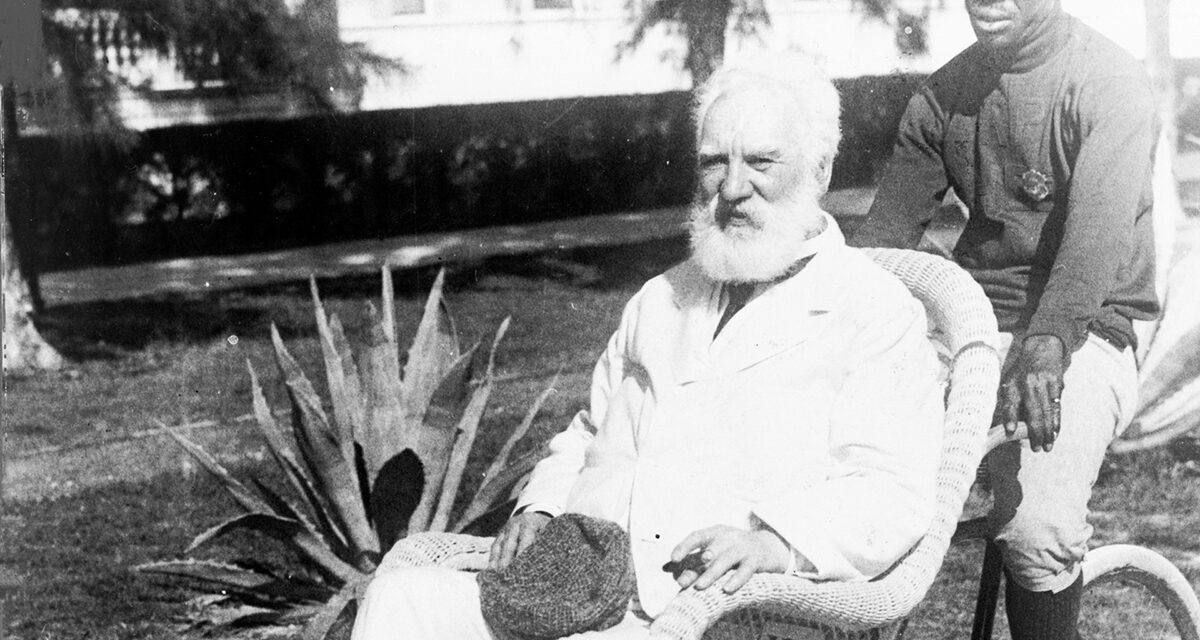
Alexander Graham Bell in Wicker Wheel Chair, 1922
 Original
Colorized
Original
Colorized
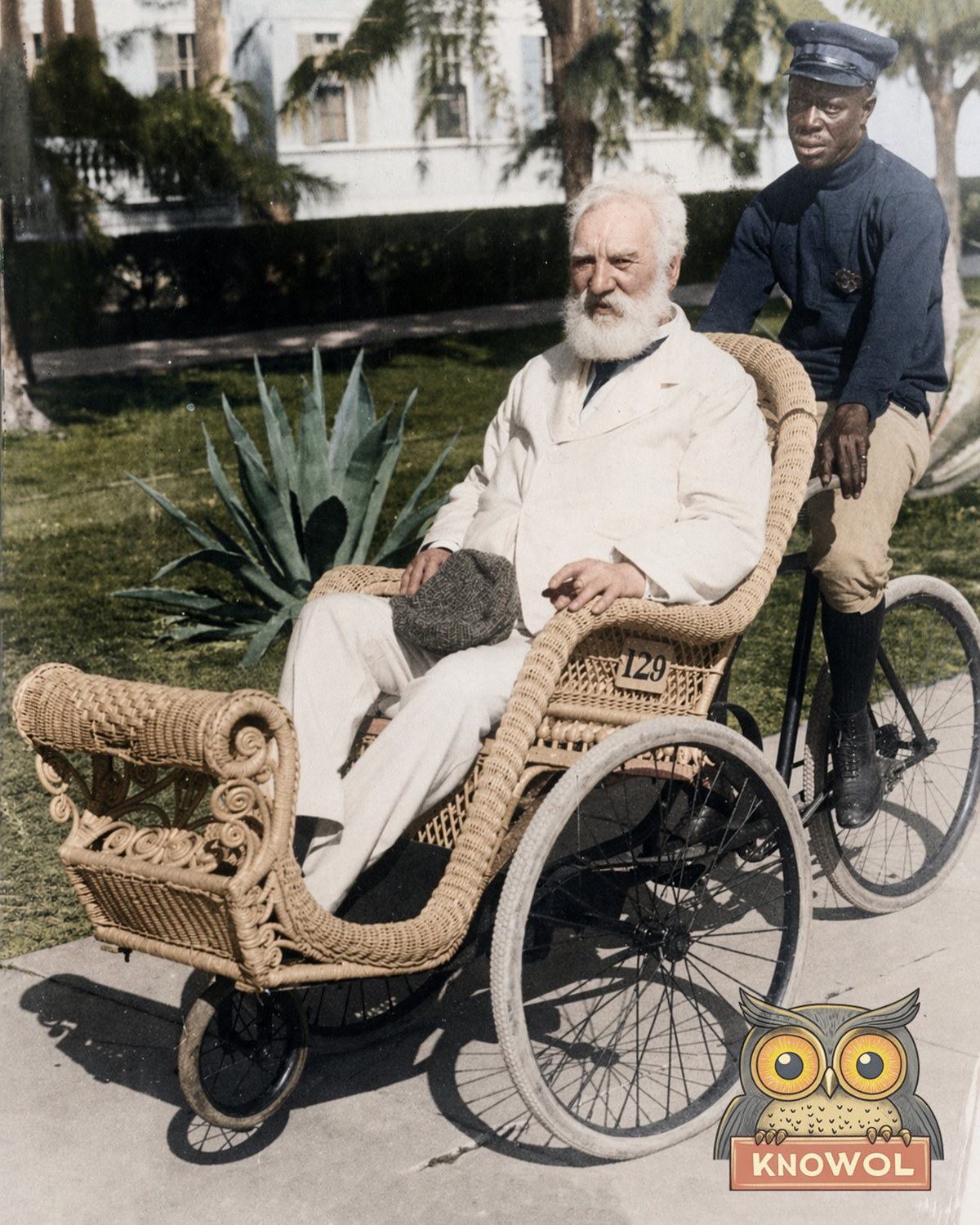
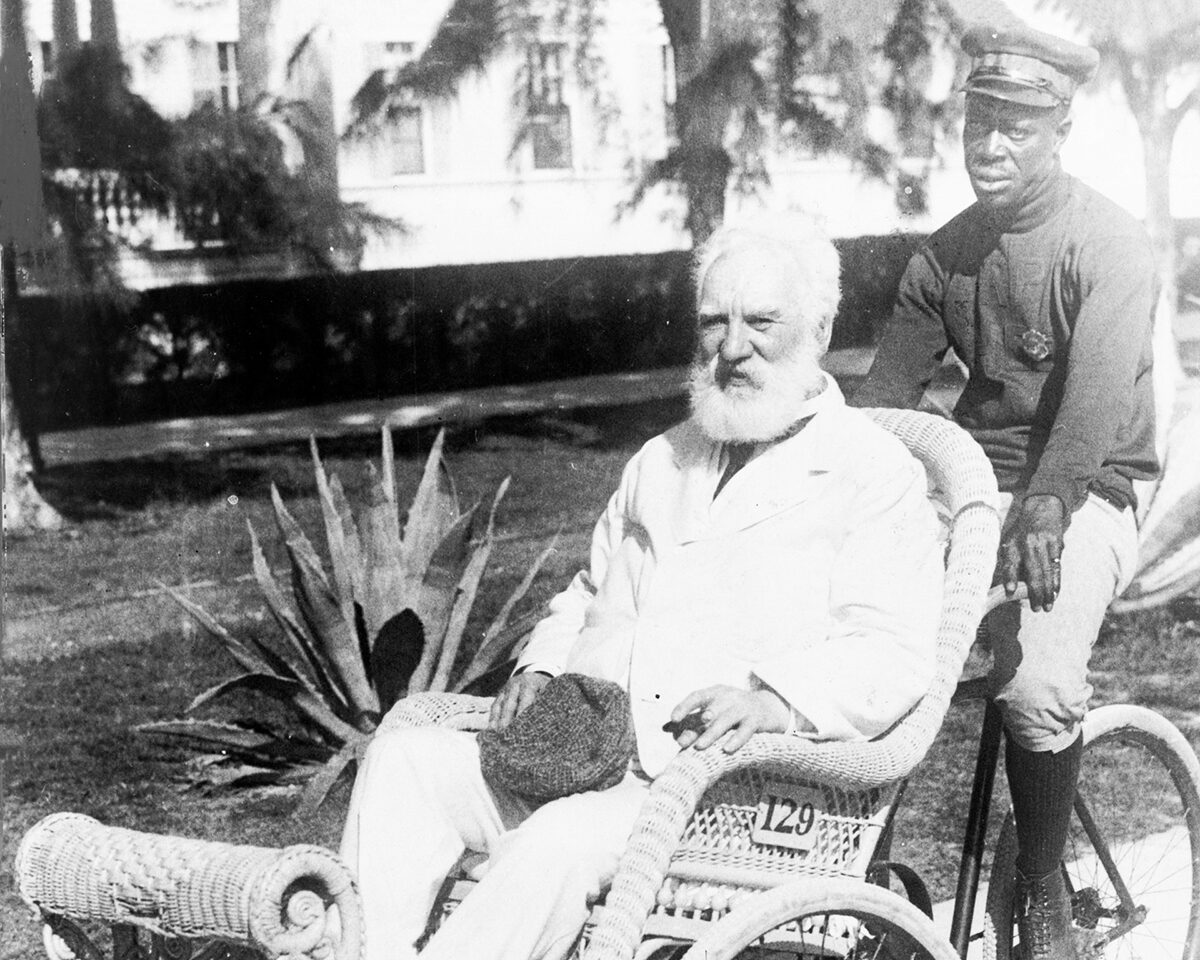
This 1922 photograph shows Alexander Graham Bell, the inventor, scientist, and patent holder of the first practical telephone, sitting in Florida during the final year of his life. He is in an ornate wicker wheeled chair attended by a uniformed driver standing at the rear bicycle wheel. The image documents both the inventor in old age and a once-common piece of early 20th-century Florida resort transportation.
Alexander Graham Bell at the End of His Life
Bell was 75 years old when this photograph was taken. By 1922 he was wintering in Florida and summering at Beinn Bhreagh, his estate in Baddeck, Nova Scotia. He spent the winter of 1921–1922 at the Coconut Grove home of his daughter-in-law, Mrs. David Fairchild, in Miami. He was suffering from complications of diabetes, later compounded by pernicious anemia, and died on August 2, 1922, at Beinn Bhreagh, months after this photo was taken.
As a tribute, every telephone exchange in the United States and Canada went silent for one minute during his funeral on August 4, 1922. There were more than 14 million telephones in service at the time.
The Chair
The vehicle in the photograph is not a conventional wheelchair. It is a wicker rolling chair attached to a bicycle, propelled by a driver pedaling from behind. A stenciled identification number (129) on the side, indicating it belonged to a numbered rental fleet Chairs of this design were a standard mode of guest transportation at major Florida resorts during the late 19th and early 20th centuries.
Wicker Rolling Chairs in Florida Resorts
These vehicles became closely associated with Henry Flagler’s Gilded Age hotels on Palm Beach, particularly the Royal Poinciana Hotel (opened 1894) and The Breakers (opened 1896). Both hotels maintained fleets of bicycle-powered wicker chairs to shuttle guests along the resort grounds and the pine trail connecting the two properties.
Reasons for their popularity:
- Climate suitability: the open wicker construction allowed airflow in Florida’s heat.
- No automobile traffic: Palm Beach restricted private cars on parts of the island.
- Resort aesthetic: wicker matched the broader interior design language of the hotels, which favored white wicker and rattan furniture throughout.
- Status display: being chauffeured in one was part of the resort experience.
The “Afromobile” Term
The chairs acquired the colloquial name “Afromobile” (also spelled “Afrimobile”) because they were almost universally pedaled by Black hotel employees, many of whom lived in a segregated workers’ settlement on the island known as the Styx. The Styx housed African American and Bahamian workers brought in to build and staff Flagler’s hotels under the legal framework of Jim Crow–era segregation.
The Preservation Foundation of Palm Beach documents these vehicles as part of the historical record of the Black community whose labor built and sustained the resort. The term itself reflects the racial dynamics of the period and is generally treated today as a historical artifact rather than a politically correct or modern term.
Decline
Bicycle-powered wicker chairs remained part of Palm Beach resort life into the mid-20th century before being phased out, primarily due to:
- The rise of automobile transportation
- The 1925 fire and rebuilding of The Breakers in concrete
- Damage to the Royal Poinciana Hotel from the 1928 Okeechobee hurricane
- The Royal Poinciana’s closure in 1934 and demolition in 1935
- Changing labor conditions and resort design after the Great Depression
Surviving examples are now housed in museum and historical society collections, and original photographs and postcards remain the primary visual record of how the chairs were used.
In This Photograph
The specific location of the 1922 image is not definitively recorded, but the visible elements are consistent with a Florida resort setting: palm trees, an agave plant, a stucco hotel building in the background, and a fleet-numbered rental chair with a uniformed attendant. Bell, in a white linen suit and holding a flat cap, sits as one of countless guests transported in this manner during the era — though he is among the most historically prominent.