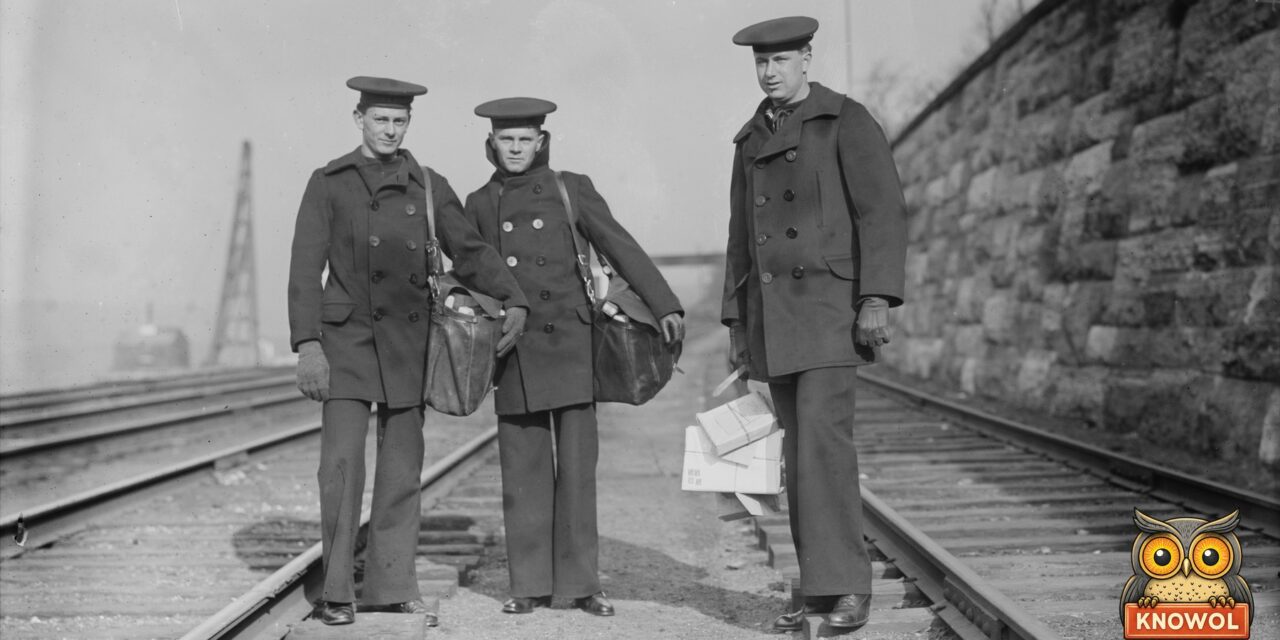
A Navy sailor named Ralph Swinden sent a telegram home to Grants Pass, Oregon. His train would pass through town, and he asked his mother, Alida Swinden, to meet him there. When she got to the train, Ralph had two young shipmates with him. He had picked them out himself, and they had something in common. Neither one had a mother.
What happened next made the newspapers. The younger boy, “with tears streaming from his eyes,” “threw his arms around her,” and told her she was “the first and only mother he had ever known.” The older one, “with less demonstration,” thanked her “for her motherly interest in him.”
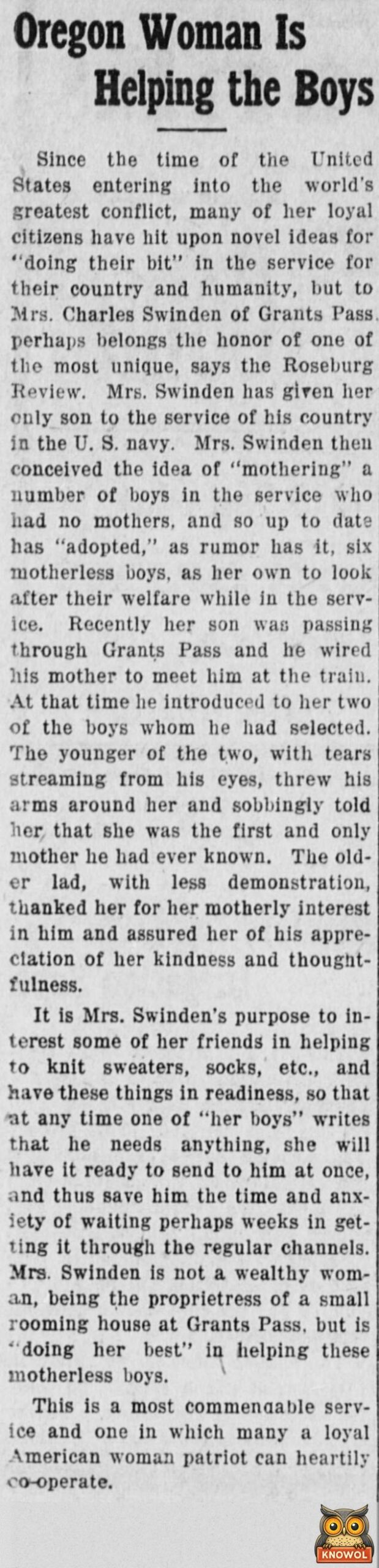
“Oregon Woman Is Helping the Boys.” Ashland Tidings, Ashland, Oregon, January 10, 1918, page 3, reprinted from the Roseburg Review. Library of Congress, Chronicling America. Click the clipping to read it full size.
A Mom With a Plan in Grants Pass
That scene comes from the Roseburg Review, a paper in Roseburg, Oregon. The Ashland Tidings of Ashland, Oregon, reprinted it on January 10, 1918, under the headline “Oregon Woman Is Helping the Boys.” The United States had been fighting in World War I since April 1917. All over the country, people were looking for ways of “doing their bit,” and the paper said Mrs. Swinden of Grants Pass had one of the most unusual.
Her idea was “mothering” young men in the service who “had no mothers.” The Review heard that she had already “adopted,” “as rumor has it, six motherless boys.” It wasn’t a legal adoption. It meant she would look after them like a mom while they served, and Ralph was helping her find them.
How the Grants Pass Plan Worked
Mrs. Swinden was not rich. The paper said she was “the proprietress of a small rooming house at Grants Pass,” a house where people rented a bedroom, usually by the week. So her plan used what she had: her own two hands, and her friends.
She asked friends to help her “knit sweaters, socks, etc.” and keep them ready. Then, if one of “her boys” wrote that he needed something, she could mail it to him right away. Otherwise he might wait “perhaps weeks in getting it through the regular channels,” the slow official way.
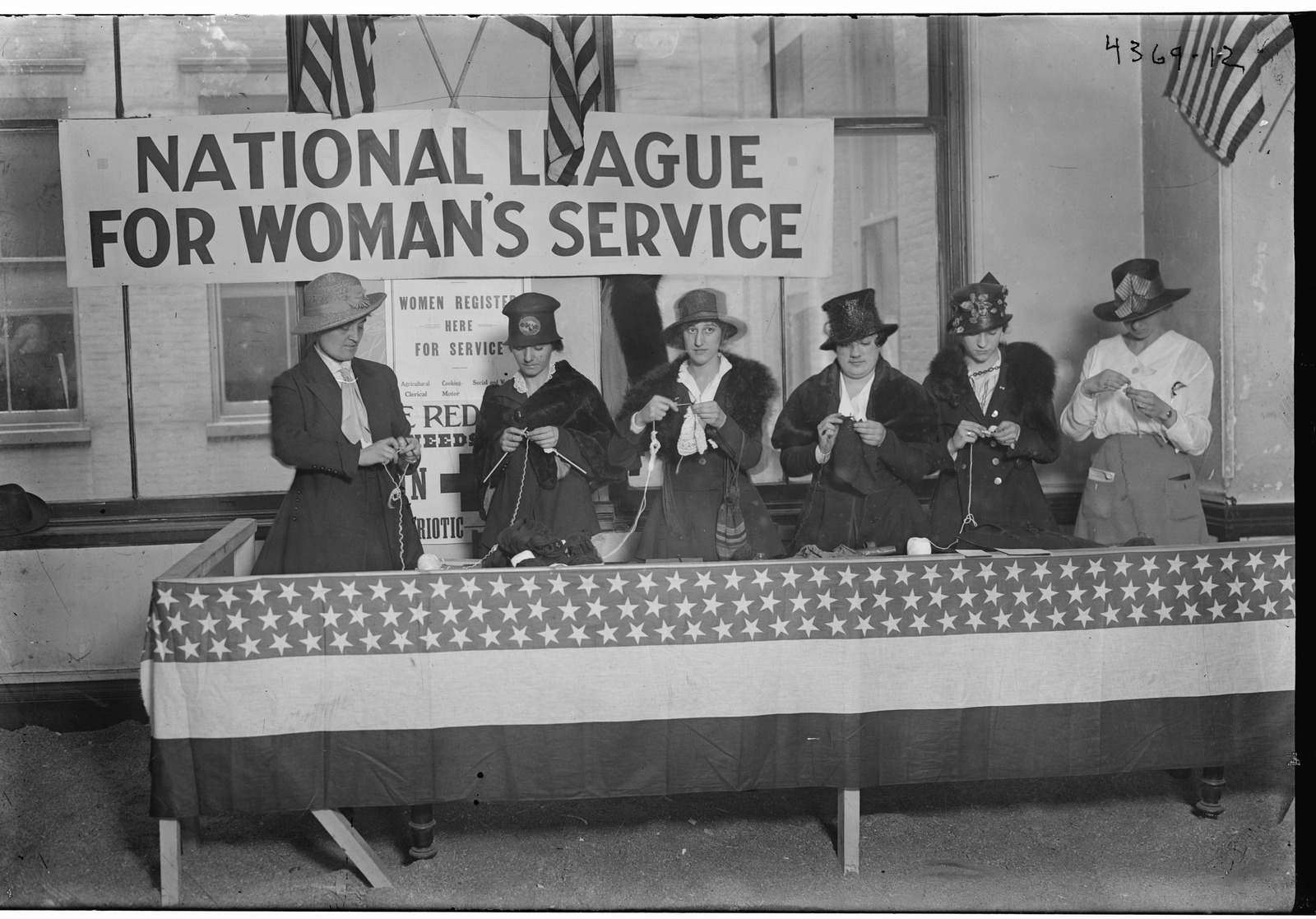
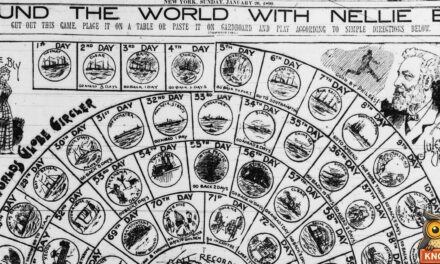
Women knitting at a National League for Woman’s Service table, about 1917 to 1919. During World War I, women all over the country knit socks and sweaters for soldiers and sailors. This photo was not taken in Oregon. Bain News Service, Library of Congress. Click the picture to see it full size.
Red Cross Knitting at the Swinden House
In March 1918, the Rogue River Courier of Grants Pass described an evening at “the home of Mrs. Alida Swinden.” Her friends looked at the “soldier life views, as lived and seen by Ralph Swinden,” his pictures of life in the service. And there was “the ever-present Red Cross knitting.” The snacks were “cookies, wafers and tea.”
The party was a goodbye for Mrs. Minnie Harman, who was moving to Washington. Her two sons were in the service. Before she left, she got “a beautiful silk service flag,” the kind a family hung in the window to show that someone from that home was serving. The paper said the flag “was the idea and dainty needlework of Mrs. Alida Swinden and Mrs. Estella Howard,” and it “was a complete surprise to Mrs. Harman.”
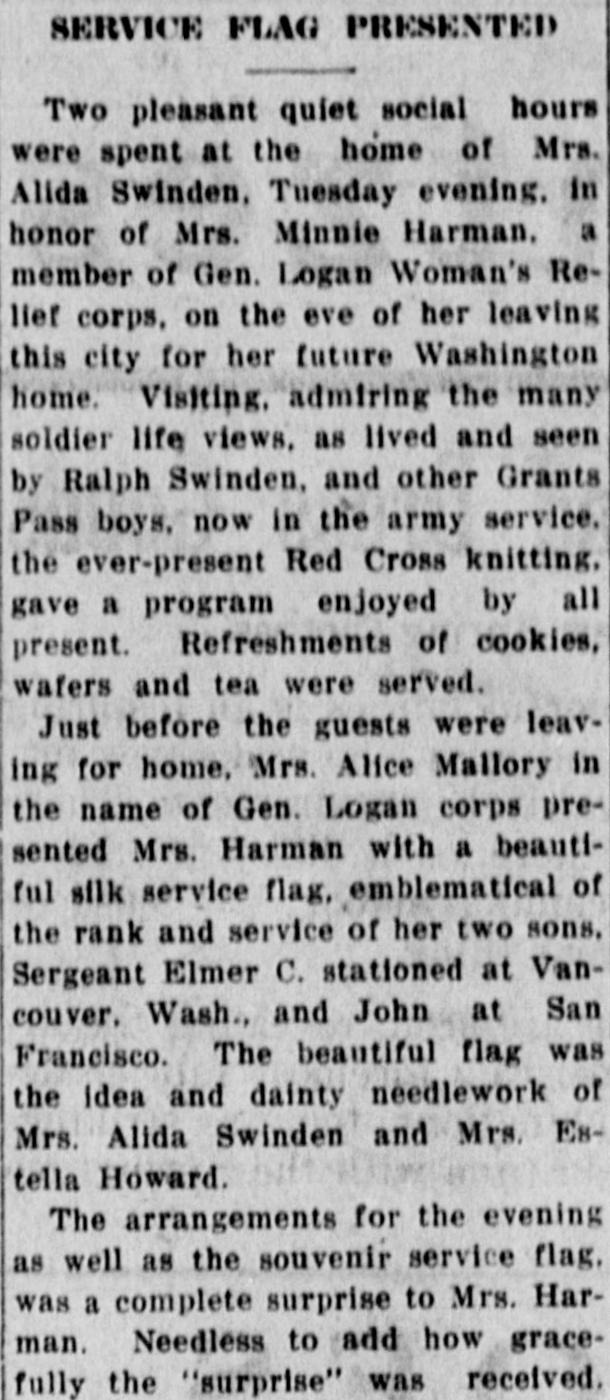
“Service Flag Presented.” Rogue River Courier, Grants Pass, Oregon, March 10, 1918, page 2. Library of Congress, Chronicling America. Click the clipping to read it full size.
Ralph Swinden’s Wartime Trips
Ralph Swinden had joined the Navy years before. In June 1916, the Grants Pass paper said his mother took the train to Portland “to meet her son, Ralph, who will be on the battleship Oregon.” Near the end of the war, he was captain of a gun crew on the steamer Northern Pacific. A gun crew was the team of sailors who worked one of the ship’s big guns. His letters tell of a fast ship carrying soldiers from New York to Brest, France.
Ralph’s letters home were printed in the Grants Pass papers, and in January 1919 he explained a trip. The ship tied up in New York, and “3,440 soldiers come aboard.” Then, “Some dark night or just before dawn we just slip quietly out and down the bay we go.”
Once the ship passed the lightship, a ship anchored at the harbor’s mouth as a floating lighthouse, the gun crews went on watch, “Four on and four off.” That meant four hours of watching, then four hours of rest, all the way across. “Every little smoke, light or oil on the water that was seen, out comes the gun crew,” he wrote. So nobody got undressed: “no duds were taken off from New York to Brest.” Duds means clothes. Then Ralph told a story on himself:
“One time I did though, when we were coming back. I was going to take a bath. Just ready, general quarters sounded. I put on a pair of trousers and that was all. Out I went onto the bow of the ship with the ship making 22 knots through an April wind.”
General quarters was the alarm that sent every sailor to his battle station. The bow is the very front of the ship, and 22 knots is about 25 miles an hour. In April, out on the Atlantic Ocean, that’s a cold place to be wearing only trousers.
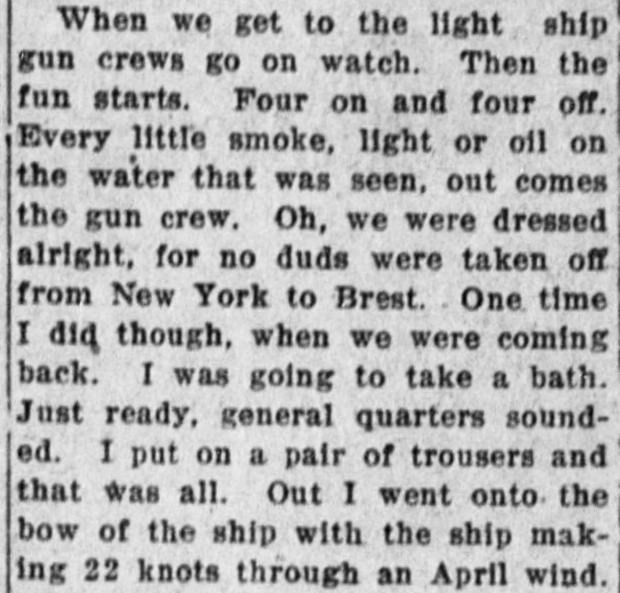
Ralph Swinden’s letter home. Grants Pass Daily Courier, Grants Pass, Oregon, February 1, 1919, page 3. Library of Congress, Chronicling America. Click the clipping to read it full size.
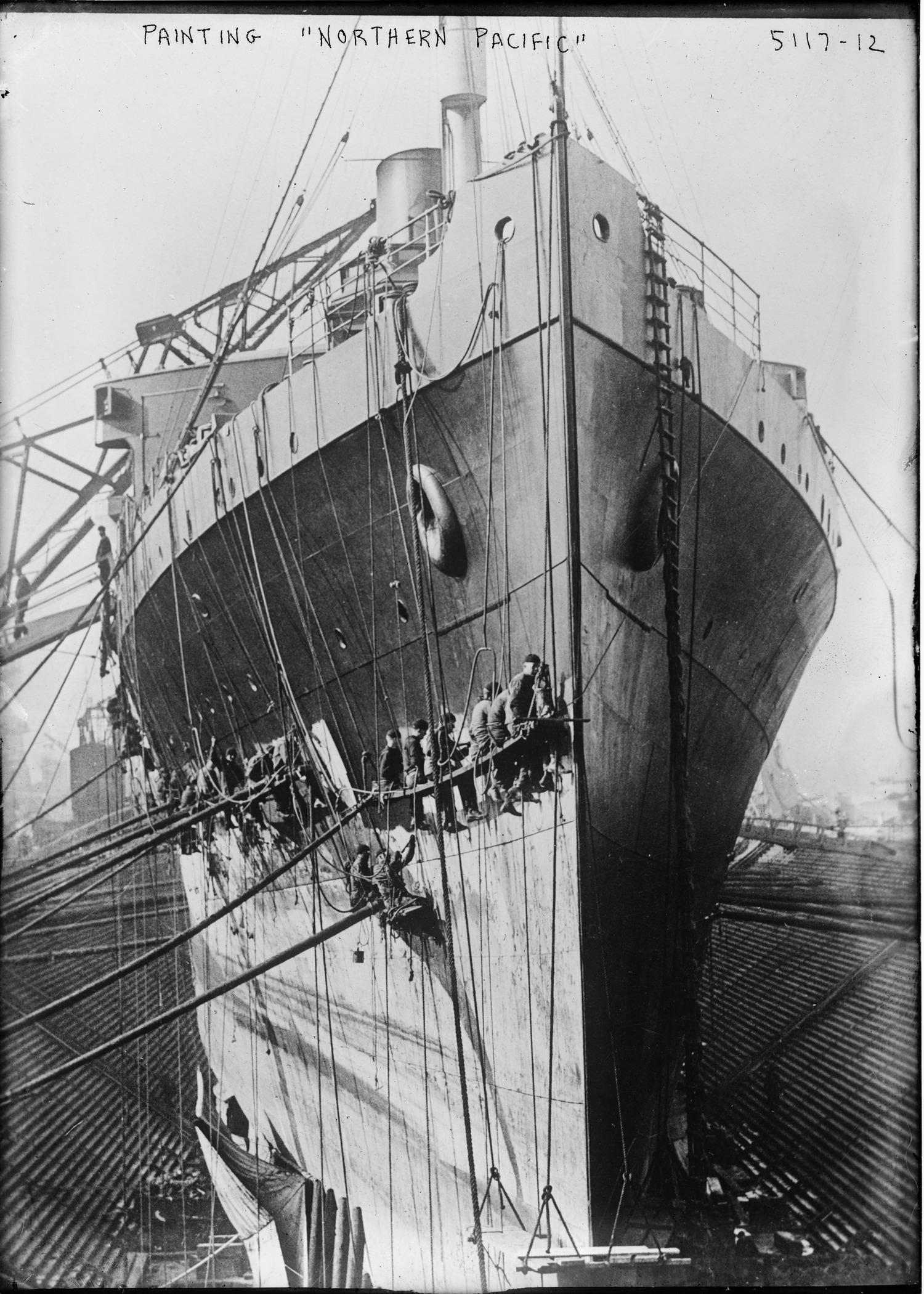
Workers paint the bow of the steamer Northern Pacific in a dry dock, about 1915 to 1920. Ralph Swinden of Grants Pass was captain of a gun crew on this ship near the end of World War I. Bain News Service, Library of Congress. Click the picture to see it full size.
A Cake From Grants Pass
The fighting ended on November 11, 1918, but Ralph Swinden was still in the Navy. On Thanksgiving Day, November 28, he wrote home from New York City. “Received the cake and two letters from you when we arrived yesterday. I thank you. The cake just fit in the right spot.”
In New York, somebody was looking out for Ralph, too. “You know the Mrs. told me they should look for me every time we come back to this port,” he wrote. He also had an invitation to Thanksgiving dinner at a friend’s house that evening. “I am going if I don’t freeze before then.”
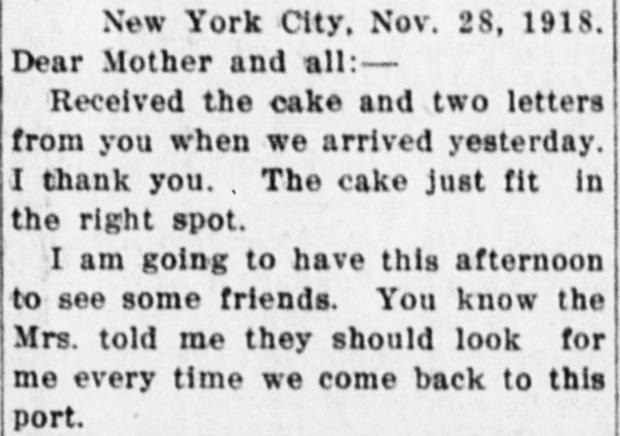
“Dear Mother and all.” Rogue River Courier, Grants Pass, Oregon, December 16, 1918, page 2. Library of Congress, Chronicling America. Click the clipping to read it full size.
By the Numbers: The Swindens of Grants Pass
- 6: young men with no mothers that Mrs. Swinden had “adopted,” as the Roseburg Review heard it.
- 2: shipmates Ralph brought to meet her at the train.
- 3,440: soldiers who came aboard Ralph’s ship for one trip to France.
- 22: knots, about 25 miles an hour, on the day of Ralph’s interrupted bath.
- 25 and 11: days Ralph’s ship spent in New York and in Brest between March 7 and July 4, 1918. He wrote that “the rest of the time we were at sea.”
- 4: years Ralph served in the Navy.
- 1: cake from home, which “just fit in the right spot.”
Home to Grants Pass for Valentine’s Day
Ralph Swinden came home to Grants Pass in early 1919, “just out of a four years enlistment in the navy.” On Friday, February 14, 1919, Valentine’s Day, he married Mildred V. Lown of Santa Rosa, California. The paper said she “was a former resident of Grants Pass.” The wedding was at the home of E. S. Day on K Street, his mother’s family: the year before, the paper had named Mrs. E. S. Day as Mrs. Swinden’s mother. “Ice cream and cake were served after the ceremony.”
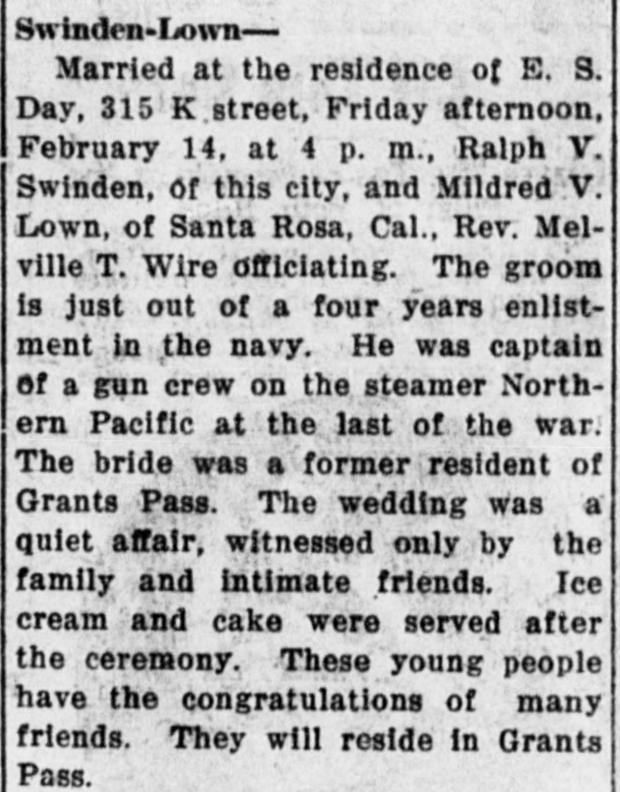
“Swinden-Lown.” Grants Pass Daily Courier, Grants Pass, Oregon, February 15, 1919, page 4. Library of Congress, Chronicling America. Click the clipping to read it full size.
The papers never printed the names of Mrs. Swinden’s six boys, so we don’t know what became of them. But we know about one of them. On a train platform in Grants Pass, a crying young sailor put his arms around a woman who ran a small rooming house, and she became the first mother he ever had. The picture at the top of this page is a stand-in: three Navy sailors carrying their bags and packages home for Christmas, photographed by the Bain News Service about 1909. They are not Ralph or his shipmates.
Sources
- “Oregon Woman Is Helping the Boys,” Ashland Tidings (Ashland, Oregon), January 10, 1918, page 3, reprinted from the Roseburg Review. Library of Congress, Chronicling America.
- “Service Flag Presented,” Rogue River Courier (Grants Pass, Oregon), March 10, 1918, page 2. Library of Congress, Chronicling America.
- Rogue River Courier (Grants Pass, Oregon), June 5, 1916, page 4, Mrs. C. L. Swinden goes to meet her son Ralph; August 19, 1917, page 4, Ralph goes back to the Navy; June 24, 1918, page 4, Mrs. Swinden’s mother, Mrs. E. S. Day. Library of Congress, Chronicling America.
- “Soldier Letters,” Rogue River Courier (Grants Pass, Oregon), December 16, 1918, page 2, Ralph’s Thanksgiving letter. Library of Congress, Chronicling America.
- “Soldier Letters,” Grants Pass Daily Courier (Grants Pass, Oregon), February 1, 1919, page 3, Ralph’s letter of January 8, 1919. Library of Congress, Chronicling America.
- “Swinden-Lown,” Grants Pass Daily Courier (Grants Pass, Oregon), February 15, 1919, page 4. Library of Congress, Chronicling America.
- Photos, all from the George Grantham Bain Collection, Library of Congress, no known restrictions on publication: cover, “Sailors at train tracks going home for Xmas” (no date on the caption card; it was filed with Bain’s Christmas 1909 pictures); “Painting NORTHERN PACIFIC” (about 1915 to 1920); “National League for Woman’s Sevice” (1917 to 1919; the misspelling is in the Library’s title).
- The newspapers and photographs were all published or made before 1931 and are in the public domain in the United States.