In June 1885, the weekly paper in New Ulm, Minnesota, was full of small-town news. The school year would end on Friday. The Fourth of July was ten days off, and “New Ulm will have a procession, several pic-nics, fire works and two balls.” (Balls were big dances.)
Tucked in among those notes was a brag about a local boy who was away at the U.S. Naval Academy in Annapolis, Maryland, where the Navy trains its officers. “Robert Stocker, of this city, cadet to Annapolis academy, has done himself and New Ulm proud,” the New Ulm Weekly Review wrote on June 24, 1885. Then it made a promise: “Cadet Stocker is bound to make his mark, and some day we’ll write it ‘Admiral Stocker.'”
An admiral is one of the Navy’s top officers. That was a big promise to make about a poor kid from a small Minnesota town. It took 37 years, but the paper got to keep it.
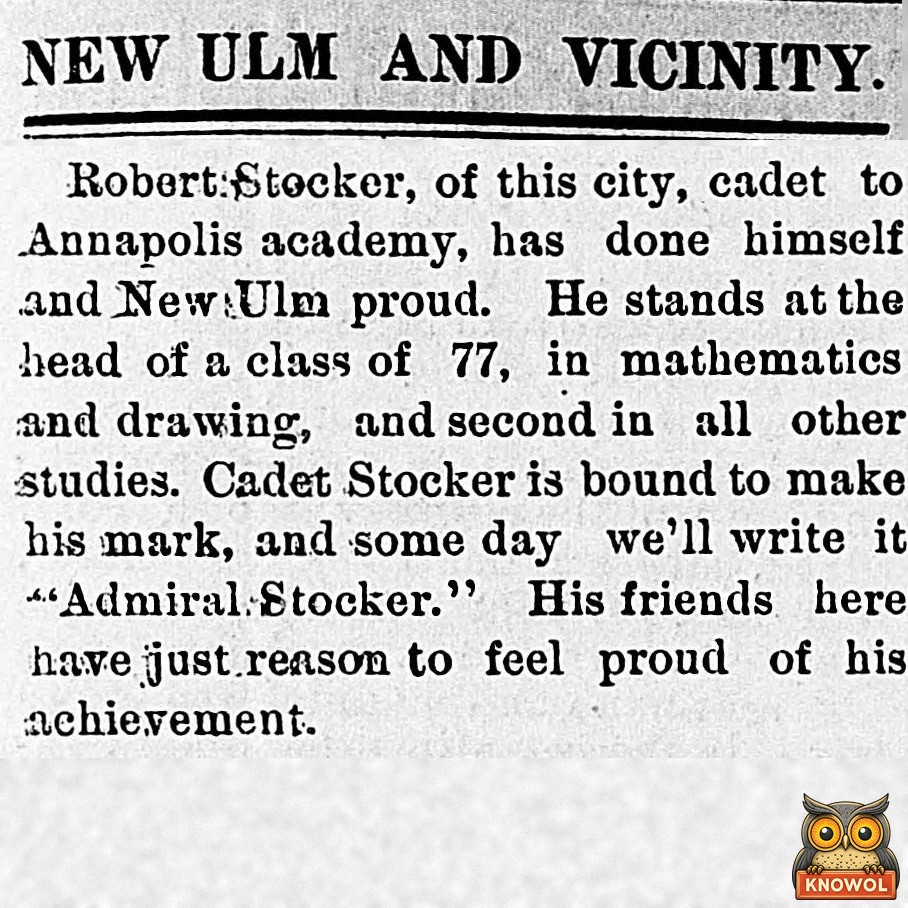
New Ulm Weekly Review, New Ulm, Minnesota, June 24, 1885, page 5. Library of Congress, Chronicling America. Click the clipping to read it full size.
Robert Stocker of New Ulm Took a Test Just to See If He Could Pass
Robert Stocker grew up in New Ulm, on the Minnesota River, in a family without much money. The town’s schools only went through the grammar grades, so he went on to the Normal school (a school that trained teachers) in nearby Mankato. He paid his way by lathing, which meant nailing thin strips of wood across the walls of new houses so the plaster would stick.
In 1914, the New Ulm Review told what happened next. While he was at the Normal school, “an examination was held at Mankato for a cadetship in the Naval Academy at Annapolis.” Robert took the test “merely out of curiosity to see whether he knew enough to be able to pass the examination.” He “stood the highest of those who had taken the examination,” so he had to decide fast. “He concluded to chance it,” the paper said, knowing he could quit if the work didn’t suit him.
In 1887, the Mankato Free Press said “Stocker’s parents were too poor” to send him off to Annapolis with a proper start. Congressman Wakefield, who had picked him, found out and made it possible. The paper called it a “simple act of kindness.”
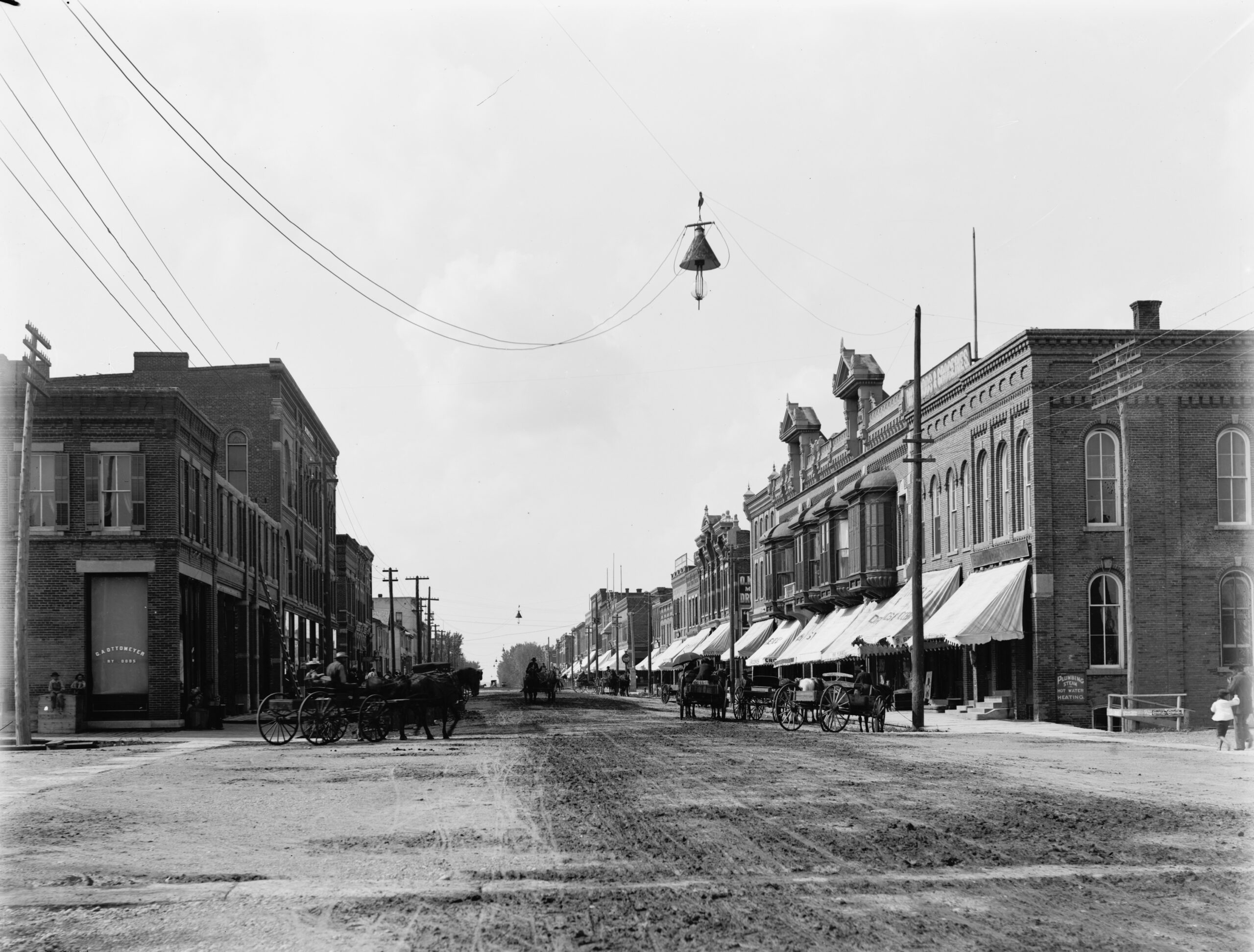
Main Street in New Ulm, Minnesota, sometime between 1880 and 1899. Detroit Publishing Co., Library of Congress. Click the picture to see it full size.
Robert Stocker’s Report Card From Annapolis
Robert Stocker’s grades from June 1885 can still be read in the Naval Academy’s own yearly record book. His class had 77 cadets, and he came in second overall. In math (trigonometry and geometry) he scored 45.12 out of 48, and in mechanical drawing he scored 22.02 out of 24. Nobody in the class beat either score.
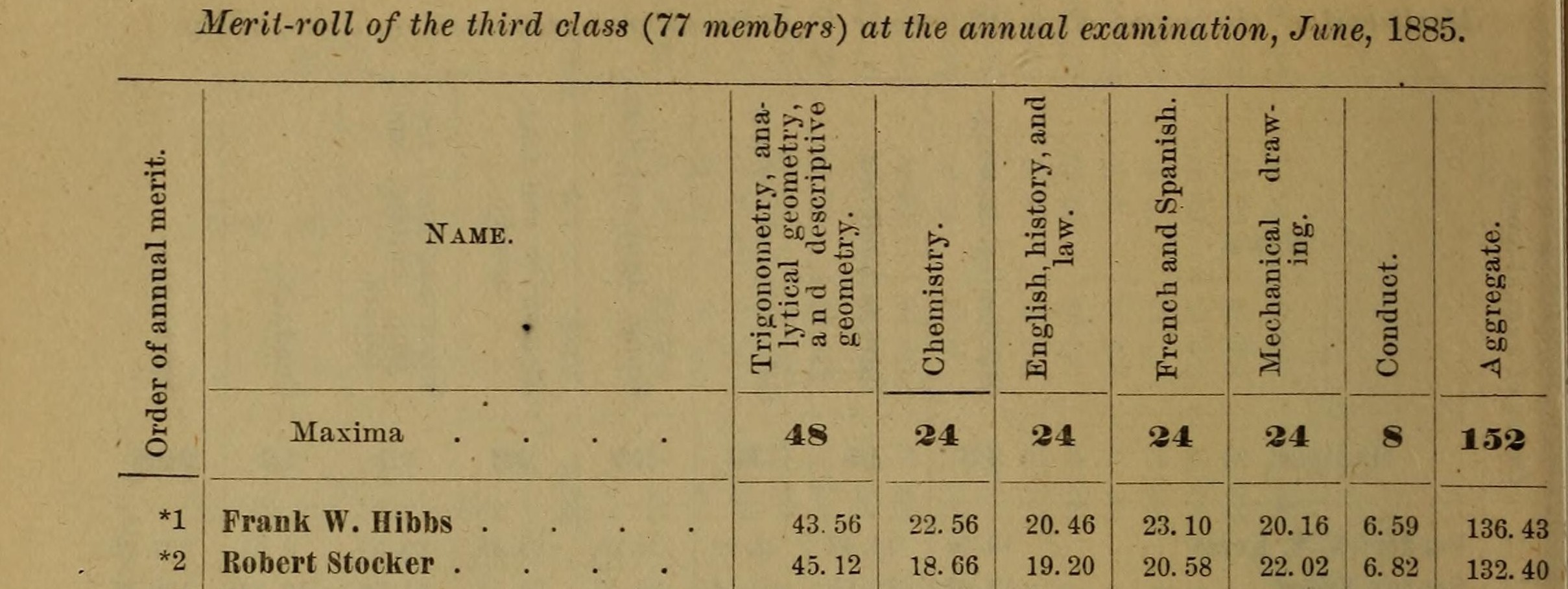
Robert Stocker is number 2 on his class’s June 1885 merit roll. Annual Register of the United States Naval Academy, 1885 to 1886, page 42. Internet Archive, public domain. Click the clipping to read it full size.
Two years later, he made it all the way to the top. On June 15, 1887, the New Ulm paper’s headline said “A New Ulm boy heads the class of the Naval Academy at Annapolis.” Robert was first of the 44 in his graduating class.
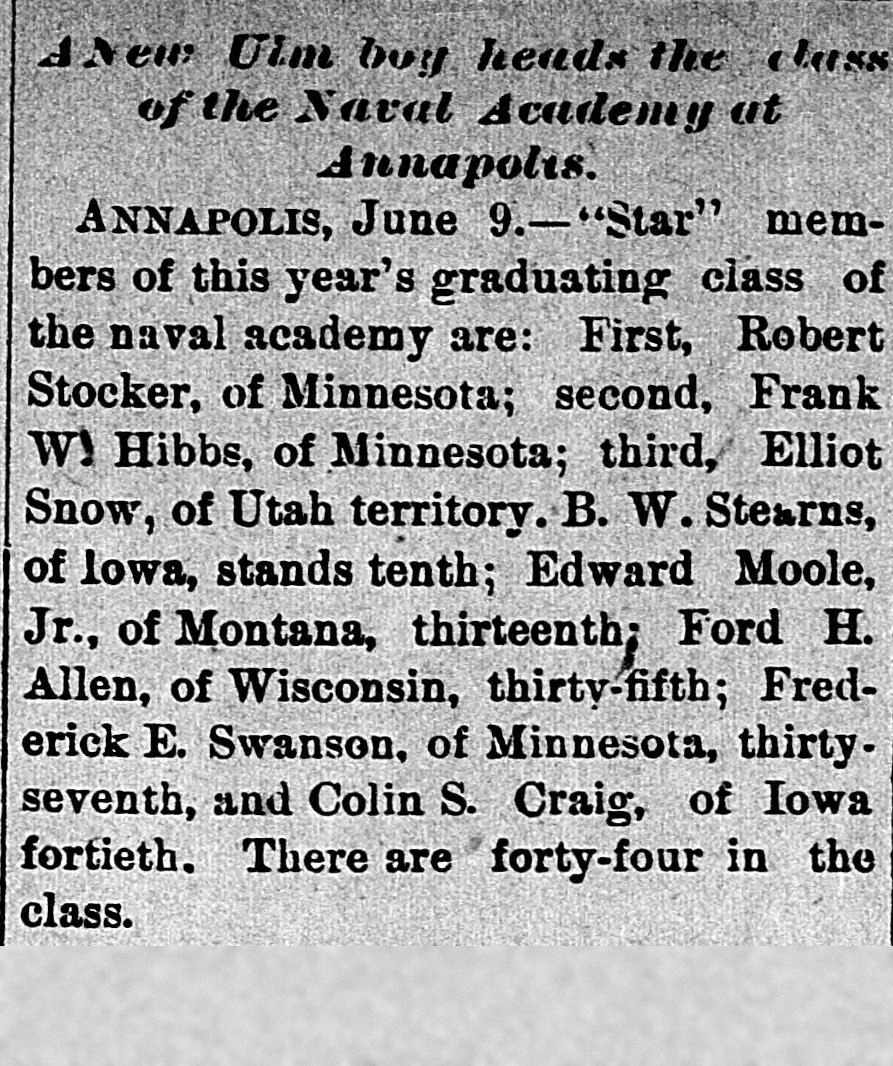
New Ulm Weekly Review, New Ulm, Minnesota, June 15, 1887, page 5. Library of Congress, Chronicling America. Click the clipping to read it full size.
Why Robert Stocker Wasn’t Supposed to Become an Admiral
In October 1890, the Navy ordered Ensign Robert Stocker of New Ulm to a shipbuilding school in Paris, France. He was one of six young officers picked to become naval constructors, the Navy officers who design and build its ships.
It was a perfect job for a young man who was best at math and drawing. But it had a catch. “Captain was really the highest rank available when I entered the corps,” Robert wrote years later. Only a few men at the very top of the Navy’s shipbuilding bureau ever rose higher. It looked like New Ulm’s promise would never come true.
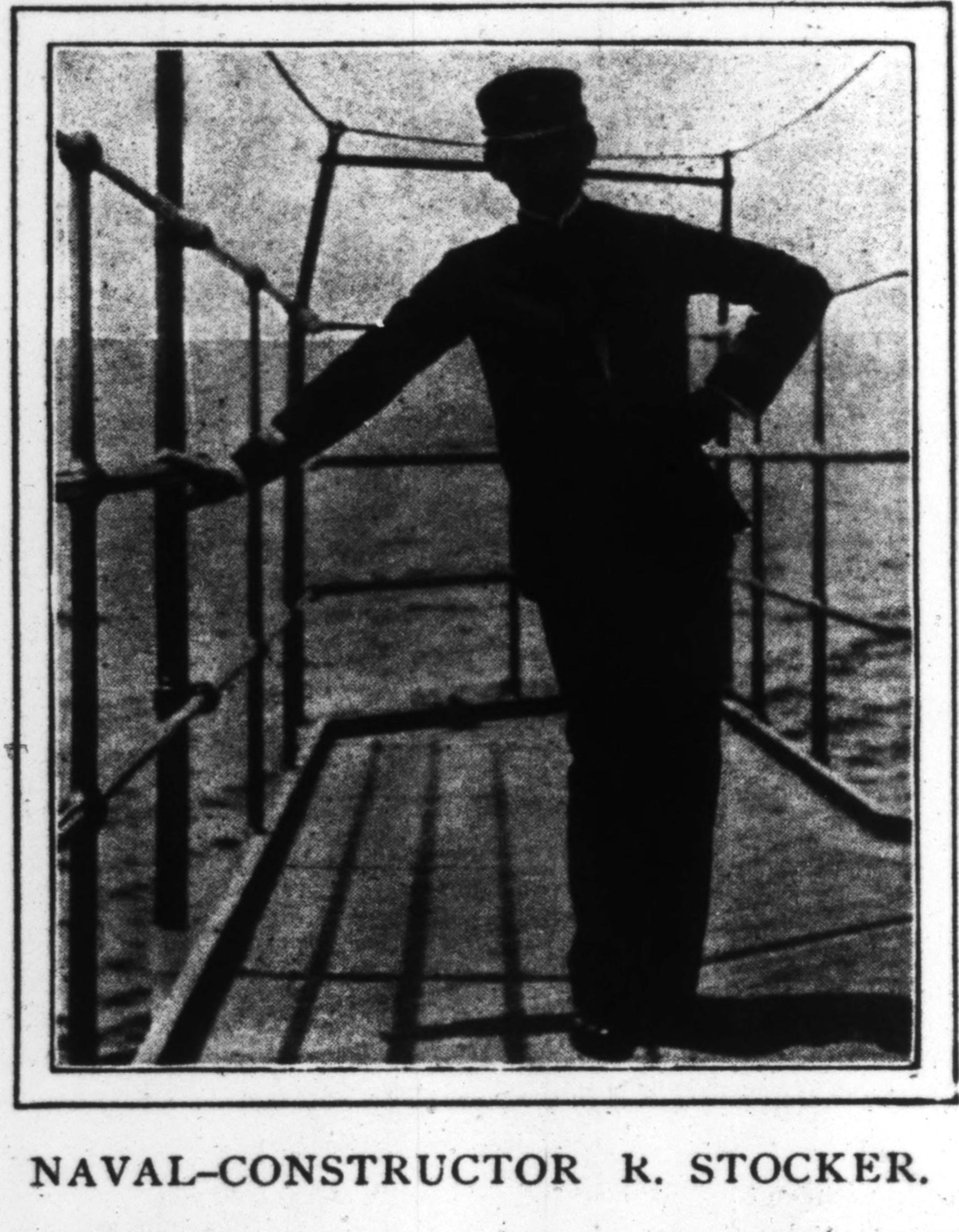
“Naval-Constructor R. Stocker” at a rail of the new battleship Kentucky during her gun trials, June 14, 1900. Harper’s Weekly, June 30, 1900, page 606. Internet Archive, public domain. Click the picture to see it full size.
The Tiny Wheel That Launched the Battleship New York
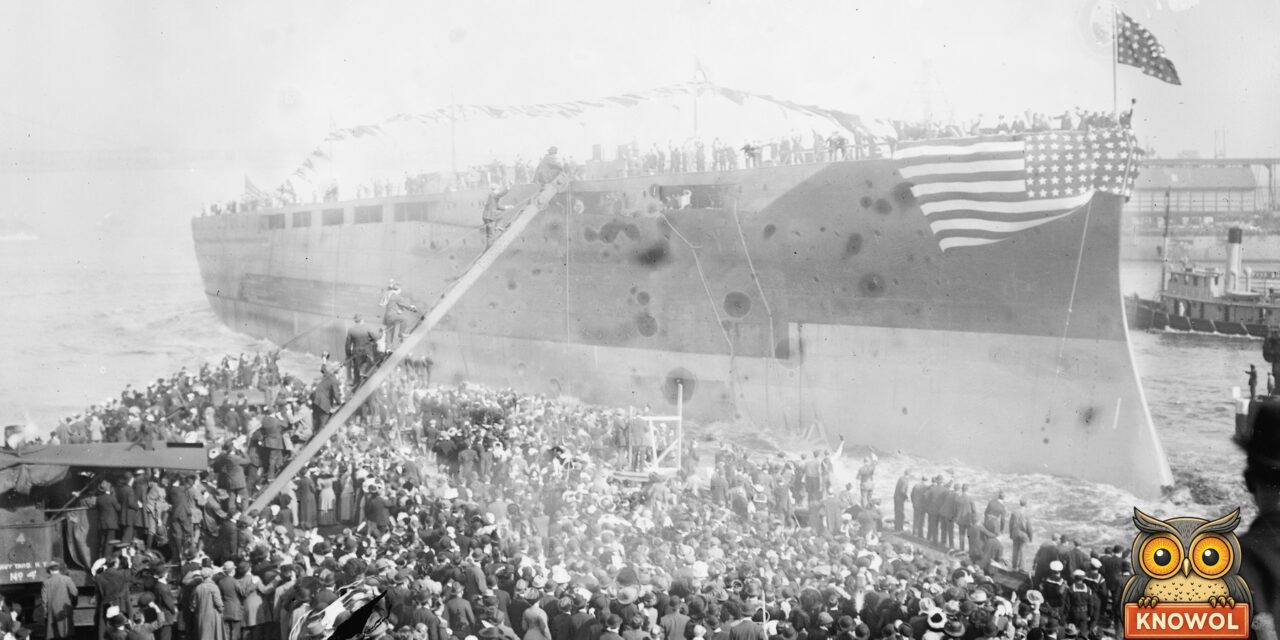
By 1912, Robert Stocker was a naval constructor at the Brooklyn Navy Yard in New York. On October 30, 1912, the yard launched the battleship New York, which the Sun newspaper called “the world’s biggest fighting ship.” Its headline said “40,000 inside the gates,” and President William Howard Taft was there. Robert was “in charge of the yard and the boss of the launching.”
A big ship is built on land, and then it slides into the water down a greased ramp called the ways. The New York “was held back by two steel fingers which would loosen their grasp when a valve was turned.” As the Sun put it, “To turn it a little too soon meant big trouble.” So Robert and Constructor Bailey waited in “the little whitewashed tunnel near the New York’s stern where the tiny wheel controlling the valve was placed.”
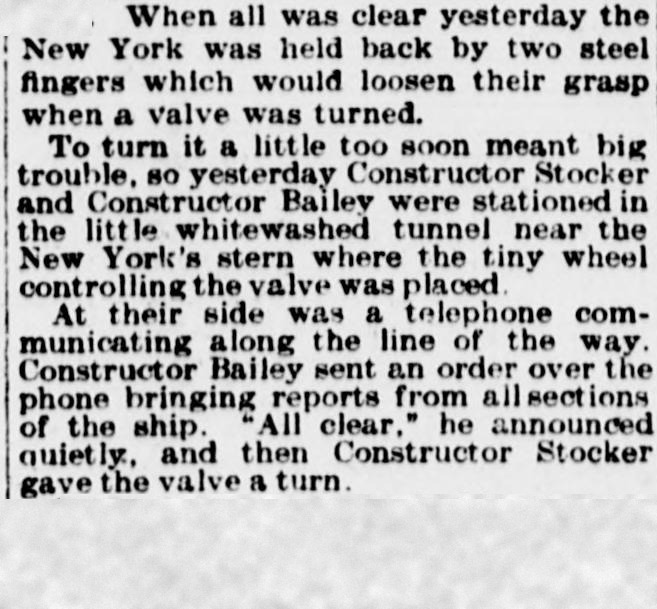
The Sun, New York, New York, October 31, 1912, page 7. Library of Congress, Chronicling America. Click the clipping to read it full size.
Bailey checked with every part of the ship by telephone. “‘All clear,’ he announced quietly, and then Constructor Stocker gave the valve a turn.” Up on the launching stand, Miss Calder banged “that stubborn bottle” of wine against the bow. Down below, “smoke shot out from the ways in spite of the 25,000 pounds of grease,” and 10,000 tons of steel slid into the water.
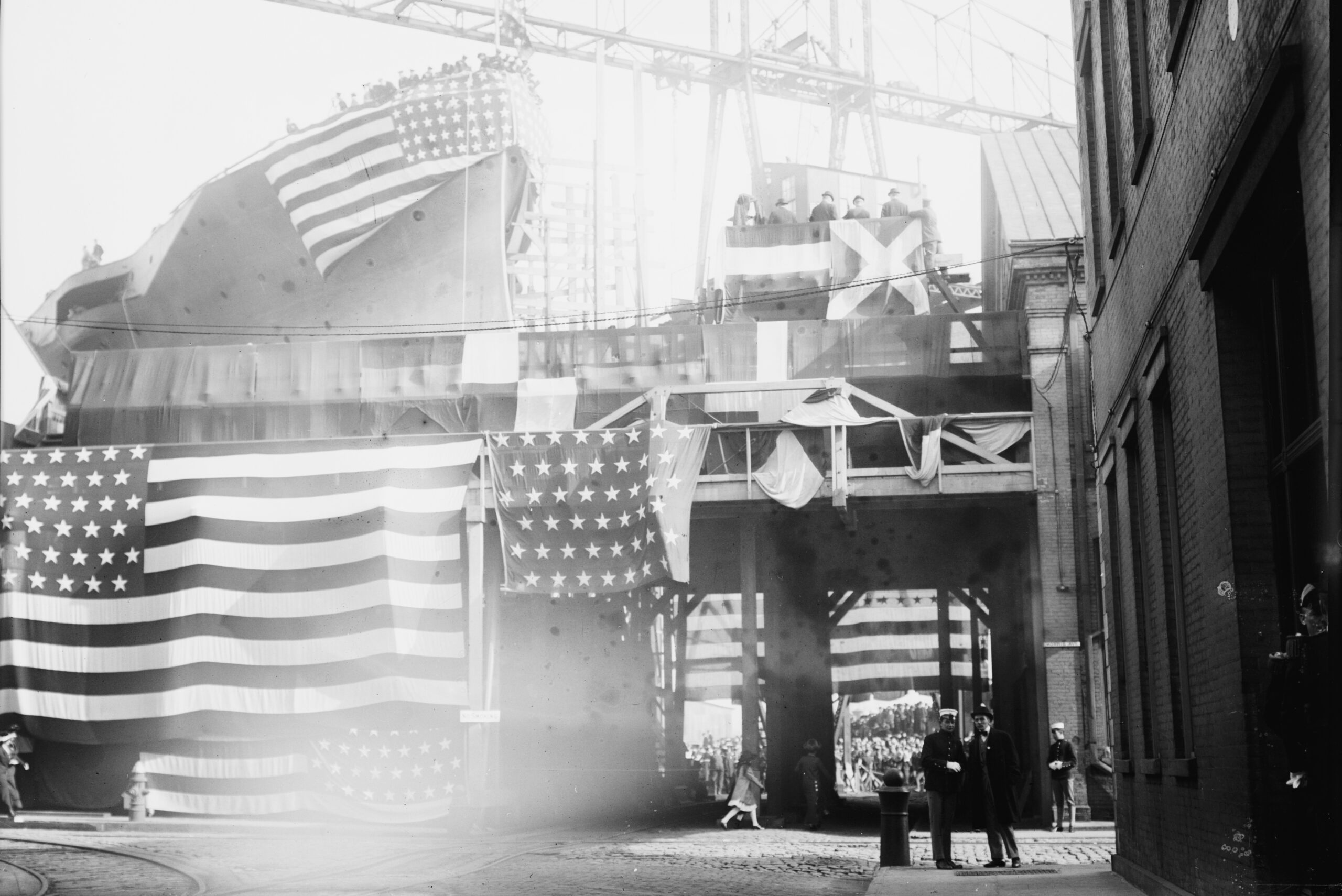
The battleship New York, hung with flags, on the ways at the Brooklyn Navy Yard before her launch in 1912. Bain News Service, Library of Congress. Click the picture to see it full size.
When the Minneapolis Tribune put Robert’s picture on its front page in March 1914, the New Ulm Review headline said “New Ulm Boy Famous.” The town’s German-language paper said his old schoolmates thought he looked almost the same as when he left 30 years before.
Robert Stocker Drew Henry Ford’s Warships With Straight Lines
During World War I, Captain Robert Stocker of New Ulm helped design a warship that carmaker Henry Ford would build near Detroit, Michigan. On December 24, 1917, Ford wrote to Navy Secretary Josephus Daniels suggesting that at least 500 boats could be built to hunt submarines. Daniels later wrote that “Captain Robert Stocker and his associates in the Design Division completed the plans and specifications in a few days.”
They were called Eagle boats, and sixty were built. A Navy officers’ magazine said in 1919 that Admiral D. W. Taylor and Captain Robert Stocker “planned the hull with the aim of eliminating curved sections as much as possible.” It added, “Straight lines characterize the design throughout to a startling degree.” The cadet with the best drawing grade in 1885 had helped draw a warship made of straight lines.
New Ulm, Minnesota, Finally Got to Write “Admiral Stocker”
In December 1922, a Navy board picked Captain Robert Stocker, the boy from New Ulm, to be a rear admiral, and the President approved. On December 13, 1922, the New Ulm Review ran the headline “Robert Stocker Made U. S. Rear Admiral.” It said he “was born and reared in New Ulm.”
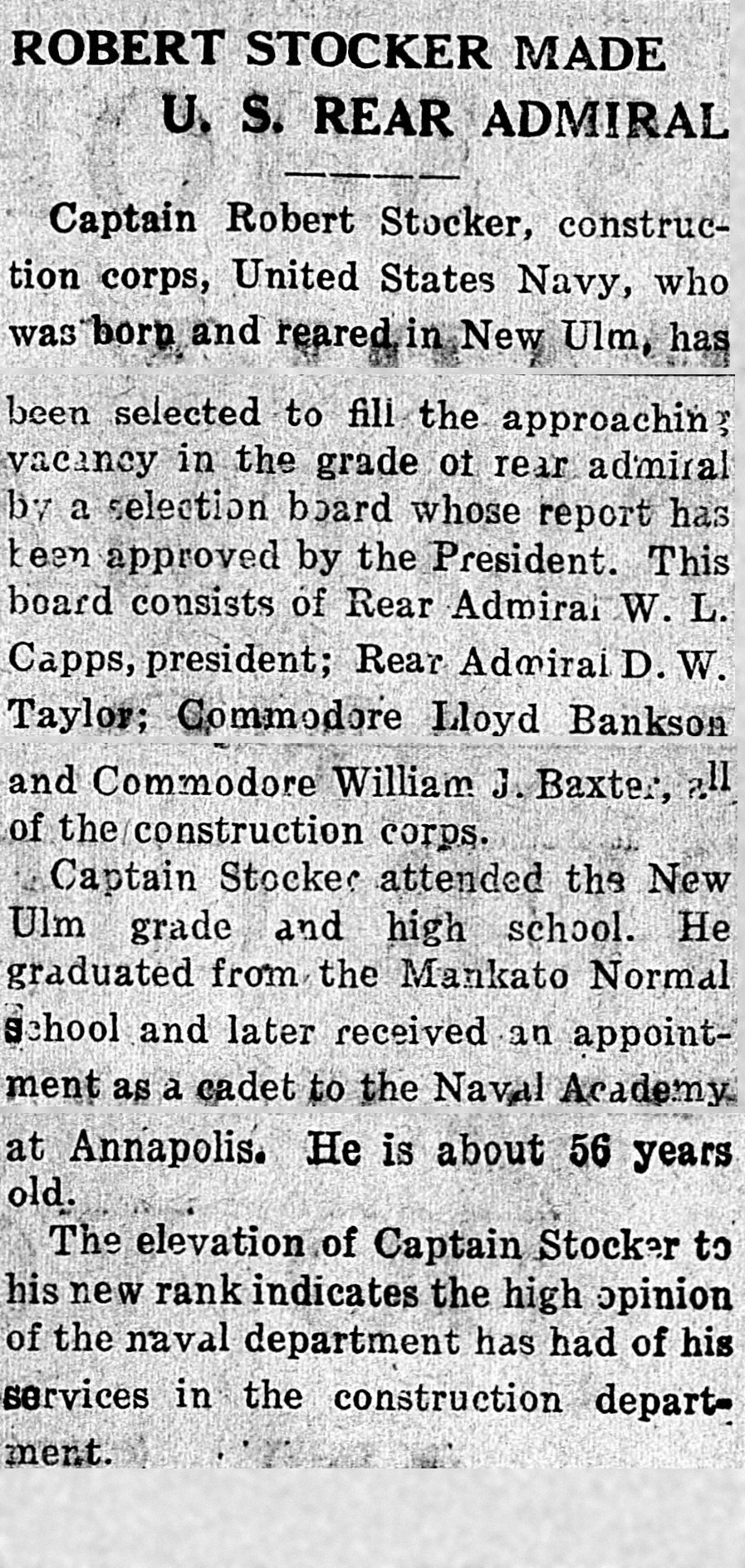
New Ulm Review, New Ulm, Minnesota, December 13, 1922, page 9. The story’s four short columns are stacked here. Library of Congress, Chronicling America. Click the clipping to read it full size.
A week later, the paper printed parts of a letter he sent home to W. T. Eckstein, the county attorney. “Rear admirals are very scarce in my corps,” he wrote. “Under present law we are allowed one permanent Rear Admiral.” The Navy’s ship builders had room for exactly one, and it was the boy from New Ulm.
He hadn’t forgotten home, either. “It would indeed give me great pleasure to again run over the scenes of my childhood,” he wrote, “and I hope that I may have that pleasure sometime in the near future.”
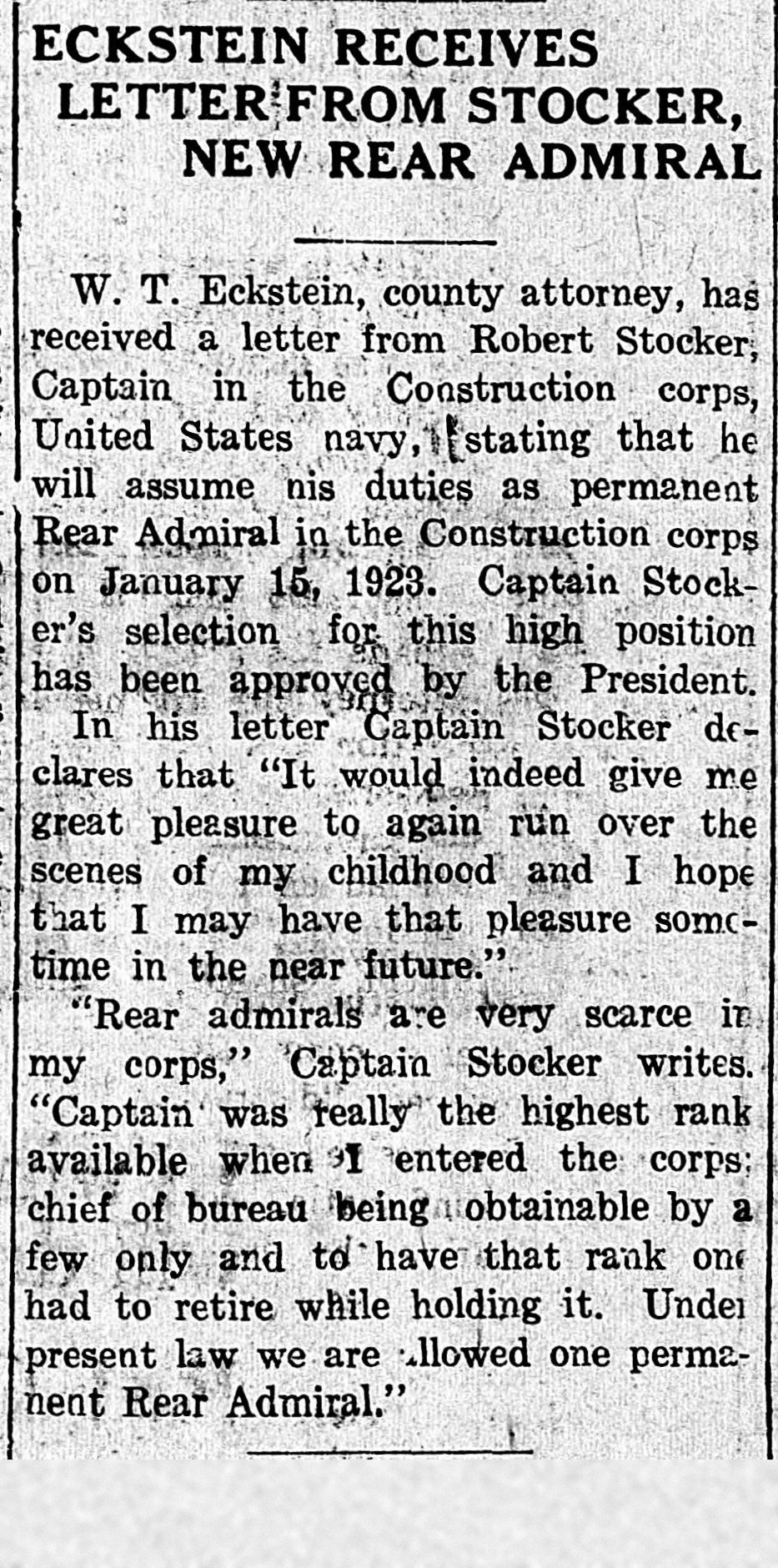
New Ulm Review, New Ulm, Minnesota, December 20, 1922, page 6. Library of Congress, Chronicling America. Click the clipping to read it full size.
Thirty-seven years earlier, the New Ulm paper had tucked a promise in between the school news and the Fourth of July plans. In December 1922, it got to write “Admiral Stocker.” The picture at the top of this page shows the battleship New York sliding into the water at the Brooklyn Navy Yard on October 30, 1912, just after Robert Stocker gave that tiny wheel a turn.
Sources
- “New Ulm and Vicinity,” New Ulm Weekly Review (New Ulm, Minnesota), June 24, 1885, page 5. Library of Congress, Chronicling America.
- Annual Register of the United States Naval Academy, 1885 to 1886, merit roll of the third class, June 1885, pages 42 and 43. Internet Archive.
- “A New Ulm boy heads the class of the Naval Academy at Annapolis,” New Ulm Weekly Review, June 15, 1887, page 5. Library of Congress, Chronicling America.
- The Mankato Free Press (Mankato, Minnesota), June 17, 1887, page 1. Library of Congress, Chronicling America.
- Army and Navy Journal, October 25, 1890, page 139. Internet Archive.
- Harper’s Weekly, June 30, 1900, page 606, gun trials of the battleship Kentucky. Internet Archive.
- “New York, Giant of Sea, Launched,” The Sun (New York), October 31, 1912, page 7. Library of Congress, Chronicling America.
- “New Ulm Boy Famous,” New Ulm Review, March 25, 1914, page 1. Library of Congress, Chronicling America.
- New Ulm Post (New Ulm, Minnesota, in German), March 27, 1914, page 12. Library of Congress, Chronicling America.
- Josephus Daniels, Our Navy at War (1922), page 303. Internet Archive.
- United States Naval Institute Proceedings, February 1919, page 281, “The Eagle Boats”. Internet Archive.
- “Robert Stocker Made U. S. Rear Admiral,” New Ulm Review, December 13, 1922, page 9. Library of Congress, Chronicling America.
- “Eckstein Receives Letter From Stocker, New Rear Admiral,” New Ulm Review, December 20, 1922, page 6. Library of Congress, Chronicling America.
- Launch of NEW YORK, Bain News Service, October 30, 1912 (the cover) and NEW YORK before launch. Library of Congress Prints and Photographs Division, George Grantham Bain Collection. No known restrictions on publication.
- New Ulm, Main Street, Detroit Publishing Co., between 1880 and 1899. Library of Congress Prints and Photographs Division. No known restrictions on publication.
- The newspapers, books, magazines and photographs above were all published before 1931 and are in the public domain.