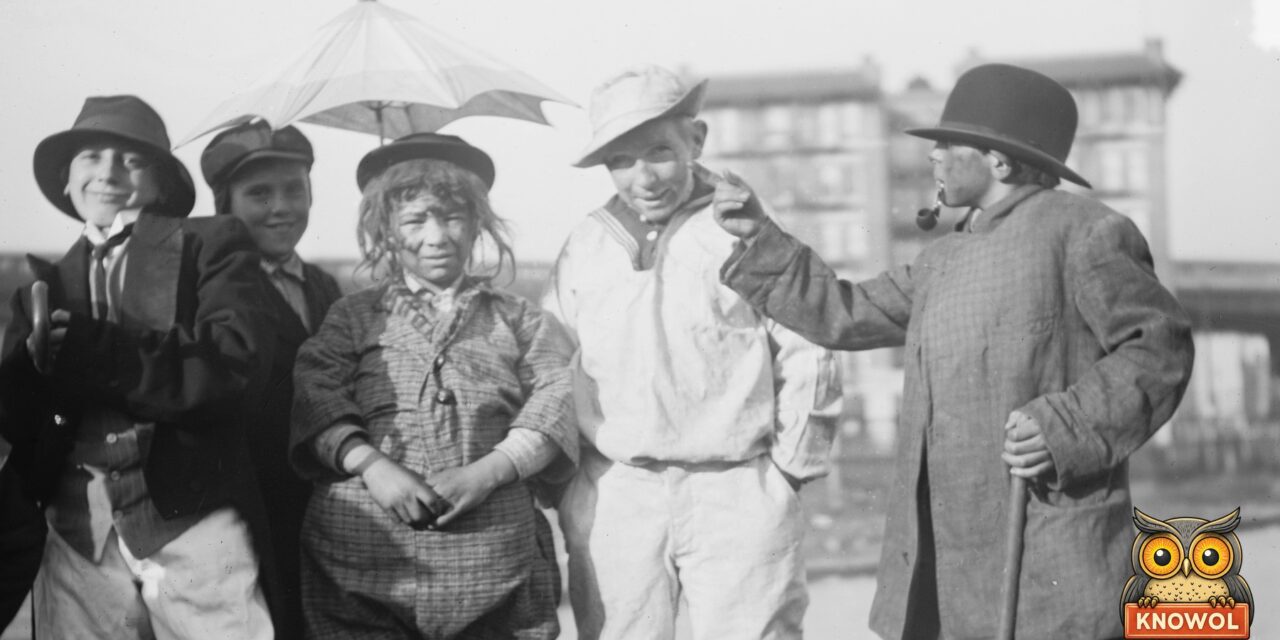
On Thanksgiving morning in New York City a little over 100 years ago, you might have met a tiny hobo with a painted face and a coat that dragged on the sidewalk. Then a whole gang of them. They blew tin horns, held out their hands and asked for a “penny, mister.” It wasn’t Halloween. It was Ragamuffin Day.
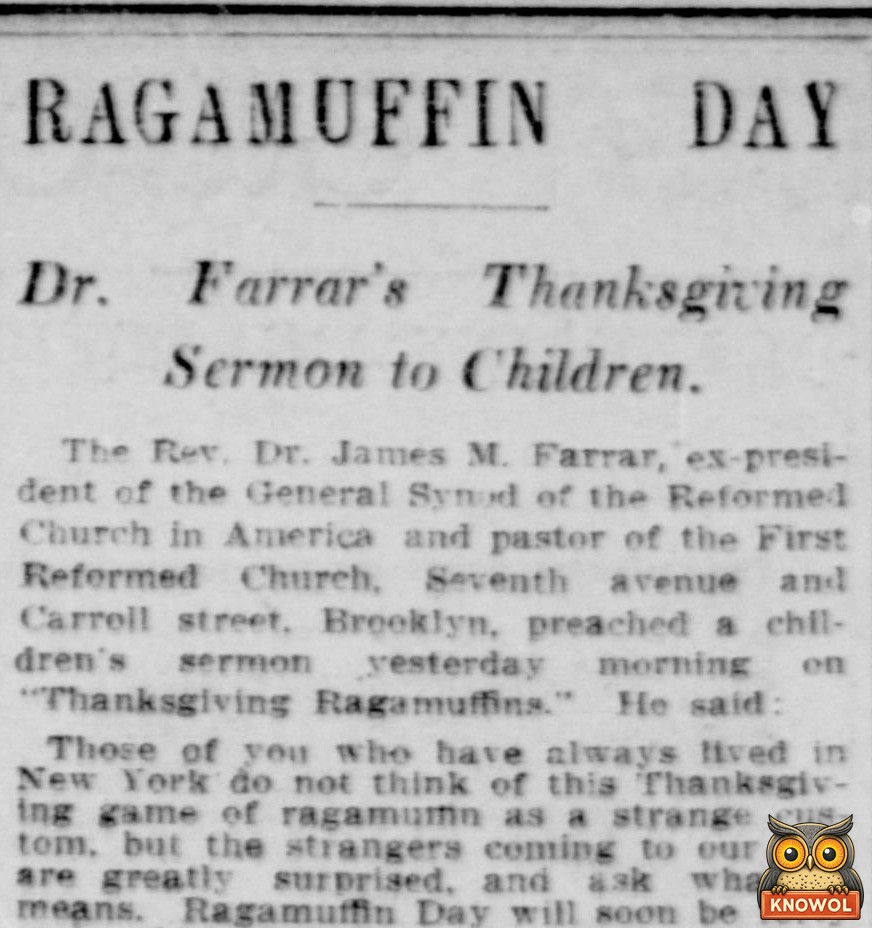
“Ragamuffin Day.” New-York Tribune, New York, New York, November 22, 1909, page 7. Library of Congress, Chronicling America. Click the clipping to read it full size.
A holiday for kids in costumes
A ragamuffin is an old word for a kid in raggedy clothes. On Thanksgiving, New York children dressed up as ragamuffins on purpose. “Thanksgiving in New-York, however, belongs, by a curious local custom, in part to the children, whether poor or rich,” the New-York Tribune explained in 1903. All a kid needed was some “outlandish garments” and “some colored substance to smear the face with, or a mask.”
The year before, the Tribune said “thousands of children roamed in ragamuffin costume, blowing horns, throwing harmless missiles and playing at begging.” That lasted “from early morning to late evening.” Grown-up clubs with silly names marched too, like the “Original Hounds,” the “Square Back Rangers” and the “Mackerel Rangers.”
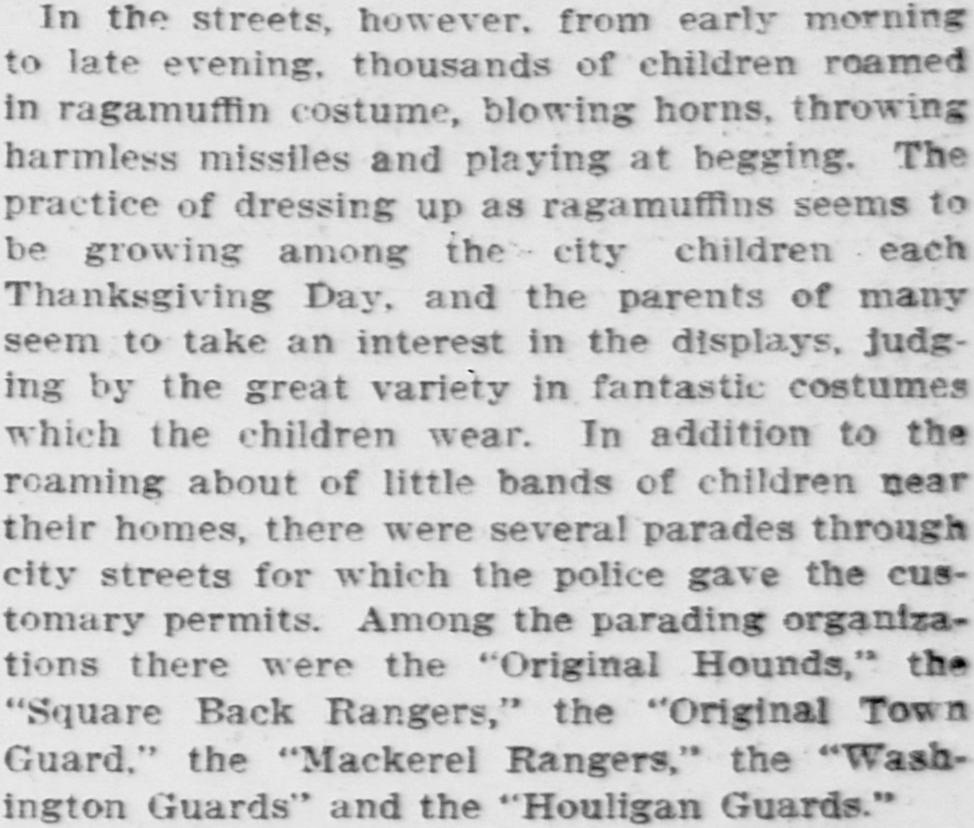
New-York Tribune, New York, New York, November 28, 1902, page 1. Library of Congress, Chronicling America. Click the clipping to read it full size.
The Tribune even worried about the kids’ dinners. It hoped their games “were followed by enough to eat and plenty of gravy, for on Thanksgiving Day the children as well as the turkeys have the right to be stuffed.”
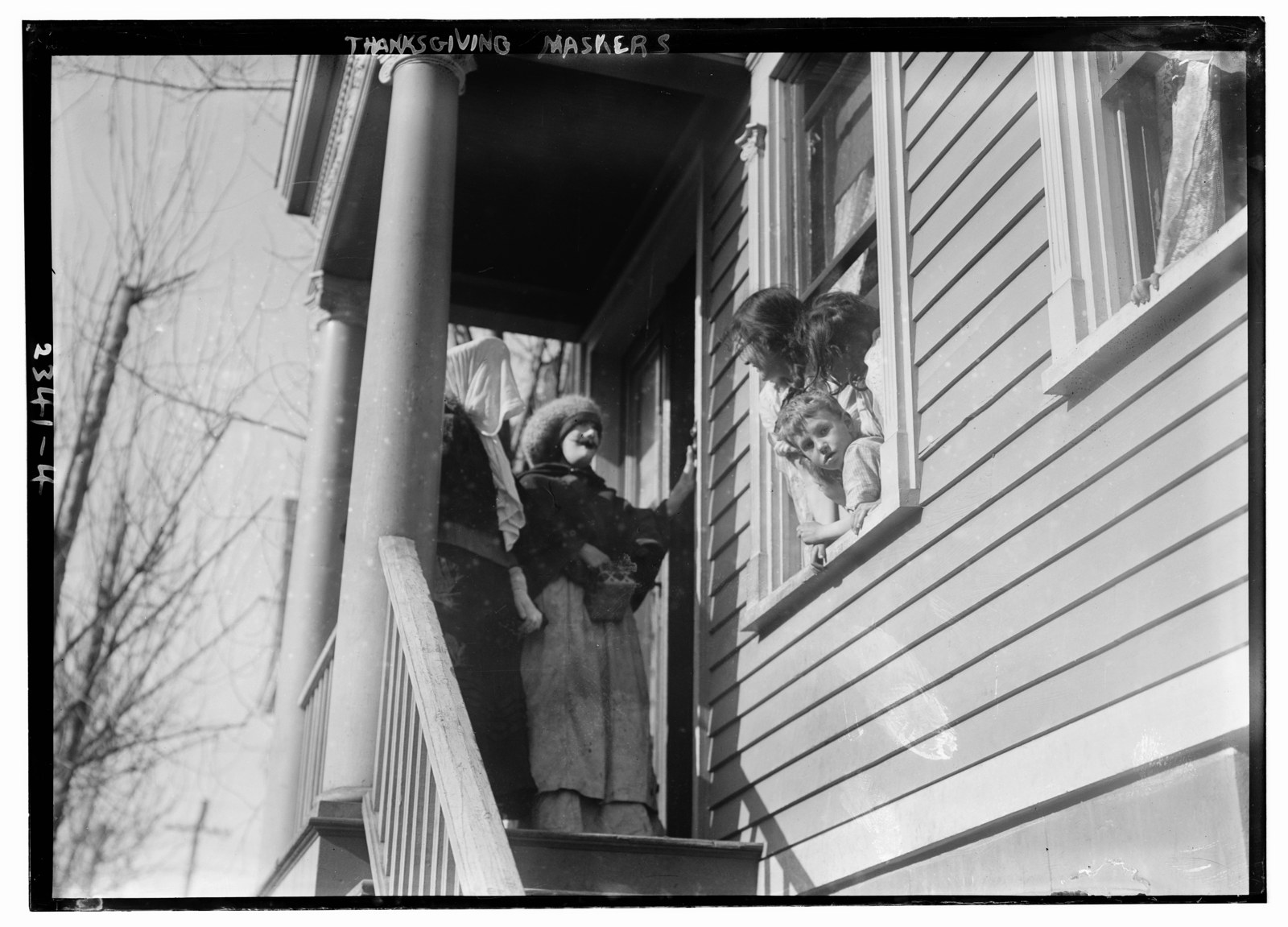
“Thanksgiving Maskers.” A masked child with a basket stands at a door while children look out the window, about 1910 to 1915. Bain News Service, Library of Congress. Click the picture to see it full size.
How it started
In 1909 a pastor in Brooklyn, New York, the Rev. Dr. James M. Farrar, gave a whole sermon to children about “Thanksgiving Ragamuffins.” He said visitors to the city “are greatly surprised, and ask what it means.”
His answer: “Ragamuffin Day will soon be forty years old.” Around 1870, he said, grown-up clubs in New York “dressed in elegant costumes, paraded the streets and made social calls” on Thanksgiving. The kids thought that looked like fun. They copied the grown-ups, “dressing in old clothes, many sizes too large, painting their faces or putting on masks.” Over time the adults quit. “The grown-ups have given up their custom, but the children keep up the imitation,” Farrar said.
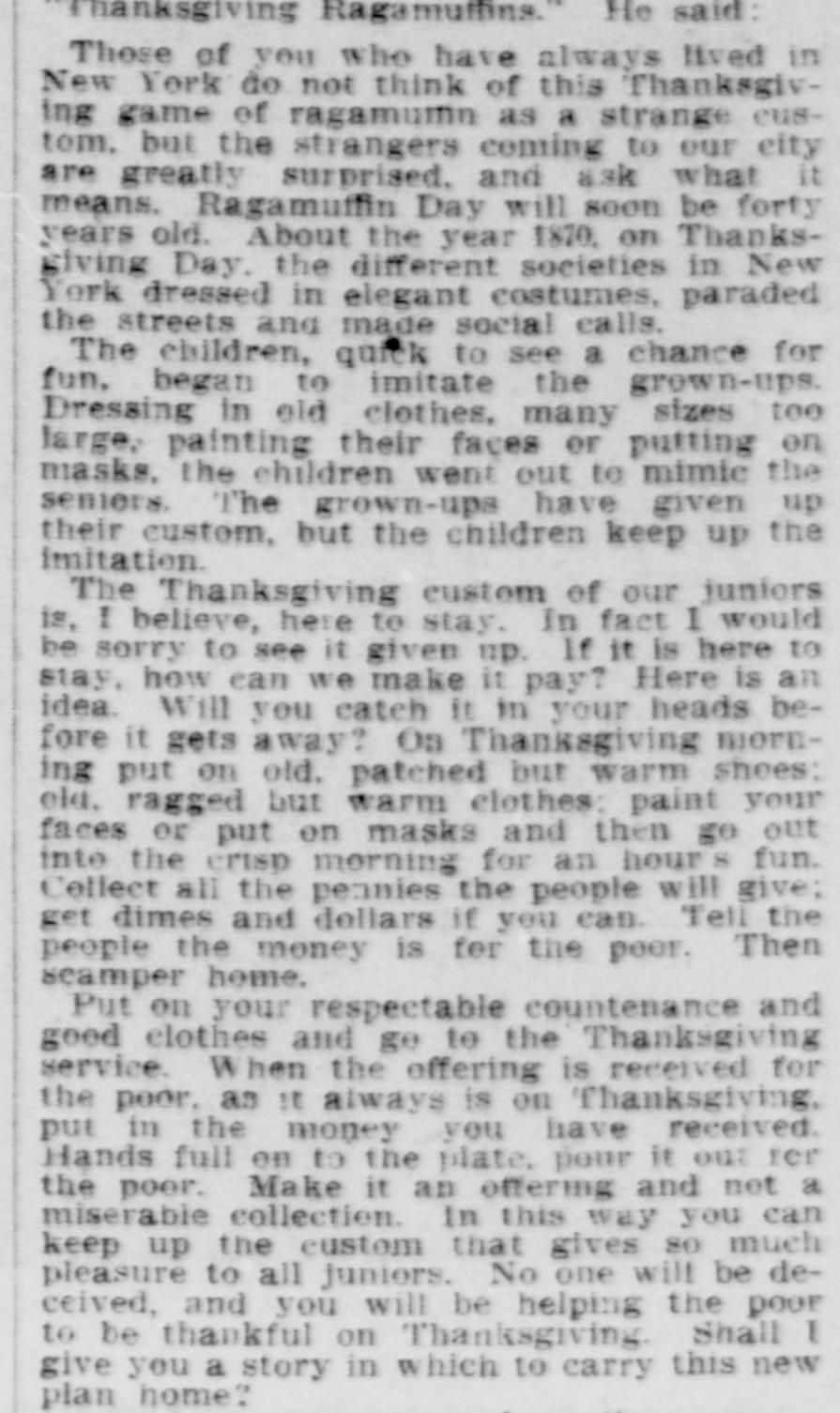
Dr. Farrar’s sermon. New-York Tribune, November 22, 1909, page 7. Library of Congress, Chronicling America. Click the clipping to read it full size.
In 1915 The Sun of New York called the custom “severely local to New York so far as we have knowledge.” It said Ragamuffin Day looked a lot like Halloween in other towns. Halloween pranks like carrying off people’s gates or wrecking clotheslines weren’t part of the fun, the paper said. The ragamuffins mostly wanted to dress up, parade and collect pennies.
Store-bought costumes
At first nearly every costume was homemade. Then the stores got involved. In 1905 the Tribune said costume dealers had sold “an unusual number of children’s costumes,” plus plenty for grown-ups. “This year dealers in masquerade costumes say the homemade ‘get up’ is beginning to be a thing of the past,” it reported. A get-up is an outfit.
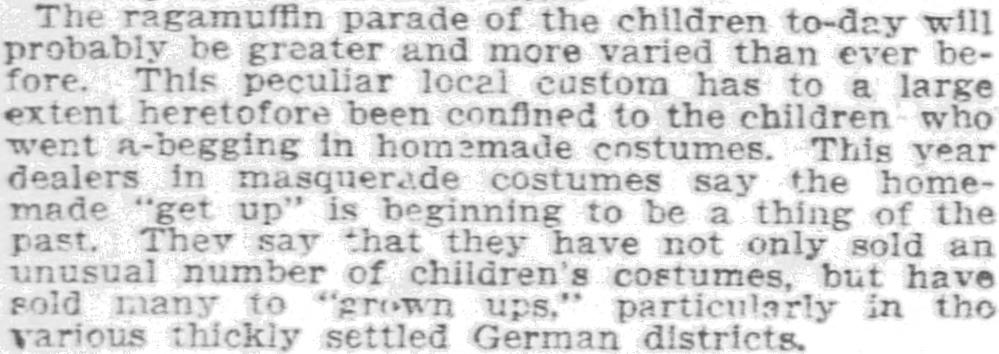
New-York Tribune, New York, New York, November 30, 1905, page 4. Library of Congress, Chronicling America. Click the clipping to read it full size.
A preacher’s plan for the pennies
Dr. Farrar had a twist for the kids in his church. He told them to dress up and go out as usual. “Collect all the pennies the people will give; get dimes and dollars if you can. Tell the people the money is for the poor.” Then they should put on their good clothes, go to the Thanksgiving church service and drop every cent into the offering plate for the poor.
He even told a story to help them remember. A boy named Sam dressed up his new dog, Bruno, with “an old collar,” “a black patch over one of his eyes and one foot in splints.” The two went out as ragamuffins together. By the end, “the basket hung around Bruno’s neck was nearly filled with pennies and nickels.”
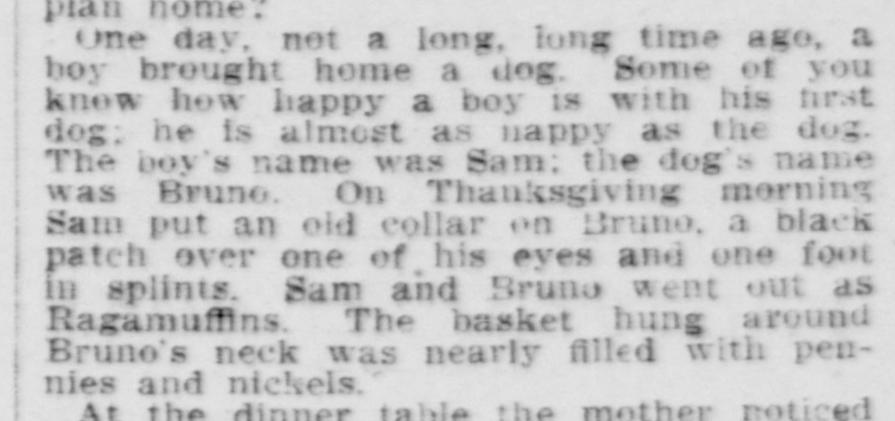
Sam and his dog Bruno, from Dr. Farrar’s sermon. New-York Tribune, November 22, 1909, page 7. Library of Congress, Chronicling America. Click the clipping to read it full size.
How to be a 1905 ragamuffin
- Borrow a grown-up’s old coat. “Many sizes too large” is perfect.
- Smear on some face paint or wear a paper mask.
- Grab a tin horn and blow it loud.
- Bring a basket or a can for the money.
- Walk up to a stranger and ask, “Penny, mister?”
Fading away
Not everyone loved the begging. By 1907 the Tribune said ragamuffin fun didn’t seem “so popular as a few years ago, except in the poorer sections of the city.”
In November 1922 the police stepped in. Chief Inspector Lahey said the begging had become “a public nuisance.” He told officers to “discourage it as much as possible.” The New York Herald broke the news to kids with a joke: “The ‘pickin’s’ probably will not be so good this year.”
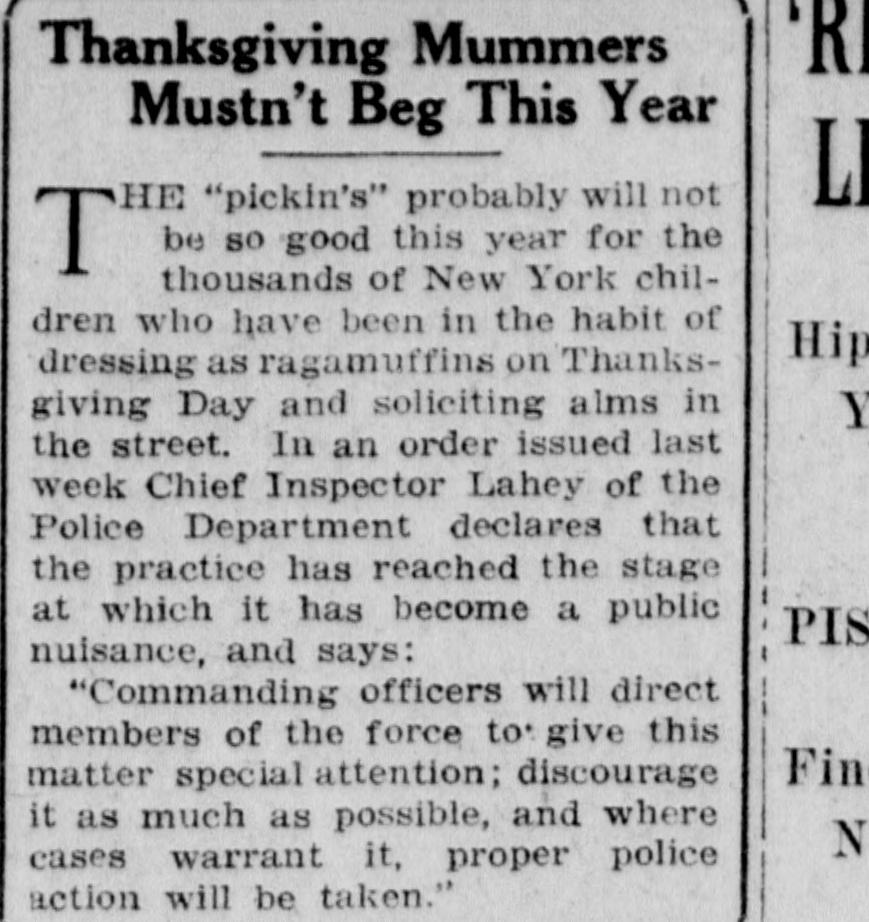
“Thanksgiving Mummers Mustn’t Beg This Year.” Mummers are people in costumes. The New York Herald, New York, New York, November 13, 1922, page 20. Library of Congress, Chronicling America. Click the clipping to read it full size.
The next day the Herald sounded a little sad. Its editorial was titled “New York Loses an Institution.” Costumes were still allowed, it said, and “the familiar ragamuffins may parade the streets.” But it predicted that the little mummers “have probably been permanently abolished by the police prohibition to beg for pennies.”
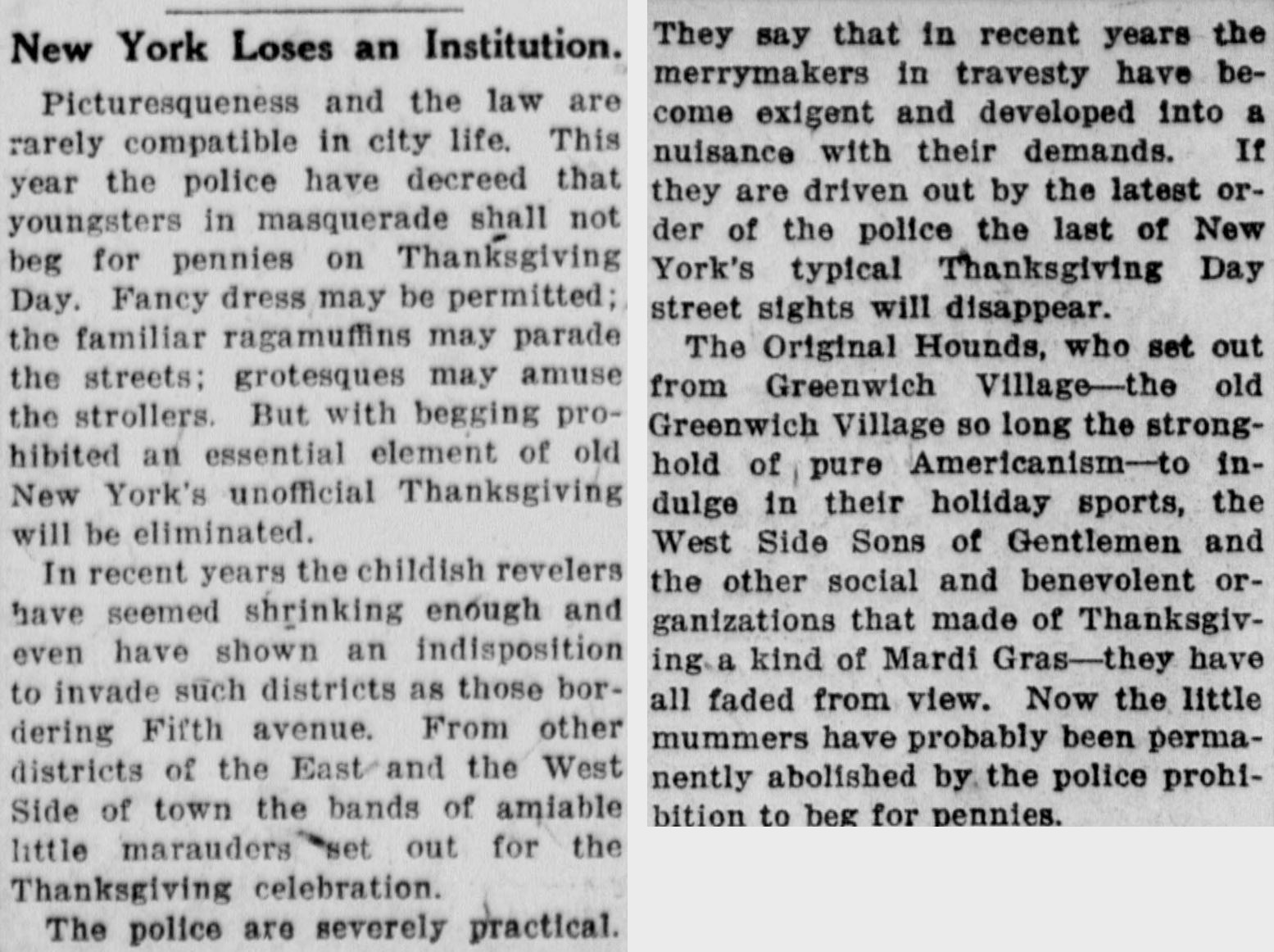
“New York Loses an Institution,” two columns of one editorial. The New York Herald, New York, New York, November 14, 1922, page 10. Library of Congress, Chronicling America. Click the clipping to read it full size.
The Herald was a little early. New York kids kept dressing up on Thanksgiving in some neighborhoods for years after that, but the custom slowly faded. The costumes, the knocking on doors and the asking for a treat ended up on a different holiday. Today millions of kids do almost the same thing every October 31, on Halloween.
Sources
- New-York Tribune (New York, New York): November 28, 1902, page 1 (thousands of children in ragamuffin costume), November 27, 1903, page 2 (“The Children’s Masque”), November 30, 1905, page 4 (costume dealers), November 29, 1907, page 3 (“penny, mister”) and November 22, 1909, page 7 (“Ragamuffin Day,” Dr. Farrar’s sermon).
- The Sun (New York, New York): November 26, 1915, page 8 (editorial on the custom).
- The New York Herald (New York, New York): November 13, 1922, page 20 (“Thanksgiving Mummers Mustn’t Beg This Year”) and November 14, 1922, page 10 (“New York Loses an Institution”).
- All newspaper images: Library of Congress, Chronicling America. Published 1902 to 1922, public domain.
- Photos: “Thanksgiving Maskers,” Bain News Service, about 1910 to 1915, Library of Congress (door and window; cover), no known restrictions on publication.