On Wednesday, October 28, 1908, four men stepped onto the handball court of the Stockton Athletic Association in Stockton, California. Two of them were the pride of the town. One was a hotel keeper who had not lived in Stockton long. The fourth was a stranger from San Francisco, and hardly anyone in the room knew a thing about him.
Plenty of the men watching had money on the game, and most of it was riding on the home team. Two short games later, that money had a new owner.
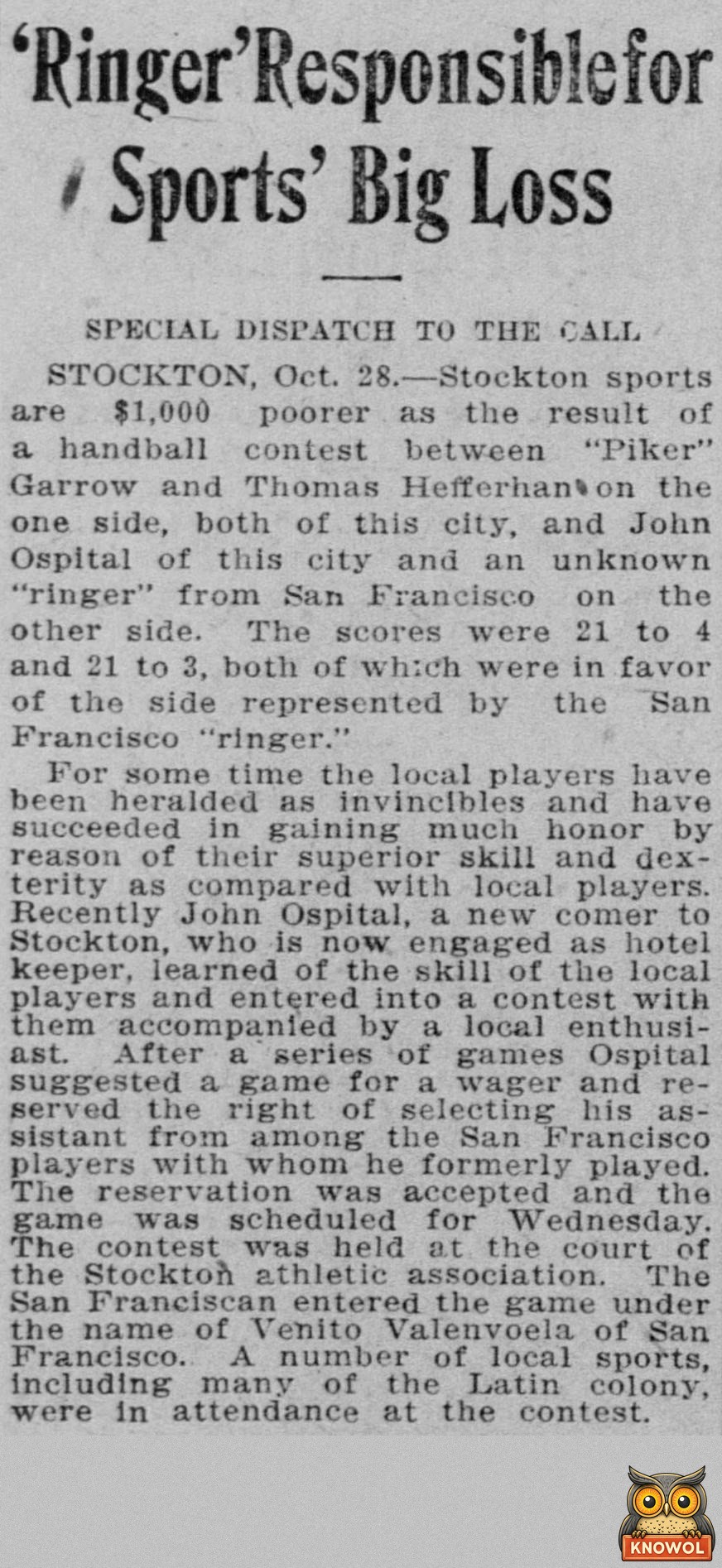
“‘Ringer’ Responsible for Sports’ Big Loss.” The San Francisco Call, San Francisco, California, October 30, 1908, page 12. Library of Congress, Chronicling America. Click the clipping to read it full size.
The Handball Experts of Stockton, California
Stockton, California, was proud of its handball players in 1908. Handball is about as simple as a game gets. You hit a small, hard ball against a wall with your hand, and the other side has to hit it back before it bounces twice. All you need is a ball, a wall and a tough pair of hands.
The two men Stockton bragged about were Frank Garrow and Thomas Heffernan. The San Francisco Call, which used Garrow’s nickname, “Piker,” said the pair had “been heralded as invincibles.” That means folks thought nobody could beat them. The Los Angeles Times called Garrow “a Stockton handball expert” and Heffernan “another crack handball artist.”
Garrow also kept a cigar stand, and a few months later the Call reported that “gaming tables are said to be connected” with it. So he and his friends were what the papers called “sports,” men who liked to put a little money on a game.
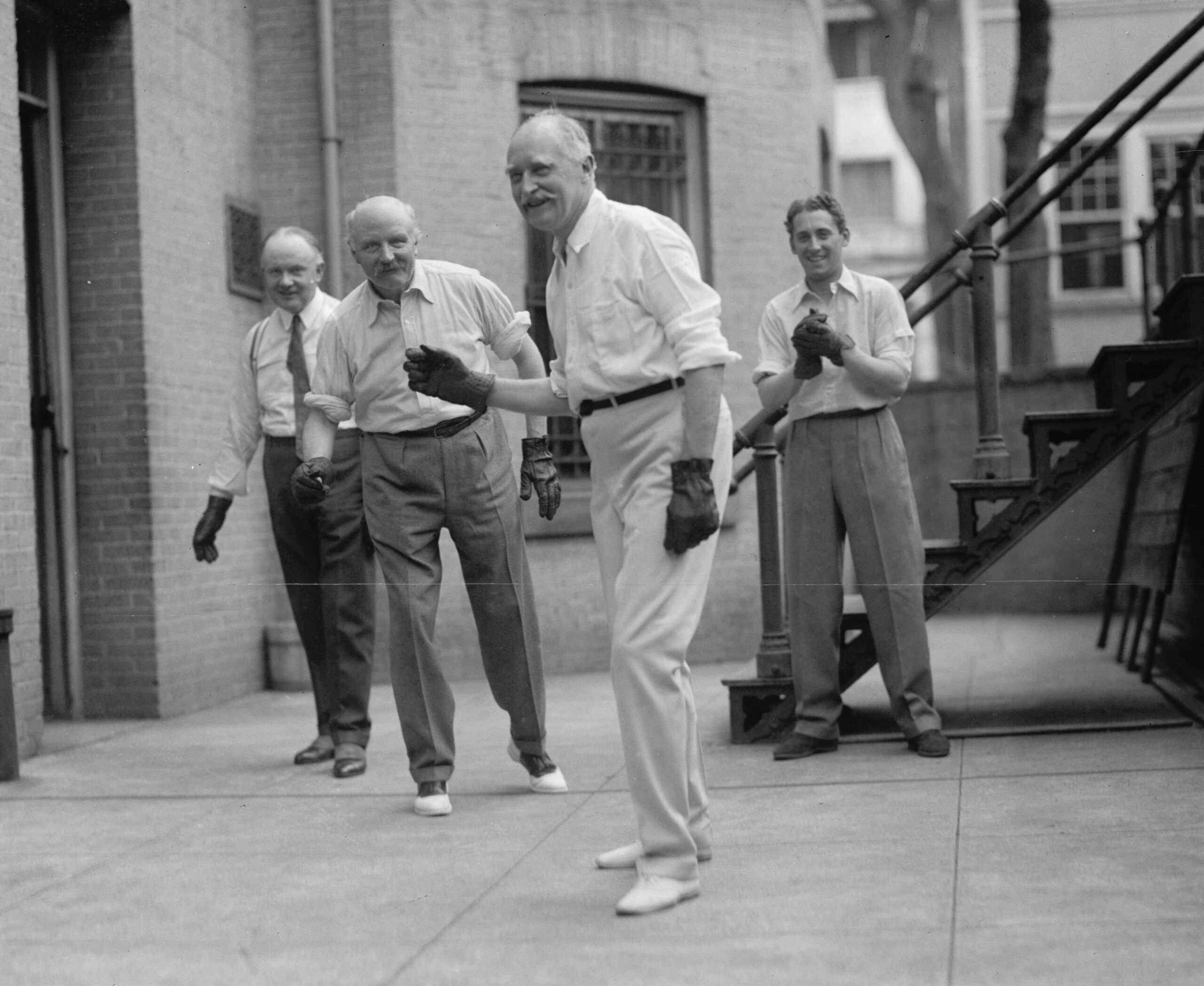
American handball, the game Frank Garrow thought he could not lose: a ball, a wall and gloved hands. This later picture shows British Ambassador Esme Howard and his attaches at a game on April 23, 1926. National Photo Company Collection, Library of Congress. Click the picture to see it full size.
A Newcomer Loses at His Own Game
The newcomer in Stockton was a man named John Ospital. The Call described him as “a new comer to Stockton, who is now engaged as hotel keeper.” The Times added one more thing: he was a Basque. The Basques are a people from the Pyrenees, the mountains where France meets Spain, and they have a ball game all their own.
Ospital and Garrow played that game first. The Times called it “the native game of the Basques, somewhat similar to the American handball, a large wooden scoop being attached to the right hand.” You catch the ball in the long scoop and sling it back at the wall. An encyclopedia printed in 1911 said a player could hurl the ball that way “with tremendous force.”
It should have been Ospital’s day. But the Times put the result in two words: “Garrow won.” The handball expert had beaten the Basque at the Basque game. Then Ospital, the paper went on, “declared he could defeat the player in the American game if allowed a partner.”
Why Frank Garrow Thought the Bet Was “a Snap”
To Frank Garrow of Stockton, the offer looked like found money. He had just beaten this man at the man’s own game. Now the man wanted to try Garrow’s game, and for money. “Garrow considered it a snap,” the Times said. A snap is something easy. He signed up Heffernan as his partner right away.
Then Garrow did what most of us do with a sure thing. He told his friends. “It was too good to keep, and Garrow let several of his friends in on the deal,” the Times reported. The friends put their money down, and the other side covered it: “Ospital put up some money, and his friend also took a few bets.”
Ospital asked for just one thing. The Call wrote that he “reserved the right of selecting his assistant from among the San Francisco players with whom he formerly played.” In plain words, he would pick his own partner, and the partner would come from out of town. Nobody on Garrow’s side minded. “The reservation was accepted and the game was scheduled for Wednesday.”
Seven Points in Two Games
At the Stockton Athletic Association court that Wednesday, Ospital’s partner gave his name as “Venito Valenvoela of San Francisco.” That is how the Call spelled it, and the paper did not seem to believe it. Its headline called him a “ringer,” an old sporting word for a strong player slipped into a game under another name.
A game of handball goes to 21 points, and the home team never got close. The Call gave the scores as “21 to 4 and 21 to 3.” The Times had them the other way around, 21 to 3 and then 21 to 4, “in favor of the Basques.” Either way, Stockton’s invincibles scored seven points in two games. The newcomer and the stranger scored 42.
The papers did not agree on the money, either. The Call’s story began, “Stockton sports are $1,000 poorer.” The Times figured that “from $600 to $900 changed hands, the bulk of the money being won by the Basque.”
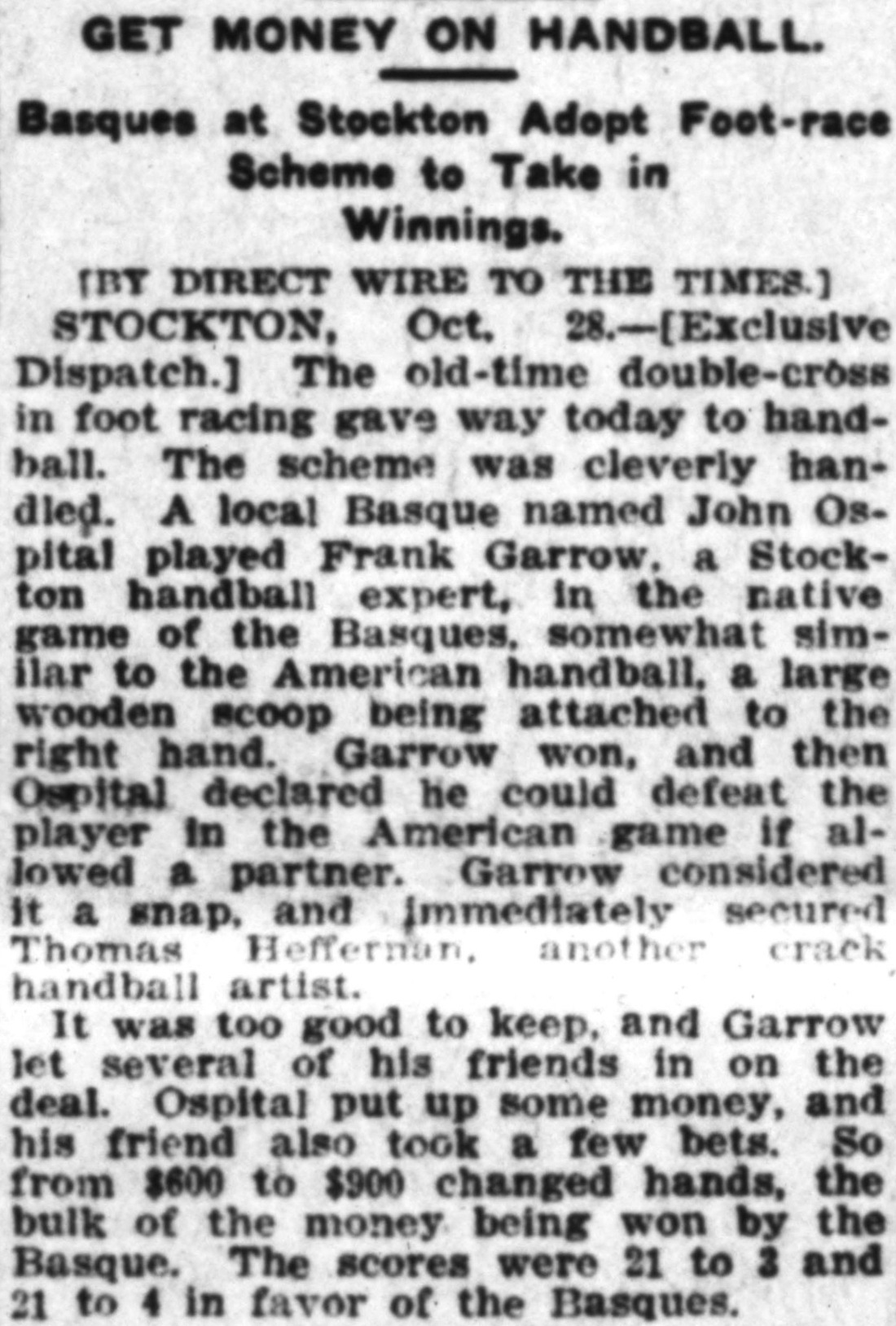
“Get Money on Handball.” Los Angeles Daily Times, Los Angeles, California, October 29, 1908. Internet Archive. Printed in 1908, public domain. Click the clipping to read it full size.
What Stockton’s Experts Did Not Know
Stockton’s handball experts had missed one thing about the Basque game. The scoop is only one way to play it. The 1911 encyclopedia says Basques also played against a wall “bare-handed.” A Basque ballplayer could grow up doing just what American handball asks for. So when Ospital offered to switch to “the American game,” he may not have been switching very far.
The Times saw it that way. “The old-time double-cross in foot racing gave way today to handball,” its story began. “The scheme was cleverly handled.” Still, neither paper says a rule was broken. Ospital said he would bring a partner from San Francisco, and the other side said yes.
A Basque Family Name in San Joaquin County
Ospital is a name that turns up again in the history of San Joaquin County, where Stockton is the county seat. A county history printed in 1923 tells the life of a Jean Ospital. Jean is the French form of John. He was born in the French Pyrenees in 1869, herded sheep as a boy, and worked on neighbors’ ranches for “sixty dollars per year.” He came to California in 1891, herded sheep here for years, and was married in Stockton on October 19, 1907, one year before the match.
The book says nothing about a hotel or a ball game, so we cannot say he was the same man. But it shows what a Basque newcomer’s life could be like, and what the bets meant. At that old pay, $600 was ten years of work.
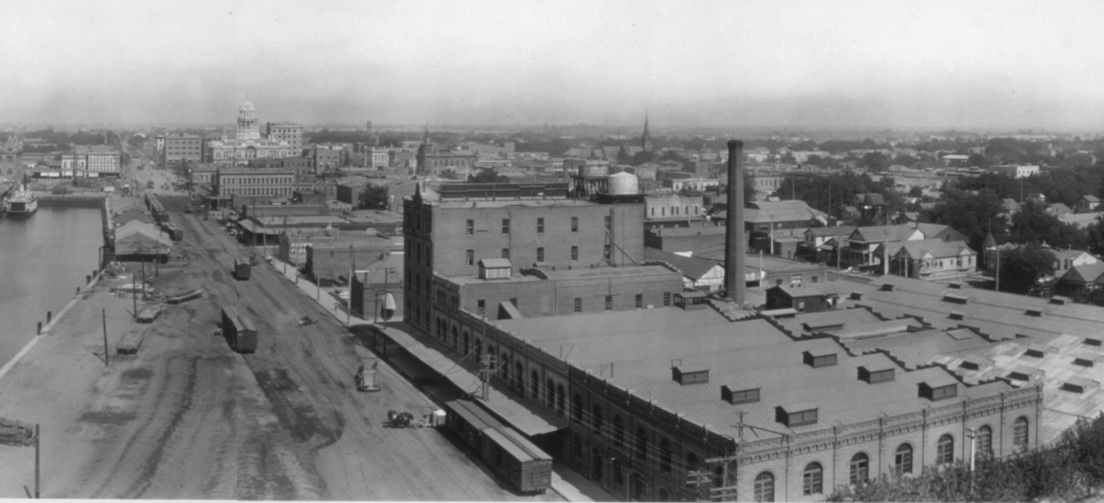
Stockton, California, about the time of the match: the waterfront and downtown, part of the “Panorama of Stockton, Calif.” copyrighted by the California Panorama Co. in 1909. Library of Congress. Click the picture to see it full size.
The Stranger Went Home
Neither paper printed the real name of the man who came to Stockton, California, from San Francisco that day, and we found no later story that did. He played two games against a wall and went home.
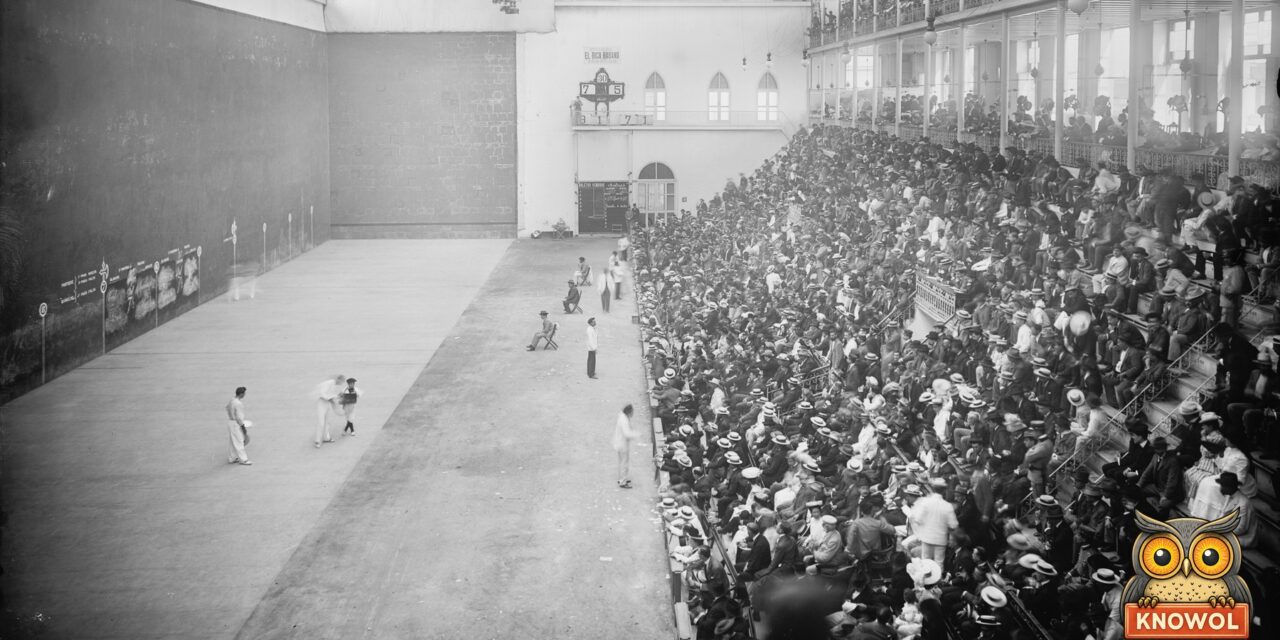
The photograph at the top of this page was taken four years earlier and far from Stockton. It shows the Basque scoop game in Havana, Cuba, in 1904, with the stands full. The photographer labeled the building the “Jai Alai” Hall, and jai alai is the name the scoop game goes by in America today. Frank Garrow won at that game once, and it turned out to be an expensive win.
The lesson cost the sports of Stockton somewhere between $600 and $1,000, and it is still good today. When a man who just lost to you asks for one small favor before the next game, it pays to wonder why.
Sources
- “‘Ringer’ Responsible for Sports’ Big Loss,” The San Francisco Call (San Francisco, California), October 30, 1908, page 12. Library of Congress, Chronicling America.
- “Get Money on Handball,” Los Angeles Daily Times (Los Angeles, California), October 29, 1908, “What’s Doing in the Pacific Slope States” page. Internet Archive.
- “Poolroom Investigation Begun at Stockton; Police Involved,” The San Francisco Call, February 3, 1909, page 2. Library of Congress, Chronicling America.
- “Pelota,” Encyclopaedia Britannica, 11th edition, 1911, volume 21, page 76. Wikisource, with the page scan.
- George H. Tinkham, “History of San Joaquin County, California,” 1923, page 1490 (Jean Ospital). Internet Archive.
- Jai Alai Hall, Havana, Cuba, Detroit Publishing Co., copyright 1904 (the picture at the top of this page). Library of Congress Prints and Photographs Division. No known restrictions on publication.
- Amb. Howard & attaches in handball, 4/23/26, National Photo Company Collection. Library of Congress Prints and Photographs Division. No known restrictions on publication.
- Panorama of Stockton, Calif., California Panorama Co., 1909. Library of Congress Prints and Photographs Division. No known restrictions on publication.
- The newspapers and books were printed before 1931 and are in the public domain.