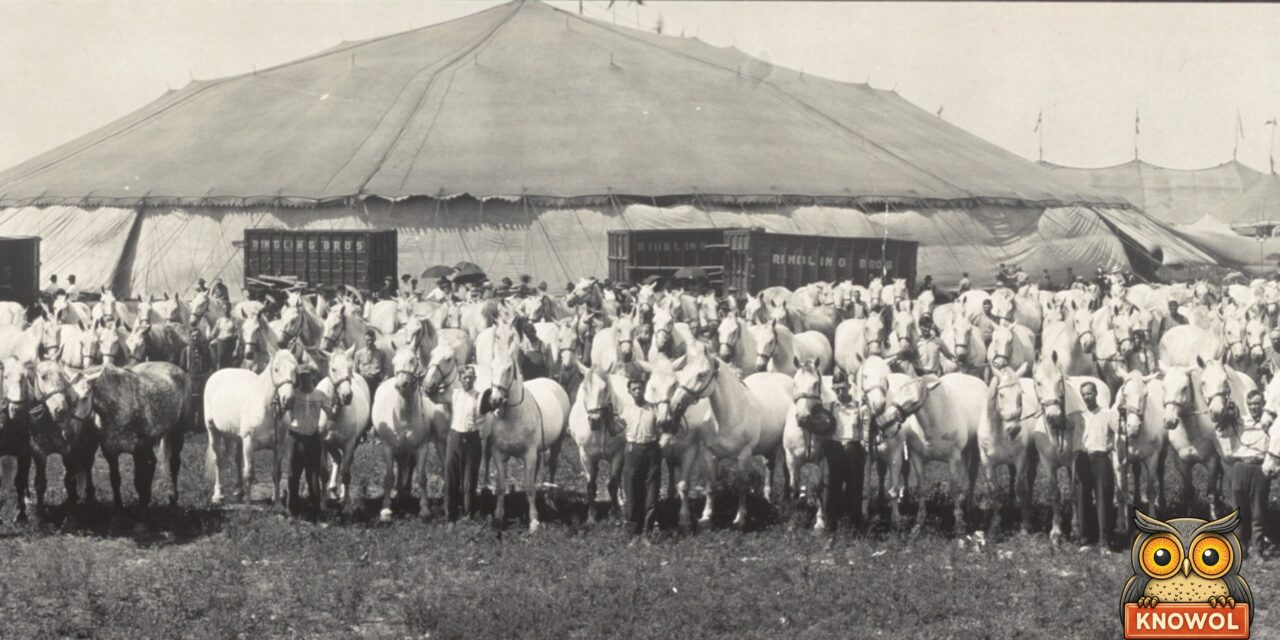
On Friday, October 16, 1914, the Ringling Brothers circus put up its tents at the old fair grounds in Birmingham, Alabama. Crowds filled the big top that afternoon and again that night. One newspaperman got something better. Jack Bethea of the Birmingham Age-Herald was let in through the back, behind the curtain where the performers came and went.
He had wanted to go back there for years. “A secret and long cherished ambition of the writer was gratified yesterday afternoon,” he wrote the next morning. In plain words, his wish came true. A man from the Ringling staff named E. P. Norwood walked him through every part of the show and explained it all as they went.
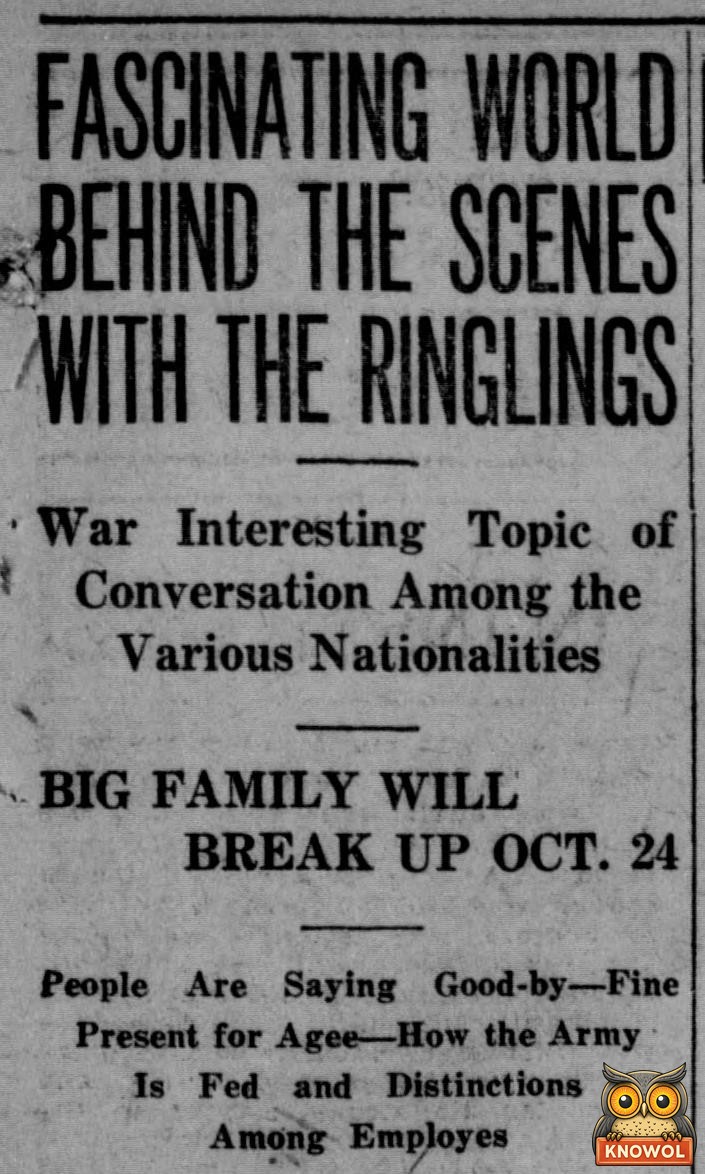
“Fascinating World Behind the Scenes With the Ringlings,” by Jack Bethea. The Age-Herald, Birmingham, Alabama, October 17, 1914, page 9. Library of Congress, Chronicling America. Click the clipping to read it full size.
Behind the Curtain at the Birmingham Show
Most people in Birmingham only saw what happened in the rings. Bethea wrote that they had seen just “the less interesting half of the show.” The other half was hidden by a curtain over the performers’ door, in a ring of small tents set up in a half circle.
It was quieter back there than you might think. In one corner a cowboy was practicing tricks with his rope. In another, “a man in faultless evening dress sits smoking a cigarette while waiting to go on.” A woman rider stood with her whip in her hand, waiting for the whistle that called her to the ring. Bethea guessed she might be feeding her horse sugar, and then he added, “she was yesterday afternoon, anyway.”
A clown with his face painted but no costume on yet ran out of the men’s dressing tent to shout for somebody, then ran back in, because it was getting late. Inside that tent, every man had a trunk the same size, with a folding stand to hang his clothes on and a mirror to put on his make-up.
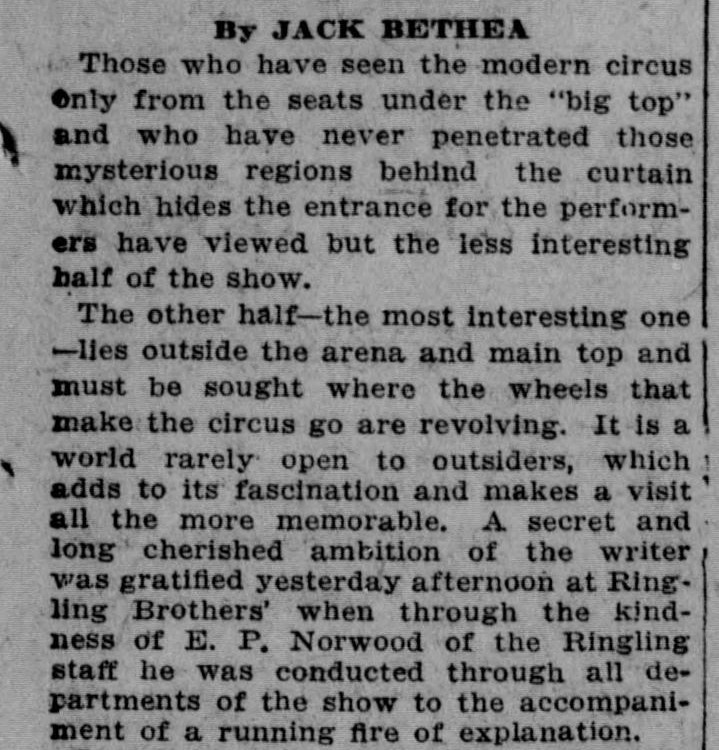
Jack Bethea’s opening lines. The Age-Herald, Birmingham, Alabama, October 17, 1914, page 9. Library of Congress, Chronicling America. Click the clipping to read it full size.
The Clown With a Dog in His Stomach
Birmingham people already knew one of the clowns. He wore a funny old costume with a big round belly, and he was in on a trick. He walked around the track, stopped short, and then came a bang. As Bethea told it, “there is a shot and a small dog springs apparently from his stomach.” The little dog danced around for a few moments. Then a hidden box was opened, the dog jumped back inside, and the clown walked on to do it all again.
Two brothers did the act, Joe and A. Deltorelli. They came from Budapest, in Hungary. That fall Joe had something heavy on his mind. A big war had started in Europe that summer, and he told Bethea that 11 of his relatives were fighting in it.
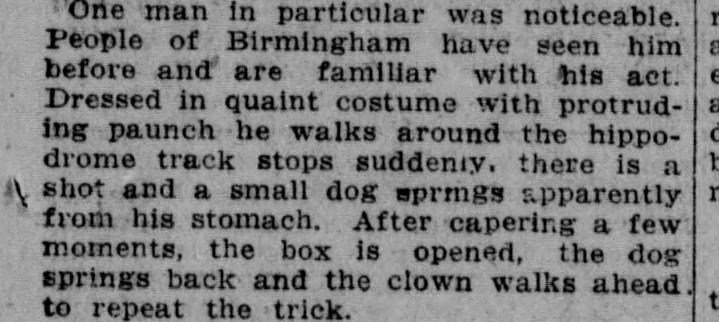
The clown and the jumping dog. The Age-Herald, Birmingham, Alabama, October 17, 1914, page 9. Library of Congress, Chronicling America. Click the clipping to read it full size.
That was the most surprising thing behind the curtain in Birmingham. The war was the big talk behind the curtain, because the circus had people from nearly every country in it. There were riders from Russia, high-wire flyers from Belgium and France, strong men from Germany, horsemen from England and clowns from Hungary. Back home, those countries were fighting each other. At the Ringling show, they dressed in the same tents and ate in the same dining tent. In Bethea’s words, “nationals of all belligerents are with the show,” meaning people from every side of the war.
A Kitchen on Wheels
Feeding everyone at the Ringling circus in Birmingham was a big job. The Ringlings carried one giant oven on wheels, and steam from an engine boiled the food in huge pots. A steam table kept the griddle cakes warm. Hot food, the paper said, was a must.
That morning in Birmingham, the cooks had a bad start. Rain had made the ground soft, so the wheels on one side of the cook wagon sank into the mud while the wheels on the other side sat on rock. The whole stove tipped over at a steep slant. The chief cook was still grumbling when Bethea came by. “It took almost an hour to fix that,” he said.
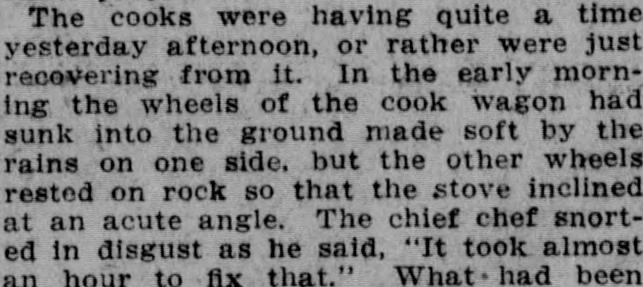
The cook wagon in the mud. The Age-Herald, Birmingham, Alabama, October 17, 1914, page 9. Library of Congress, Chronicling America. Click the clipping to read it full size.
When the work was done, the show people had free time. Some men played a lively game of quoits, which is like horseshoes with rings, behind their dressing tent. The women sewed and, the paper said, gossiped.
What the Crowd Saw Out Front in Birmingham
Out front, the Birmingham crowds got a big show that same Friday. It opened with a giant costume show called “Solomon and the Queen of Sheba,” a Bible story acted out without words, with a ballet of dancers. The Age-Herald’s review said it was “the best of its kind ever shown in Birmingham,” and it looked best at night, when the lights made the costumes shine.
There were riders, flyers, strong men and racing. The animals were a hit too. The elephants and seals did tricks, and one act made everybody howl. “The elephant tango was ludicrous and caused roars of laughter,” the review said. The tango was the new dance craze of 1914, and here were elephants doing it.
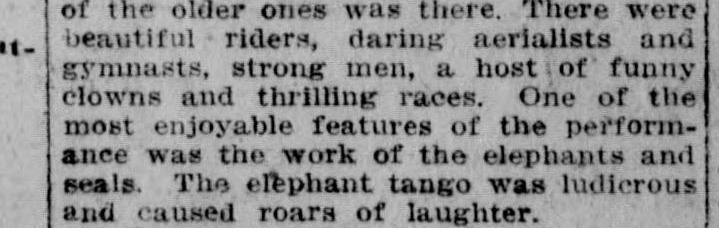
The review of the show. The Age-Herald, Birmingham, Alabama, October 17, 1914, page 2. Library of Congress, Chronicling America. Click the clipping to read it full size.
The Millionaire Clown
Two days before the circus came, the Age-Herald told readers to look for one clown in particular. George Hartzell was called the “millionaire clown.” He wasn’t really worth a million dollars, the paper admitted, but he was rich. He had been with the Ringlings for almost 20 years. He and his wife had saved their pay for years. They owned a home on Long Island and business buildings in Philadelphia.
Mrs. Hartzell was the circus’s wardrobe mistress. She and her helpers cleaned and fixed thousands of sparkly costumes. She was also a good typist, and the paper said you could often see the two of them typing letters to their tenants behind the scenes. They could have quit and rested at home. Once, the paper said, “they tried it for just one season and spent several very unhappy months.” So they came back. “Watch for the clown in the green X-ray skirt,” the paper told Birmingham.
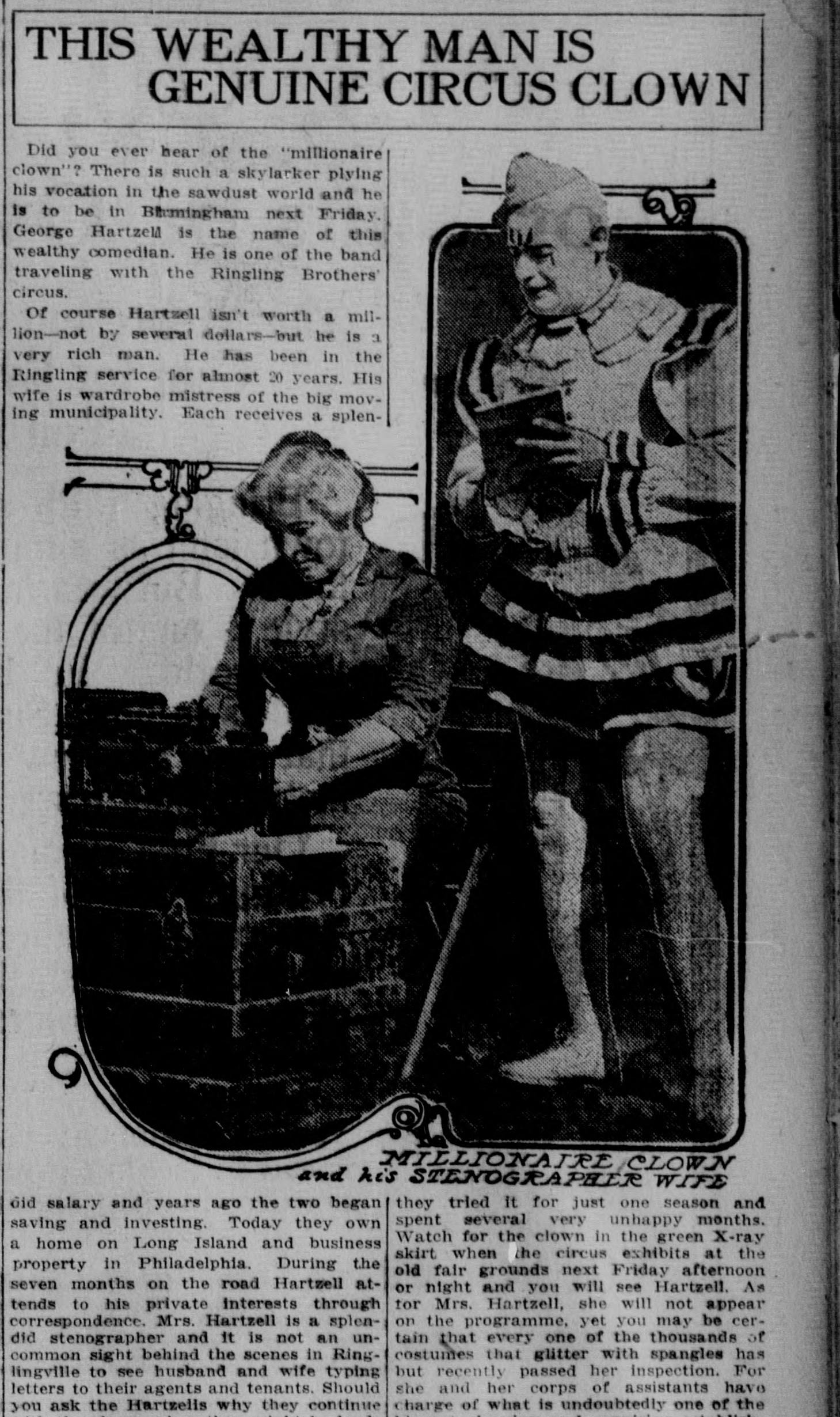
“This Wealthy Man Is Genuine Circus Clown,” with George Hartzell and his wife. The Age-Herald, Birmingham, Alabama, October 14, 1914, page 11. Library of Congress, Chronicling America. Click the clipping to read it full size.
“Are You Going to Be With Us Next Year?”
The Birmingham visit came near the end of a long year on the road. The show would close on October 24 and go home to its winter quarters in Wisconsin. Bethea could feel it behind the curtain. The circus was like one big family about to split up, and people kept asking each other the same thing.
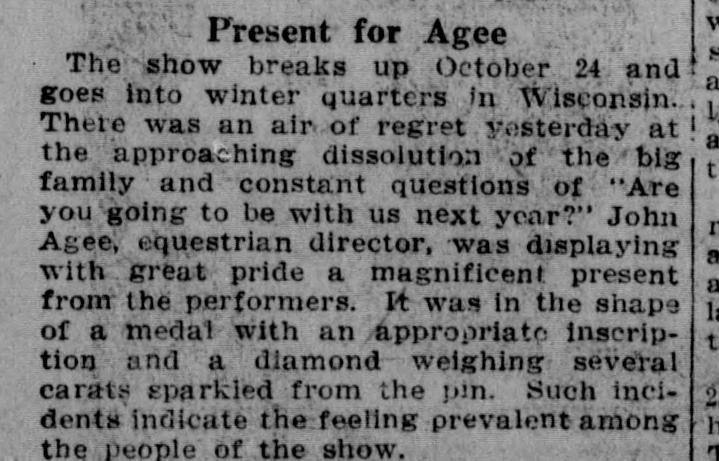
“Present for Agee.” The Age-Herald, Birmingham, Alabama, October 17, 1914, page 9. Library of Congress, Chronicling America. Click the clipping to read it full size.
That afternoon, John Agee, the equestrian director, was showing off a gift from the performers. (The equestrian director was the boss of the show in the ring, the one who kept the acts moving.) It was a medal with words cut into it, and “a diamond weighing several carats sparkled from the pin.” Bethea said gifts like that showed how the show people felt about each other.
The last stop was Cairo, Illinois, where the Ohio and Mississippi rivers meet. Weeks ahead, the circus’s advertising car had pasted up a huge poster there on the south wall of a warehouse. It showed a country home with a father, a mother and children, all happy that someone was coming back. Big letters said “Home Sweet Home,” next to “an open song book.” Little print at the end gave the closing date: October 24. After the last show, the New York Clipper, a show business paper, listed John Agee among the performers “Returning from Cairo on the ‘Ringling Special,'” the circus’s own train.
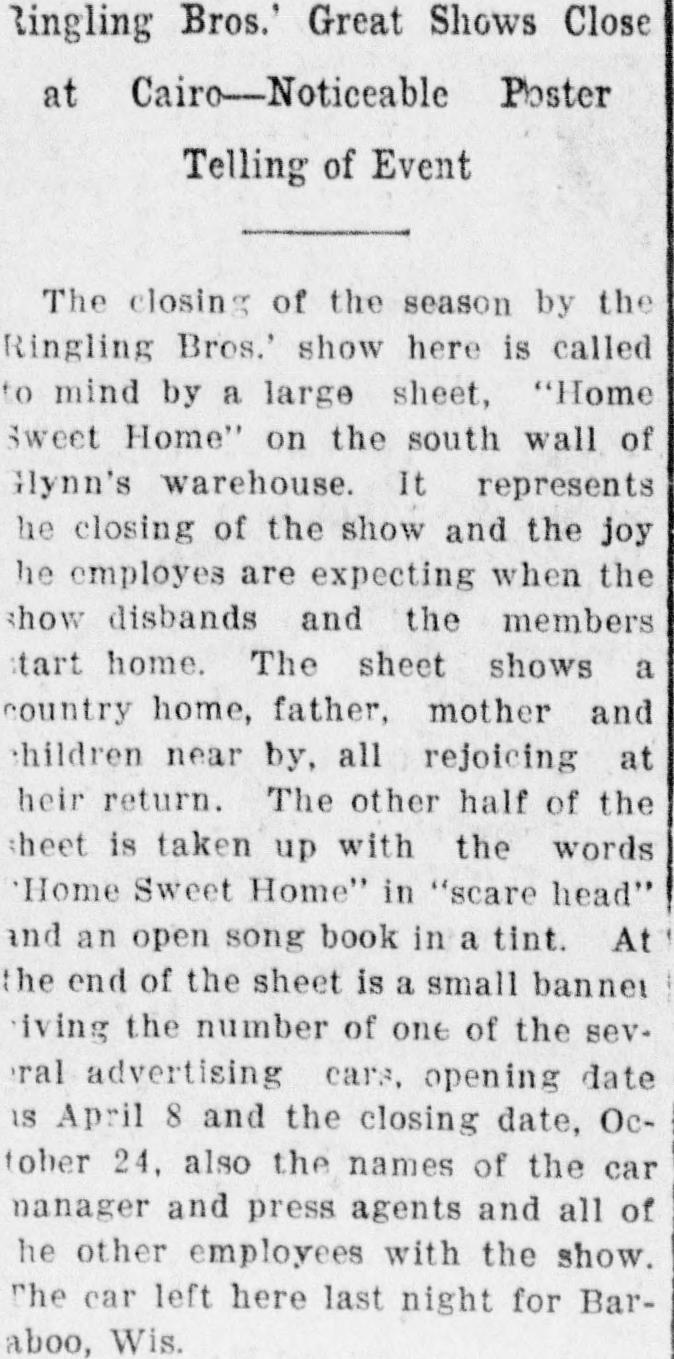
The “Home Sweet Home” poster in Cairo. The Cairo Bulletin, Cairo, Illinois, October 4, 1914, page 1. Library of Congress, Chronicling America. Click the clipping to read it full size.
Who Came Back
For the Ringling people Bethea met in Birmingham, the answer turned up in the Clipper. In December 1914 it said Joe Deltorelli had signed with Ringling again and would bring “a number of new stunts.” In April 1915 the paper printed the whole program for the new season. John Agee was there as assistant equestrian director. So were Joe Deltorelli, A. Deltorelli and George Hartzel (spelled with one “l” this time), the millionaire clown, in the clowns’ “Festival of Fun.” And the big opening play was “Solomon and the Queen of Sheba” once more.
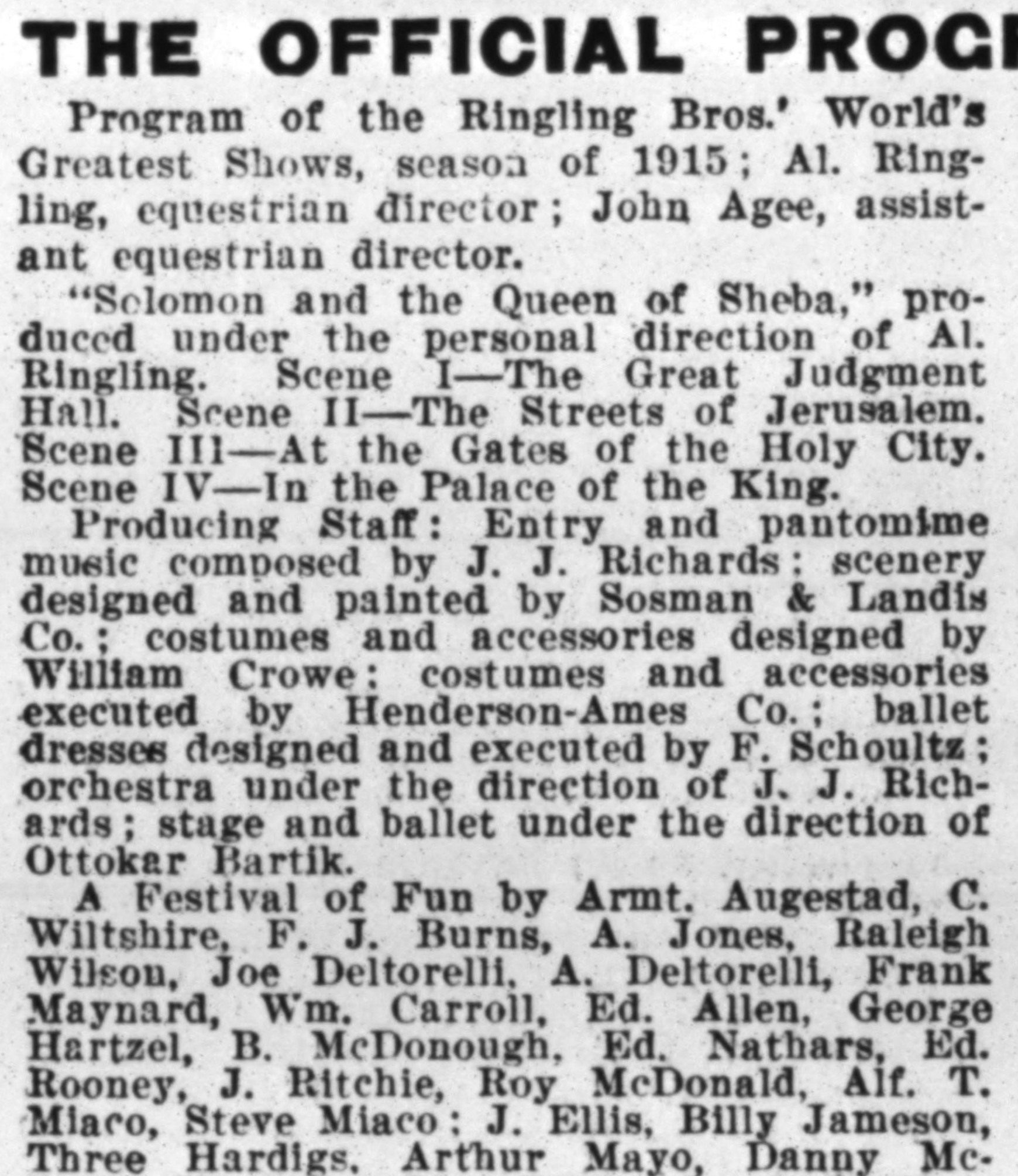
“The Official Program” of the Ringling show for 1915. The New York Clipper, April 24, 1915. Internet Archive. Published 1915, public domain. Click the clipping to read it full size.
Jack Bethea ended his Birmingham story with the thing he learned behind the curtain. The circus had a magic that would last as long as there were circuses, he wrote. But “after they have left the glare of the sawdust ring and discarded the tinsel and spangles and rice powder, they are just people.” Then he said it once more: “just ordinary people.” They had a stove stuck in the mud, family far away in a war, and friends they hoped to see again in the spring.
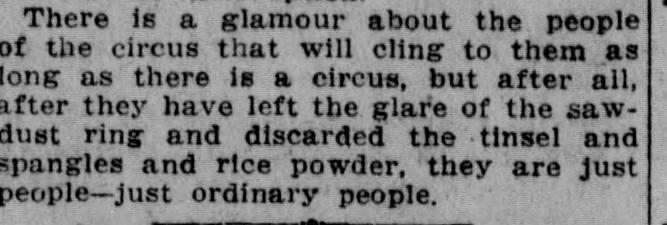
Bethea’s last lines. The Age-Herald, Birmingham, Alabama, October 17, 1914, page 9. Library of Congress, Chronicling America. Click the clipping to read it full size.
Birmingham in 1914
The picture at the top of this story is part of a 1914 panorama of Ringling Brothers work horses and their handlers lined up in front of the big top, with “Ringling Bros.” painted on the wagons behind them. The photographer was Kenneth Spencer of Battle Creek, Michigan; the record does not say where it was taken, so it is not Birmingham, but it is the same circus in the same year. Below is Birmingham itself that year, as seen from up high.
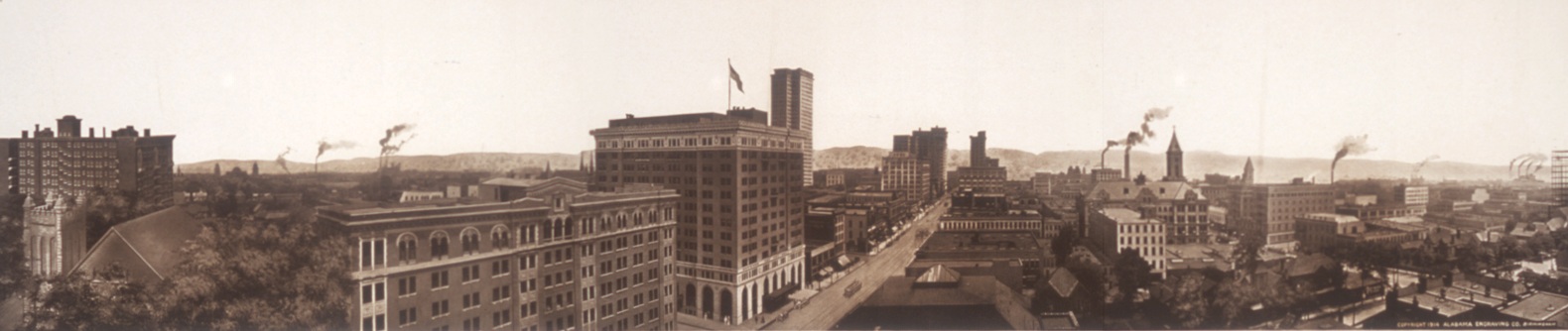
“Sky line of Birmingham,” a 1914 panorama by the Alabama Engraving Co. of Birmingham. Library of Congress Prints and Photographs Division, Panoramic Photographs. No known restrictions on publication. Click the picture to see it full size.
Sources
- Jack Bethea, “Fascinating World Behind the Scenes With the Ringlings,” The Age-Herald (Birmingham, Alabama), October 17, 1914, page 9. Library of Congress, Chronicling America.
- “Ringling Brothers’ Circus,” Amusements, The Age-Herald (Birmingham, Alabama), October 17, 1914, page 2. Library of Congress, Chronicling America.
- “This Wealthy Man Is Genuine Circus Clown,” The Age-Herald (Birmingham, Alabama), October 14, 1914, page 11. Library of Congress, Chronicling America.
- “Circus People Are Going Home From This City,” The Cairo Bulletin (Cairo, Illinois), October 4, 1914, page 1. Library of Congress, Chronicling America.
- The New York Clipper, November 7, 1914: “Returning from Cairo on the ‘Ringling Special.'” Internet Archive.
- The New York Clipper, December 12, 1914: Joe Deltorelli signs for next season. Internet Archive.
- The New York Clipper, April 24, 1915: “The Official Program” of Ringling Bros.’ World’s Greatest Shows, season of 1915. Internet Archive.
- Work horses of Ringling Bros. Circus, panorama, 1914, Kenneth Spencer (the cover). Library of Congress Prints and Photographs Division, Panoramic Photographs.
- Sky line of Birmingham, panorama, 1914, Alabama Engraving Co. Library of Congress Prints and Photographs Division, Panoramic Photographs.
- The newspapers and both panoramas were published before 1931 and are in the public domain.