In 1872, a blacksmith named William Robertson paid a quarter at the Memphis Exposition to see the most talked-about machine in the country. It was a tiny village full of little moving people, and thousands crowded in to see it. Robertson looked it over and laughed.
Then he went home to Memphis, Tennessee, and could not stop thinking about it. One night he dreamed he had built a better one. He woke up and started. Seven months later his own little village was on show, and the papers had a name for it: “The Blacksmith’s Dream.”

“The Blacksmith’s Dream,” from the Holly Springs Reporter, reprinted in The Weekly Clarion, Jackson, Mississippi, January 8, 1874, page 1. Library of Congress, Chronicling America. Click the clipping to read it full size.
A Poor Blacksmith on Main Street in Memphis
The story of William Robertson ran first in the Holly Springs Reporter, a paper in northern Mississippi. The Weekly Clarion of Jackson, Mississippi, printed it again on January 8, 1874. It said Robertson lived “in an humble tenement,” a plain rented house, near the Mississippi and Tennessee Railroad depot, “hard by Main street.” He was “a poor blacksmith,” and he was 36 years old.
Robertson was born near Markinch, a small town in Scotland. His father died when he was young, so he went to work for a farmer. At 16 he started six years of training with a blacksmith. Then he sailed for Canada with good letters from his bosses, and he went to work in the shops of the Grand Trunk Railway.
Robertson’s Bad Luck With Inventions
In Canada, the paper said, Robertson invented the “Railway Frog,” a tool for getting wrecked cars back onto the rails. He showed his model to his boss, the master mechanic. The boss “stole the model and had it patented,” and he made a fortune from it, “never giving Robertson a cent.”
It happened again. A poor printer told Robertson his idea for a new printing press, and Robertson built it in three months. The printer promised to share the money. Instead he got the patent in his own name and “never came near Robertson any more.” We only have Robertson’s side of these two stories, as the paper told it.
After the Civil War, Robertson worked in railroad shops in Water Valley, Mississippi, and Jackson, Tennessee, and he was good enough to keep getting promoted. About 1870 he went to work in the shops of the Mississippi and Tennessee Railroad, the line whose depot stood near his house in Memphis. But after being cheated twice, he decided he was done inventing things for grown-ups. From now on he would make something “that would please the children.”
William Robertson’s Squirrel Band
What the blacksmith William Robertson built for the children was a little band of squirrels. He was good at taxidermy, the art of stuffing animals so they look alive. He had learned it in Canada.

Robertson’s squirrel band. The Weekly Clarion, Jackson, Mississippi, January 8, 1874, page 1. Library of Congress, Chronicling America. Click the clipping to read it full size.
He dressed the squirrels in costumes, gave each one a tiny instrument, and hooked them up to a music box. When the music played, the squirrels moved, danced and “rolled their eyes.” The paper said they “did squirrelish,” which is a fun way of saying they acted just like squirrels. The neighbors’ children loved them. Then Robertson “gave it away to some children.”
Some of his stuffed animals ended up in Jackson, Mississippi, too. Col. J. L. Power, one of the owners of The Clarion, had bought his last collection.
The Famous Tiny Village Robertson Laughed At
The machine Robertson laughed at was Bergmann’s automaton village. An automaton is a machine that moves by itself, like a robot from long ago. This one was a whole little town of wooden people at work. A show called Bergmann’s Automatic City toured the country for years, and it was almost surely the same one. In Wilmington, Delaware, in 1885, the Daily Republican said it was built by Joseph Bergmann of Baden-Baden, Germany, and ran on buckets of water.

What Robertson saw at the Memphis Exposition. The Weekly Clarion, Jackson, Mississippi, January 8, 1874, page 1. Library of Congress, Chronicling America. Click the clipping to read it full size.
Robertson paid 25 cents to see it. “He laughed at it; said there was not a single character that represented natural motion.” In plain words, none of the little people moved the way a real person moves. But the crowds didn’t care. What really caught Robertson’s eye was “the vast amount of money the proprietors were making.”
The Dream, and Seven Months of Nights in Memphis
William Robertson went home “a changed man,” the paper said. He thought about nothing but that village. Then came the dream.

The dream, and the work at night. The Weekly Clarion, Jackson, Mississippi, January 8, 1874, page 1. Library of Congress, Chronicling America. Click the clipping to read it full size.
“In his sleep he dreamed that he had eclipsed it.” Eclipsed means beat it so badly the old one looked dim. He couldn’t quit his job, because “his bread and that of his family depended on his daily labor.” So he worked at the railroad shops by day and on his machine at night. The paper said Bergmann’s village took seventeen years to build. Robertson finished his “in seven months from the night of his dream.”
What the Blacksmith’s Dream Looked Like
William Robertson’s Memphis village sat on a table 3 feet wide and 8 feet long, about the size of a big dining table, and rose 3 feet high. It showed the “Progress of Civilization”: a railroad, a steamboat, a velocipede (an early bicycle), a sewing machine and more. It was “wound up by a key and is run by the power of weights,” the way a big old clock runs.
On the left end was a little railroad with an engine, a mail car and passenger cars.

The little train. The Weekly Clarion, Jackson, Mississippi, January 8, 1874, page 1. Library of Congress, Chronicling America. Click the clipping to read it full size.
As the train came into the station, “the fireman rings the bell, the brakesman turns the brakes, and the passengers put their heads out of the windows.” The conductor stepped out and waved, and “the splendid little train moves on as before.”
A horse trotted along a road pulling a coach. A man rode by on a velocipede. An old man walked up a hill to his cottage and went inside. On a little lake floated a model steamboat called the Mississippi.

The steamboat Mississippi on its little lake. The Weekly Clarion, Jackson, Mississippi, January 8, 1874, page 1. Library of Congress, Chronicling America. Click the clipping to read it full size.
There was a two-story brick factory, too, with tiny men sawing, planing and hammering, and women upstairs weaving, spinning and running a sewing machine. People who knew the men in the railroad shop said the little workers were perfect likenesses of them.
Then came the best trick of all. When the factory bell rang, “everything stops and is as quiet as if they never moved.” It rang again, and everybody went back to work.

The bell that stops everything, and the plan for Philadelphia. The Weekly Clarion, Jackson, Mississippi, January 8, 1874, page 1. Library of Congress, Chronicling America. Click the clipping to read it full size.
A Dime for the Orphans in Memphis
Robertson’s village went on the road in the fall of 1873. The Clarion said it was shown at the Louisville Exposition in Kentucky and at the Mississippi State Fair. In Jackson, Tennessee, where he used to work, the Whig and Tribune listed “Robertson’s Automaton, or Blacksmiths Dream” with the big attractions of the fair week.

Whig and Tribune, Jackson, Tennessee, October 25, 1873, page 2. Library of Congress, Chronicling America. Click the clipping to read it full size.
A look cost “only 10 cents,” and “one fifth of the gross receipts are to be donated to the orphans home in Memphis.” So for every five dimes that came in, one went to the city’s orphans.
Back in Memphis that November, the Public Ledger’s report on the Exposition listed “Robertson’s automaton” among the curiosities, with “a number of figures at work at different mechanical occupations.”

Public Ledger, Memphis, Tennessee, November 24, 1873, page 3. Library of Congress, Chronicling America. Click the clipping to read it full size.
From Blacksmith to “Prof. Robertson”
By the new year, the poor blacksmith had a new title. On January 31, 1874, the American Citizen of Canton, Mississippi, said “Prof. Robertson’s World’s Wonder” was coming to town. It had been shown “almost throughout the Southern States,” and the price was now 25 cents, the same quarter Robertson once paid to see Bergmann’s. There was even a Punch and Judy puppet show with it.

American Citizen, Canton, Mississippi, January 31, 1874, page 3. Library of Congress, Chronicling America. Click the clipping to read it full size.
The Clarion’s story ended with a bigger plan. Robertson wanted to build something “on a larger scale” for the great Centennial Exposition in Philadelphia, the giant world’s fair coming in 1876. The paper predicted it “will be the grandest acheivement in mechanism displayed there.” We could not find Robertson’s name in the papers after that winter, so we don’t know if he made it to Philadelphia.
What we do know is enough. A man who had been cheated twice and gave his squirrel band away to the neighbor kids paid a quarter, laughed, and then spent seven months of nights proving he could do better.
The Memphis Robertson Knew
The picture at the top of this story is part of a bird’s-eye view of Memphis, Tennessee, drawn by the artist A. Ruger and printed in 1870, a few years before Robertson built his village. It shows steamboats on the Mississippi River and the city along the bluff, with Main Street running through it.

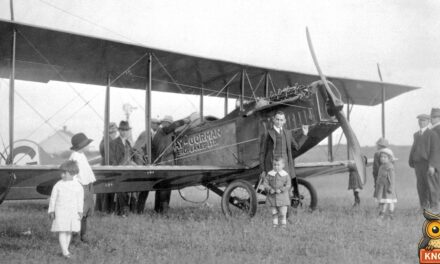
Main Street, north from Gayoso Avenue, Memphis, Tennessee, in the early 1900s, more than 25 years after Robertson lived “hard by Main street.” Detroit Publishing Co., Library of Congress Prints and Photographs Division. No known restrictions on publication. Click the picture to see it full size.
Sources
- “The Blacksmith’s Dream,” from the Holly Springs Reporter, The Weekly Clarion (Jackson, Mississippi), January 8, 1874, page 1. Library of Congress, Chronicling America.
- Whig and Tribune (Jackson, Tennessee), October 25, 1873, page 2: the fair week and “Robertson’s Automaton.” Library of Congress, Chronicling America.
- Public Ledger (Memphis, Tennessee), November 24, 1873, page 3: “The Exposition.” Library of Congress, Chronicling America.
- American Citizen (Canton, Mississippi), January 31, 1874, page 3: “Prof. Robertson’s World’s Wonder.” Library of Congress, Chronicling America.
- Daily Republican (Wilmington, Delaware), June 20, 1885, page 2: Joseph Bergmann’s automatic city. Library of Congress, Chronicling America.
- Bird’s eye view of the city of Memphis, Tennessee, 1870 (the cover). Library of Congress Geography and Map Division, Panoramic Maps.
- Main Street, north from Gayoso Avenue, Memphis, Tenn., Detroit Publishing Co. Library of Congress Prints and Photographs Division.
- The newspapers, the map and the photograph above were all published before 1931 and are in the public domain.