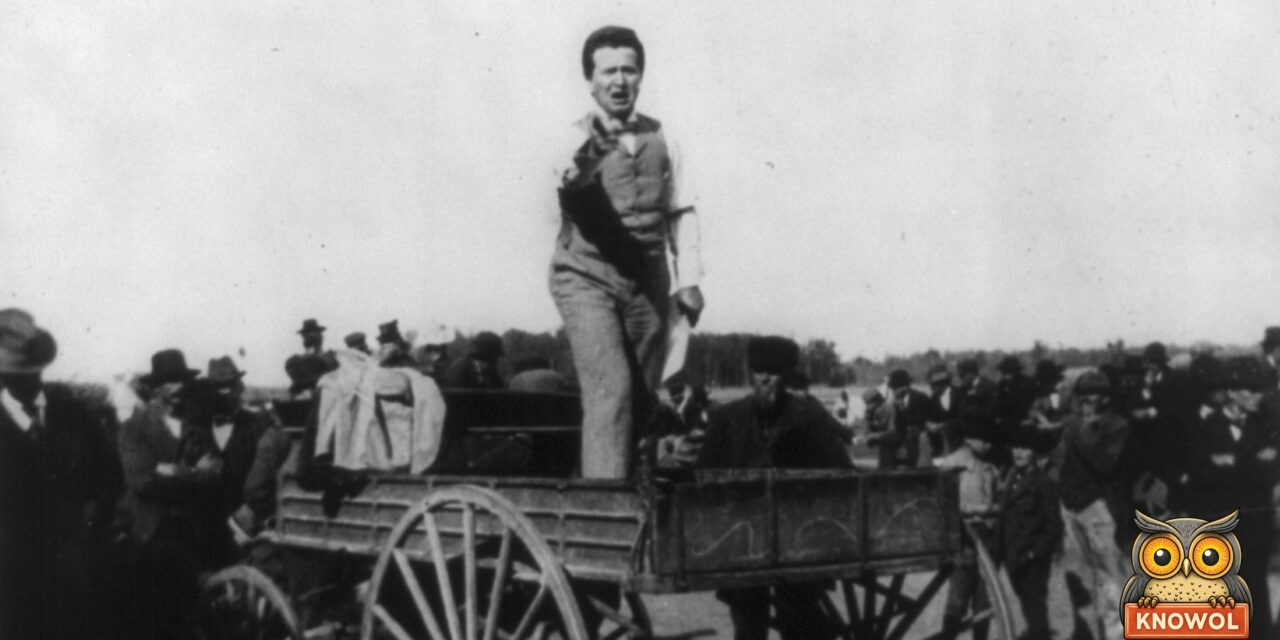
The picnic at Cantrell Springs, a few miles outside Pine Bluff, Arkansas, had promised “speaking and dancing and plenty of ice water.” On Friday, August 28, 1896, the speaking got hot. A man running for office rushed toward the speakers’ platform, and the whole crowd waited for a fight. Then he stopped, reached into his pocket and pulled out his pocket-book, an old word for a wallet. “How much will you bet on it?” he asked.
The story comes from the Pine Bluff Daily Graphic, the town’s daily paper, which put it on the front page two days later. The paper called it “a breezy incident” that “was not down on the program.”
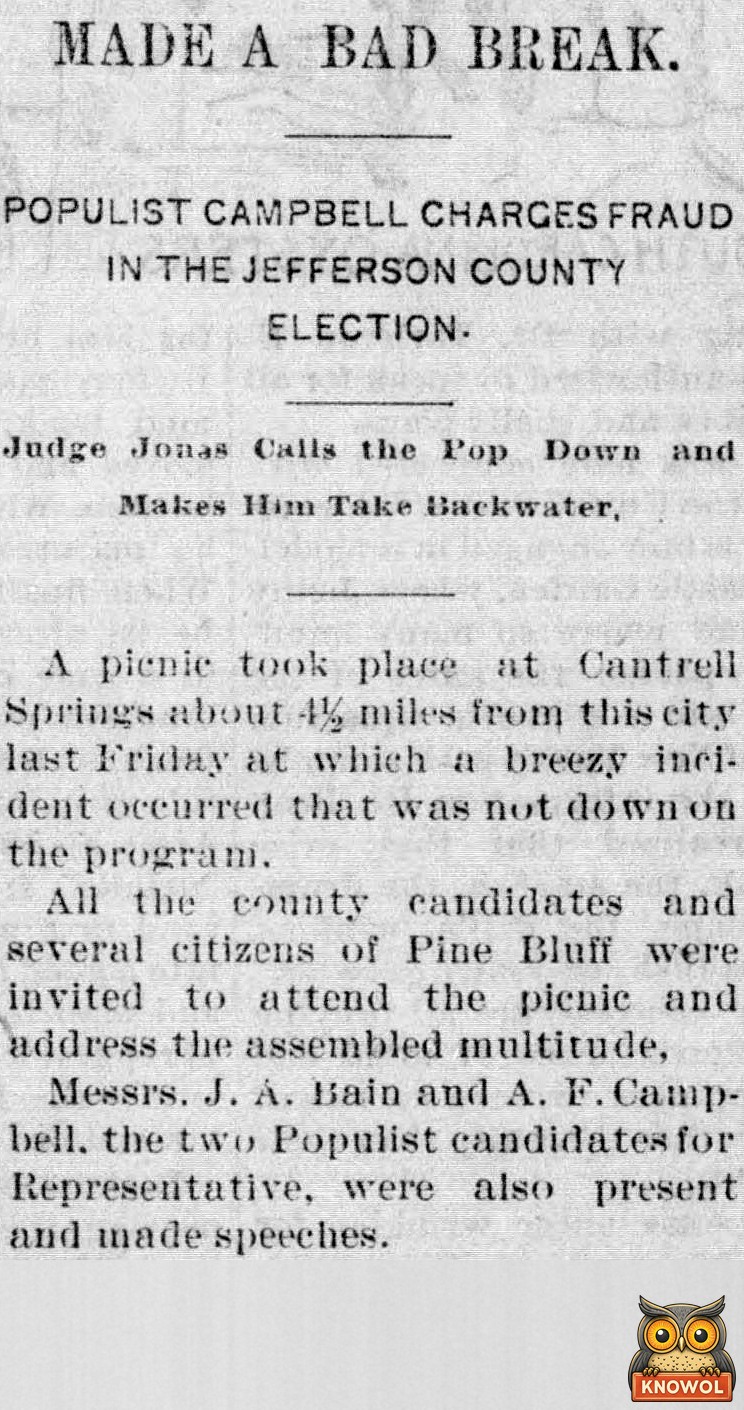
“Made a Bad Break.” Pine Bluff Daily Graphic, Pine Bluff, Arkansas, August 30, 1896, page 1. “Jonas” is the paper’s own misprint for Jones. Library of Congress, Chronicling America. Click the clipping to read it full size.
A Picnic Near Pine Bluff, Arkansas
In 1896 there was no radio or TV, so people running for office in Jefferson County, Arkansas, went where the voters were. A summer picnic was a fine place to find them. A week ahead, the Graphic told Pine Bluff that “There will be a picnic at Cantrell Springs on August 28, 1896.” The promoters had “promised the public something great,” it said.
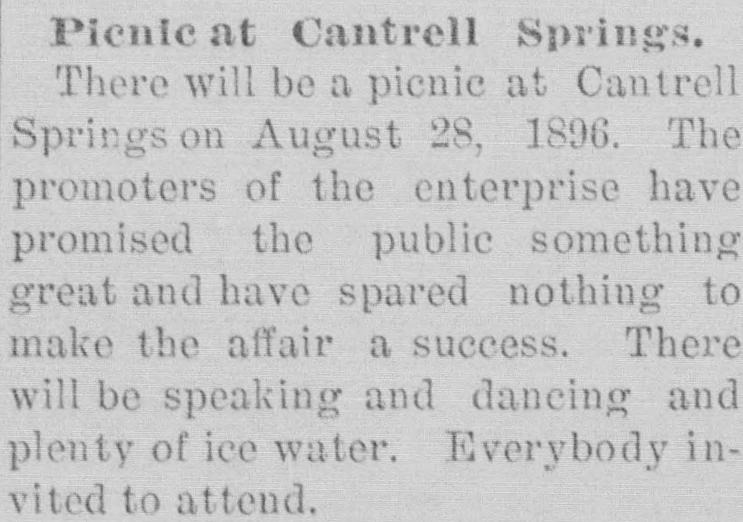
The first notice. Pine Bluff Daily Graphic, Pine Bluff, Arkansas, August 21, 1896, page 4. Library of Congress, Chronicling America. Click the clipping to read it full size.
The day before the picnic, the Graphic’s local column gave Pine Bluff one more tip: “Carry full baskets and have a grand day.” That meant bring a basket full of food. The paper couldn’t quite decide how far away the springs were. One day it said “about 3½ miles from this city,” and three days later it said “about 4½.”

Pine Bluff Daily Graphic, Pine Bluff, Arkansas, August 27, 1896, page 4. Library of Congress, Chronicling America. Click the clipping to read it full size.
“All the county candidates and several citizens of Pine Bluff were invited to attend the picnic and address the assembled multitude,” the Graphic wrote. The assembled multitude just means the crowd. Two speakers were J. A. Bain and A. F. Campbell, “the two Populist candidates for Representative.” They hoped to speak for Jefferson County in the Arkansas legislature, where the state’s laws are made. The Populists, also called the People’s Party, were a newer party.
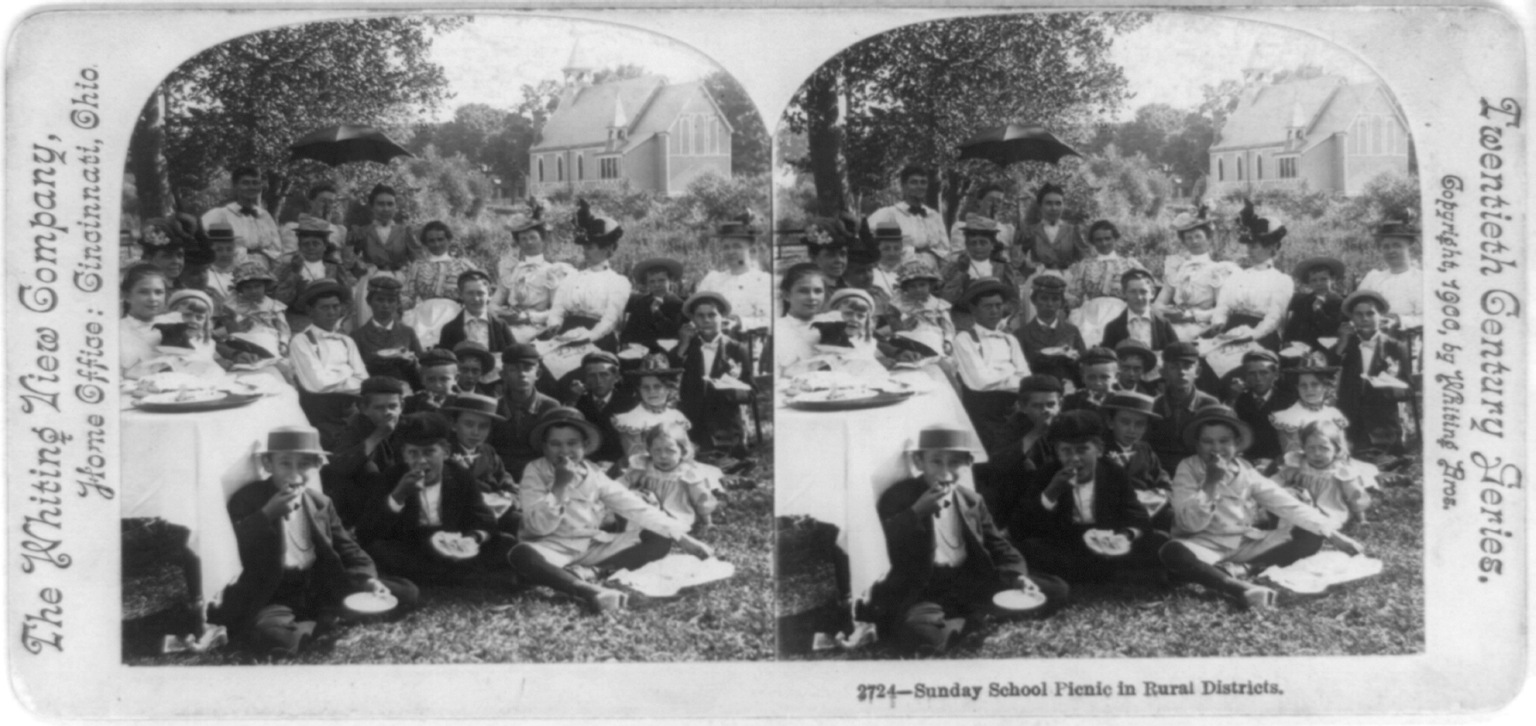
A country picnic around 1900, on a stereograph card titled “Sunday School Picnic in Rural Districts.” It is not the Cantrell Springs picnic. Whiting View Company, Cincinnati, 1900. Library of Congress Prints and Photographs Division. No known restrictions on publication. Click the picture to see it full size.
Pine Bluff, Arkansas, Argued About Money
In Pine Bluff, Arkansas, in 1896, the hottest subject was money itself. Americans were fighting over whether the country should coin silver as freely as gold, or stick to gold alone. The Democrats had picked William Jennings Bryan for president, and he was for silver. The Graphic wrote later that Arkansas had shown “the intensity of the silver sentiment in this State.”
The Graphic’s local column put it this way: “Red-hot discussions of the financial question are of frequent occurrence in this city between Democrats and ‘boltocrats.'” Boltocrats was a joke name for Democrats who had bolted, or broken away from, their party over the money fight.
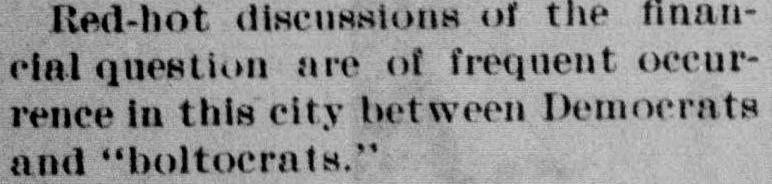
Pine Bluff Daily Graphic, Pine Bluff, Arkansas, August 27, 1896, page 4. Library of Congress, Chronicling America. Click the clipping to read it full size.
The Charge at Cantrell Springs
So the speeches at Cantrell Springs began with “a lengthy discussion of the financial question.” Then Campbell, the Populist, changed the subject. He “delivered himself of a tirade against the election law,” the paper said, a long, angry speech against Arkansas’s rules for voting. He said he had “undisputed proof of the fact that the officers of this county had committed fraud at the last election.” In plain words, he said the people who ran Jefferson County had cheated.
Judge W. D. Jones was sitting in the crowd. He was the county judge, which in Arkansas meant the county’s top officer, in charge of things like roads and the courthouse. He was also the only county officer at the picnic. Campbell looked and pointed his way, so the judge stood up and asked if Campbell meant him.
Campbell said he “did not mean him in particular, but if the shoe fit he was welcome to wear it.” That old saying means “If what I said sounds like you, maybe it is.”
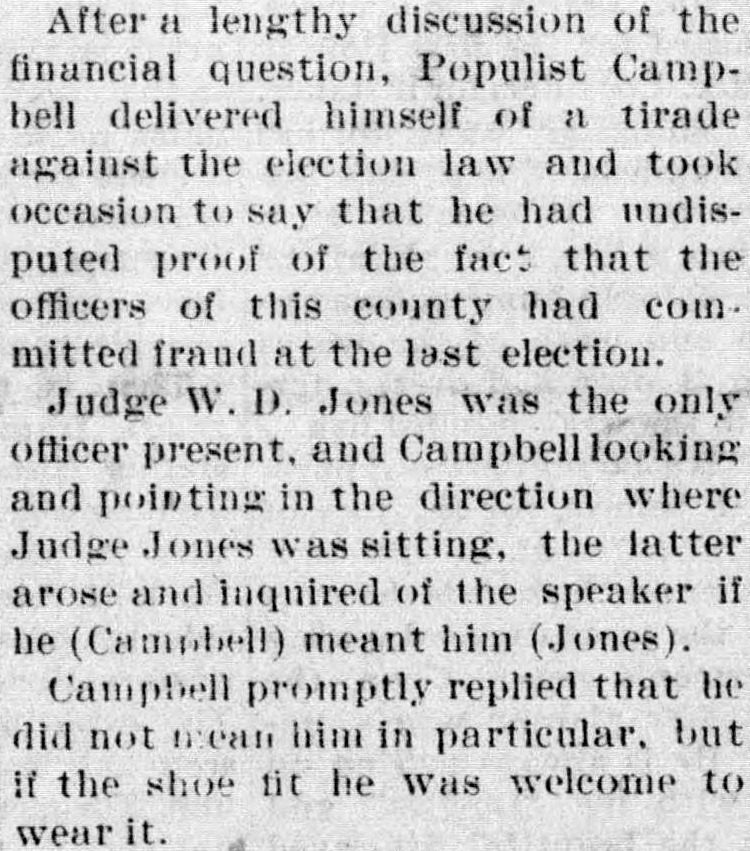
Pine Bluff Daily Graphic, Pine Bluff, Arkansas, August 30, 1896, page 1. Library of Congress, Chronicling America. Click the clipping to read it full size.
“Do You Mean to Say That I Lied?”
When Campbell finished, the crowd at Cantrell Springs began calling for the judge: “Jones,” “Jones!” Judge Jones got up on the platform. He said the last election “was universally conceded to be a fair and honest one,” which means everybody agreed it was fair. And he said anyone who claimed otherwise “lied.”
Campbell was standing “about 30 feet from the platform,” about as long as two cars parked end to end. “He rushed forward in an excited manner and exclaimed: ‘Do you mean to say that I lied?'”
The judge took his time. He “hesitated, and looking his antagonist straight in the face, drew himself up his full length,” the paper said. His antagonist was the man against him, and drawing himself up means he stood as tall as he could. Then he handed Campbell’s own shoe line right back to him: “If my remarks fit the gentleman, I mean them for him.”
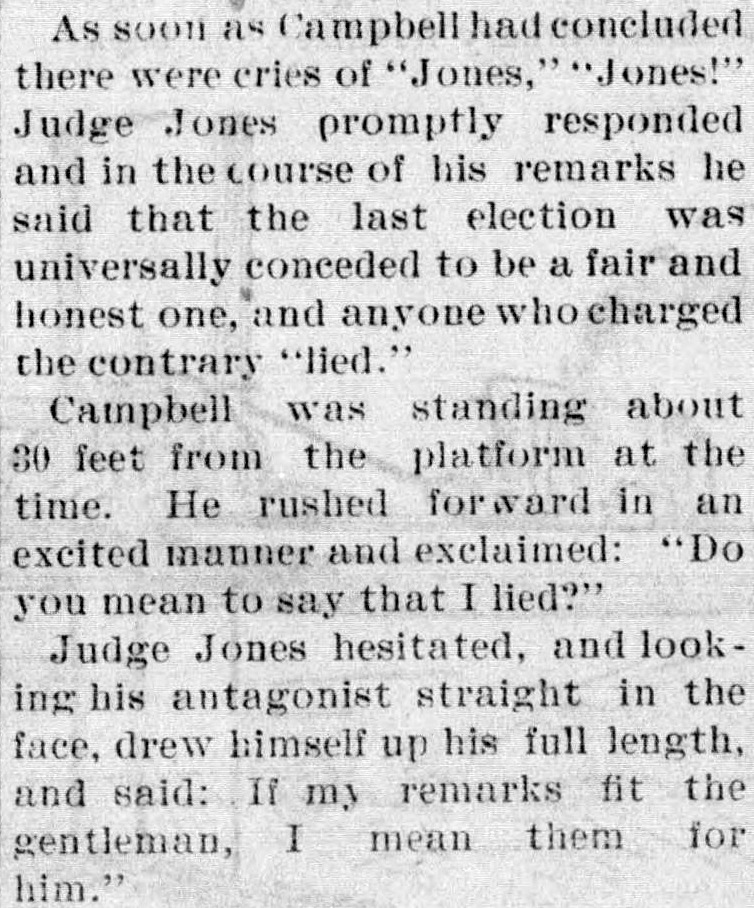
Pine Bluff Daily Graphic, Pine Bluff, Arkansas, August 30, 1896, page 1. Library of Congress, Chronicling America. Click the clipping to read it full size.
What Campbell Pulled From His Pocket
Now every eye at the picnic near Pine Bluff was on Campbell. “Everybody expected to see Campbell, from the menacing attitude he had assumed, make a grand rush for the platform,” the Graphic said. “But he didn’t.”
Instead, “Campbell stopped, ran his hand down into his pocket, pulled out his pocket-book and said: ‘How much will you bet on it?'” He had traded his fists for his wallet. “Then everybody laughed and applauded.”
The paper called it “only a grand stand play,” an old baseball phrase for showing off to the people in the grandstand. Campbell kept saying he had money to bet “that he could prove what he said was true.” Judge Jones answered from the platform that after his speech “he would take any bet for any amount.”
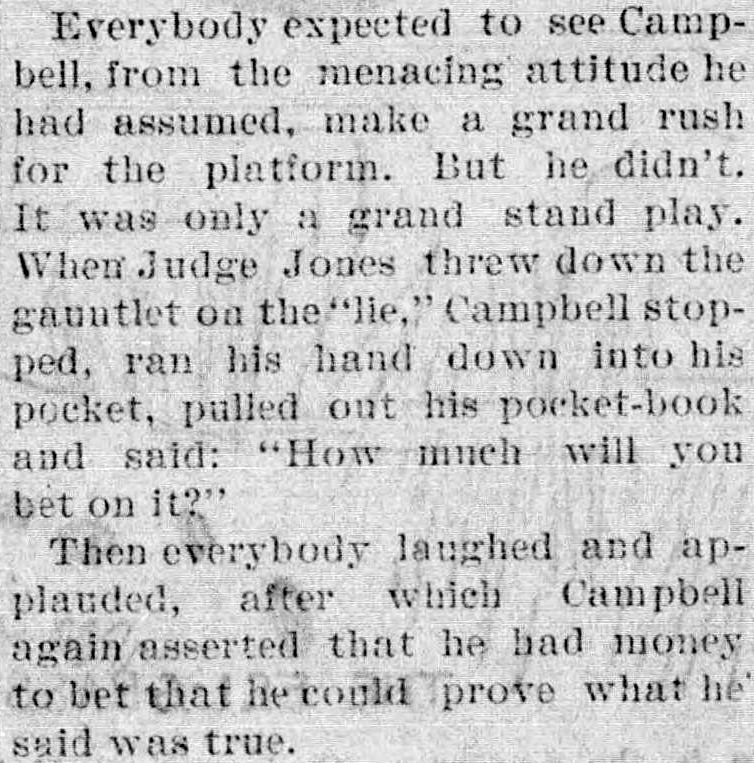
The pocket-book. Pine Bluff Daily Graphic, Pine Bluff, Arkansas, August 30, 1896, page 1. Library of Congress, Chronicling America. Click the clipping to read it full size.
The Bet That Never Happened
The bet at Cantrell Springs was never made. After the speeches, Campbell explained that he had meant “the last Democratic primaries and not the last county election.” A primary is a party’s own vote to pick its candidates, so he was talking about a different election from the one the judge defended. With that, “the bet was declared off,” and the paper said the whole thing “passed away without the loss of either blood or money.”
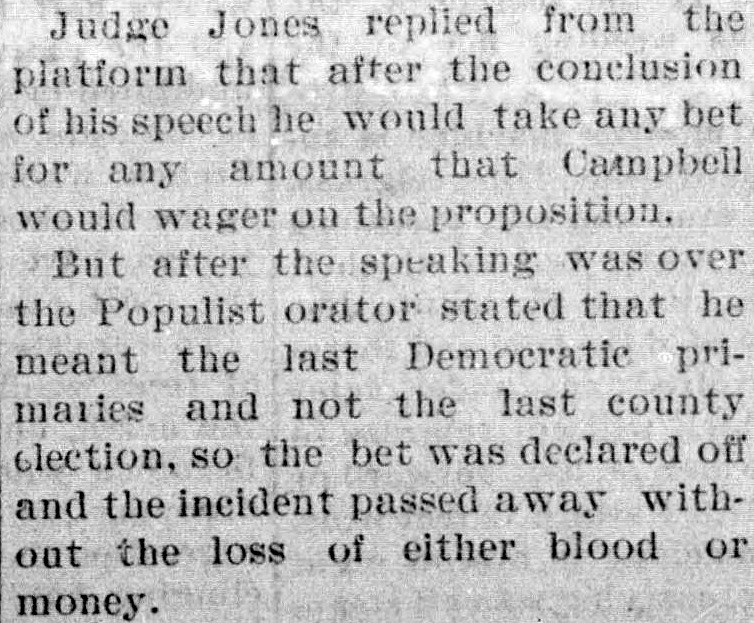
Pine Bluff Daily Graphic, Pine Bluff, Arkansas, August 30, 1896, page 1. Library of Congress, Chronicling America. Click the clipping to read it full size.
The picnic went on. The other speakers were W. T. Wooldridge, J. Y. Saunders and W. G. Streett, and “There was a lage attendance from town, especially in the afternoon.” Lage is the paper’s typo for large.
The Pine Bluff Paper Took the Judge’s Side
The Graphic told this Pine Bluff story from the judge’s side. Its headline said Campbell “Made a Bad Break,” which meant a bad mistake. A smaller line said the judge “Calls the Pop Down and Makes Him Take Backwater.” Pop was short for Populist, and taking backwater, like paddling a boat backward, means backing down. The same line even misspelled the judge’s name as “Jonas.” We found no telling from Campbell himself, so this is the paper’s version, and nothing about the election was proved either way at the picnic.
Election Day in Jefferson County, Arkansas
Jefferson County, Arkansas, voted ten days after the picnic, on Monday, September 7, 1896. The next morning’s Graphic said “The Entire Straight Democratic Ticket Elected,” so Bain and Campbell lost. “Yesterday’s election in this county was the quietest ever known,” it added. “It was the smallest vote polled in Jefferson county in a general election since the war,” meaning the Civil War. The state picked a governor named Jones that day, too: Dan W. Jones, a different man from the judge.
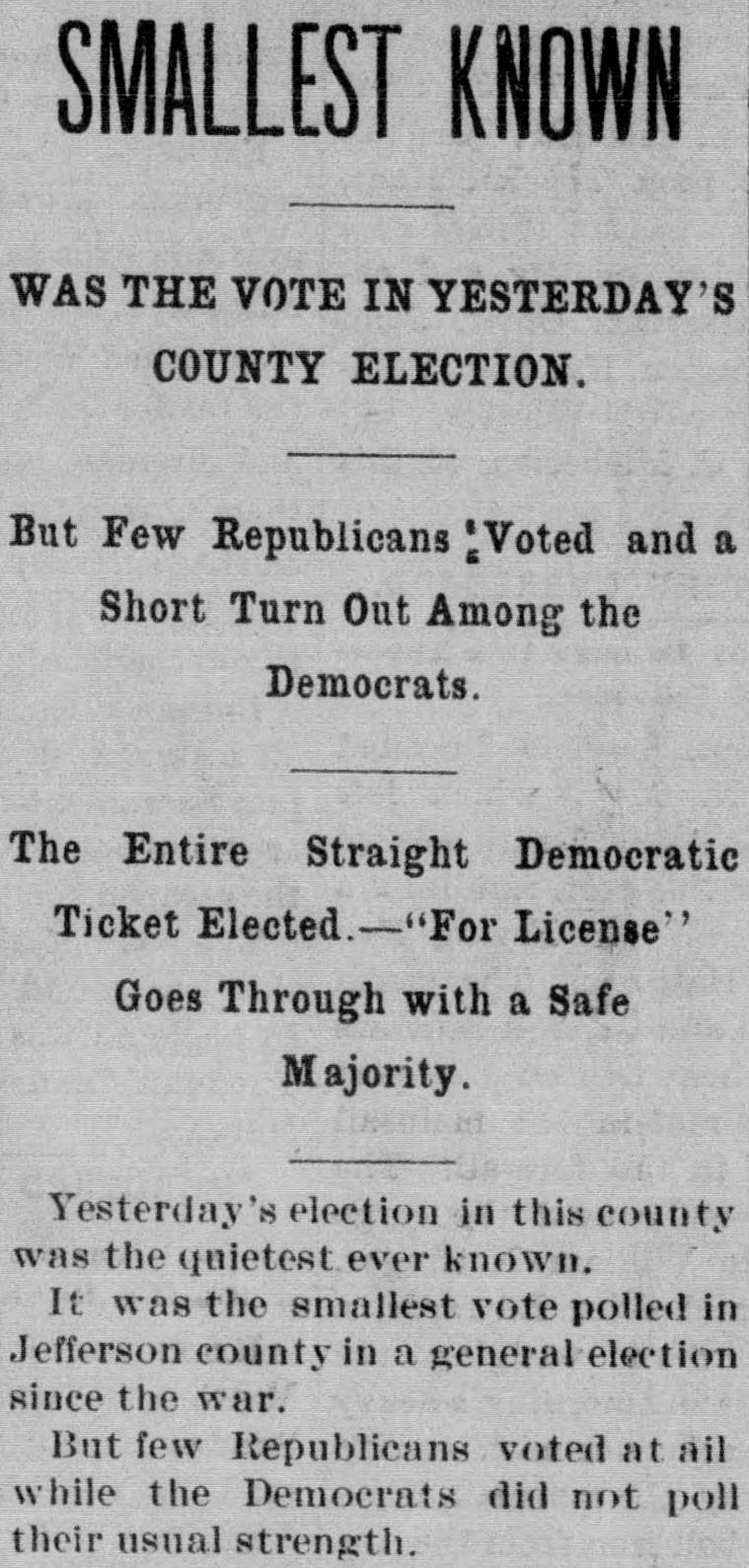
Pine Bluff Daily Graphic, Pine Bluff, Arkansas, September 8, 1896, page 1. Library of Congress, Chronicling America. Click the clipping to read it full size.
The Pine Bluff Bicycle Meet of “1996”
The same front page of the Pine Bluff Daily Graphic carried a big ad for a “Grand Bicycle Meet” the paper was putting on at Jones’ Park. In huge letters, it gave the date as “SEPT. 10, 1996.” That was a typo, 100 years off. Tickets cost 25 cents for grown-ups and 15 cents for children under 10.
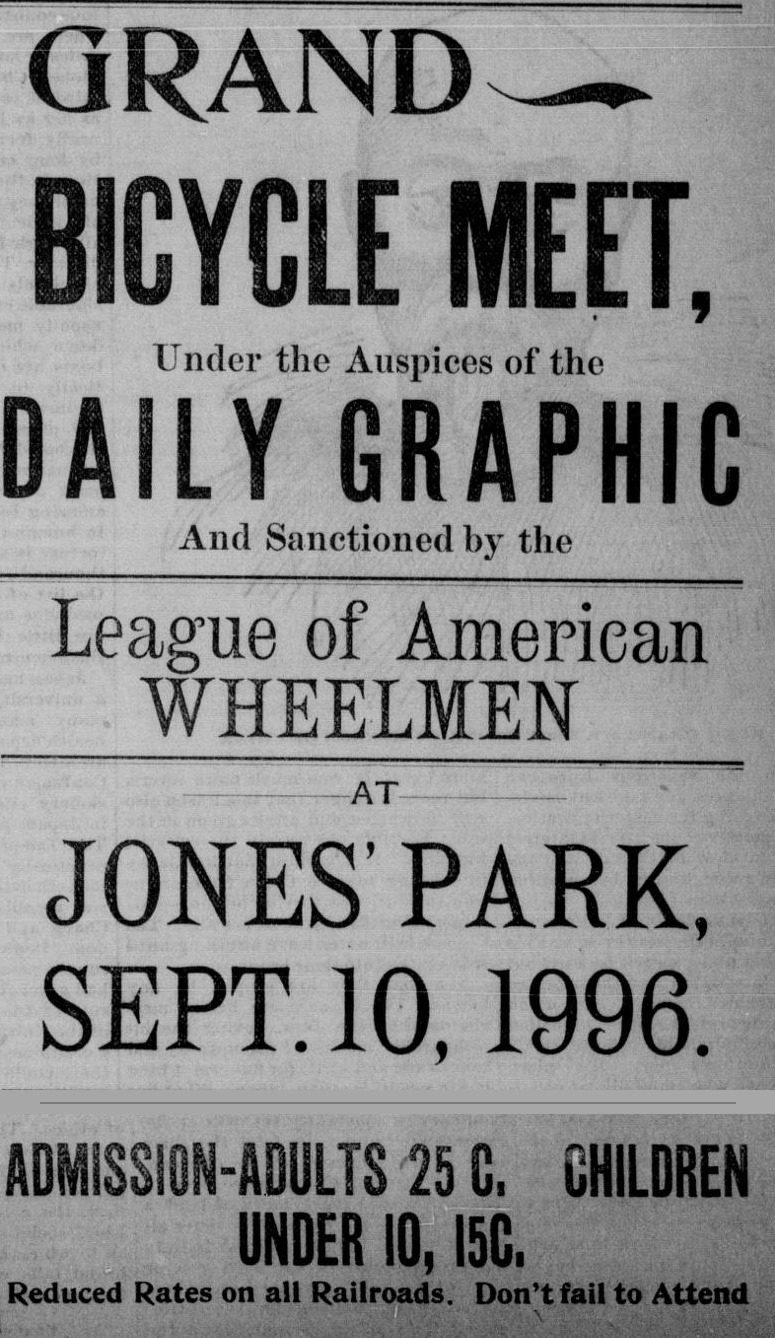
The top and bottom of the ad, joined. Pine Bluff Daily Graphic, Pine Bluff, Arkansas, August 30, 1896, page 1. Library of Congress, Chronicling America. Click the clipping to read it full size.
The races really happened on Thursday, September 10, 1896. The next day the Graphic said at least 600 people came, and a fast rider from Memphis, Tennessee, Z. S. Oliver, took first prize in every race he entered.
The Cantrell Springs Picnic by the Numbers
- About 30 feet from Campbell to the platform
- 1 pocket-book
- 0 punches
- $0 bet
- 2 distances to the springs in the paper (3½ and 4½ miles)
- 2 Joneses in the news that week
The Picture at the Top of This Page
The photo at the top of this story is not Pine Bluff, Arkansas. The Library of Congress says it shows Robert M. La Follette campaigning in Cumberland, Wisconsin, in 1897, speaking from the back of a farm wagon to a crowd of men in hats. We found no photo of the Cantrell Springs picnic, so we chose this real one from the next year. It shows how a candidate talked to voters out in the open air, the way Campbell did.
Sixteen years later, the same Pine Bluff paper had another election-day show, a canvas in the street: The Night Pine Bluff, Arkansas, Watched the Election on a Canvas Screen in the Street. The Cantrell Springs picnic promised speaking, dancing and plenty of ice water. It got all three, plus one pocket-book that cooled things down faster than the ice water did.
Sources
- “Made a Bad Break. Populist Campbell Charges Fraud in the Jefferson County Election,” Pine Bluff Daily Graphic (Pine Bluff, Arkansas), August 30, 1896, page 1: the picnic, the speeches, the pocket-book and the bet. The same page has the Grand Bicycle Meet ad. Library of Congress, Chronicling America (page scan).
- “Picnic at Cantrell Springs,” Pine Bluff Daily Graphic, August 21, 1896, page 4. Library of Congress, Chronicling America (page scan).
- Pine Bluff Daily Graphic, August 27, 1896, page 4: “Picnic at Cantrell Springs” (about 3½ miles), “Carry full baskets,” and the “boltocrats” line in the local column. Library of Congress, Chronicling America (page scan).
- “Smallest Known Was the Vote in Yesterday’s County Election,” Pine Bluff Daily Graphic, September 8, 1896, page 1. Library of Congress, Chronicling America (page scan).
- Pine Bluff Daily Graphic, September 10, 1896, page 2: the paper’s note on Dan W. Jones’s win for governor and “the silver sentiment in this State.” Library of Congress, Chronicling America (page scan).
- Pine Bluff Daily Graphic, September 11, 1896, page 1: the bicycle meet, at least 600 people, and Z. S. Oliver of Memphis. Library of Congress, Chronicling America (page scan).
- Pine Bluff Daily Graphic, February 13, 1896, page 1: “County Judge Jones” lends the courthouse for a good-roads talk. Library of Congress, Chronicling America (page scan).
- Robert Marion La Follette campaigning in Cumberland, Wisconsin, 1897, speaking from the back of a wagon, photo copyrighted by Henry Miller, 1897 (the cover). Library of Congress Prints and Photographs Division, from the Robert M. La Follette, Sr. Papers.
- “Sunday School Picnic in Rural Districts,” stereograph, Whiting View Company, Cincinnati, 1900. Library of Congress Prints and Photographs Division. No known restrictions on publication.
- We found the picnic story in only one paper, the Pine Bluff Daily Graphic. Its own notices before the picnic and its election report after it back up the day, the place and the outcome.
- The newspapers, photo and stereograph above were all published before 1931 and are in the public domain.