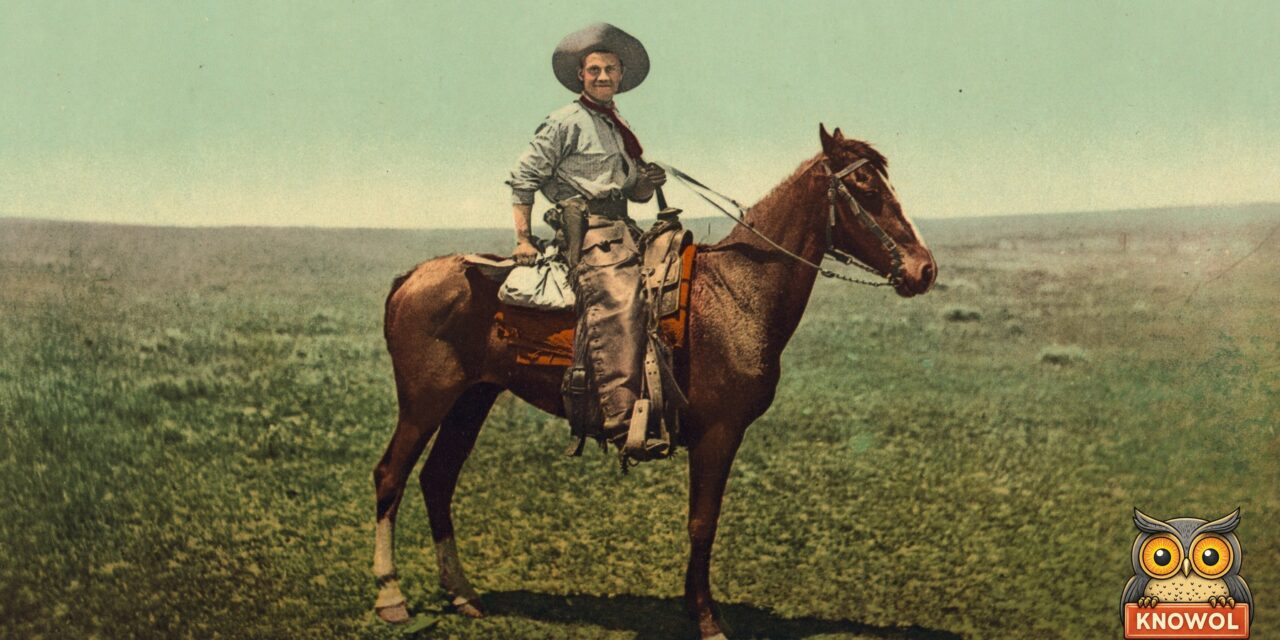
At seven o’clock on Thursday morning, May 10, 1894, two riders lined up in front of the Delta County Bank in Delta, Colorado. One sat on a Cleveland bicycle, about the newest thing on the road. The other sat on Prince, a 13-year-old cow horse who spent his days pulling a freight wagon around town. They were going to race to the next town and back, about fifty miles, and plenty of people in Delta had money on it.
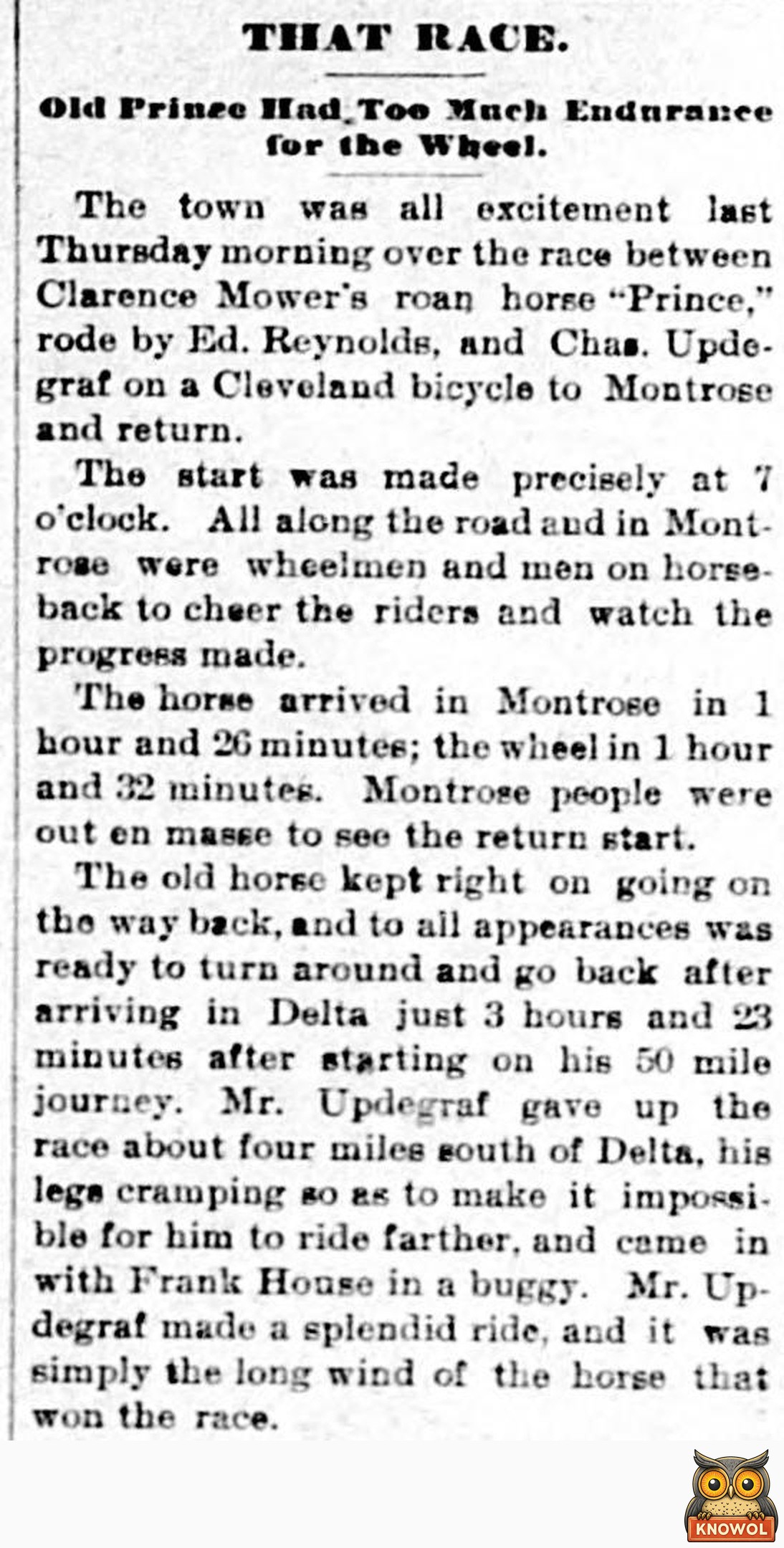
“That Race. Old Prince Had Too Much Endurance for the Wheel.” The Delta Independent, Delta, Colorado, May 16, 1894, page 1. Library of Congress, Chronicling America. Click the clipping to read it full size.
A new bicycle or $100
The man on the bicycle was Charley Updegraf. The horse belonged to Clarence Mower, and a rider named Ed Reynolds was in the saddle. The day before the race, the Delta Independent laid out the rules. The riders would start at the Delta County Bank, go to the Bank of Montrose in Montrose, Colorado, and turn right around. Three men waited in Montrose to watch the turn. A starter and two judges stood ready in Delta.
The prize depended on who won. “Should the rider win, he is to receive a new Cleveland bicycle; if the horse wins, Mr. Mower receives $100 in cash,” the paper said. Nobody could agree on who would win. The paper hoped the two would come back down Main Street “neck and neck.”
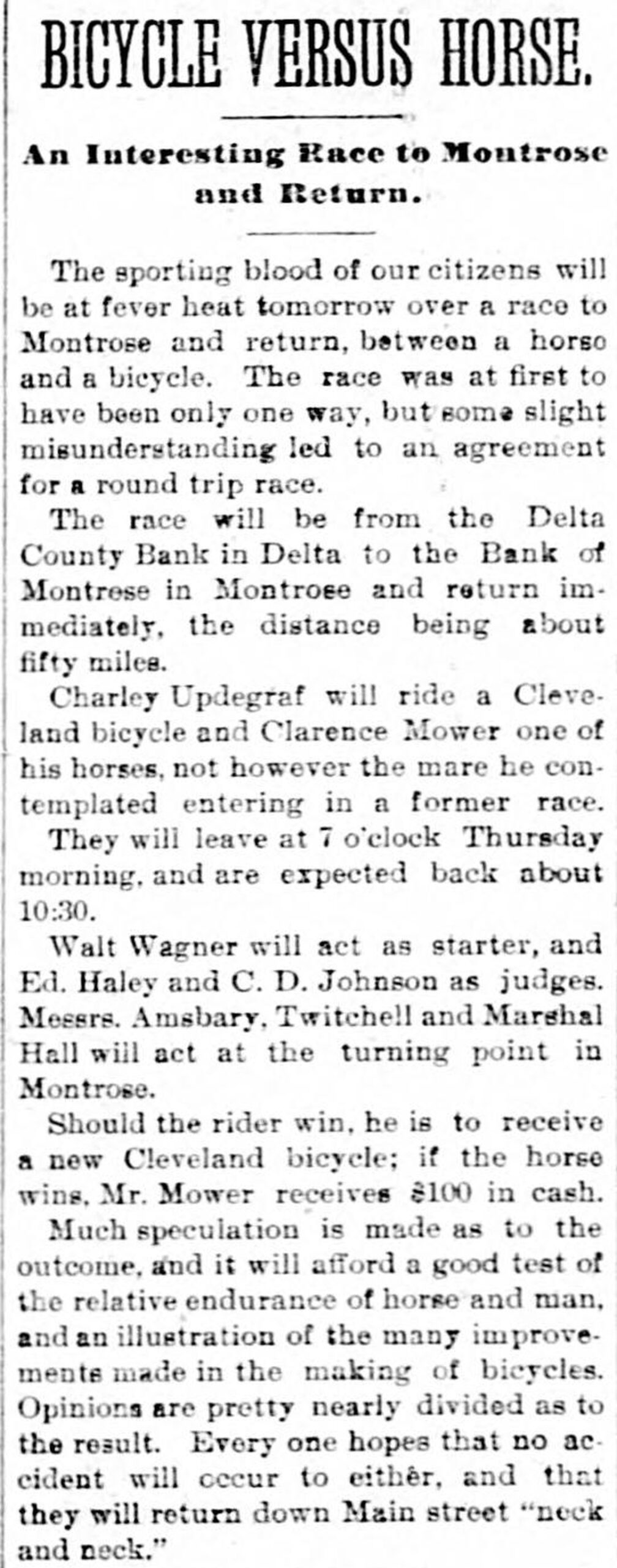
“Bicycle Versus Horse.” The rules, printed the day before the race. The Delta Independent, Delta, Colorado, May 9, 1894, page 1. Library of Congress, Chronicling America. Click the clipping to read it full size.
It seemed the whole town had picked a side. “Even the church people are sufficiently interested in to-morrow’s race to at least wager an opinion on the outcome,” the paper joked. To wager is to bet. Church people weren’t supposed to bet money, so they bet opinions.

The Delta Independent, Delta, Colorado, May 9, 1894, page 1. Library of Congress, Chronicling America. Click the clipping to read it full size.
Why anybody bet on the bicycle
In 1894 the bicycle was the exciting new machine. Riders were called wheelmen, and a bicycle was a “wheel.” People all over were asking the same thing Delta asked: could a man on a wheel beat a horse?
They were asking it in Paris, France, too. The poster below was printed there in 1893. It sold tickets to a three-day match between S. F. Cody, a cowboy on horseback, and a French bicycle racer named Meyer.
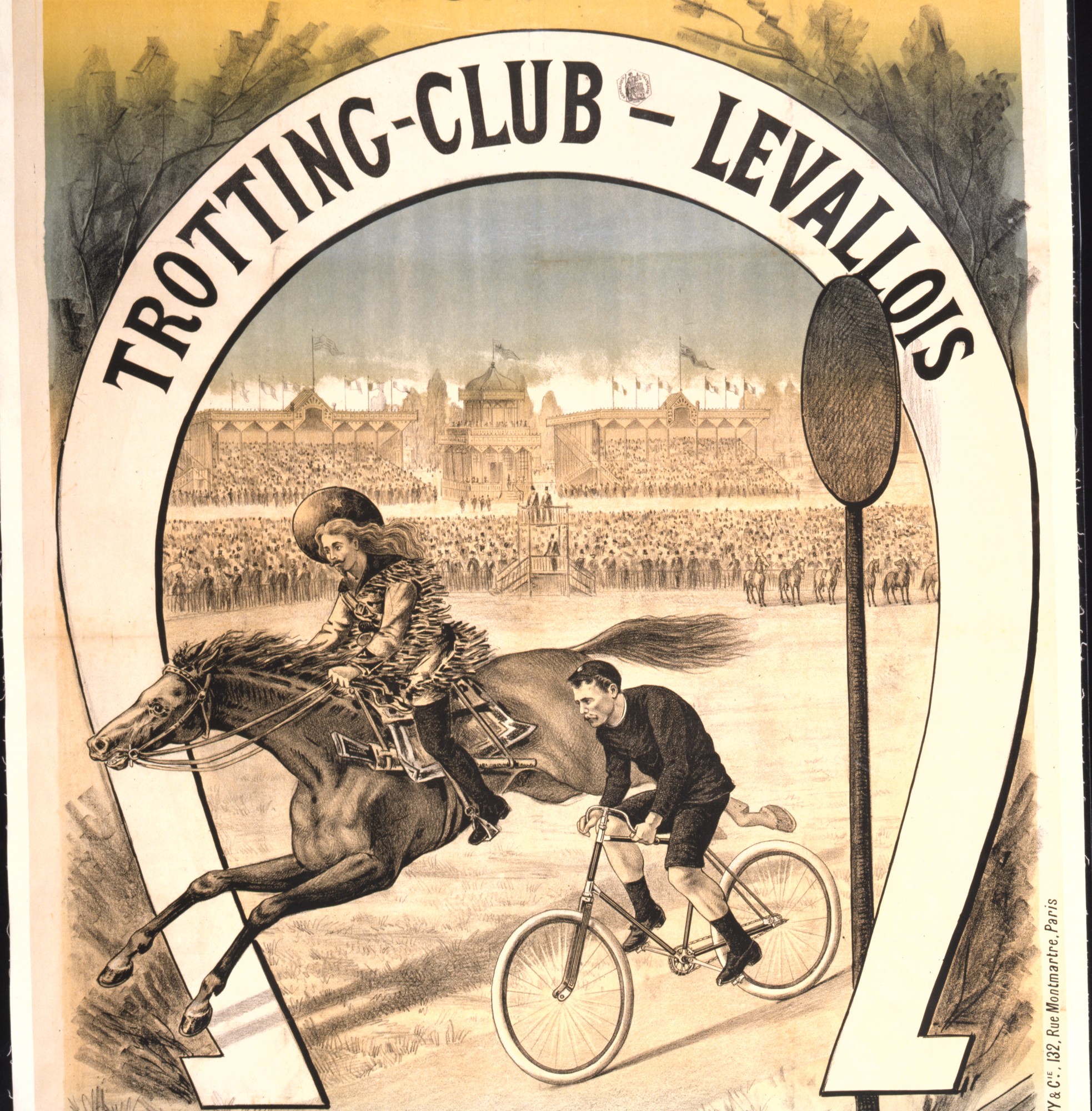
A horse against a bicycle in Paris: part of an 1893 poster for a match between the cowboy S. F. Cody and the cyclist Meyer. It is not the Delta race. Library of Congress. Click the picture to see it full size.
Six minutes apart at Montrose
The start in Delta “was made precisely at 7 o’clock.” All along the road, men on bicycles and men on horseback waited to cheer the racers on.
Prince got to Montrose first, in 1 hour and 26 minutes. The bicycle rolled in at 1 hour and 32 minutes, just six minutes behind. Montrose people came out in a crowd to watch them start for home. It was still anybody’s race.
Then came the long road back. “The old horse kept right on going,” the paper said. Charley Updegraf’s legs began to cramp. About four miles from Delta, he could not pedal any farther. He rode into town in a buggy with a man named Frank House.
Prince trotted in 3 hours and 23 minutes after he started. That works out to almost 15 miles an hour for fifty miles. The paper said he looked ready “to turn around and go back.”
The horse nobody had heard of
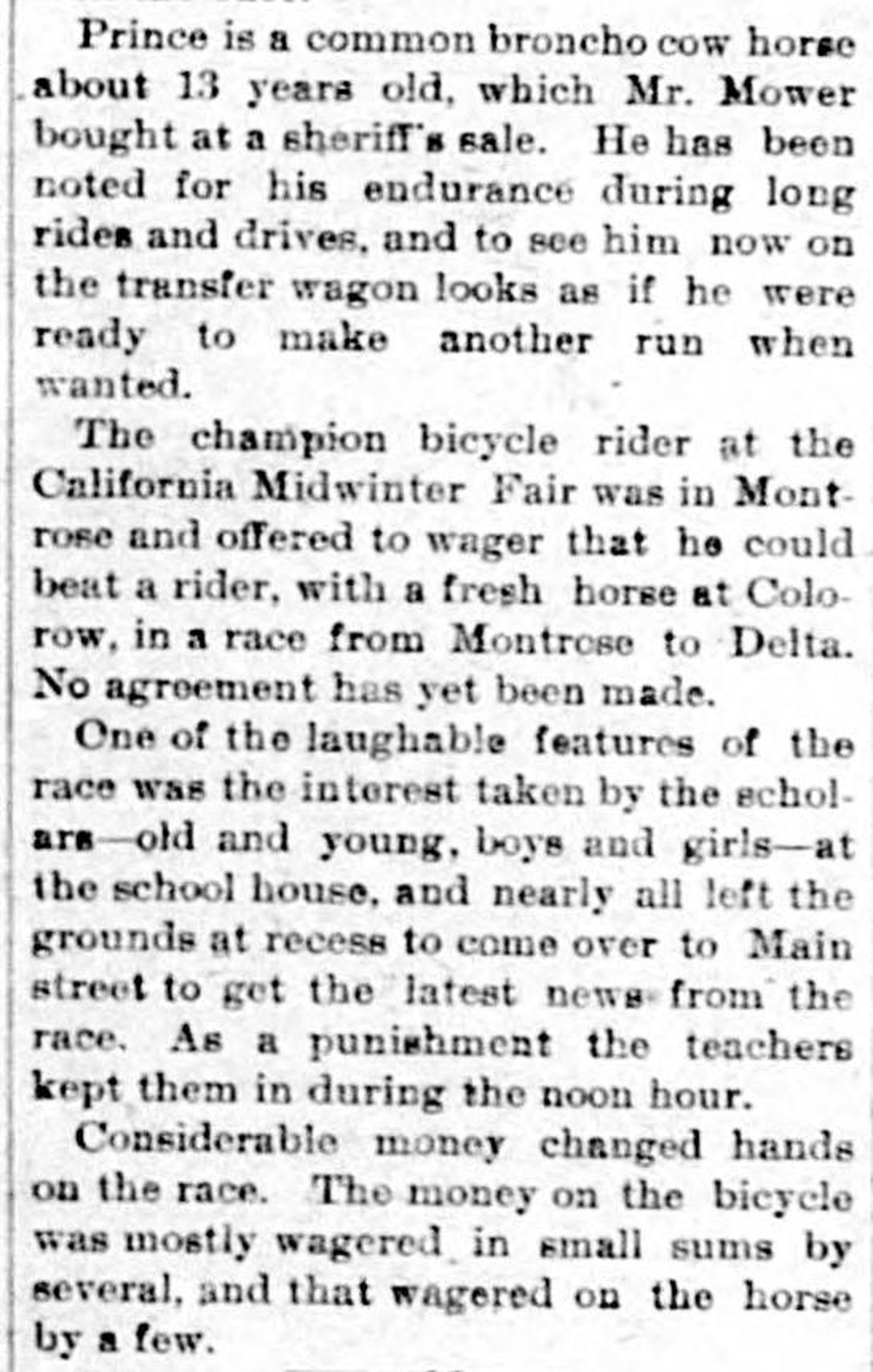
Prince was no racehorse. The Independent called him “a common broncho cow horse about 13 years old, which Mr. Mower bought at a sheriff’s sale.” A sheriff’s sale is an auction where things are sold off to pay somebody’s debts. After the race, Prince went right back to work on the transfer wagon, the wagon that hauled trunks and freight around town.
The paper was kind to the loser. “Mr. Updegraf made a splendid ride, and it was simply the long wind of the horse that won the race.” Long wind means he never ran out of breath.
Prince, the school children and the bets. The Delta Independent, Delta, Colorado, May 16, 1894, page 1. Library of Congress, Chronicling America. Click the clipping to read it full size.
What the kids did
The school children could not stand the wait. At recess, nearly all of them left the school grounds and ran over to Main Street “to get the latest news from the race.” The teachers were not amused. “As a punishment the teachers kept them in during the noon hour,” the paper reported. It called that one of the “laughable features” of the day.
The grown-ups had their own stake in it. “Considerable money changed hands on the race,” the paper said. Lots of people had put small bets on the bicycle. Only a few had bet on the old horse.
What a bicycle cost
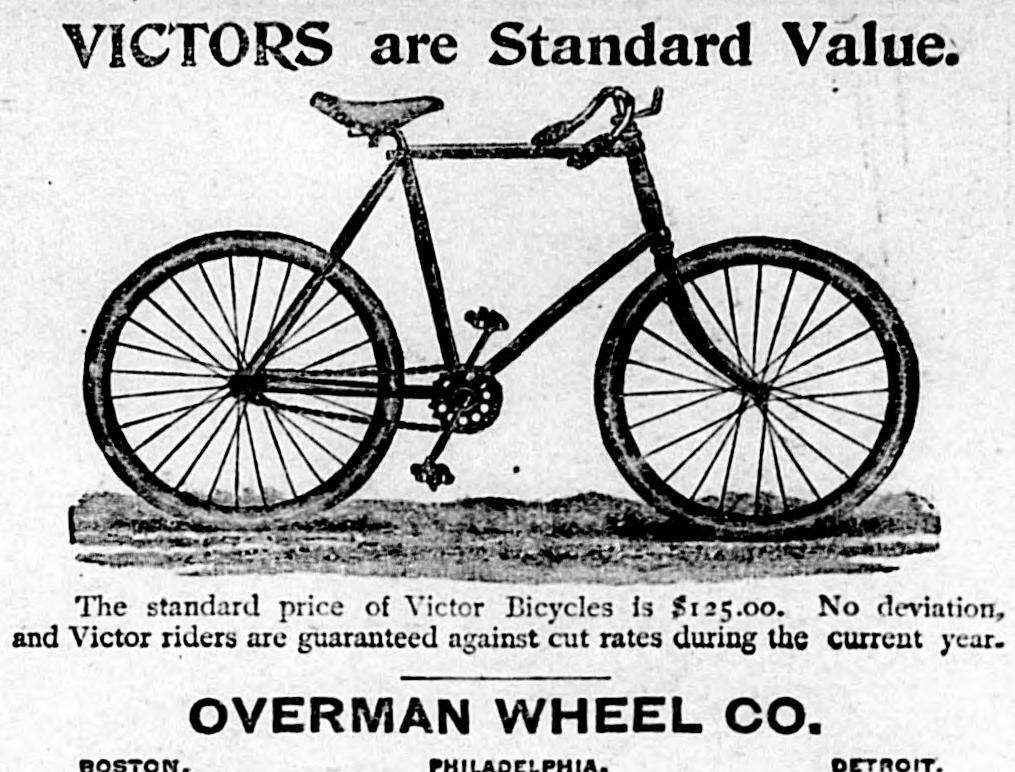
A good bicycle was a big prize in 1894. That same month, the Delta paper ran an ad for Victor bicycles. “The standard price of Victor Bicycles is $125.00,” it said. That was more than the $100 Clarence Mower won.
A Victor bicycle ad from the Overman Wheel Co. The Delta Independent, Delta, Colorado, May 2, 1894, page 4. Library of Congress, Chronicling America. Click the picture to see it full size.
A wheel for the loser
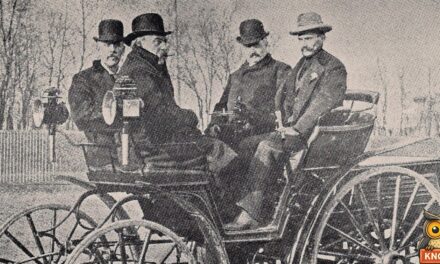
The photo at the top of this page is not Prince. We found no picture of him. It shows a cowboy and his horse, photographed out West between 1898 and 1905, the same kind of working horse.
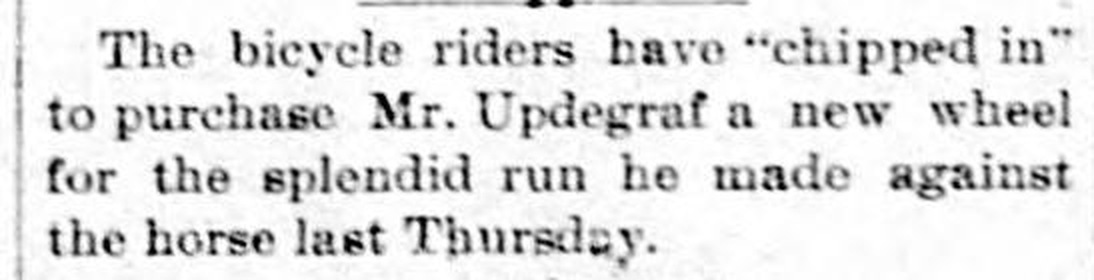
Charley Updegraf lost the race and the new Cleveland that went with it. He did not go without for long. The same paper that told of his loss carried one more short item about him. “The bicycle riders have ‘chipped in’ to purchase Mr. Updegraf a new wheel for the splendid run he made against the horse last Thursday.” So the old cow horse won the money, the man who lost got the bicycle anyway, and the school kids of Delta paid for the news with their lunch hour.
The Delta Independent, Delta, Colorado, May 16, 1894, page 1. Library of Congress, Chronicling America. Click the clipping to read it full size.
Sources
- The Delta Independent (Delta, Colorado): May 16, 1894, page 1 (“That Race,” and the item on Mr. Updegraf’s new wheel).
- The Delta Independent (Delta, Colorado): May 9, 1894, page 1 (“Bicycle Versus Horse”).
- The Delta Independent (Delta, Colorado): May 2, 1894, page 4 (Victor bicycle ad).
- Poster, “Hippodrome du Trotting Club Levallois, grand match en 12 heures: S. F. Cody Jr. contre Meyer,” Paris, Émile Lévy & Cie., 1893, Library of Congress, no known restrictions on publication in the U.S.
- All newspaper images: Library of Congress, Chronicling America. Published 1894.
- Cover: “A cowboy,” photochrom print, Detroit Photographic Co., between 1898 and 1905, Library of Congress, no known restrictions on publication. It shows a cowboy and a horse of the same kind, not Prince or the Delta race.