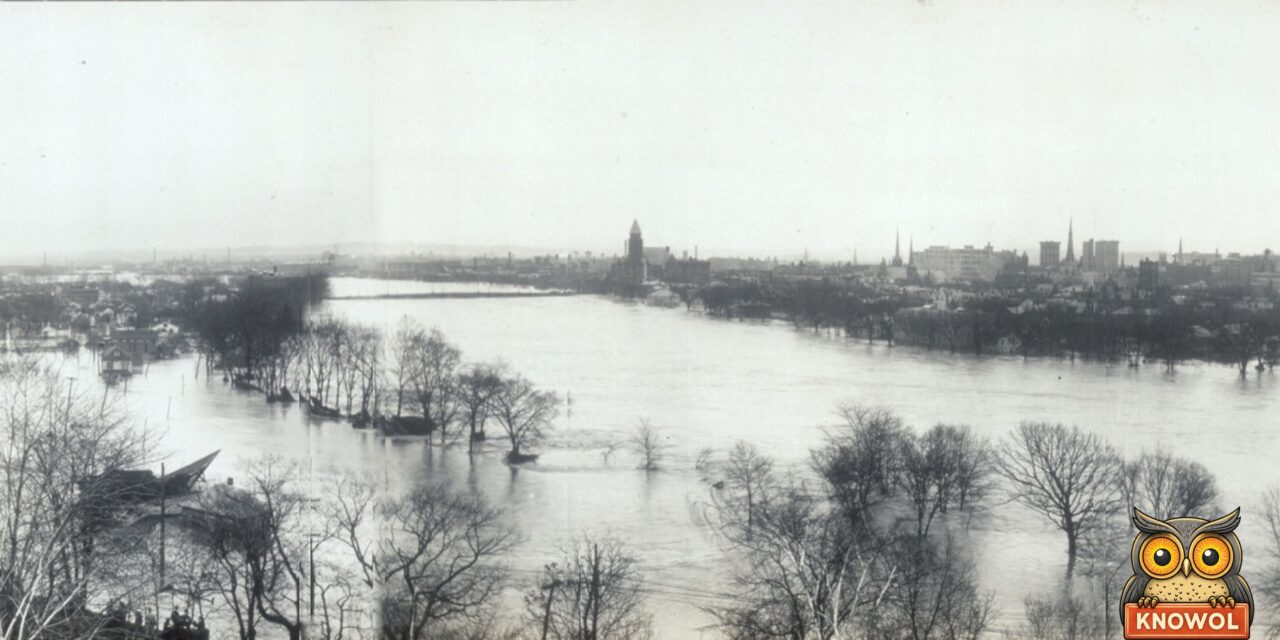
On Friday night, May 9, 1913, about 3,000 people squeezed into the Coliseum in Richmond, Indiana. They came to watch a team of lodge men from Dayton, Ohio, march in patterns to music. Just six weeks earlier, Dayton had been under floodwater.
The visitors were the Oregon rank team of the Knights of Pythias. The Richmond Palladium called their show “the most spectacular and brilliant drill ever given by a lodge team in this city.” The paper said “the big hall was filled to its capacity,” and the crowd “watched with interest the silent maneuvers of the team.” Silent maneuvers are marching moves done without shouted orders.
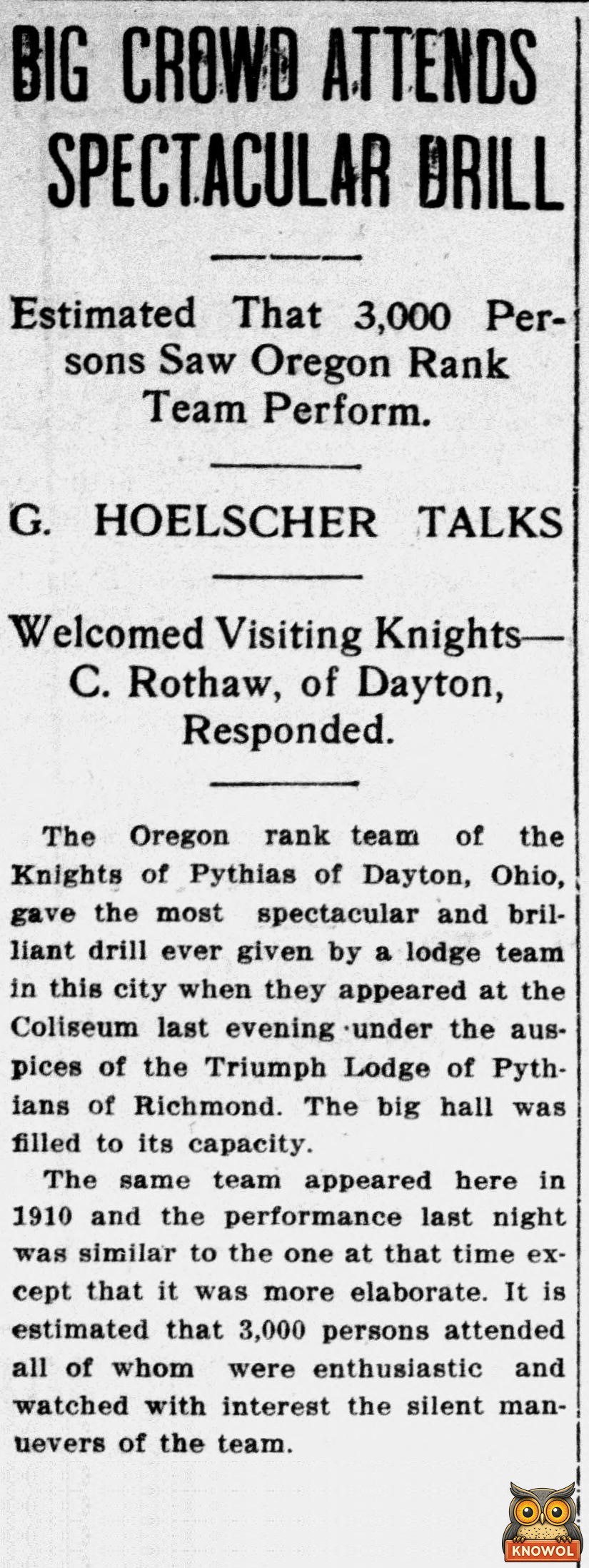
“Big Crowd Attends Spectacular Drill.” The Richmond Palladium and Sun-Telegram, Richmond, Indiana, May 10, 1913, page 3. Library of Congress, Chronicling America. Click the clipping to read it full size.
Who Dayton’s Oregon Guards Were
The name can fool you. Oregon was simply the name of the men’s lodge, Oregon Lodge No. 351 of the Knights of Pythias in Dayton, Ohio. This was an Ohio team, not one from the state of Oregon.
The Knights of Pythias was a lodge, a kind of members’ club with secret ceremonies, costumes and a promise to help each other. Its name came from an old Greek story about two friends in the city of Syracuse. A ruler named Dionysius sentenced Pythias to die. His friend Damon stood as a hostage for him. In the end, the ruler pardoned them both.
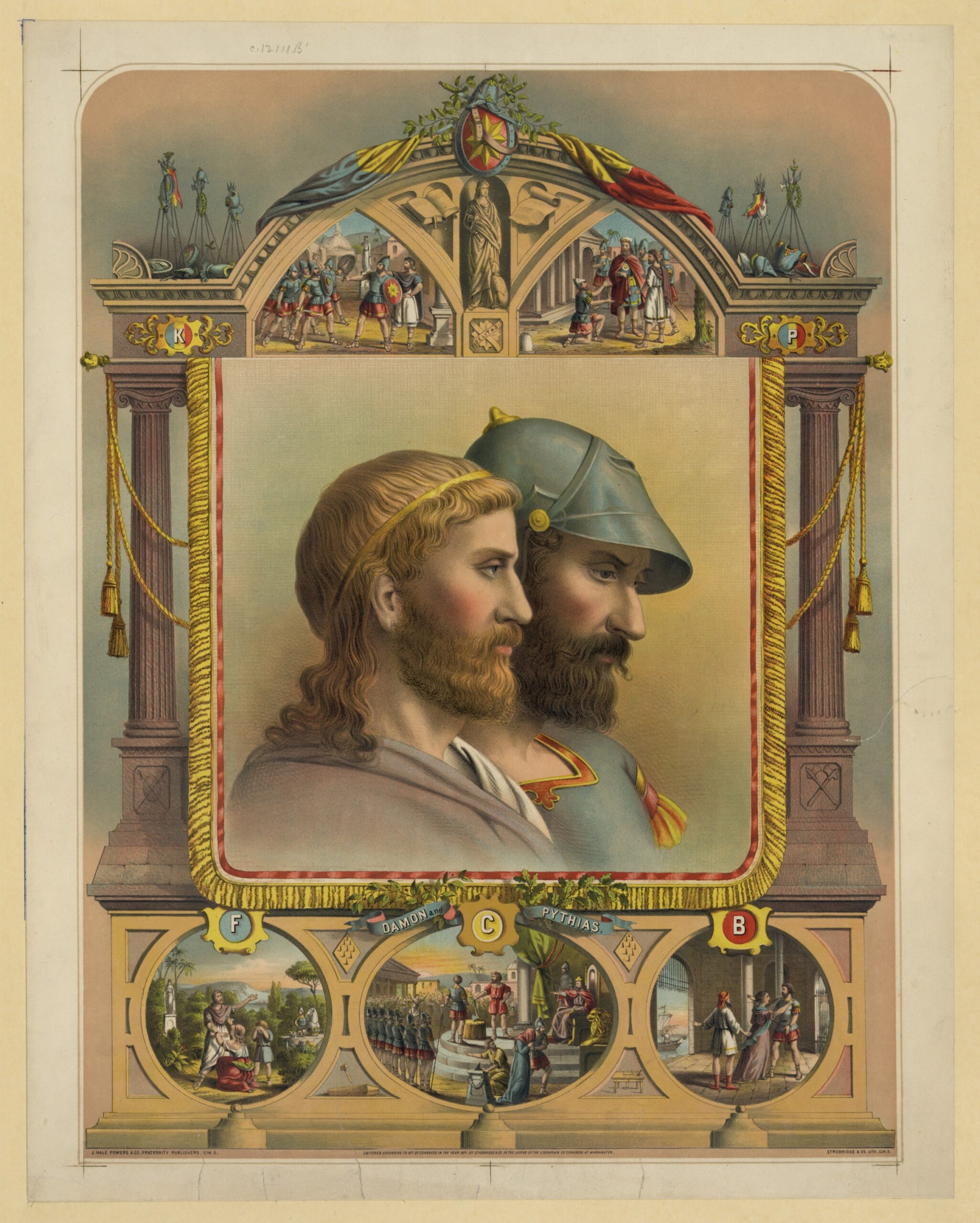
Damon and Pythias, the two friends of the old story, on a color print with the initials K and P at the top. Strobridge & Co., about 1871. Library of Congress, Prints and Photographs Division. Click the picture to see it full size.
New members joined in steps called ranks, each with its own ceremony. A degree team was a group of members who acted out a ceremony for the newcomers. In March 1912, Richmond knights rode a special railroad coach to Dayton to watch the Oregon team “work” on about nine new members from Richmond’s Triumph lodge. The Palladium also remembered the team’s first Richmond show, in 1910, “before one of the largest crowds which was ever crowded into that building.”
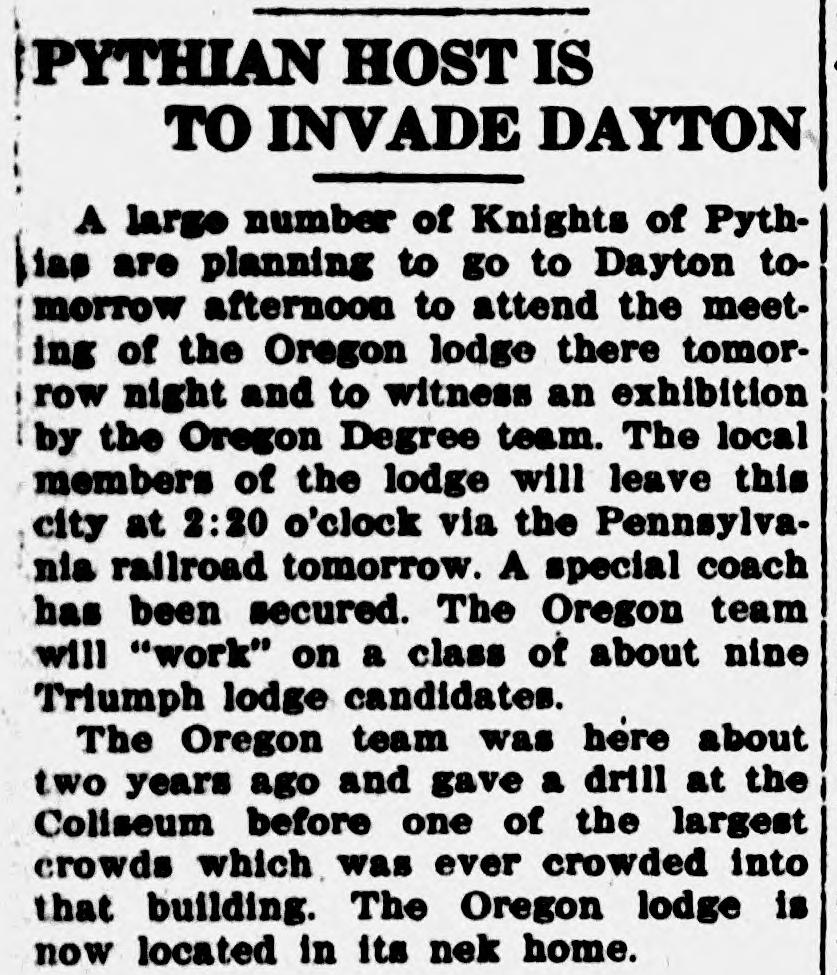
Richmond’s knights head to Dayton. The Richmond Palladium, March 27, 1912, page 8. Library of Congress, Chronicling America. Click the clipping to read it full size.
How Richmond, Indiana, Helped Flooded Dayton
In late March 1913, a flood swamped Dayton, Ohio. Richmond, just west across the Indiana line, sent help fast. The Palladium reported that “Richmond’s flying squadron of relief automobiles” drove into the city on Thursday, March 27. The first car to get there was driven by Russell Gaar, and it carried a load of bread.
Before Gaar drove home, “nearly a hundred of the homeless flood sufferers wrote letters and post cards to relatives in other cities, telling them they were safe and sound.” They handed the cards to Gaar to mail at the Richmond post office. For worried families far away, those cards carried the news they wanted most.
The Night Dayton’s Knights Came to Richmond
Six weeks later, the Oregon team came to Richmond as guests of the Triumph Lodge. Gus Hoelscher gave the welcome speech and handed the visitors “the keys to the city.” He said the Richmond lodge felt for its guests, “many members of the lodge having sustained losses in the flood.”
Then a Dayton knight answered. The paper spelled his name C. Rothaw, and he kept the lodge’s records. He thanked his hosts and “told of how they had been assisted by Richmond persons.” The Palladium wrote of “the Damon and Pythias feeling that exists between the brother knights of the two cities.”
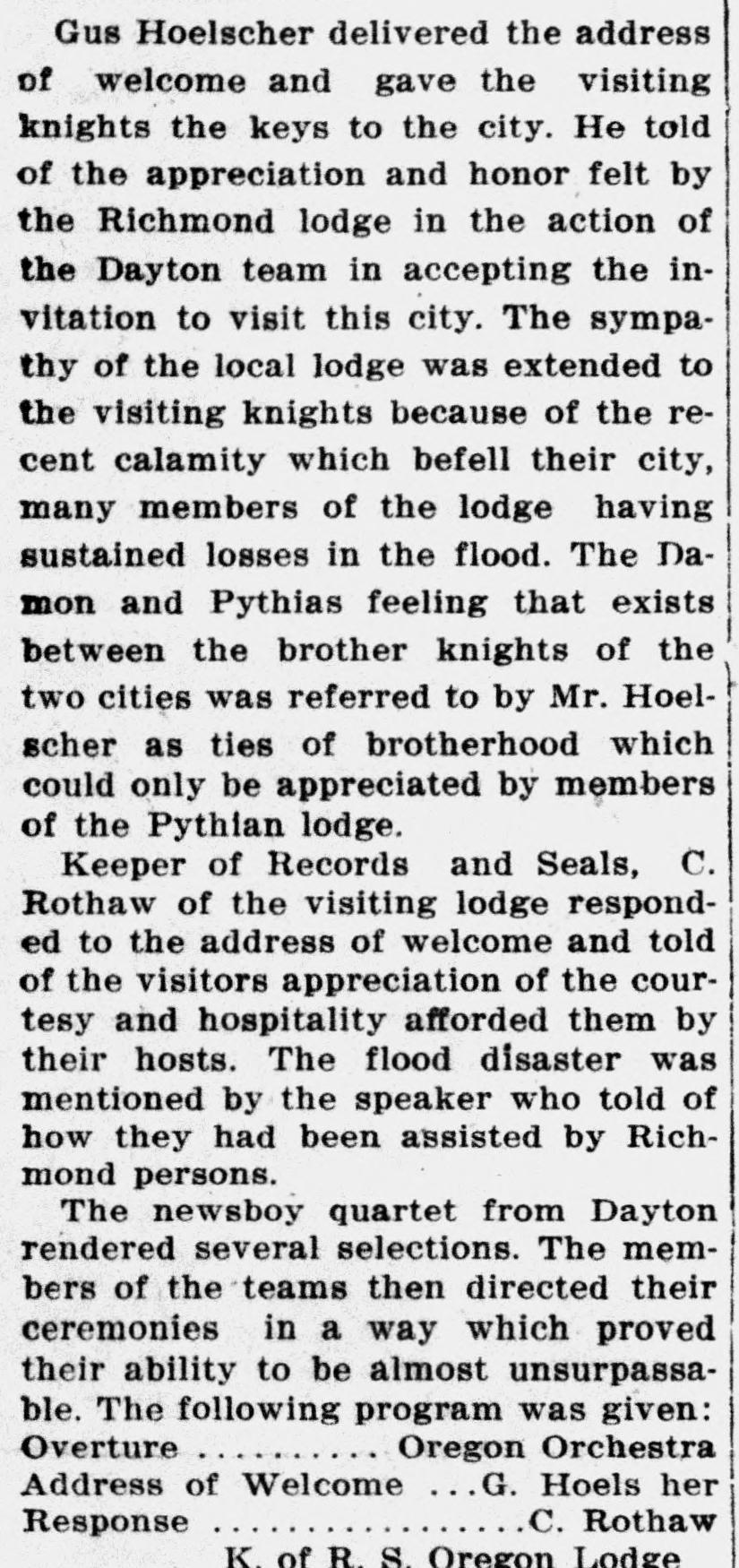
The welcome, and the flood. The Richmond Palladium, May 10, 1913, page 3. Library of Congress, Chronicling America. Click the clipping to read it full size.
The Oregon Orchestra played first. A quartet of Dayton newsboys, boys who sold papers on the street, sang several songs. Then the drill began. Swords were presented to the captains. A king and a senate took their seats, like a royal court from long ago. The White Guards, led by Capt. Paul Ackerman, did an “Electrical Drill.” The Blue Guards, the Yellow Guards and the Red Guards each had a turn. The whole team came together for a “Grand Finale,” and then everybody danced.
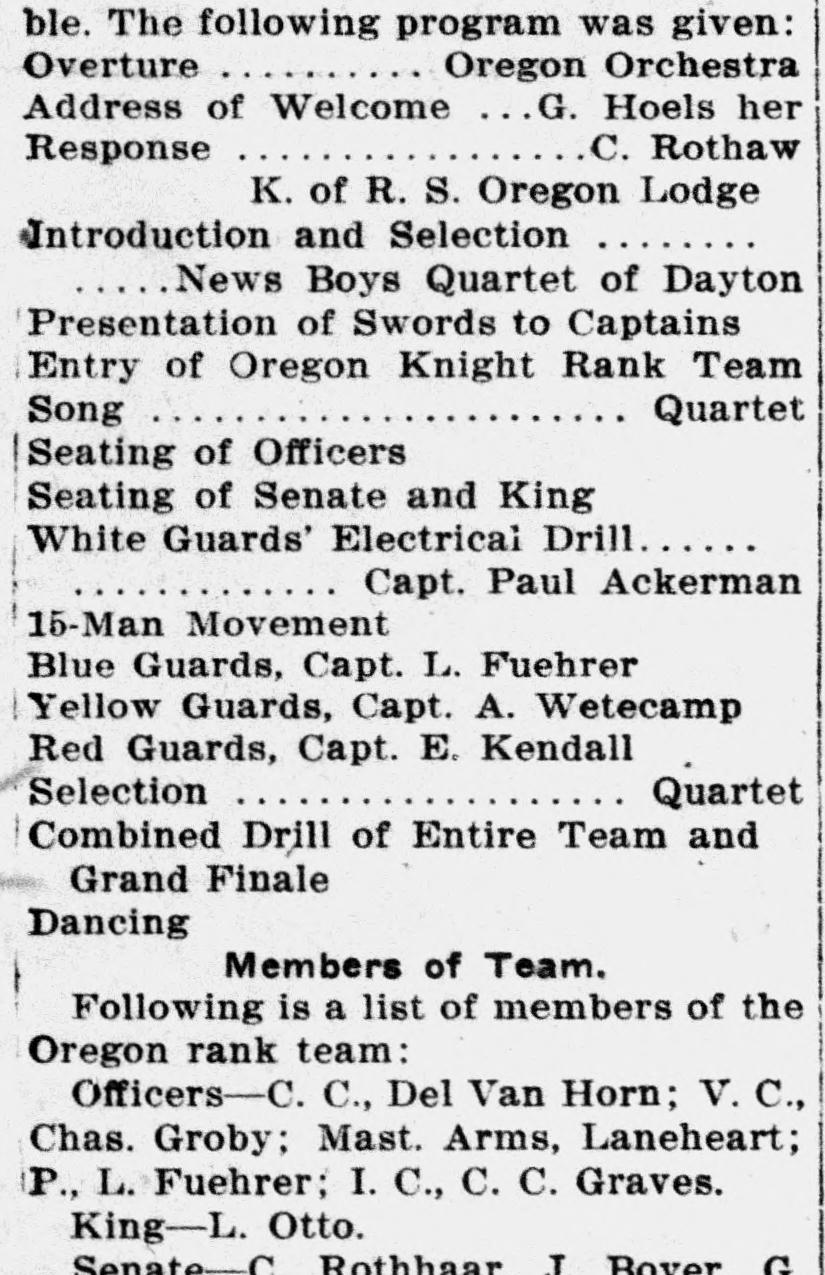
The program for the night. The Richmond Palladium, May 10, 1913, page 3. Library of Congress, Chronicling America. Click the clipping to read it full size.
By the Numbers: Dayton’s Oregon Team in 1913
The Palladium printed the whole team list. Each of the four guards had 13 men, a captain and 12 more. That’s 52 marchers. Each guard also brought spare men and a bugler or a trumpeter.
Behind them stood an orchestra of 12 men, counting its manager. There were a king, a senate, a herald, two men for “Stage and Properties,” and six “Electricians.” The Palladium never explains how the electric part of the drill worked. It only shows that the drill needed its own crew.
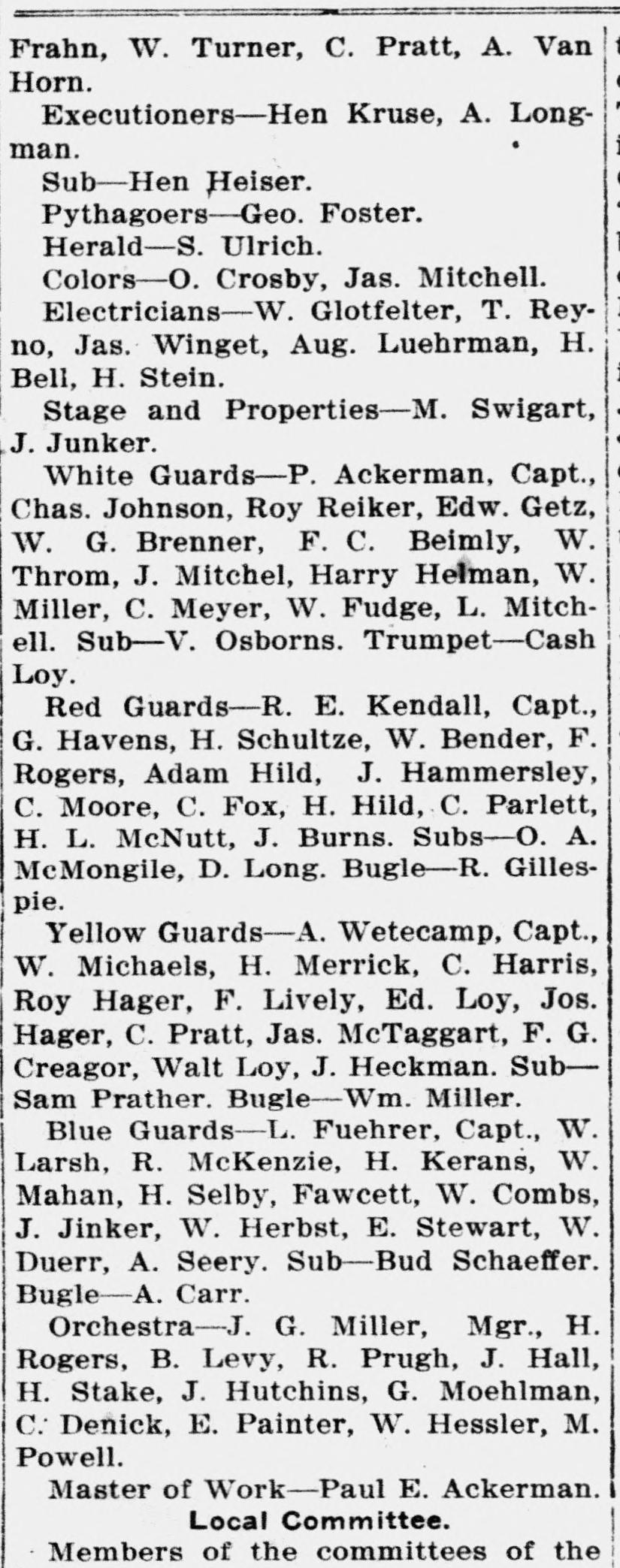
The team list, with its six electricians. The Richmond Palladium, May 10, 1913, page 3. Library of Congress, Chronicling America. Click the clipping to read it full size.
Dayton’s Oregon Guards Came Back to Richmond in 1921
Eight years later, Richmond Lodge No. 8 booked the team again for Friday, May 27, 1921. The Palladium reminded readers that last time, “crowds were turned away from the Coliseum.”
This time the paper promised “Triangles, circles, anchors, letters, boxes, diamonds, wheels and numerous other designs,” all made by men moving into place. There would be “myriads of dazzling electric effects,” and costumes “valued at more than $10,000.” Even the four guards had big names. The White Guards were the “Twentieth century” guards, and the Red Guards were “Incomparable.” The Blue Guards were billed as invincible, and the Yellow Guard as “Superior.”
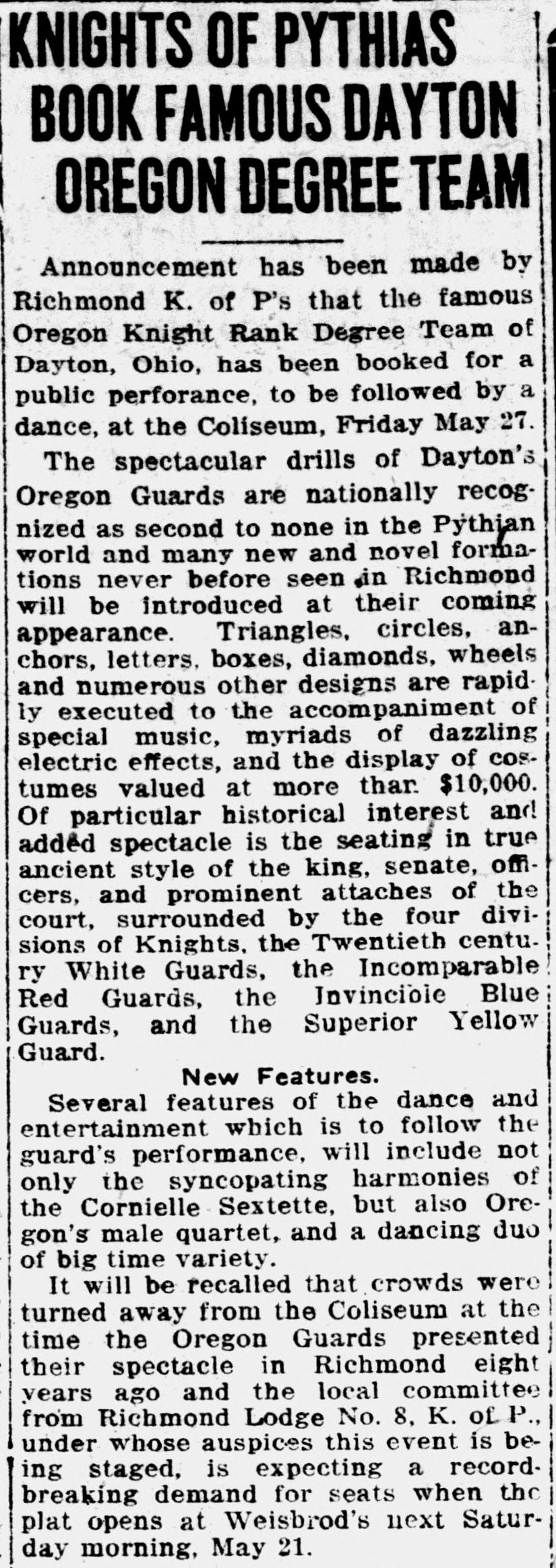
“Knights of Pythias Book Famous Dayton Oregon Degree Team.” The Richmond Palladium and Sun-Telegram, May 14, 1921, page 2. Library of Congress, Chronicling America. Click the clipping to read it full size.
On May 17, the paper printed a photograph of the Yellow Guards in their helmets, holding long spears.
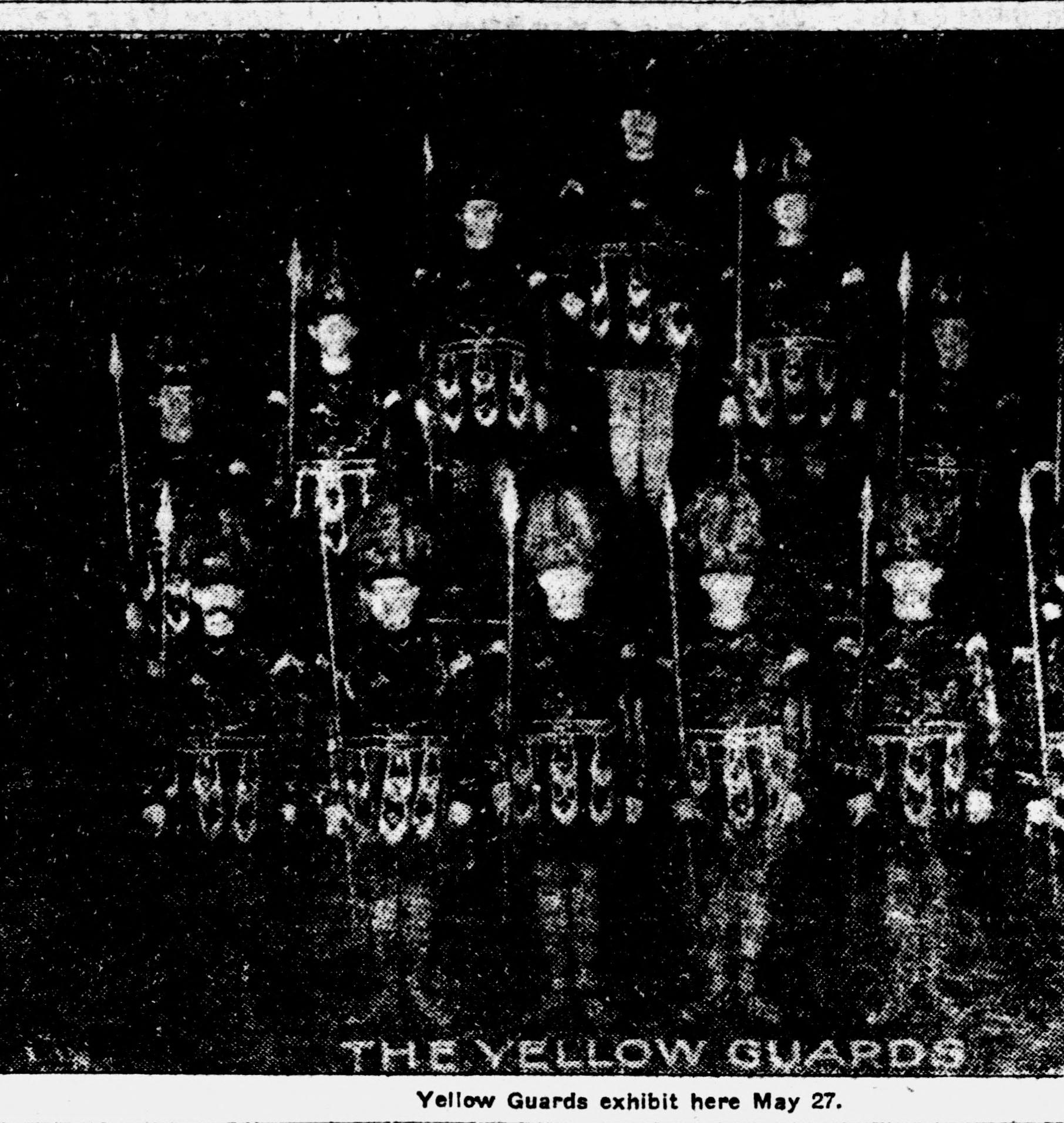
“The Yellow Guards” of Dayton’s Oregon team. The Richmond Palladium and Sun-Telegram, May 17, 1921, page 7. Library of Congress, Chronicling America. Click the picture to see it full size.
The show went on as planned. The next day’s paper said the team drilled “before a well filled house,” and “many formations produced were nothing less than marvelous.” The men moved “with clock-like work to the accompaniment of special music.” Afterward, people danced “to the strains of the saxaphone,” played by the Cornielle sextette of Dayton.
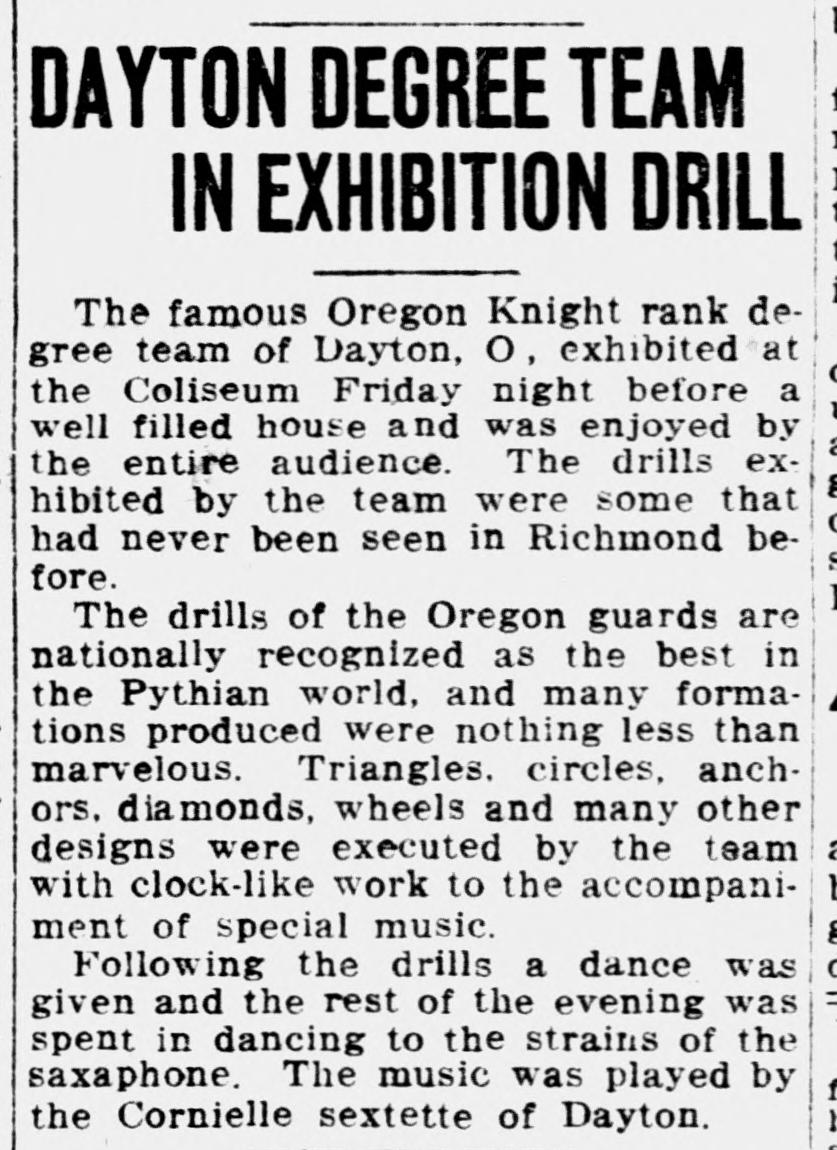
“Dayton Degree Team in Exhibition Drill.” The Richmond Palladium and Sun-Telegram, May 28, 1921, page 2. Library of Congress, Chronicling America. Click the clipping to read it full size.
What a Ticket Cost in Richmond, Indiana, in 1921
The ad for the 1921 show called Dayton’s men “The Largest K. of P. Knight Rank Team in America.” K. of P. stood for Knights of Pythias. Admission was “50c including war tax,” and a reserved seat cost “10c Extra.” The war tax was a federal tax on theater tickets. It started in November 1917, during World War I, and it was still on tickets in 1921.
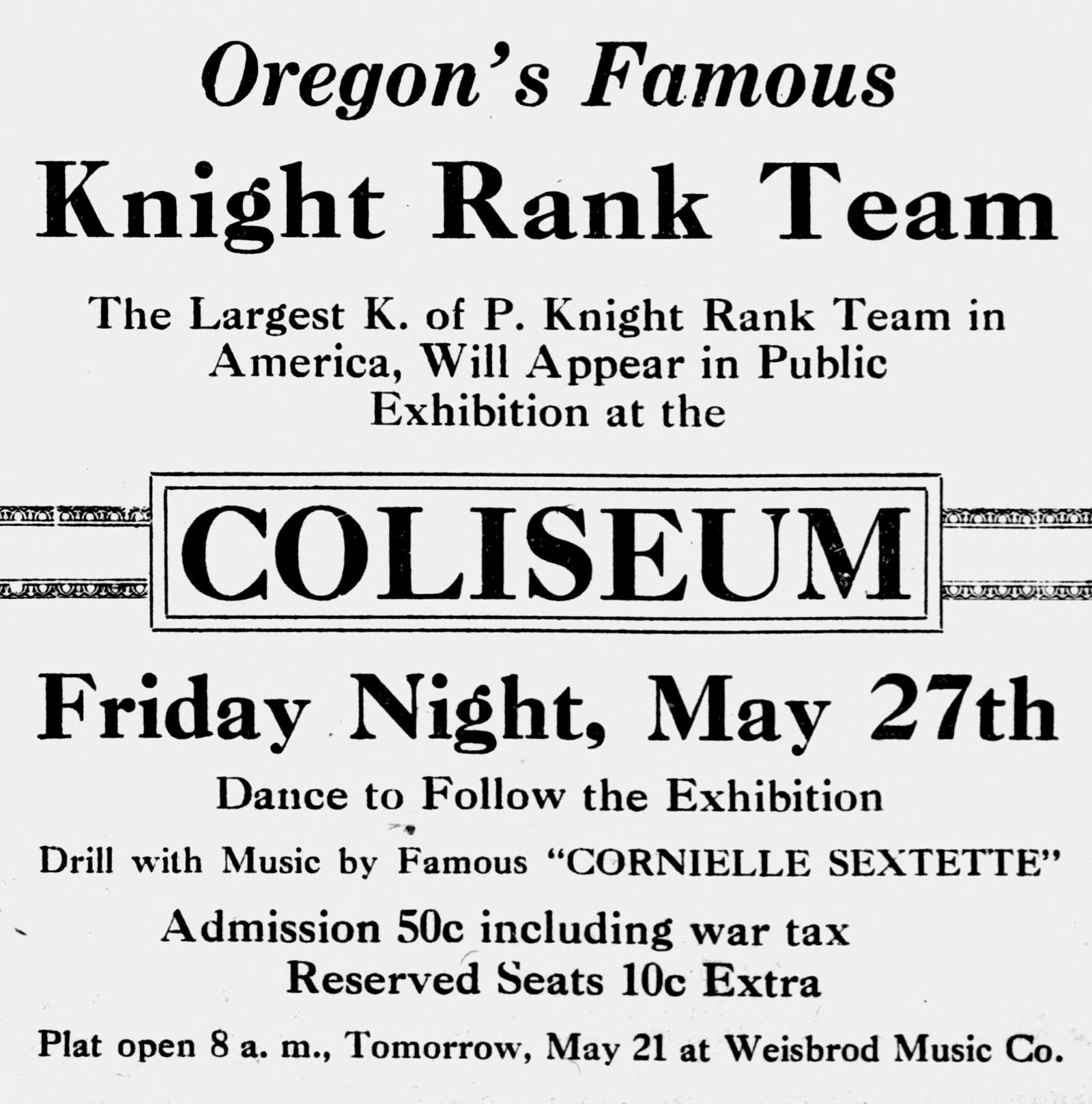
The ad for the show. The Richmond Palladium and Sun-Telegram, May 20, 1921, page 8. Library of Congress, Chronicling America. Click the clipping to read it full size.
Fifty cents bought a lot of groceries that week. At Buehler Bros. on Main Street in Richmond, five pounds of pure lard cost 50 cents. Hamburger was 12 1/2 cents a pound. So one ticket to see the Oregon Guards cost the same as four pounds of hamburger. Two pounds of peanut butter cost a quarter.
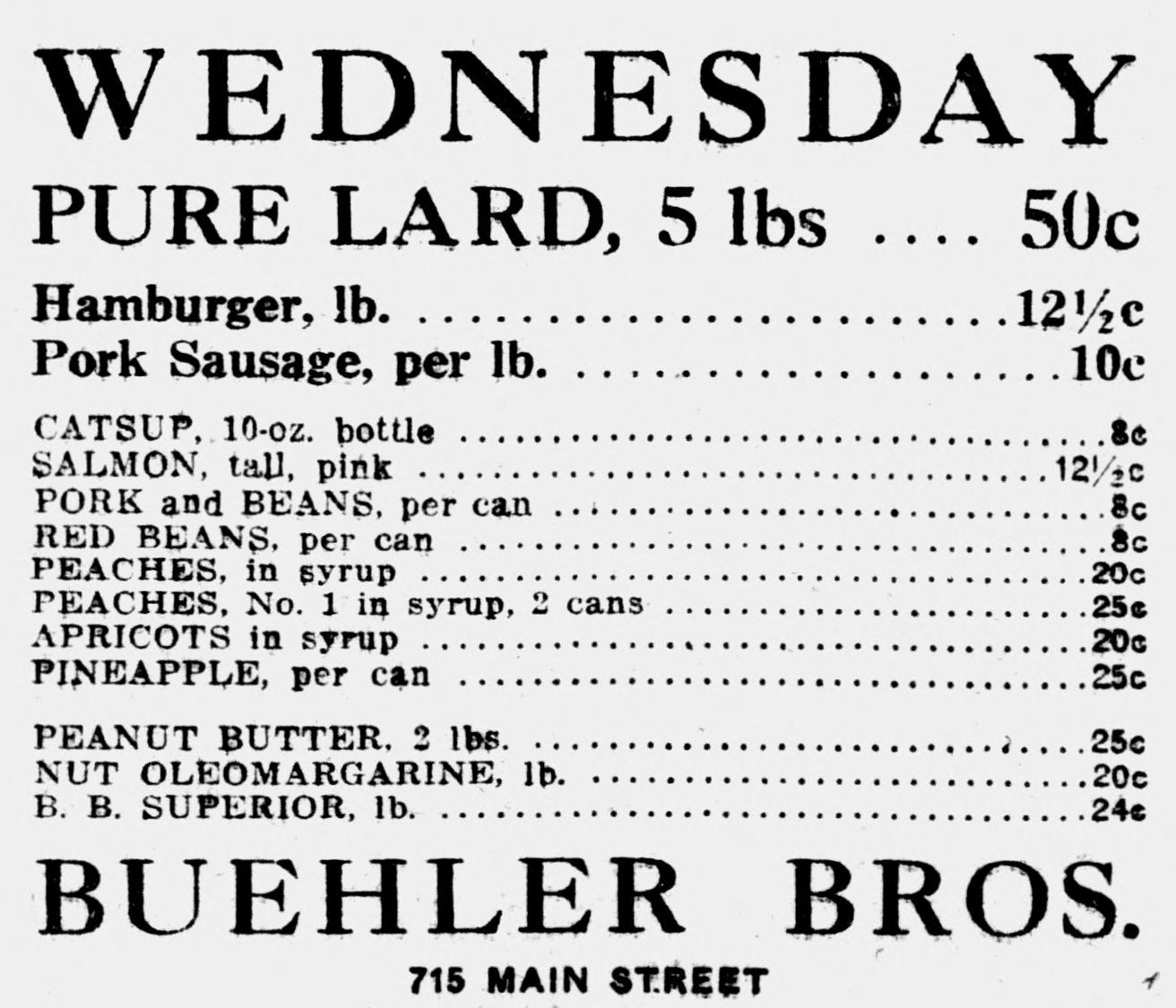
Grocery prices the same week. The Richmond Palladium and Sun-Telegram, May 17, 1921, page 7. Library of Congress, Chronicling America. Click the clipping to read it full size.
Two Friends, Two Cities: Richmond and Dayton
The Knights of Pythias took their name from two friends who stood by each other when it counted. In 1913, Richmond, Indiana, and Dayton, Ohio, did something like that. Richmond sent bread and carried home the “safe and sound” letters. Six weeks later, Dayton’s knights brought their swords, their music and their electric drill to Richmond, and 3,000 people came out to see them.
The Oregon Lodge kept the old story alive in other ways, too. In November 1921, a cast from the lodge took the play “Damon and Pythias” to the Opera House in Xenia, Ohio. The picture at the top of this page shows Dayton under the floodwater in March 1913, six weeks before the team’s big night in Richmond.
Sources
- “Big Crowd Attends Spectacular Drill,” The Richmond Palladium and Sun-Telegram (Richmond, Indiana), May 10, 1913, page 3. Library of Congress, Chronicling America.
- “Squadron of Local Autos Bring Cheer to Victims,” The Richmond Palladium and Sun-Telegram, March 28, 1913, page 1. Library of Congress, Chronicling America.
- “Pythian Host Is to Invade Dayton,” The Richmond Palladium and Sun-Telegram, March 27, 1912, page 8. Library of Congress, Chronicling America.
- “Knights of Pythias Book Famous Dayton Oregon Degree Team,” The Richmond Palladium and Sun-Telegram, May 14, 1921, page 2. Library of Congress, Chronicling America.
- “Dayton Oregon Drill Team Will Appear in Richmond” and the Buehler Bros. ad, The Richmond Palladium and Sun-Telegram, May 17, 1921, page 7. Library of Congress, Chronicling America.
- Knight Rank Team ad, The Richmond Palladium and Sun-Telegram, May 20, 1921, page 8. Library of Congress, Chronicling America.
- “Dayton Degree Team in Exhibition Drill,” The Richmond Palladium and Sun-Telegram, May 28, 1921, page 2. Library of Congress, Chronicling America.
- Xenia Evening Gazette (Xenia, Ohio), November 12, 1921, page 3: Oregon Lodge No. 351 brings “Damon and Pythias” to the Opera House. Internet Archive.
- “Big Theater Tax,” The Topeka State Journal (Topeka, Kansas), October 24, 1917, page 6: the war tax on tickets begins November 1, 1917. Library of Congress, Chronicling America.
- Hugh Goold Webb, A History of the Knights of Pythias and Its Branches and Auxiliary, 1910, pages 325 and 326: the story of Damon and Pythias. Internet Archive.
- Flood in Dayton, Ohio, March 1913, panoramic view. Library of Congress Prints and Photographs Division. No known restrictions on publication. The cover is a cropped part of the panorama, with the white seams between its print sections cleaned up.
- Damon and Pythias, print, Strobridge & Co., about 1871. Library of Congress Prints and Photographs Division. No known restrictions on publication.
- The newspapers and the book were printed before 1931 and are in the public domain.