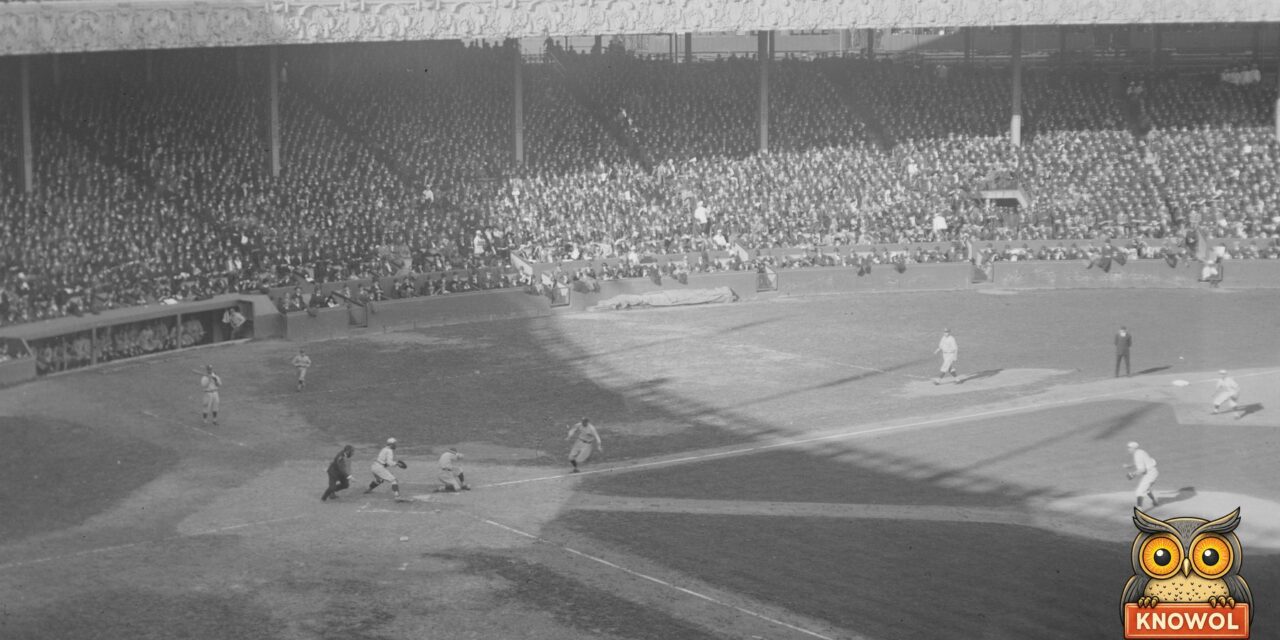
On Wednesday, October 5, 1921, the New York Giants and the New York Yankees met at the Polo Grounds in New York for the first game of the World Series. The New York Times called the people with tickets “the lucky 37,000 of the 6,000,000.” Everybody else had to wait for the news. Out in the farm towns of Indiana and Ohio, that usually meant waiting for tomorrow’s paper. That fall, a newspaper in Richmond, Indiana, had a better idea. It sent the games out over the air.
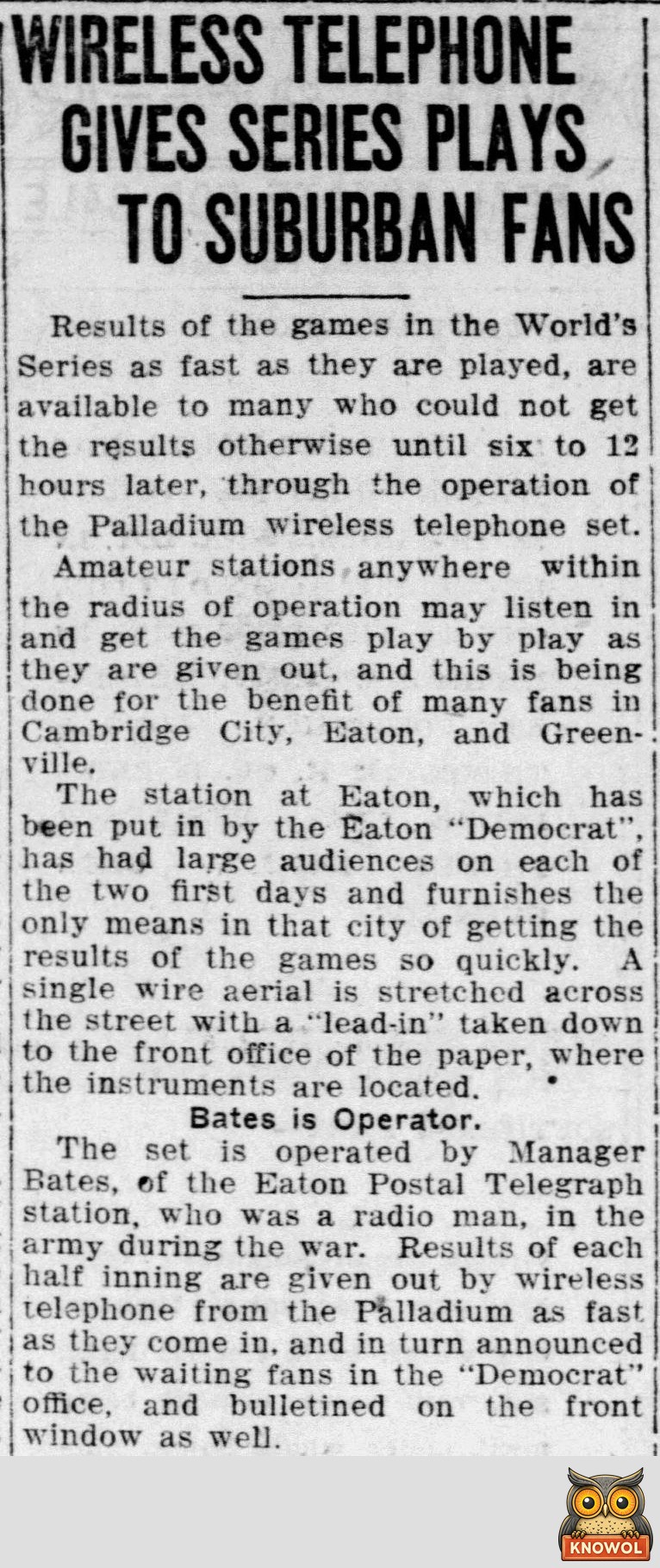
“Wireless Telephone Gives Series Plays to Suburban Fans.” The Richmond Palladium, Richmond, Indiana, October 7, 1921, page 16. Library of Congress, Chronicling America. Click the clipping to read it full size.
The lucky 37,000
New York went baseball crazy that week. For the first time, both teams in the World Series came from New York City, and both played their home games in the same ballpark. The night before the first game, the Times said fans “debated the relative chances of the Yanks and the Giants until the small hours.”
The first fan in line was Charles Kierst, “a city fireman of Auburn, N. Y.” He got to the gate at 10 o’clock in the morning, a full day before the game. He was still there at midnight. Bleacher seats were “$1 each,” plus a 10-cent war tax. About forty people were waiting with him by then. It “was shivery long before midnight,” the paper said, and many fans spent the evening “hunting up mid-Winter apparel.”
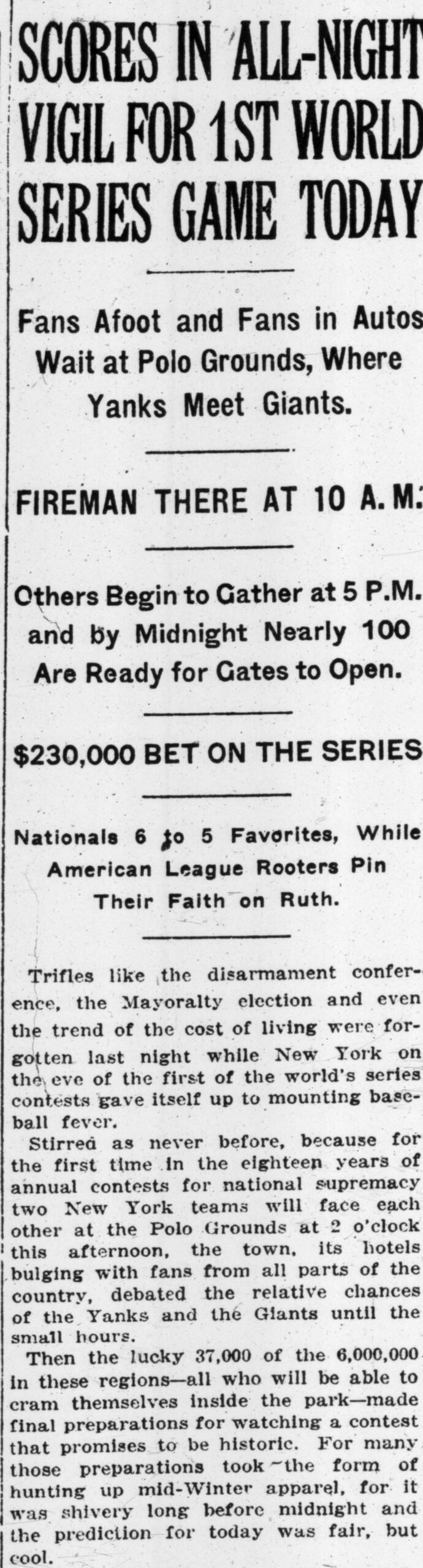
“Scores in All-Night Vigil for 1st World Series Game Today.” The New York Times, New York, October 5, 1921, page 1. Internet Archive; published 1921, public domain. Click the clipping to read it full size.
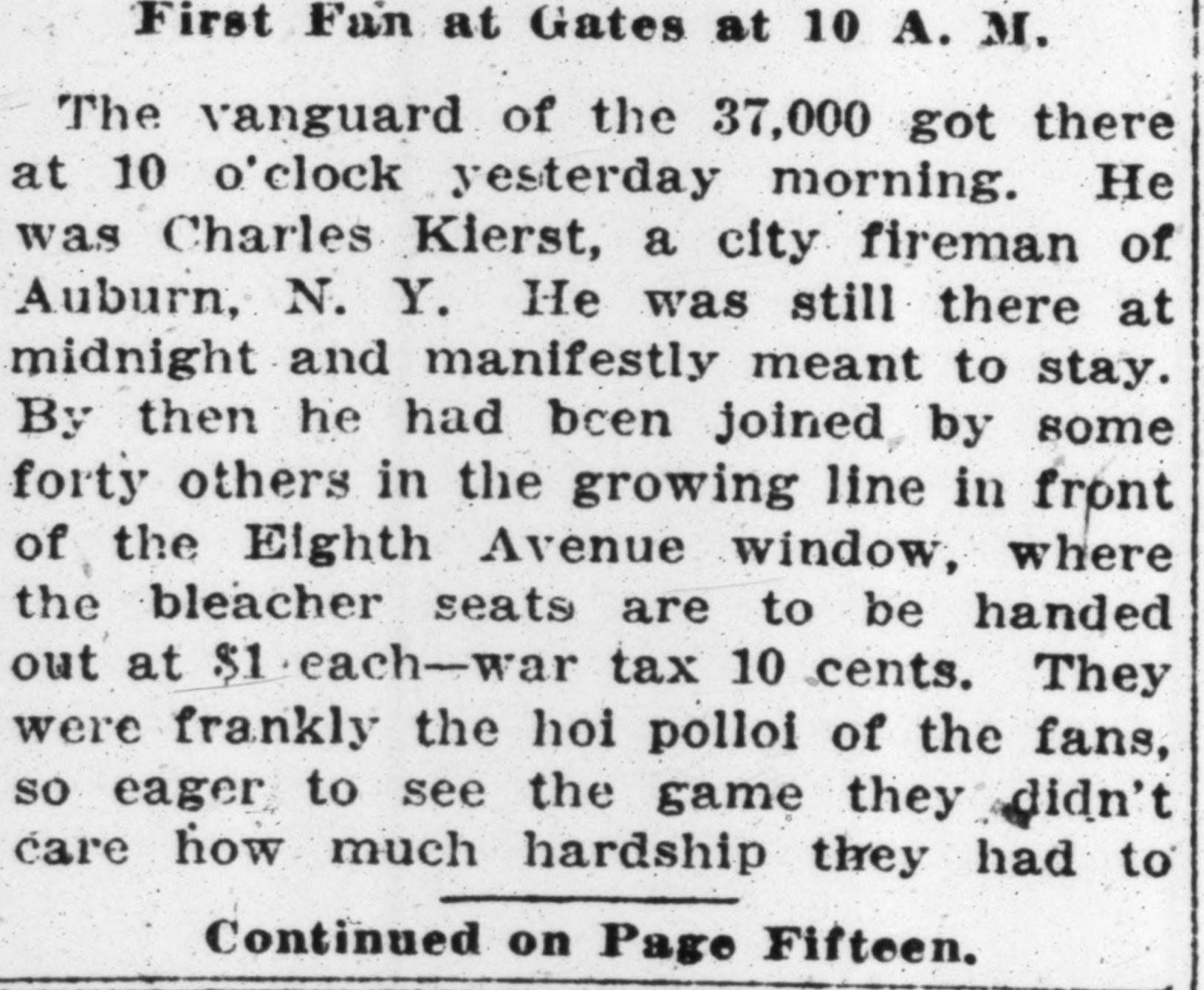
“First Fan at Gates at 10 A. M.” The New York Times, New York, October 5, 1921, page 1. Internet Archive; published 1921, public domain. Click the clipping to read it full size.
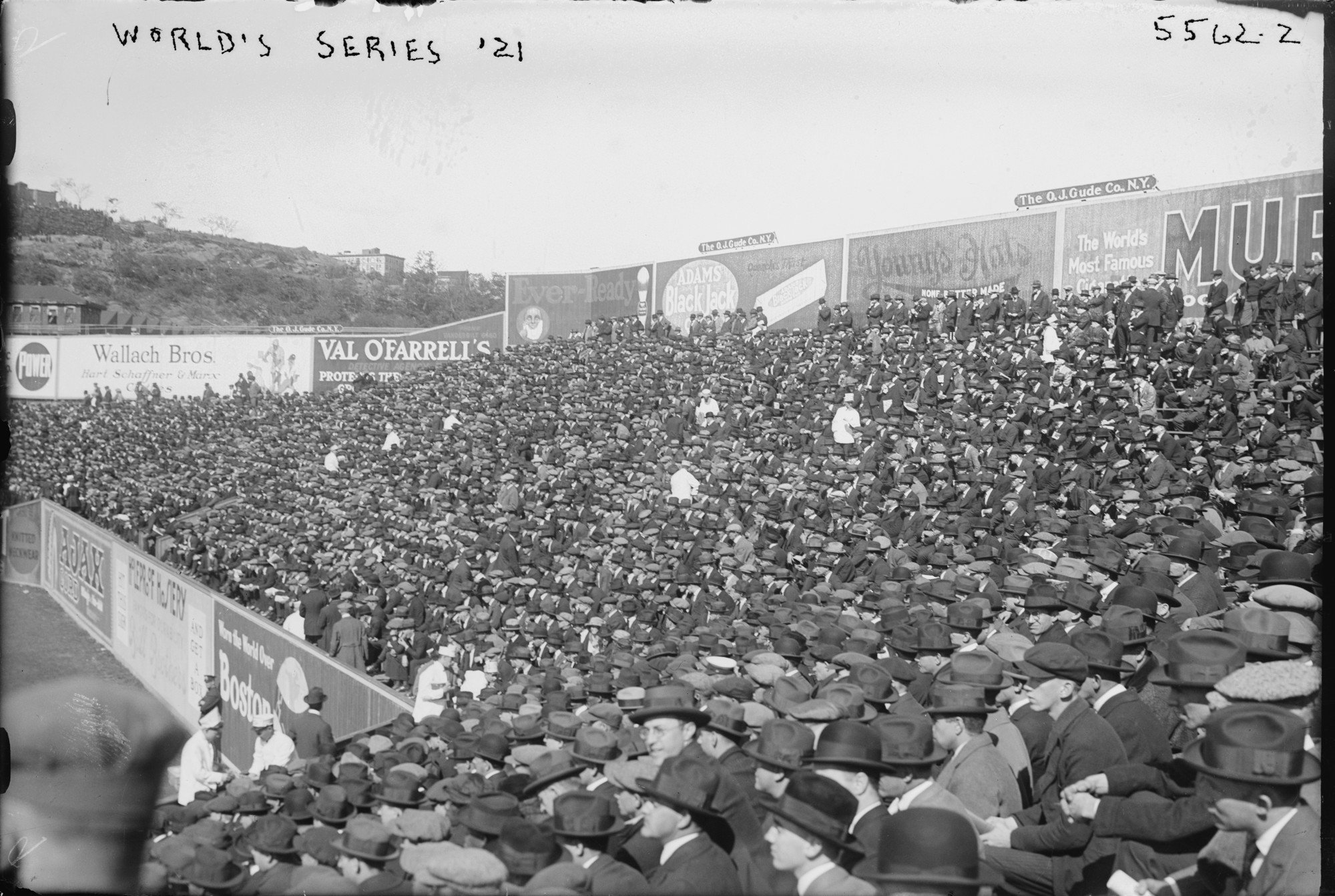
Fans in hats pack the outfield seats at the Polo Grounds during the 1921 World Series. Bain News Service, Library of Congress. Click the picture to see it full size.
A telephone with no wires
Richmond sits near the Ohio line, nearly 600 miles west of New York. Its paper, the Richmond Palladium, had put in a “wireless telephone” that spring. Today we’d just call it a radio. It sent voices and music through the air, with no wires in between.
One Tuesday night that April, a small group sat in the Palladium building and listened to a record of “Carry Me Back to Old Virginny” played far away in Washington, D.C. Some of them had come ready to say “I told you so” if it didn’t work. It worked. The paper put it this way: “They came to scoff but remained to wonder.” It also promised to bring “baseball scores” to “the outlying districts,” meaning the farms and small towns around Richmond.
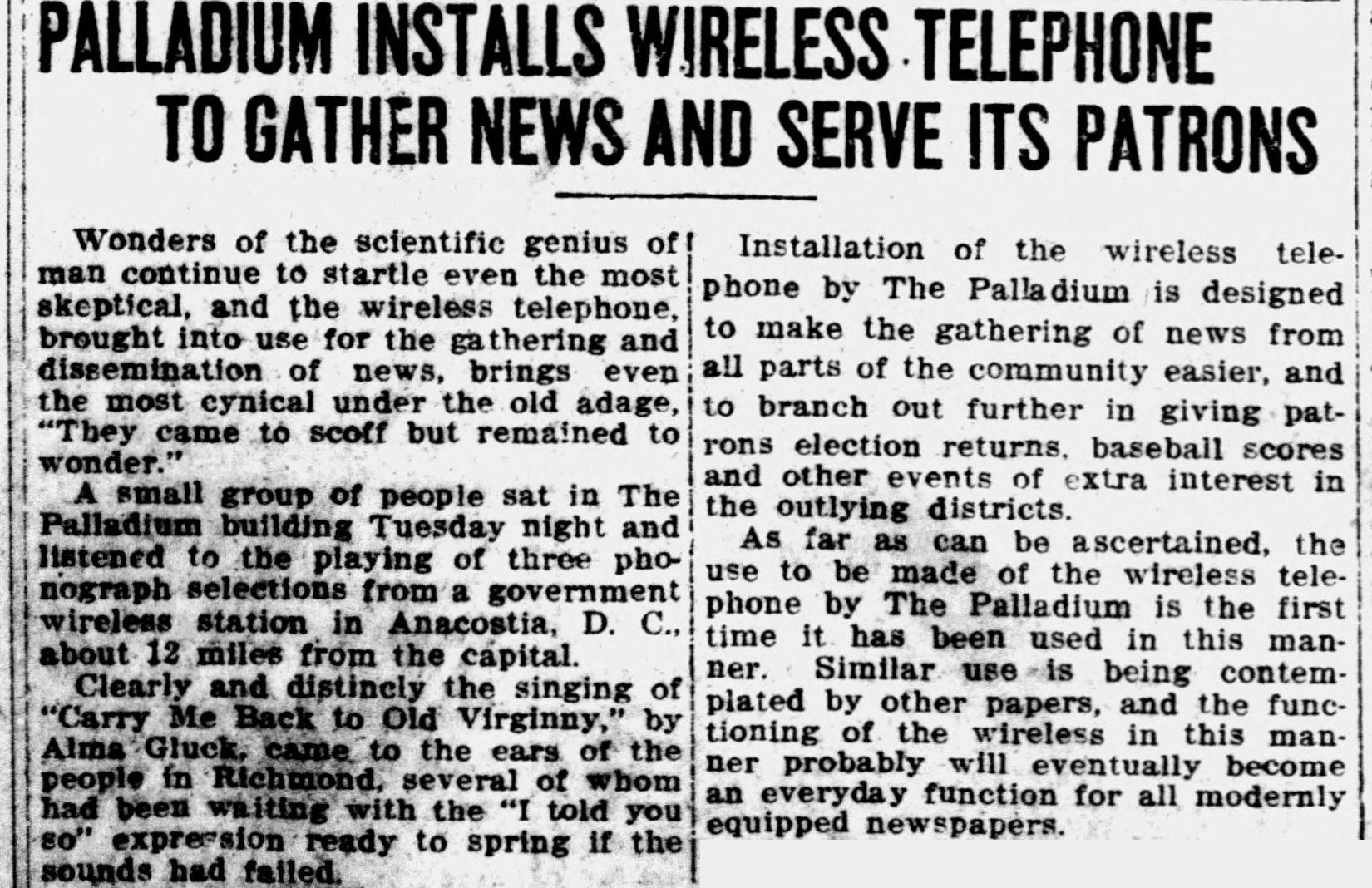
“Palladium Installs Wireless Telephone to Gather News and Serve Its Patrons.” The Richmond Palladium, Richmond, Indiana, April 6, 1921, page 1. Library of Congress, Chronicling America. Click the clipping to read it full size.
How the game got to Indiana
Here is how it worked. The Associated Press had a box at the Polo Grounds. A telegraph wire ran from that box all the way to the Palladium office. As each play happened, it came clicking down the wire. The same wire ran an “electric scoreboard” in front of the office.
Then the Palladium did one more thing. It sent the game out, play by play, over its wireless telephone “for the benefit of all stations within a radius of 50 miles.” The game started at 2:30 in New York, which was 1:30 in Richmond.
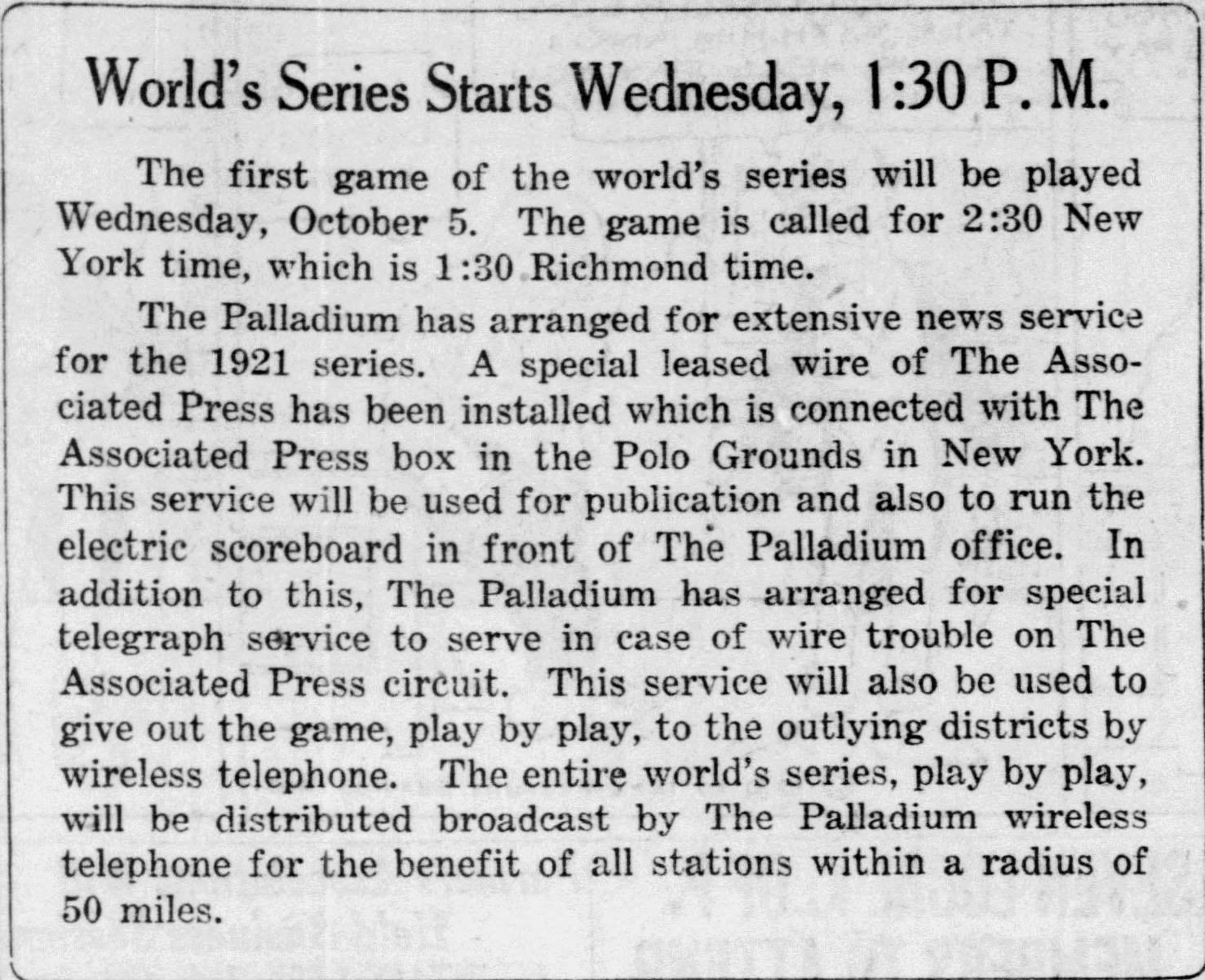
“World’s Series Starts Wednesday, 1:30 P. M.” The Richmond Palladium, Richmond, Indiana, October 3, 1921, page 7. Library of Congress, Chronicling America. Click the clipping to read it full size.
One wire across the street in Eaton, Ohio
Few people owned a radio in 1921. So the listening happened where people gathered. In Eaton, Ohio, the town paper, the Eaton Democrat, set up a set in its front office. “A single wire aerial is stretched across the street,” the Palladium reported. The man at the dials was Manager Bates of the Eaton telegraph office. He had been “a radio man, in the army during the war.”
Each half inning came in from Richmond and was called out to “the waiting fans” in the office, then posted in the front window. In Greenville, Ohio, an amateur named Carl Stocker picked up the reports on his own station and sent the news down to two poolrooms. In Cambridge City, Indiana, Fred Rowe ran a station too. They all said the voice was “coming in” very loud, and “easily understood.”
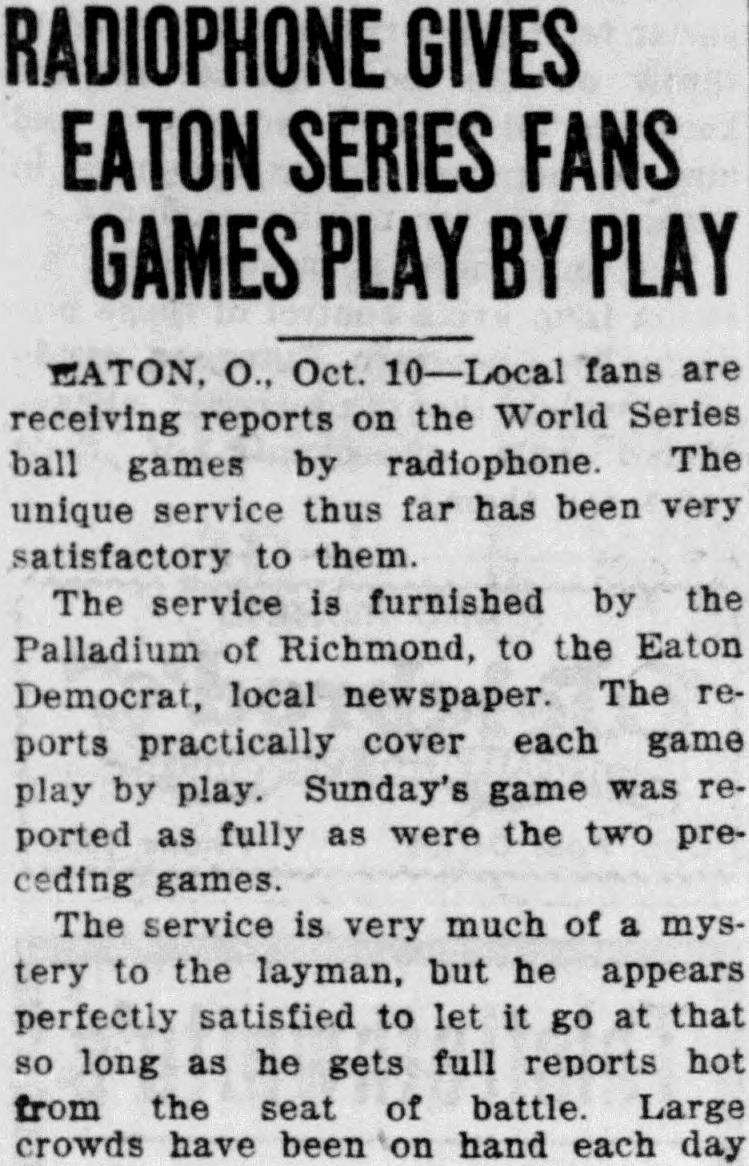
“Radiophone Gives Eaton Series Fans Games Play by Play.” The Richmond Palladium, Richmond, Indiana, October 10, 1921, page 13. Library of Congress, Chronicling America. Click the clipping to read it full size.
Eaton’s own report was the best part. Radio was “very much of a mystery to the layman,” it said. In other words, most people had no idea how it worked. They didn’t much care, “so long as he gets full reports hot from the seat of battle.”
The play nobody in Eaton saw
The photo at the top of this story is the real first game. In the fifth inning, Mike McNally of the Yankees ran in from third base and crossed the plate before the catcher could tag him. The Palladium’s play-by-play put it in four words: “McNally stole home.” The Yankees won that first game. Nobody in Eaton saw it. They heard it.
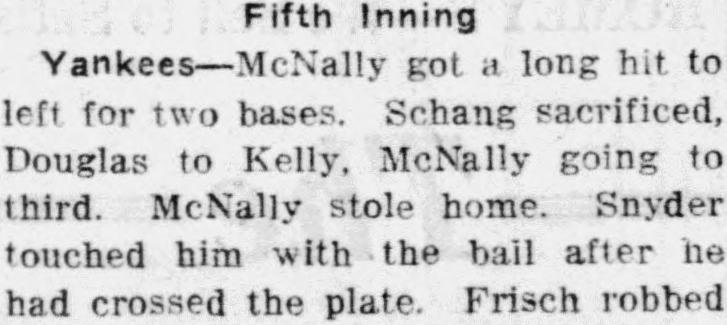
The fifth inning of the first game, from the play-by-play. The Richmond Palladium, Richmond, Indiana, October 5, 1921, page 1. Library of Congress, Chronicling America. Click the clipping to read it full size.
Letters from the parlor
The series ran eight games. The Giants won it on October 13. Then the mail started coming. The Palladium called it “a chorus of appreciation,” and it printed some of the cards and letters.
A listener in Somerville, Ohio, wrote: “It is certainly a pleasure to sit in our own parlor and listen as the world’ series games progresses.” A listener in Cincinnati wrote, “My sons and I appreciate your broadcasting.” Someone in Greenville heard the scores “on a crystal detector set.” That was the simplest radio of all. It ran without batteries and needed headphones to hear.
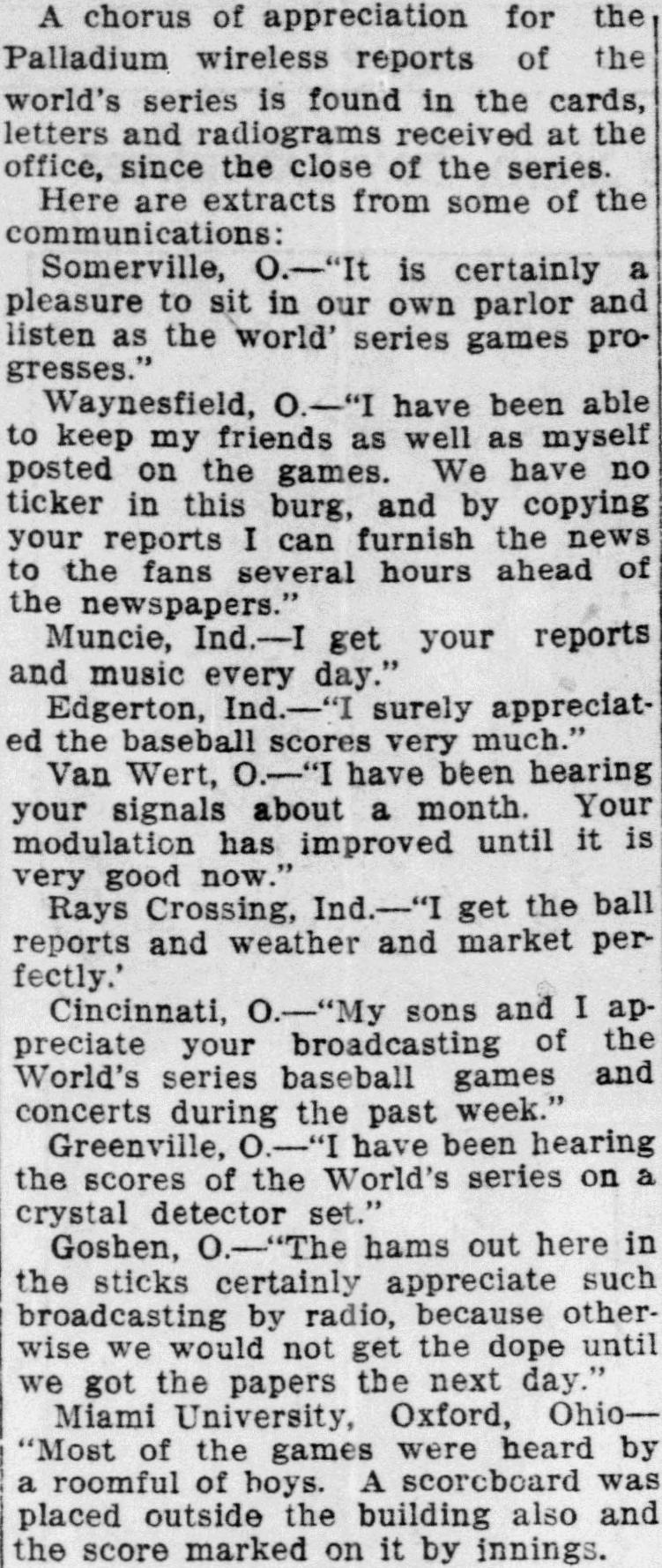
Letters from listeners. The Richmond Palladium, Richmond, Indiana, October 18, 1921, page 2. Library of Congress, Chronicling America. Click the clipping to read it full size.
A listener in Waynesfield, Ohio, said, “We have no ticker in this burg.” A ticker was a telegraph machine that printed the news on paper tape. So this fan copied down the radio reports and passed the news around town, “several hours ahead of the newspapers.” At Miami University in Oxford, Ohio, “most of the games were heard by a roomful of boys.”
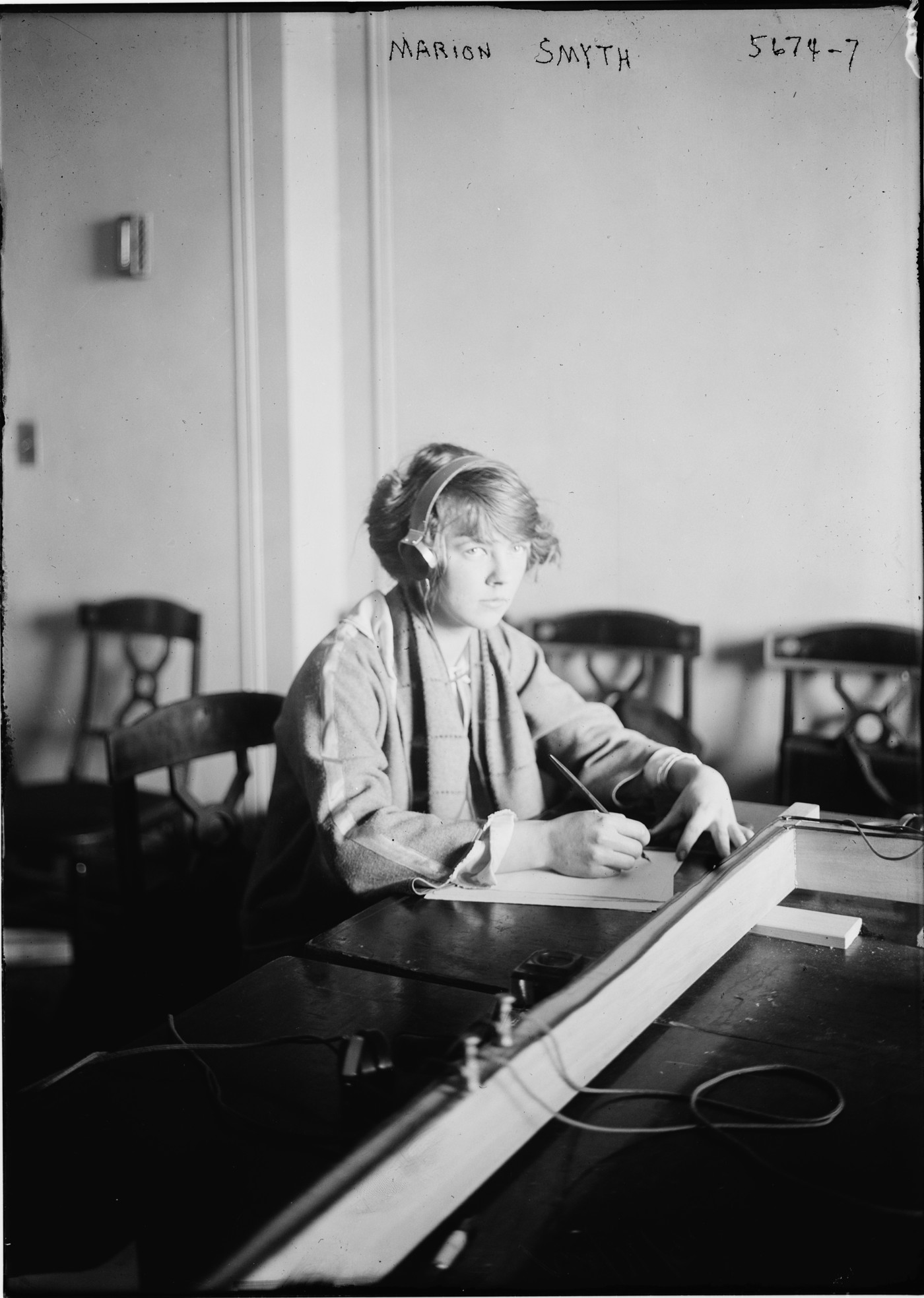
Marion Smyth takes notes while listening through radio headphones, about 1920 to 1925. She is a stand-in for the listeners in this story, not one of them. Bain News Service, Library of Congress. Click the picture to see it full size.
From Goshen, Ohio, came the plainest thanks of all: “The hams out here in the sticks certainly appreciate such broadcasting by radio, because otherwise we would not get the dope until we got the papers the next day.” Hams were radio amateurs. The dope was the news.
The practice game
The Palladium tried out its plan on a high school football game a few days before the series. A radio station in Hamilton, Ohio, reported Richmond’s game there, quarter by quarter. At 2:21 the first word came through: “Richmond team just went on field. They look pretty cocky with their new uniforms.”
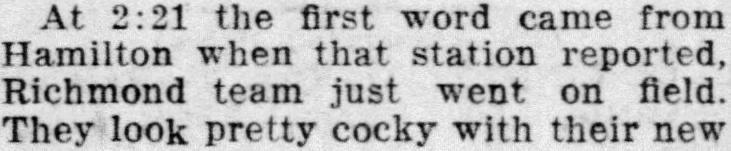
The first report from Hamilton. The Richmond Palladium, Richmond, Indiana, October 3, 1921, page 7. Library of Congress, Chronicling America. Click the clipping to read it full size.
Richmond lost, 33 to 7. The last report was a kind one: “No one injured, and no arguments. Clean game, with Richmond delighted by their treatment.”
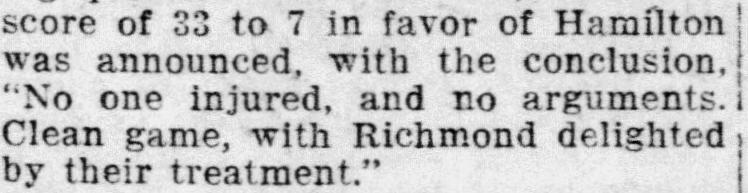
The last report from Hamilton. The Richmond Palladium, Richmond, Indiana, October 3, 1921, page 7. Library of Congress, Chronicling America. Click the clipping to read it full size.
Two ways to see a ball game
That October, Charles Kierst stood at a ballpark gate from 10 in the morning to midnight for a one-dollar seat. Hundreds of miles away, a family in Somerville, Ohio, just pulled up a chair in the parlor. Both of them got the World Series. Only one of them needed a winter coat.
Sources
- The Richmond Palladium (Richmond, Indiana): “Palladium Installs Wireless Telephone to Gather News and Serve Its Patrons,” April 6, 1921, page 1; “World’s Series Starts Wednesday, 1:30 P. M.” and the Hamilton football report, October 3, 1921, page 7; first-game play-by-play, October 5, 1921, page 1; “Wireless Telephone Gives Series Plays to Suburban Fans,” October 7, 1921, page 16; “Radiophone Gives Eaton Series Fans Games Play by Play,” October 10, 1921, page 13; letters from listeners, October 18, 1921, page 2. Library of Congress, Chronicling America.
- “Scores in All-Night Vigil for 1st World Series Game Today,” The New York Times, October 5, 1921, page 1. Internet Archive. Published 1921, public domain.
- “Giants Win the World Championship,” The Cordele Dispatch (Cordele, Georgia), October 13, 1921, page 1. Library of Congress, Chronicling America.
- Photos: Bain News Service, “Mike McNally steals home, 10/5/1921 World Series Game at Polo Grounds, 5th inning” (the cover), “World Series at Polo Grounds” (1921) and “Marion Smyth (radio)” (about 1920 to 1925). George Grantham Bain Collection, Library of Congress Prints and Photographs Division. No known restrictions on publication.