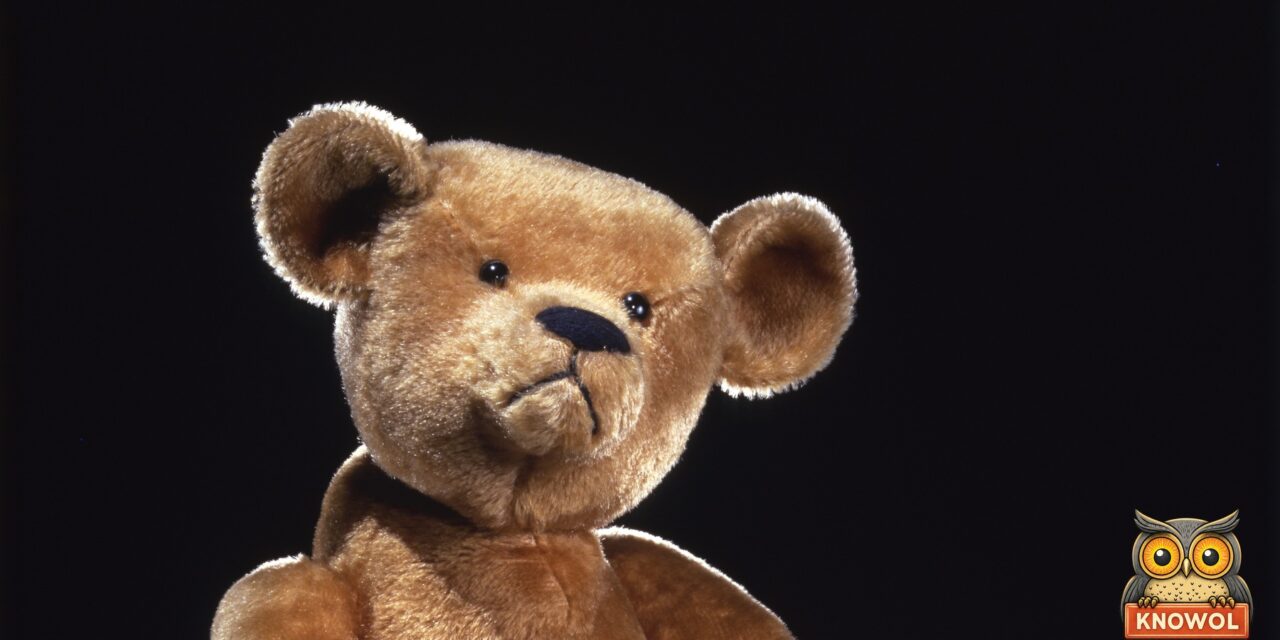
On the afternoon of November 14, 1902, a messenger rode back to President Theodore Roosevelt’s hunting camp on the Little Sunflower River, near Onward, Mississippi. The hounds had brought a bear to bay, and the hunters had sent for the President. When Roosevelt got there, he found a worn-out black bear roped to a tree. He wouldn’t shoot it, and that choice gave the world the teddy bear.
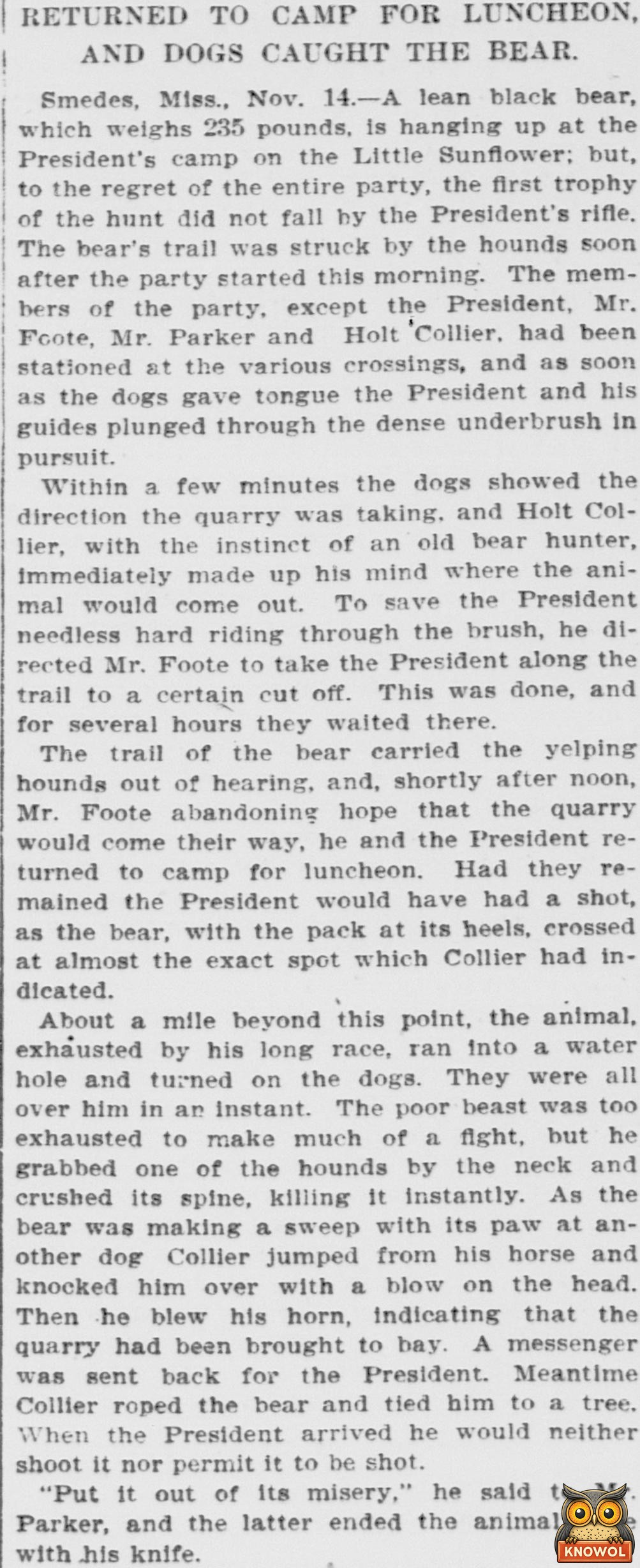
“Returned to Camp for Luncheon, and Dogs Caught the Bear,” New-York Tribune, New York, New York, November 15, 1902. Library of Congress, Chronicling America. Click the clipping to read it full size.
A long morning in the woods
Mississippi’s governor, Andrew Longino, had invited Roosevelt south to hunt bear. His train waited on a siding at Smedes, a tiny stop with a boxcar for a telegraph office. “Smedes is dismal beyond description,” one reporter wrote in the San Antonio Daily Light. “It is simply a cotton field covered and shut in by a wall like a circus tent of mist.”
The guide was Holt Collier, a Mississippi hunter born into slavery in 1846. The U.S. Fish and Wildlife Service credits him with killing more than 3,000 bears. That morning, the New-York Tribune reported, Collier, “with the instinct of an old bear hunter,” guessed where the bear would come out of the brush and sent the President to wait there. Roosevelt waited for hours. Shortly after noon he gave up and rode back to camp for lunch. “Had they remained the President would have had a shot,” the paper said, “as the bear, with the pack at its heels, crossed at almost the exact spot which Collier had indicated.”
“Put it out of its misery”
About a mile farther on, the exhausted bear ran into a water hole and turned on the dogs. It killed one hound before Collier jumped from his horse and knocked it down with a blow to the head. He blew his horn, and a messenger was sent for the President. “Meantime Collier roped the bear and tied him to a tree,” the Tribune reported. “When the President arrived he would neither shoot it nor permit it to be shot.”
To Roosevelt, killing a tied animal wasn’t sport. “‘Put it out of its misery,’ he said to Mr. Parker, and the latter ended the animal’s life with his knife.” The bear weighed 235 pounds.
“Drawing the Line in Mississippi”
Two days later, on November 16, the Washington Post ran a cartoon by Clifford Berryman called “Drawing the Line in Mississippi.” It shows Roosevelt with his rifle grounded and one hand raised, saying no, while a man holds a frightened little bear on a rope. People loved that bear. The Library of Congress notes that Berryman kept putting it in his later cartoons, on all kinds of subjects.
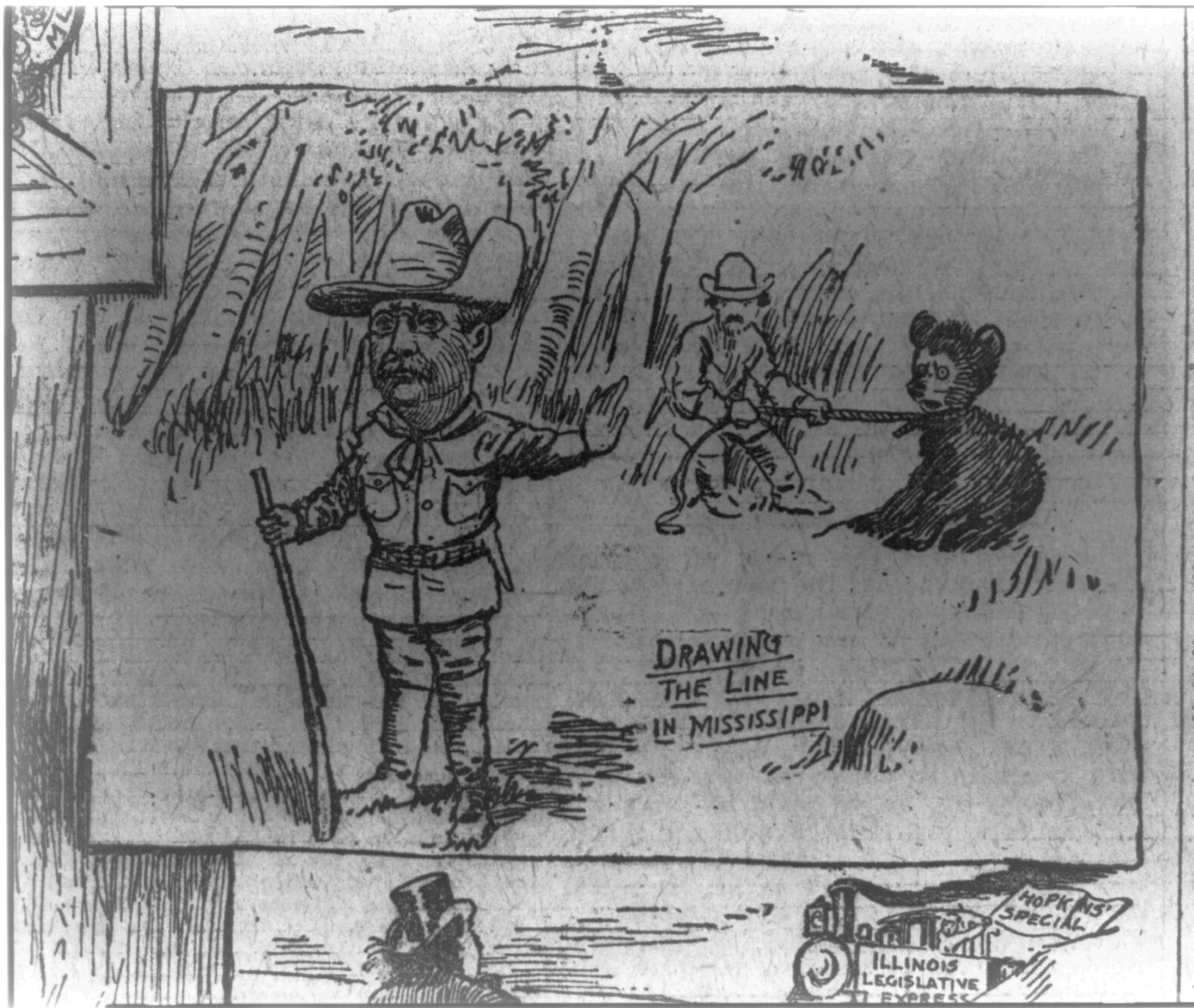
Clifford Berryman, “Drawing the Line in Mississippi,” the Washington Post, November 16, 1902. Library of Congress Prints and Photographs Division. Click the picture to see it full size.
Two toymakers, two stories
Who made the first toy bear is still argued. The National Park Service and the Smithsonian credit Morris and Rose Michtom, who ran a candy store in Brooklyn, New York. After seeing the cartoon, they made a stuffed bear and called it “Teddy’s Bear.” The family said Roosevelt agreed to lend his name, and the bears sold so well that Michtom started the Ideal Toy Company. The Smithsonian’s National Museum of American History keeps an Ideal bear from about 1903, given by Roosevelt’s grandson Kermit and his wife.
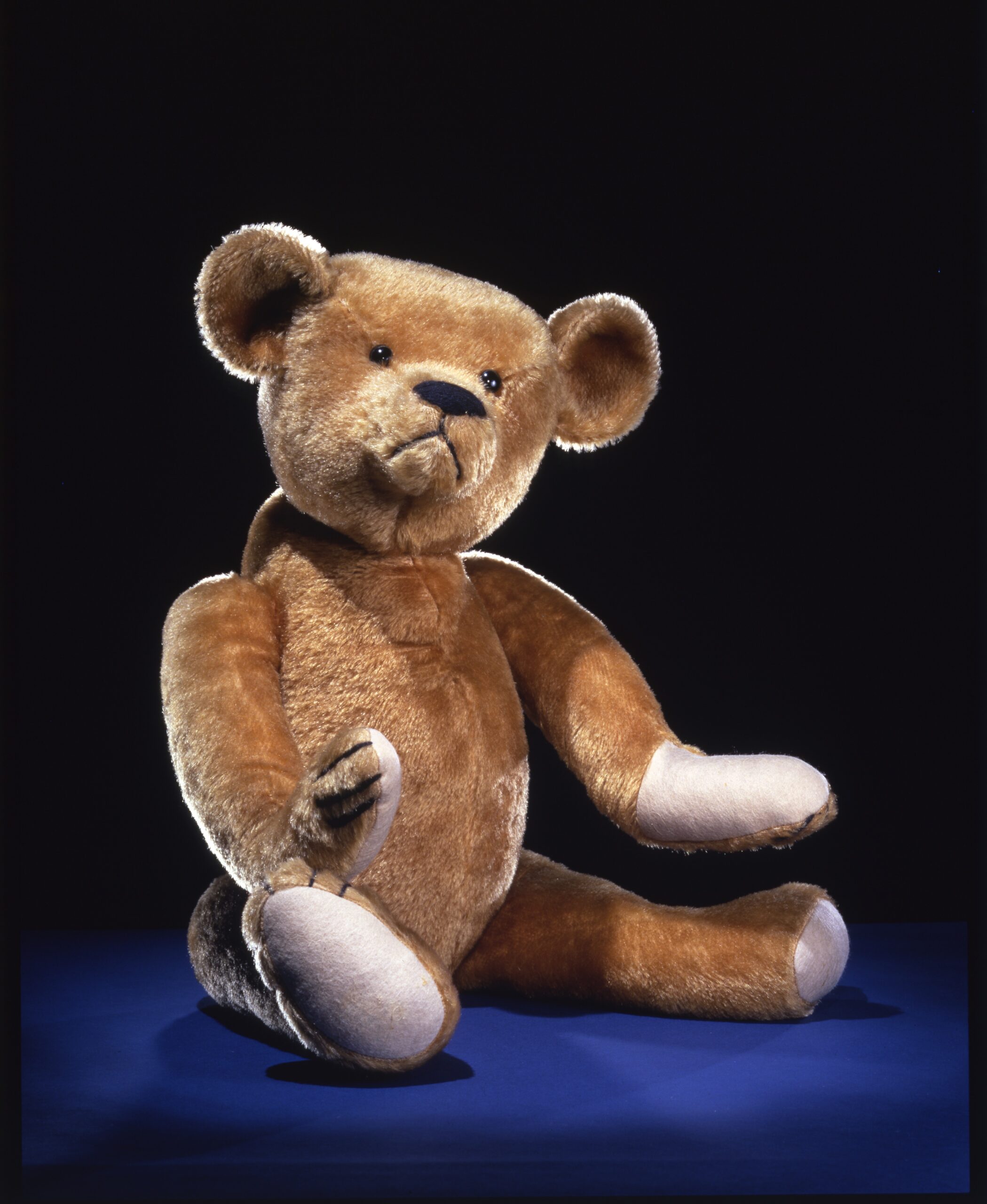
A teddy bear made by the Ideal Toy Company, about 1903. Smithsonian, National Museum of American History. Click the picture to see it full size.
In Germany, the Steiff toy company says Richard Steiff, the founder’s nephew, designed a plush bear with movable arms and legs in 1902, and that an American dealer ordered 3,000 of them at the Leipzig Toy Fair in 1903. Within a few years, both kinds of bears were for sale in America.
$8 for a 20-inch bear
By Christmas Eve 1906, Wanamaker’s department store in New York ran an ad for “Twenty-five Hundred TEDDY BEARS From Wurtemberg,” just off the steamship Kaiser Wilhelm der Grosse. “Imitation bears have been selling everywhere,” the ad said, “but every little child knows how poorly they fill the desire for a real Teddy Bear from Wurtemberg, Germany.” The prices were “$1, $1.50, $2.50, $4, $7 and $8,” and the $8 bear stood 20 inches tall, in white or brown.
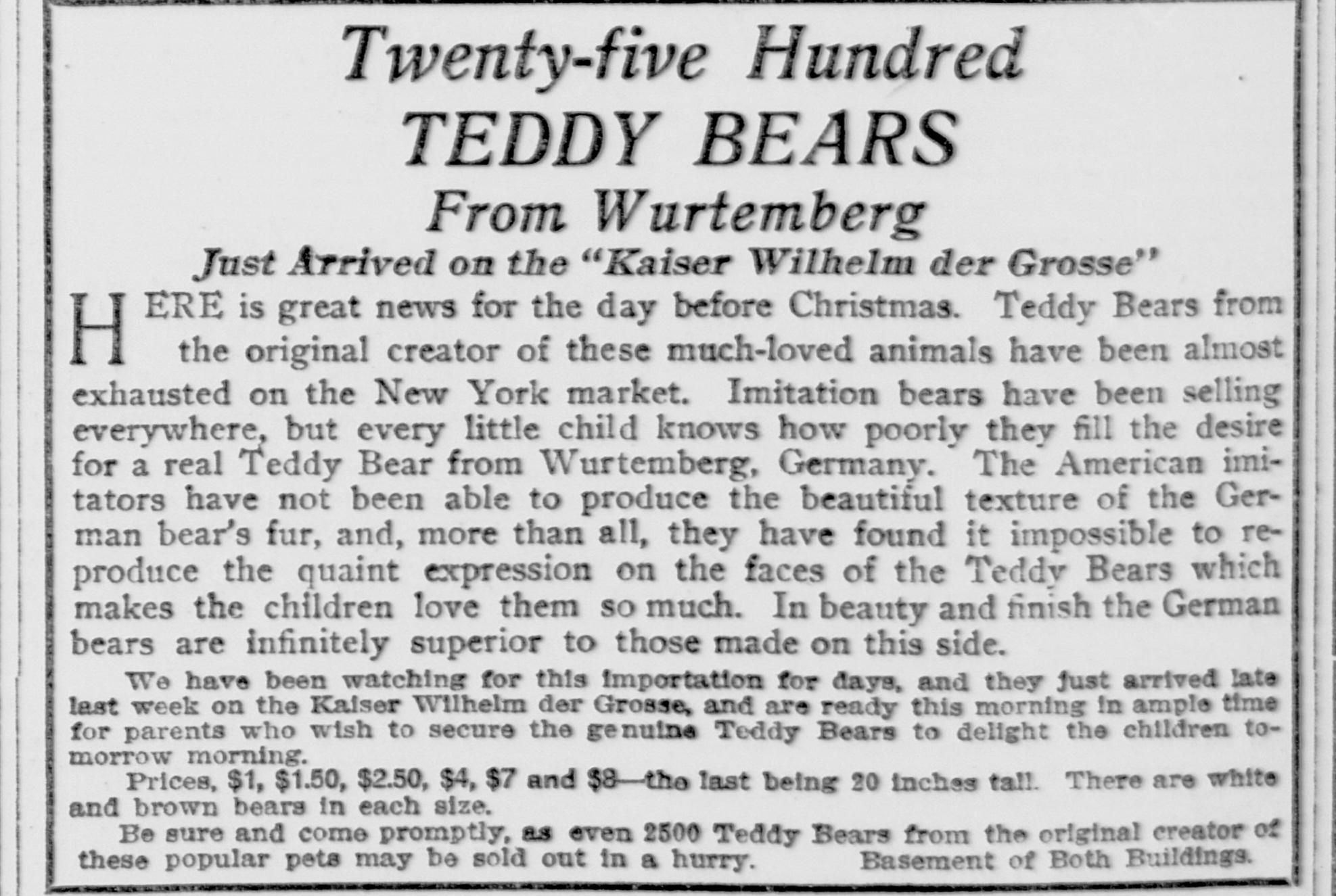
Wanamaker’s Christmas Eve ad, New-York Tribune, New York, New York, December 24, 1906, page 4. Library of Congress, Chronicling America. Click the picture to see it full size.
Not everyone was charmed. In July 1907, a priest in St. Joseph, Michigan, the Rev. Michael G. Esper, preached against the fad. He “declared that the toy beast in the hands of little girls was destroying all instincts of motherhood,” a wire report in the Barre Daily Times of Vermont said, and he asked parents to bring back the doll and “discard the ‘Teddy bear’ forever.” The teddy bear outlasted the sermon.
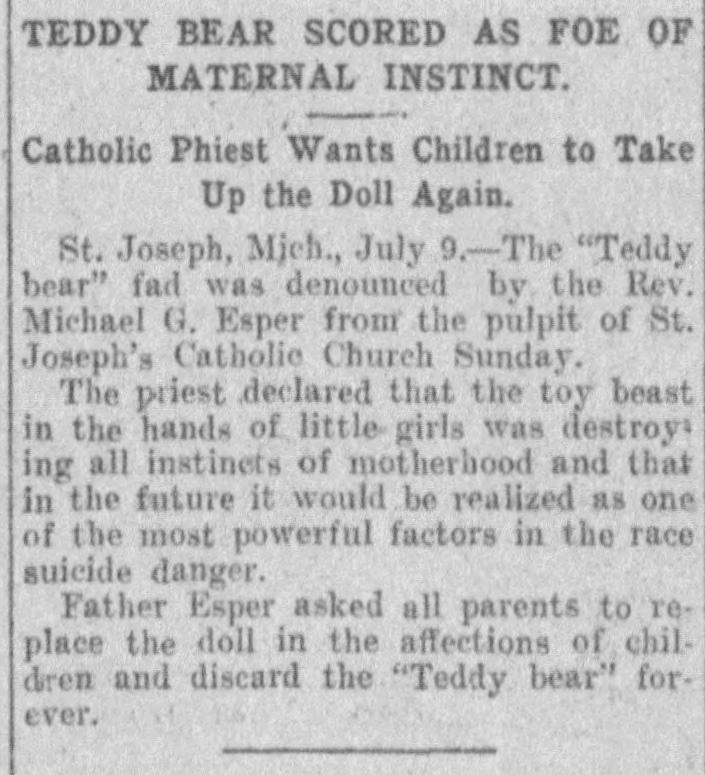
“Teddy Bear Scored as Foe of Maternal Instinct,” the Barre Daily Times, Barre, Vermont, July 9, 1907. Library of Congress, Chronicling America. Click the clipping to read it full size.
What’s left in the Delta
Holt Collier is remembered there. Roosevelt gave him a Winchester rifle, the U.S. Fish and Wildlife Service says, and the two men hunted together again. A national wildlife refuge in the Delta carries Collier’s name, the only one in the country named for an African American sportsman. He died on August 1, 1936, at 90, and he’s buried in Live Oak Cemetery in Greenville, Mississippi, near where he killed his first bear.
Sources
- New-York Tribune (New York, N.Y.), November 15, 1902, page 4 and December 24, 1906, page 4 (Wanamaker’s ad).
- San Antonio Daily Light (San Antonio, Tex.), November 15, 1902, page 1.
- The Barre Daily Times (Barre, Vt.), July 9, 1907, page 2.
- All newspaper images: Library of Congress, Chronicling America. No known copyright restrictions.
- Clifford K. Berryman, “Drawing the Line in Mississippi”, Washington Post, November 16, 1902. Library of Congress Prints and Photographs Division, LC-USZ62-34274. No known restrictions on publication.
- Teddy bear, Ideal Toy Company, about 1903, Smithsonian National Museum of American History, ID PL.252493.02, photo NMAH-93-7204. Smithsonian Open Access, CC0.
- National Park Service, Theodore Roosevelt Birthplace, “The Story of the Teddy Bear”.
- U.S. Fish and Wildlife Service, Holt Collier National Wildlife Refuge.
- Steiff, “120 years of the Teddy Bear”, for the company’s own account of its first bear.
- Cover: Teddy bear, Ideal Toy Company, about 1903, Smithsonian National Museum of American History (cropped). Smithsonian Open Access, CC0.