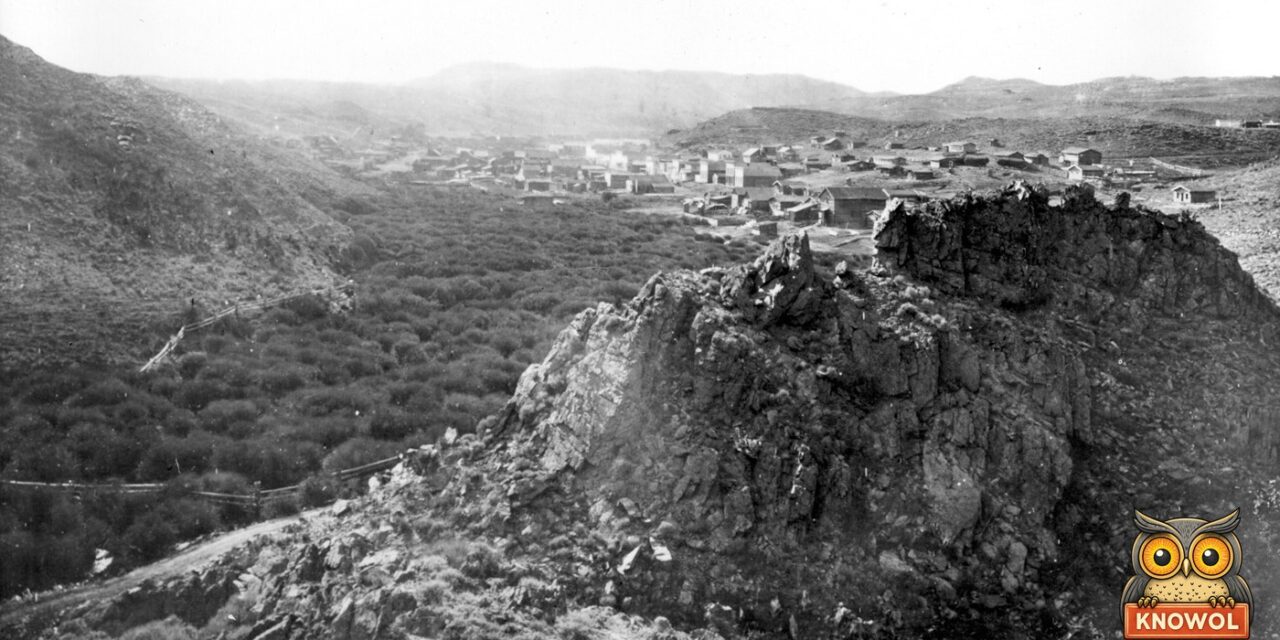
On February 14, 1870, three county commissioners in Wyoming Territory took up a question that would have been impossible a few months before. Esther Morris, wife of John Morris of South Pass City, had applied to be justice of the peace. One commissioner voted yes. The other, John Swingle, voted no. That left the deciding vote to the chairman, J. W. Anthony, who wrote about it that same day. “It put me to my trumps. The lady is every way qualified, and considering everything, I voted for it.”
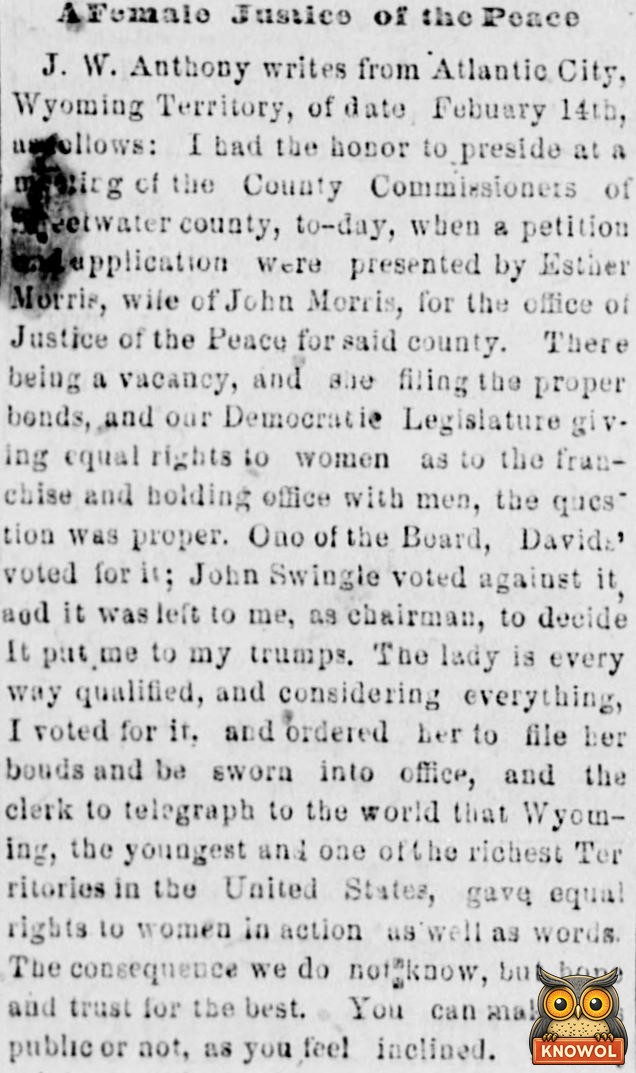
“A Female Justice of the Peace,” J. W. Anthony’s letter of February 14, 1870, as printed in the Petroleum Centre Daily Record, Petroleum Center, Pennsylvania, March 11, 1870, page 2. Library of Congress, Chronicling America. Click the clipping to read it full size.
A gold camp and a brand-new law
South Pass City was a gold-rush town high in the Wind River country, full of miners and saloons. The Morris family had come there in 1869, and John Morris ran a saloon. Esther was 55. A few weeks before that meeting, on December 10, 1869, Wyoming’s first territorial legislature had given women the right to vote and to hold office, the first such law in the country. When a justice’s seat came open in the county, Esther Morris put in for it. Anthony knew the vote was news. He told the clerk to telegraph the world that Wyoming gave women equal rights in deeds, not just in words.
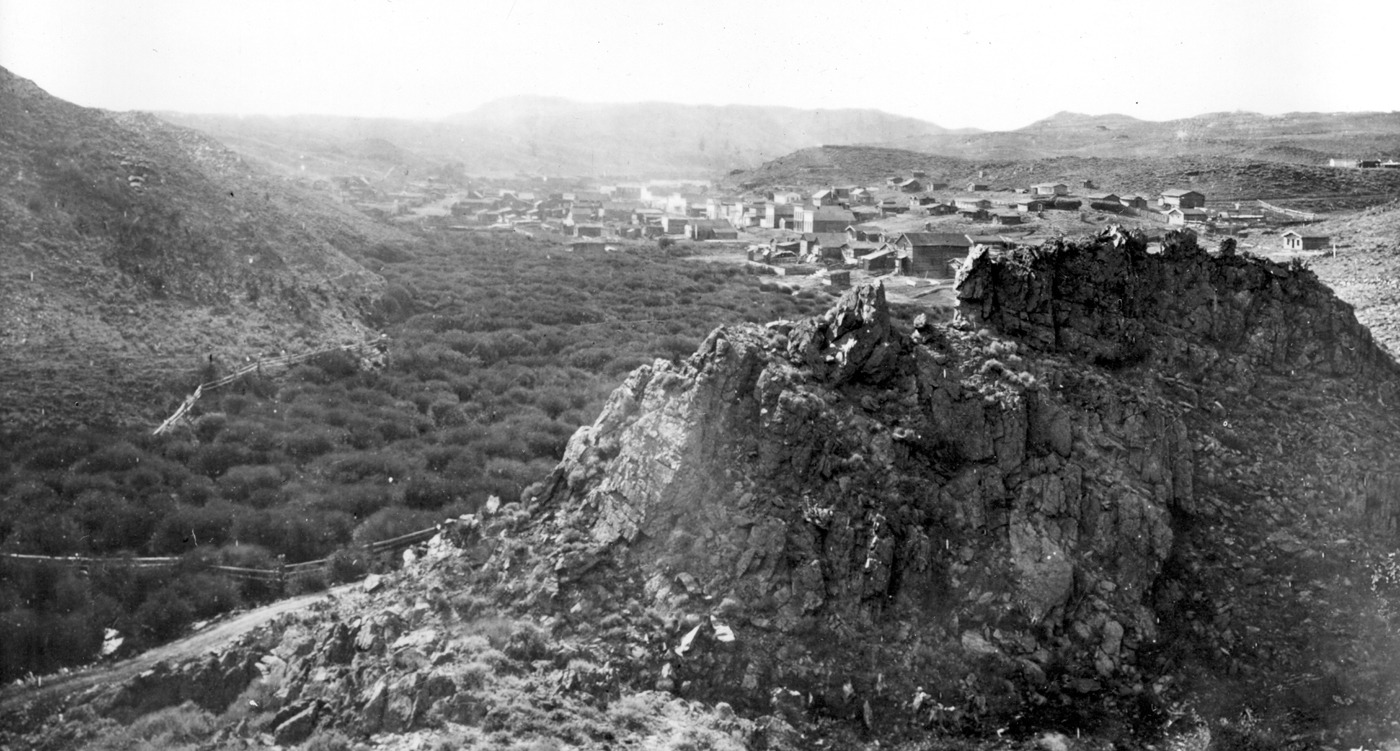
South Pass City, Wyoming Territory, in 1870, the year Esther Morris served as justice of the peace. Photo by William Henry Jackson, U.S. Geological Survey. Public domain. Click the picture to see it full size.
“Her Worship”
Papers everywhere picked up the story, and many cared most about what she wore. A Chicago paper reported that she held court in a calico gown, a worsted breakfast shawl, a green necktie and a green head dress. “Her Worship is 57 years old, and weighs 180 pounds,” it added, getting her age wrong by two years.
Her teenage son took the job of her clerk and started studying law. In a letter to a cousin that ran in an Illinois paper, he wrote that his mother was “the first woman who has ever exercised the judicial power, at least on the American Continent.” He said she was perfectly at ease in the job, and that most of the local lawyers had promised to bring her their cases.
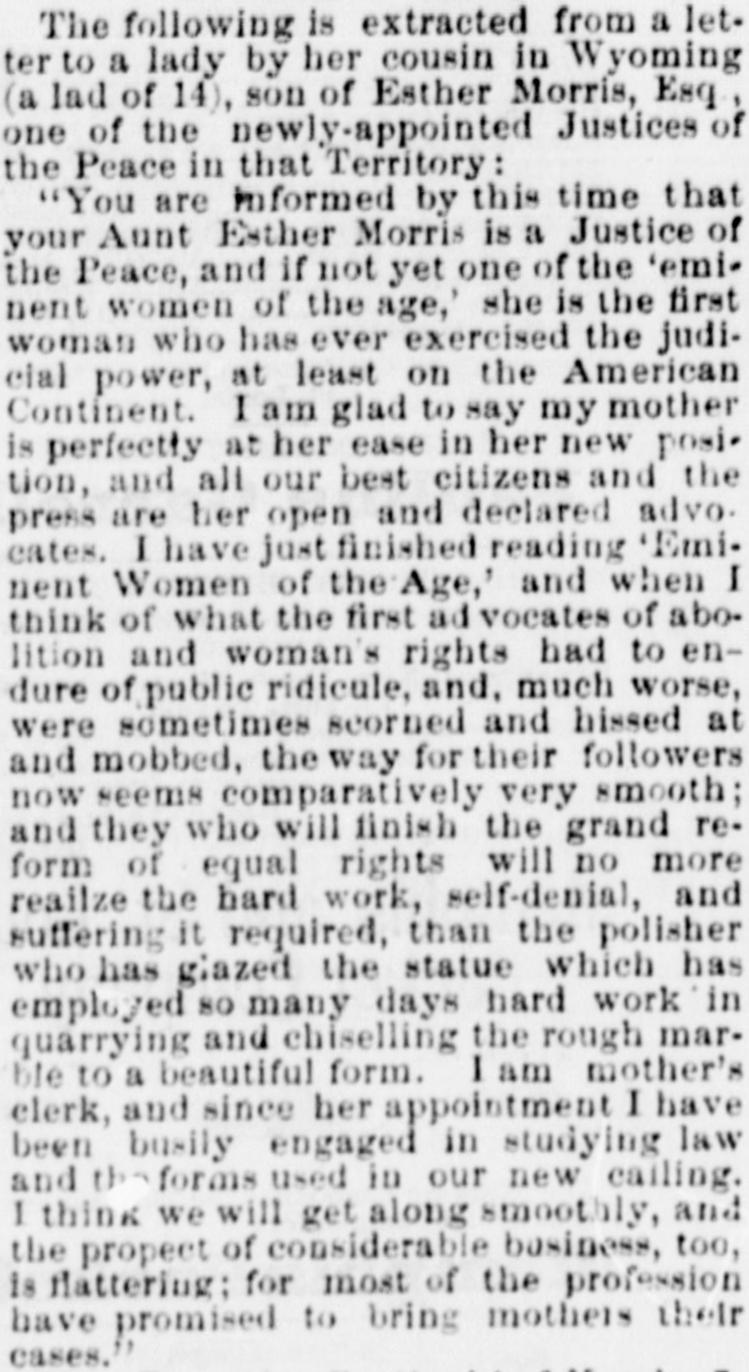
Her son’s letter, Cairo Evening Bulletin, Cairo, Illinois, March 26, 1870, page 1. Library of Congress, Chronicling America. Click the clipping to read it full size.
Court in South Pass City
Most of her cases were civil suits, the everyday business of a mining camp. In September 1870, a Mr. Haas of nearby Atlantic City came before her charged with assault and battery on a young man named Pope. On the stand, Pope said he didn’t understand what an oath was, so she judged on the evidence, and the hometown South Pass News told it with a wink. The young man had been “somewhat severely chastised with a willow switch, at least the Justice thought so, and Haas was fined $25 and costs.” That same month she sat with the county clerk and another justice to count the county’s election returns.
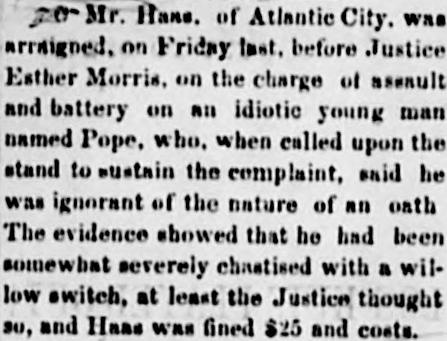
The South Pass News, South Pass City, Wyoming, September 27, 1870, page 3. Library of Congress, Chronicling America. Click the picture to see it full size.
In her own words
Her term ran out on November 1, 1870, after about eight and a half months. That winter, she wrote a letter that was read aloud at a woman suffrage convention in Washington, D.C., and printed in the Chicago Tribune. She’d tried some thirty civil cases, she wrote, and only one was appealed, and the higher court agreed with her. She had helped draw a jury, cast a ballot and count the votes. And she gave the credit for Wyoming’s suffrage law to William H. Bright, the legislator who introduced it. “So far as woman suffrage has progressed in this Territory, we are entirely indebted to man.”
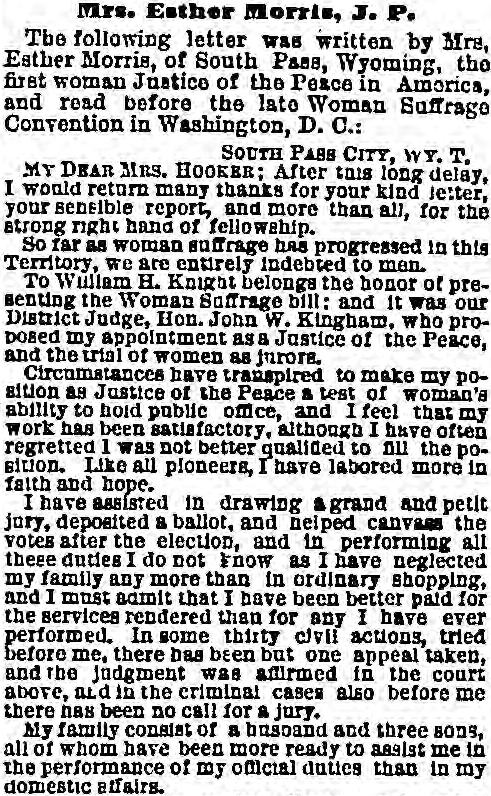
“Mrs. Esther Morris, J. P.,” Chicago Tribune, January 31, 1871, page 2. Library of Congress, Chronicling America. Click the clipping to read it full size.
The tea party that wasn’t
Fifty years later, a story grew up that Esther Morris had invented the whole idea at a tea party, making the candidates promise to pass a suffrage bill. It was first told in 1920 by an old South Pass City politician and spread by a University of Wyoming professor. Wyoming historians have found no record of any such party, and Morris herself never claimed it. Even so, a statue of her went up in the U.S. Capitol in 1960.
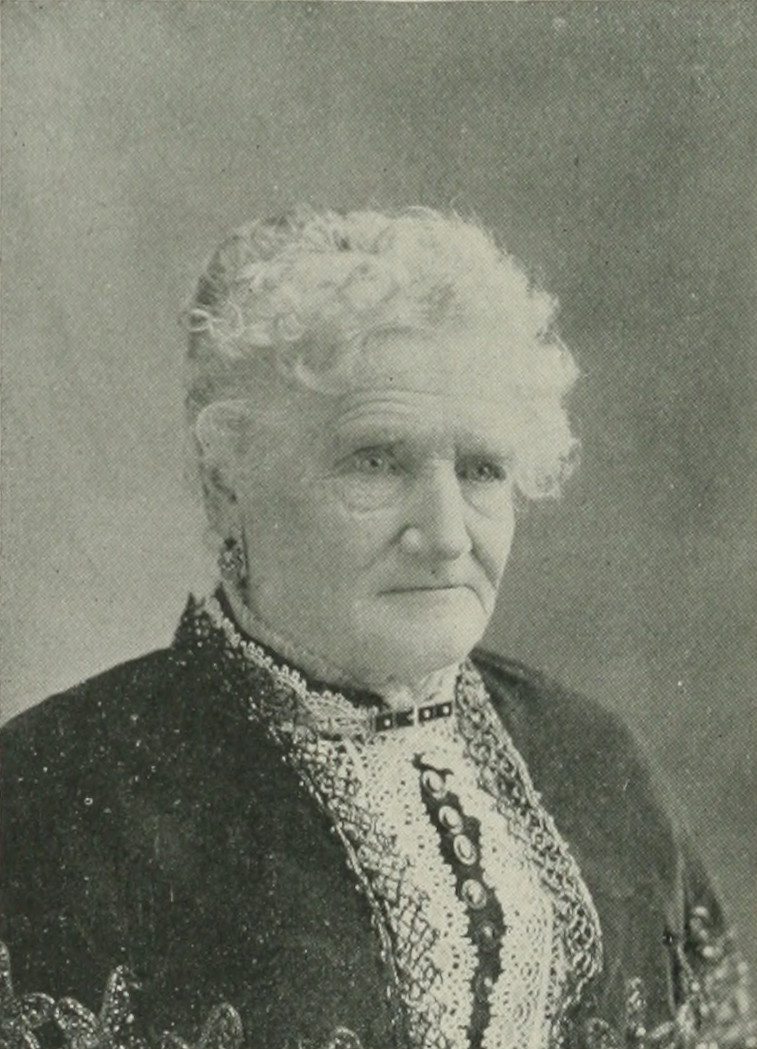
Esther Morris, from “A Woman of the Century,” 1893. Public domain. Click the clipping to read it full size.
She died in Cheyenne in 1902, at 87. In that 1871 letter, she had saved a last word for her family. “My family consists of a husband and three sons, all of whom have been more ready to assist me in the performance of my official duties than in my domestic affairs.”
Sources
- Petroleum Centre Daily Record (Petroleum Center, Pa.), March 11, 1870, page 2, J. W. Anthony’s letter of February 14, 1870.
- The Cheyenne Daily Leader (Cheyenne, Wyo.), March 11, 1870, page 4, reprinting the Chicago Post.
- The Idaho World (Idaho City, Idaho), March 3, 1870, page 1.
- The Cairo Evening Bulletin (Cairo, Ill.), March 26, 1870, page 1.
- The South Pass News (South Pass City, Wyo.), September 27, 1870, page 3.
- Chicago Tribune (Chicago, Ill.), January 31, 1871, page 2, her letter to Isabella Beecher Hooker.
- The Portland Daily Press (Portland, Maine), February 14, 1871, page 3, the same letter.
- Abby Dotterer, “Esther Hobart Morris, Justice of the Peace and Icon of Women’s Rights,” WyoHistory.org (Wyoming State Historical Society), 2019, drawing on Rick Ewig, “Did She Do That?” Annals of Wyoming, Winter 2006, for her birth date, the family’s move, the December 10, 1869 law, her term, the tea-party story and the 1960 statue.
- Photo of South Pass City, 1870: William Henry Jackson, U.S. Geological Survey Photographic Library (jwh00301), via Wikimedia Commons. Public domain.
- Portrait: Frances E. Willard and Mary A. Livermore, eds., A Woman of the Century (1893), page 532, via Wikimedia Commons.jpg). Public domain.
- All newspaper images: Library of Congress, Chronicling America. No known copyright restrictions.
- Cover: South Pass City in 1870, photographed by William Henry Jackson, U.S. Geological Survey. Public domain.