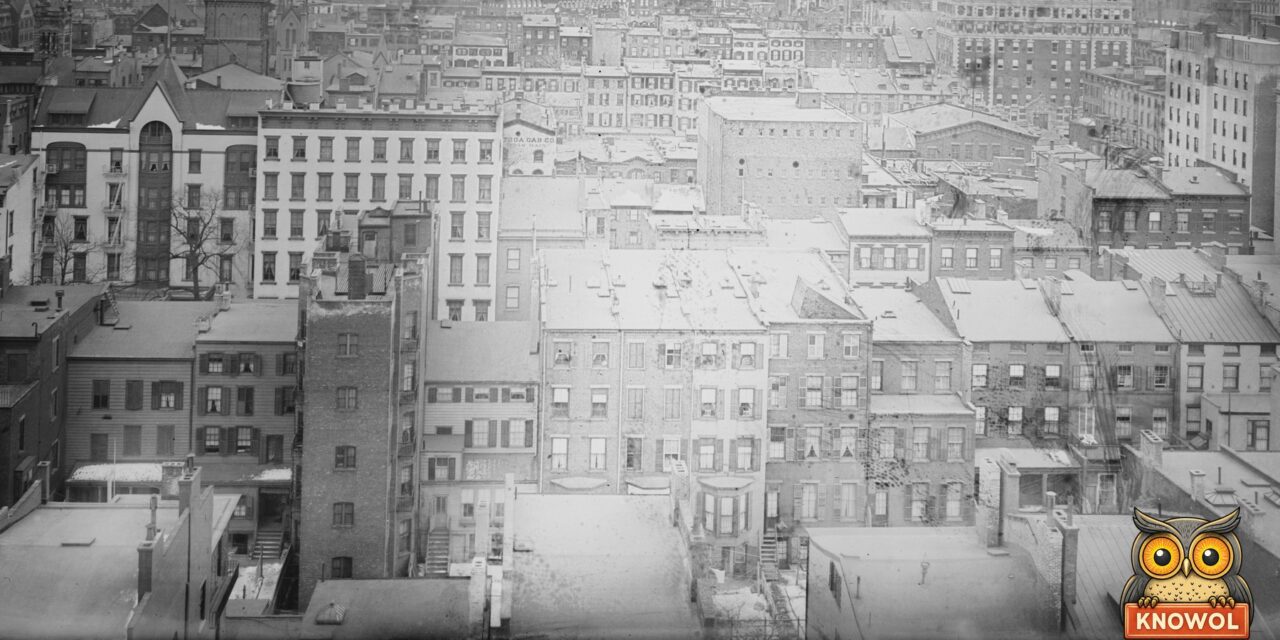
In November 1900, the apartment house at No. 120 First Place in Brooklyn, New York, stood between two strange walls. On one side rose a wall of boards 48 feet high. On the other side rose one 52 feet high. That’s about as tall as a five-story building. The walls didn’t hold up any roof. They were fences, built by the neighbors, and they had stood there for eight years.
People had a name for a fence like that. They called it a spite fence: a fence built mostly to annoy the folks next door. On Wednesday, November 28, 1900, the news broke that Brooklyn’s fire marshal had ordered both of them cut down to 10 feet. He didn’t do it because the fences were mean. He did it because they could burn.
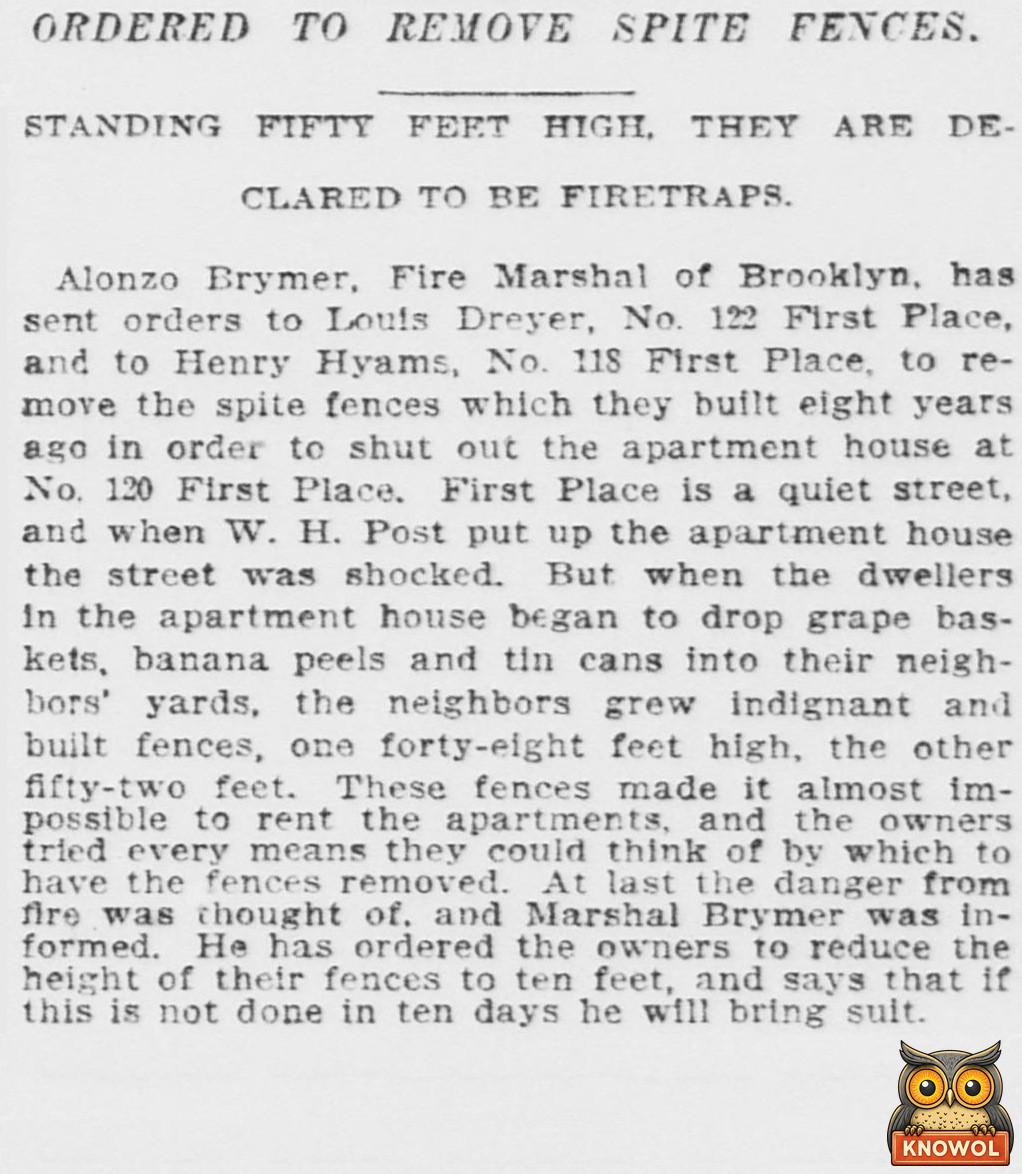
“Ordered to Remove Spite Fences.” New-York Tribune, New York, November 29, 1900, page 4. Library of Congress, Chronicling America. Click the clipping to read it full size.
How a Quiet Brooklyn Street Got an Apartment House
First Place in Brooklyn was a quiet street of private houses, one family to a house. About 1892, William H. Post built an apartment house at No. 120, right between two of them. Henry Hyams owned No. 118. Louis Dreyer owned No. 122. Papers of the time often called an apartment house a “flat” or a “flat house.”
“First Place is a quiet street, and when W. H. Post put up the apartment house the street was shocked,” the New-York Tribune said. Then things got worse. The paper said the tenants “began to drop grape baskets, banana peels and tin cans” into the yards next door.
The Sun, another New York paper, gave a second reason. The apartment house had a notch in its side, with slanting windows. From those windows, “the occupants of the flat could look into the back windows of the private houses on either side.” Imagine strangers looking into your back windows at supper time.
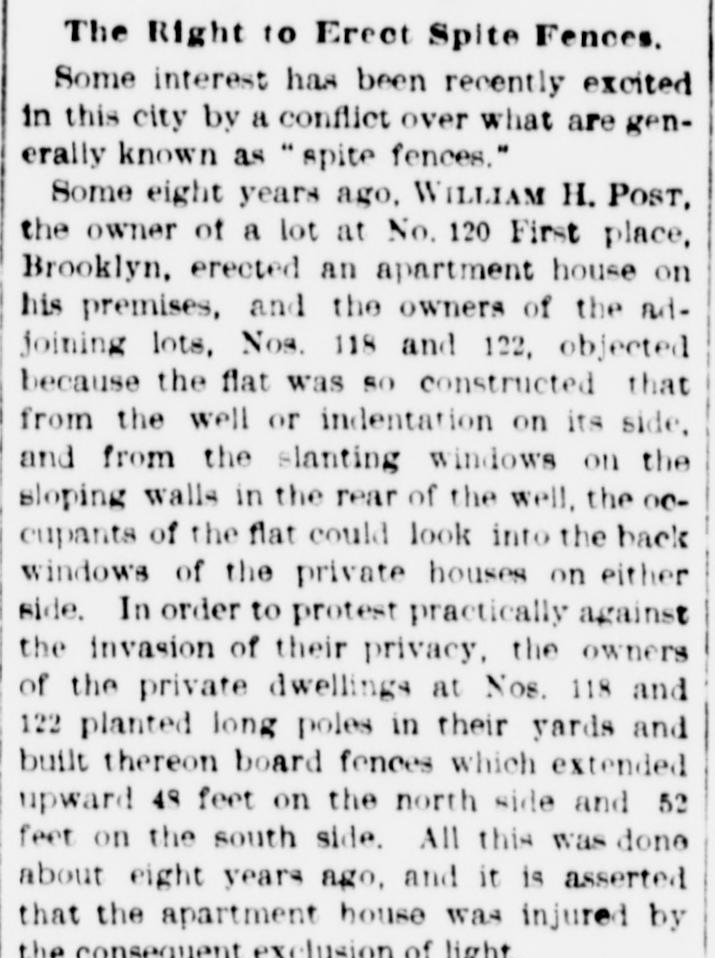
“The Right to Erect Spite Fences.” The Sun, New York, December 6, 1900, page 6. Library of Congress, Chronicling America. Click the clipping to read it full size.
How Two Brooklyn Neighbors Built Fences 50 Feet High
Hyams and Dreyer, the two First Place neighbors, didn’t build ordinary fences. They “planted long poles in their yards and built thereon board fences,” the Sun said. Picture telephone poles standing in a back yard, with boards nailed across them. The Tribune gave the heights: “one forty-eight feet high, the other fifty-two feet.”
The fences worked. They blocked the views, and they blocked the sunlight, too. “These fences made it almost impossible to rent the apartments,” the Tribune said. Few people will pay rent to stare at boards. For eight years, the owners of the apartment house tried everything they could think of to get the fences taken down. Nothing worked.
The newspaper photo below isn’t from Brooklyn. It shows another spite fence, in South Orange, New Jersey, printed by the Tribune the next summer. You can see how it was built: boards on tall wooden poles, next to a railroad signal tower.
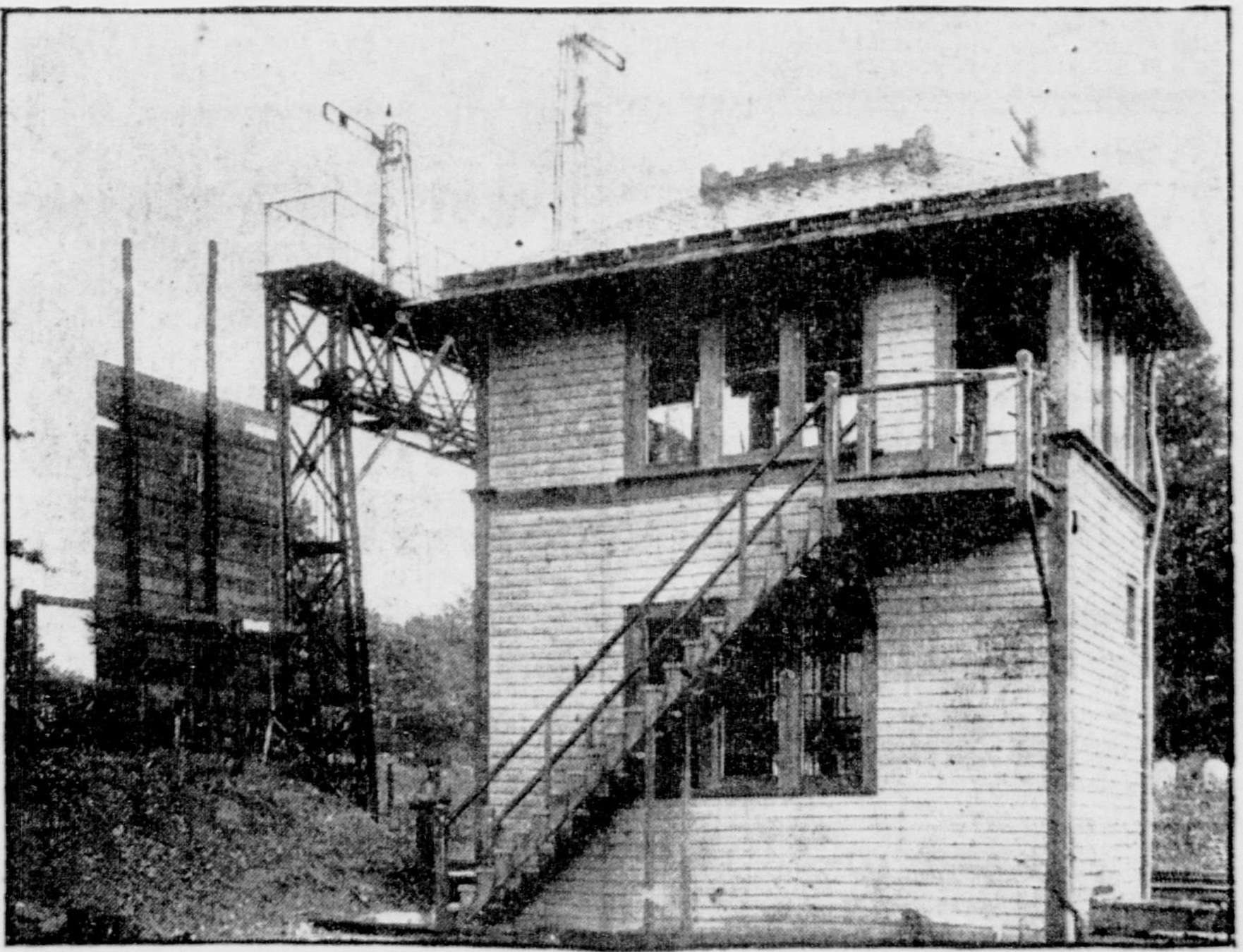
A spite fence on tall poles, beside a railroad signal tower, in South Orange, New Jersey. The Tribune’s caption named it as W. A. Manda’s spite fence. New-York Tribune, August 25, 1901, page 14. Library of Congress, Chronicling America. Click the picture to see it full size.
Brooklyn’s Fire Marshal Finds a Way
The owners of the First Place apartment house finally found a way that had nothing to do with manners. “At last the danger from fire was thought of,” the Tribune said. They went to Alonzo Brymer, Brooklyn’s fire marshal, the official whose job was to look for fire dangers.
Here’s how the trick worked. A Brooklyn building law from 1888 had a simple rule: “Fences of wood shall not be erected over 10 feet high.” A tall wooden wall is like a giant stack of kindling. If it catches fire, flames can climb it and jump to the houses on both sides.
So Brymer sent a notice to Louis Dreyer. His fence, it said, stood at “the height of 48 feet, whereas the same should be but 10 feet high.” Henry Hyams got a notice, too. They had a few days to cut the fences down to 10 feet, or Brymer would take them to court.
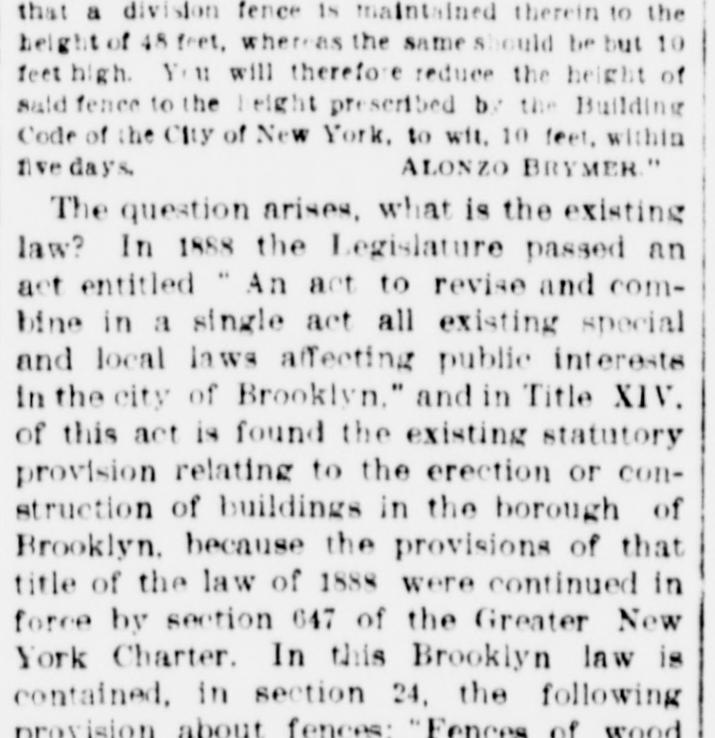
The end of Brymer’s notice, and the Brooklyn law about wooden fences. The Sun, December 6, 1900, page 6. Library of Congress, Chronicling America. Click the clipping to read it full size.
More Brooklyn Spite Fences Came to Light
As soon as the news got out, other Brooklyn people spoke up. The New York Times reported on December 1 that “many complaints of similar obstructions to light and air have been made to Mr. Brymer.” Thomas B. Dunn complained about a fence 30 feet high at 775 Lafayette Avenue. Thomas McGoldrick complained about one 25 feet high on Carlton Avenue.
Mrs. Hannah Schaefer complained about a brick wall 16 feet high on Veranda Place. But Brymer didn’t think he could touch that one. Brick doesn’t burn the way boards do.
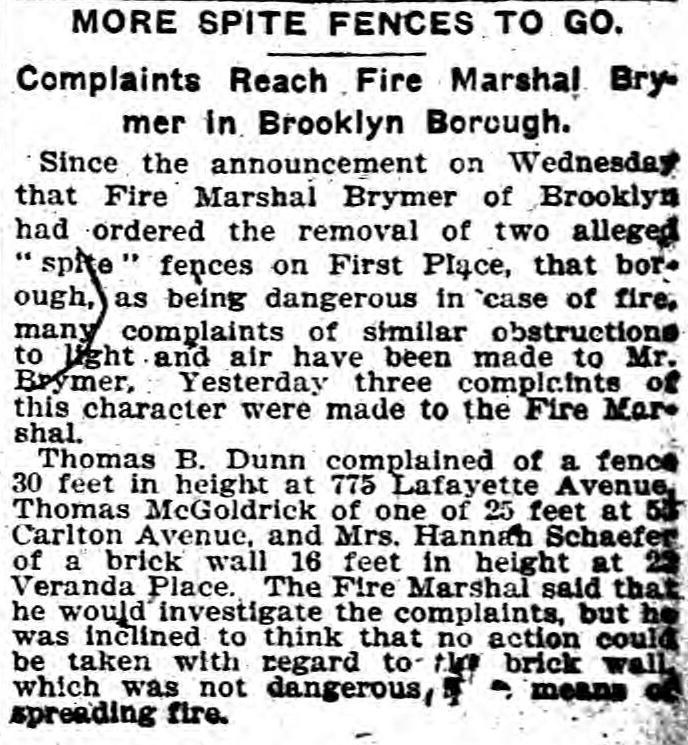
“More Spite Fences to Go.” The New York Times, December 1, 1900, page 6. Internet Archive, public domain. Click the clipping to read it full size.
Brooklyn’s Lawyers Said He Could Take an Axe to Them
Not everyone in New York agreed that Brooklyn’s fire marshal could order the First Place fences down. A legal writer in the Sun argued that the fences were a job for the city’s building department. “It may well be doubted, however, whether the Fire Marshal has any right to interfere in the matter,” he wrote. He also explained an old rule of the law: “a freeholder owns his land and all above it and all beneath it.” A freeholder is a person who owns land. By that rule, an owner could even build a brick wall in the same spot.
Then the city’s own lawyers weighed in. On December 22, 1900, Assistant Corporation Counsel Callahan, a city lawyer, said the fire marshal had all the power he needed. If he saw fit, he could order a high fence down or “take an axe and knock it down himself.”
That tells us the First Place fences were still standing almost a month after the first order. Brymer sent the owners one more notice. It said that “unless they were removed within five days the matter would be taken into the courts.” Even so, he said, “Fire Commissioner Tully was disposed to go slow.” That meant his boss wanted to give people time. The rule was the same for every tall wooden fence, spiteful or not. Iron fences were fine, because they stopped a fire instead of spreading it.
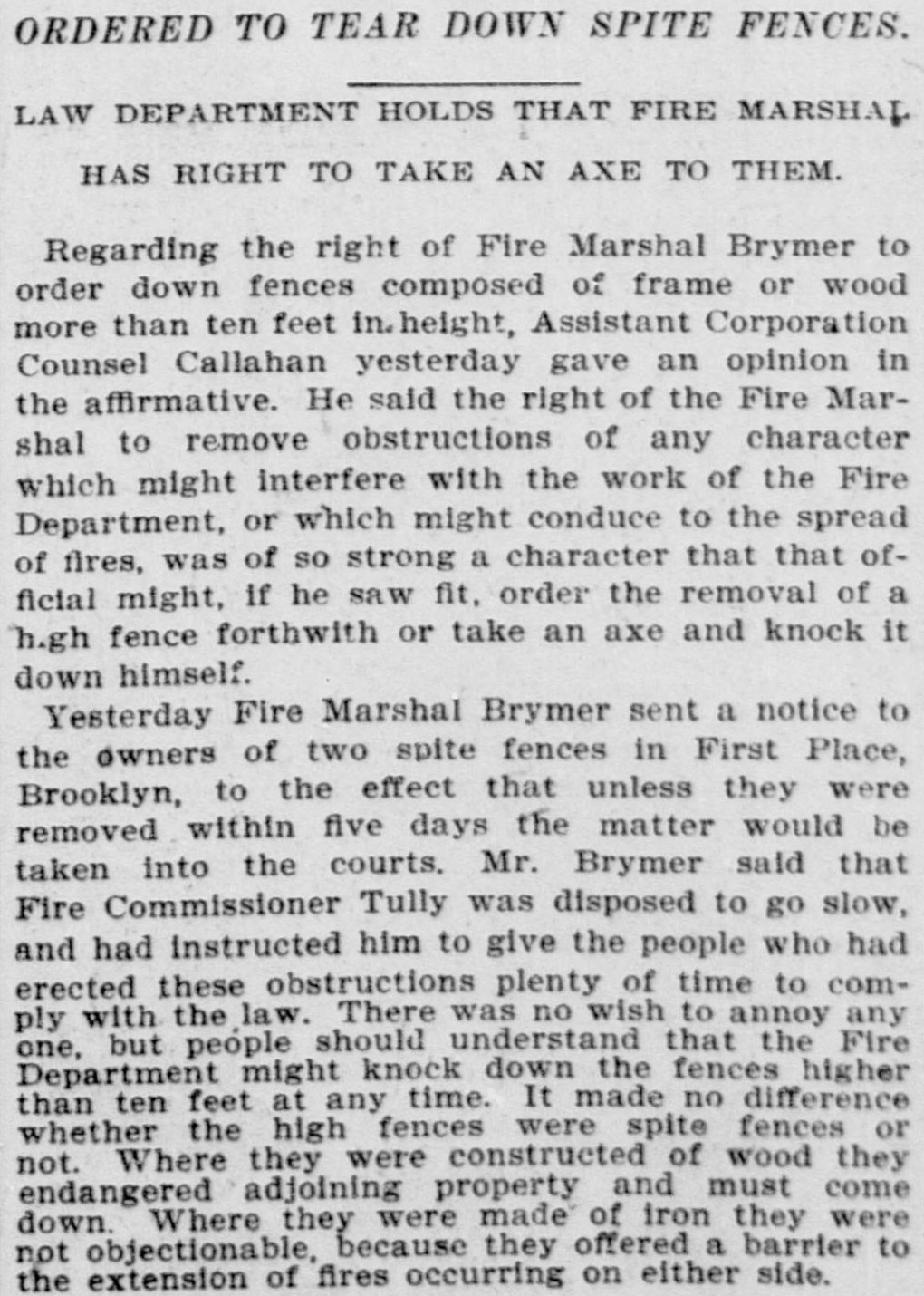
“Ordered to Tear Down Spite Fences.” New-York Tribune, December 23, 1900. Library of Congress, Chronicling America. Click the clipping to read it full size.
Spite Fences Next Door in Newark, New Jersey
The fall of 1900 was a busy season for spite fences around New York. A few miles west, in Newark, New Jersey, Philip N. Jackson put up a fence “28 feet high and about 50 feet in length” beside new flat houses that J. Brodhead Woolsey was building behind his home on High Street.
Woolsey said he would give Jackson “his fill of spite fences.” He planned a fence 60 feet high, and he would rent it to bill posters “on condition that they plaster it with the most glaring advertisements.” That’s a giant billboard, built just to bother a neighbor.
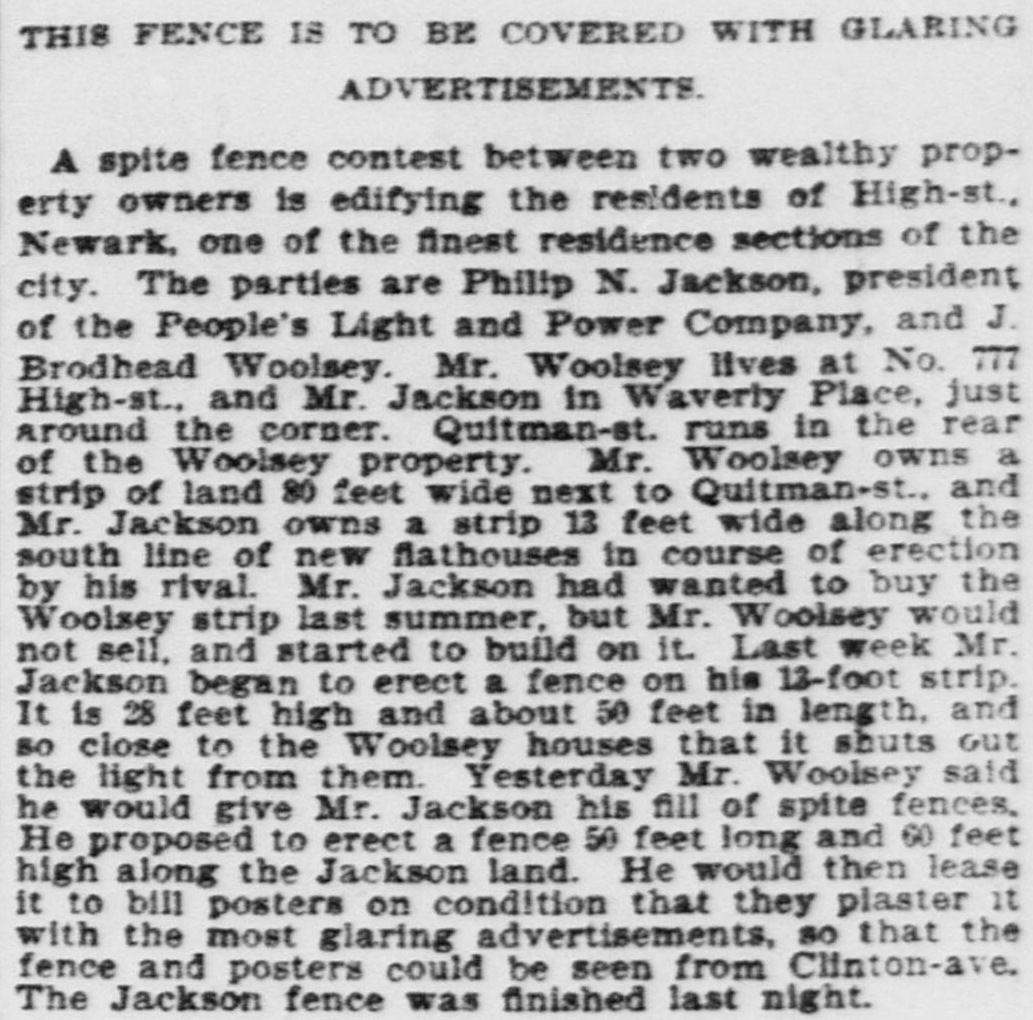
“This Fence Is to Be Covered With Glaring Advertisements.” New-York Tribune, November 20, 1900, page 6. Library of Congress, Chronicling America. Click the clipping to read it full size.
A week later, Jackson told the papers he hadn’t built his fence out of spite at all. He only wanted privacy for his family. He also had a friend in the flats, Judge Herman Schalk, whose windows now faced the boards. So Jackson ordered windows cut into his fence to let light into the judge’s rooms. The Tribune said “a spite fence with windows in it will be the novel result.”
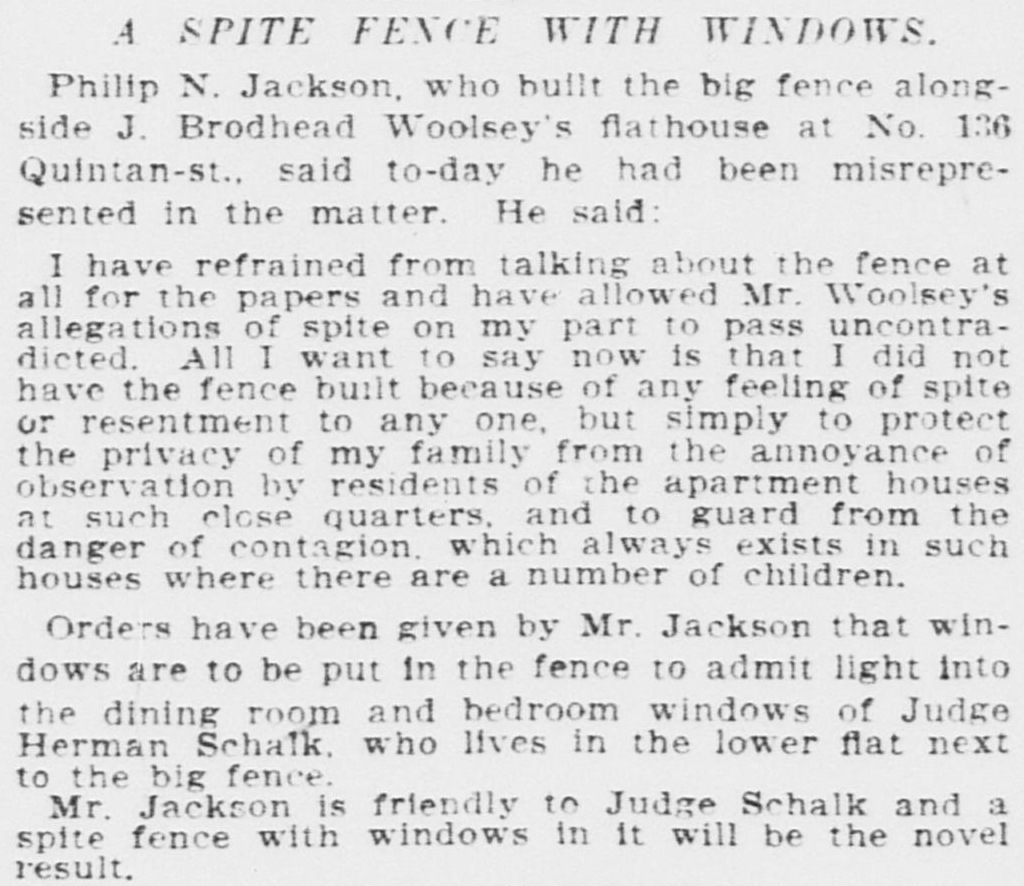
“A Spite Fence With Windows.” New-York Tribune, November 27, 1900, page 5. Library of Congress, Chronicling America. Click the clipping to read it full size.
The Brooklyn Man Who Turned His House Around
Two years later, a spite fence in Sheepshead Bay, Brooklyn, ended in the oddest way of all. Eugene Cumisky lived near the Sheepshead Bay train station. People taking a short cut across Samuel Freedman’s lot next door, he said, “were always looking into his dining room.” So he asked Freedman to put up a fence.
“Freedman said he would do this and more,” the Sun reported on May 21, 1902. He built the fence Cumisky asked for. Then he built a spite fence “about thirty-five feet high and within half a foot of Cumisky’s house.”
The Sun said Cumisky “could not stand this.” So he called in a gang of house movers. “They turned the house about, so that the front, which formerly faced the Shore Road, is now in the opposite direction.” Then they moved the whole house back about 50 feet, away from the fence.
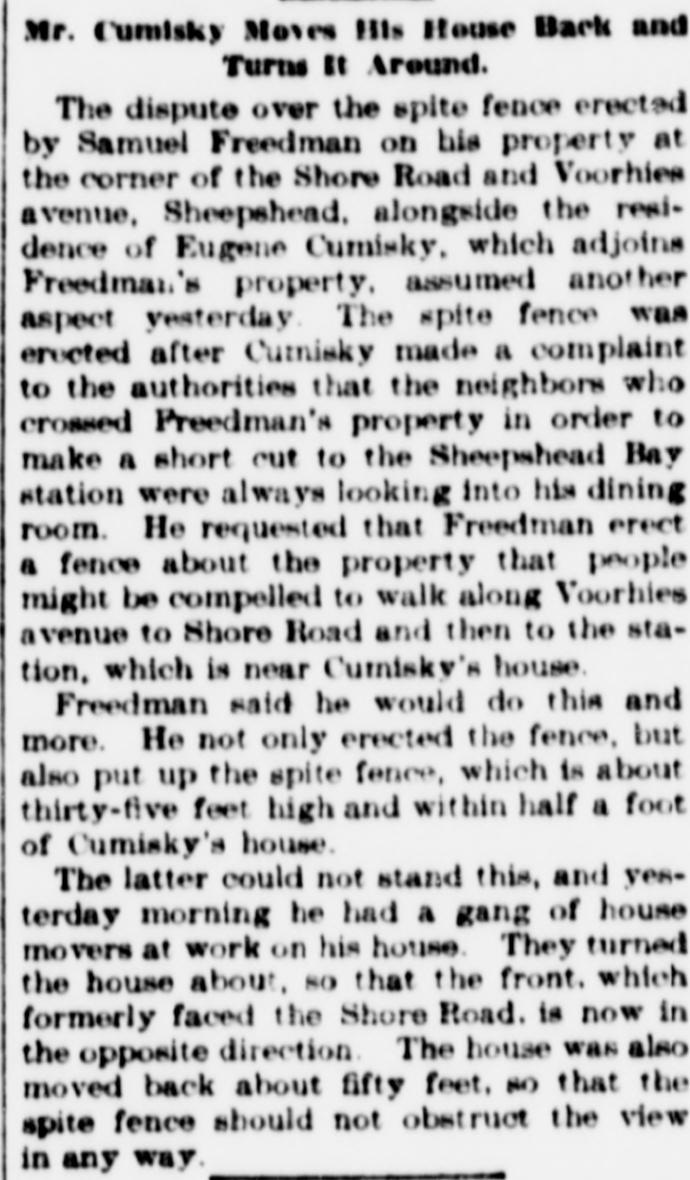
“Mr. Cumisky Moves His House Back and Turns It Around.” The Sun, May 21, 1902, page 1. Library of Congress, Chronicling America. Click the clipping to read it full size.
How the First Place Fences Ended
The papers we found don’t say the day the boards came down on First Place in Brooklyn. Their last word is the Tribune’s December 23 report and its five-day warning.
The photo at the top of this page isn’t First Place. It shows the backs of Brooklyn houses and their small yards, seen from the Standish Arms hotel on Columbia Heights. The Library of Congress files the photo under 1900, though no date was written on it. It shows how close together Brooklyn’s houses stood, and why a neighbor’s window could feel so near.
So the First Place fight is worth remembering for how it was settled. Two neighbors spent eight years behind walls of boards, over banana peels and a window. Nobody could make them stop by asking whether they were being mean. In the end, the only question that mattered was a fire marshal’s question: whether a fence could burn.
Sources
- “Ordered to Remove Spite Fences,” New-York Tribune (New York, New York), November 29, 1900, page 4. Library of Congress, Chronicling America.
- “More Spite Fences to Go,” The New York Times, December 1, 1900, page 6. Internet Archive.
- “The Right to Erect Spite Fences,” The Sun (New York, New York), December 6, 1900, page 6. Library of Congress, Chronicling America.
- “Ordered to Tear Down Spite Fences,” New-York Tribune, December 23, 1900. Library of Congress, Chronicling America.
- “This Fence Is to Be Covered With Glaring Advertisements,” New-York Tribune, November 20, 1900, page 6. Library of Congress, Chronicling America.
- “A Spite Fence With Windows,” New-York Tribune, November 27, 1900, page 5. Library of Congress, Chronicling America.
- “Mr. Cumisky Moves His House Back and Turns It Around,” The Sun, May 21, 1902, page 1. Library of Congress, Chronicling America.
- “South Orange’s Spite Fences,” with the photo of W. A. Manda’s spite fence, New-York Tribune, August 25, 1901, page 14. Library of Congress, Chronicling America.
- Brooklyn from “Standish Arms”, Columbia Heights, Bain News Service, no date recorded. Library of Congress Prints and Photographs Division, George Grantham Bain Collection. No known restrictions on publication. The cover is a crop of the negative.
- The newspapers were printed before 1931 and are in the public domain.