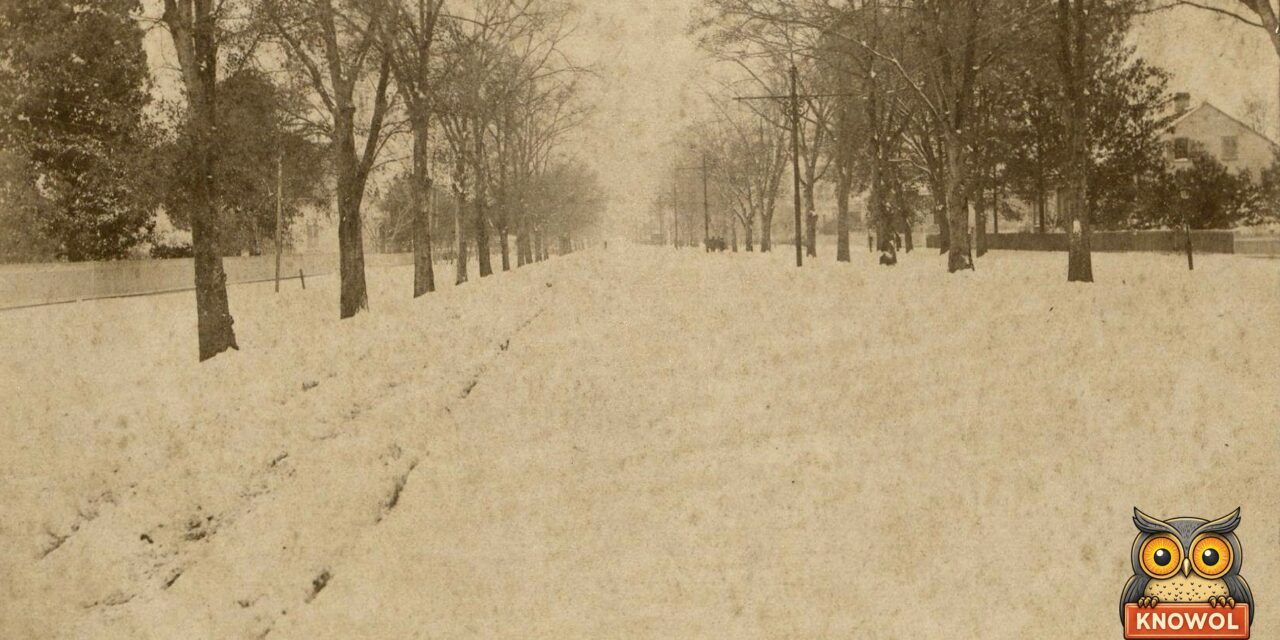
A little after nine o’clock on the night of Wednesday, February 13, 1895, it began to snow in Opelousas, Louisiana. When the town woke up the next morning, Valentine’s Day, two or three inches of white covered everything, and big flakes kept coming down all day without a break. The town’s newspapers called it the greatest snow ever seen there.
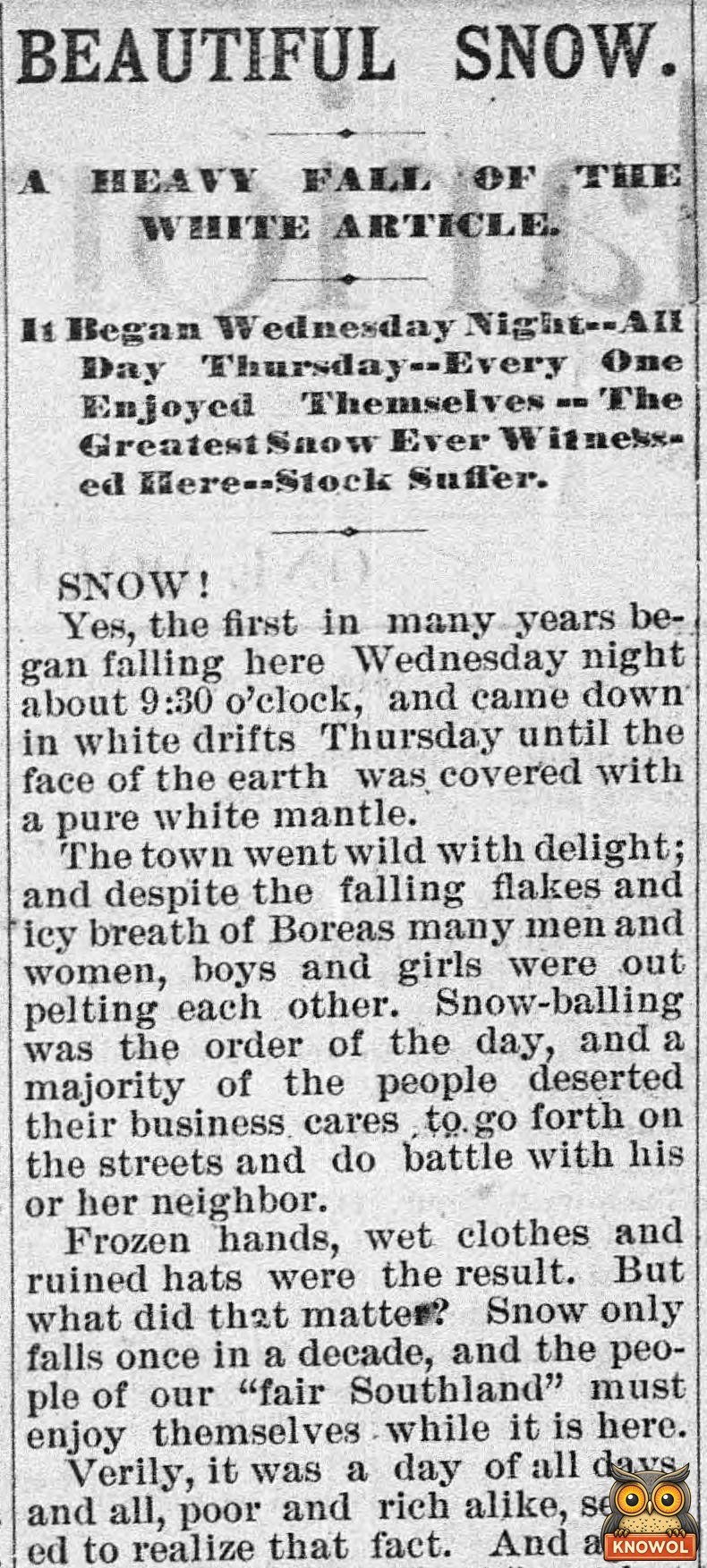
“Beautiful Snow,” St. Landry Clarion, Opelousas, Louisiana, February 16, 1895, page 2. Library of Congress, Chronicling America. Click the clipping to read it full size.
Two armies and a clergyman
Business in Opelousas practically stopped that Thursday. Snowballing, the Opelousas Courier said, was the order of the day, and some of it was organized. “There was an army organized on Landry street under the leadership of a clergyman, who marched with pockets full of snow-balls to attack a similar organization on Main street.”
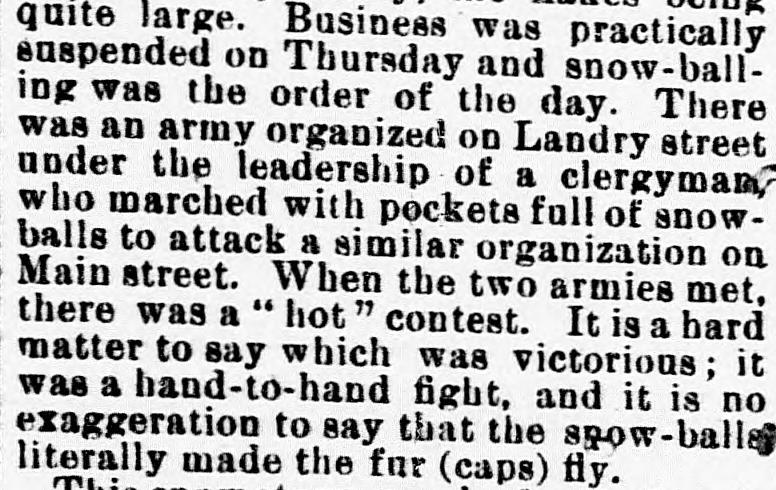
The Opelousas Courier’s report of the battle between the Landry street and Main street armies. February 16, 1895, page 1. Library of Congress, Chronicling America. Click the clipping to read it full size.
When the two armies met, the fight was hot and hand to hand, and the Courier couldn’t say which side won. It was no exaggeration, the paper added, to say the snowballs “literally made the fur (caps) fly.” Elsewhere on the same page it called it a three-hour battle. The Courier didn’t print the clergyman’s name.
The town went wild
The St. Landry Clarion told the same story. “The town went wild with delight,” it reported. Men and women, boys and girls were out in the falling snow pelting each other, and most people left their business cares behind to do battle with their neighbors. “Frozen hands, wet clothes and ruined hats were the result.” Nobody seemed to mind. Snow fell only about once in ten years, the Clarion said, so people in the South had to enjoy it while it lasted. For one day, it joked, there was no Sunny South, only a snowy one.
The women didn’t sit it out. From its office on Main street, the Courier watched them in the middle of the fight and called them “quite brave and venturesome.” Dr. W. W. Duson, his wife and Jesse Duson came in from Eunice that Thursday and took an active part in the snowballing too.
A foot of snow
By Thursday noon, the Clarion reported, five or six inches had fallen. In front of the post office the drifts were twelve to fifteen inches deep, and walking through them was hard work. Some young people had a better idea. A number of sleighs were quickly improvised, and young men and women went sleigh riding.
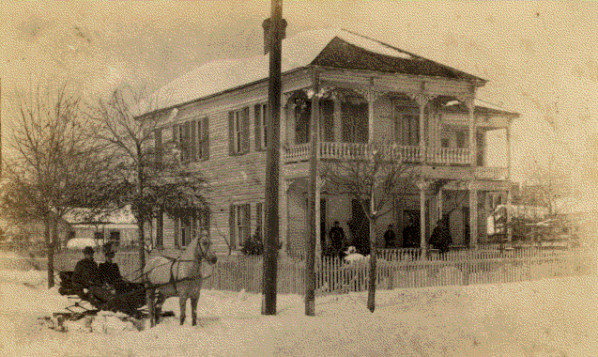
A horse-drawn sleigh in front of the Miguel Rosteet home in Lake Charles, Louisiana, about 70 miles west of Opelousas, during the same snowstorm, February 1895. Wikimedia Commons, public domain. Click the picture to see it full size.
By dark the snow was nearly ten inches deep on the level. More fell overnight and until almost eleven o’clock Friday morning, and when the thaw began, the Courier said, the whole area lay under fully twelve inches of the prettiest snow ever seen anywhere. It was only about 25 degrees. The Courier said even the oldest inhabitant had never seen or heard of a heavier snow in Louisiana.
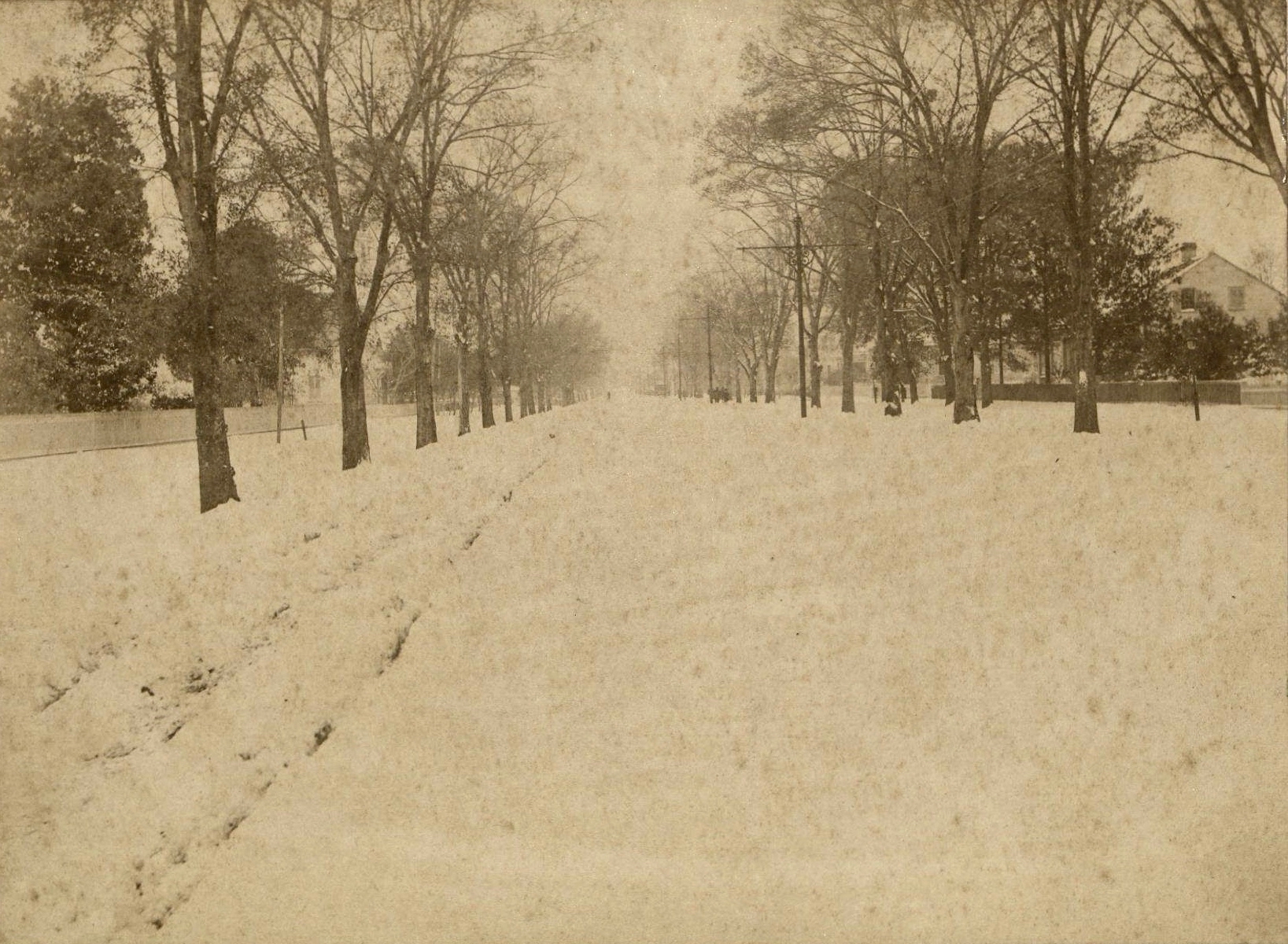
The same storm in New Orleans: a snowy street in the Carrollton neighborhood, February 1895. Louisiana Research Collection, Tulane University, via Wikimedia Commons, public domain. Click the picture to see it full size.
The storm was hard on the animals. The Clarion watched several cows pass its office with their backs one mass of ice, and the Courier feared many cattle would die from exposure.
Valentines, a play and a camel
The Clarion didn’t forget the date. Thursday was Valentine’s Day, it noted, and as usual the love notes and funny valentines had been plentiful. “The day was cold, but it is a very cold day when Cupid gets left.”
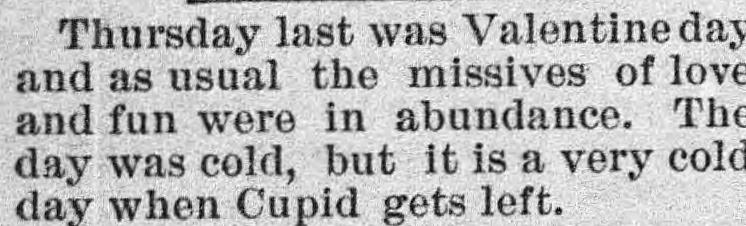
The Clarion’s Valentine’s Day note, February 16, 1895. Library of Congress, Chronicling America. Click the clipping to read it full size.
The town had more fun coming. The Joseph Jefferson Dramatic Club of Opelousas was putting on a play called “Won Back” at the Opera House that weekend. On the same page as the Clarion’s snow story, a big ad promised Col. G. W. Hall’s New United Railroad Shows in Opelousas on Thursday, February 21. It offered Sampson, the Giant Camel, a little clown elephant named Pomp that stood only four feet high, and a free balloon ascension and parachute leap every day.
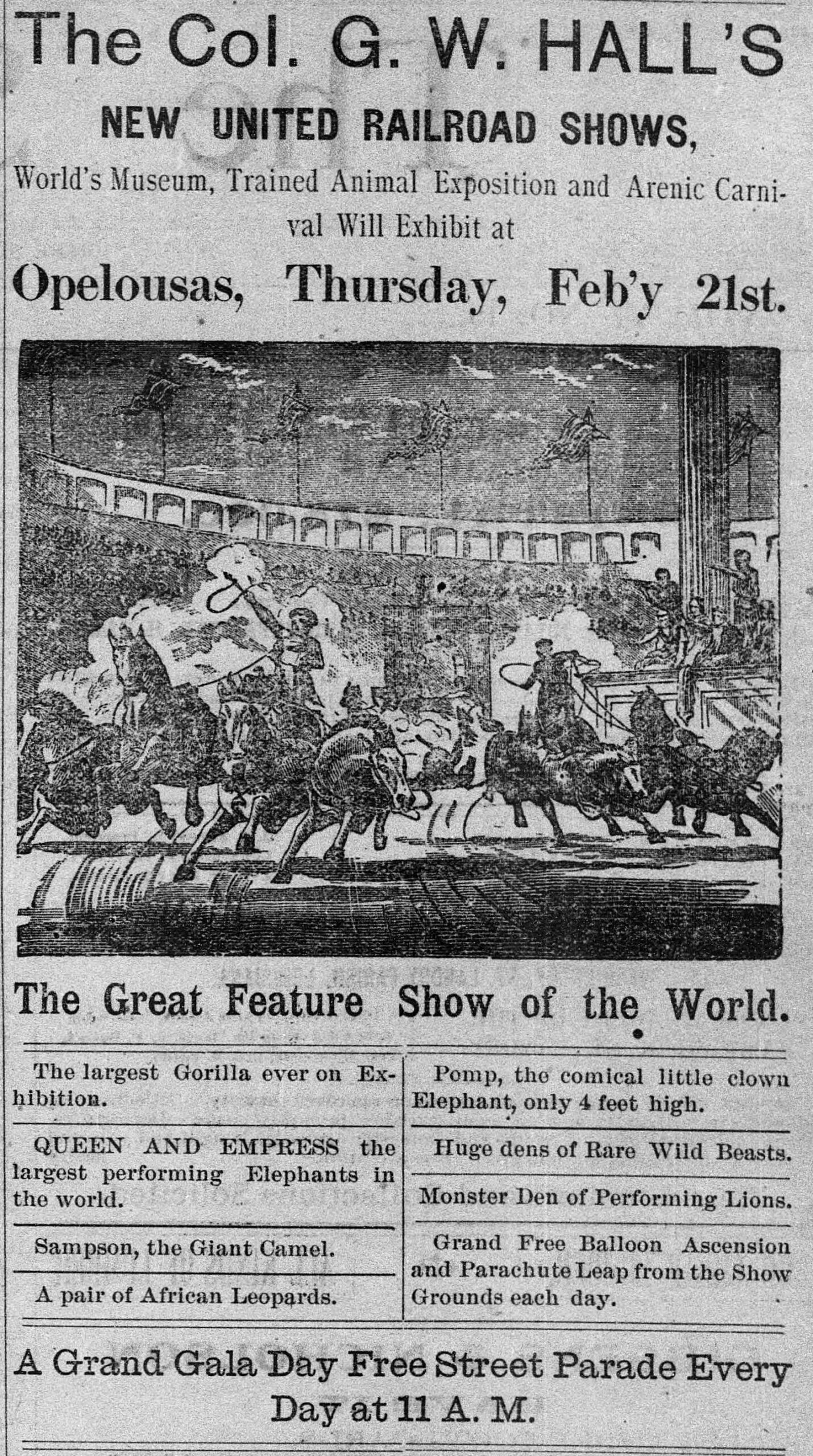
The circus ad on the same page as the snow story, with an engraving of a chariot race. St. Landry Clarion, February 16, 1895. Library of Congress, Chronicling America. Click the clipping to read it full size.
Snow figures in the country
A week later, the Clarion’s country correspondents wrote in. In Grand Coteau, crowds of young folks filled the streets, the stinging snowballs were taken in good humor, and quite a few married ladies and gentlemen joined in. At Big Cane, nobody could name a time when a snowfall had matched it. There, Mr. N. M. Richard, with help from Misses Annie Reynolds and Gussie Eilert, built a large snow figure of Mary Washington that the correspondent said deserved special mention.
Within a few days the sun came back and the snow melted. The Courier hoped it would be many a year before Opelousas saw another storm like it. Nobody ever reported who won the battle between Landry street and Main street.
Sources
- St. Landry Clarion (Opelousas, La.), February 16, 1895, page 2 (“Beautiful Snow,” the Valentine’s Day note, the Hall’s circus ad).
- The Opelousas Courier (Opelousas, La.), February 16, 1895, page 1 (“The Beautiful Snow,” the snowball armies, the ladies, the Dusons, the Dramatic Club play).
- St. Landry Clarion, February 23, 1895, page 5 (letters from Grand Coteau and Big Cane).
- All newspaper images: Library of Congress, Chronicling America. No known copyright restrictions.
- New Orleans photograph: “New Orleans Snow Feb 1895 in Carrollton,” February 15, 1895, Louisiana Research Collection, Tulane University, Wikimedia Commons, public domain.
- Lake Charles photograph: “Lake Charles Louisiana Snow 1895,” February 15, 1895, Wikimedia Commons, public domain.
- Cover: Snow in Carrollton, New Orleans, February 15, 1895, Louisiana Research Collection, Tulane University, via Wikimedia Commons (cropped). Public domain.