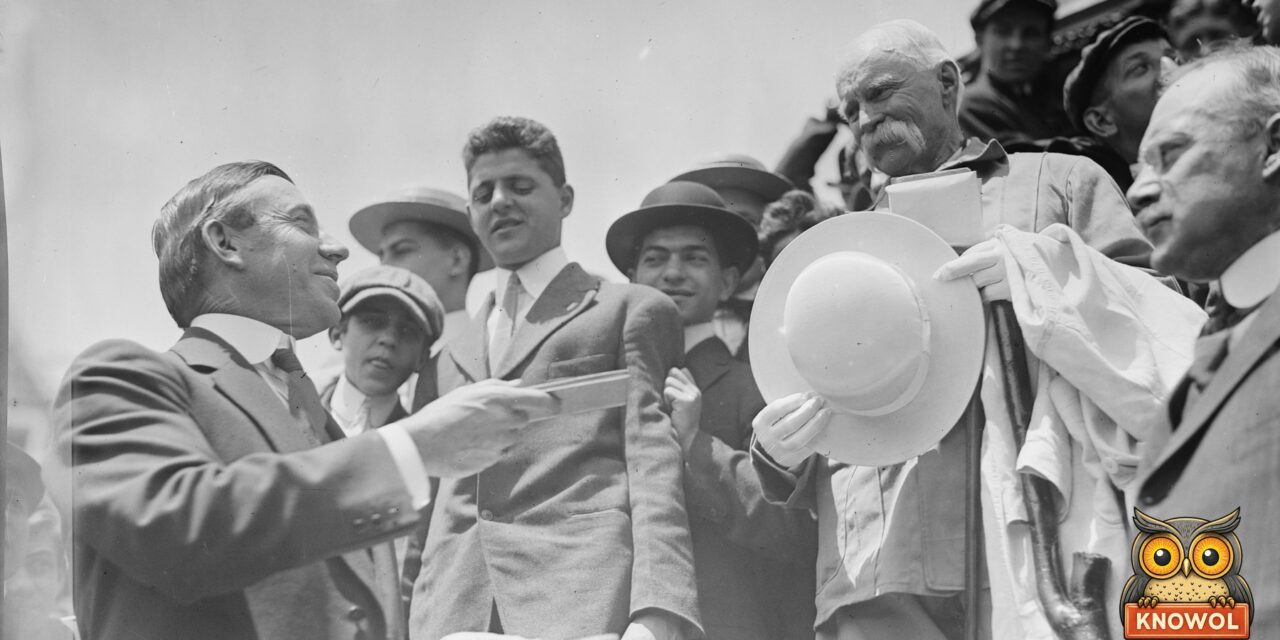
At 6:10 on Tuesday morning, March 8, 1910, a gray-haired man with a big mustache walked into La Junta, Colorado. He had already covered 10 miles since 4 o’clock. His name was Edward Payson Weston, and he was walking from Los Angeles to New York.
The La Junta Tribune called Weston “world-famous.” He had given walking shows all his life, and he often walked for money. This time, the paper said, $20,000 was riding on his feet.
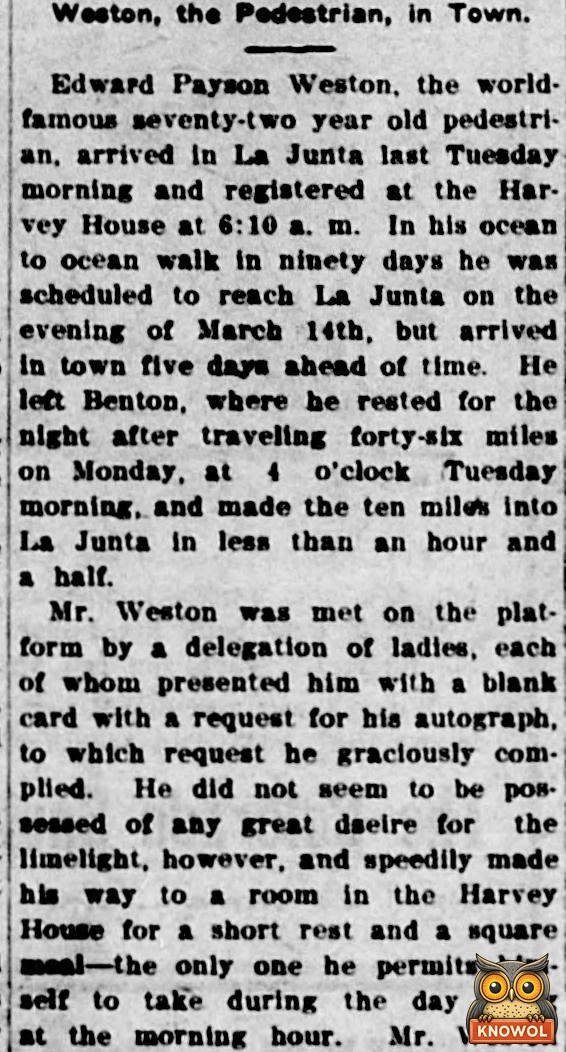
“Weston, the Pedestrian, in Town.” La Junta Tribune, La Junta, Colorado, March 12, 1910, page 1. Library of Congress, Chronicling America. Click the clipping to read it full size.
Breakfast at the Harvey House
Weston had left Los Angeles on February 1. By La Junta he had gone 1,384 miles in 31 days of walking. That’s about 44.6 miles a day. He was five days ahead of schedule, even though he never walked on Sundays.
He meant it about Sundays. The summer before, he had walked across the country the other way, heading west. He spent Sunday, July 4, 1909, resting in Lovelock, Nevada. Then he left at 12:05 a.m. Monday, five minutes after Sunday ended. A big group of townspeople escorted him out of town in the dark.
Back in La Junta, a group of women met him on the railroad platform. Each one handed him a blank card and asked for his autograph, and he signed them all. Then he went into the Harvey House, the hotel and restaurant at the train station, for a short rest and “a square meal.” It was “the only one he permits himself to take during the day.”
The paper described him for its readers. He weighed about 140 pounds and stood five feet eight, with “gray hair, grizzled mustache and bronzed and weather beaten countenance.” Countenance is an old word for face. The paper called him 72, but that was a little off. Weston was born in 1839, so he was 70 and about to turn 71. For his birthday the next week, he planned to walk “a mile for each year of his life.”
Don’t step on his heels
At 9:30 he set off east again. Several hundred people watched from the depot platform, and some crowded in too close. He had to warn them not to step on his heels. An injury could cost him “the $20,000 stake money.” (Stake money is the prize in a bet.) Two men in a gasoline motor car, loaded with supplies, followed “in his wake.”
The paper did some math. If Weston kept up his pace, it said, he would “bathe his toosie wootsies in the Atlantic” twelve days early.
The men who tried to keep up
Some La Junta men “hot-footed it out of town” with him. There was L. A. Fleming, roadmaster of the Santa Fe Railway, which meant he was in charge of a stretch of track. There was Paul Henkel of the Postal Telegraph Company. And there was Bob Fisher of North La Junta, a “chicken fancier,” or a man who bred chickens. The paper said Bob was an expert on a bicycle and a motorcycle.
Bob made it halfway to Casa, a stop east of town, “and then quit him cold.” He said Weston started out slow, “but the longer he walked the faster he went.” So Bob “bade Mr. Weston a fond adieux and turned his back on him.” Adieu is French for goodbye.
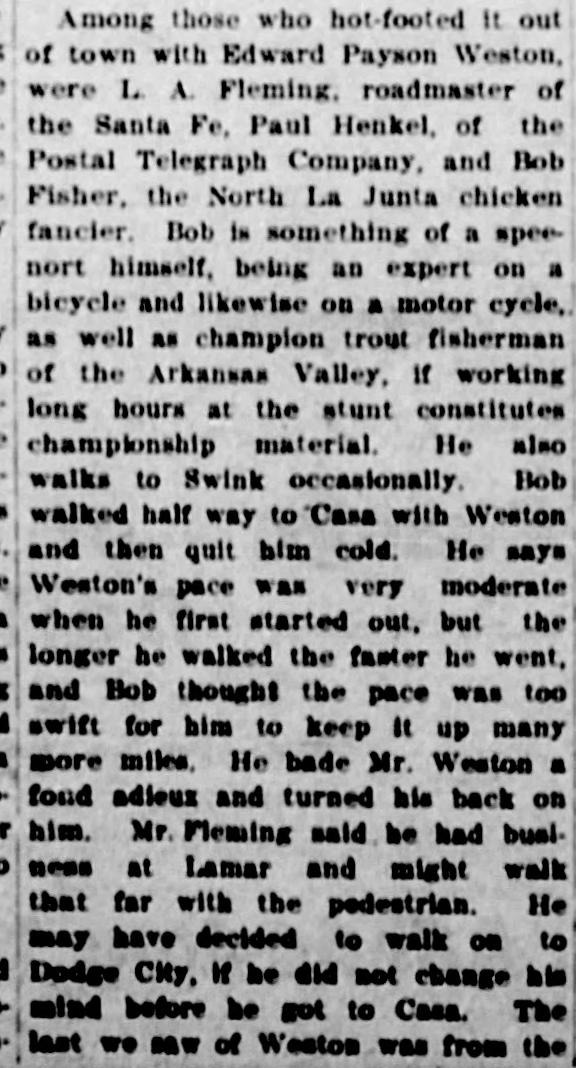
The La Junta men who tried to keep up with Weston. La Junta Tribune, La Junta, Colorado, March 12, 1910, page 4. Library of Congress, Chronicling America. Click the clipping to read it full size.
Fleming said he had business in Lamar, Colorado, and might walk that far. The paper’s last look at Weston came from the front seat of an automobile, three miles east of town, and “Dad Henkel was still pegging along in his wake.” Henkel said he had done a walk with Weston 53 years before, when he was 17. “How old is Dad?” the paper joked.
What a champion walker ate
Two days later, Weston reached Holly, Colorado, near the Kansas line. He said he had walked 47 miles that day, all the way from Caddoa. He dodged the waiting crowd and made “a bee line” for the hotel. He told the Holly Chieftain that walking “comes natural to him,” and that he was “ill at ease when not walking for a wager.” A wager is a bet.
He was up at 3:30 the next morning. Between bites of “fried eggs, coffee and oranges,” he wrote his daily report for a New York newspaper, the World. Before he left, he thanked “Holly people for their fond welcome.”
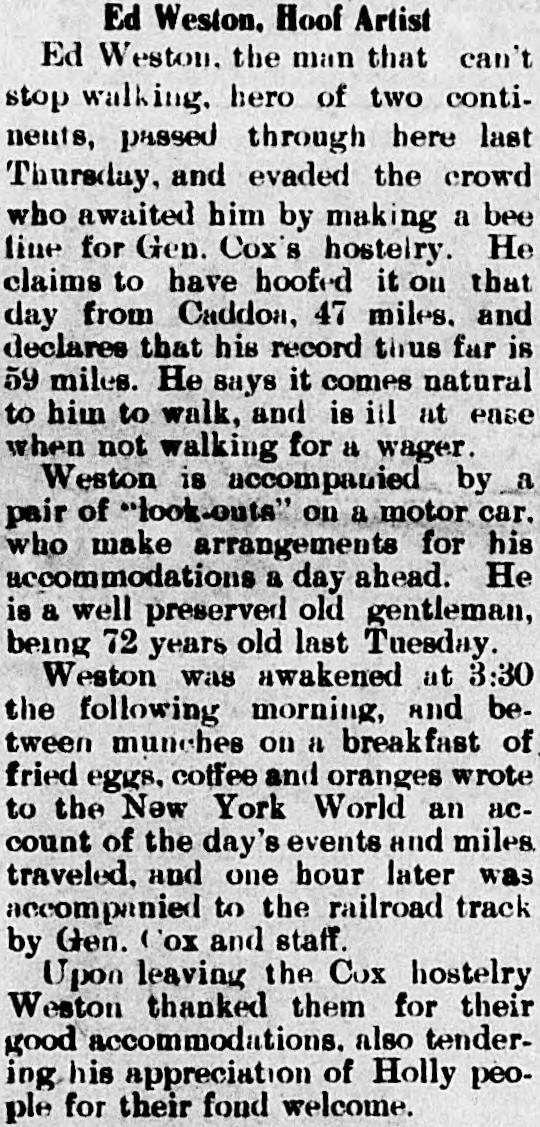
“Ed Weston, Hoof Artist.” The Holly Chieftain, Holly, Colorado, March 18, 1910, page 1. Library of Congress, Chronicling America. Click the clipping to read it full size.
That fits what the La Junta paper said: breakfast was his one square meal of the day. At the very end of his trip, in New York, he lay down on a bed for a few minutes. Then he sat up and ate “a light lunch of eggs beaten up in milk.”
The end of the road
On May 2, 1910, Weston walked down Broadway in New York City with crowds cheering him on. The New-York Tribune said he walked “like a happy boy.” He wore brown trousers cut off at the knee, leather leggings and a derby hat with a very wide brim.
At City Hall, at 3:10 in the afternoon, he handed Mayor Gaynor a letter from the mayor of Los Angeles. “You left there at 4 o’clock on February 1,” the mayor said, “and you reached us at 3:10 o’clock to-day; that’s marvellous.”
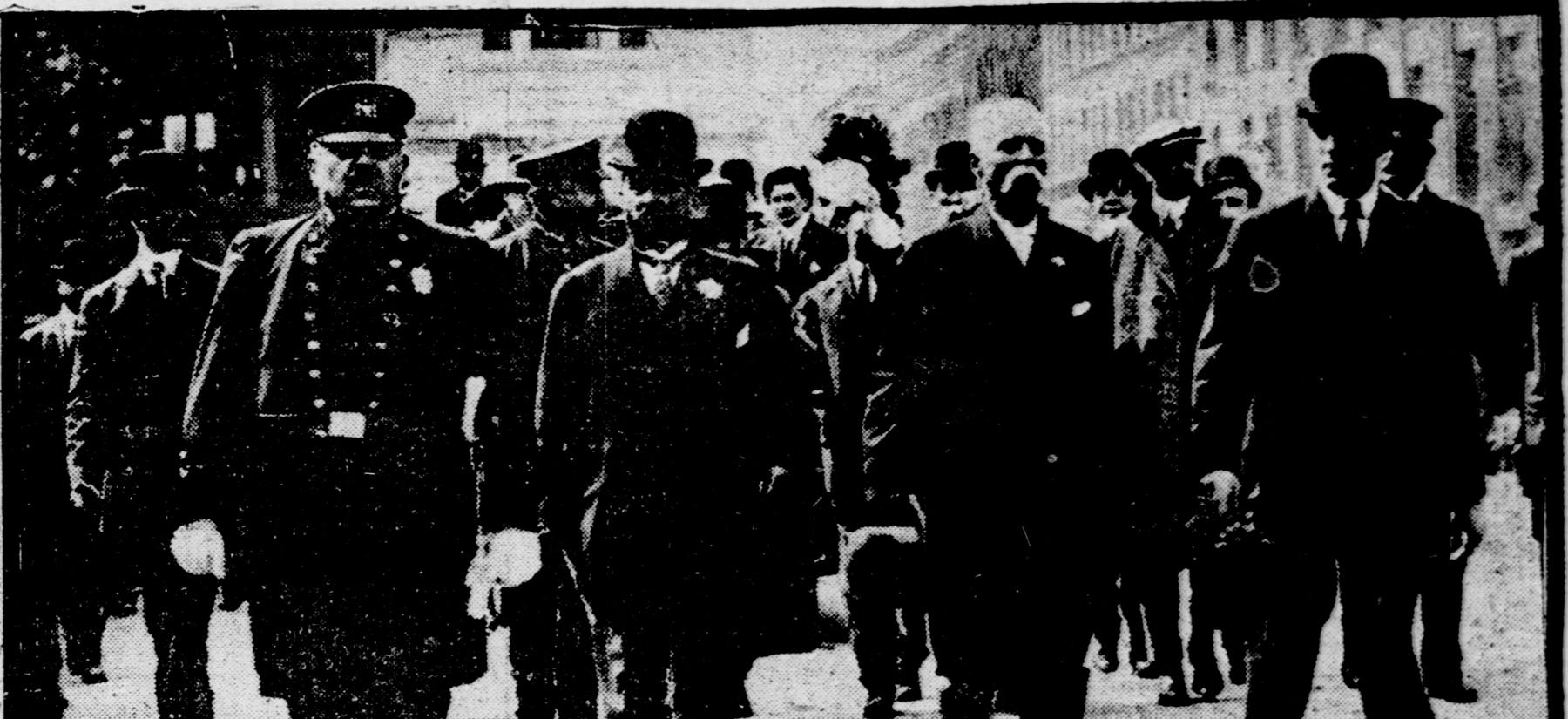
Weston (with the white mustache, right of center) walking down Broadway on the last day of his trip. New-York Tribune, New York, May 3, 1910, page 1. Photographs credited to Paul Thompson. Library of Congress, Chronicling America. Click the clipping to read it full size.
Then the mayor asked how the trip had gone. “Fine, thank you,” Weston replied, “and I feel so proud right now that I…” He couldn’t finish. He stood quiet while “big tears coursed down his cheeks.”
The La Junta Tribune’s math was right. Weston had planned to cross the country in 90 days. It took him 78 walking days, twelve fewer. And he wasn’t done. In June 1913, at 74, he set off from New York on another long walk, this time to Minneapolis. Back in La Junta, Dad Henkel had kept up for at least three miles.
Sources
- La Junta Tribune (La Junta, Colorado): March 12, 1910, page 1 (“Weston, the Pedestrian, in Town”) and March 12, 1910, page 4.
- The Holly Chieftain (Holly, Colorado): March 18, 1910, page 1 (“Ed Weston, Hoof Artist”).
- The Lamar Register (Lamar, Colorado): March 9, 1910, page 5.
- Lovelock Tribune (Lovelock, Nevada): July 9, 1909, page 1 (“Weston Greeted With Loud Cheers”).
- New-York Tribune (New York, New York): May 3, 1910, page 1 (“Weston at Journey’s End Moved to Tears”).
- All newspaper images: Library of Congress, Chronicling America. Published 1909 and 1910, public domain.
- Cover: “Dr. Finley & Weston,” June 2, 1913, the day Weston started his walk to Minneapolis, Bain News Service, George Grantham Bain Collection, Library of Congress, no known restrictions on publication.