On Monday morning, July 24, 1911, hundreds of kids crowded the doors of six charity offices around Washington, D.C.. Each one wanted a free cardboard box. At the Georgetown office, 13-year-old Layton H. Burdette was already a step ahead. He showed up with “a shoe box half full of dead flies under his arm.” He dumped them into one of the official boxes, “filling it to the brim,” and handed it in. It was the first box of the day in Georgetown. Two weeks later, Layton would be the city’s fly-killing champion.
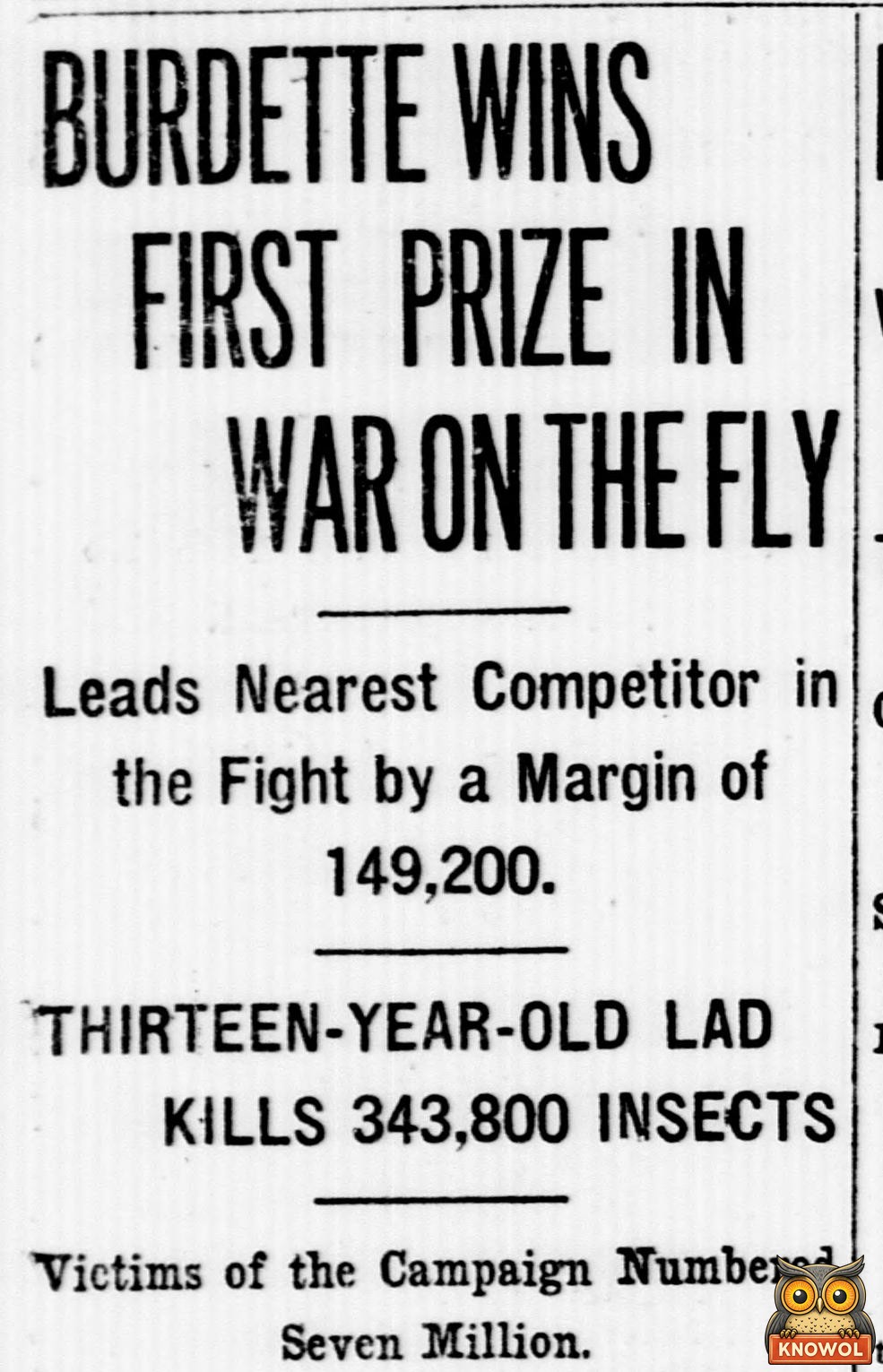
“Burdette Wins First Prize in War on the Fly.” Evening Star, Washington, D.C., August 6, 1911, page 1. Library of Congress, Chronicling America. Click the clipping to read it full size.
A war on flies
The contest belonged to The Evening Star, one of the city’s daily papers. It called the plan its “Flyless City” campaign, and the city’s health department helped run it. Health officials blamed the house fly for spreading germs and sickness. The Star called the fly the city’s “greatest menace to health.”
The rules were simple. Any child under 16 could enter. Kids picked up special boxes, made free by a local box company, and wrote their name, age and address on top. Every morning except Sunday, between 10 and 11, they turned in full boxes at one of the six stations. The prizes added up to $100. First place won $25, second $20 and third $15, and twenty more kids would get $1 each.
There was one big rule about how to catch them. “Flies caught on sticky paper cannot be counted,” The Star said, “but they may be caught in traps, ‘swatted’ or poisoned.” Sticky paper, or flypaper, was a strip coated with glue that flies landed on and couldn’t leave.
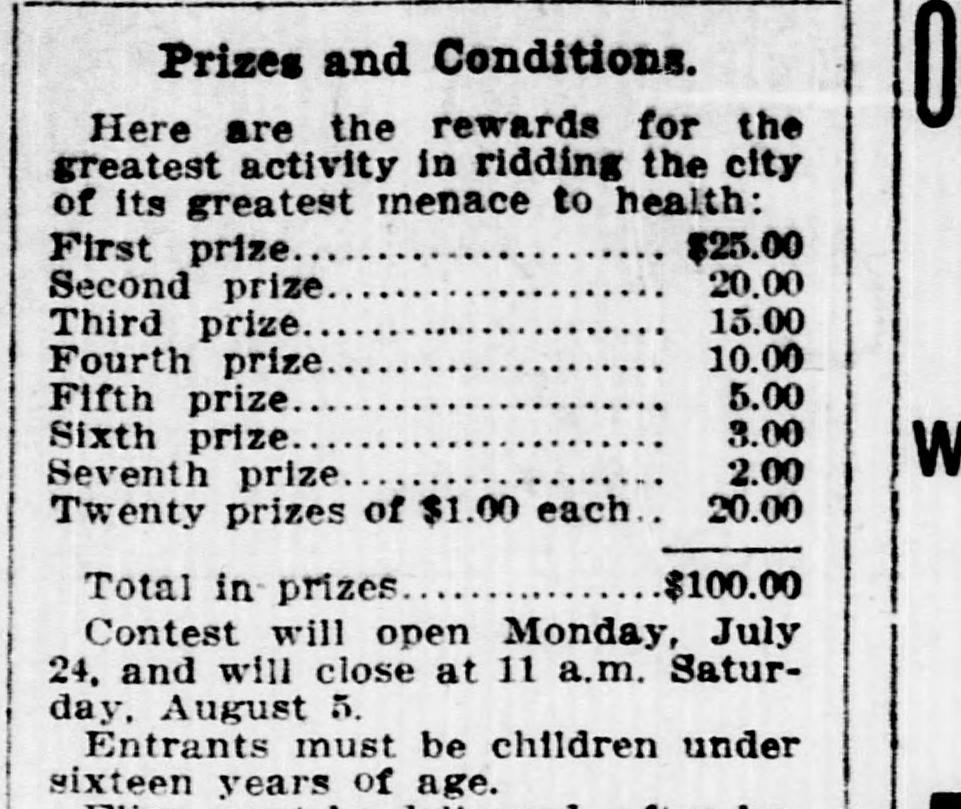
The prize list. Evening Star, Washington, D.C., July 25, 1911, page 2. Library of Congress, Chronicling America. Click the clipping to read it full size.
Twelve hundred kids on day one
About 1,200 boys and girls signed up the first day. The next morning 600 more came, making “eighteen hundred children in all.” Three stations ran out of boxes, and the box company got a rush order for more.
The kids were ready for battle. While they waited outside one station, someone said a fly had landed on a boy’s bare head. “Instantly his head was covered with a dozen hands and three fly swatters,” the paper reported. Nobody ever found out what happened to that fly.
Everyone had a plan. One boy tied a rubber band to a small stick and practiced shooting flies with it. After all that practice, he said, “now I can almost hit them on the ‘fly.'” A girl of about ten had watched flies land on her mother’s bread dough. So she mixed flour and water, let the flies eat, and trapped them under a box screen. Another boy asked a rules question: “Is it fair to catch flies in the corner grocery?” When a reporter asked if they expected to win, the answer was a chorus of “Sure,” “Bet your boots” and “Well, I should say so.”
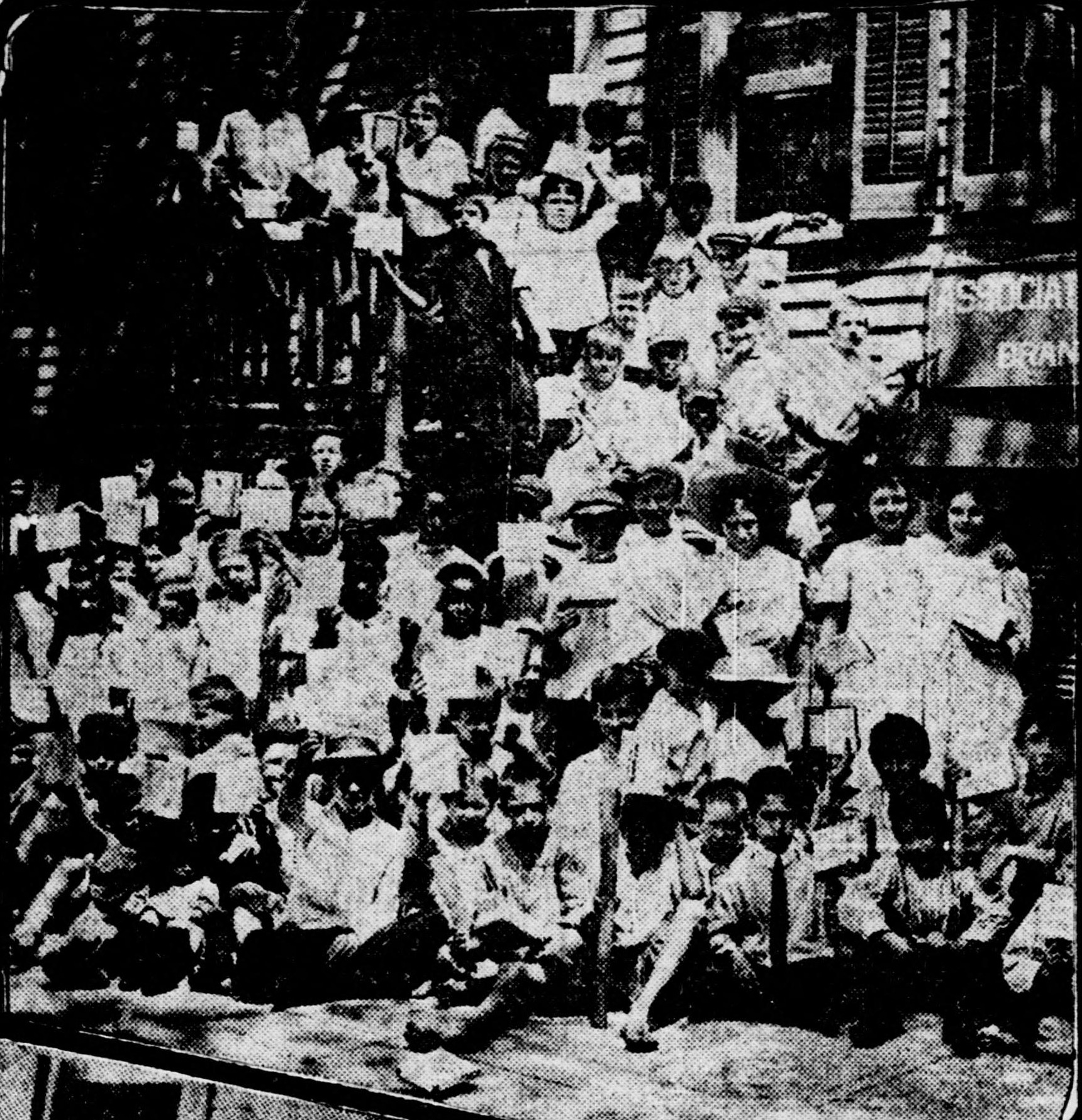
Children hold up their fly boxes at the Northeast station, 922 H street, on the first day of the contest. Evening Star, Washington, D.C., July 24, 1911, page 2. Library of Congress, Chronicling America. Click the picture to see it full size.
Counting a million flies
Nobody counted them one at a time. Dr. Arthur L. Murray of the health department used a kind of measuring cup. It was a “gill measurement,” an old size equal to half a cup. The Star explained that it “holds 1,600 flies, and is marked so that a sixteenth part of it may be computed.” So every little mark on the side stood for 100 flies.
Dr. Murray opened each box, poured the flies into the measure and wrote down the number. Then the number went onto that kid’s own card. So no flies got lost on the way, the paper warned in capital letters: “TIE THE LIDS ON TIGHT.”
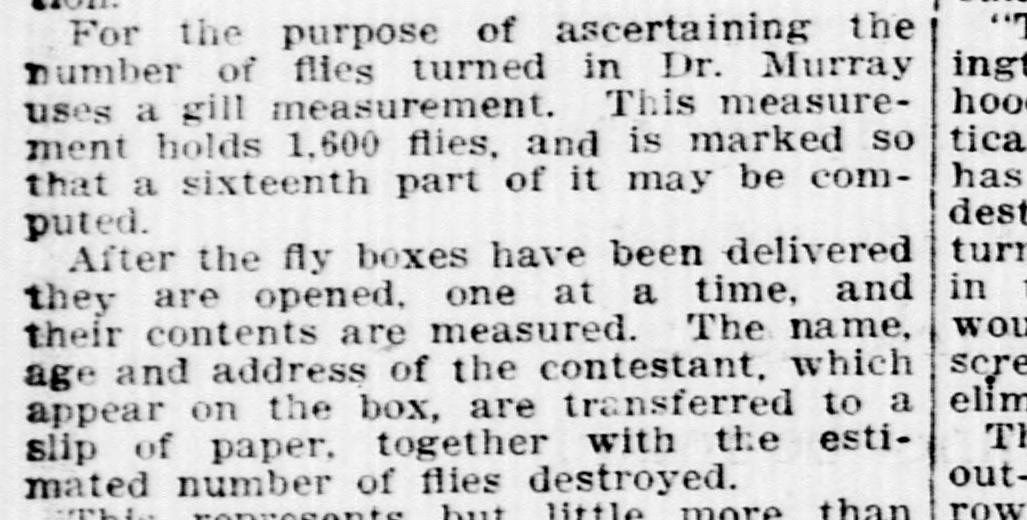
How Dr. Murray counted the flies. Evening Star, Washington, D.C., July 30, 1911, page 2. Library of Congress, Chronicling America. Click the clipping to read it full size.
The biggest fly
Near the end, 10-year-old Lawrence Fitzgerald sent in the biggest fly of the whole contest. It was “over an inch long,” and the health department put it on display. With it came a note for Dr. Murray. “This is the largest fly I have caught,” Lawrence wrote. “Please dissect him and let me know if he carries any diseases.” To dissect means to cut something open to study it. He ended with the question every contestant wanted answered: “How much does this fly count for me?”
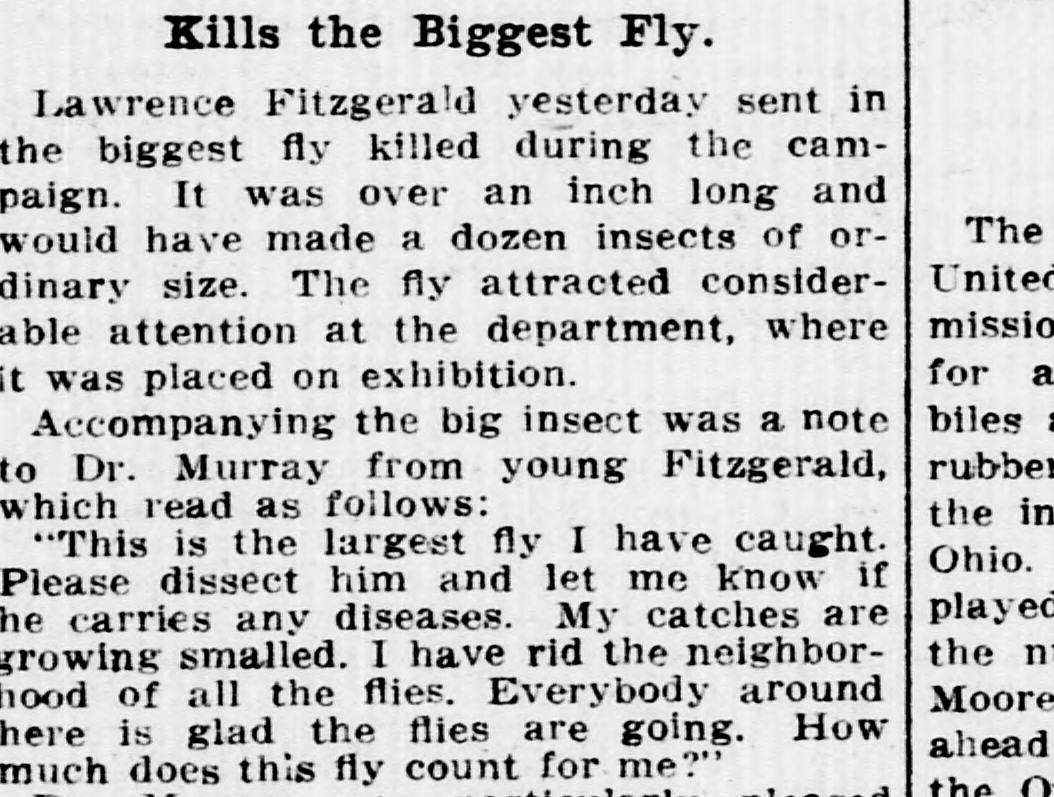
Lawrence Fitzgerald’s note. Evening Star, Washington, D.C., August 5, 1911, page 3. Library of Congress, Chronicling America. Click the clipping to read it full size.
The winner
The contest closed on Saturday morning, August 5. The kids turned in nearly a million flies that last day alone, and Dr. Murray worked late into the night to finish the count. Layton Burdette brought in more than 100,000 by himself. “Several water buckets were required for carting away the flies,” The Star said.
The next morning, the front page told the city who had won. Layton, who lived at the Industrial Home School, finished with 343,800 flies. That was 149,200 more than anyone else. At 1,600 flies to a gill, his catch would have filled about 215 of Dr. Murray’s measures, close to seven gallons of flies.
Bessie B. Fillius, 13, came in second with 194,600. Mildred Zuschnett, 11, joined late and still took third with 180,500. Together, all the kids had killed about seven million flies.
By the numbers
- $100: all the prizes put together, for 27 winners.
- 1,600: flies in one gill measure.
- About 7 million: flies killed by all the kids together.
- 6: the age of the youngest winner, Francis T. Moreland, who caught 44,450 flies.
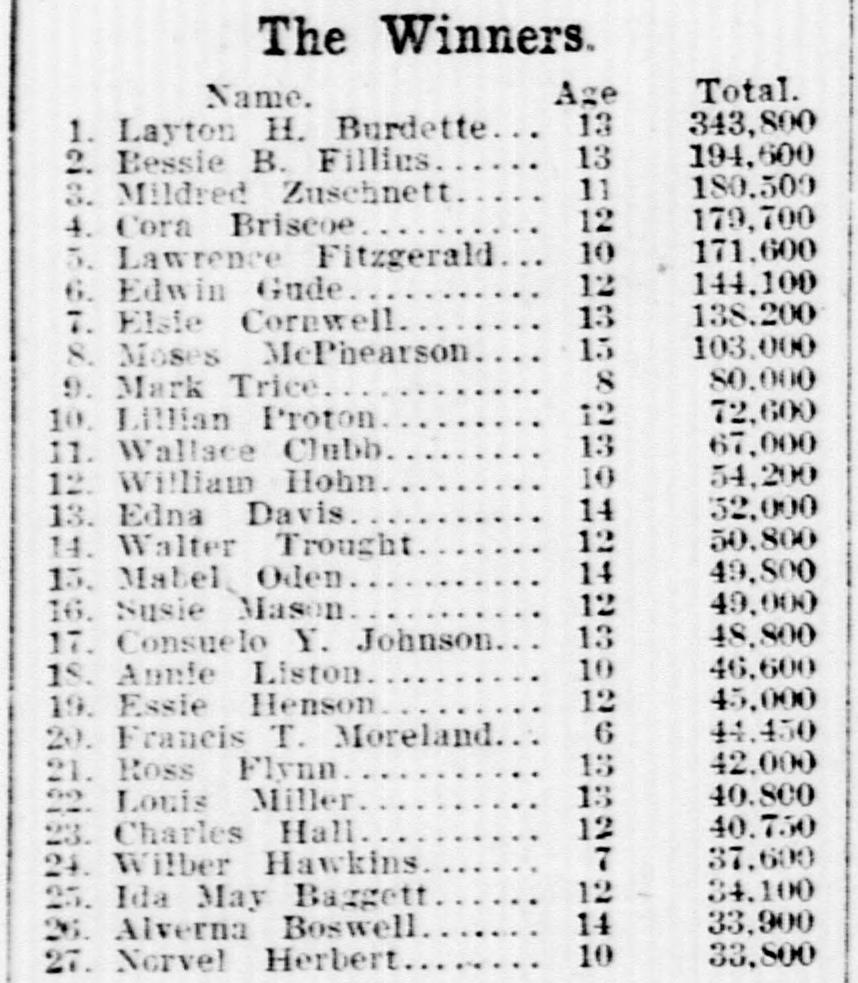
The 27 winners, with their ages and totals. Evening Star, Washington, D.C., August 6, 1911, page 1. Library of Congress, Chronicling America. Click the clipping to read it full size.
Swat the fly, everywhere
Washington wasn’t alone. In Kansas, state health officer Samuel J. Crumbine had been telling people to “swat the fly” for years. By 1905, the Kansas Historical Society says, he had turned a gadget called the fly bat into the flyswatter. In May 1912, the Civic League of Brownsville, Texas, offered $10 to the boy or girl who killed the most flies. Kids brought them to city hall on Saturday afternoons, where “a special officer will be detailed to measure them.”
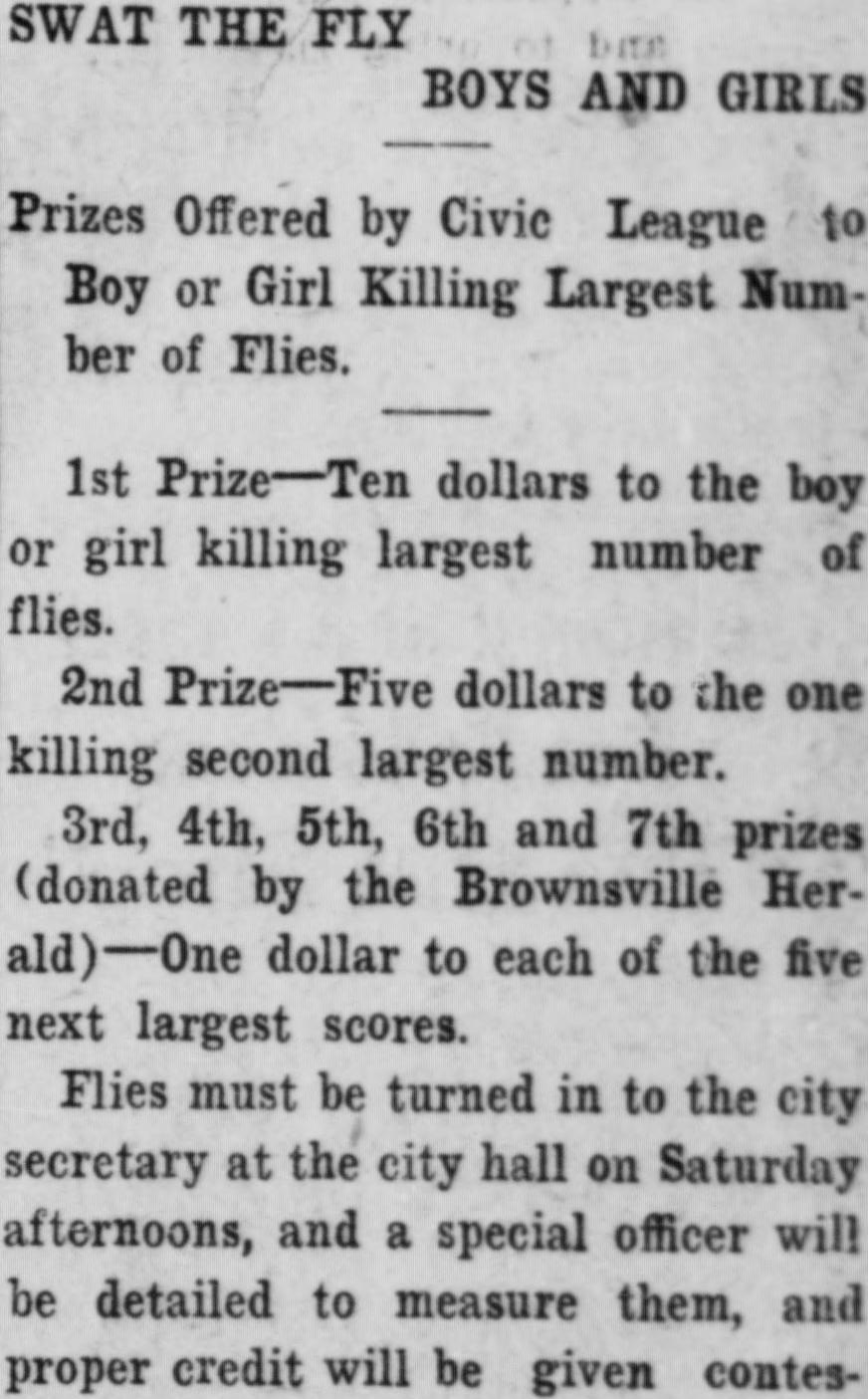
“Swat the Fly, Boys and Girls.” Brownsville Herald, Brownsville, Texas, May 7, 1912, page 3. Library of Congress, Chronicling America. Click the clipping to read it full size.
Back in Washington, the grown-ups got the last word. The paper quoted Dr. Murray: “the children of the capital must be thanked for an even greater service.” They had woken the whole city up to the problem. Next, the health department planned to find out why some neighborhoods had so many more flies. Then it would start a “swat the man who feeds the fly” crusade, aimed at the grown-ups whose messes fed the flies. The kids had done their part.
Sources
- Evening Star (Washington, D.C.): July 24, 1911, page 2 (opening day, photographs, “First to Fill a Box”), July 25, 1911, page 2 (“Rushing Merry War,” prizes and conditions), July 30, 1911, page 2 (the gill measure), August 5, 1911, page 1 (“Fly Battle Over; Six Million Dead”), August 5, 1911, page 3 (the biggest fly, the health department’s plans) and August 6, 1911, page 1 (“Burdette Wins First Prize in War on the Fly,” the winners).
- Brownsville Herald (Brownsville, Texas): May 7, 1912, page 3.
- All newspaper images and photographs: Library of Congress, Chronicling America. Published 1911 and 1912, public domain.
- Kansas Historical Society, Kansapedia, “Samuel J. Crumbine.”
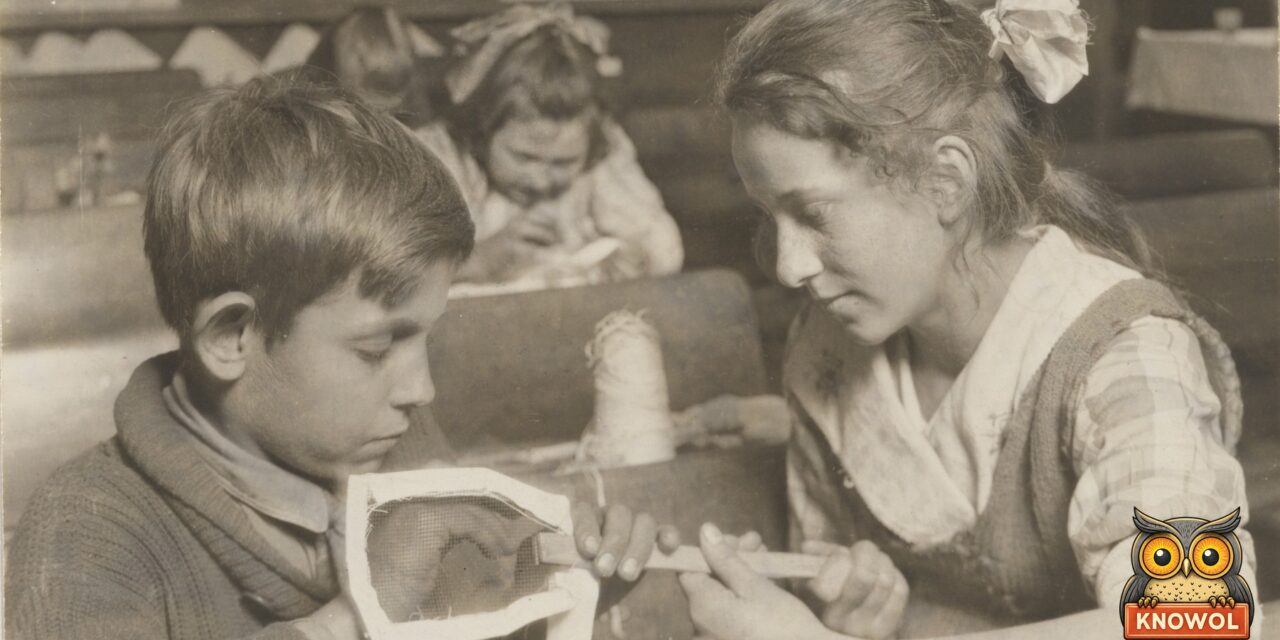
- Cover: “Fighting flies,” school children in Breesport, New York, make fly swatters and nets for the Junior Red Cross campaign against flies, about 1920, American National Red Cross photograph collection, Library of Congress, no known restrictions. It shows the same kind of fly war a few years later, not the 1911 contest.