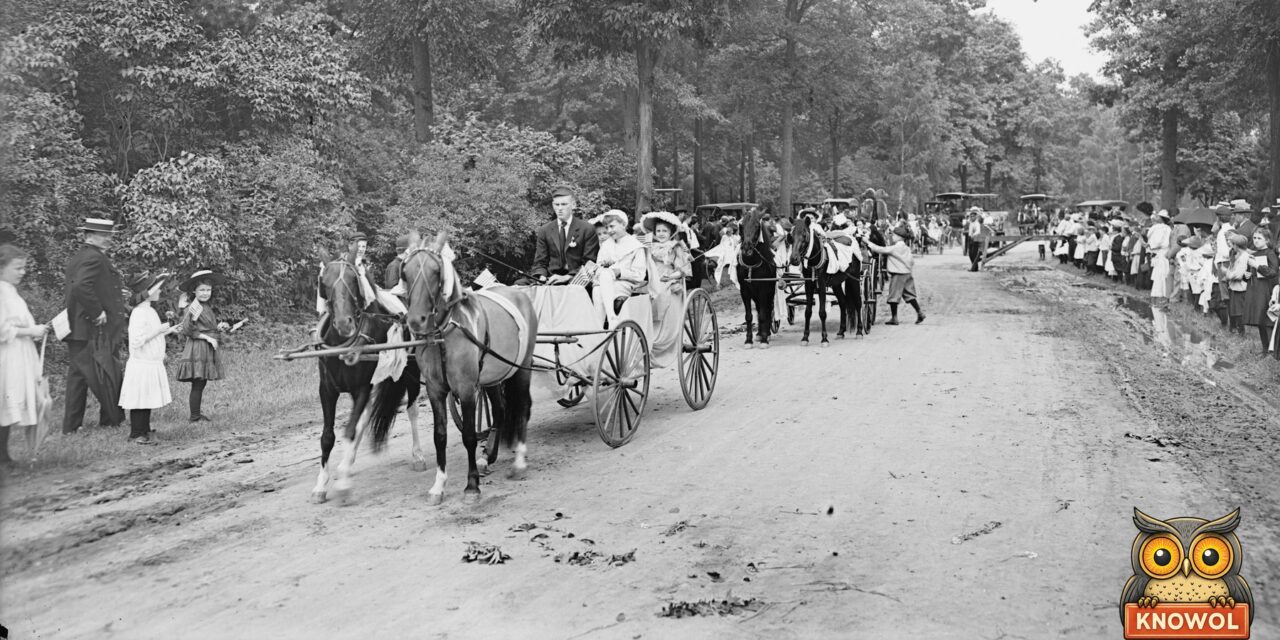
On the morning of Friday, October 14, 1921, the roads into Covington, Louisiana, filled up with kids. They came packed into trucks and autos, and they were loud. The St. Tammany Farmer saw “Trucks and autos loaded with school children shouting the yells of the school.” It was School Day at the St. Tammany Parish Fair, and schools from all over the parish were on their way to town.
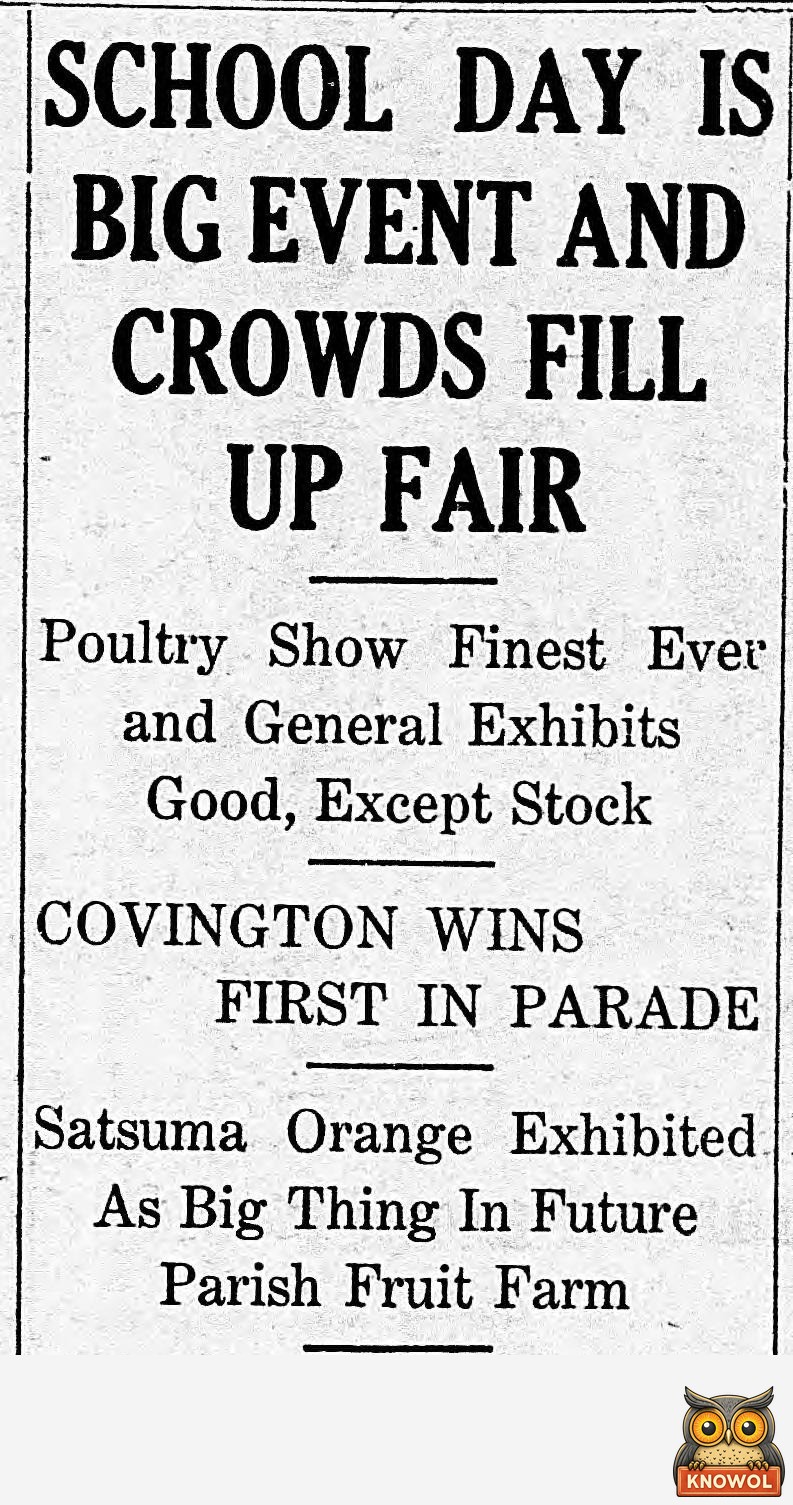
“School Day Is Big Event and Crowds Fill Up Fair.” The St. Tammany Farmer, Covington, Louisiana, October 15, 1921, page 1. Library of Congress, Chronicling America. Click the clipping to read it full size.
A mile of kids
In Louisiana, a parish is what other states call a county. St. Tammany Parish sits on the north shore of Lake Pontchartrain, across the water from New Orleans. Covington is the parish seat, the town with the courthouse, and once a year the whole parish came there for the fair.
On School Day the children marched to the fair grounds together. Superintendent Lyon, the school superintendent, walked at the front. Some schools carried banners. Some wore matching costumes: “Red and gold, white and gold and some in gold costume complete.” The line of children ran “a mile long.” That is a long walk for a first grader.
The grown-ups got swept up in it too. Judge Pons came along with the children from Abita Springs, Louisiana. He “forgot that he had not been feeling the best in the world and stepped like a drum major.” A drum major is the leader at the front of a marching band, the one who high-steps and swings a baton.
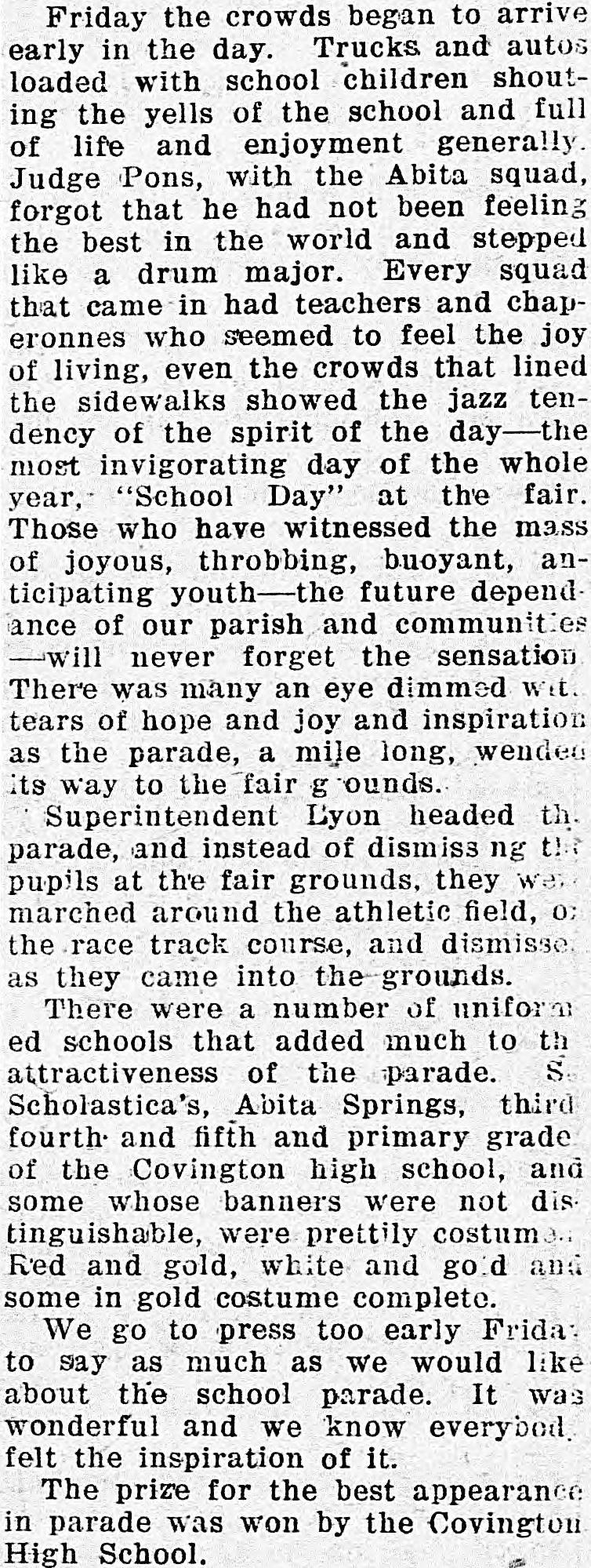
The School Day parade. The St. Tammany Farmer, Covington, Louisiana, October 15, 1921, page 4. Library of Congress, Chronicling America. Click the clipping to read it full size.
Why the grown-ups cried
The paper’s editor watched the parade go by, and it got to him. He called it “the most invigorating day of the whole year.” Invigorating means it filled you with energy. He wrote that nobody who saw “the mass of joyous, throbbing, buoyant, anticipating youth” would ever forget it. “There was many an eye dimmed,” he said, with “tears of hope and joy and inspiration.”
He had one problem. The Farmer came out on Saturday, but it was printed on Friday, while the fair was still going. So the editor had to stop writing before he wanted to. He said he went to press too early “to say as much as we would like about the school parade.” The first prize for looks, he reported, went to the Covington High School.
An airplane made by an 11-year-old
The fair had planned real flying, too. A week later the paper admitted there was “some disappointment in not having the balloon and aeroplane stunts.” It called the problem “unavoidable,” so it was nobody’s fault. Still, one airplane did make the news.
Inside the Baptist Church booth, visitors found “some remarkable mechanical genius, by Fritz Burns, age 11 years.” Then came the line any kid would love to read about himself: “The aeroplane was especially good.” The paper never said how big it was or whether it could fly. In 1921, airplanes were still new and thrilling. The real ones never came to the fair, but a boy of 11 brought one, and the paper picked it out.
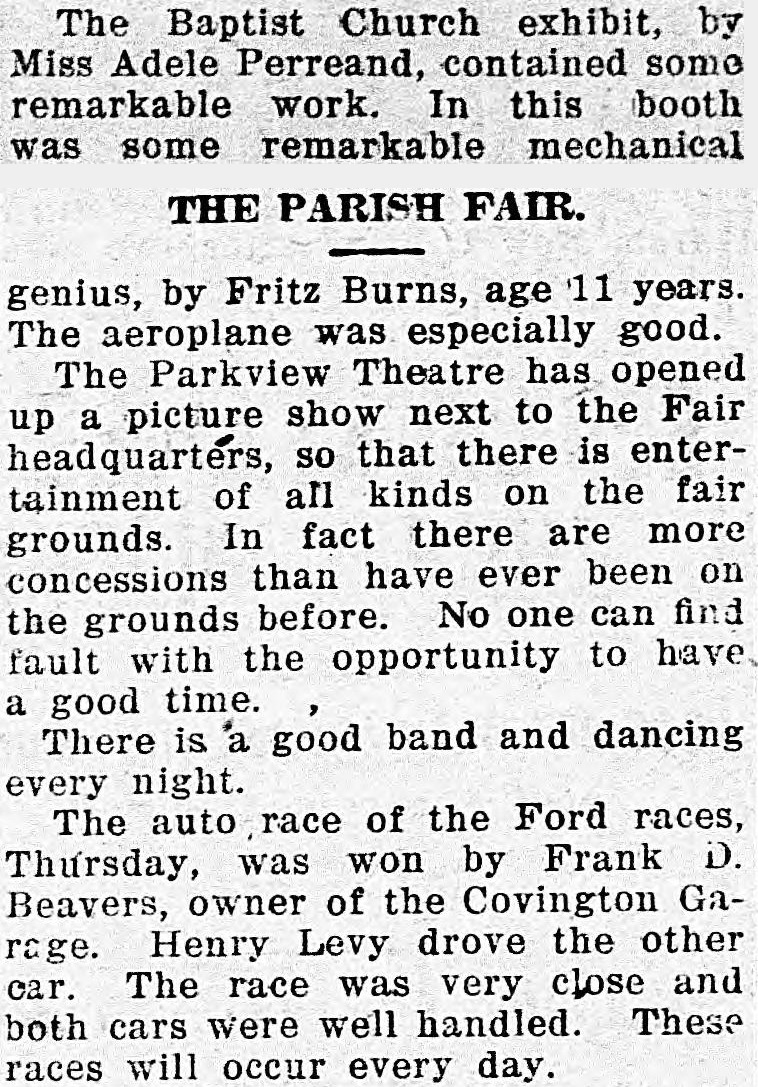
Fritz Burns’s aeroplane and the Ford race. The St. Tammany Farmer, Covington, Louisiana, October 15, 1921, pages 1 and 4 (two pieces of one story, joined). Library of Congress, Chronicling America. Click the clipping to read it full size.
What else was at the fair
There was a lot to see. There was “a good band and dancing every night,” and a picture show next to the fair headquarters. The paper promised Ford races every day. On Thursday, Frank D. Beavers, who owned the Covington Garage, beat Henry Levy. “The race was very close and both cars were well handled,” the paper said. By the end, “Mr. Beavers won two of the auto races and Mr. Henry Levy two. Tit for tat.” Tit for tat means they came out even.
Paul Friedlander showed off satsumas, small sweet oranges that are easy to peel. He said St. Tammany could raise the satsuma “of finer quality and productiveness than anywhere in America.” In the paper’s photo of his booth, a big sign brags about growing a million oranges.
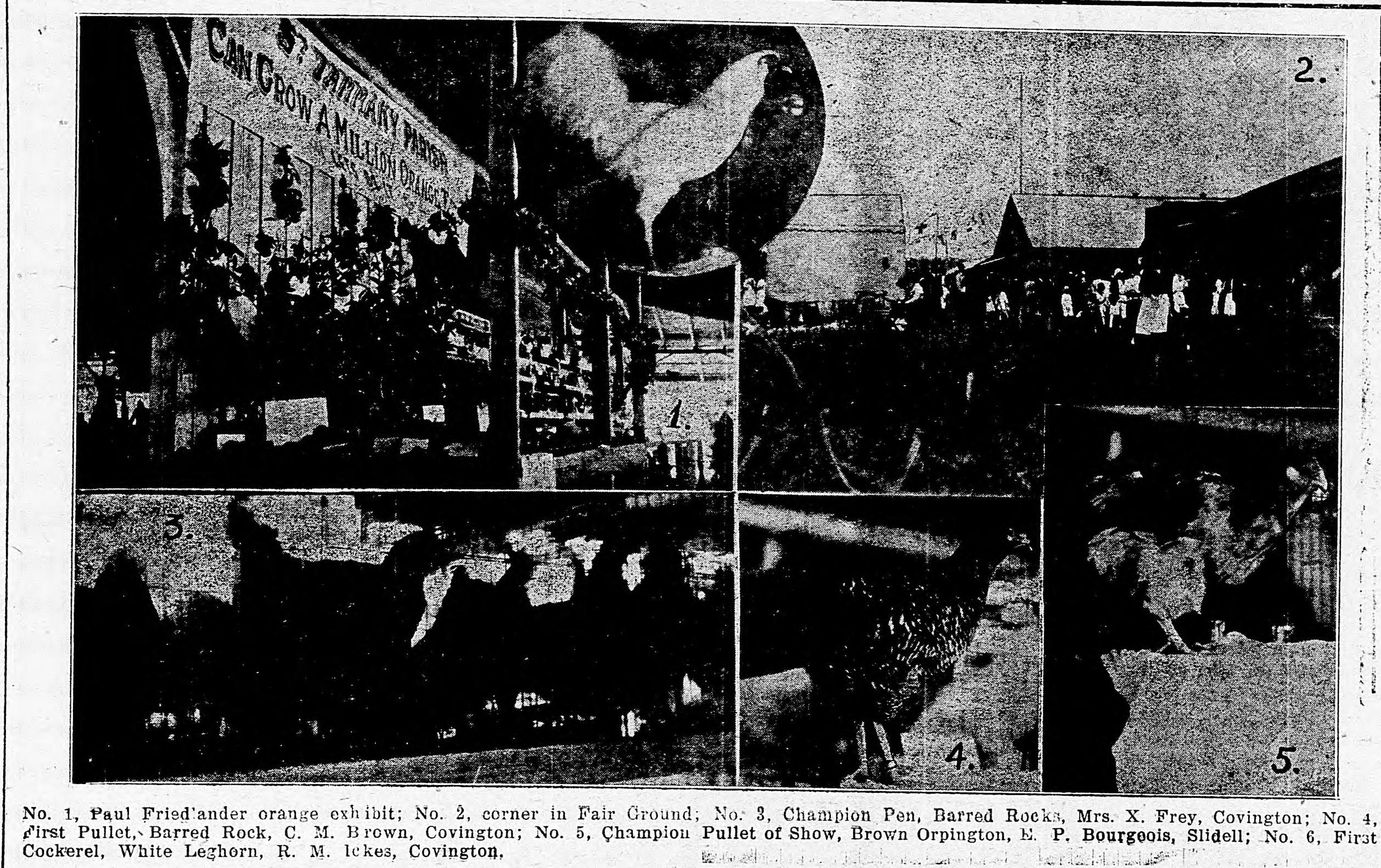
“Scene and Some of Exhibits at St. Tammany Parish Fair”: No. 1, Paul Friedlander’s orange exhibit; No. 2, a corner of the fair ground; the rest are prize chickens. The St. Tammany Farmer, Covington, Louisiana, October 22, 1921, page 1. Library of Congress, Chronicling America. Click the picture to see it full size.
The women’s department had handmade wonders. There were “flowers made of goose feathers and hand-painted,” with ferns made of quills. There was a “patch-work quilt made by a lady 90 years of age.” And the Domestic Science department, which taught cooking, showed off a Waldorf salad, the kind with apples, celery and nuts. The paper said it “would make anybody hungry to look at it.”
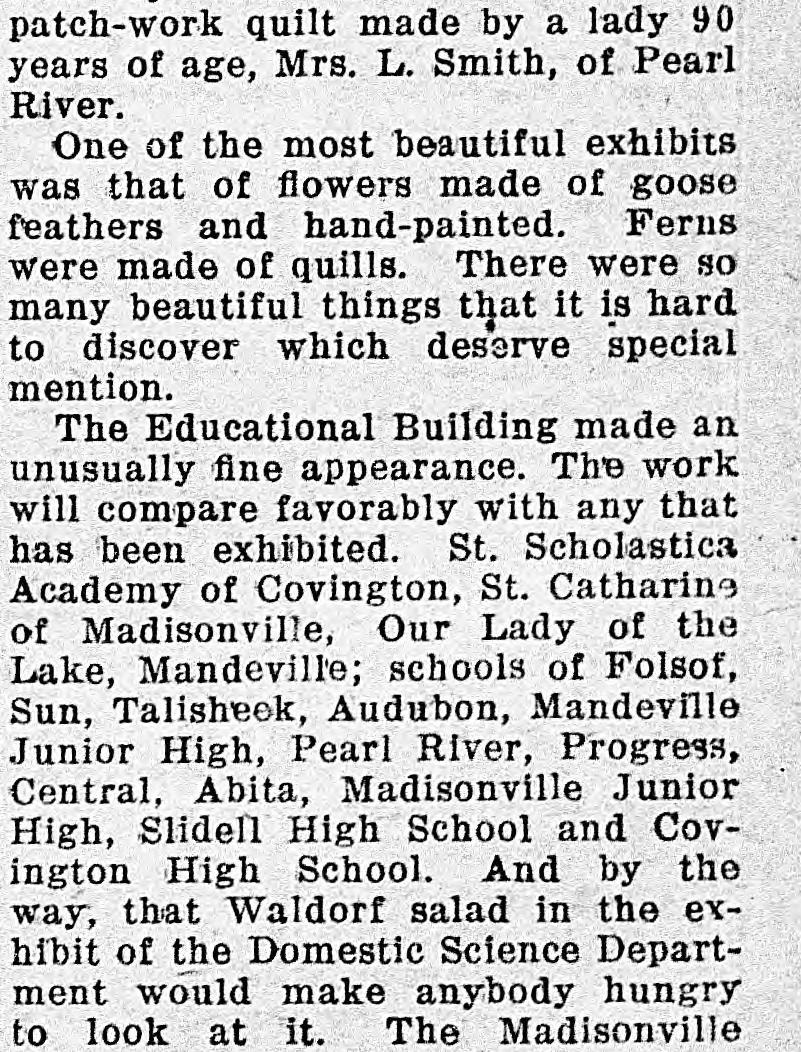
The women’s department and the school exhibits. The St. Tammany Farmer, Covington, Louisiana, October 15, 1921, page 1. Library of Congress, Chronicling America. Click the clipping to read it full size.
The chickens that wouldn’t hold still
“It was the finest poultry show we have ever had,” the paper said a week later. It tried to print photos of the winning birds. Some pictures came out. Others failed, it said, “because of the darkness in the interior” and because the chickens would not hold still “long enough for the exposures.” Cameras back then needed their subject to stay still for a moment while the light came in. A chicken is not good at that.
The cow barns were nearly empty, though. “Ticks are given the blame for this failure,” the paper said. Cattle ticks could spread a deadly fever, so farmers kept their best cows at home.
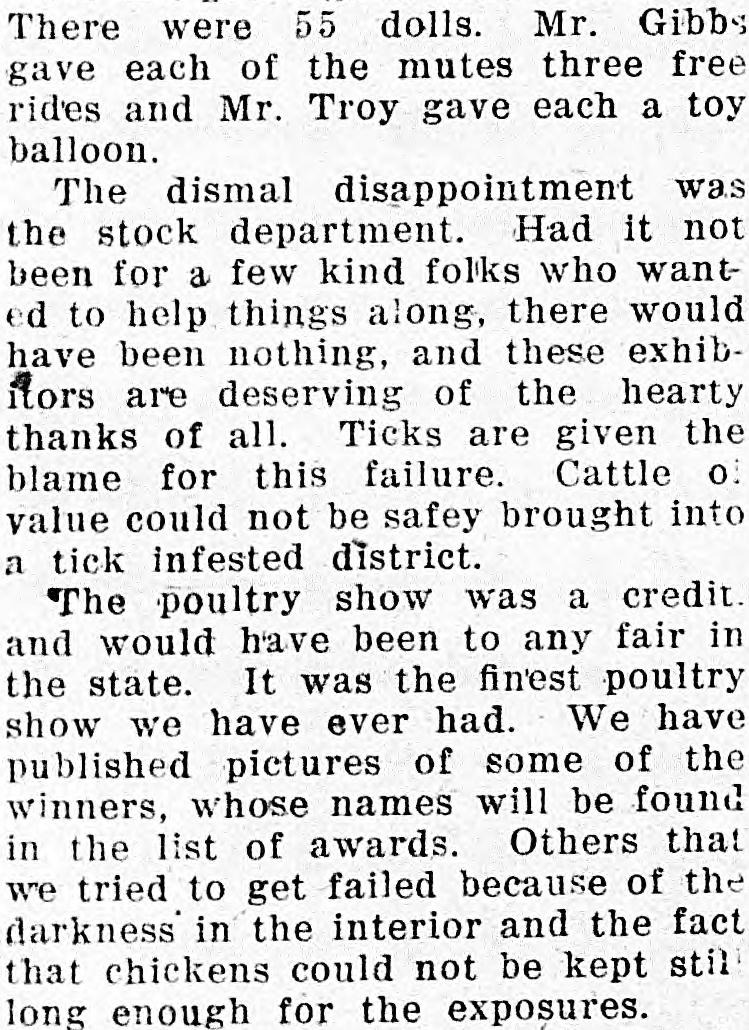
The St. Tammany Farmer, Covington, Louisiana, October 22, 1921, page 1. Library of Congress, Chronicling America. Click the clipping to read it full size.
A week later
When the next Saturday’s paper came out, the editor finally had room. He handed out the silver cups. Abita won the cup “for the best appearance of any visiting school.” Mrs. V. Z. Young’s third grade in Covington won “the cup for the best grade work.” There were gifts, too. A woman named Mrs. C. S. Engle gave a doll to each of the deaf children who came from the school at Chinchuba, near Mandeville, Louisiana. That was 55 dolls. The paper noticed that “the boys were just as anxious to get the dolls as the girls.”
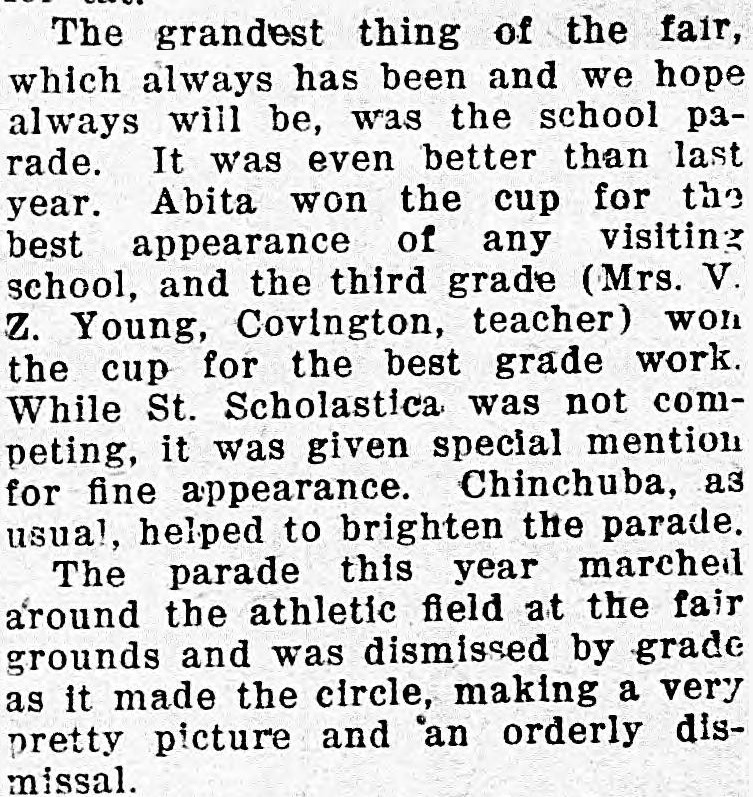
The St. Tammany Farmer, Covington, Louisiana, October 22, 1921, page 1 (two pieces of one paragraph, joined across a column). Library of Congress, Chronicling America. Click the clipping to read it full size.
Then the editor said the thing he hadn’t had time to say the week before. Of all the oranges, races, quilts and chickens, one thing stood above the rest. “The grandest thing of the fair, which always has been and we hope always will be, was the school parade.” The kids had marched around the race track and were let go one grade at a time, “making a very pretty picture and an orderly dismissal.”
About the pictures
The cover photo is not Covington. It shows a Children’s Day parade at Belle Isle Park in Detroit, Michigan, taken sometime between 1900 and 1915 by the Detroit Publishing Company. We found no photo of the Covington parade itself. The picture below is real Covington: streetcars on a wooden bridge over the Bogue Falaya River, the river that runs through town, from an old print sold in the same years.
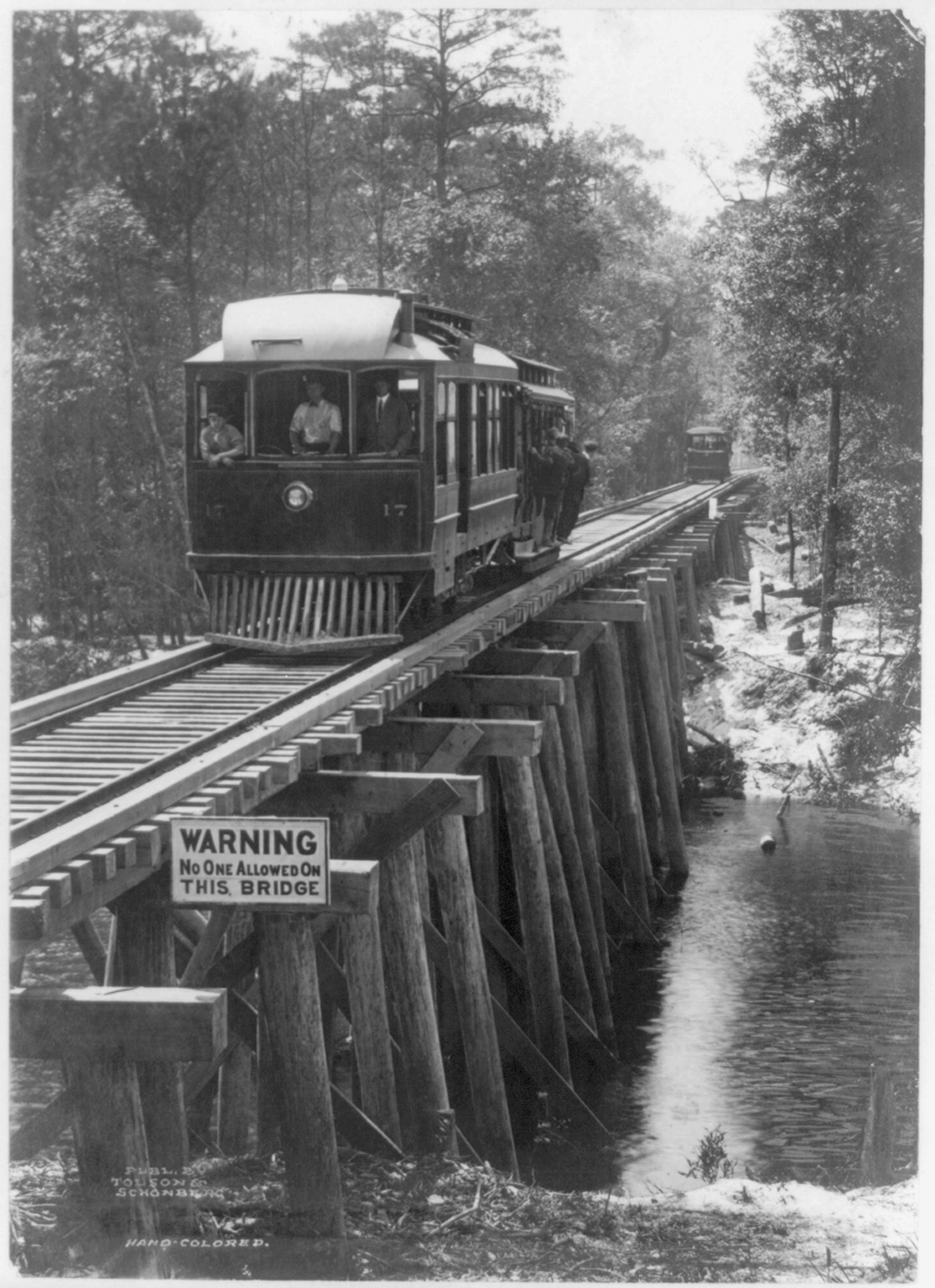
“Motor cars crossing Bogye Falaya River,” Covington, Louisiana. Published by Tolson & Schonberg, between about 1906 and 1923. Library of Congress Prints and Photographs, no known restrictions on publication. Click the picture to see it full size.
Sources
- The St. Tammany Farmer (Covington, Louisiana): October 15, 1921, page 1 (“School Day Is Big Event and Crowds Fill Up Fair”) and page 4 (“The Parish Fair,” continued).
- The St. Tammany Farmer (Covington, Louisiana): October 22, 1921, page 1 (“Parish Fair Is Even Better in Some Respects Than Before” and the fair photos).
- Tolson & Schonberg, “Motor cars crossing Bogye Falaya River,” between about 1906 and 1923, Library of Congress, no known restrictions on publication.
- All newspaper images: Library of Congress, Chronicling America. Published 1921.
- Cover: Detroit Publishing Co., “Children’s Day parade at Belle Isle Park, Detroit, Mich.,” between 1900 and 1915, Library of Congress, no known restrictions on publication. It shows Detroit, not Covington.