In the fall of 1927, the little newspaper office in Wolf Point, Montana, started to fill up with potatoes. Farmers carried them in by the sack and the basket. One came in the mail with a note. By the end, the Wolf Point Herald had a whole store window full of big spuds, and the winner of its contest wasn’t one potato at all. It was a whole hill of them, grown together into one lump.
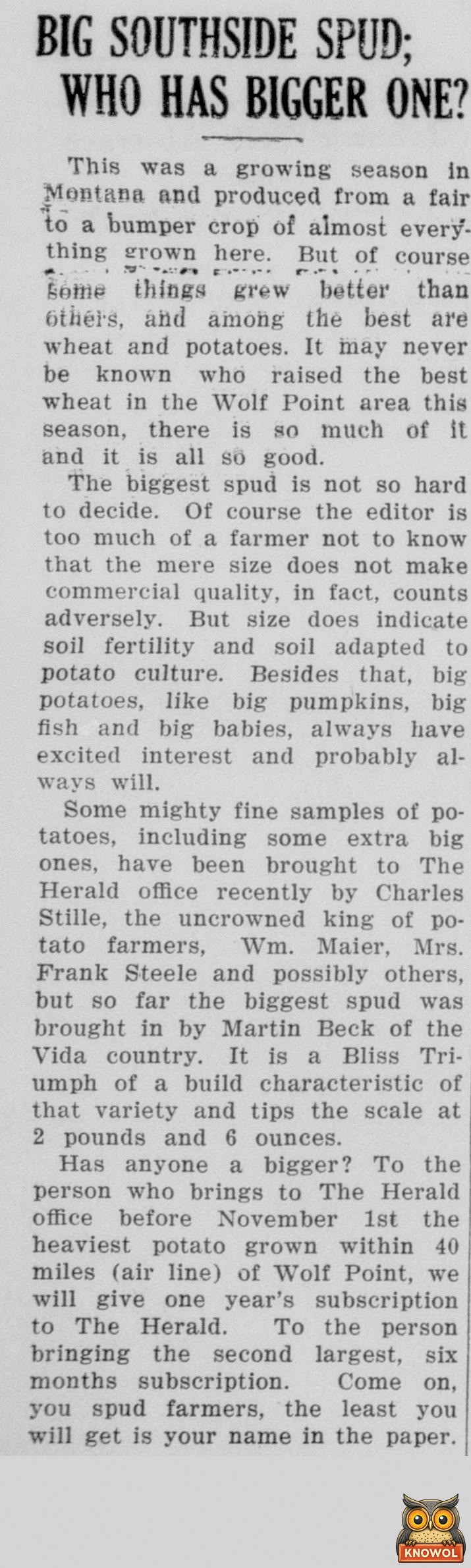
“Big Southside Spud; Who Has Bigger One?” The Wolf Point Herald, Wolf Point, Montana, September 23, 1927, page 8. Library of Congress, Chronicling America. Published 1927, public domain. Click the clipping to read it full size.
The Wolf Point Herald Makes an Offer
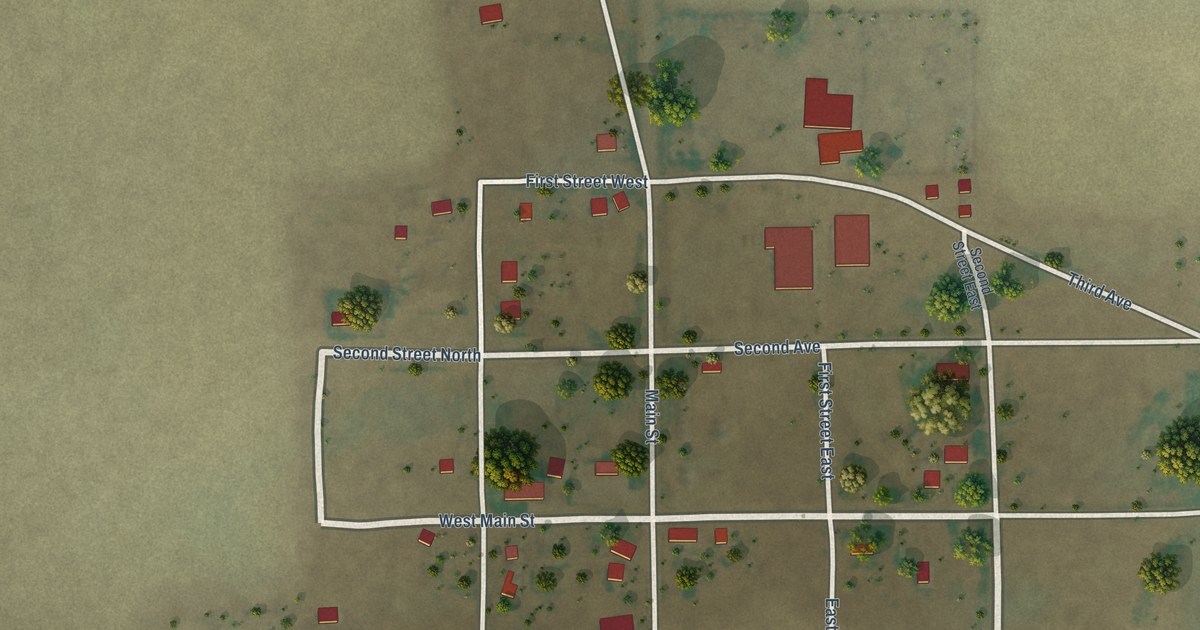
Wolf Point, Montana, is a prairie town on the Missouri River in the northeast corner of the state. In 1927 the wheat was good there, and so were the potatoes. On September 23, the Herald’s editor wrote that nobody could ever pick the best wheat, “there is so much of it and it is all so good.” But the biggest spud would be easy to find. You just had to put it on a scale.
The editor knew a giant potato isn’t the best kind to sell. He said he was “too much of a farmer not to know that the mere size does not make commercial quality.” Still, he had a good reason for the contest. “Big potatoes, like big pumpkins, big fish and big babies, always have excited interest and probably always will.”
So the Herald made an offer. Whoever brought the heaviest potato to the paper’s office before November 1 would get one year of the Herald for free. Second place got six months. The potato had to be grown within 40 miles of Wolf Point, “air line,” which means measured in a straight line, the way a bird flies. Then came the best line of all: “Come on, you spud farmers, the least you will get is your name in the paper.”
At that point the biggest one belonged to Martin Beck of the Vida country, south of the river. It was a Bliss Triumph, a round red potato, and it weighed 2 pounds and 6 ounces. That’s about as heavy as a big bag of sugar.
Fish Stories, Wolf Point Style
On October 7, the Herald said its display of big spuds was “attracting the attention of all who call at the office.” More potatoes had come in from the Dry Fork community, from Vida, and from the Southside, the farms across the Missouri River from town. Most of them weighed around three pounds. “There have been rumors of four pound spuds this year,” the paper said, “but none have been entered in the contest so far.”
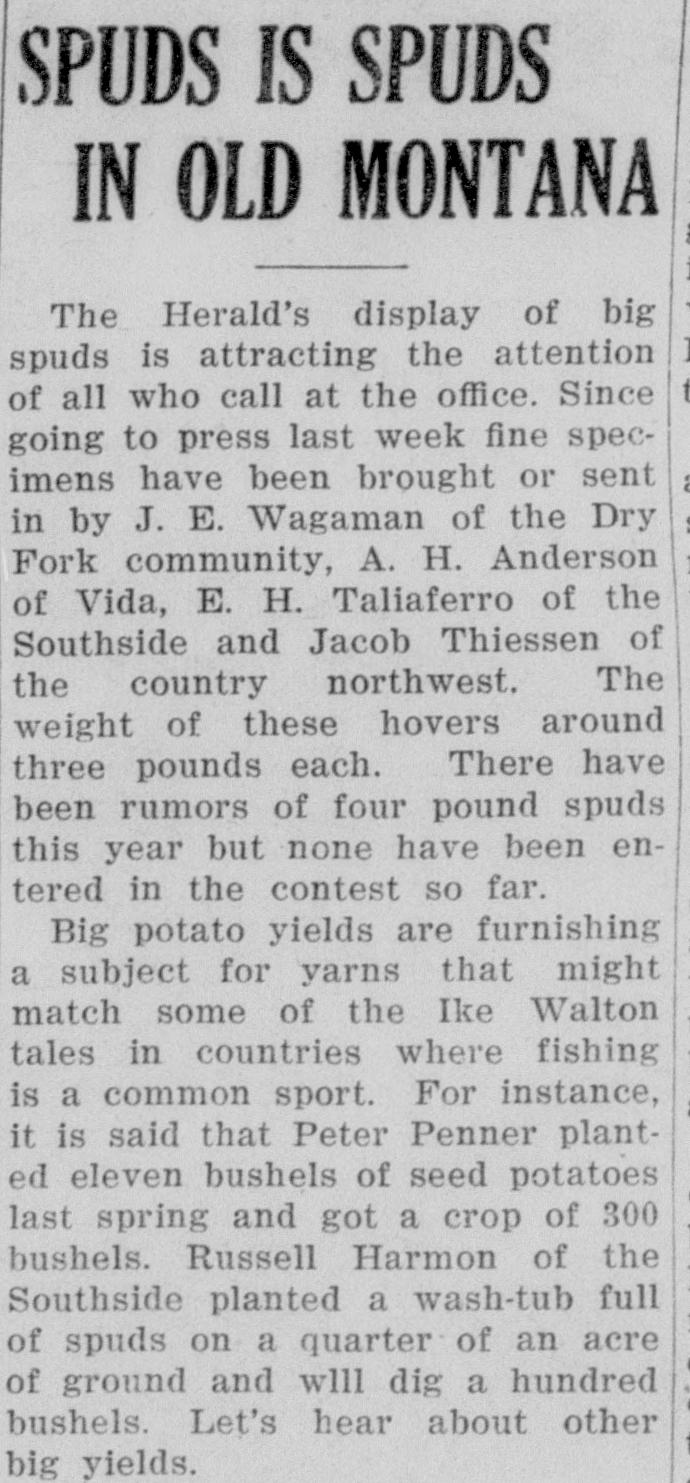
“Spuds Is Spuds in Old Montana.” The Wolf Point Herald, Wolf Point, Montana, October 7, 1927, page 1. Library of Congress, Chronicling America. Published 1927, public domain. Click the clipping to read it full size.
The farmers had big stories, too. The Herald said the harvest was giving people “yarns that might match some of the Ike Walton tales in countries where fishing is a common sport.” Izaak Walton wrote a famous old book about fishing, so the paper was saying these were potato fish stories. Peter Penner, it was said, planted eleven bushels of seed potatoes and got 300 bushels back. Russell Harmon of the Southside planted “a wash-tub full of spuds” on a quarter of an acre and expected to dig a hundred bushels.
A bushel is a big basket, and a bushel of potatoes weighs about 60 pounds. Farmers plant potatoes by cutting up old potatoes and putting the pieces in the ground. So the real brag was how many bushels came out for each bushel that went in.
Potatoes in the Window of the Fad
By October 14 the Herald said “spuds are now being brought in every day.” Wolf Point was holding a Trade Carnival, a big week of shopping. So the paper moved its potatoes to the window of the Fad, a store in town, where more people would walk by and see them.
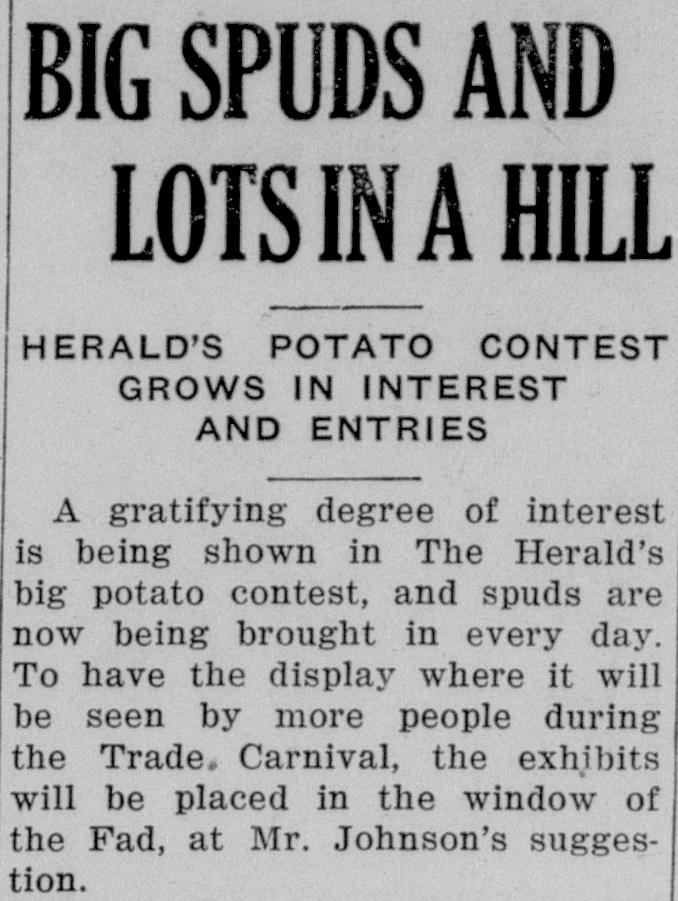
“Big Spuds and Lots in a Hill.” The Wolf Point Herald, Wolf Point, Montana, October 14, 1927, page 1. Library of Congress, Chronicling America. Published 1927, public domain. Click the clipping to read it full size.
The yarns kept coming. Wayne Fuller of the Southside said he planted one bushel of seed potatoes “and got 45 in return.” Steve Yellowrobe of Macon planted eight bushels of Early Rose potatoes and dug 200 bushels, on dry land with no watering ditches. The Herald also made its prize better. Now every potato that weighed three pounds or more would earn six months of the paper for free. The eleven potatoes in the window that week weighed 31 pounds and 7 ounces all together.
The Wolf Point Potato That Was a Whole Hill
On October 21, Peter Penner came in with some of his Bliss Triumphs. Two weeks before, people had said he got 300 bushels. Now the Herald said his field “yielded nearly 400 bushels from eleven bushels of seed.” That was a hundred more bushels in two weeks, which is how a good fish story works. Penner had a secret, too. He always planted big potatoes, and “there are no little ones in the hills when he comes to dig them.”
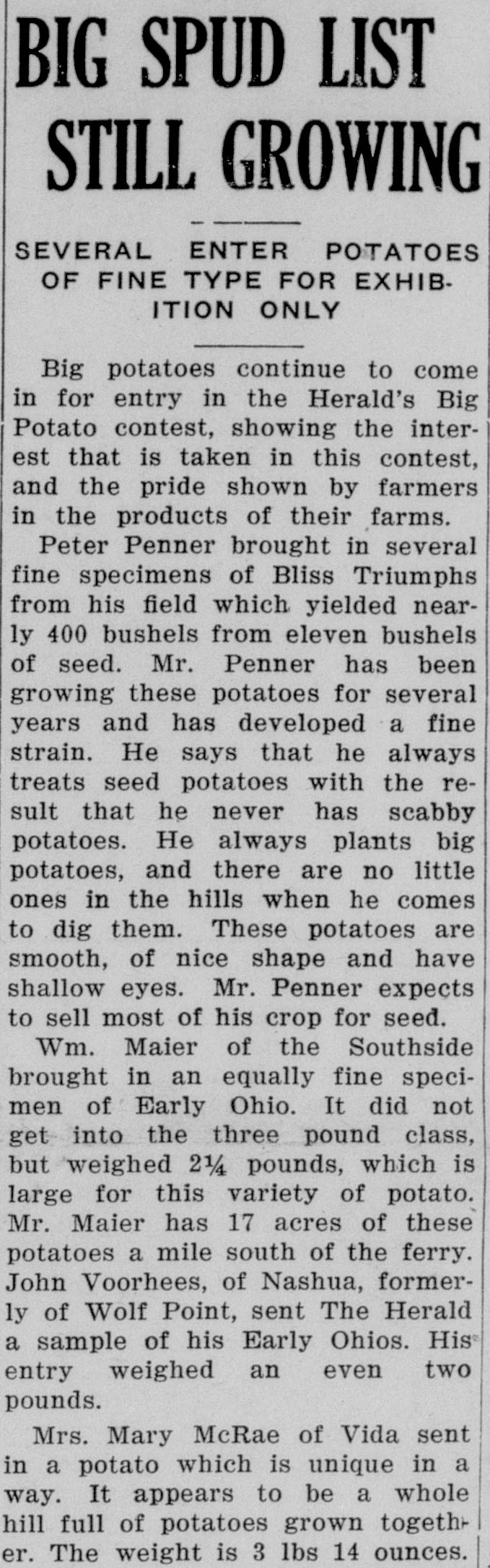
“Big Spud List Still Growing.” The Wolf Point Herald, Wolf Point, Montana, October 21, 1927, page 1. Library of Congress, Chronicling America. Published 1927, public domain. Click the clipping to read it full size.
A “hill” is the little mound of dirt where one potato plant grows. Under each plant, a farmer usually digs up a bunch of separate potatoes. But Mrs. Mary McRae of Vida, Montana, sent in something different. The paper called it “unique in a way.” “It appears to be a whole hill full of potatoes grown together.” Her lump weighed 3 pounds and 14 ounces.
Who Won the Wolf Point Herald’s Big Potato Contest
The contest closed on November 1, and the Herald printed the winner on November 4, 1927. It was J. E. Pipal of the Southside. And his potato was the same kind of surprise as Mrs. McRae’s. “His entry was an Early Ohio, or rather a whole hill full grown together in one, which weighed four pounds and two ounces.”
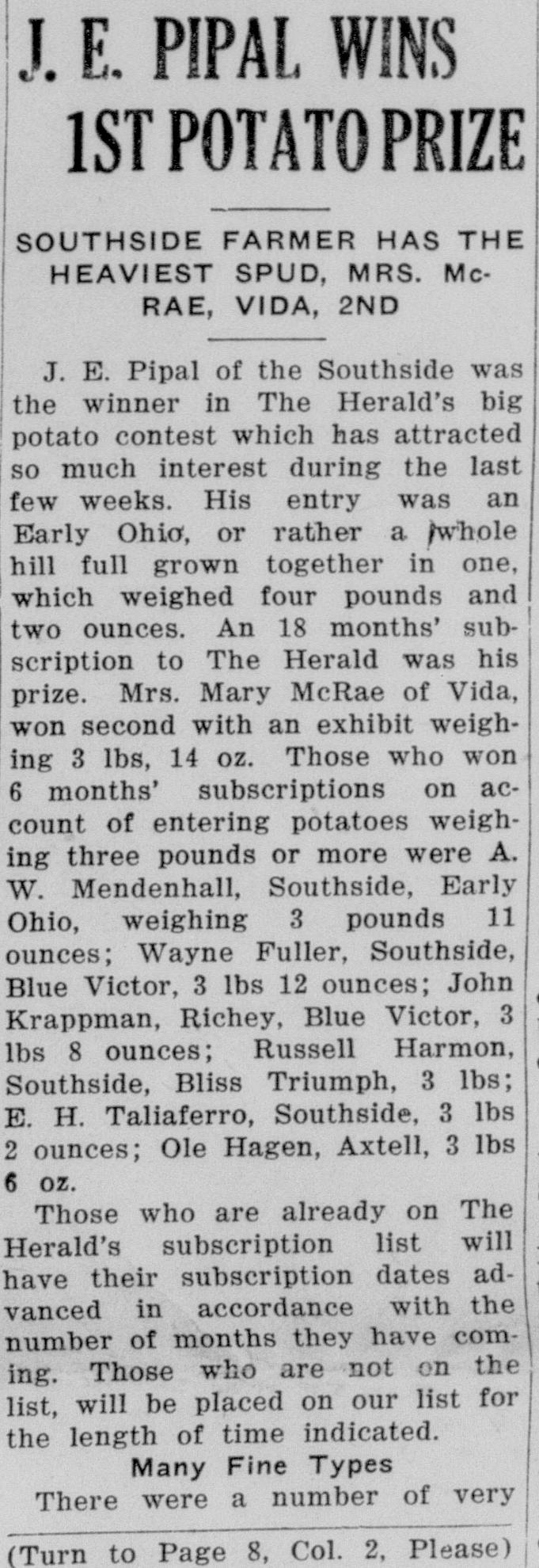
“J. E. Pipal Wins 1st Potato Prize.” The Wolf Point Herald, Wolf Point, Montana, November 4, 1927, page 1. Library of Congress, Chronicling America. Published 1927, public domain. Click the clipping to read it full size.
Four pounds and two ounces is a little lighter than a half-gallon jug of milk. Pipal won 18 months of the Herald: the year for first place plus six months for topping three pounds. Mrs. McRae came in second.
Six more farmers had potatoes of three pounds or more and won six months each: A. W. Mendenhall, Wayne Fuller, Russell Harmon and E. H. Taliaferro of the Southside, John Krappman of Richey, and Ole Hagen of Axtell.
What the Potatoes in Wolf Point Were Called
The names of the potatoes are a fun list all by themselves. Farmers around Wolf Point grew Bliss Triumphs, Early Ohios, Early Roses, Blue Victors, Netted Gems and Burbanks. John Krappman of Richey, who also dug 340 bushels from a patch of about one acre, grew a rose potato that “looks like an early rose, but is a late keeper,” which means it kept well long after the early kinds went soft.
Farm Country Around Wolf Point, Montana
Wolf Point sits on the Fort Peck Indian Reservation, home of Assiniboine and Sioux people. The photo below shows farmers on the reservation sometime between about 1915 and 1920, stacking bundles of grain in a field that stretches to the sky.
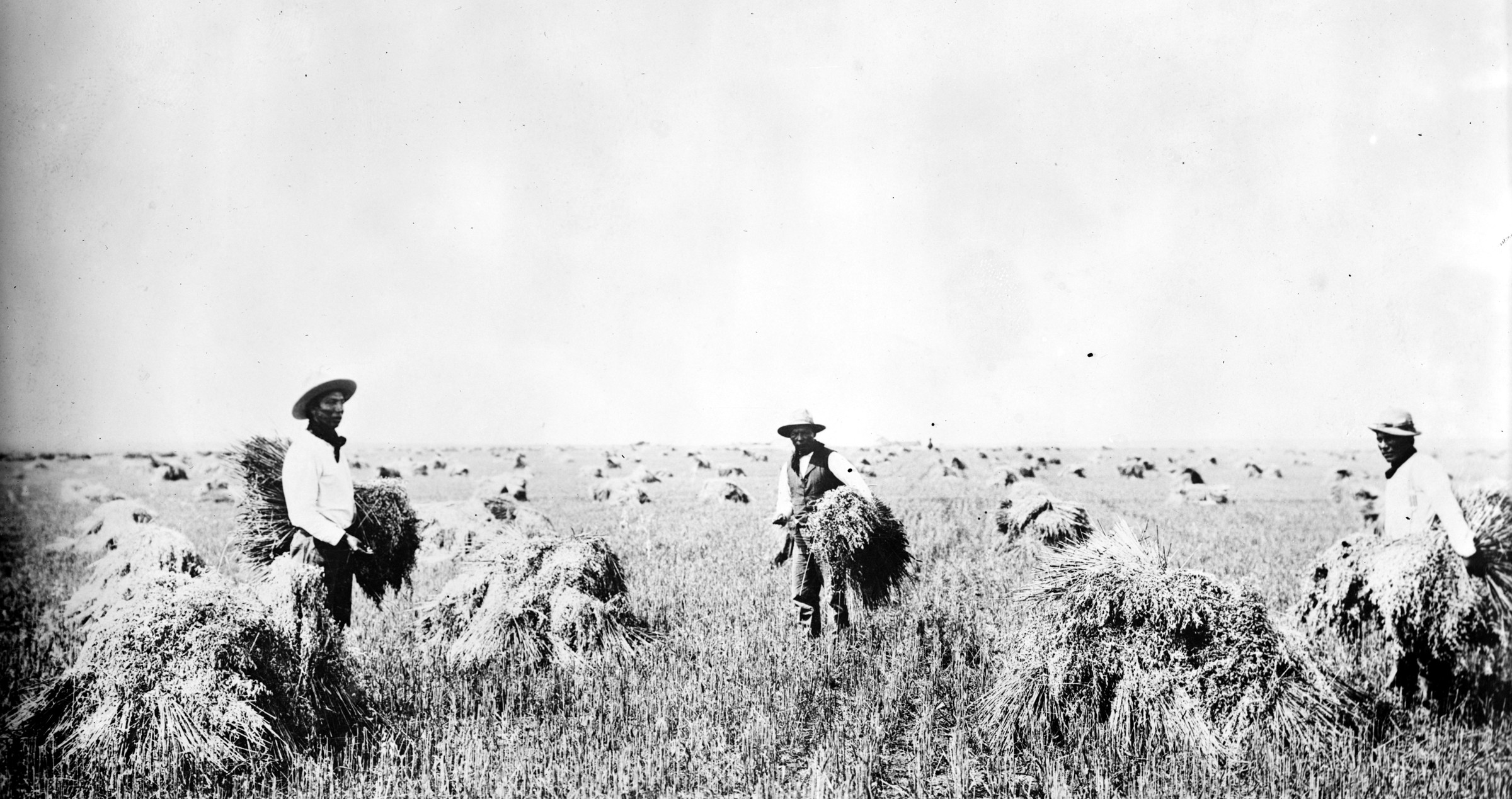
Farmers on the Fort Peck Indian Reservation, Montana, where Wolf Point is, between about 1915 and 1920. Bain News Service, Library of Congress. Click the picture to see it full size.
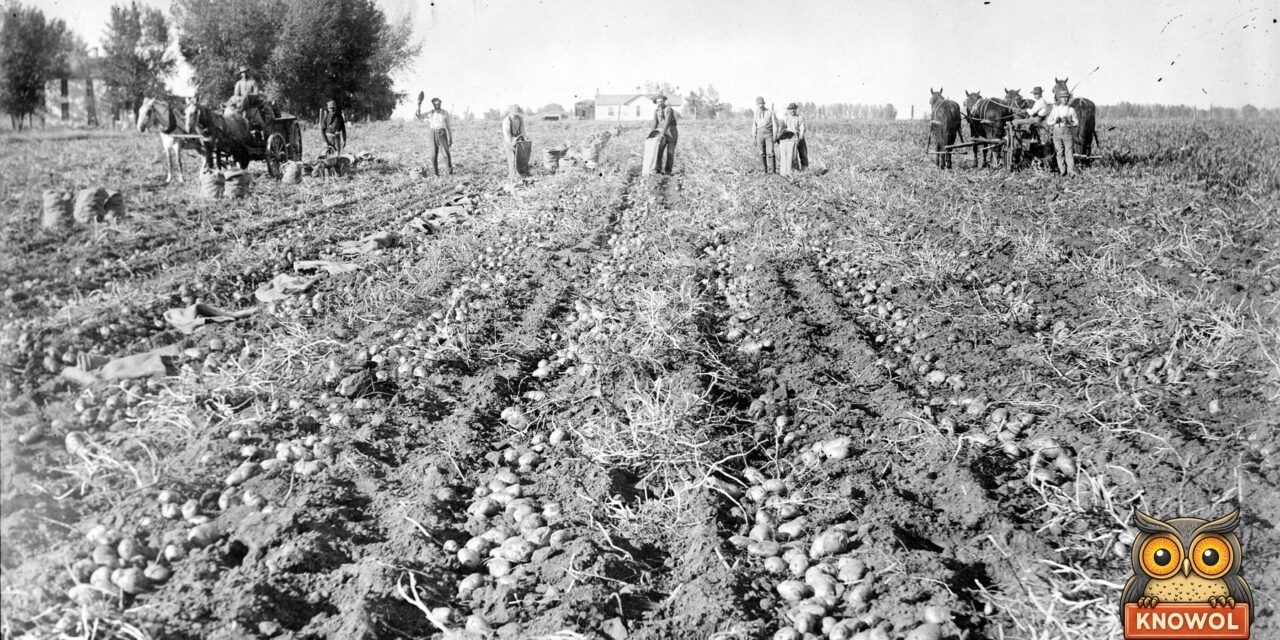
The picture at the top of this story isn’t Wolf Point. It’s a Bain News Service photo called “Potato raising in Colo.,” taken in Colorado between about 1915 and 1920. It shows a field just after digging, with the potatoes lying in rows for the pickers. No photo of the Herald’s contest or its window full of spuds has turned up.
The Herald kept its promise. Every farmer who brought one in got a name in the paper. Eight of them got the paper for free. And the biggest potato in Wolf Point, Montana, in 1927 turned out to be a whole hill of potatoes that decided to stick together.
Sources
- “Big Southside Spud; Who Has Bigger One?” The Wolf Point Herald, Wolf Point, Montana, September 23, 1927, page 8. Library of Congress, Chronicling America
- “Spuds Is Spuds in Old Montana.” The Wolf Point Herald, October 7, 1927, page 1. Library of Congress, Chronicling America
- “Big Spuds and Lots in a Hill.” The Wolf Point Herald, October 14, 1927, page 1. Library of Congress, Chronicling America
- “Big Spud List Still Growing.” The Wolf Point Herald, October 21, 1927, page 1. Library of Congress, Chronicling America
- “J. E. Pipal Wins 1st Potato Prize.” The Wolf Point Herald, November 4, 1927, page 1. Library of Congress, Chronicling America
- Cover: “Potato raising in Colo.,” Bain News Service, between about 1915 and 1920. Library of Congress Prints and Photographs. No known restrictions on publication.
- “Indians farming on Fort Peck Reservation,” Bain News Service, between about 1915 and 1920. Library of Congress Prints and Photographs. No known restrictions on publication.
- Newspaper pages printed in 1927 are in the public domain.