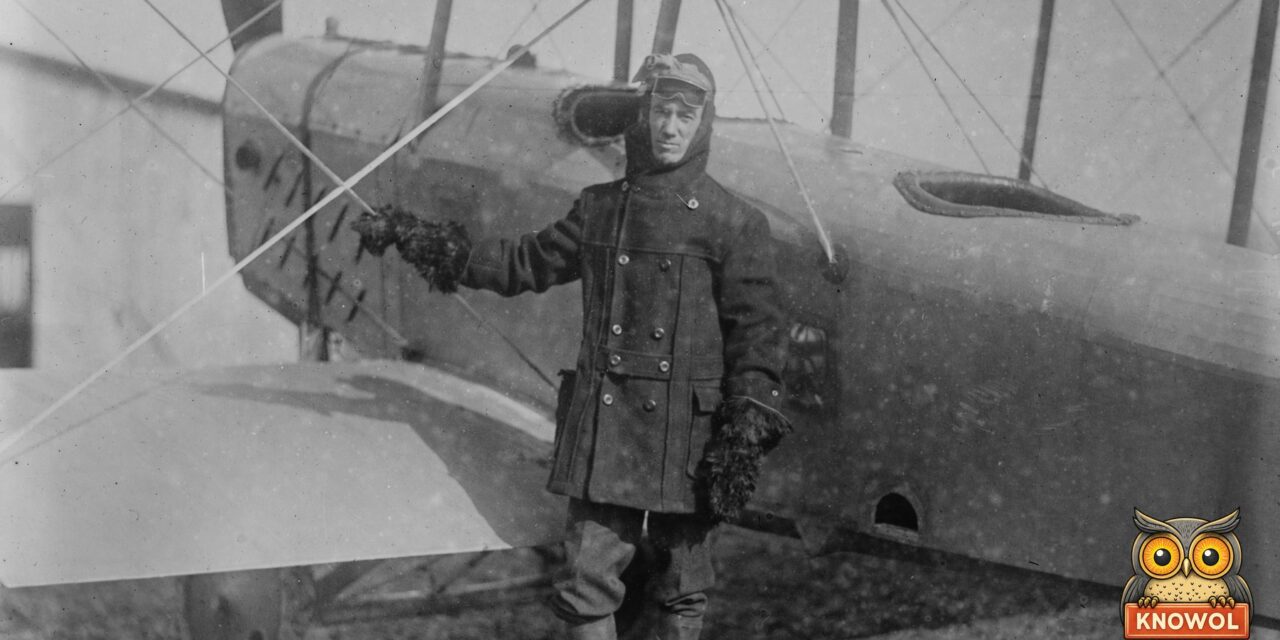
In the spring of 1913, the men planning the Fourth of July in Ely, Nevada, wanted something nobody in eastern Nevada had ever seen. They hired an aviator. On the Fourth he flew three times over the copper town, and when he climbed down from his seat after the last landing, the White Pine News reported, he was “triumphantly borne down the street on the shoulders of enthusiastic admirers.”
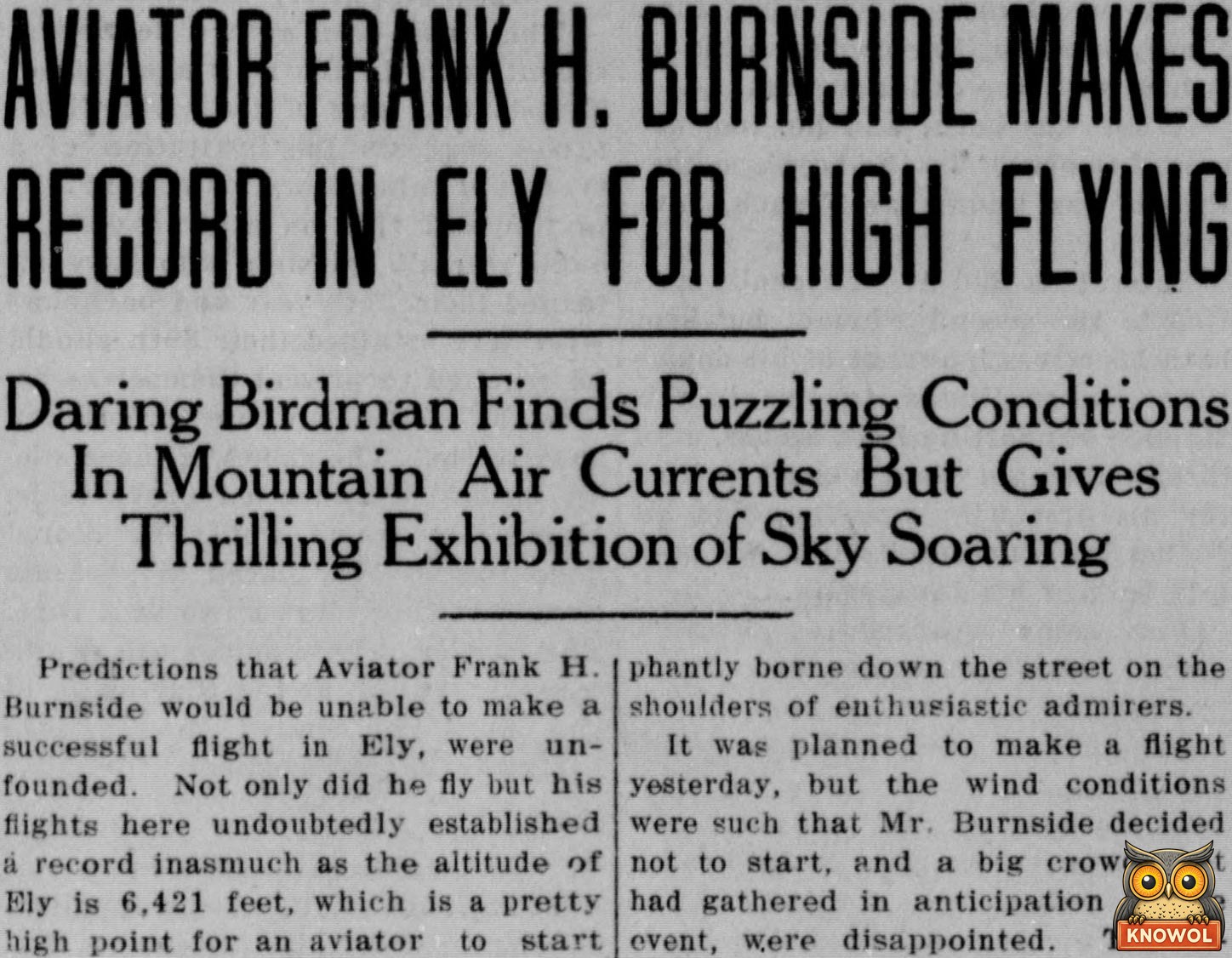
“Aviator Frank H. Burnside Makes Record in Ely for High Flying,” the White Pine News, East Ely, Nevada, July 6, 1913, page 1. Library of Congress, Chronicling America. Click the clipping to read it full size.
No fly, no money
The news came on June 1. The celebration committee had decided to fly high this year, the paper said, and its star attraction would be Frank Burnside of the Thomas Bros. Aeroplane company of Bath, New York. Bert Walker, the committee’s chairman, had a telegram promising the flier by June 28. Nobody in that part of the state, the News wrote, had ever seen an aeroplane gliding over the Steptoe Valley.
The whole celebration was expected to cost $2,400, and the bird man was most of it. “The bird man who is coming from the east with his aeroplane, is going to cost $1400 according to contract, provided he flies. No fly, no money,” the News explained. The contract called for four flights, two on the Fourth and two on the Fifth.
The committee’s ad promised flights each day and the “First aeroplane flight ever given in eastern Nevada.” It also got the flier’s name wrong, calling him Frank H. Burton.
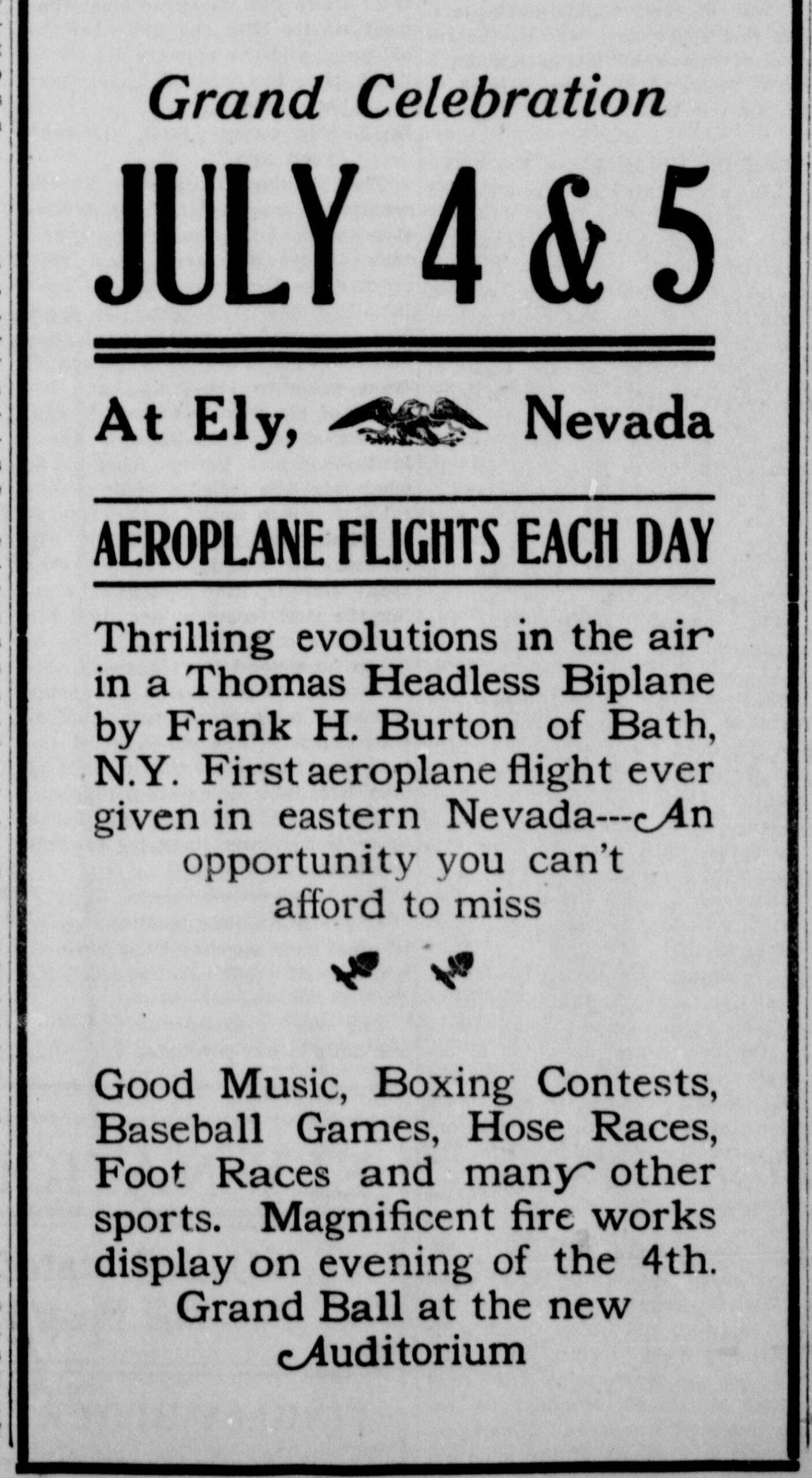
The committee’s advertisement in the White Pine News, East Ely, Nevada, June 22, 1913, page 1. Library of Congress, Chronicling America. Click the picture to see it full size.
Flying from 6,421 feet
Burnside and his assistant, Bud Cary, arrived on Tuesday, July 1, and set up their Thomas headless biplane beside the Ely garage. Burnside was worried. Ely sits at 6,421 feet, and the thin mountain air robbed his 80-horsepower engine of its pull. Drafts poured down the canyons, and the mountains crowded close.
He made a trial flight early on the morning of the Fourth, with hardly anyone watching. Word got around, and the crowds came out for the next two, both from East Ely, at the corner of Eleventh Street and Avenue D. The third went up just about sunset. Circling high above the town, the machine caught the light from the western sun “and seemed for all the world like some giant insect of varied color.” He climbed about 3,000 feet, which, as the paper figured it, put him more than 9,000 feet above sea level.
Coming down from that one, he glided steeply toward what looked like a spot dangerously near the ground, then swung away and came in on a long, smooth glide. That’s when the crowd picked him up and carried him down the street.
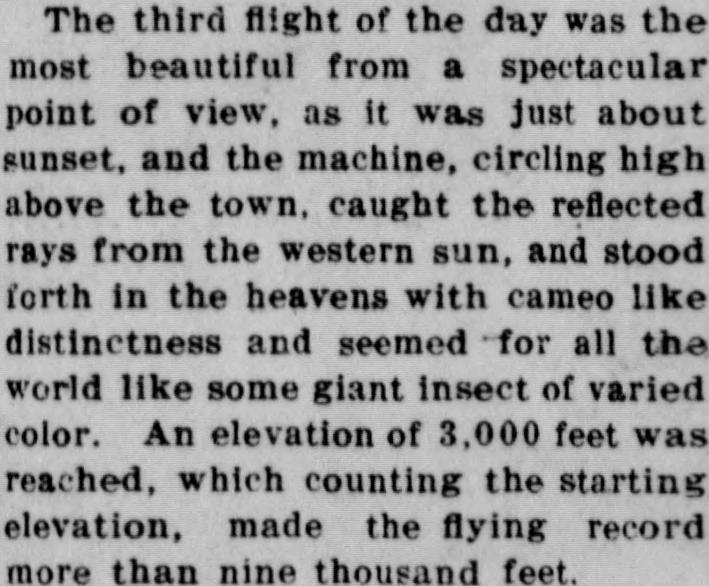
The sunset flight, from the White Pine News, East Ely, Nevada, July 6, 1913, page 1. Library of Congress, Chronicling America. Click the clipping to read it full size.
The wind won the Fifth
On Saturday the wind was too strong, and a big crowd went home disappointed. The biplane sat all day beside the Gunn-Thompson building while people looked it over and asked the aviator questions. He told the News that the greatest danger an aviator had to guard against wasn’t the wind. It was “drowsiness while flying,” and he knew of fliers who had fallen asleep at the wheel high up.
Sunday was windy too. On Monday, Burnside and Cary crated the plane, and on Tuesday they left for Bath. He had made three flights, not four, but the business men who chipped in for the celebration decided he had earned the full amount agreed upon for four flights: $1,000 for the first two and $200 for each one after that.
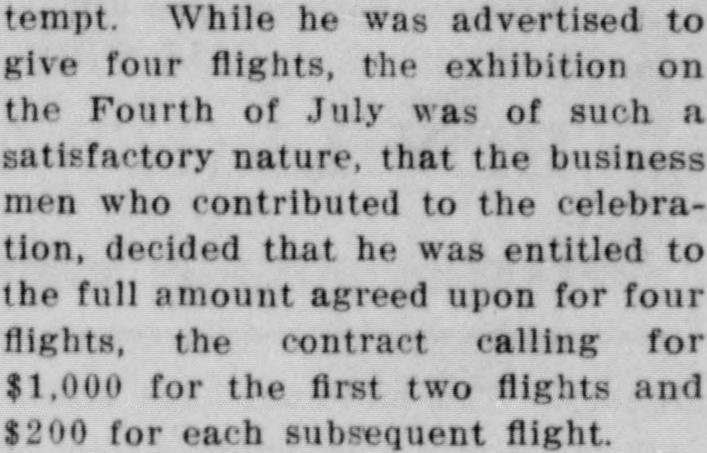
The White Pine News, East Ely, Nevada, July 13, 1913, page 1. Library of Congress, Chronicling America. Click the clipping to read it full size.
Fat men, eggs and a greased pole
The aeroplane wasn’t the whole show. Special trains on the Nevada Northern brought people in from all over the district. There was a fat men’s race on Aultman Street, and the paper joked that the warm weather and the running “fried some of the surplus adipose tissue out of the contestants.” Boys carried eggs on spoons, five eggs over the course, and Walter Mitchell did it fastest with his eggs undamaged. The Ely firemen won the hose race in 26.8 seconds.
Nobody could climb the greased pole, so the kids brought a step ladder, stood on each other’s shoulders, and got the money at the top. Then, the News said, they “proceeded to ‘blow'” it. The town danced in the new auditorium until early morning and ended the holiday pelting each other with confetti.
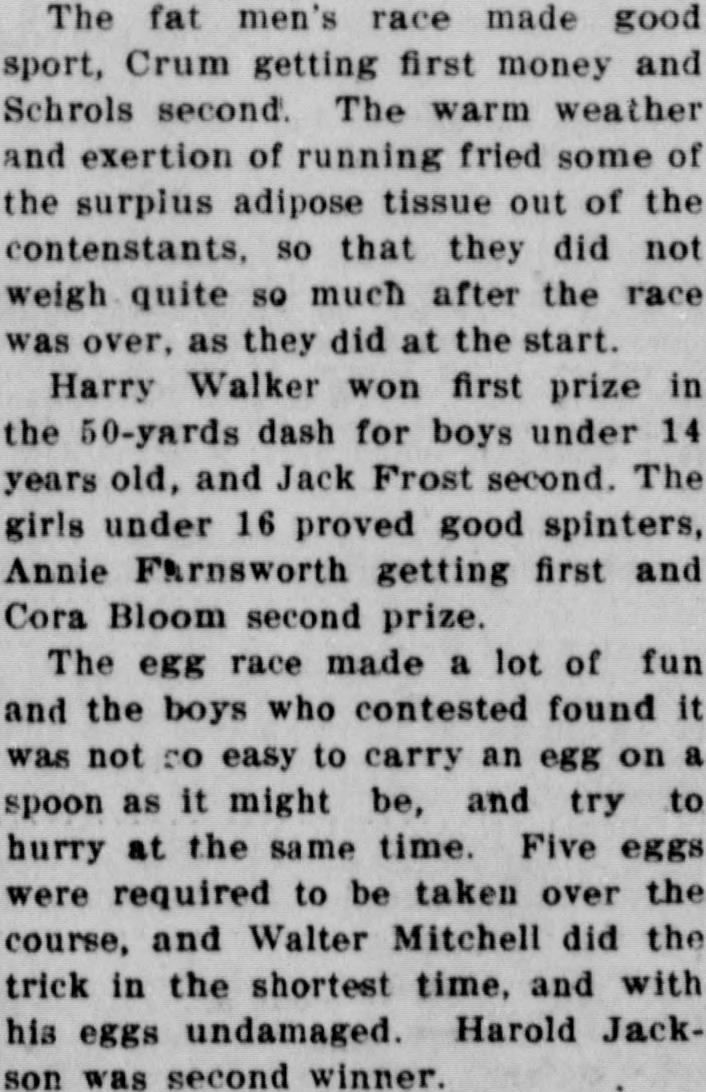
The fat men’s race and the egg race, from the White Pine News, East Ely, Nevada, July 6, 1913, page 1. Library of Congress, Chronicling America. Click the picture to see it full size.
Higher still
Three weeks later, back at Bath, Burnside went up in winter clothing and kept climbing until watchers lost him in the clouds. The wire services reported he reached 12,950 feet, a new American altitude record, beating the mark Lincoln Beachey set at Chicago in 1911. The thermometer read 92 degrees on the ground and 30 degrees at 12,000 feet.
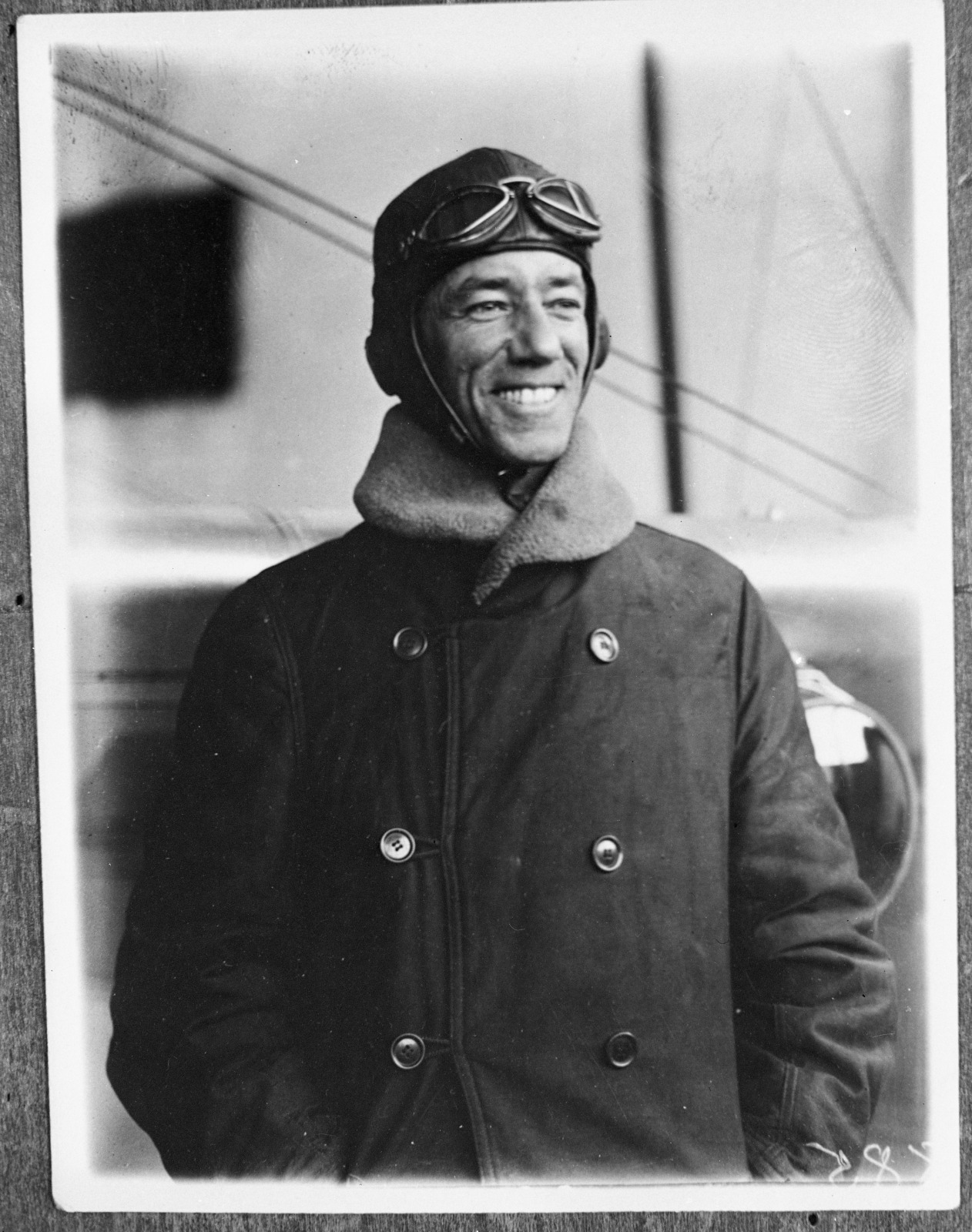
Frank H. Burnside in his flying coat and goggles. San Diego Air and Space Museum Archives, public domain, via Wikimedia Commons. Click the picture to see it full size.
The White Pine News had already given its verdict. In Ely, it said, he “succeeded in doing what no other bird man has ever done in Nevada.” In 2013, a hundred years after the Fourth of July flights, the Nevada Aerospace Hall of Fame added Frank H. Burnside to its roll.
Sources
- White Pine News (East Ely, Nev.), June 1, 1913, page 1 (“Bird Man Will Be the Big Thrill”), June 15, 1913, page 1 ($2,400; “No fly, no money”), June 22, 1913, page 1 (the advertisement), June 29, 1913, page 1 (the program), July 6, 1913, page 1 (the flights and the sports) and July 13, 1913, page 1 (paid for four flights).
- The Beatrice Daily Express (Beatrice, Neb.), August 8, 1913, page 2, and the Wausau Pilot (Wausau, Wis.), August 5, 1913, page 8 (the altitude record at Bath).
- Nevada Aerospace Hall of Fame, Frank H. Burnside (enshrined 2013).
- All newspaper images: Library of Congress, Chronicling America. No known copyright restrictions.
- Photograph: Frank H. Burnside, San Diego Air and Space Museum Archives, via Wikimedia Commons. Public domain.
- Cover: “Frank Burnside,” Bain News Service glass negative, about 1915 to 1920, the aviator beside a biplane (a later machine, not the one he flew at Ely), George Grantham Bain Collection (cropped). Library of Congress Prints and Photographs Division, 2014700872. No known restrictions on publication.