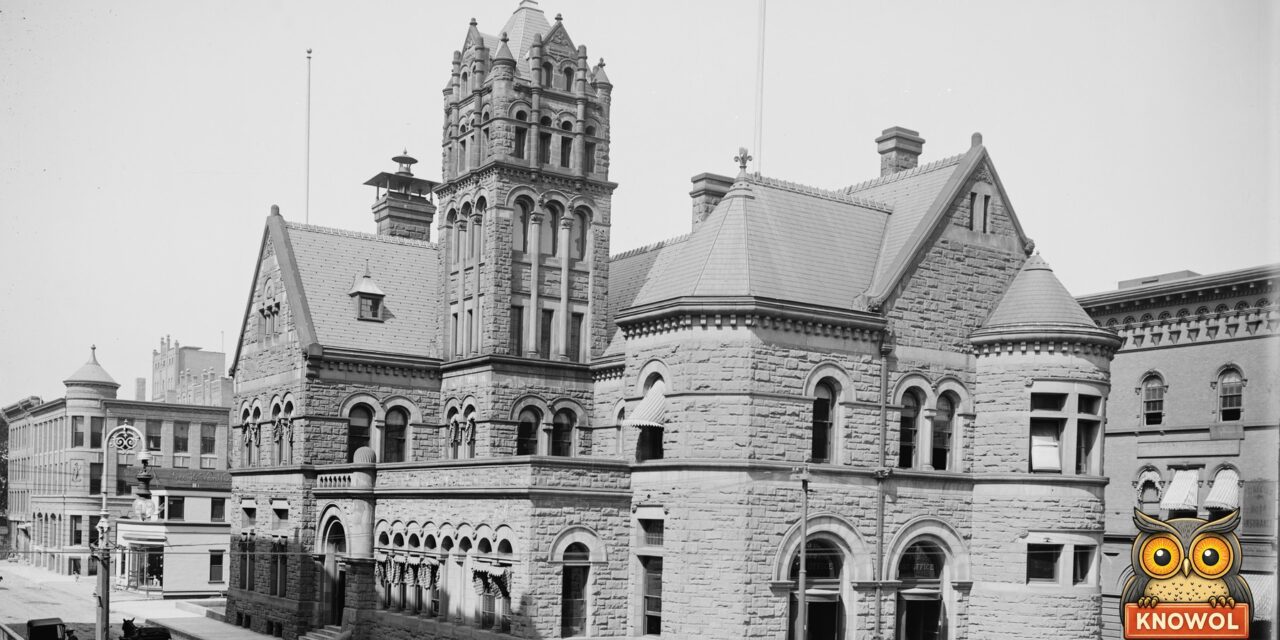
In the summer of 1905, the mail carriers of Springfield, Massachusetts, had a problem. People wouldn’t stop sending picture postcards. The post office was “glutted with them all summer,” the Springfield Republican said, and the carriers were “running their legs off” to deliver them all.
One young woman in town set a record. In a single delivery, she got 85 postcards. Other popular young women often got 25 or 30 at a time. Every one of those cards had to pass through the hands of a clerk and a carrier.
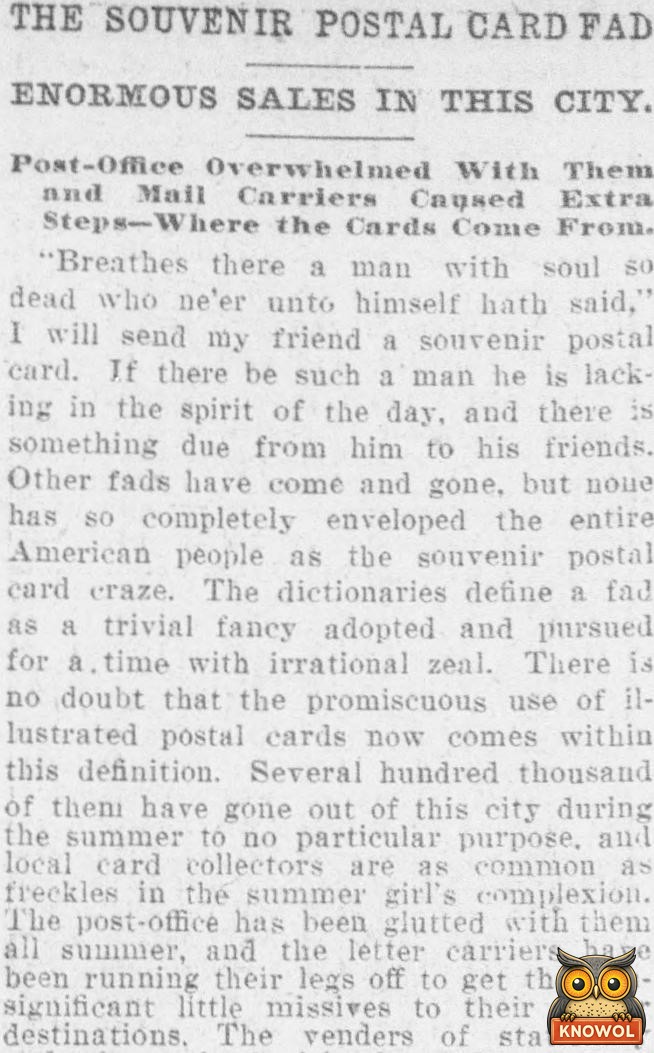
“The Souvenir Postal Card Fad.” Springfield Weekly Republican, Springfield, Massachusetts, September 15, 1905, page 10. Library of Congress, Chronicling America. Click the clipping to read it full size.
A brand-new craze
The picture postcard fad was new to America. The paper said postcards were “born in Europe some seven or eight years ago.” Travelers sent a few home, but the fad didn’t really cross the ocean until the summer of 1904. “Then it descended upon us with a mighty force,” the paper said.
At first it was mostly vacation mail. People at the shore or in the country mailed pictures to show friends where they were. Then the craze “spread like wildfire” to almost every town in that part of the country. Several hundred thousand cards left Springfield that summer alone. People collected them, too, and the paper joked that collectors were “as common as freckles in the summer girl’s complexion.”
How a postcard was made
Making a postcard took a long time. Photographers working for big card companies traveled through cities and towns taking pictures. The photos were sent to factories in Leipzig, Germany, where most of the good cards were printed. A store had to order at least 1,000 cards of each picture, then wait weeks for them to cross the ocean.
The stores still made plenty of money. They paid about $7.50 for 1,000 cards, which is less than a penny each. Then they sold them at “two of them for five cents.” No wonder the dealers were “praying that this mild form of insanity” would last for years.
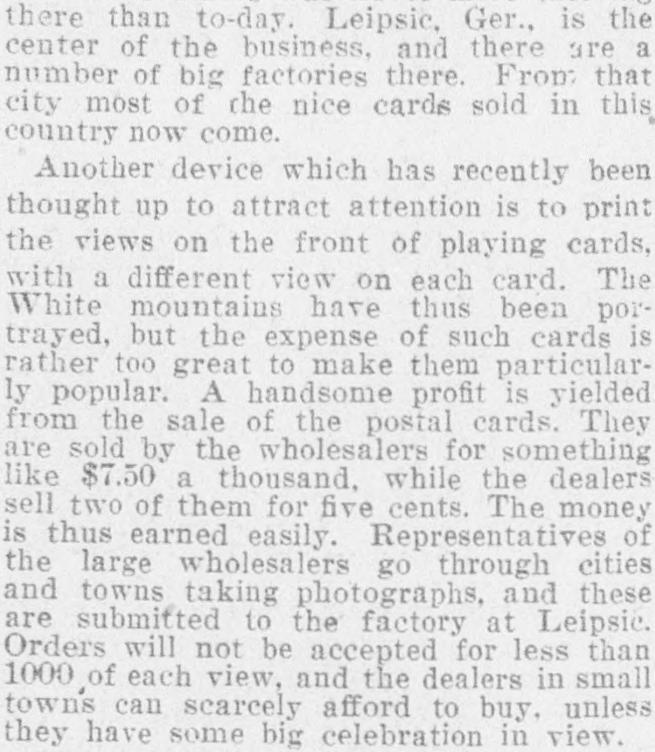
Where the cards came from, and what they cost. Springfield Weekly Republican, September 15, 1905, page 10. Library of Congress, Chronicling America. Click the clipping to read it full size.
Springfield’s favorite views
Springfield stores sold about 200 different local pictures. One company alone sold between 200,000 and 300,000 of them in six months. The best seller was the duck pond at Forest Park, with more than 10,000 cards sold. People liked parks and outdoor scenes better than buildings.
The most popular building was the United States Armory, where the government made rifles. When Springfield’s City Hall burned down, everyone wanted a postcard showing it, and most stores sold out. It took six weeks to get more. By the time they came, nobody wanted them anymore.
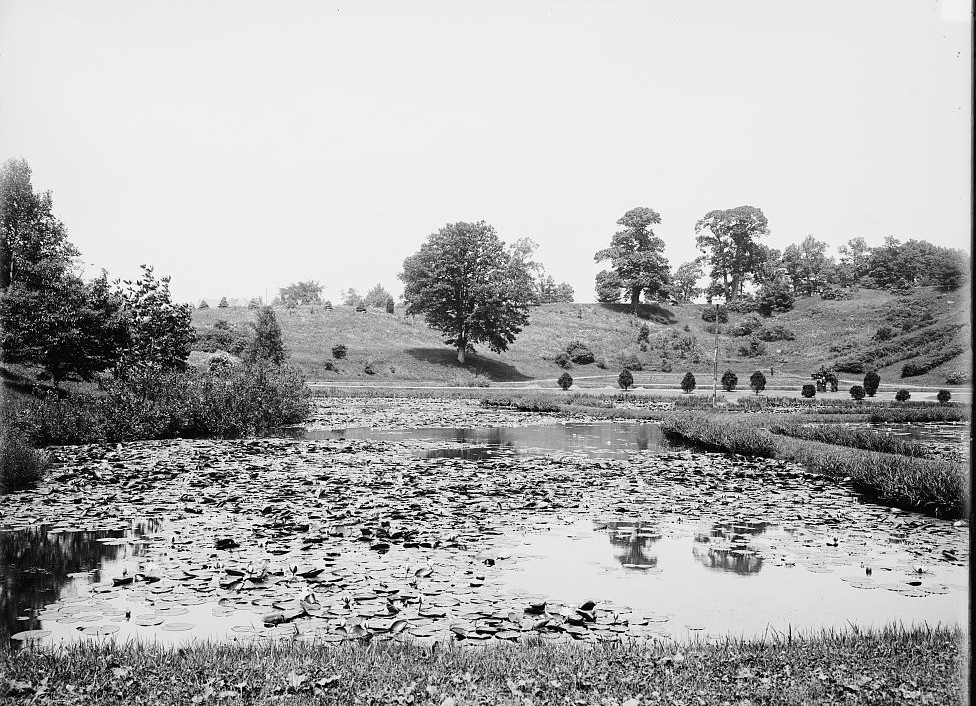
Lily ponds in Forest Park, Springfield, around 1907. Detroit Publishing Co., Library of Congress. Click the picture to see it full size.
A mountain of mail
Springfield’s post office was a big stone building with a tall tower, and the words “Post Office” sat over its arched doors. Inside, “huge piles” of postcards arrived every day. There were thousands daily, almost as many as all the other letters put together. The paper said the work of the clerks and carriers had nearly doubled. They were hoping the public “may get its senses again soon.” If not, the paper said, they deserved a raise.
Lots of people forgot that a postcard needed a stamp, which cost one cent. More than 100 cards a day landed in Springfield’s mailboxes with no stamp at all. The post office mailed a notice to the person each card was for. If nobody paid, the card went to the dead letter office in Washington, where mail that couldn’t be delivered ended up. The paper guessed that office now had “the largest collection of souvenir postal cards in the world.”
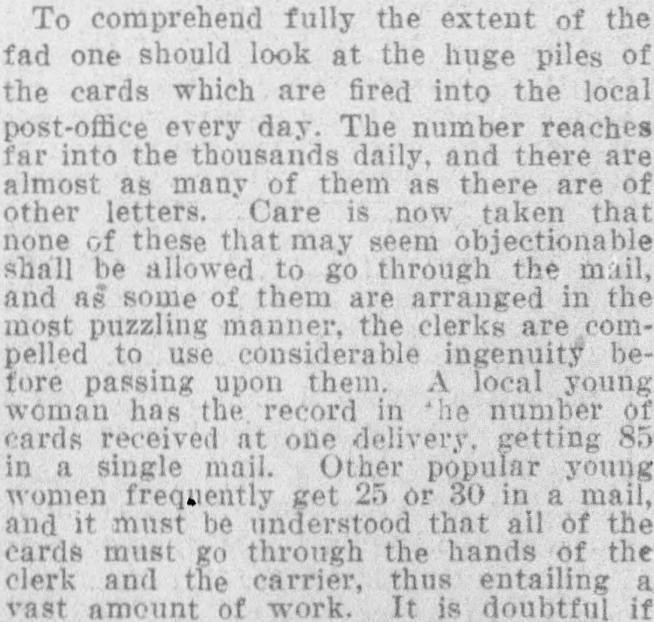
Thousands a day, and 85 in one mail. Springfield Weekly Republican, September 15, 1905, page 10. Library of Congress, Chronicling America. Click the clipping to read it full size.
Postcards too sharp to mail
Some cards were fancier than paper. One kind had pictures burned into leather. The government said leather cards were “merchandise,” not regular mail, so they needed a two-cent stamp instead of one.
In New Haven, Connecticut, people bought postcards made of aluminum, a light metal. In March 1905 the Post Office Department in Washington ruled them “unmailable” because of “the danger of the sharp edges cutting the hands of the postal clerks.” About 100 of them got stuck at the New Haven post office, most with pictures of Yale buildings. To send one, you had to put it in an envelope.
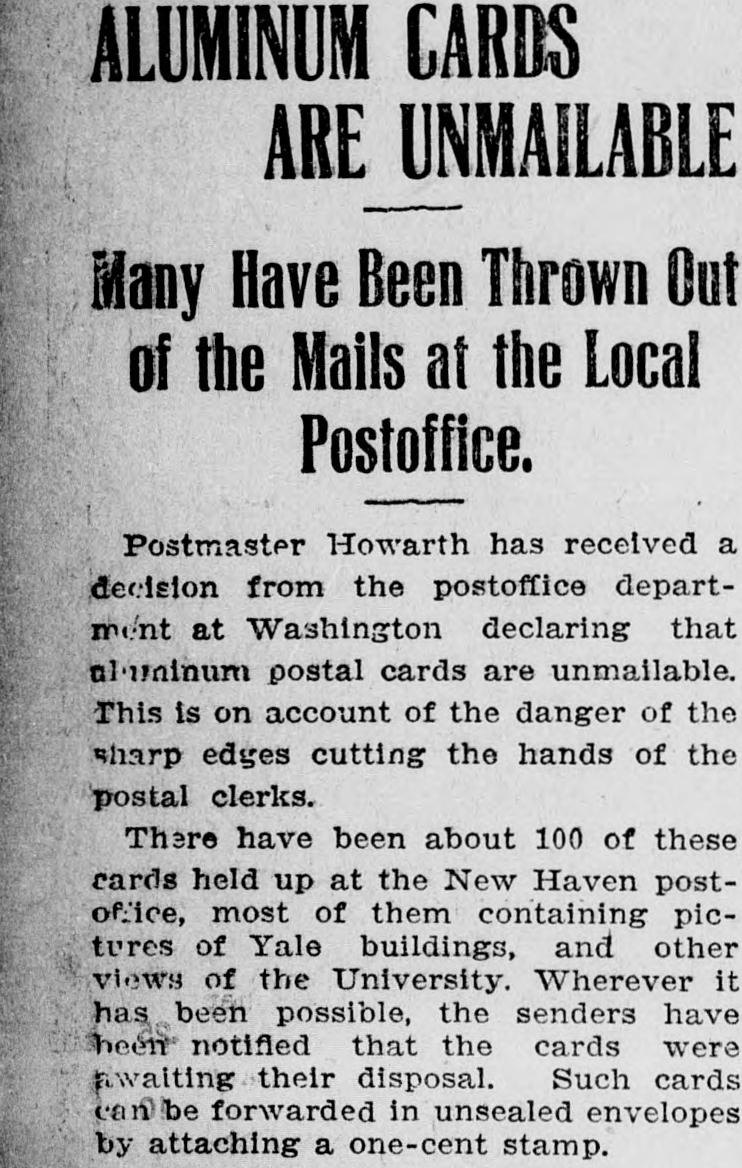
Metal cards get stopped. The New Haven Union, New Haven, Connecticut, March 24, 1905, page 10. Library of Congress, Chronicling America. Click the clipping to read it full size.
Not just Springfield
Springfield wasn’t alone. In Atlantic City, New Jersey, the post office “can scarcely get enough one-cent stamps to supply the demand.” For two months, Postmaster Bacharach said, it had sold an average of “seventy thousand a day” of those one-cent stamps.
The craze didn’t fade as fast as the clerks hoped. Millions of those penny cards were saved in albums and shoeboxes, and lots of them are still around. If your family has an old box of postcards in the attic, some of them might be from the summer the whole country went card crazy.
Sources
- “The Souvenir Postal Card Fad,” Springfield Weekly Republican, Springfield, Massachusetts, September 15, 1905, page 10. Library of Congress, Chronicling America.
- “Aluminum Cards Are Unmailable,” The New Haven Union, New Haven, Connecticut, March 24, 1905, page 10. Library of Congress, Chronicling America.
- “Atlantic City Affairs,” New-York Tribune, August 27, 1905, page 46. Library of Congress, Chronicling America.
- Photographs: Federal building (post office), Springfield, Mass., about 1905, and Lily ponds, Forest Park, Springfield, Mass., about 1907, Detroit Publishing Co. Library of Congress Prints and Photographs Division.