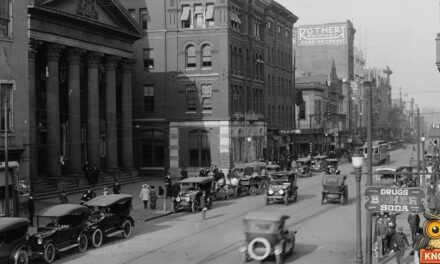
On Monday, October 4, 1909, the public schools in Walla Walla, Washington, let out at noon. The county fair was opening that afternoon, and every schoolchild in the county got in free. By 1 o’clock, the Evening Statesman said, “thousands of people thronged Main street.” Then the parade started. It was a parade of automobiles, “in the neighborhood of 100 cars.” In 1909 that was a lot of cars for one town.
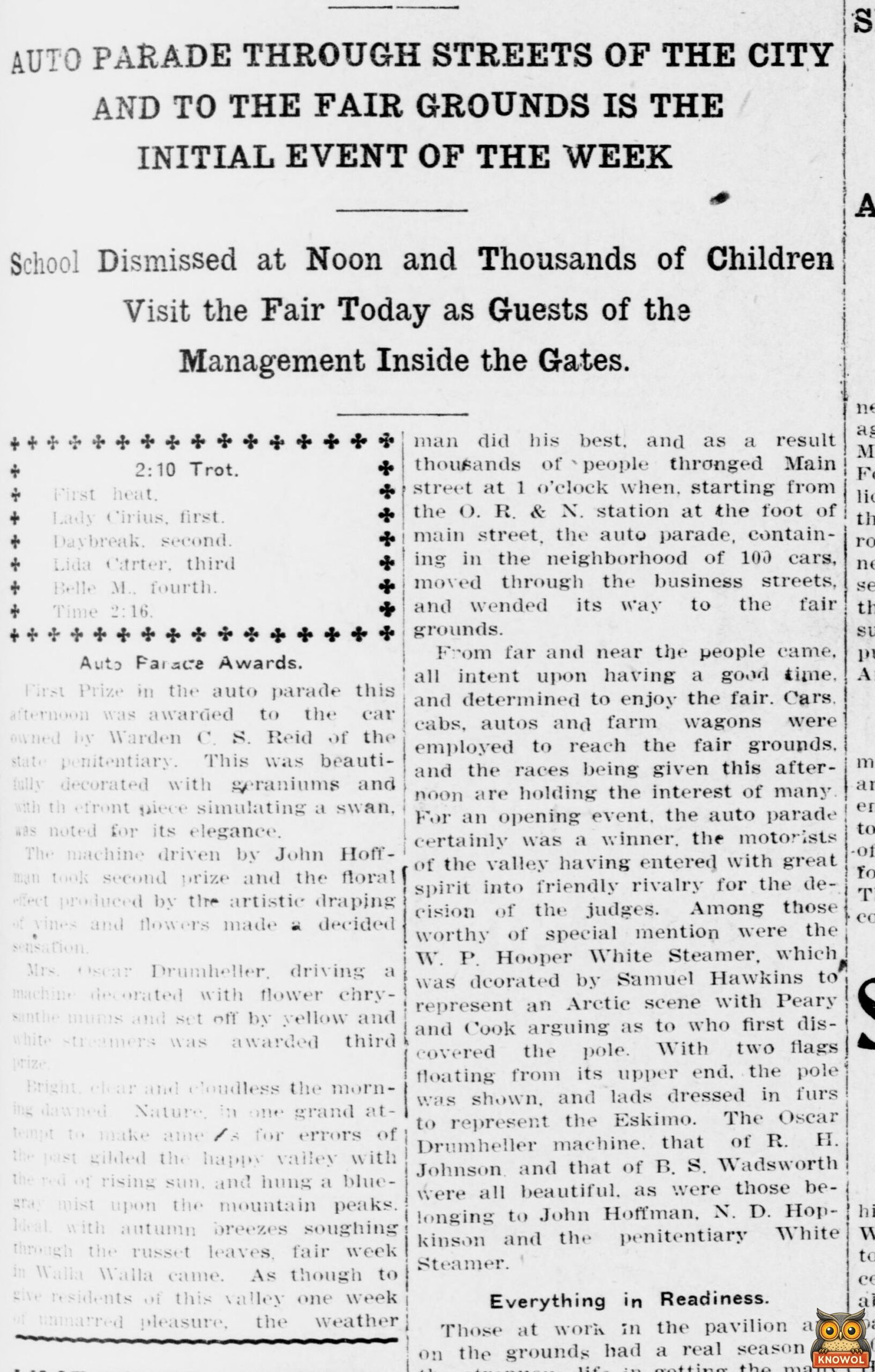
“Auto Parade Through Streets of the City and to the Fair Grounds Is the Initial Event of the Week.” The Evening Statesman, Walla Walla, Washington, October 4, 1909, page 1. Library of Congress, Chronicling America. Click the clipping to read it full size.
A mile of buzzing machines
Walla Walla called itself the Garden City. It was a wheat town of about 20,000 people in the southeast corner of Washington, and its county fair was only seven years old. The fair’s secretary, R. H. Johnson, wanted a big opening. So he asked every car owner in the county to line up at the railroad station at the foot of Main Street. A grand marshal named Grant Copeland rode in front, “mounted on a blooded charger.” That means a fine, well-bred horse. Behind him came the Fourteenth Cavalry band, playing on horseback. Then came the cars, 50 feet apart, so that “the line of buzzing machines will be more than a mile in length.”
There were prizes for the best decorated car. At first the prize was a $50 silver cup. Then the fair split the money four ways instead: $20 for first, $15 for second, $10 for third and $5 for fourth. That way, the paper said, “several auto owners of the city” could win something, and “the young people who will doubtless do the work” would get paid for their trouble. Days before the parade, people downtown were “startled by seeing a half-completed buzz-buggy darting through the streets.” A buzz-buggy was slang for a car.
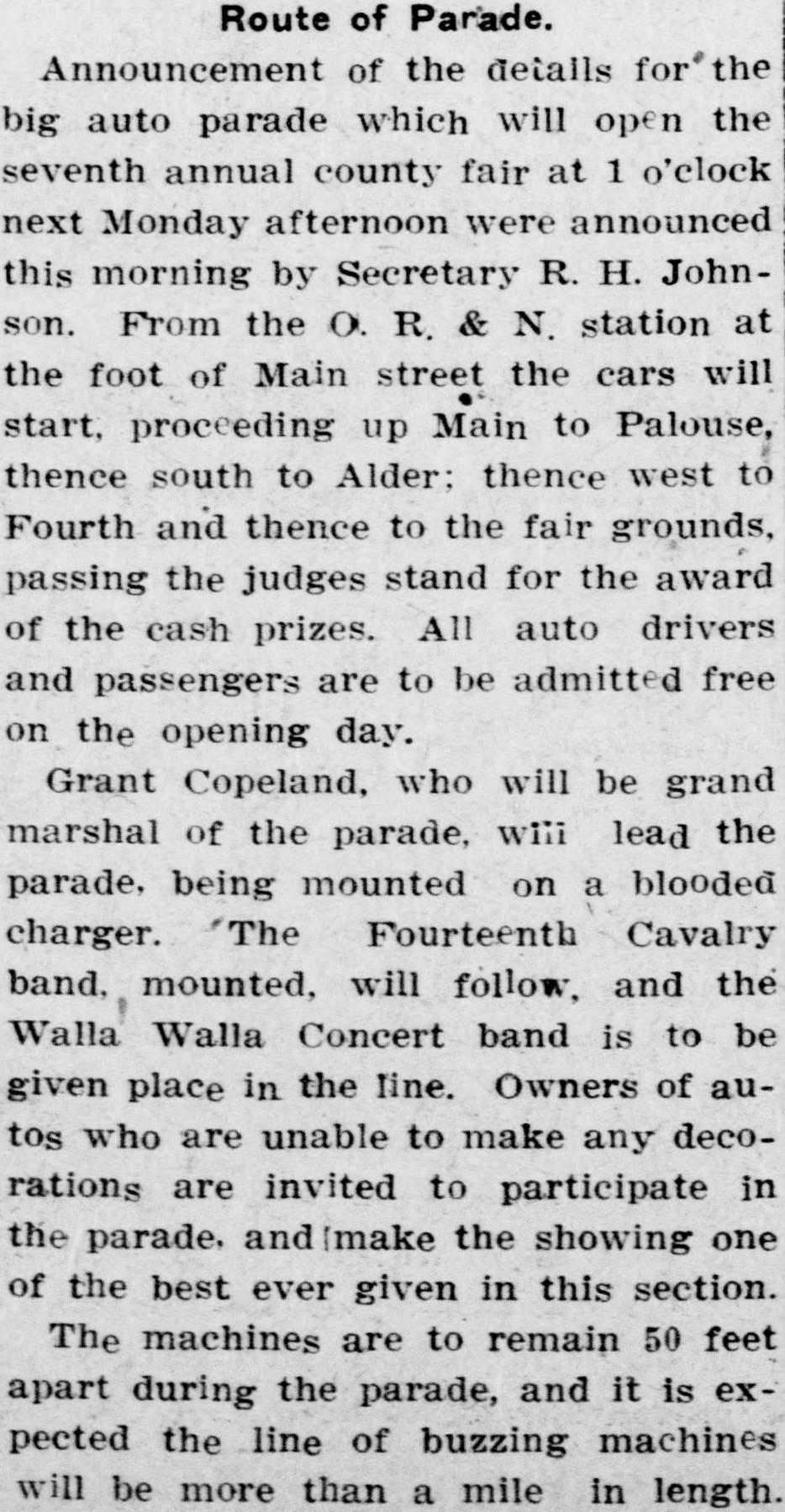
“Route of Parade.” The Evening Statesman, Walla Walla, Washington, September 30, 1909, page 4. Library of Congress, Chronicling America. Click the clipping to read it full size.
The North Pole on wheels
One car stood out. W. P. Hooper owned a White Steamer, a car that ran on steam instead of gasoline. A man named Samuel Hawkins decorated it “to represent an Arctic scene with Peary and Cook arguing as to who first discovered the pole.” A pole stood up from the car, “with two flags floating from its upper end.”
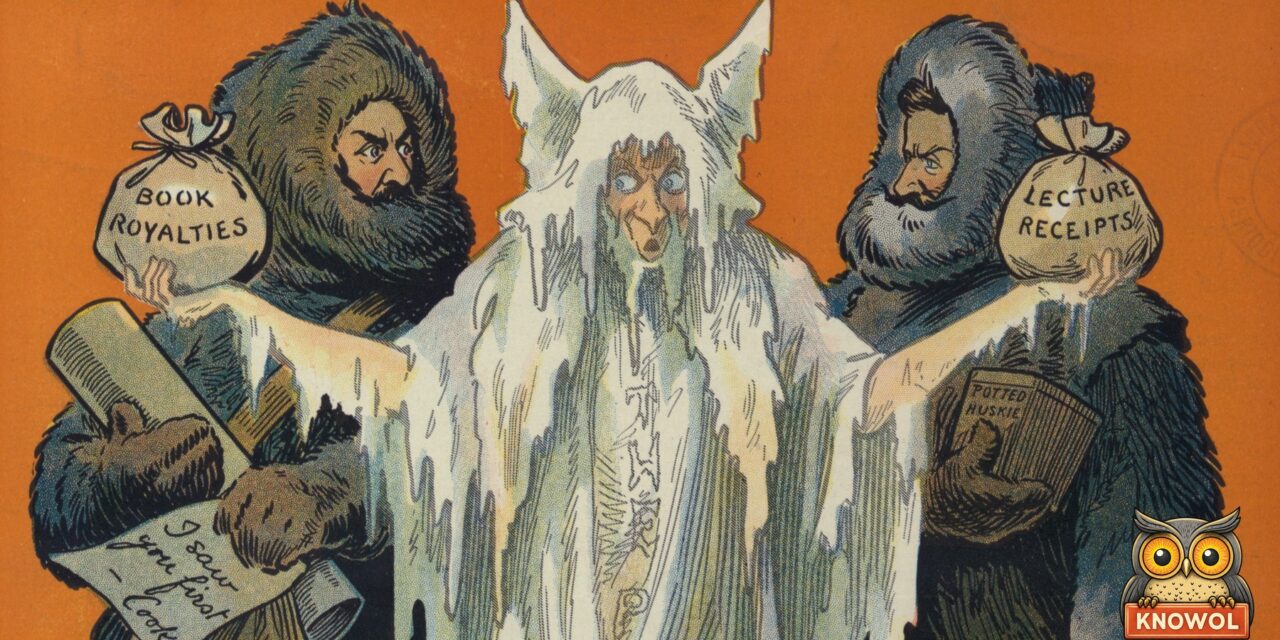
Everyone in 1909 got the joke. That September, two American explorers had each announced that he was the first man to reach the North Pole. Dr. Frederick Cook said he got there in 1908. Commander Robert Peary said he got there in 1909, and that Cook never did. Their fight filled the newspapers for weeks. A columnist in the Statesman wrote that “the quarrel between the two explorers assumes more and more the comic aspect.” In other words, it was turning into a joke. The cover of this story is the front of Puck magazine from September 29, 1909, five days before the parade. It shows Cook and Peary standing on either side of a frozen figure labeled “The Pole.”
Walla Walla was already laughing about it. Two nights before the parade, a church social for Whitman College students staged the same argument. One professor played Cook and another played Peary. “The North Pole consisted of a pail of water in which floated a piece of ice mounted with a stick.” The argument, the paper said, “occasioned a deal of wit and repartee.” Repartee means quick, clever comebacks.
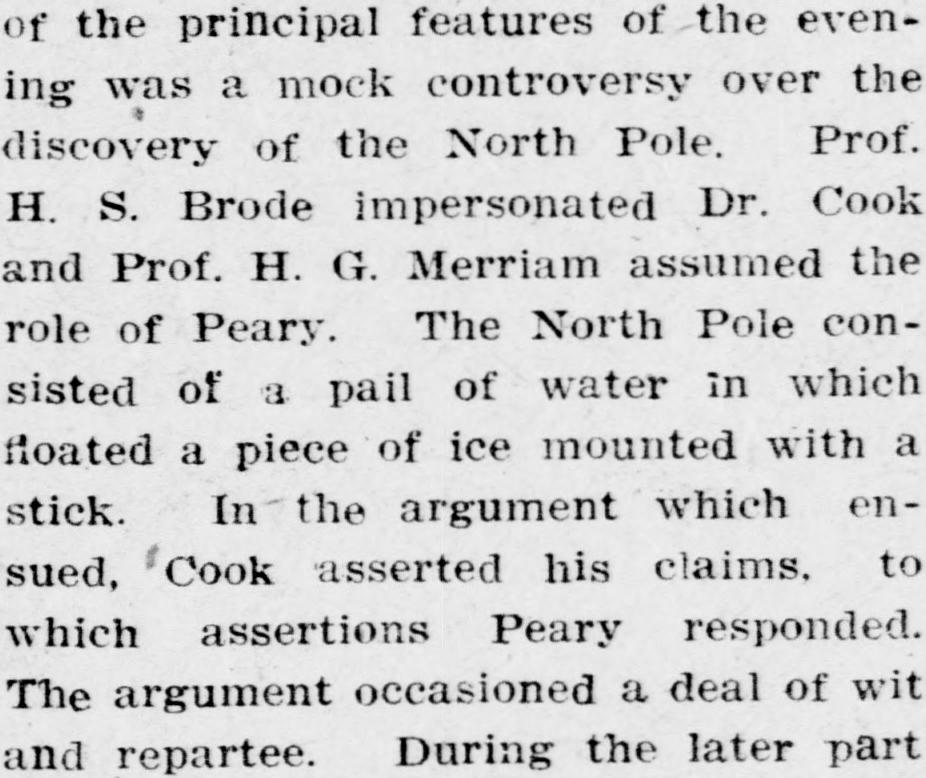
The North Pole in a pail. The Evening Statesman, Walla Walla, Washington, October 2, 1909, page 5. Library of Congress, Chronicling America. Click the clipping to read it full size.
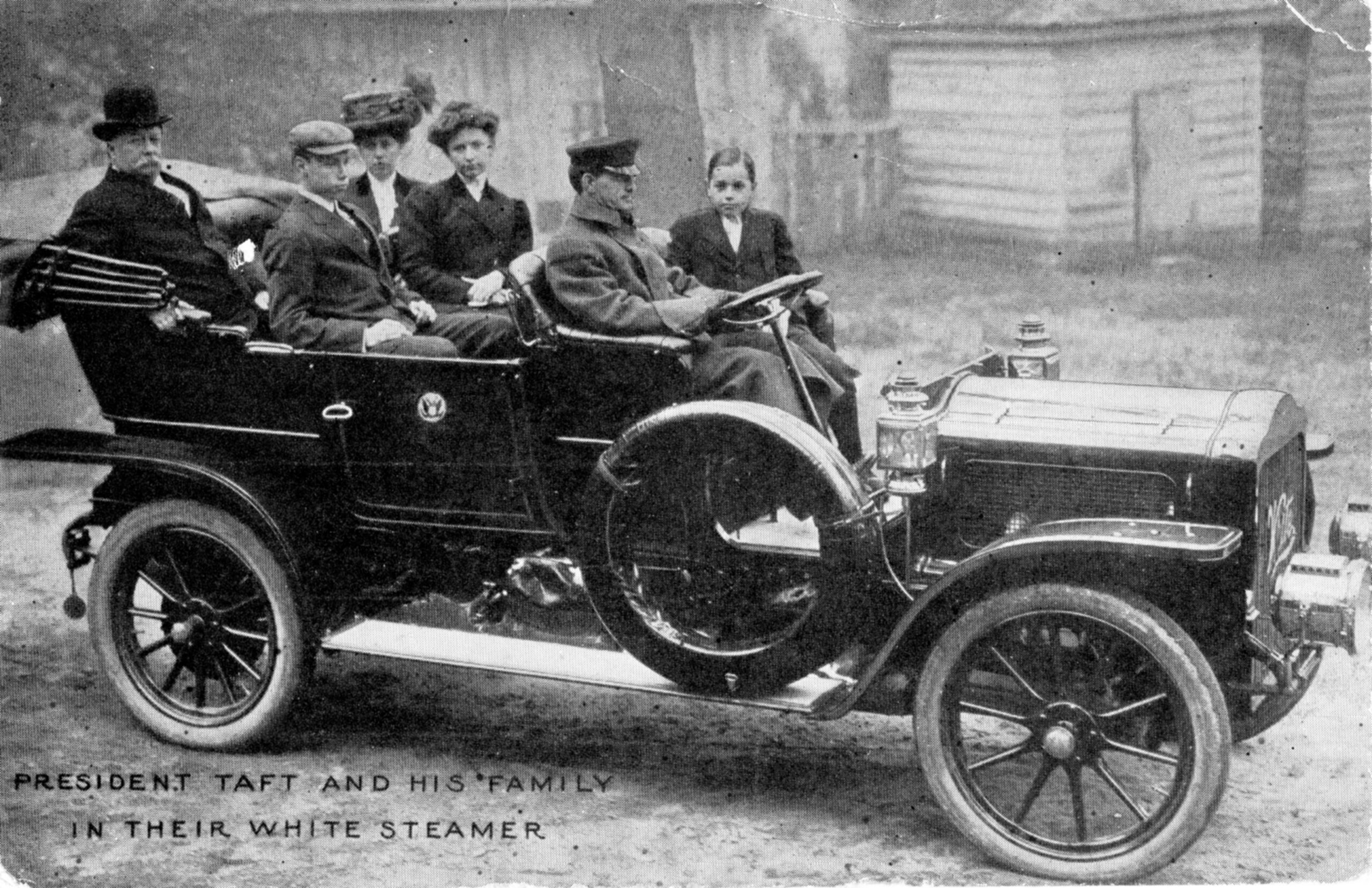
A White Steamer like the one that carried the North Pole. This 1909 souvenir postcard shows President William Howard Taft and his family in theirs. Wikimedia Commons, public domain. Click the picture to see it full size.
Who won?
Not the North Pole. First prize went to the car of C. S. Reid, the warden of the state penitentiary. It was “beautifully decorated with geraniums,” with a front piece “simulating a swan.” John Hoffman’s car took second with vines and flowers. Third went to Mrs. Oscar Drumheller, who drove her own car, “decorated with flower chrysanthemums and set off by yellow and white streamers.” The North Pole car still got “special mention,” and the paper summed up the day this way: “For an opening event, the auto parade certainly was a winner.”
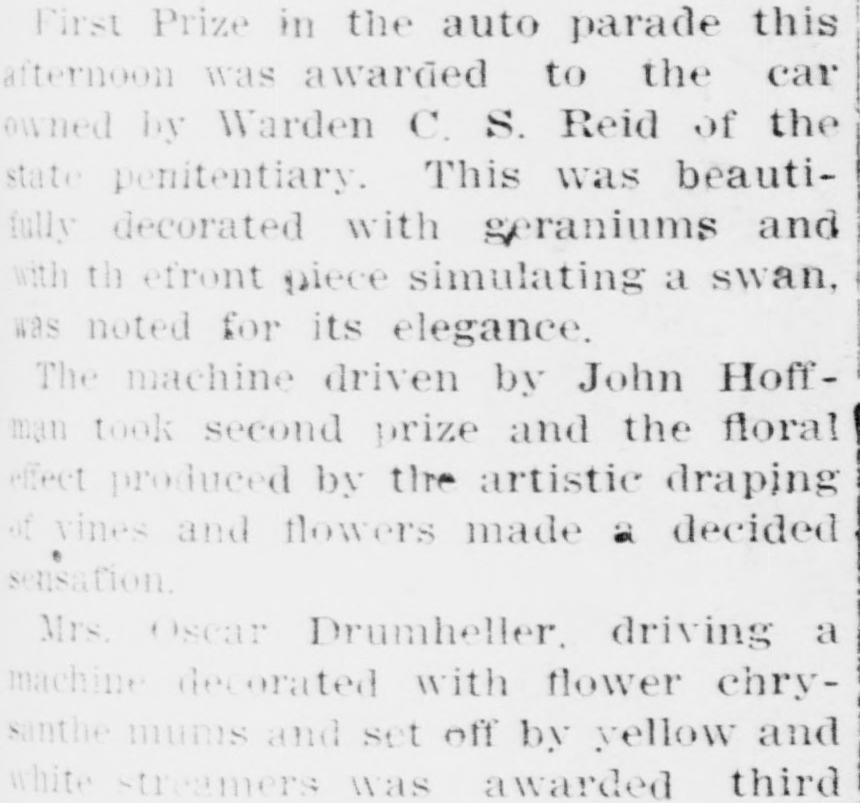
“Auto Parade Awards.” The Evening Statesman, Walla Walla, Washington, October 4, 1909, page 1. Library of Congress, Chronicling America. Click the clipping to read it full size.
A man in the sky
The parade ended at the fairgrounds, where a traveling carnival called the Arnold Combined Shows was setting up. It had come from Lewiston, Idaho, and it was late. “Owing to delay in arrival from Lewiston, the Arnold Carnival company was not ready, except with the free acts,” the paper said. The company brought “educated dogs, monkeys, goats and ponies,” a “big steam riding gallery” (a merry-go-round) “for the ladies and children,” and one act “never before seen in Walla Walla”: “the daily balloon race, a free act that is enjoyed by all.”
Here is how a fair balloon act worked. A performer rode up hanging under the balloon. Hundreds of feet up, he cut loose and floated down with a parachute. “With favorable wind, this daring acrobat shoots skyward with the big gas-bag,” the Statesman reported on Tuesday, “and hundreds of feet above the crowd does things that ordinary people would hesitate to do on terra firma.” Terra firma means solid ground.
It could go wrong. That July the Arnold shows’ balloon man, “Professor” J. Thomas, jumped at a Fourth of July celebration in Dallas, Oregon. The wind carried him over a sawmill. He hit a conveyor, swung into “the iron roof of the waste burner,” and fell about thirty feet. He got up with “a number of painful bruises” and jumped again the next morning. That time he “fell through a window into the Commercial Club rooms, taking the sash and glass with him.” The club sent the bill for a new window to the celebration committee.
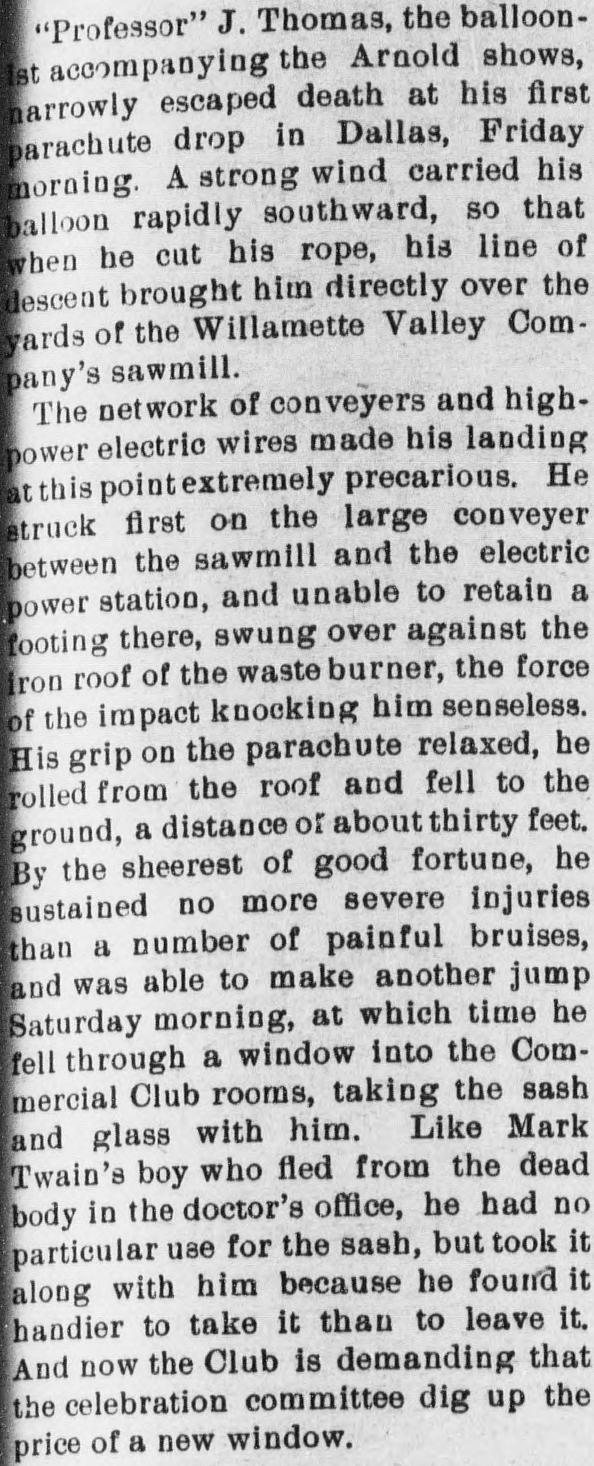
“Professor” J. Thomas and the window. Polk County Observer, Dallas, Oregon, July 6, 1909, page 1. Library of Congress, Chronicling America. Click the clipping to read it full size.
Dogs chained to the pillars
The 1909 fair also held Walla Walla’s first dog show. So many dogs showed up that carpenters had to build more pens. Even then, “a number of dogs are being shown in the center of the building, chained to the pillars.” By Friday the paper counted “more than 50 dogs comprising everything from a fox terrier to a bloodhound.” By Saturday there were more than 60, and the man in charge, Frank Cowan, had to order more first-prize ribbons from the printer. The winners, the paper said, “may sit up and look proud over the ribbons, cups and other articles that come their way.”
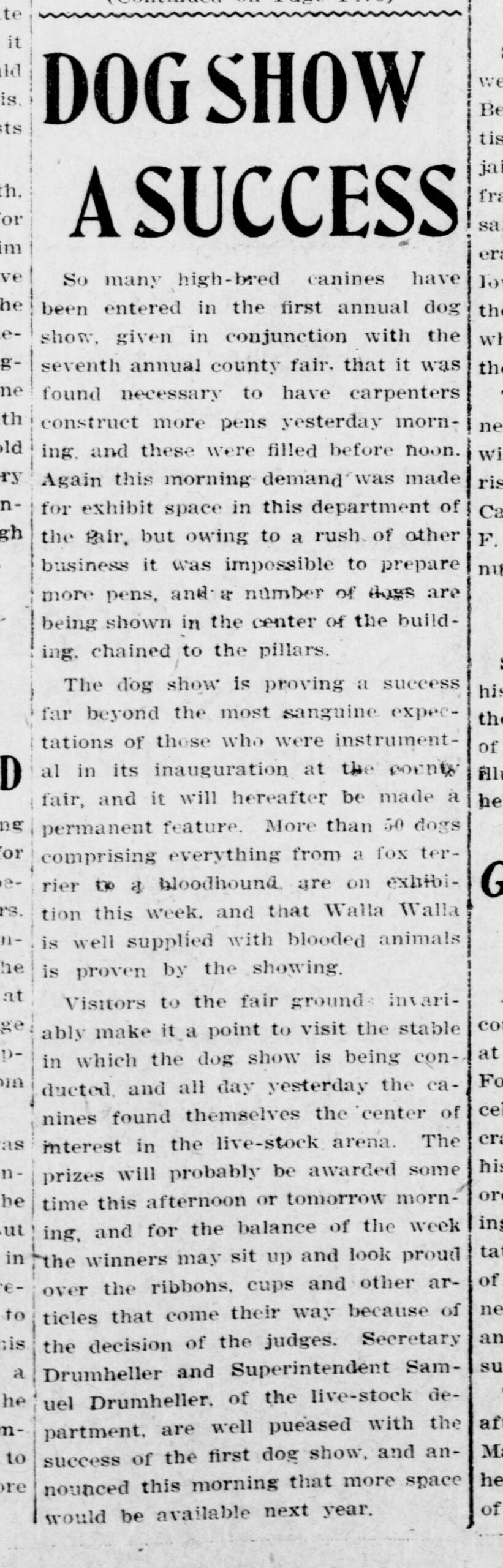
“Dog Show a Success.” The Evening Statesman, Walla Walla, Washington, October 8, 1909, page 1. Library of Congress, Chronicling America. Click the clipping to read it full size.
By the numbers
The fair ran six days. Thursday was Derby Day, when most of the stores in town closed at noon for the horse races, and the fair counted 7,683 admissions that day. The whole week drew 22,705 admissions, “just 1,813 below” the year before. Secretary Johnson blamed the big world’s fair in Seattle, Washington, that summer, the Alaska-Yukon-Pacific Exposition. He said it “has had a demoralizing influence on the smaller fairs of the west this year.” Walla Walla had sent its own exhibit to Seattle, with pyramids of jars full of fruit and grain. Bad weather spoiled two days too.
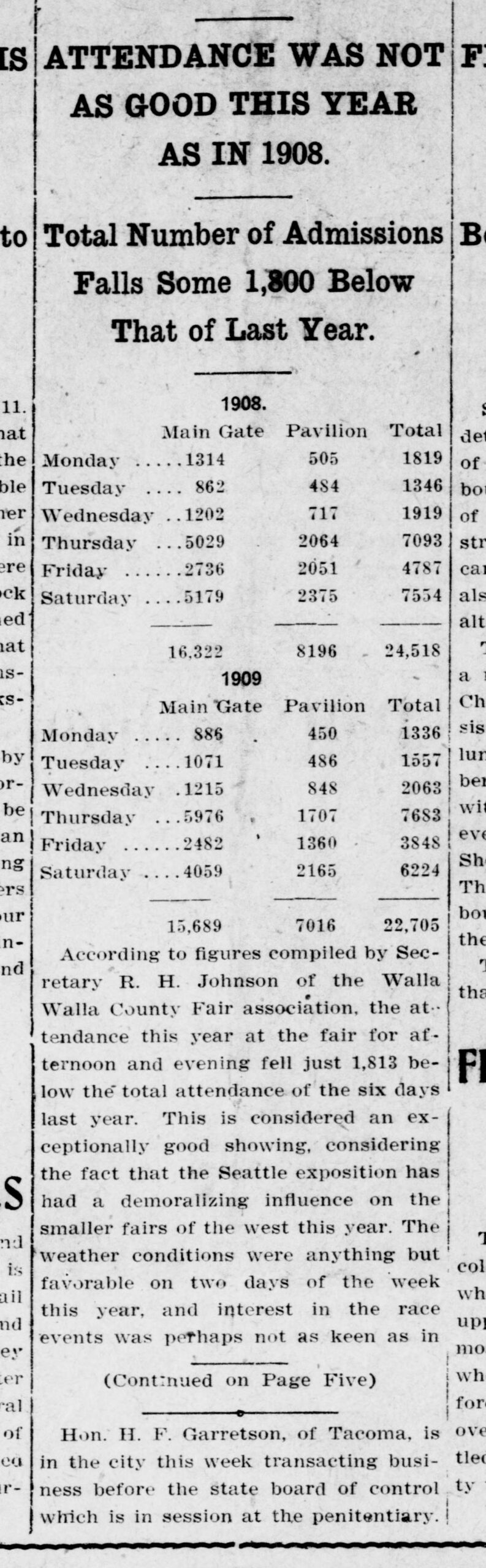
“Attendance Was Not as Good This Year as in 1908.” The Evening Statesman, Walla Walla, Washington, October 11, 1909, page 1. Library of Congress, Chronicling America. Click the clipping to read it full size.
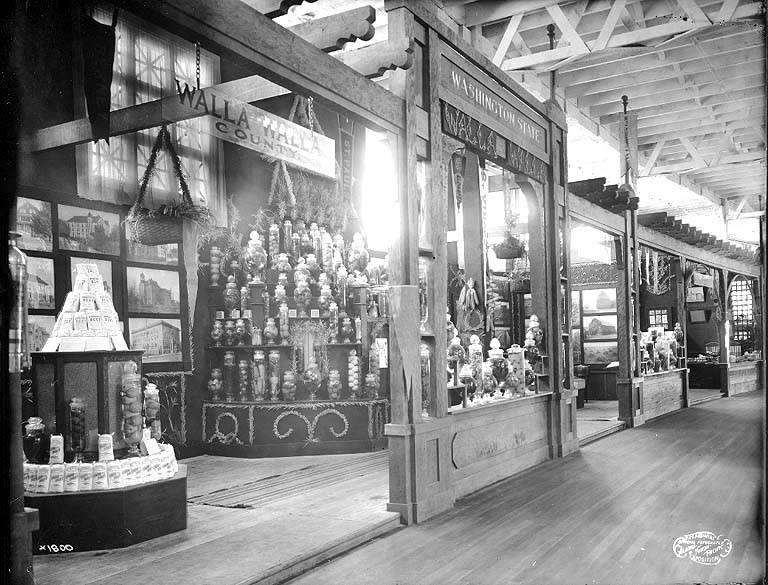
Walla Walla County’s booth at the Alaska-Yukon-Pacific Exposition in Seattle, 1909. Photo by Frank H. Nowell. Wikimedia Commons, public domain. Click the picture to see it full size.
And Cook and Peary? They never settled it. Historians still argue about whether either man really stood at the North Pole. In Walla Walla, the argument rolled down Main Street on a steam car, two flags flying, and went off to join the fair.
Sources
- The Evening Statesman (Walla Walla, Washington): August 20, 1909, page 4 (“First Class Shows,” the Arnold Combined Shows and the balloon race); September 10, 1909, page 1 (“Change Made in Big Prize”); September 25, 1909, page 7 (“The Polar Dispute”); September 30, 1909, page 4 (“Route of Parade,” the schools and the buzz-buggy); October 2, 1909, page 5 (the church social and the pail of water); October 4, 1909, page 1 (“Auto Parade Through Streets of the City,” the North Pole car and the awards); October 5, 1909, page 5 (“Balloon Ascension”); October 6, 1909, page 5 (Derby Day); October 8, 1909, page 1 (“Dog Show a Success”); October 9, 1909, page 5 (“More Ribbons Ordered”); October 11, 1909, page 1 (“Attendance Was Not as Good This Year as in 1908”).
- Polk County Observer (Dallas, Oregon): July 6, 1909, page 1 (“Professor” J. Thomas and the Commercial Club window).
- Walla Walla’s size: Sketches of Washingtonians (1906) put the city at nearly 20,000 people, on archive.org.
- Postcard: “President Taft and his family in their White Steamer,” 1909 inauguration souvenir, Wikimedia Commons, public domain.
- Photo: Frank H. Nowell, “Walla Walla County exhibit, Agriculture Building, Alaska Yukon Pacific Exposition, Seattle, Washington, 1909,” Wikimedia Commons, public domain.
- All newspaper images: Library of Congress, Chronicling America. Published 1909.
- Cover: L. M. Glackens, “A coldness between them,” Puck, September 29, 1909, Library of Congress, no known restrictions on publication. It shows Cook and Peary, not Walla Walla.