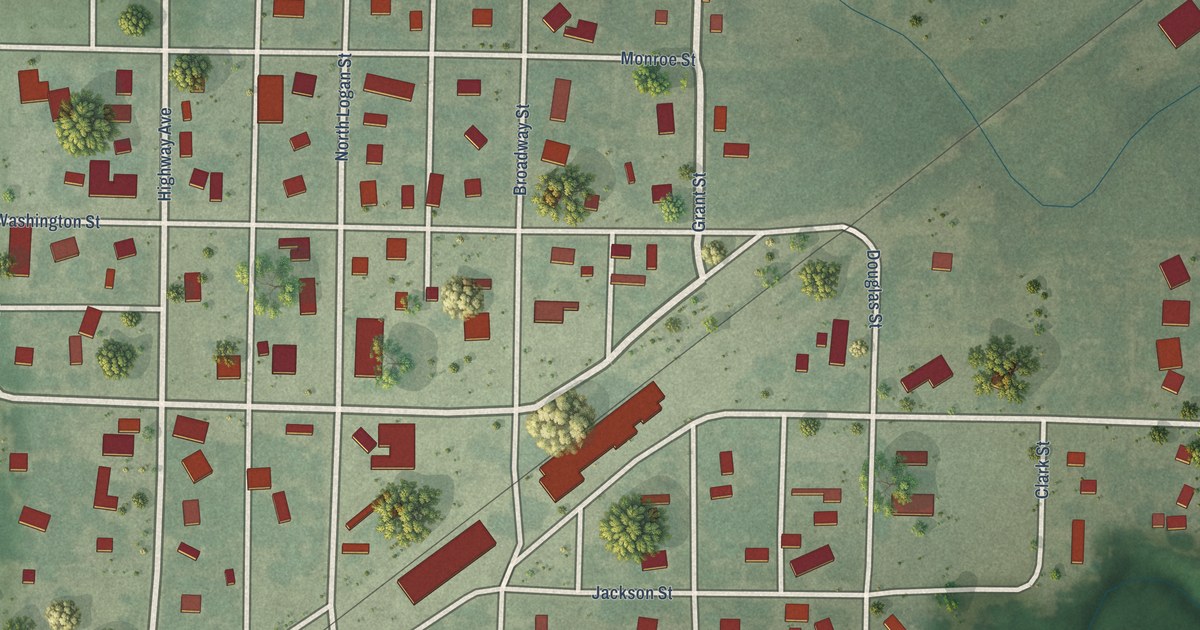
On Wednesday, May 17, 1899, a reporter for the Topeka State Journal got up early. The Ringling Brothers circus was coming to Topeka, Kansas, and he wanted to watch the show build itself. “It was just 7 o’clock Wednesday morning when the first of the three sections of Ringling’s show, or circus as it might be called, pulled past the Union Pacific depot in North Topeka,” he wrote. Twenty minutes later the first wagon “ran down the skids from the cars” and rolled off toward the show grounds at Topeka Avenue and Fourteenth Street. “It’s like clock work, the unloading of a circus.”
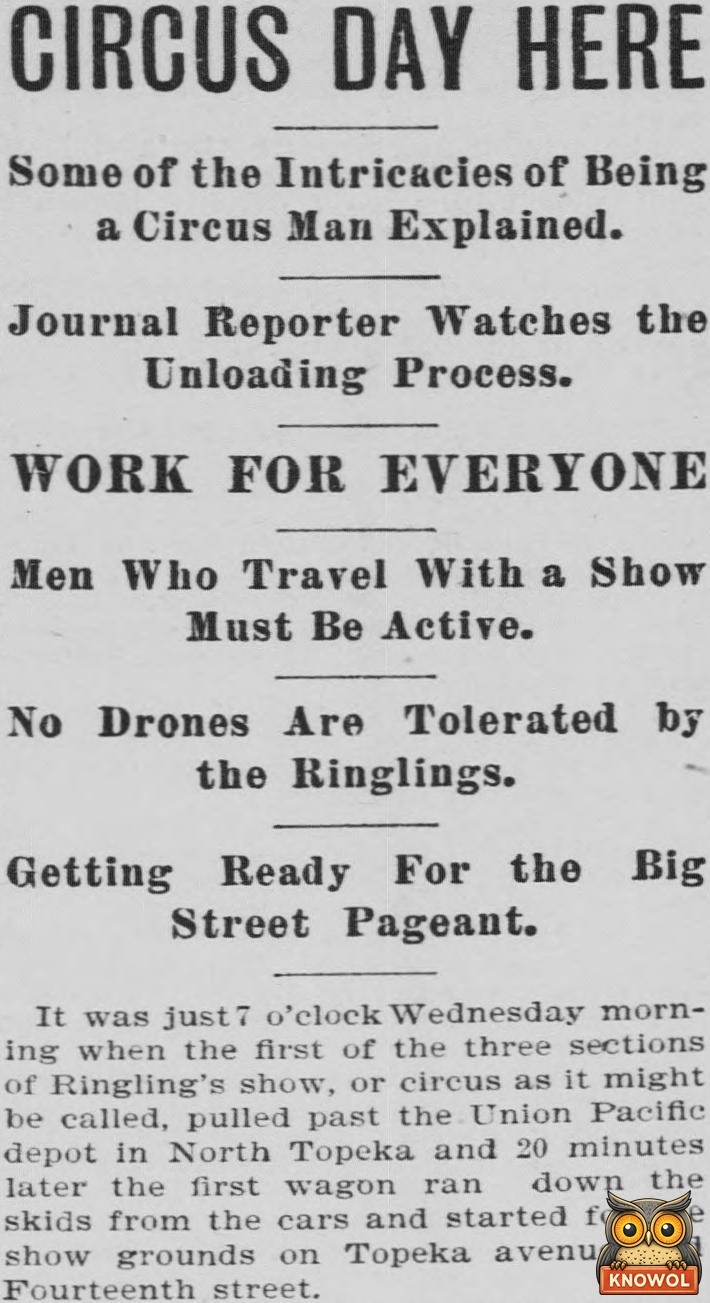
“Circus Day Here.” The Topeka State Journal, Topeka, Kansas, May 17, 1899, page 1. Library of Congress, Chronicling America. Click the clipping to read it full size.
Three trains before breakfast
The circus traveled in three trains. The first one carried “20 cars of horses and tent and pole wagons.” The wagons rode on flat cars, and the workers slept wherever they could. The paper called them “razor backs,” and said they bunked “on the flat cars, under the wagons and on top of the canvas wagons.” Ten feet of folded canvas made a soft enough bed.
Getting a loaded wagon off a train took brains and horsepower. A hook on a heavy rope went into a ring on the back of the wagon. The rope ran around a windlass, a drum that let it out slowly. Horses pulled the wagon down the skids while the windlass kept it “from running down too fast.” Then a fresh team hauled it to the lot. “After seeing one wagon unloaded the whole show, as far as that is concerned, has been seen,” the reporter said.
Colored flags told every wagon where to go
Two men left the train first: Lee Coleman and George Heiser, the “architects” of the show. They carried “bundles of wire stakes with red, white and blue flags” and marked out the empty lot in a few minutes. Each color stood for a tent. “The menagerie tent is marked out by blue flags, the big tent by red, the kinetoscope tent by black and the side show by red and blue. The cook house is known by yellow flags.” The menagerie was the circus zoo. The kinetoscope tent showed moving pictures, a brand-new thing in 1899.
The flags meant nobody had to give orders. Each driver “looks the ground over, notices the position of the flags and then without asking any questions drives his wagon immediately to its proper place.”
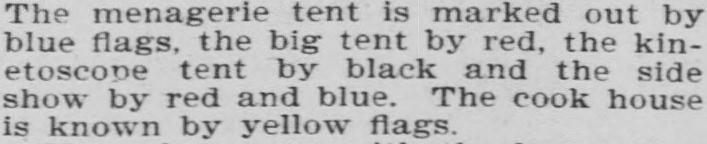
The flag code. The Topeka State Journal, Topeka, Kansas, May 17, 1899, page 1. Library of Congress, Chronicling America. Click the clipping to read it full size.
The sledge gang
Next came the “sledge gang,” eight men to a stake, swinging heavy hammers one after another. “Zip, zip, zip the heavy sledges fall on the tops of the stakes following each other so close that it seems like a gigantic alarm clock going off.” It took “barely a minute” to drive a stake “two and three feet into the ground.” Then James Jordan, the “boss canvas man,” and his 130 men spread the canvas and laced the pieces together. “The tent is flat on the ground and at the signal from Jordan up it goes.”
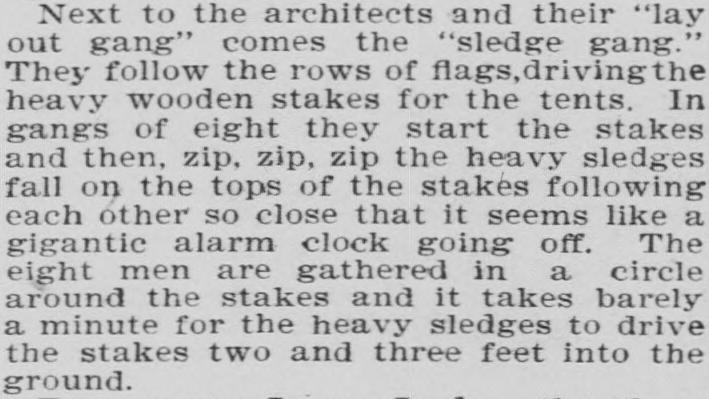
The sledge gang. The Topeka State Journal, Topeka, Kansas, May 17, 1899, page 1. Library of Congress, Chronicling America. Click the clipping to read it full size.
By 10:30 the tents were up, “just in time for the herd of twenty-seven elephants to find shelter when they arrived.” Boys crowded in for the most famous job in circus history, carrying water to the elephants. It didn’t work out. “But the big beasts were not thirsty.”
Every kid got a job
“An army of several hundred boys is on hand as soon as the show arrives, everyone of them right in the way,” the reporter wrote. The circus men handled it the smart way. “They remember they were boys once, and so everyone of the ‘kids’ receives a job of some sort.” The jobs were mostly there to keep the boys busy. “They carried stakes, stretched canvas and were occasionally sworn at for a mistake.”
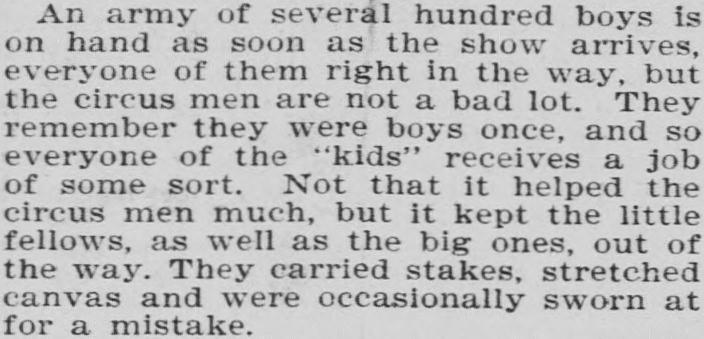
Every boy got a job. The Topeka State Journal, Topeka, Kansas, May 17, 1899, page 1. Library of Congress, Chronicling America. Click the clipping to read it full size.
By the numbers
- The bell wagon, which carried the chimes, weighed 9,300 pounds. The “hip” wagon, which carried the hippopotamuses “and their perpetual bath,” weighed 8,200.
- The show employed “from 800 to 1,200 persons.” In winter they worked at the circus headquarters in Baraboo, Wisconsin, “repainting the wagons, making new harness, training animals for new feats.”
- George Stump drove the big-top pole wagon. On good roads he used eight horses. On bad roads he drove sixteen, and he could handle twenty-four. He “is paid $80 a month,” with $20 a month more if he stayed a whole year. “It pays to be a twenty-four horse driver, for they are scarce.”
- Breakfast in the cook tent: “A barrel full of radishes, another of cucumbers, a pile of potatoes, stacks of bread, pies, cake and the like with ham, beefsteak, mutton and veal.”
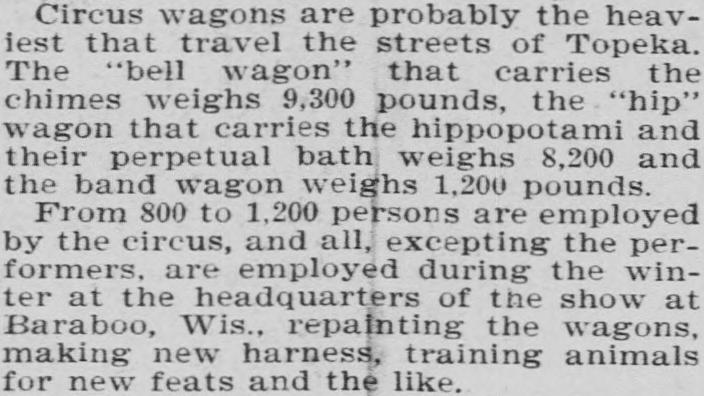
Wagon weights and the winter in Baraboo. The Topeka State Journal, Topeka, Kansas, May 17, 1899, page 1. Library of Congress, Chronicling America. Click the clipping to read it full size.
The elephant brass band
The strangest act on the lot lived in the menagerie tent. William H. Winmer looked after the animals there, “All except Pearl Souder’s musical elephants and Souder looks after them himself for their musical education has to be kept up.” Two days earlier the paper had explained what that meant. “Souder’s elephant brass band, which is one of the features of Ringling Bros.’ famous big circus this year, is a musical organization composed entirely of elephants.”
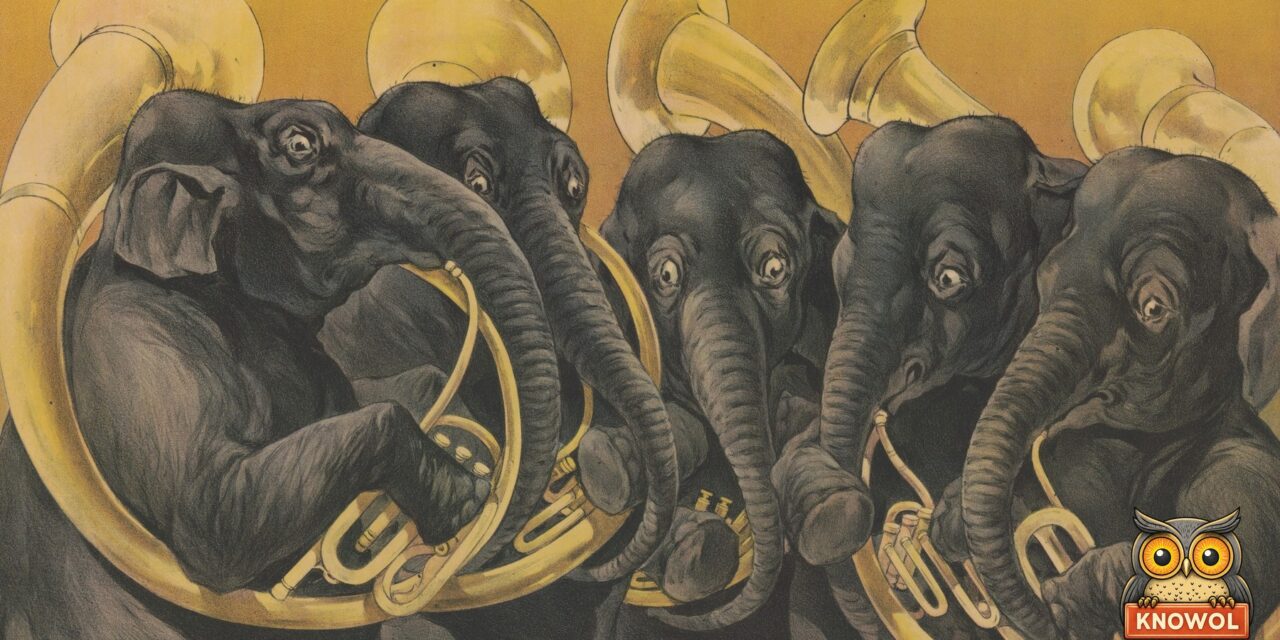
The circus printed a poster of the band that year, and it is the cover of this story. Five elephants hold giant horns in their trunks. The poster promised they played “popular songs of the day in time and tune on big common brass band horns,” and that they were “louder than a thousand human bandmen.”
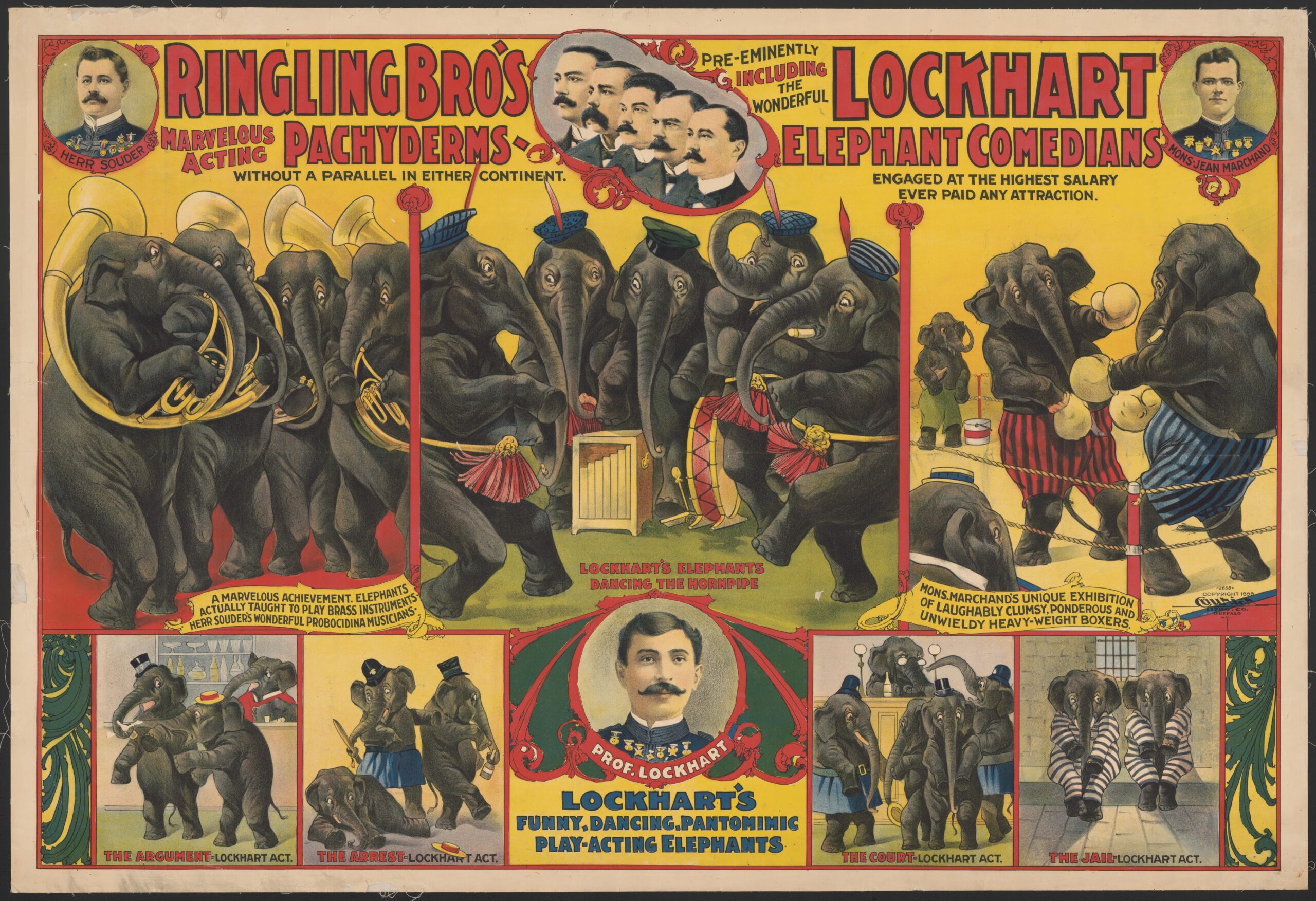
Ringling Bros. poster, 1899: Souder’s elephant band at left, Lockhart’s elephants dancing in the middle, and Marchand’s boxing elephants at right. Courier Litho. Co., Buffalo. Library of Congress, Prints and Photographs Division. Click the picture to see it full size.
The circus’s own press agent wrote the best description, and Kansas papers printed it as news. The Wellington, Kansas, People’s Voice ran it five days before the show reached that town. “There are five of these big, unwieldy elephantine wind-jabbers, and the way they blow great, blue blasts out of their long helicon horns is a caution to the musical fraternity.” A helicon is a big round horn that wraps around the player, like a tuba. The band knew one song, “Comin’ Through the Rye,” and played it “with such a thunderous volume of sound as to rattle neighboring windows and cause the lions and tigers to roar a protest in a deep feline bass.”
Souder first had to find out if an elephant could blow hard enough. The story says he got a lung tester, a machine that measured a person’s breath, and made a mouthpiece for it. “The indicator climbed up to the top notch in a twinkling, and then the mechanism gave way under the pressure of the four-ton beast, and collapsed.”
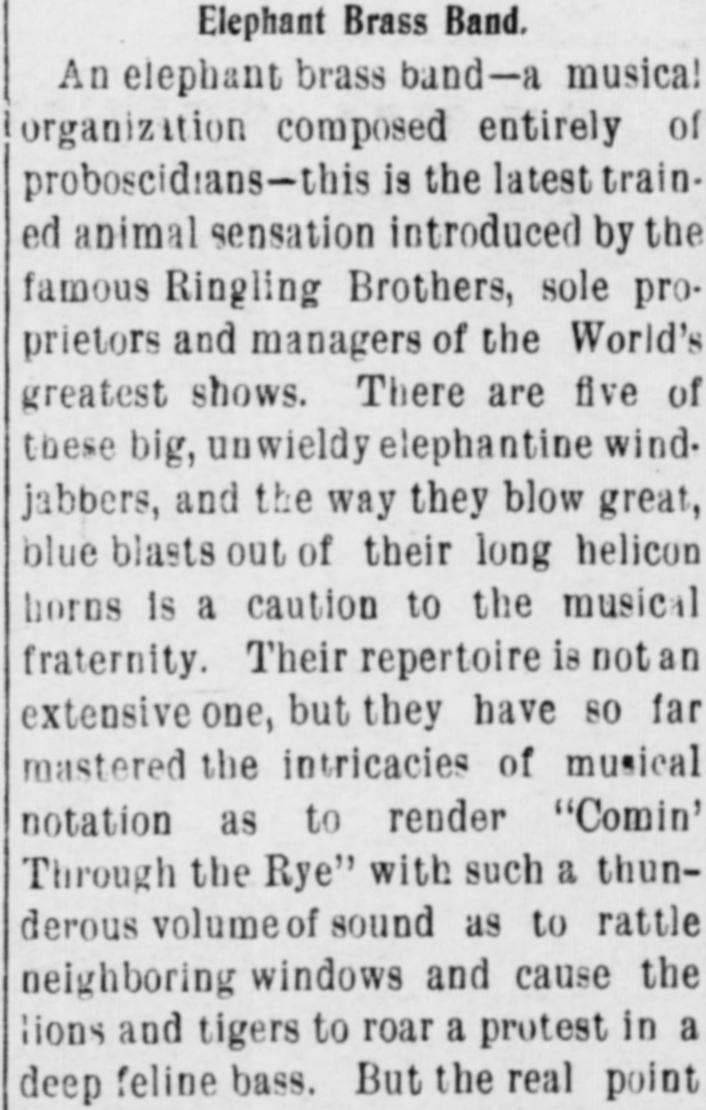
“Elephant Brass Band.” People’s Voice, Wellington, Kansas, October 5, 1899, page 6. Library of Congress, Chronicling America. Click the clipping to read it full size.
The elephants even had a Kansas-made instrument. C. W. Parker of Abilene, Kansas, built merry-go-rounds. That fall the Abilene Weekly Reflector said he “shipped an organ from Abilene to Concordia Friday for Ringling’s circus, the organ to be used in an elephant act.” The paper didn’t say which elephant act got it.
What it cost a town
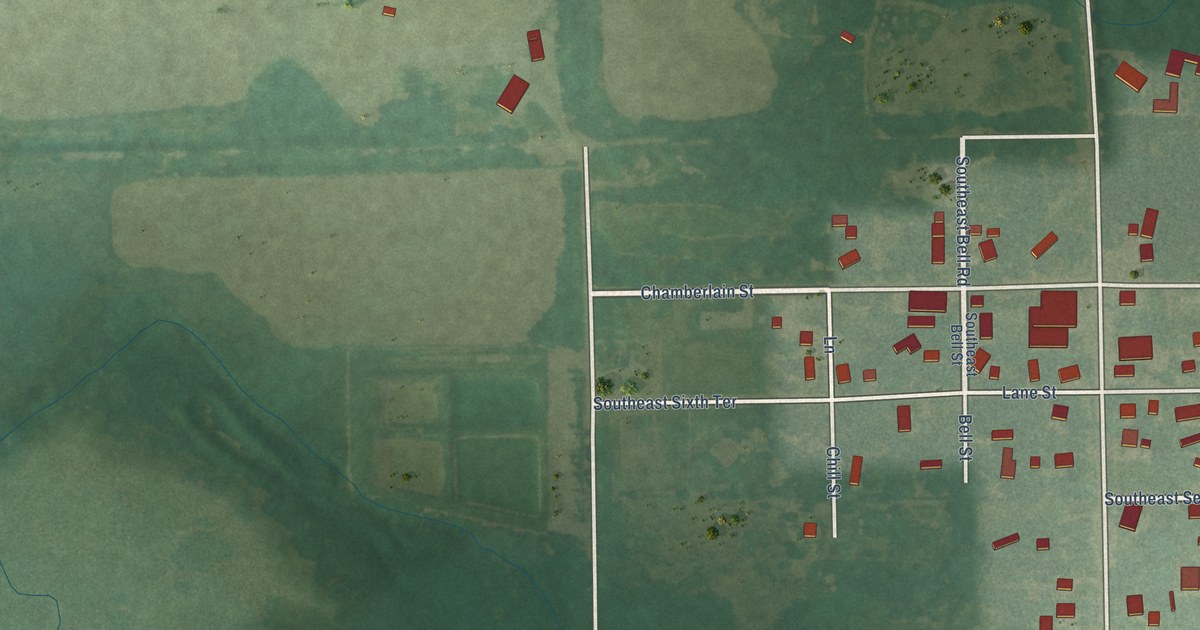
A circus took money out of a town as well as bringing fun in. When the show played Wellington on October 10, the People’s Voice did the math. Local merchants sold the circus one day’s supplies: “Livery and feed, $150; meat, $75; groceries, $75; city, $50; hotel, $50.” Livery meant hay and stable room for the horses, and “city” was the license fee. Against that, “Not less than $8,000 was taken in for tickets and reserved seats in Wellington October 10.” Add “$1,000 to $2,000 taken by fakirs of all kinds,” the paper said. Fakirs were the game men and sideshow sellers who worked outside the big tent. “Credit $400 to $500 for good measure. Debit $8,000 to $10,000 and what is received for it?”
The editor had an answer. Farm families “within a radius of 20 and 30 miles” drove in before dawn and home after dark, “lighter in pocket, but they have seen the show.” He blamed “the dreary monotony of farm life and the demand in human nature for amusement.” The Topeka State Journal said the same about Beloit, Kansas: “It is estimated that Ringling’s circus took $10,000 out of Beloit. It has done just about as well at every other town where it has stopped in Kansas.” Nobody stayed home anyway. “Wellington dismissed school for the circus,” the People’s Voice reported. “A number of the country schools did the same thing.”
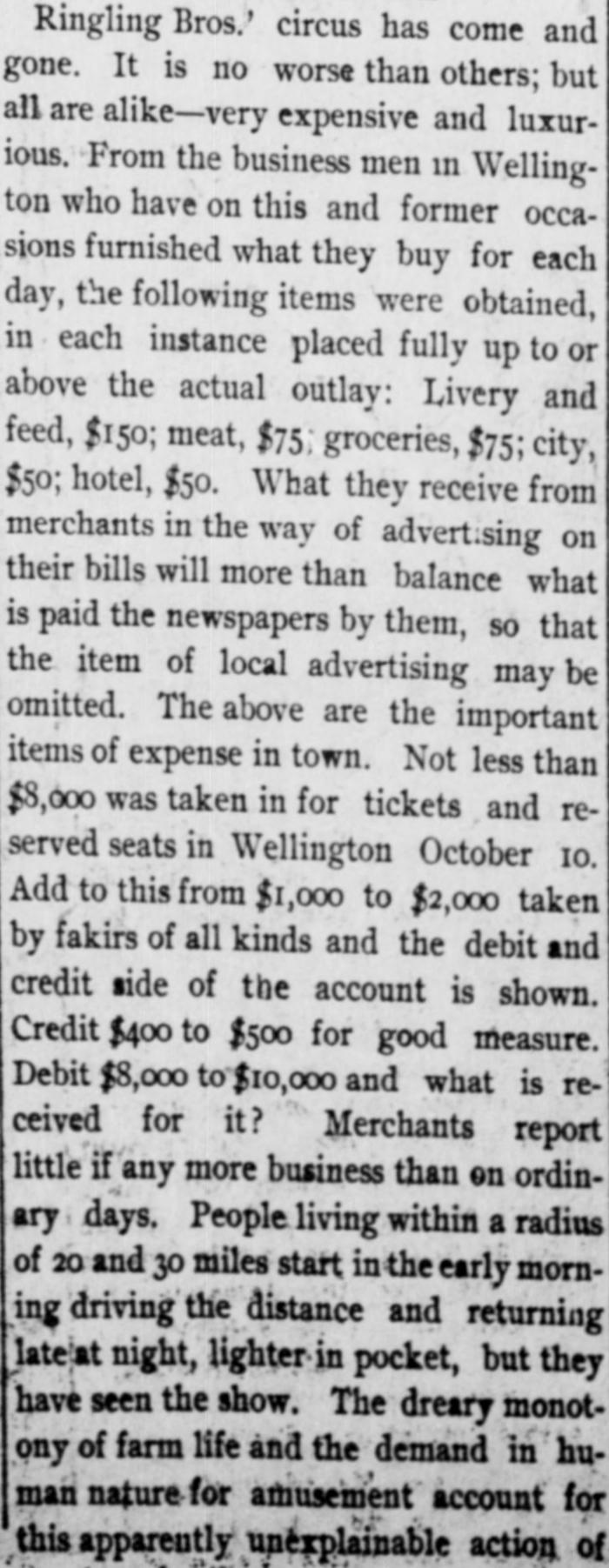
The editor’s circus arithmetic. People’s Voice, Wellington, Kansas, October 19, 1899, page 4. Library of Congress, Chronicling America. Click the clipping to read it full size.
Loading up
In Topeka the show ended that night, and the whole morning ran backward. “Quite a large crowd gathered last evening at the U. P. yards to watch Ringling Bros. load up their show,” the Journal said the next day. “To see this work was almost as good as to see the circus itself, especially that of loading the elephants in their cars. These animals travel in enormous boxcars, four in each car.” By daylight the lot at Topeka Avenue and Fourteenth Street was an empty field again. The paper’s headline had said it in three words: “Work for Everyone.” Even the elephants had to practice.
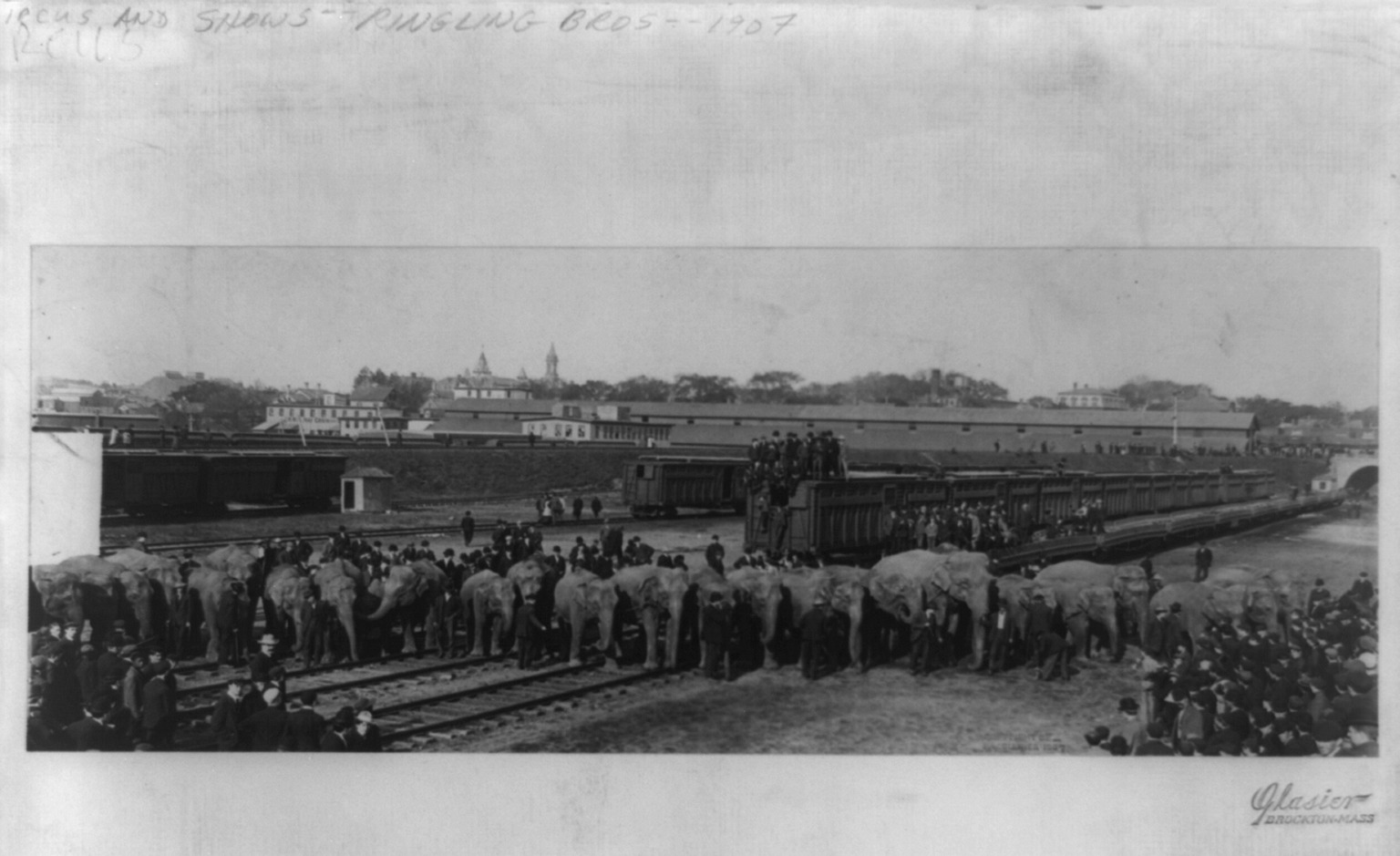
Ringling Bros. elephants lined up beside the circus trains in 1907, with a crowd watching. Photo by Glasier, Brockton, Massachusetts. The Library of Congress record does not name the town. Library of Congress, Prints and Photographs Division. Click the picture to see it full size.
Sources
- The Topeka State Journal (Topeka, Kansas): May 15, 1899, page 3 (Souder’s elephant brass band), May 17, 1899, page 1 (“Circus Day Here”), May 18, 1899, page 7 (loading up at the U. P. yards) and October 10, 1899, page 4 (Beloit).
- People’s Voice (Wellington, Kansas): September 21, 1899, page 8 (“World’s Greatest Show”), October 5, 1899, page 6 (“Elephant Brass Band”), October 19, 1899, page 4 (the circus account) and October 26, 1899, page 8 (school dismissed).
- Abilene Weekly Reflector (Abilene, Kansas): September 28, 1899, page 1 (“Organ for a Circus”).
- Poster: “Ringling Bro’s marvelous acting pachyderms … Lockhart elephant comedians,” Courier Litho. Co., Buffalo, 1899, Library of Congress, no known restrictions on publication.
- Photo: “Elephants from Ringling Bros.–Circus, trains and crowd of people,” copyright 1907 by Glasier, Brockton, Mass., Library of Congress.
- All newspaper images: Library of Congress, Chronicling America. Published 1899.
- Cover: “Ringling Bros. world’s greatest shows … The funny, wonderful elephant brass band,” poster, Courier Litho. Co., Buffalo, 1899, Library of Congress, no known restrictions on publication.