On Monday, August 14, 1911, people gathered at Provincetown, Massachusetts, at the very tip of Cape Cod, to see something the United States Navy had never tried. The big gray battleships of the United States Atlantic fleet were going to fight an airplane. The fleet lay at anchor, ready to go.
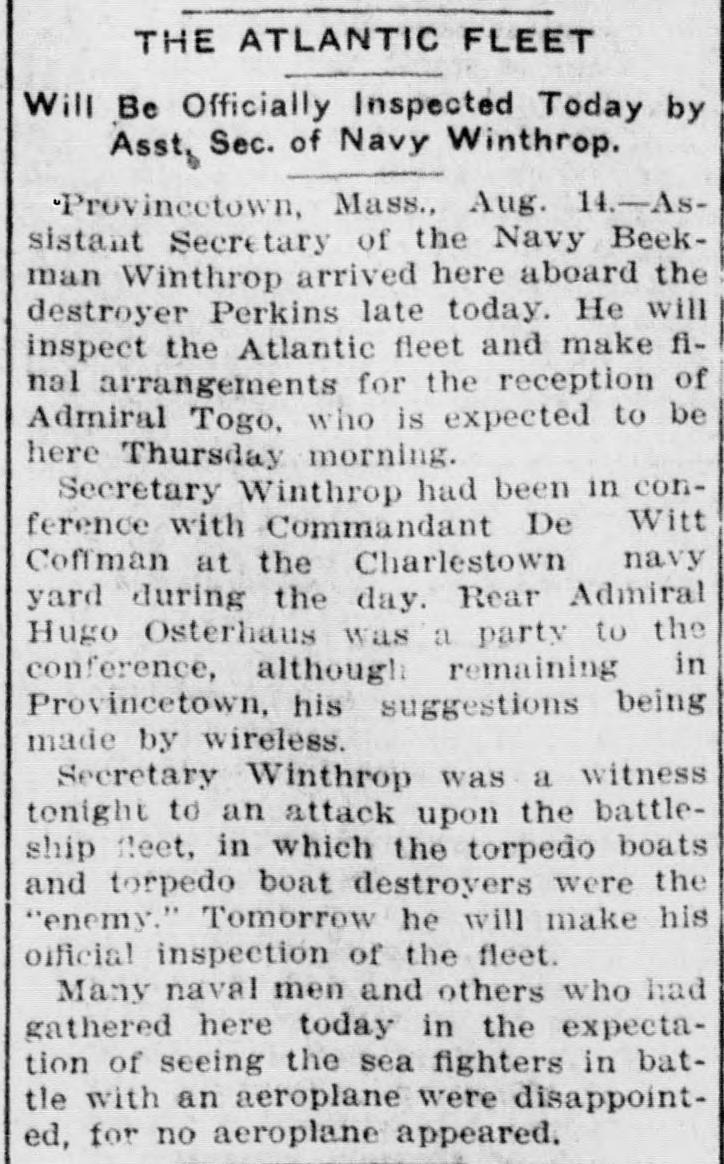
The airplane never came. “Many naval men and others who had gathered here today in the expectation of seeing the sea fighters in battle with an aeroplane were disappointed,” the Daily Kennebec Journal of Augusta, Maine, reported, “for no aeroplane appeared.”
A week before, papers all over the country had promised the show. In Wheeling, West Virginia, the Intelligencer put it on the front page: “NAVY BATTLE WITH AIRSHIP.” The paper said it “Will Be First Effort of Big Battleships to Combat With Navy of the Air.” In 1911, “airship” could mean any flying machine. This one meant airplanes.
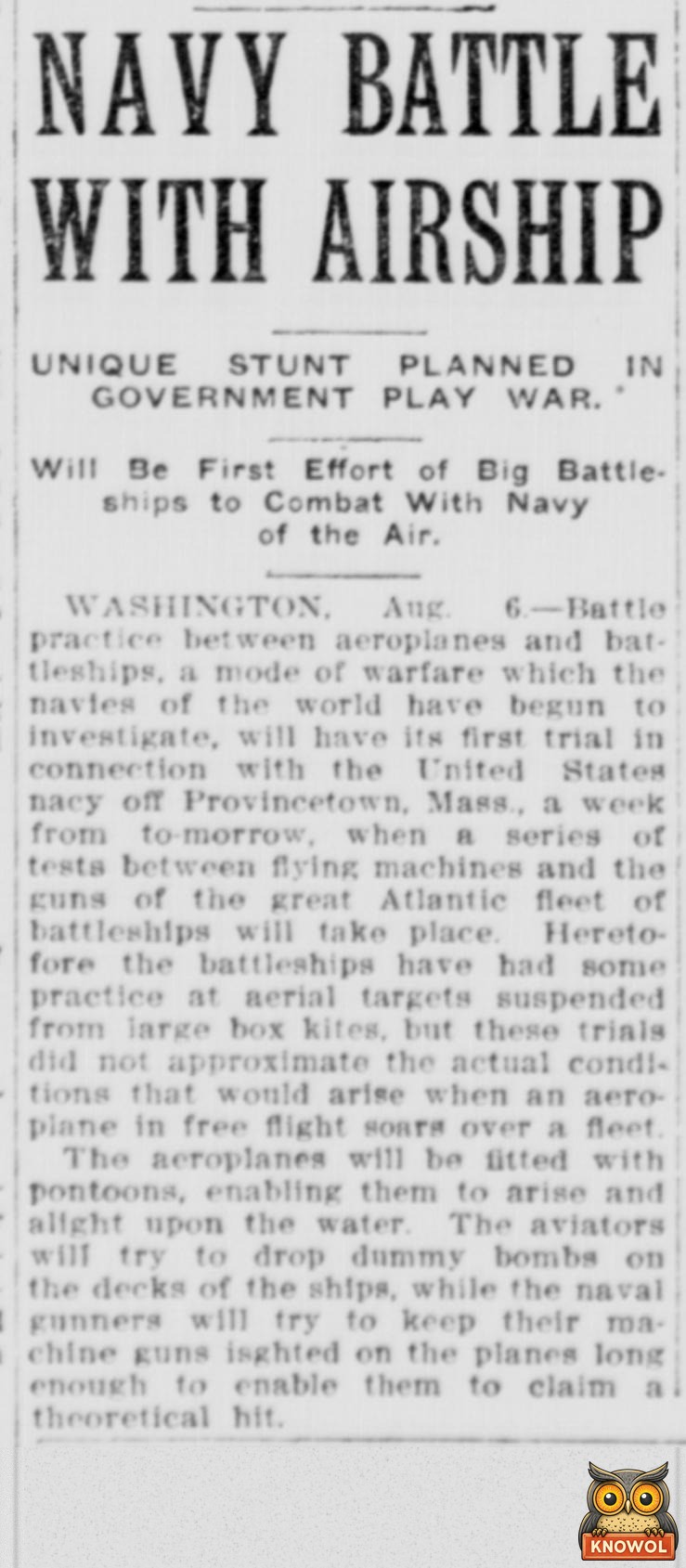
The Wheeling Intelligencer, Wheeling, West Virginia, August 7, 1911, page 1. Library of Congress, Chronicling America. Click the clipping to read it full size.
The Plan at Provincetown: Dummy Bombs and Pretend Hits
The plan for the fleet off Provincetown worked a little like a game of tag. The airplanes would wear pontoons, which are big floats, so they could take off from the water and land on it. “The aviators will try to drop dummy bombs on the decks of the ships,” the Wheeling paper said. Down on deck, the gunners would keep their machine guns aimed at each plane “long enough to enable them to claim a theoretical hit.”
Nobody was going to really shoot. A theoretical hit was a hit on paper. If a gunner could keep his gun sights on a moving plane long enough, he scored the point.
The Army and Navy Journal, a weekly paper read by officers, said there would be night tests too. The Navy wanted to learn whether a plane “intent upon dropping an explosive on a battleship in the night time, can be discovered with the searchlights.” Rear Admiral Hugo Osterhaus, the commander of the fleet, even had platforms built on some of the battleships so the planes could try taking off from the decks and landing on them.
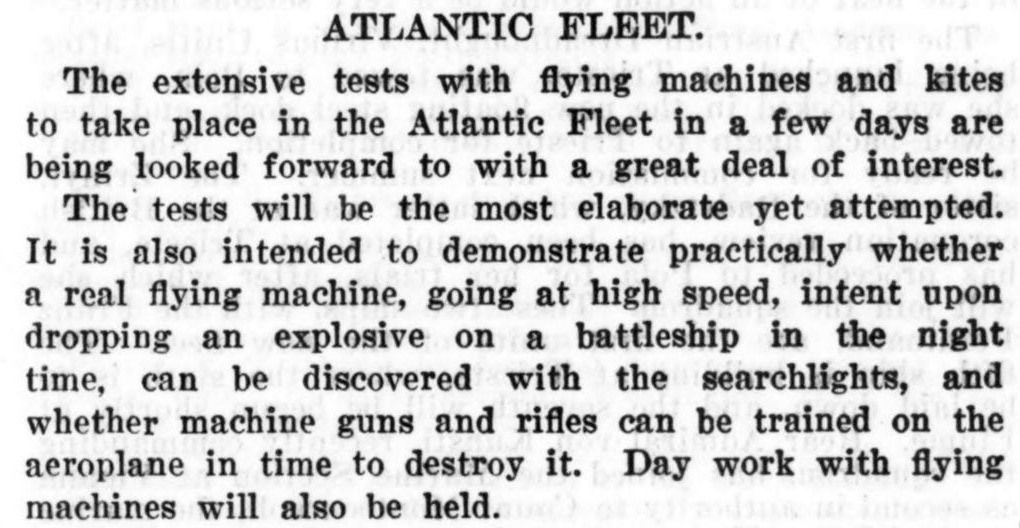
Army and Navy Journal, New York, August 12, 1911, page 1525. Internet Archive, public domain. Click the clipping to read it full size.
Why the Sailors at Provincetown Wanted a Real Airplane
Until then, the gunners of the fleet at Provincetown had practiced on kites. Box kites are kites built like an open box, a light frame covered with cloth, and they hold steady in the wind. In July 1911, a paper in Bridgeport, Connecticut, said the officers and men wanted something better. “Box kites to simulate aeroplanes are all right to shoot at, they say,” but the kites were “too stationary.” They just hung there on their strings. “An airship, the naval officers say, would be a more elusive mark.” Elusive means hard to catch.
Help seemed to be on the way. A yacht designer and “airship builder” named Burgess, from Marblehead, Massachusetts, came out to the flagship Connecticut with Mrs. Burgess. The admiral gave them lunch and sent them back to shore in his own launch, a small motorboat. Burgess planned to send one of his fliers “to fluttter over the warships,” the paper said, misspelling “flutter.” But he warned that “his aviators were all engaged at present.” He said one flier, Harry Atwood, “would be busy.”
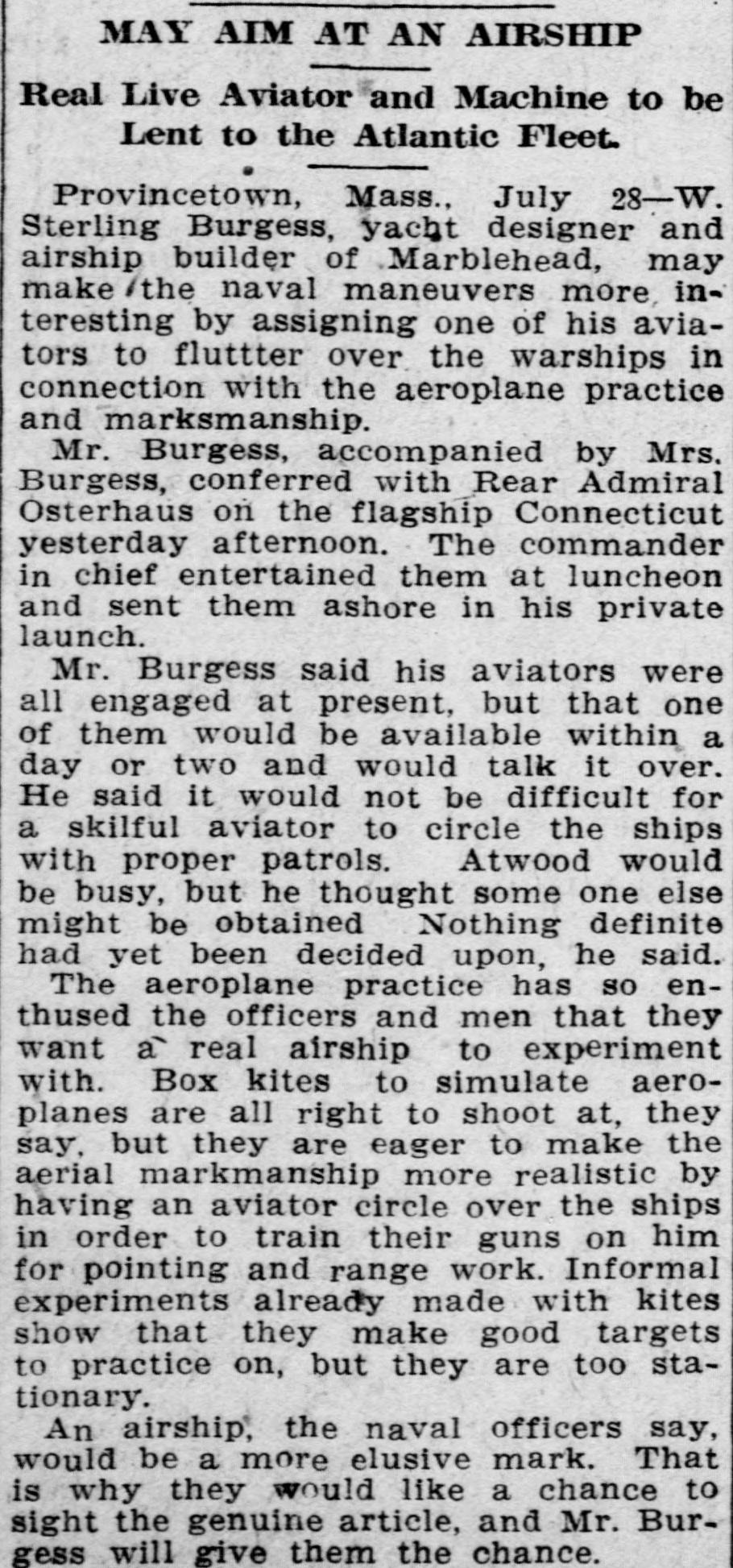
The Bridgeport Evening Farmer, Bridgeport, Connecticut, July 28, 1911, page 3. Library of Congress, Chronicling America. Click the clipping to read it full size.
The kite practice went on while everyone waited. On August 10, “Seventeen kites were sent up in the air from launches of the battleship Mississippi,” the Army and Navy Journal said, and the gunners practiced aiming at them at different heights. Then came the big promise: “There will be no more drills until Monday, Aug. 14, when the aeroplane practice begins.”
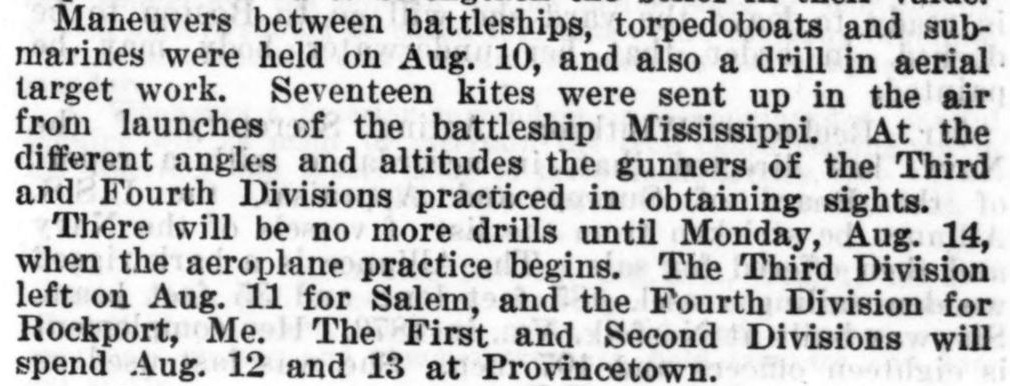
Army and Navy Journal, New York, August 12, 1911, page 1525. Internet Archive, public domain. Click the clipping to read it full size.
August 14 Near Provincetown: Kites in the Searchlights
Monday came to Provincetown, and the sky stayed empty. Beekman Winthrop, the Assistant Secretary of the Navy, arrived late that day on the destroyer Perkins. That night he watched a different pretend battle. Small, fast torpedo boats and destroyers played the “enemy” and attacked the battleships in the dark.
Daily Kennebec Journal, Augusta, Maine, August 15, 1911, page 12. Library of Congress, Chronicling America. Click the clipping to read it full size.
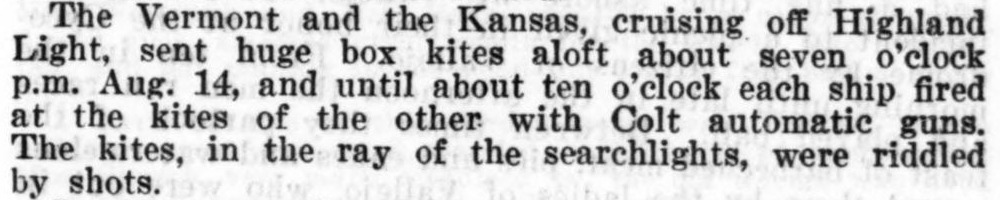
Out at sea, two battleships made their own air battle. Highland Light is a lighthouse in Truro, the town next to Provincetown. “The Vermont and the Kansas, cruising off Highland Light, sent huge box kites aloft about seven o’clock p.m. Aug. 14, and until about ten o’clock each ship fired at the kites of the other with Colt automatic guns. The kites, in the ray of the searchlights, were riddled by shots,” the Army and Navy Journal said.
Army and Navy Journal, New York, August 19, 1911, page 1553. Internet Archive, public domain. Click the clipping to read it full size.
Burgess had been right about Atwood. That same Monday, the Journal said, “Harry N. Atwood on Aug. 14 started from St. Louis, Mo., to fly to New York city by way of Chicago, in an effort to make a world’s cross-country record.”
Why No Airplane Came to Provincetown
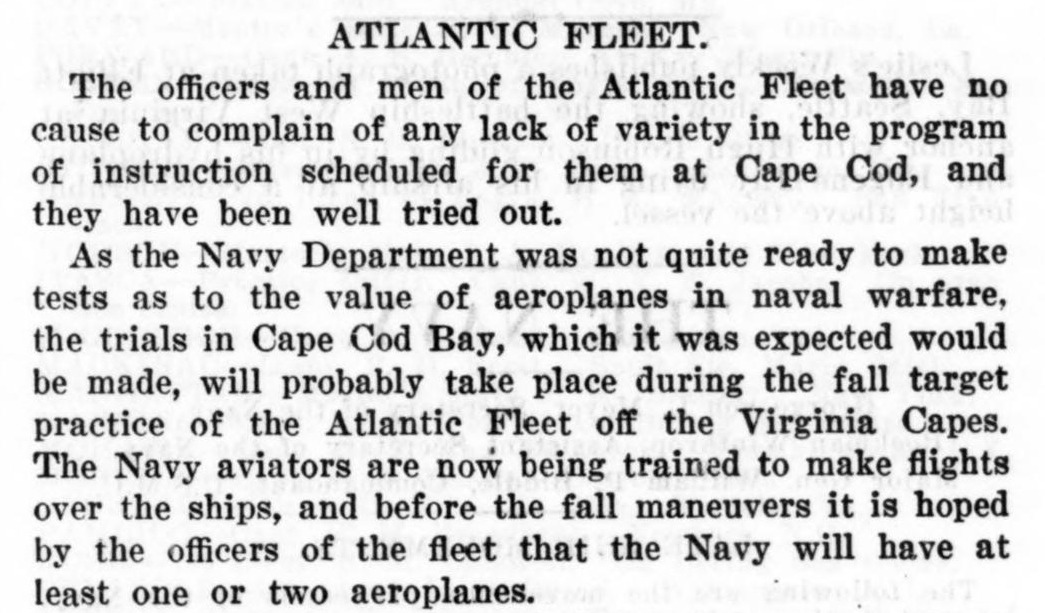
The Army and Navy Journal explained the empty sky over Provincetown a few days later. “As the Navy Department was not quite ready to make tests as to the value of aeroplanes in naval warfare,” the trials would probably wait until the fleet’s fall practice off the Virginia coast. The officers of the fleet hoped “that the Navy will have at least one or two aeroplanes” by then.
Army and Navy Journal, New York, August 19, 1911, page 1553. Internet Archive, public domain. Click the clipping to read it full size.
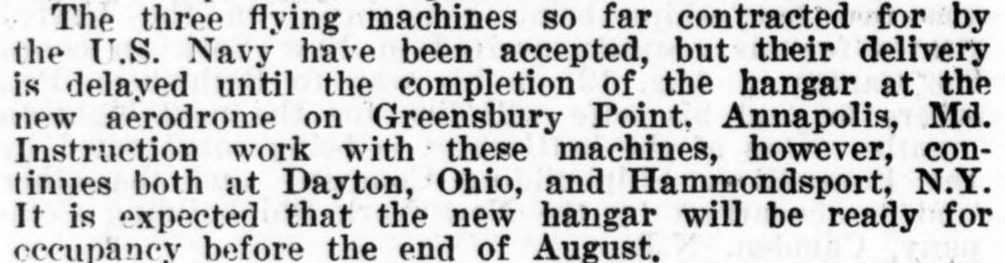
The Navy did own airplanes. They just weren’t ready to go. “The three flying machines so far contracted for by the U.S. Navy have been accepted,” the Journal said, “but their delivery is delayed until the completion of the hangar.” In plain words, the Navy’s airplanes were waiting for their garage. Until it was done, the fliers kept training with them at Dayton, Ohio, and Hammondsport, New York, far from the fleet.
Army and Navy Journal, New York, August 19, 1911, page 1546. Internet Archive, public domain. Click the clipping to read it full size.
The Navy’s Whole Air Fleet: Three “Water Beetles” at Annapolis
The Navy’s new airplane garage was going up at Greenbury Point, “just across the Severn river from the Naval Academy at Annapolis,” in Annapolis, Maryland. The Sunday Star of Washington, D.C., told all about it, and the Evening Capital of Annapolis reprinted the story. One building held “three hangars, a workship, an office and several bunk rooms, all under one roof.” The roof was “reinforced with rubberized paper.”
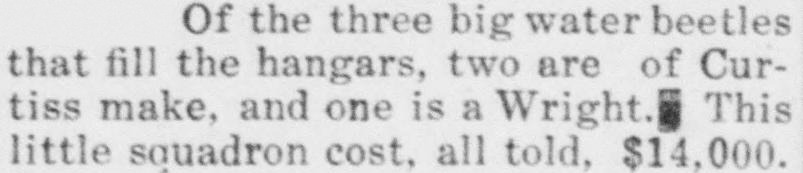
The writer said the Navy’s seaplanes moved “like monster water beetles.” They crawled from the land into the water, skimmed the waves and rose into the sky. “Of the three big water beetles that fill the hangars, two are of Curtiss make, and one is a Wright. This little squadron cost, all told, $14,000.” That was the whole air fleet of the United States Navy.
The Evening Capital, Annapolis, Maryland, August 25, 1911, page 4. Library of Congress, Chronicling America. Click the clipping to read it full size.
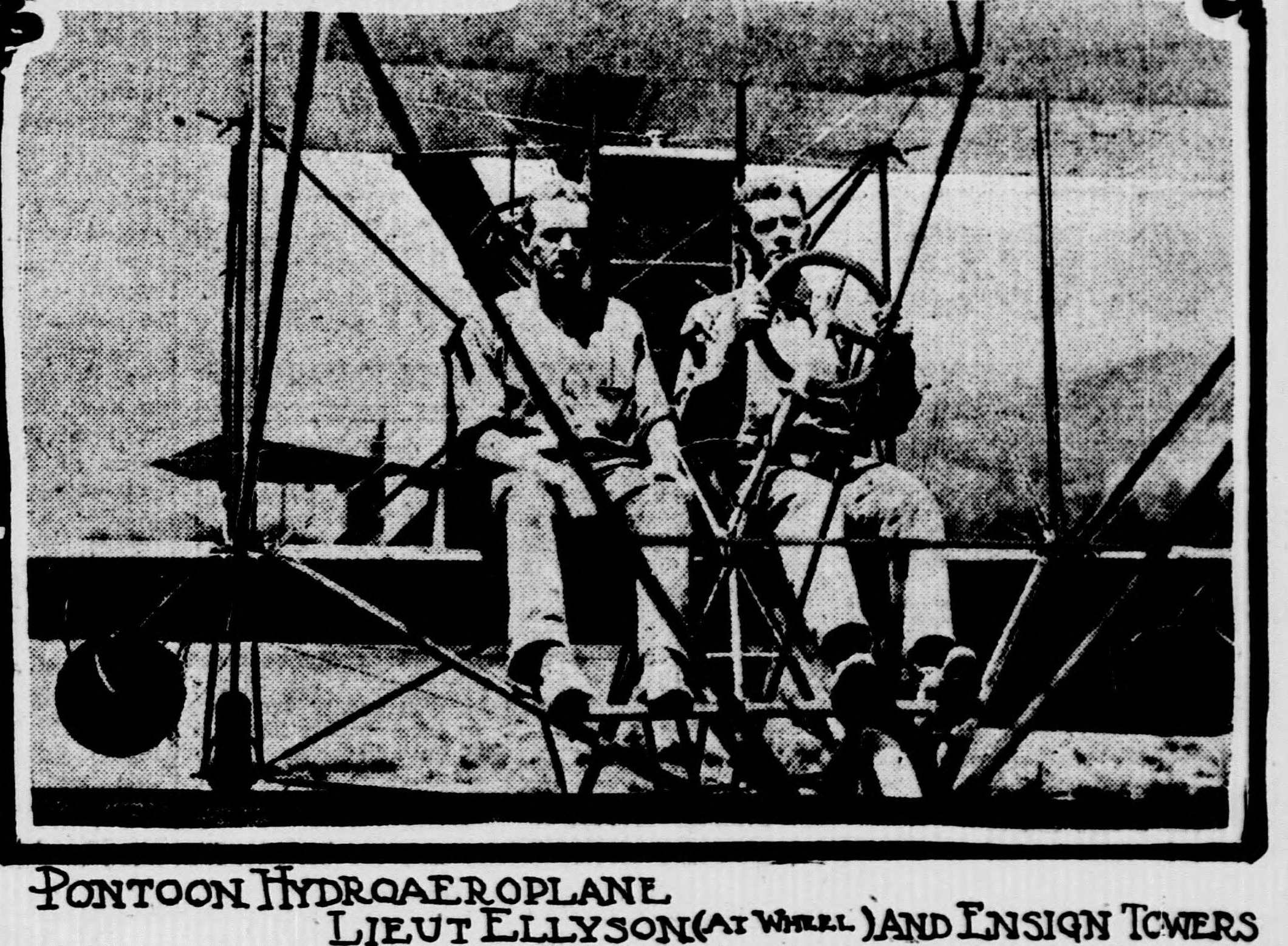
Two Navy fliers in one of the Navy’s seaplanes. The paper’s caption names Lieutenant Ellyson at the wheel and Ensign Towers beside him. The Sunday Star, Washington, D.C., August 20, 1911. Library of Congress, Chronicling America. Click the picture to see it full size.
Off Virginia, Every Battleship Got Its “Aeroplanes”
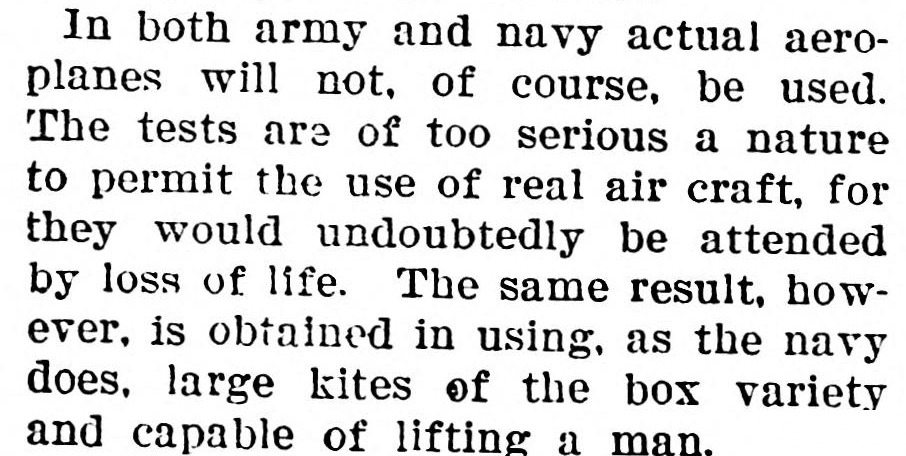
The Atlantic fleet’s fall practice came in September, off the Virginia coast. This time the gunners would fire real shells, and that was no job for a man in an airplane. “In both army and navy actual aeroplanes will not, of course, be used,” a Minnesota paper explained. The Navy used “large kites of the box variety and capable of lifting a man.”
The Princeton Union, Princeton, Minnesota, August 17, 1911, page 2. Library of Congress, Chronicling America. Click the clipping to read it full size.
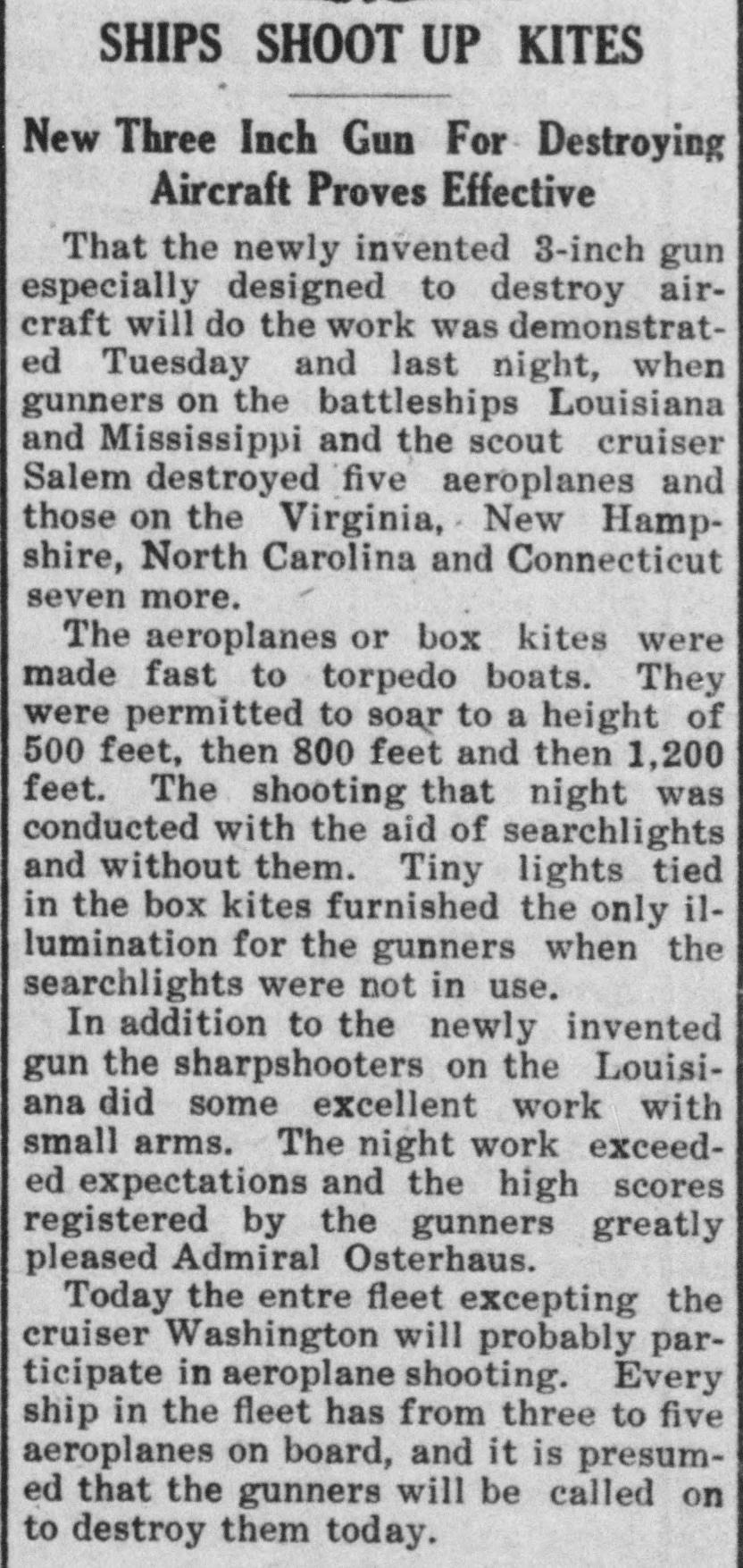
The kites were tied to torpedo boats and flown at 500 feet, then 800 feet, then 1,200 feet. That top height is about four football fields stacked end to end, straight up. A new 3-inch gun, built to shoot at aircraft, fired at them. At night, “Tiny lights tied in the box kites furnished the only illumination for the gunners when the searchlights were not in use,” the Evening Capital said.
The paper wrote about the kites as if they were real planes. Gunners on the battleships Louisiana and Mississippi and the cruiser Salem “destroyed five aeroplanes,” it said, and gunners on four more ships got seven more. Then came the best line of all: “Every ship in the fleet has from three to five aeroplanes on board.”
The Evening Capital, Annapolis, Maryland, September 8, 1911, page 4. Library of Congress, Chronicling America. Click the clipping to read it full size.
So the Navy’s first big shooting practice against airplanes was fought against kites. In August, the officers off Provincetown had hoped for “at least one or two aeroplanes.” By September, every battleship had three to five of its own. Each one was a box kite on a string.
By the Numbers
- 3: flying machines the whole U.S. Navy had accepted by August 1911, two Curtiss and one Wright
- $14,000: what all three cost together
- 17: kites sent up from the Mississippi’s boats on August 10
- 3 hours: how long the Vermont and the Kansas shot at kites on August 14, from about 7 to 10 p.m.
- 1,200 feet: the highest the kites flew in September
- 3 to 5: “aeroplanes,” really box kites, on every ship in the fleet
The Pictures in This Story
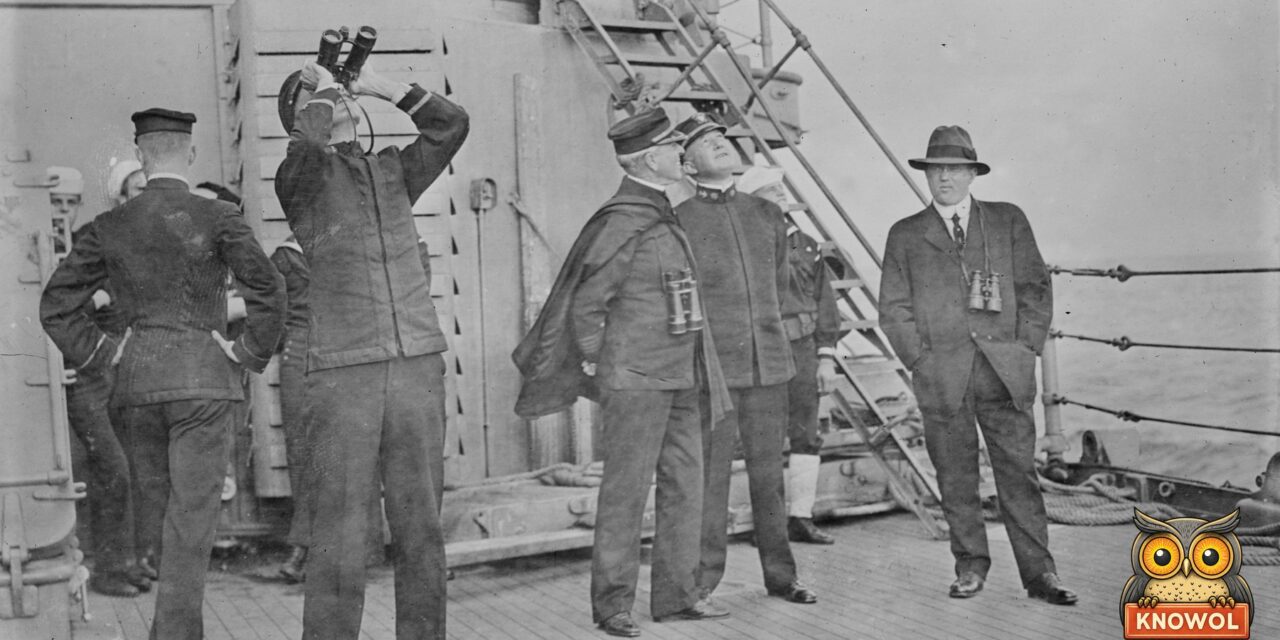
The photo at the top shows officers on the deck of the battleship Mississippi, one with binoculars pressed to his eyes, most of them looking up at the sky. The Bain News Service called it “Watching Kite shooting from the ‘Mississippi.'” Its card gives no date. The Bain pictures filed right beside it are dated March and April 1911. It is not a picture of the day at Provincetown, but it shows the same kind of kite shooting on one of the same ships.
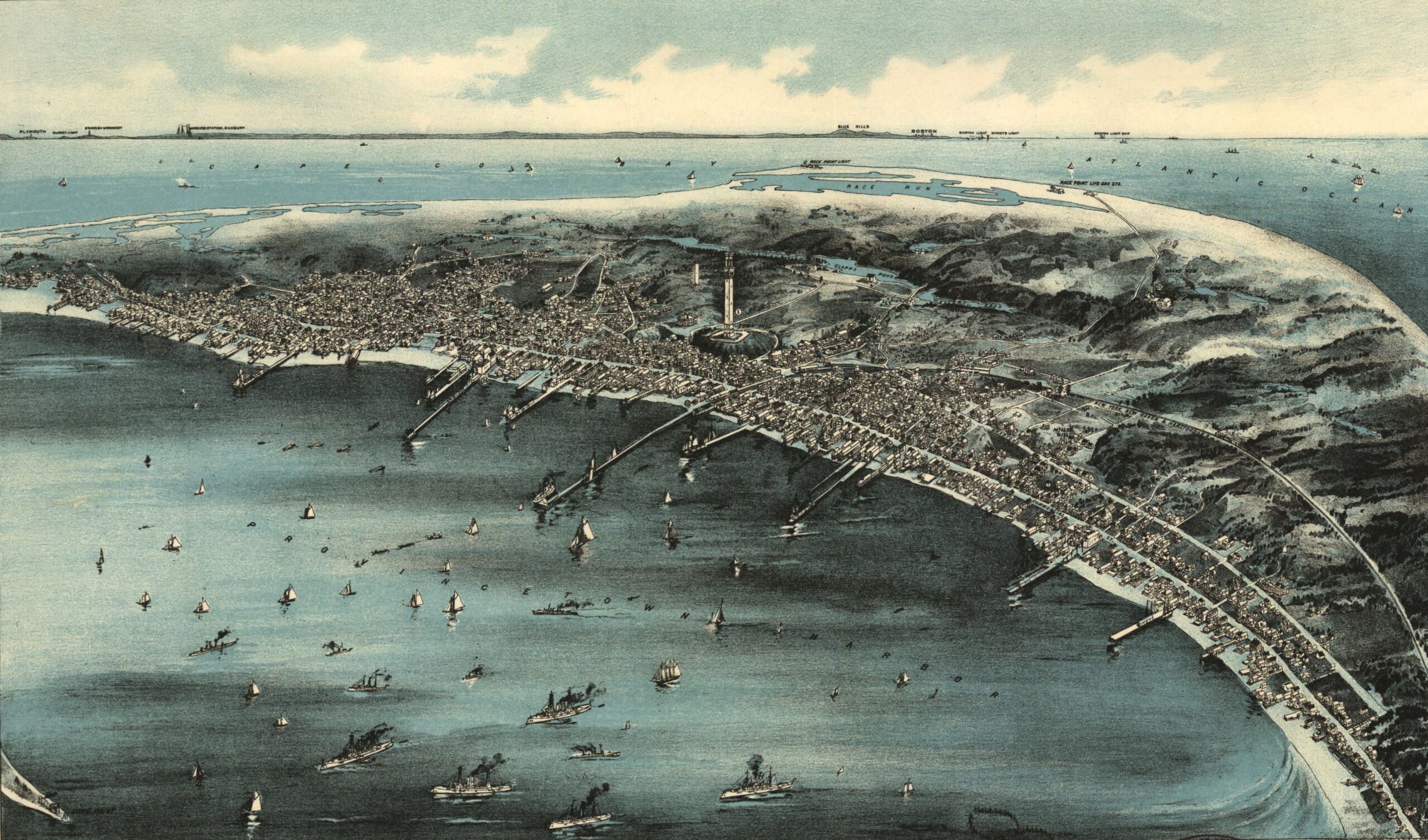
Provincetown, Massachusetts, in a bird’s-eye view printed in 1910 by the Walker Lithograph & Publishing Company. The artist drew gray steamships with smokestacks out in the harbor, where the Atlantic fleet anchored in the summer of 1911. Library of Congress, Geography and Map Division. Click the picture to see it full size.
Sources
- The Wheeling Intelligencer, Wheeling, West Virginia, August 7, 1911, page 1, “Navy Battle With Airship.” Library of Congress, Chronicling America
- The Bridgeport Evening Farmer, Bridgeport, Connecticut, July 28, 1911, page 3, “May Aim at an Airship.” Library of Congress, Chronicling America
- Army and Navy Journal, New York, August 12, 1911, page 1525, “Atlantic Fleet.” Internet Archive
- Daily Kennebec Journal, Augusta, Maine, August 15, 1911, page 12, “The Atlantic Fleet.” Library of Congress, Chronicling America
- The Princeton Union, Princeton, Minnesota, August 17, 1911, page 2, “Kites Will Be Shot at From the Decks of Moving Battleships.” Library of Congress, Chronicling America
- Army and Navy Journal, New York, August 19, 1911, page 1553, “Atlantic Fleet,” and page 1546, “Aviation Notes.” Internet Archive, page 1553 and Internet Archive, page 1546
- The Sunday Star, Washington, D.C., August 20, 1911, Part 4, page 2, “To Ply the Air Over Land and Sea,” by John Elfreth Watkins. Library of Congress, Chronicling America
- The Evening Capital, Annapolis, Maryland, August 25, 1911, page 4, “To Ply the Air,” reprinted from the Washington Star. Library of Congress, Chronicling America
- The Evening Capital, Annapolis, Maryland, September 8, 1911, page 4, “Ships Shoot Up Kites.” Library of Congress, Chronicling America
- Evening Star, Washington, D.C., September 8, 1911, page 1, “Shoot at Aeroplanes.” Library of Congress, Chronicling America
- Cover photo: “Watching Kite shooting from the ‘Mississippi,'” Bain News Service, no date on the card. Library of Congress, Prints and Photographs Division. No known restrictions on publication.
- Map: “Provincetown, Mass.,” Walker Lith. & Pub. Co., Boston, 1910. Library of Congress, Geography and Map Division
- All newspapers and the Army and Navy Journal were published in 1911 and are in the public domain.