On Sunday morning, July 19, 1903, readers of The Saint Paul Globe in Minnesota opened their paper to a giant front-page headline: “EMPEROR OF KOREA WEDS EMILY BROWN.” The smaller line under it said the news had come to Appleton, Wisconsin, “of the Crowning of a Wisconsin Girl.” It was “the story of Emily Brown, born in Appleton and now the empress of Korea.”
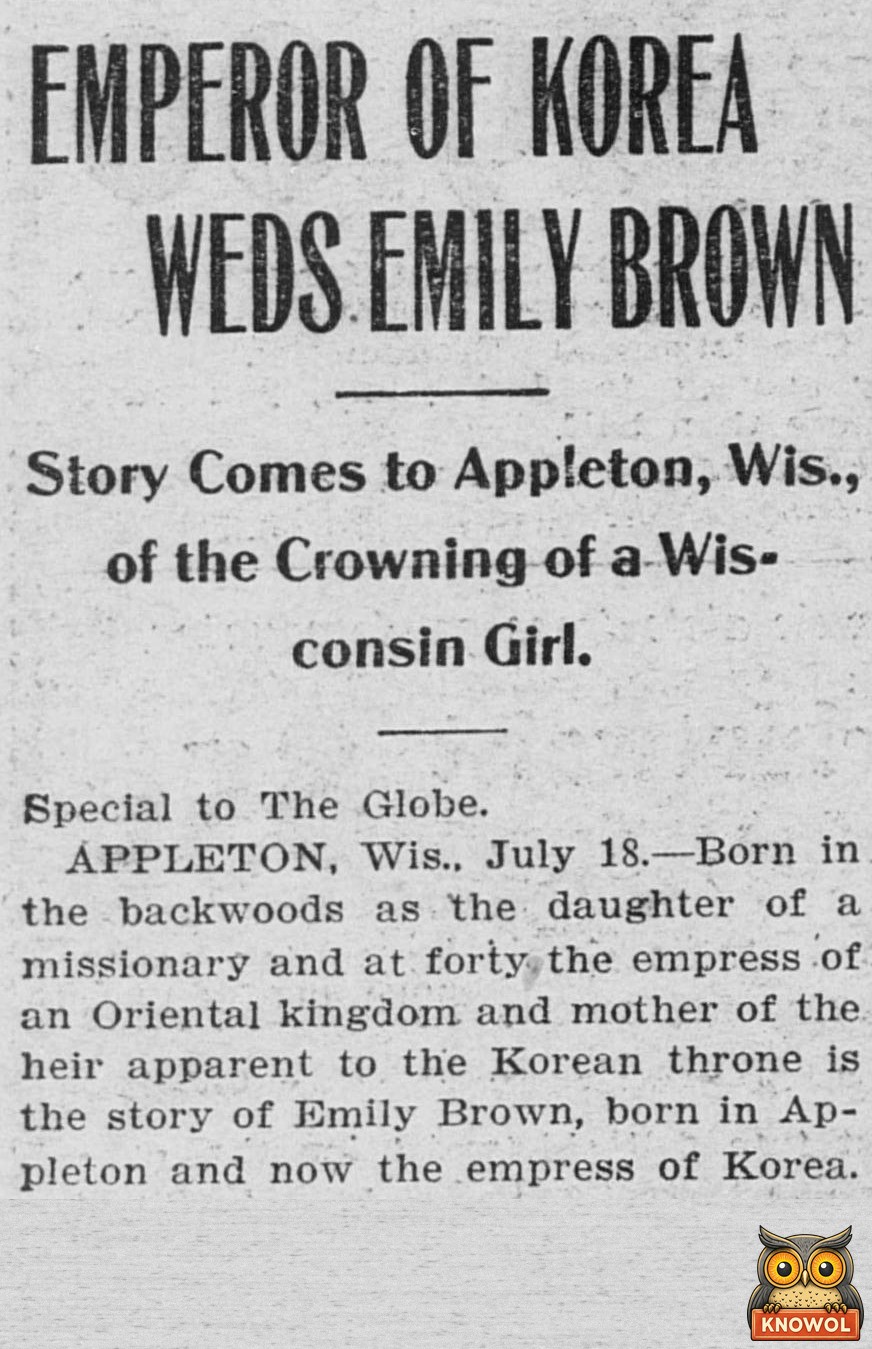
“Emperor of Korea Weds Emily Brown.” The Saint Paul Globe, St. Paul, Minnesota, July 19, 1903, page 1. Library of Congress, Chronicling America. Click the clipping to read it full size.
The story went like this. Emily Brown “was born in Appleton about 1860.” Her father, the Rev. Herbert Brown, was a traveling missionary “who lived here only a few months.” When Emily was about fifteen, he took the family to Seoul, Korea’s capital. Emily “sang in the mission church,” learned the language, and caught the emperor’s eye. Now, the paper said, “she is the Empress Om.”
It was a wonderful story. Papers from Wisconsin to Hawaii printed it. Months later, so many American women wrote to Seoul asking for jobs in her palace that the American official there had to print one answer for all of them. There was just one problem. There was no Emily Brown.
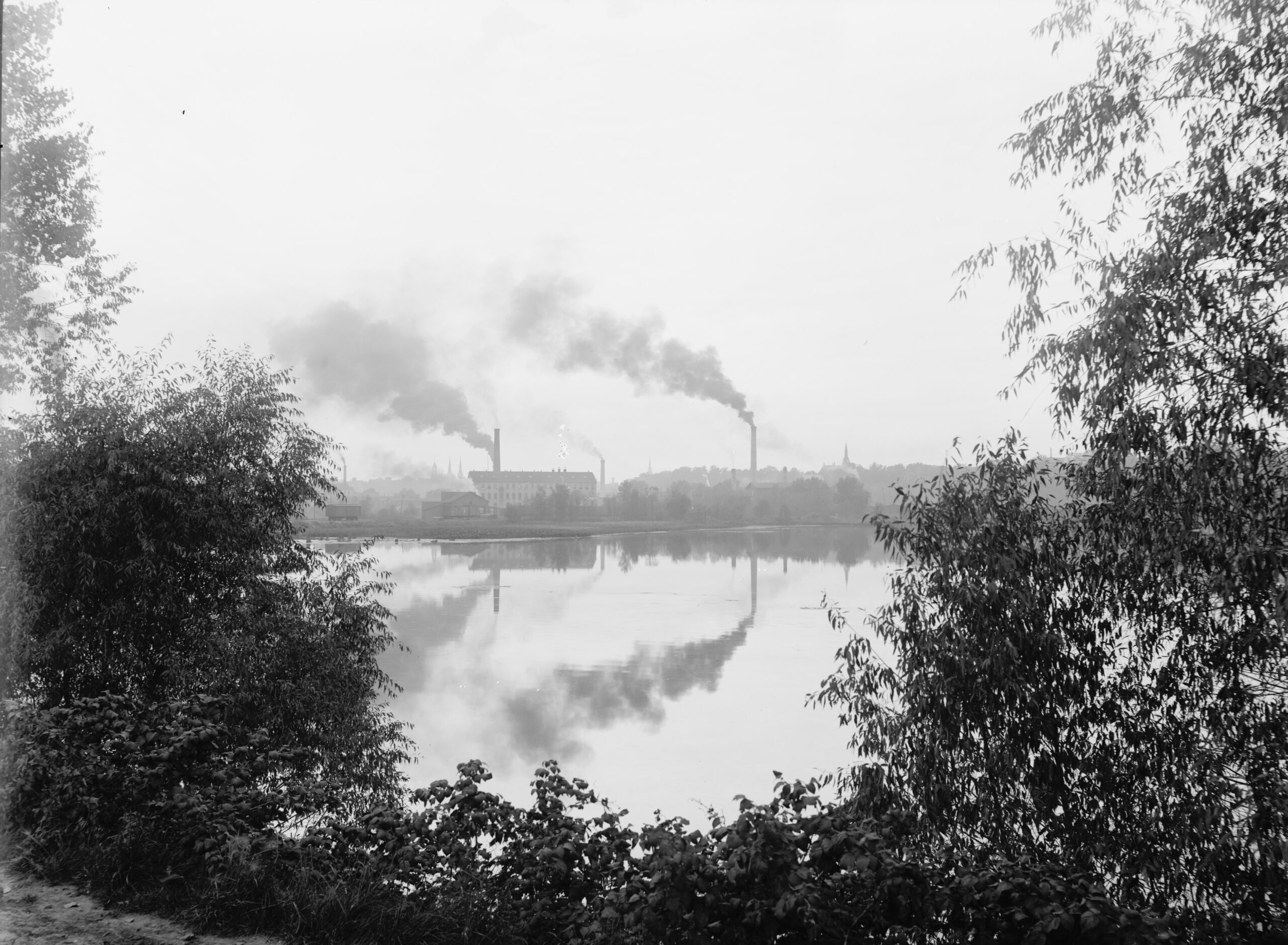
Smoke from the mills of Appleton, Wisconsin, seen across the river, by the Detroit Photographic Co. (listed in its 1899 catalog). The Emily Brown story said she was born in this Wisconsin mill town. Library of Congress. Click the picture to see it full size.
How the Emily Brown Story Started
The tale was already months old when it reached Appleton, Wisconsin. On January 25, 1903, the Sunday Journal in Indianapolis ran it under a big headline, “AN AMERICAN EMPRESS.” The story was a letter dated “TOKIO, Japan, Jan. 1.” It began, “All hail, Emily, the first Empress of Korea of the blood American!” It said she would be crowned on January 21, when Korea’s emperor marked forty years on the throne.
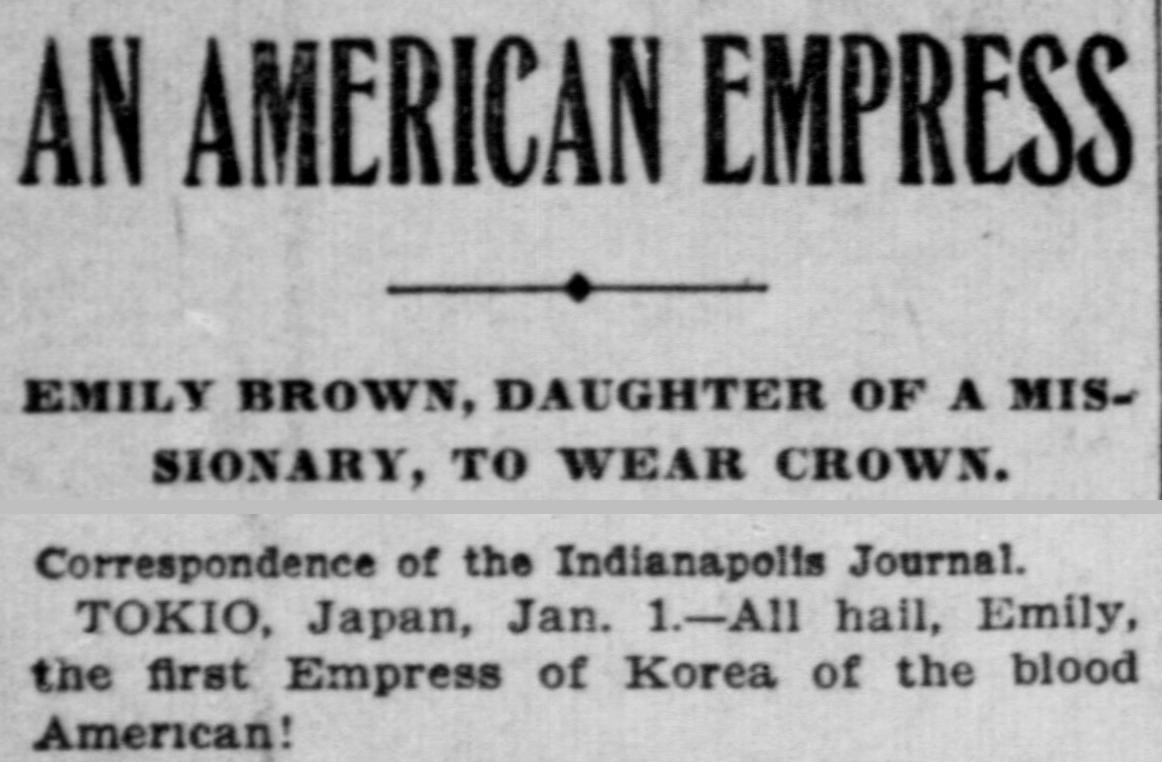
“An American Empress.” The Indianapolis Journal (Sunday Journal), Indianapolis, Indiana, January 25, 1903, part two, page 1. Library of Congress, Chronicling America. Click the clipping to read it full size.
Each time the story was printed, it picked up new details. By July it came with an Appleton dateline and a father with a name, the Rev. Herbert Brown. In New Haven, Connecticut, the Morning Journal and Courier printed it on July 25, 1903, under the headline “EMPRESS OF KOREA BORN IN WISCONSIN.”
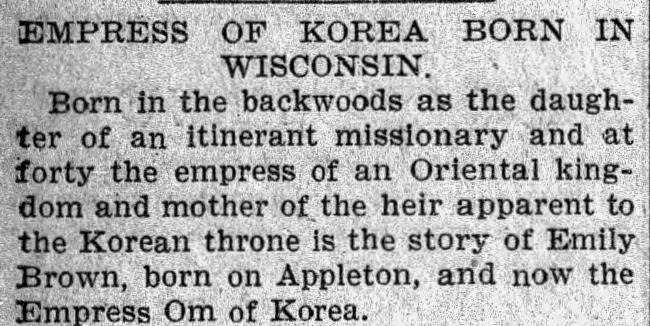
The Morning Journal and Courier, New Haven, Connecticut, July 25, 1903, page 12. Library of Congress, Chronicling America. Click the clipping to read it full size.
Church Women in Keokuk, Iowa, Checked by Mail
In Keokuk, Iowa, a group of church women decided to find out for themselves. Mrs. H. Scott Howell was secretary of the Woman’s Foreign Missionary society of the First Westminster Presbyterian church. The story said Emily’s father was a Presbyterian missionary, so her group knew just whom to ask.
First they asked Mrs. D. B. Wells, field secretary of the church’s mission board for the Northwest. “Mrs. Wells knows personally,” Mrs. Howell said, “every Presbyterian missionary in Korea, and she does not know anyone named Brown.” Next, Mrs. Wells wrote to the Rev. S. F. Moore, a missionary who lived in Seoul and was home in America on a long break. He wrote back that “there was not a modicum of truth in the story.” A modicum is a tiny bit.
Then came the line that settled it. “The girl who has been made empress is a native Korean, of Korean parentage.” An Iowa paper ran the news under the headline “SAYS STORY IS A FAKE.”
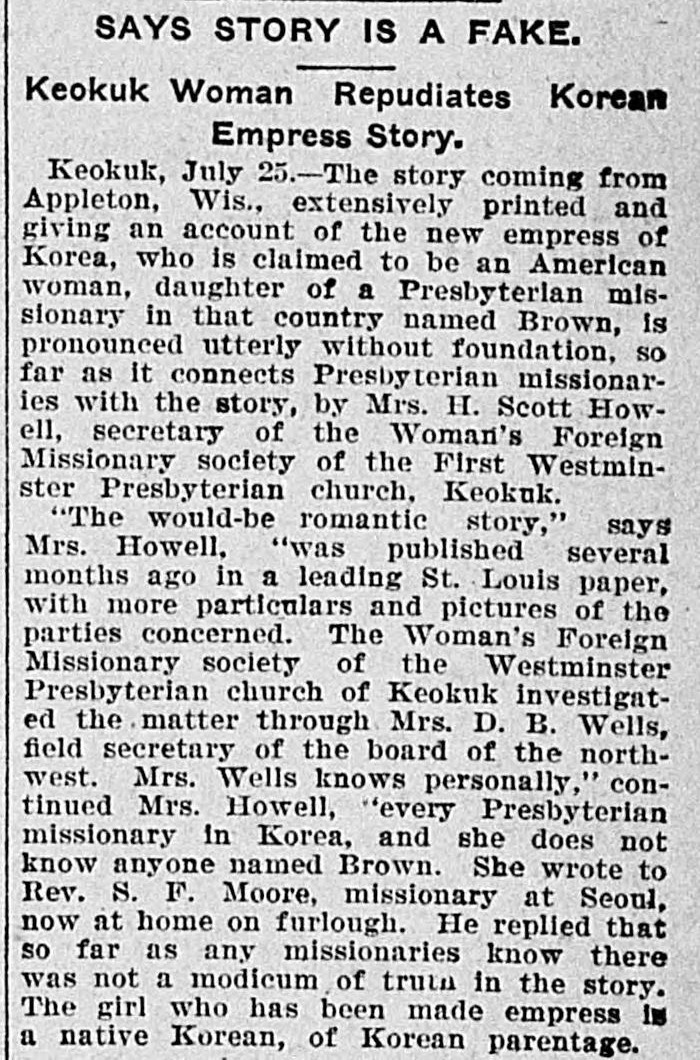
“Says Story Is a Fake,” datelined Keokuk, July 25. Ottumwa Semi-Weekly Courier, Ottumwa, Iowa, July 28, 1903, page 6. Library of Congress, Chronicling America. Click the clipping to read it full size.
The Keokuk women solved it by asking the people who would know. But a true answer in one Iowa paper could not catch a fun story already running in paper after paper.
Letters Pile Up in Seoul, Korea
In early 1904, Russia and Japan went to war, and Korea was suddenly in every American paper. The man who got the mail was Horace N. Allen, the American Minister at Seoul. A minister was the top United States diplomat in a country, the job an ambassador does today. On March 13, 1904, the New-York Tribune said Allen was “Flooded” with questions from home.
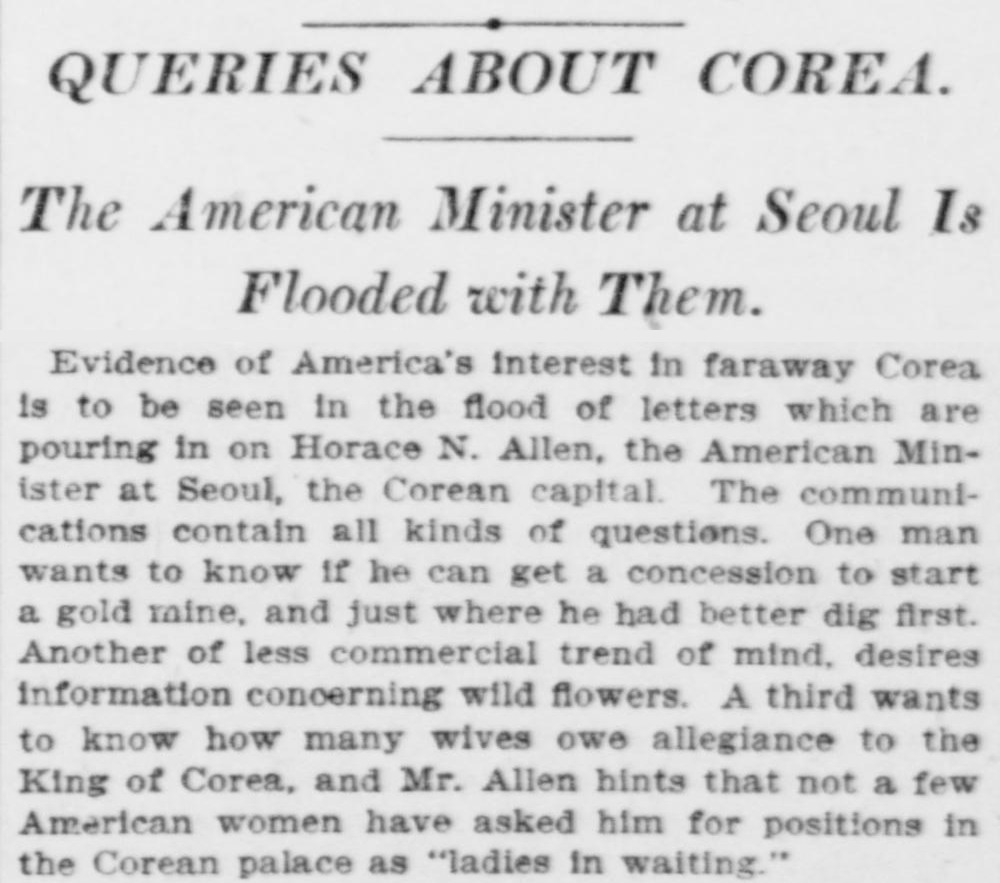
“Queries About Corea.” New-York Tribune, New York, March 13, 1904, page 17. Library of Congress, Chronicling America. (Corea is an old spelling of Korea.) Click the clipping to read it full size.
The Tribune described “the flood of letters which are pouring in on Horace N. Allen.” Some came from women. “Not a few American women have asked him for positions in the Corean palace as ‘ladies in waiting,'” the paper said. A lady-in-waiting is a woman who helps a queen and keeps her company. A news report from Washington tied those letters straight to the story of the American empress.
Instead of writing to each person by hand, Allen used a circular. That is one printed letter, copied many times, so every writer got the same answer in the mail. His answer said there was “no demand in the Corean Palace for foreign women as nurses, maids, governesses, teachers, physicians and companions.” Then he said it plainly. “The Emperor of Corea did not marry a foreign woman. Nothing ever occurred in Corea to afford the slightest foundation for the remarkable story of ‘Emily Brown.'”
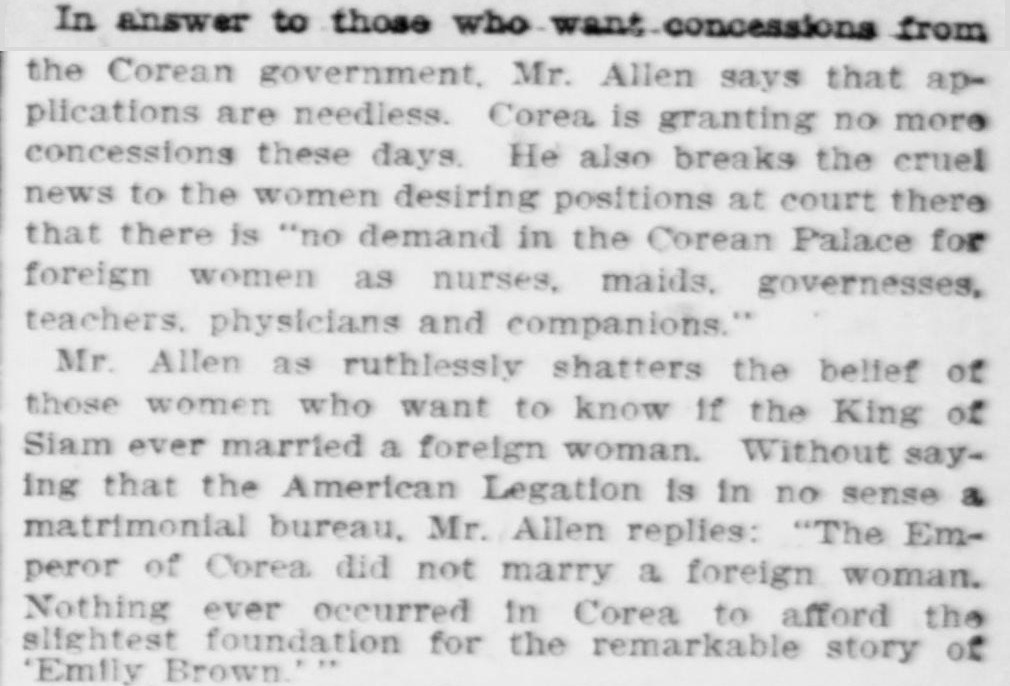
Allen’s printed answer, in the New-York Tribune, New York, March 13, 1904, page 17. Library of Congress, Chronicling America. Click the clipping to read it full size.
The same New Haven paper that had printed “BORN IN WISCONSIN” now ran the denial on its front page. It said Allen “has been obliged to print identical replies to a number of women correspondents denying the truth of the story.”
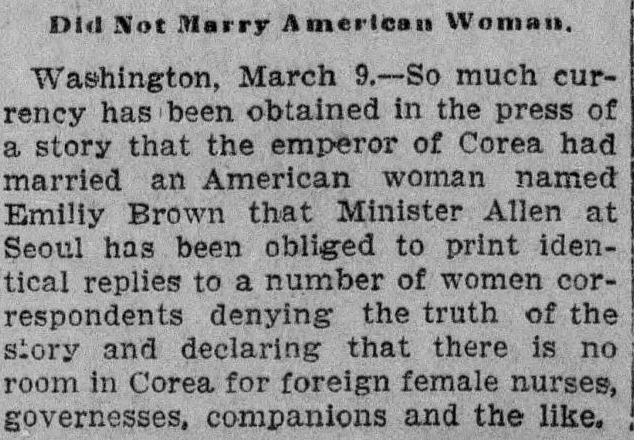
“Did Not Marry American Woman.” The Morning Journal and Courier, New Haven, Connecticut, March 10, 1904, page 1. Library of Congress, Chronicling America. Click the clipping to read it full size.
What Else Americans Asked the Minister in Seoul
The Emily Brown letters were only part of Horace Allen’s mail in Seoul. “Among others who are deluging Mr. Allen with inquiries is the small boy,” the Tribune said. Boys who collected stamps wrote to ask for Korean ones. Used stamps with a postmark are called cancelled stamps, and collectors cut them off old envelopes. Allen printed an answer for the boys, too.
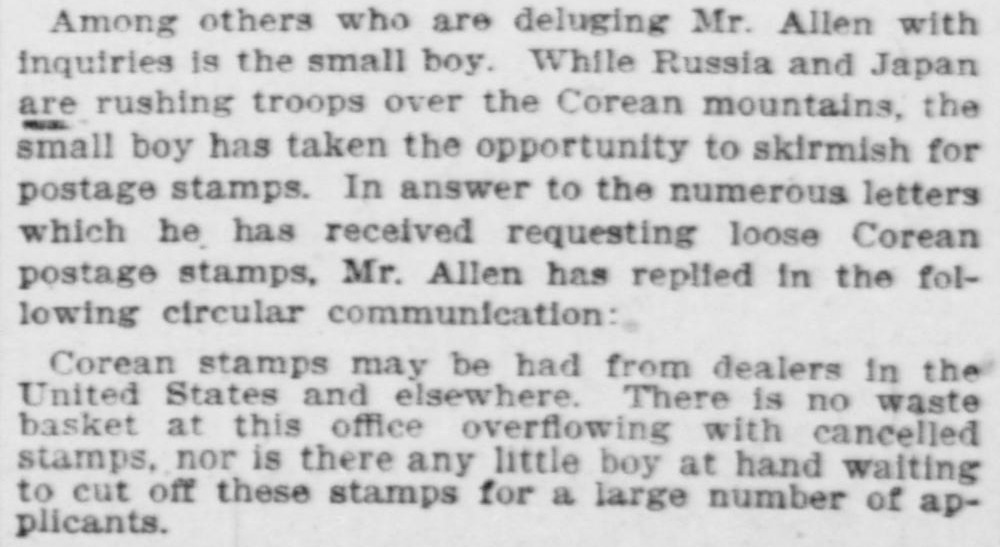
Allen’s printed answer to the stamp collectors. New-York Tribune, New York, March 13, 1904, page 17. Library of Congress, Chronicling America. Click the clipping to read it full size.
“There is no waste basket at this office overflowing with cancelled stamps,” he wrote, “nor is there any little boy at hand waiting to cut off these stamps for a large number of applicants.” In other words: buy them from a stamp dealer at home.
The grown-ups asked for bigger things. “One man wants to know if he can get a concession to start a gold mine, and just where he had better dig first.” A concession was a government’s permission to run a mine or a business. Another writer wanted to know about Korea’s wild flowers. Many wanted ginseng, a root people used as medicine. “Not a few ask him to send them roots and seeds,” the paper said. Allen warned that American ginseng “will be of little value,” because the only big market for it was in China, and it already had too much.
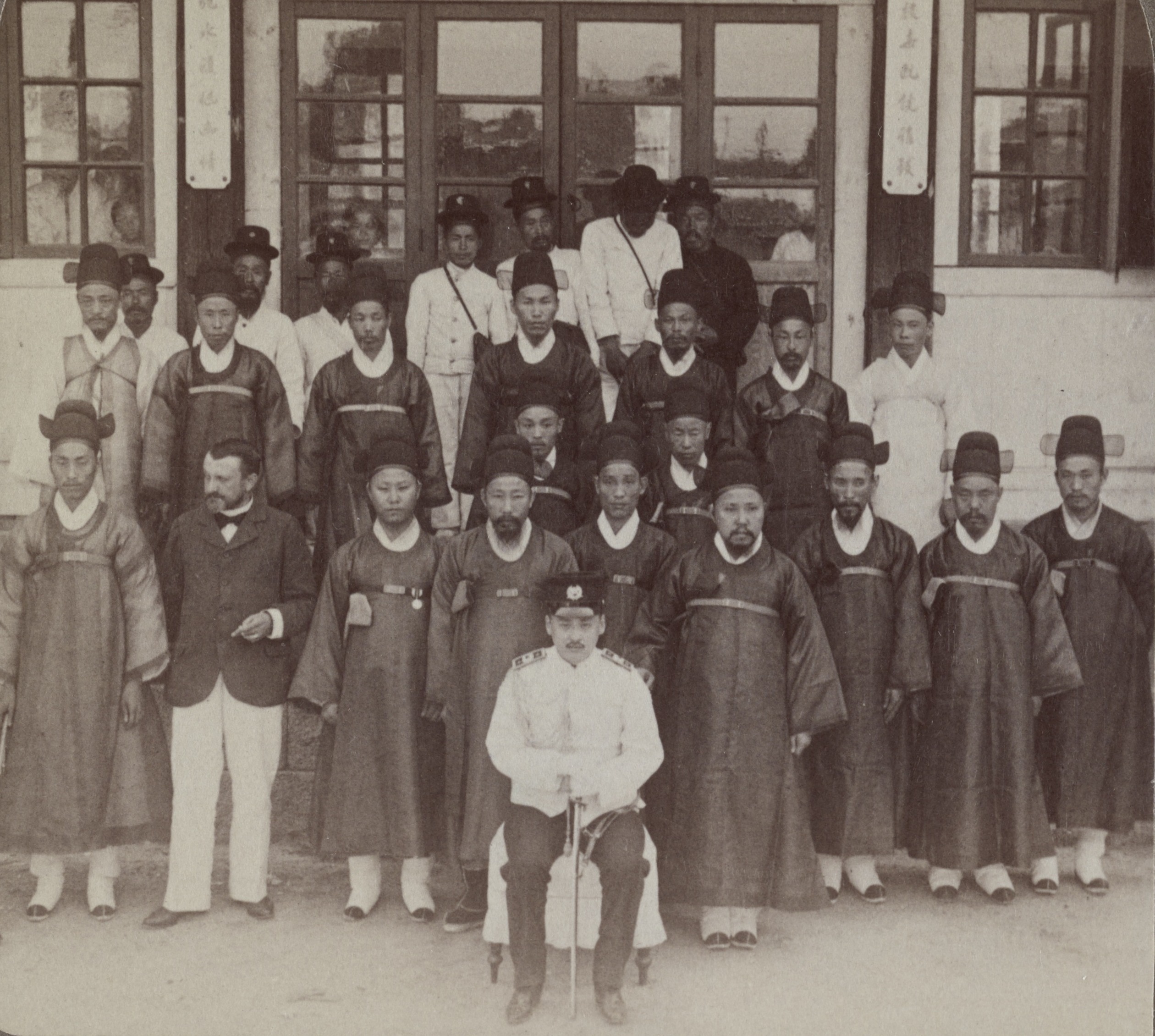
“Officials of the Imperial Department of Communications, outside their office, Seoul, Korea.” Underwood & Underwood stereograph, 1904. Library of Congress. Click the picture to see it full size.
The Real Woman in the Korean Palace
The name of the real woman in the palace was right there in the Emily Brown story the whole time. The papers said Emily had become “Empress Om.” Om, also spelled Eom, was a real Korean family name, and Lady Eom was a real Korean woman.
Lady Eom was born in Seoul and went to work in the royal court at an early age, says a history page from Seoul’s Dongdaemun district. She became a consort, a royal wife, of Korea’s ruler, Gojong. In 1897 she gave birth to his son, Prince Yi Eun. The Keokuk church women had it right: she was Korean, born to Korean parents.
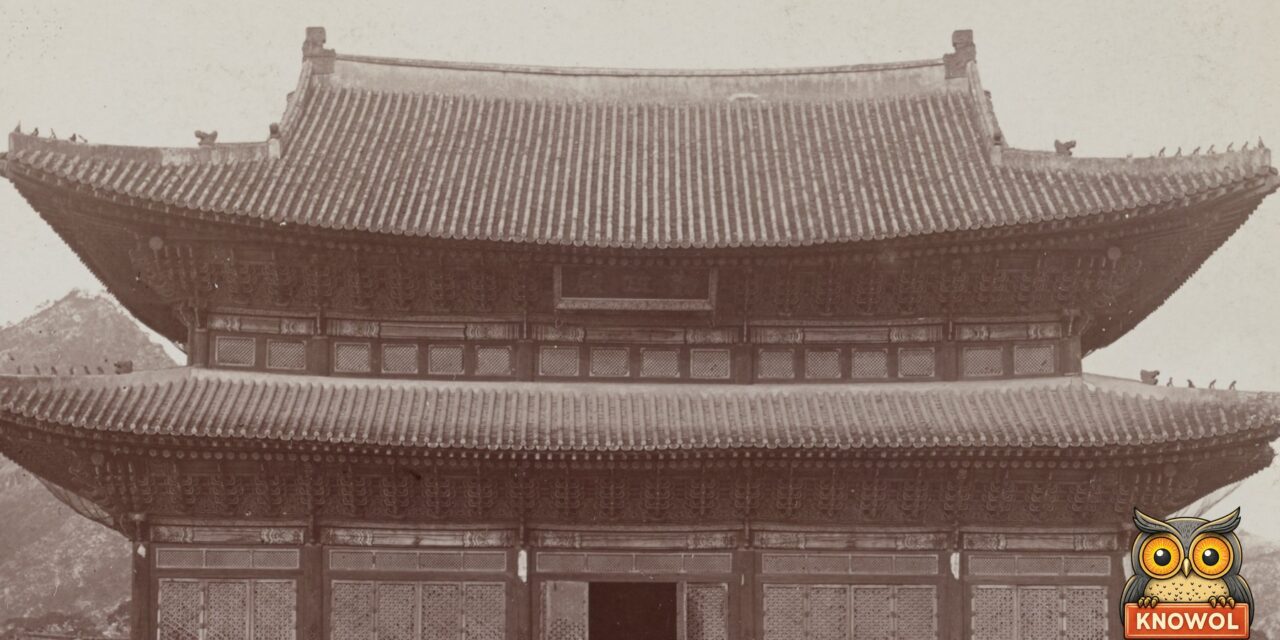
The cover photo of this story is a 1904 Keystone View Company stereograph. Its card calls the hall the entrance to the queen’s apartments at the Imperial Palace in Seoul.
Lady Eom also believed in schools. She started one in 1905 and later Jinmyeong Girls’ School. In May 1906 her money helped open Myungshin Girls’ School in Seoul. It grew into Sookmyung Women’s University, which still names her as its founder, using her royal title, Sunheon.
The Emily Brown Story That Would Not Quit
Lady Eom died on July 20, 1911. Even then, the old tale came back. On August 4, 1911, the Northern Wisconsin Advertiser in Wabeno printed the headline “RULERS CONSORT AN AMERICAN.” Under it: “Lady Om, Deceased, Was Emily Brown of Appleton, Wis.” This time the story said her father was “a Methodist minister,” not a Presbyterian.
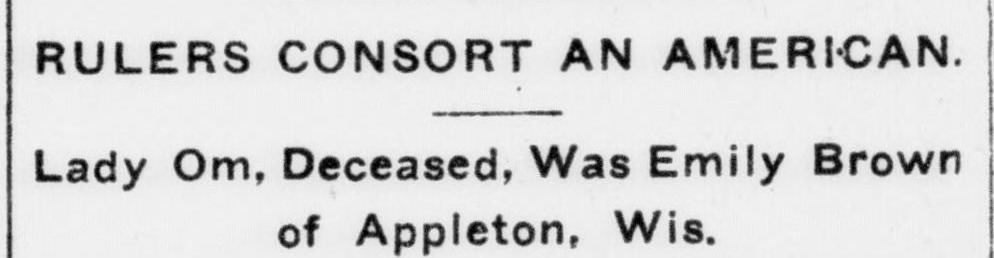
Northern Wisconsin Advertiser, Wabeno, Wisconsin, August 4, 1911, page 2. Library of Congress, Chronicling America. Click the clipping to read it full size.
Eight years, two church denials, a stack of printed letters from Seoul, and the story still changed its details and kept going. The woman the papers called Korea’s empress was not a choir girl from Appleton, Wisconsin. She was Lady Eom of Korea, and the schoolgirls of Seoul still remember her name.
Sources
- The Saint Paul Globe, St. Paul, Minnesota, July 19, 1903, page 1: Library of Congress, Chronicling America
- The Indianapolis Journal (Sunday Journal), January 25, 1903, page 13 of the scan: Library of Congress, Chronicling America
- The Morning Journal and Courier, New Haven, Connecticut, July 25, 1903, page 12: Library of Congress, Chronicling America
- Ottumwa Semi-Weekly Courier, Ottumwa, Iowa, July 28, 1903, page 6 (Keokuk, July 25): Library of Congress, Chronicling America
- The Morning Journal and Courier, New Haven, Connecticut, March 10, 1904, page 1: Library of Congress, Chronicling America
- New-York Tribune, New York, March 13, 1904, page 17, “Queries About Corea”: Library of Congress, Chronicling America
- Northern Wisconsin Advertiser, Wabeno, Wisconsin, August 4, 1911, page 2: Library of Congress, Chronicling America
- Robert Neff, “Funeral of Lady Eom: consort’s send-off fit for queen,” The Korea Times, August 1, 2021: koreatimes.co.kr
- “Sookmyung, Great Power to Change the World,” The Sookmyung Times, Sookmyung Women’s University: smtimes.sookmyung.ac.kr, and the university’s history page: Sookmyung Women’s University
- “Yeonghwiwon,” Dongdaemun-gu, Seoul (district government history page on Queen Sunheon Eom): ddm.go.kr
- Cover: Keystone View Company, “Entrance to the Queen’s Apartments, Imperial Palace, Seoul, Korea,” stereograph, 1904: Library of Congress. Published 1904, public domain.
- Underwood & Underwood, “Officials of the Imperial Department of Communications, outside their office, Seoul, Korea,” stereograph, 1904: Library of Congress. Published 1904, public domain.
- Detroit Publishing Co., “Appleton, Wis., mills from across river”: Library of Congress. No known restrictions on publication.