On a Saturday night in November 1911, sixteen racing cars waited in a noisy line outside the Hollenbeck hotel in Los Angeles, California. At 10:45 the first one shot off into the dark, and the rest followed, one a minute. The very last car in line was a Buick with the number 16. It came from Bisbee, Arizona, and the man at its wheel was a Bisbee car dealer named Billy Ferguson. Between him and the finish line in Phoenix, Arizona lay mountains, sand and about 500 miles of desert road.
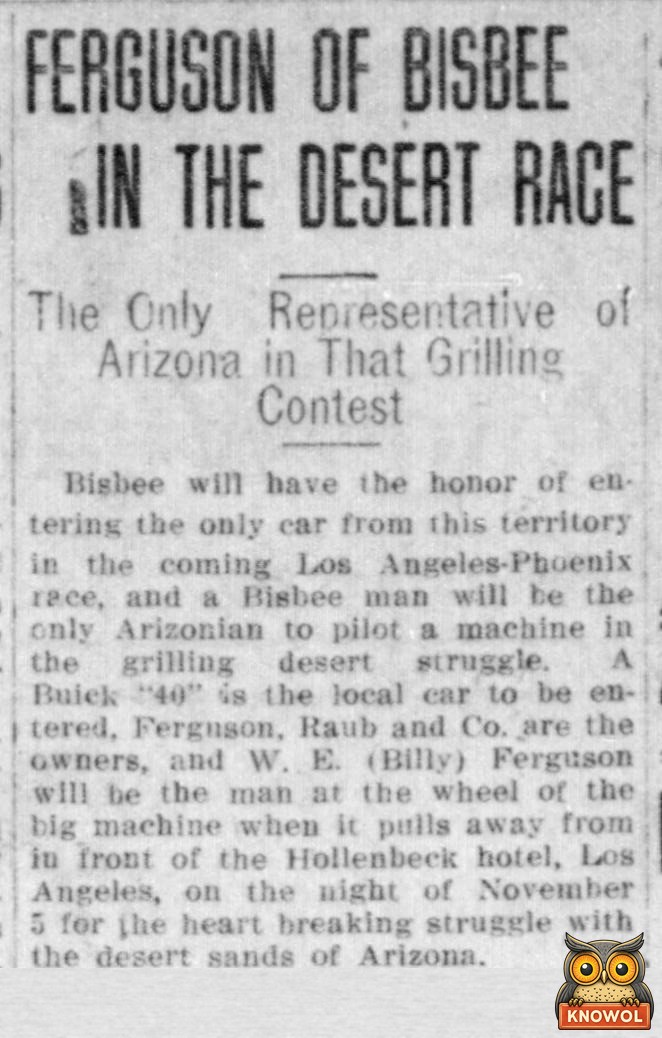
“Ferguson of Bisbee in the Desert Race.” Bisbee Daily Review, Bisbee, Arizona, October 10, 1911, page 6. Library of Congress, Chronicling America. Click the clipping to read it full size.
Big News in Bisbee, Arizona
Bisbee was a copper mining town in the hills of southern Arizona, and Arizona was not even a state yet. On October 10, 1911, the Bisbee Daily Review was proud to say, “Bisbee will have the honor of entering the only car from this territory in the coming Los Angeles-Phoenix race, and a Bisbee man will be the only Arizonian to pilot a machine in the grilling desert struggle.”
The car was a big Buick “40” owned by Ferguson, Raub and Co., the Buick dealers in Bisbee. W. E. “Billy” Ferguson would drive it.
The paper turned out to be wrong about one thing. By race day, two more Arizona men had entered cars. Then the drivers drew numbers for their starting places. The Yuma Sentinel said, “The luck of the other two Arizona drivers was not so good,” and Billy Ferguson’s Buick “will start last.”
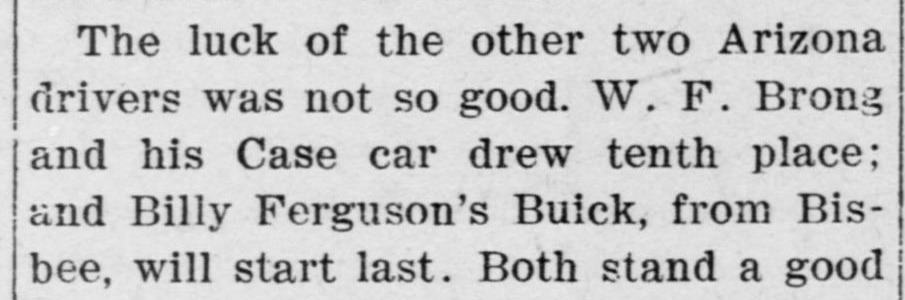
The draw for starting places. Arizona Sentinel, Yuma, Arizona, November 2, 1911, page 4. Library of Congress, Chronicling America. Click the clipping to read it full size.
Billy Ferguson Had Done This Before
Billy Ferguson of Bisbee was no beginner. Three years earlier, he had helped drive a car called “Black Bess” in the very first race from Los Angeles to Phoenix. Black Bess was a White Steamer, a car that ran on steam, like a little railroad engine on rubber tires. The Bisbee paper said that Ferguson and Capt. Harmon Ryus brought it into Phoenix “far in advance of any of the other contestants.”
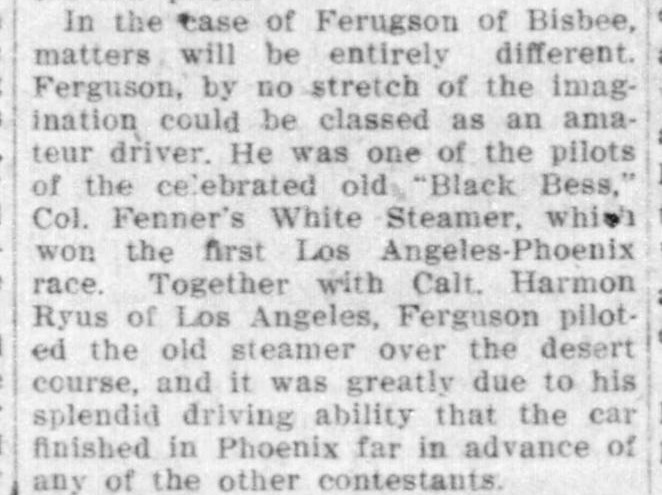
Bisbee Daily Review, October 10, 1911, page 6. Library of Congress, Chronicling America. Click the clipping to read it full size.
In October, Ferguson and his partner, J. E. Raub, drove the Buick from Bisbee to Phoenix. They left at 6 o’clock one evening and pulled in about 4 the next afternoon. The Arizona Republican, the Phoenix paper, liked what it saw. “Mr. Ferguson is no tenderfoot in the racing game,” it said. A tenderfoot was a beginner who didn’t know the ways of the West. Ferguson himself could “see no logical reason why the Buick should not be a winner if the driver knows how to go and where to go.”
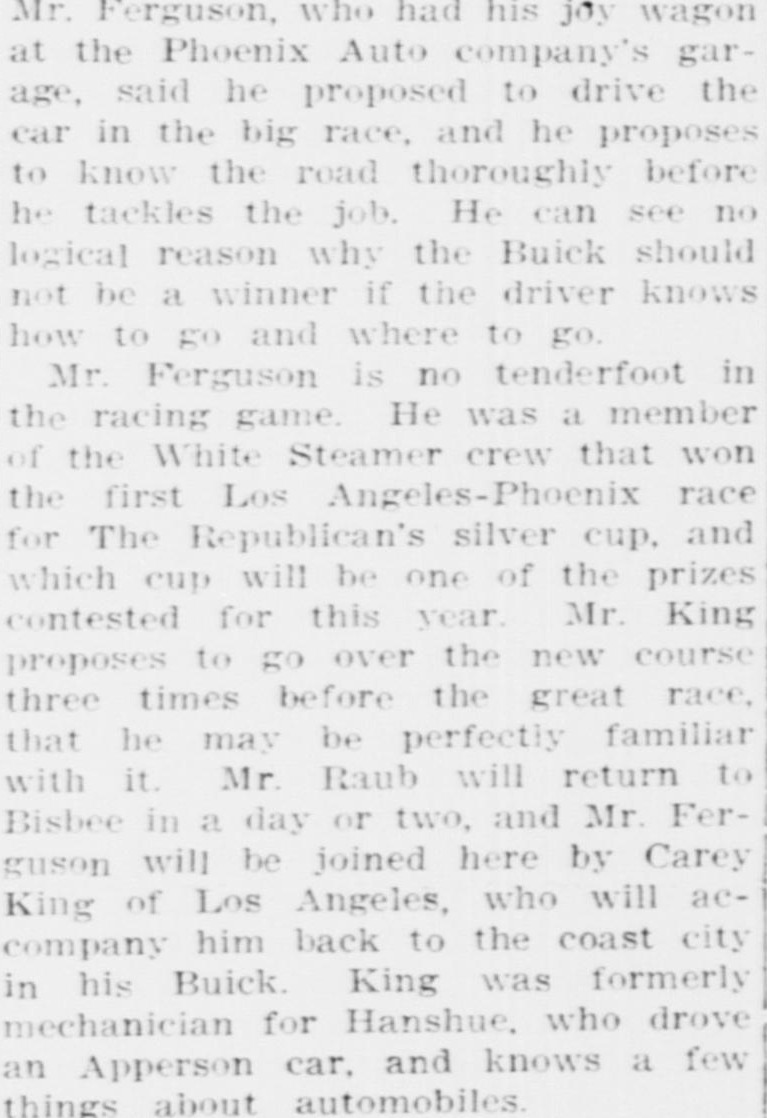
Arizona Republican, Phoenix, Arizona, October 14, 1911, page 7. Library of Congress, Chronicling America. Click the clipping to read it full size.
His riding partner in the race would be a mechanic from Los Angeles named Carey King. Every race car carried a mechanic to fix things along the road. The racing Buick had no body at all, just an engine, two seats, gas tanks and spare tires on a long frame.
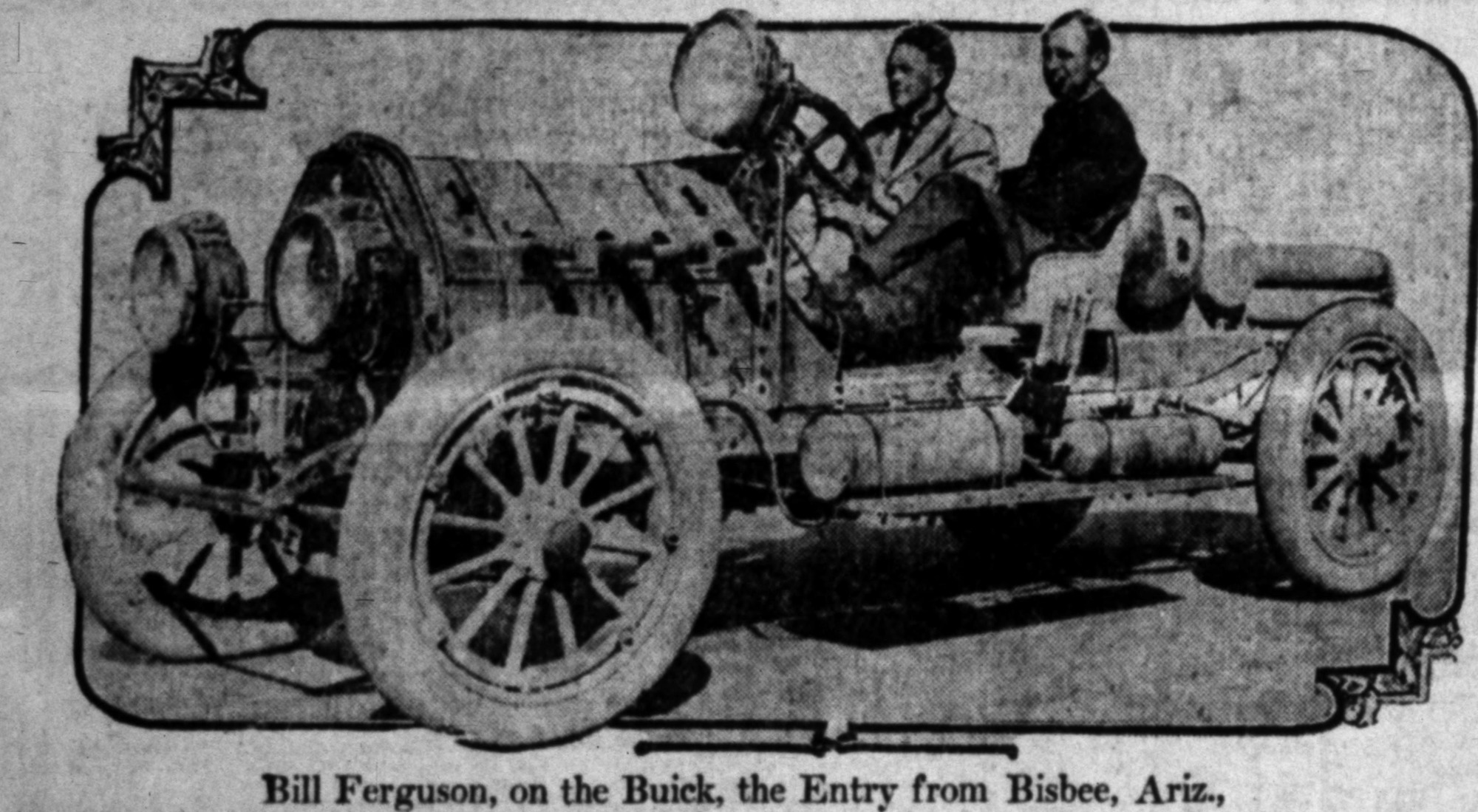
“Bill Ferguson, on the Buick, the Entry from Bisbee, Ariz.” Billy Ferguson and Carey King in the racing Buick. Los Angeles Times, November 5, 1911, Part VII, page 3. Internet Archive, public domain. Click the picture to see it full size.
The Los Angeles Times ran that picture in its Sunday paper, along with its own list of favorites. “Now for a surprise,” it said. “Bill Ferguson, on the Buick, is fifth choice.”
The Bisbee Buick Leaves Los Angeles Last
The night of November 4 was loud in Los Angeles. “With a roar that was heard for many blocks, sixteen giant racing automobiles lined up in front of the Hollenbeck hotel,” the Republican’s story began. The crowd was so big that the cars could hardly get through. A Maxwell left first. About fifteen minutes later, Billy Ferguson’s Buick left last.
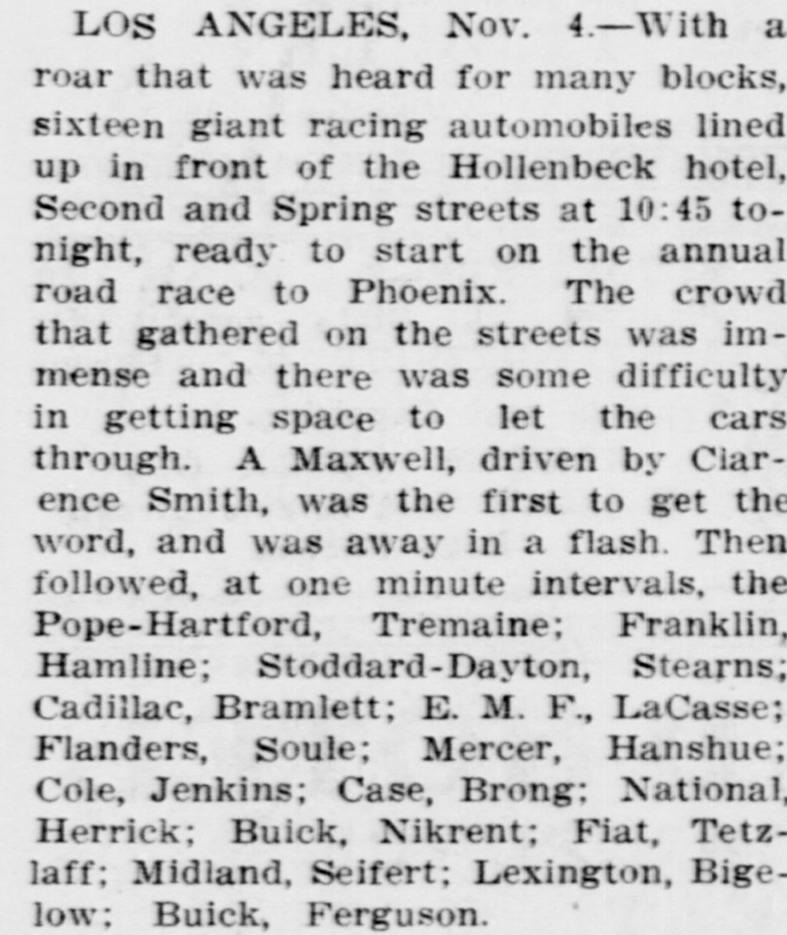
Arizona Republican, Phoenix, Arizona, November 5, 1911, page 1. Library of Congress, Chronicling America. Click the clipping to read it full size.
A Sleeping Driver Near Del Mar, California
Billy Ferguson’s bad luck started in the dark, near Del Mar, California, on the road south to San Diego. Up ahead sat the Case car, the other unlucky Arizona entry. Its driver “had wrecked his car in a ditch, put out his lights and gone to sleep.” The Bisbee Buick nearly ran into it. “Ferguson tore the foot brake off his car and drove to San Diego to repair the damage.”
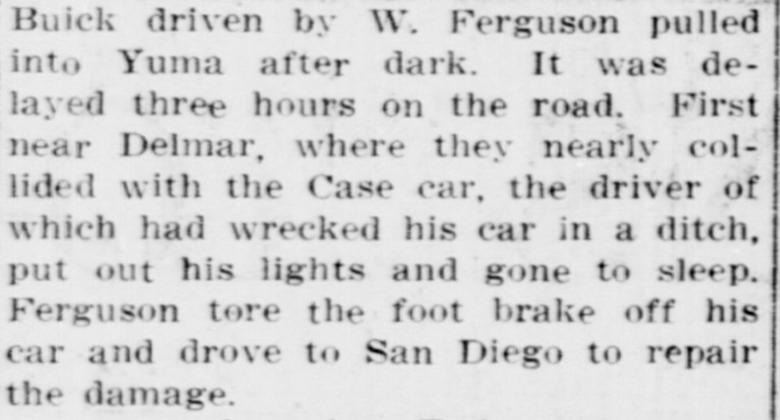
Arizona Republican, November 6, 1911, page 8. Library of Congress, Chronicling America. Click the clipping to read it full size.
Then, in the mountains east of San Diego, the Buick needed a new magneto. A magneto is a little machine that makes the sparks that keep a gas engine running. “Two hours were lost by Ferguson’s Buick at a point twelve miles east of Campo by necessary replacing of a magneto,” the Republican said. The racers spent the night at Yuma, Arizona, and the Bisbee Buick got there after dark, three hours late.
A Shout in Phoenix, Arizona
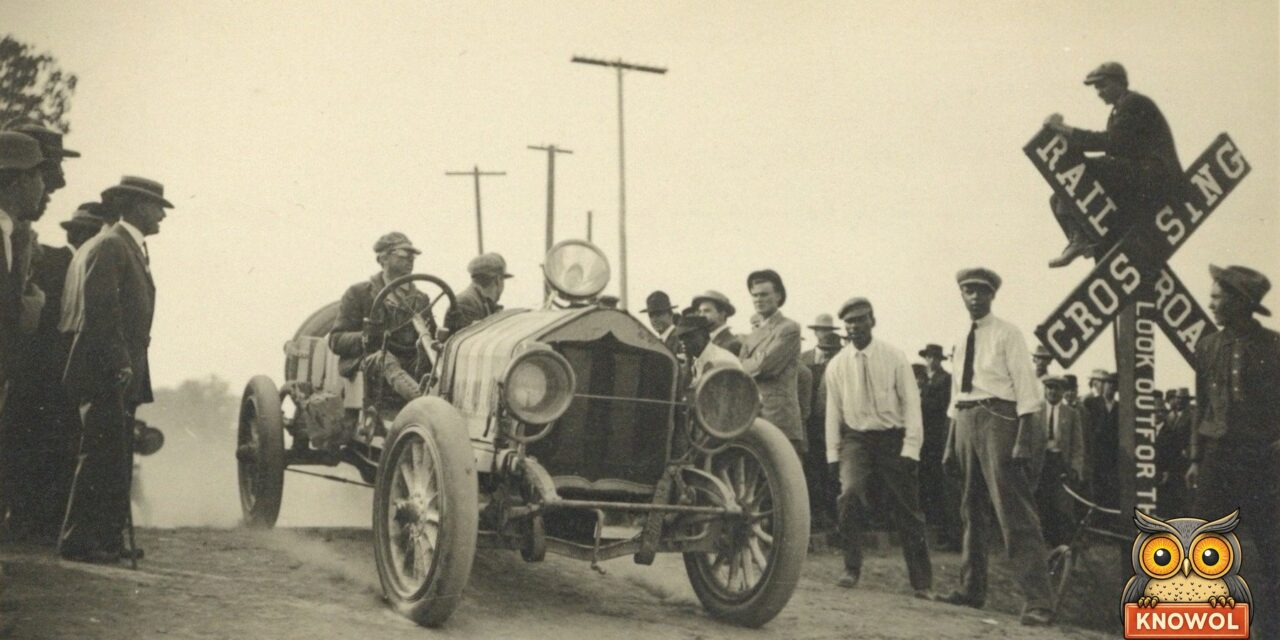
On Monday, November 6, Billy Ferguson and the Bisbee Buick left Yuma early in the morning for the last stretch across the Arizona desert to Phoenix. The race was won by Harvey Herrick in a big National car. The cover picture shows Herrick and his National at a railroad crossing. It is a postcard by a Phoenix photographer, Robert A. Turnbull, dated that same day.
The Republican told what happened next. “Next came the Buick Sixteen, the Bisbee car, driven by Ferguson. He arrived at 3:12-35 and like all the others was received with a shout.”

Arizona Republican, November 7, 1911, page 5. Library of Congress, Chronicling America. Click the clipping to read it full size.
Back home, the Bisbee Daily Review said he was “just outside of the money,” one place short of a prize. “He made a game race of it, passing twelve cars in the run, but was distanced by the powerful car that won premier honors.”
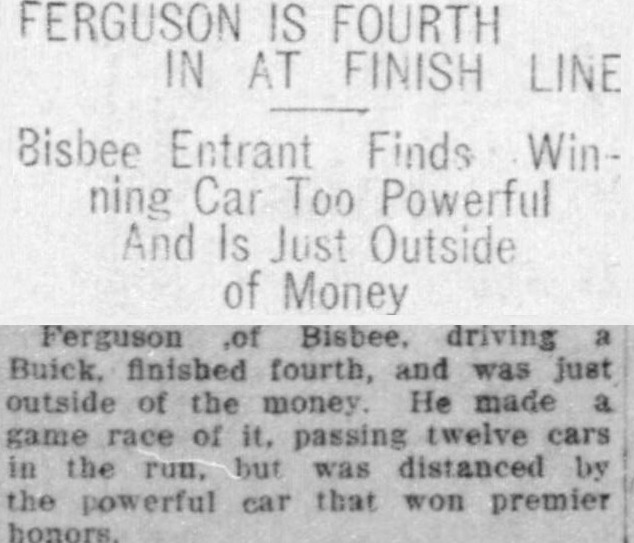
Headline and paragraph from one front-page story, joined. Bisbee Daily Review, November 7, 1911, page 1. Library of Congress, Chronicling America. Click the clipping to read it full size.
The Los Angeles Times said many people in Phoenix had picked him to win. “He is worn out from his long night ride, but he has the fans of Phoenix with him.”
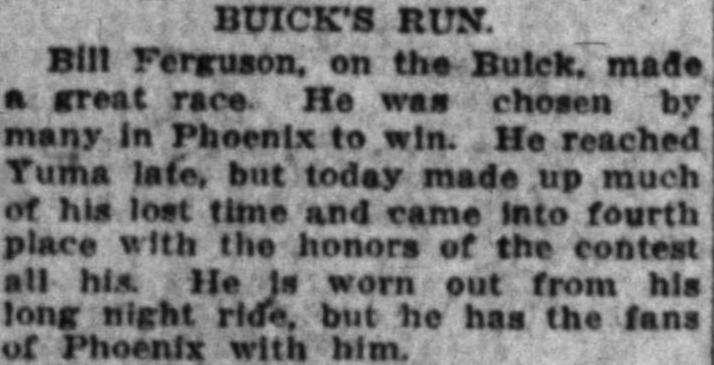
Los Angeles Times, November 7, 1911, Part III, page 3. Internet Archive, public domain. Click the clipping to read it full size.
The Official Count for Bisbee, Arizona
The Bisbee paper said fourth, but the race committee in Phoenix added up every car’s driving time. On November 12, the paper printed the official list. “Buick, No. 16, Bisbee Buick, W. H. Ferguson, fifth, 26h. 26m 21s.” Herrick had won in 20 hours and 23 minutes. Out of sixteen cars, Ferguson came in fifth.
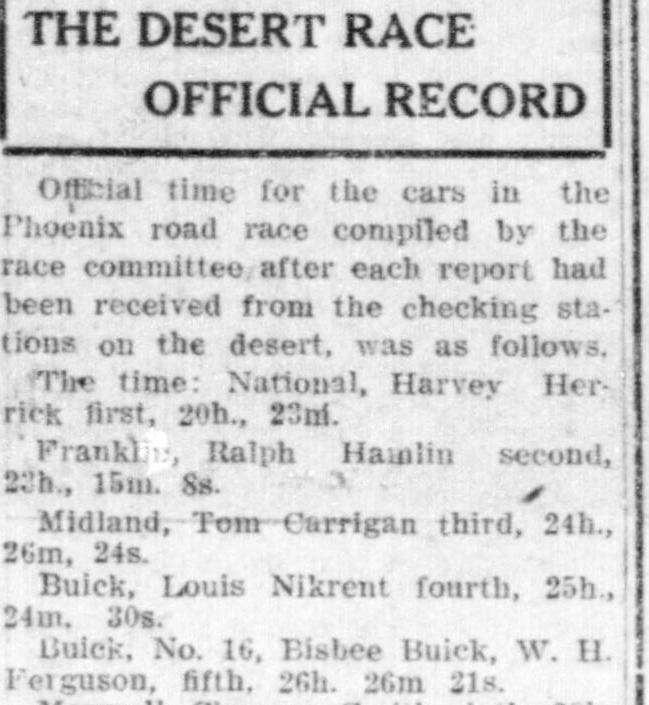
Bisbee Daily Review, November 12, 1911, page 5. Library of Congress, Chronicling America. Click the clipping to read it full size.
Meanwhile, a Car Tax in Bisbee, Arizona
The same Bisbee page that sent Ferguson off to the race had other car news. The town council wanted every car to carry a license tag and a tail light. The tax was not set yet, but “it is understood that it will be $5 per year, not a very heavy burden.” The council meeting had to wait, though, because Mayor M. Newman was away in Tombstone.
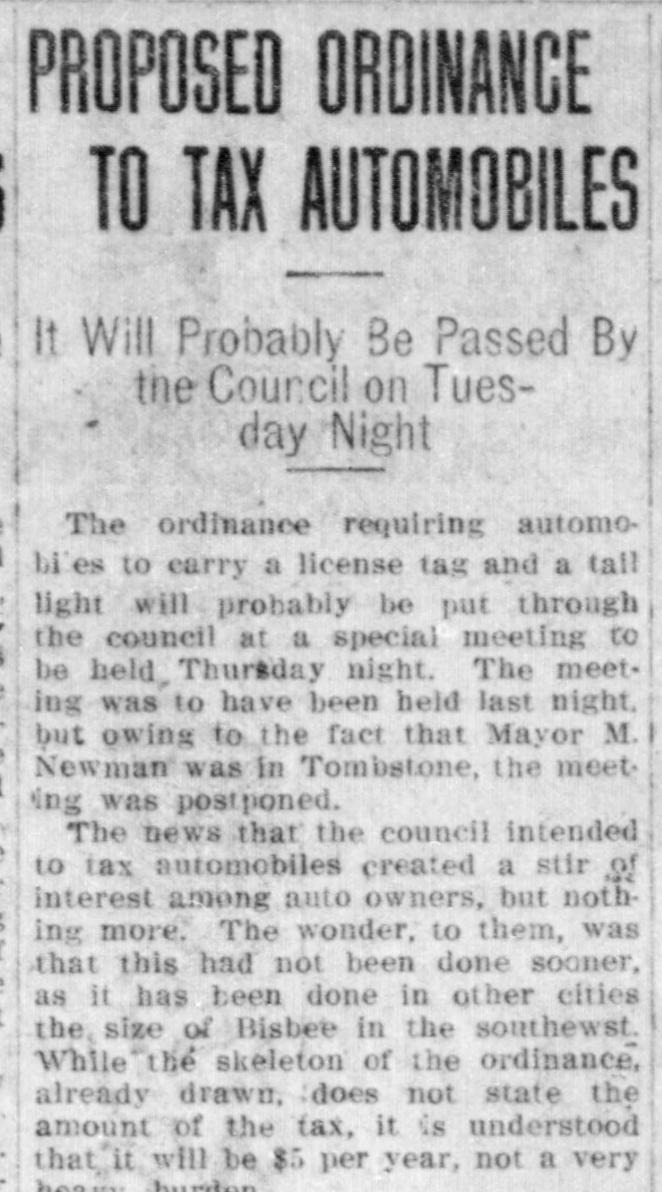
Same page as the race story. Bisbee Daily Review, October 10, 1911, page 6. Library of Congress, Chronicling America. Click the clipping to read it full size.
One Bisbee car owner said buggies should carry lights at night too. Laws like this, the paper said, “seem to presume that while the buggy and its occupants are in danger from the automobile, an automobile and its occupants are not in danger from the buggy.”
Bisbee’s Very First Car
Ferguson’s partner, J. E. Raub, stayed home in Bisbee. “The rigors and hardships of the sand battle do not appeal to him,” the paper said. But Raub had owned the first automobile in Bisbee, and it was still going. “The machine is running today and is still in excellent condition.”
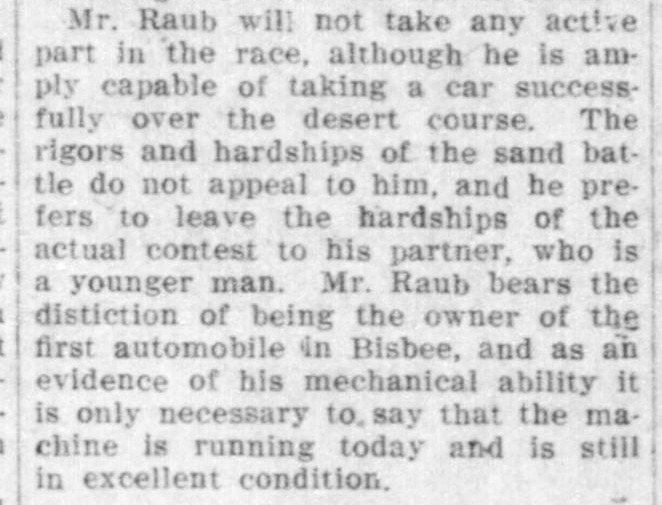
Bisbee Daily Review, October 10, 1911, page 6. Library of Congress, Chronicling America. Click the clipping to read it full size.
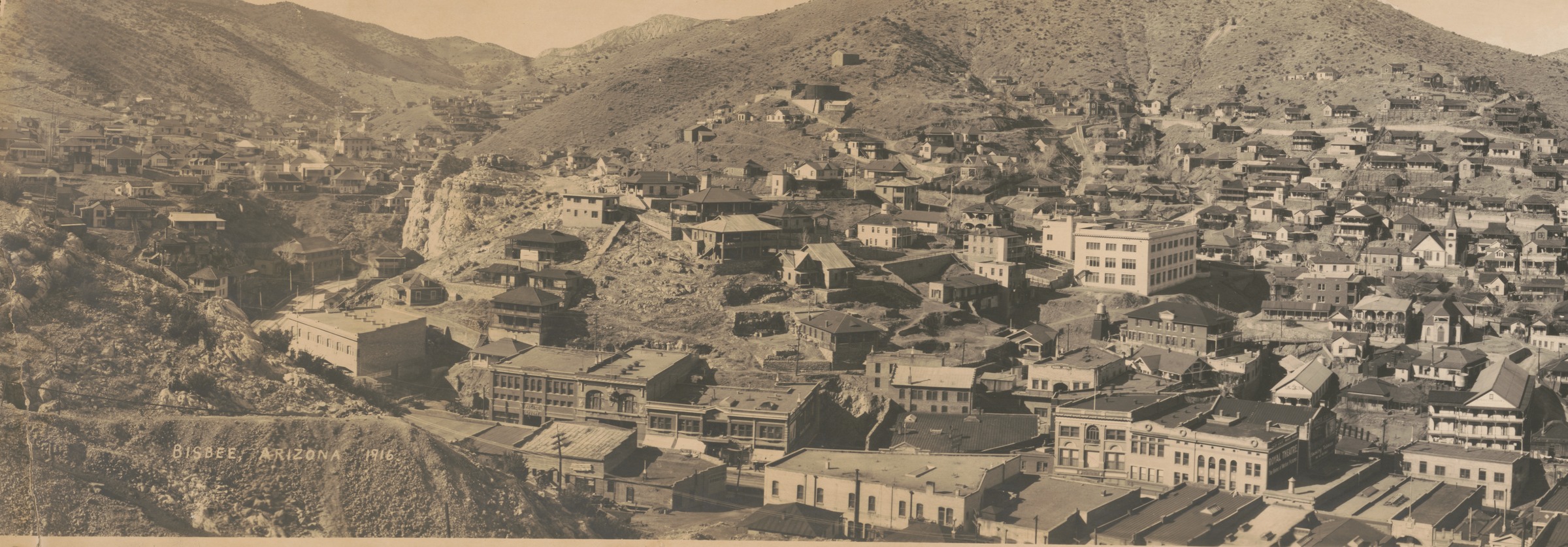
Bisbee, Arizona, in 1916, five years after the race, with houses climbing the hills above Main Street. Part of a panorama photograph. Library of Congress, Prints and Photographs Division, no known restrictions. Click the picture to see it full size.
From Bisbee to Phoenix for Good
Billy Ferguson’s company didn’t stay in Bisbee long. In January 1912, the Arizona Republican said Ferguson, Raub & Co. “has removed to Phoenix and opened a state agency for the Buick and Apperson cars.” Its showroom was at First Avenue and Monroe Street.
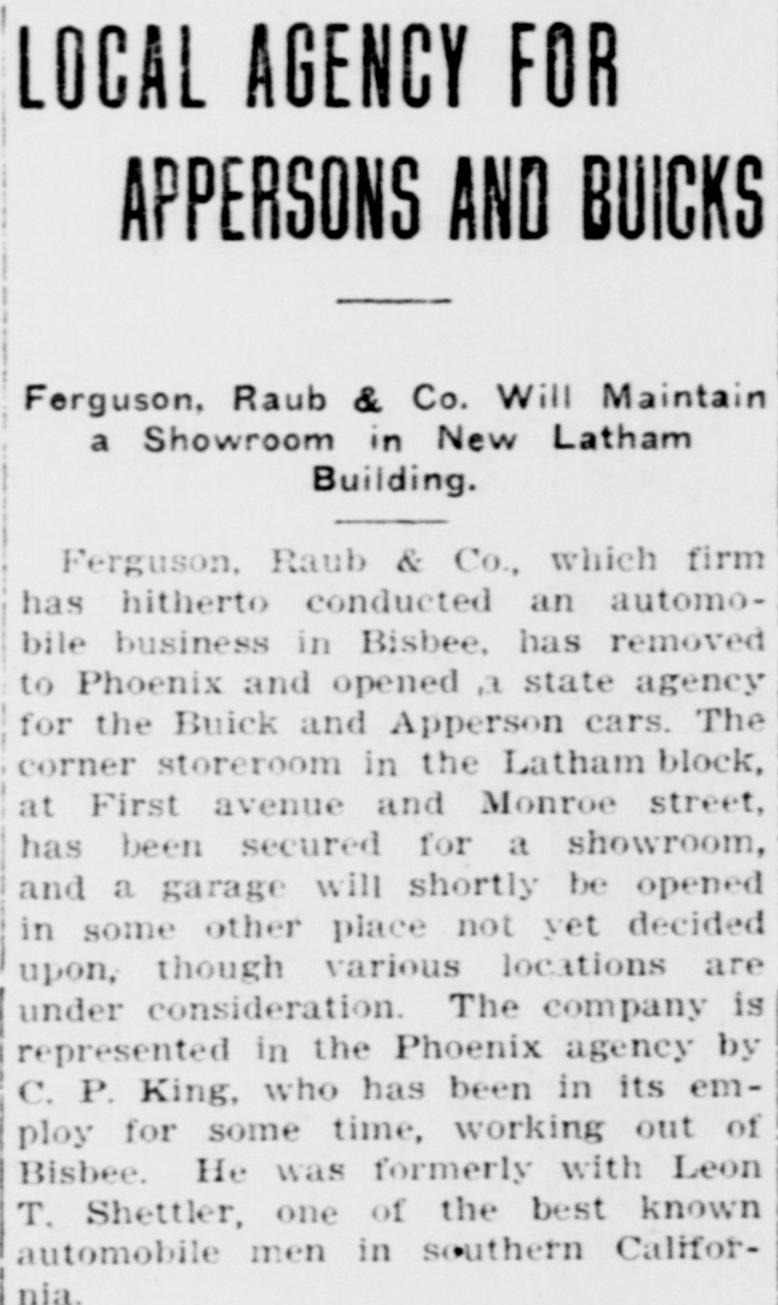
Arizona Republican, January 24, 1912, page 3. Library of Congress, Chronicling America. Click the clipping to read it full size.
A year later, the company had a new name, the Ferguson-Mohn Company. “Phoenix will soon have the next largest automobile garage in the west,” the Republican said. It was being built right on top of the Salt River canal on Central Avenue, with the water running through a concrete channel underneath. Upstairs was a paint shop, “where autos will be raised by means of a powerful elevator.”
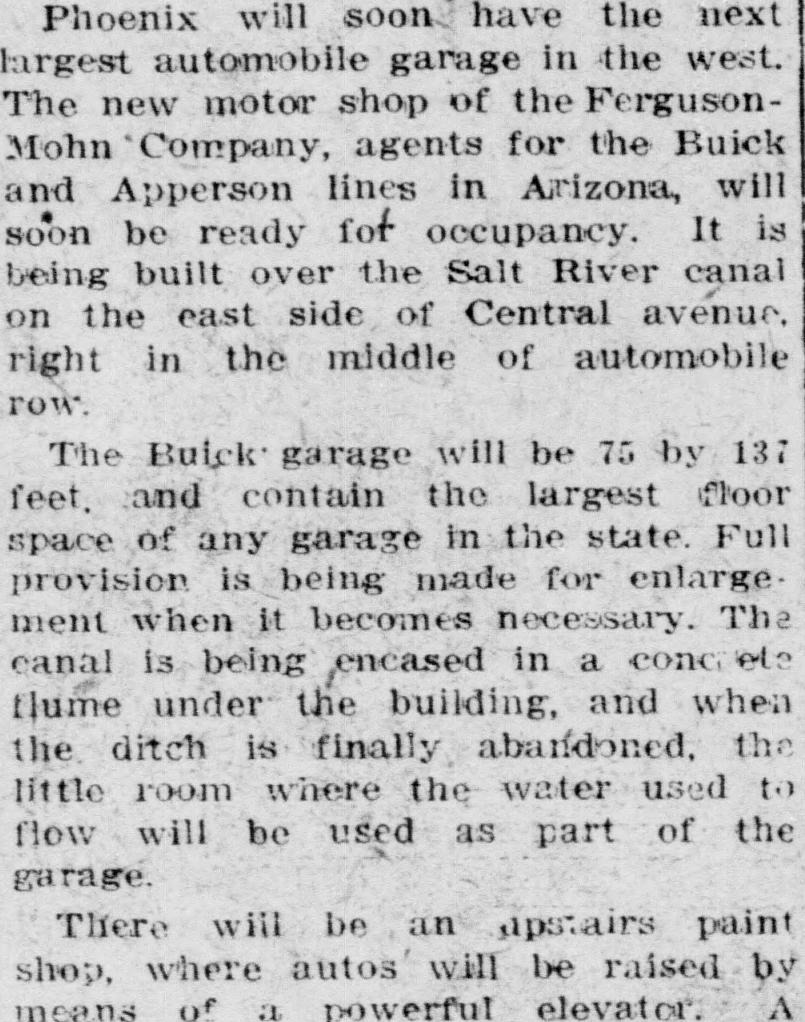
Arizona Republican, January 19, 1913, page 27. Library of Congress, Chronicling America. Click the clipping to read it full size.
In 1911 the fans of Phoenix cheered for the last car out of Los Angeles. Before long, the man who drove it was selling Buicks in their town.
Sources
- Bisbee Daily Review (Bisbee, Arizona): October 10, 1911, page 6 (“Ferguson of Bisbee in the Desert Race” and “Proposed Ordinance to Tax Automobiles”); November 7, 1911, page 1 (“Ferguson Is Fourth in at Finish Line”); November 12, 1911, page 5 (“The Desert Race Official Record”).
- Arizona Republican (Phoenix, Arizona): October 14, 1911, page 7 (“Ferguson Will Drive Buick in Big Race”); November 5, 1911, page 1 (the start); November 6, 1911, page 8 (Del Mar and Campo); November 7, 1911, page 5 (the finish); January 24, 1912, page 3 (“Local Agency for Appersons and Buicks”); January 19, 1913, page 27 (the garage over the canal).
- Arizona Sentinel (Yuma, Arizona): November 2, 1911, page 4 (the draw for starting places).
- Los Angeles Times: November 5, 1911, Part VII, page 3 (the photo of Ferguson and King); November 7, 1911, Part III, page 3 (“Buick’s Run”). Internet Archive.
- The Automobile, November 9, 1911, page 826, and Motor Age, November 9, 1911 (race reports and the protest over third place). Internet Archive.
- Newspaper images: Library of Congress, Chronicling America, and the Internet Archive. Published in the United States in 1911 to 1913, public domain.
- Bisbee photo: “Bisbee, Arizona, 1916,” panorama, Library of Congress, Prints and Photographs Division, no known restrictions.
- Cover: Robert A. Turnbull, Phoenix, real photo postcard of Harvey Herrick and his National “40,” November 6, 1911, Wikimedia Commons, public domain.