On Monday morning, May 26, 1873, a man took his place on a street corner on Broadway, near Union Square in New York City. He tipped his head back and looked up at the clear blue sky. That was all he did. The New York Times said “He had remained thus employed scarcely three minutes before four or five other men were standing quietly by his side, all gazing wisely into the heavens.”
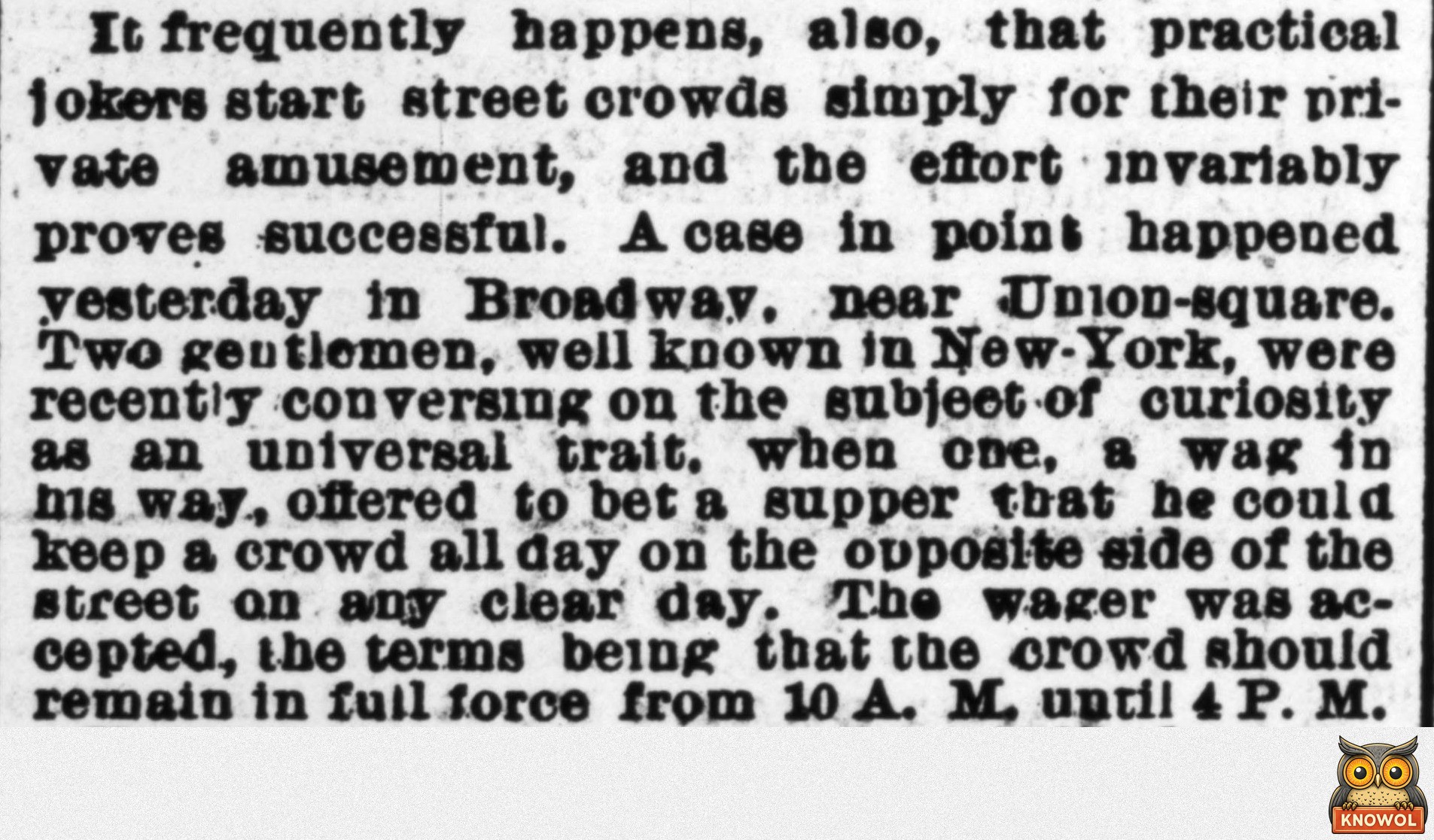
The bet, in the New York Times story “A New-York Street Scene,” May 27, 1873, page 8. Internet Archive scan, public domain. Click the clipping to read it full size.
A bet for a supper
The Times told the whole story the next morning. Two gentlemen, “well known in New-York,” had been talking about curiosity. One of them was “a wag in his way,” which is an old way of saying a joker. He bet his friend a supper that he could keep a crowd standing on the other side of the street all day long.
His friend took the bet. The rules were simple. The crowd had to stay “in full force from 10 A. M. until 4 P. M.” That’s six hours of people standing on a sidewalk, looking at nothing. The paper never printed the two men’s names.
“Why, at that star there”
At last one of the men on the corner asked the joker what he was looking at. “Why, at that star there,” the joker said, and he pointed into the sky near the sun.
“I don’t see it,” the man said; “whereabouts is it?”
“Right up there,” came the answer. “It’s very bright and beautiful.”
Then a third man spoke up. “Oh, I see it,” he said. “How singular it looks.” Singular was an old word for strange. That did it. Now everybody wanted a look.
Here is the trick. The stars are up there in the daytime too. But sunlight fills the whole sky with light, so you can’t see them. The Times put it plainly: the crowd wanted “to see the daylight star, which of course was invisible.” Once the trap was set, the joker slipped away and joined his friend to watch.
Hour after hour
The people on the corner kept changing. Some gave up and walked on, and new ones stopped to take their place, “like the figures in a kaleidoscope.” A kaleidoscope is a tube you look into, full of colored bits that make a new pattern each time you turn it. “Few went away without becoming convinced that there was really a star to be seen.”
Then came the best part. The friend who had bet against the joke couldn’t stand it. He knew it was a trick, but he joined the group to look for himself. The Times said “He in turn saw the star after gazing at the sun until he really could not see at all.” Please don’t try that part. Staring at the sun can hurt your eyes for good.
The crowd held on “until near sunset,” hours past the 4 o’clock finish line. The joker won his bet. The paper ended with a smile: “But two gentlemen had a very jolly supper last night at the expense of a star-gazer.”
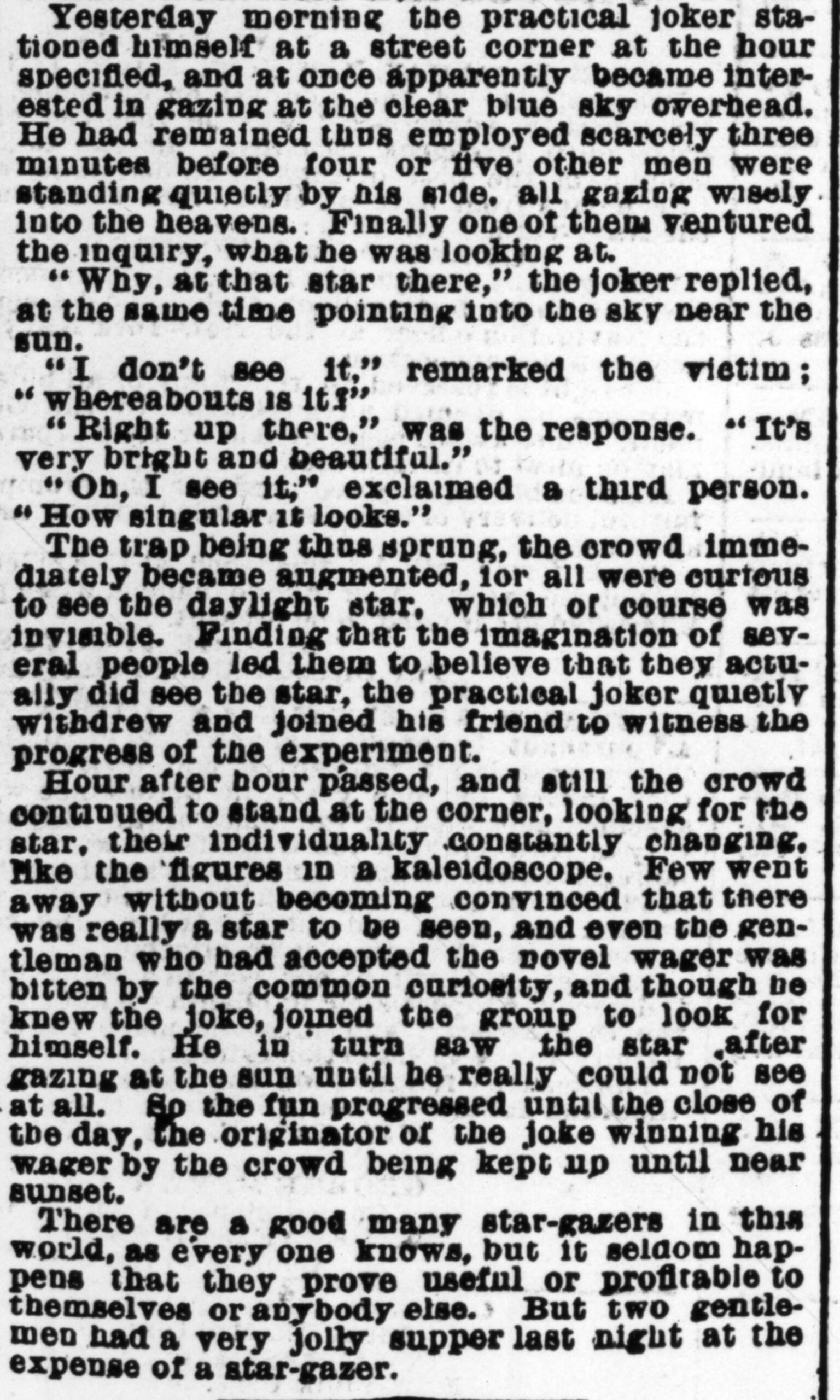
The day of the daylight star, from 10 in the morning until near sunset. The New York Times, May 27, 1873, page 8. Internet Archive scan, public domain. Click the clipping to read it full size.
A city that stops to look
The Times said nobody should be surprised. “It has long been an established fact that in this City a crowd can be gathered in the street on the smallest occasion.” Stop at a shop window with a friend for a minute or two, the paper said, and strangers will stop to see what you see.
Store owners knew it too. A few years earlier, one company moved into a new building near a rival store. It put an ad in the papers for a “light porter,” a helper who carried packages. Then it locked the door and hung up a big sign that said “Situation filled.” The job hunters bunched up outside, people stopped to stare at them, and the police had to clear the sidewalk. The Times called it “a cruel hoax.” But everyone learned the store’s new address, and “their business increased.”
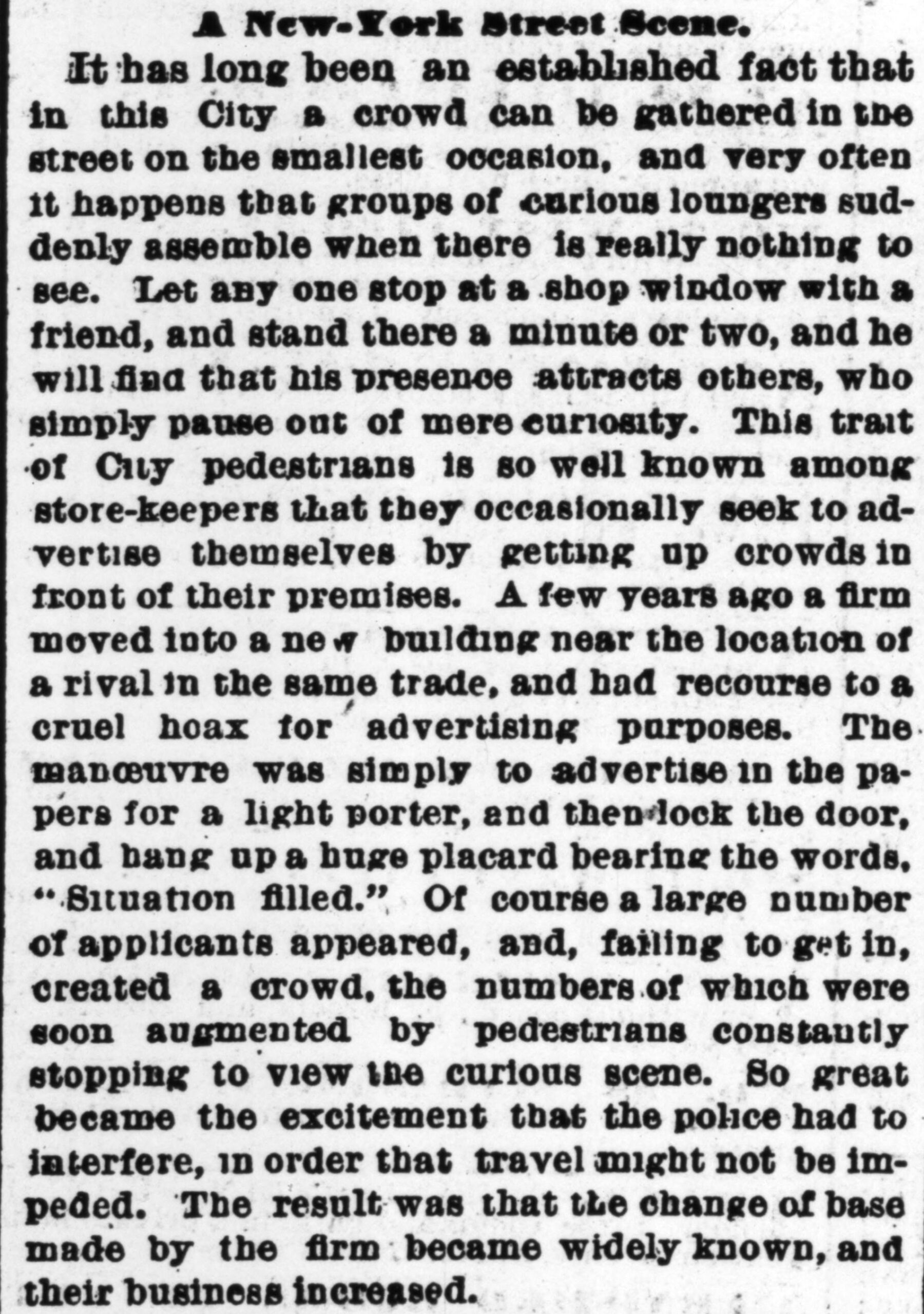
“A New-York Street Scene,” the start of the story. The New York Times, May 27, 1873, page 8. Internet Archive scan, public domain. Click the clipping to read it full size.
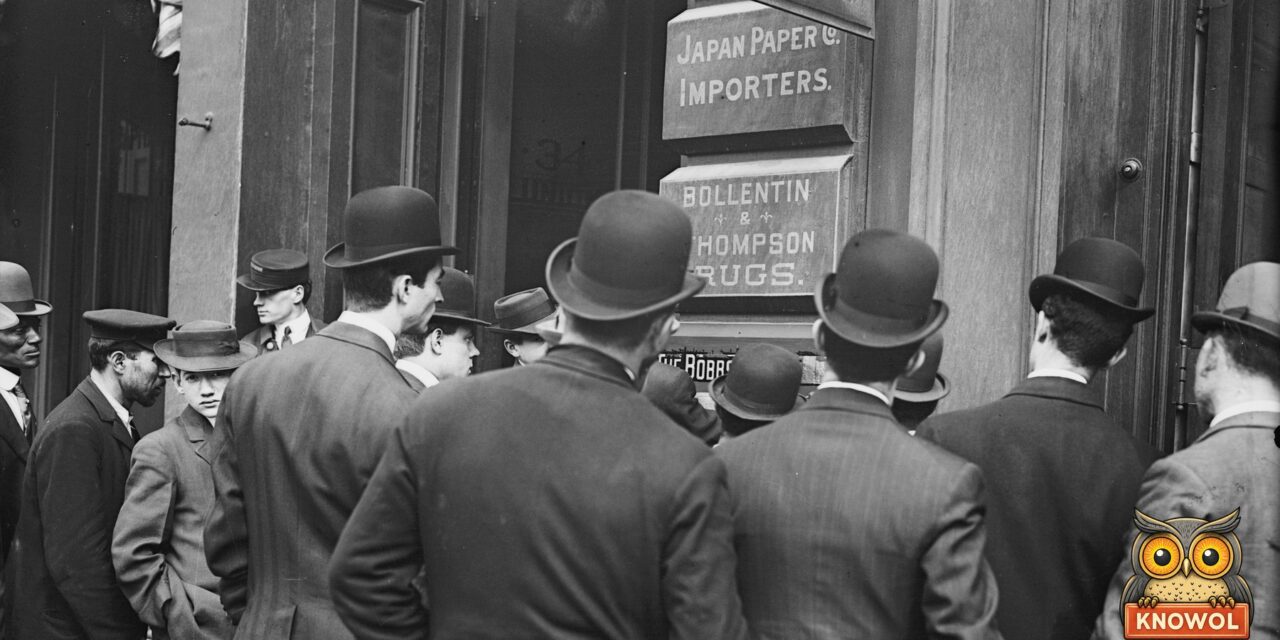
The photo at the top of this story is not the 1873 crowd. The Bain News Service took it at Union Square in the early 1900s (its card gives no date), and its caption says it shows a “crowd watching painter of signs.” Decades after the daylight star, New Yorkers were still stopping to watch a man at work on a sign.
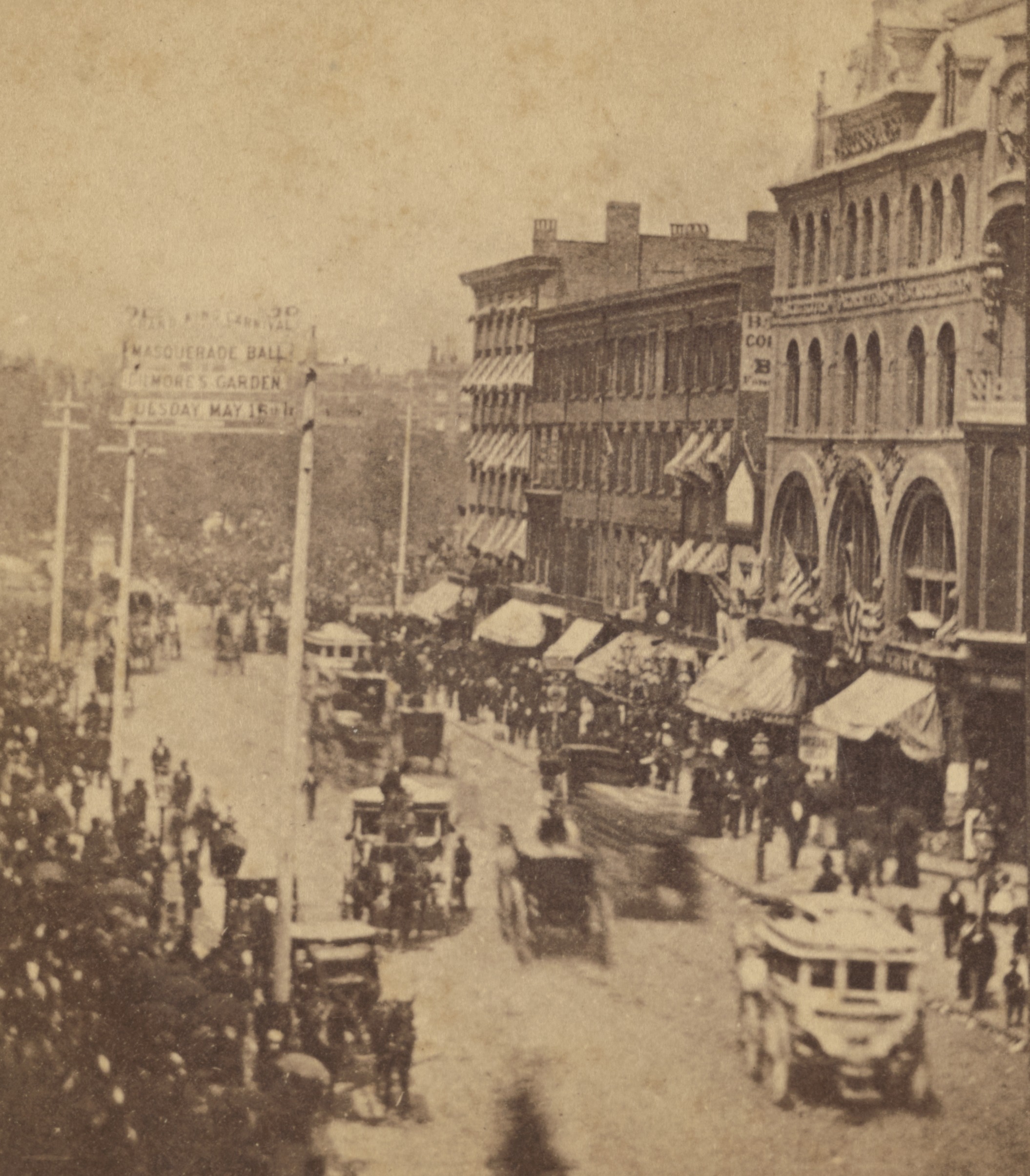
“Broadway near Union Square,” the street the joker picked, on an old stereograph card. A banner over the street advertises a masquerade ball at Gilmore’s Garden on “Tuesday May 16th,” which points to 1876. Library of Congress. Click the picture to see it full size.
The joke goes on the road
Small-town papers loved the story. In June 1873 it was reprinted in Smyrna, Delaware, and in Fayetteville, Tennessee, where the Fayetteville Observer called it “Star Gazing on Broadway.” In Mineral Point, Wisconsin, it ran as “Star-Gazers.” By the middle of July it had reached Canton, Mississippi, and two more Wisconsin towns, Watertown and Grand Rapids (now Wisconsin Rapids). The crowd on Broadway lasted one day. The story lasted seven weeks.
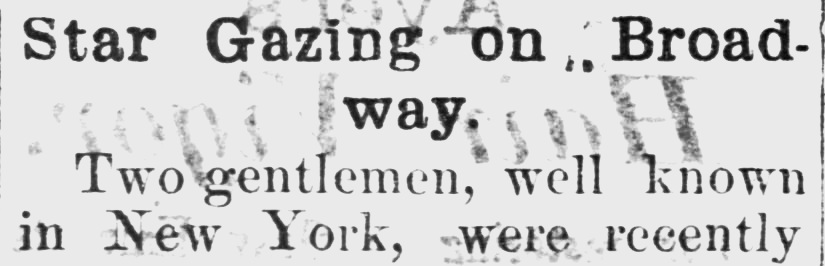
“Star Gazing on Broadway.” The Fayetteville Observer, Fayetteville, Tennessee, June 26, 1873, page 1. Library of Congress, Chronicling America. Click the clipping to read it full size.
It still works
In 1969, almost a hundred years later, three scientists tried the same thing on a busy New York City sidewalk. Stanley Milgram, Leonard Bickman and Lawrence Berkowitz had people stand and stare up at a sixth-floor window for one minute while a camera filmed the people walking by. The bigger the group looking up, the more strangers looked up too, and the more of them stopped.
Nobody wrote down the joker’s name, or what he ordered for supper. But on one sunny Monday on Broadway, he proved what the scientists measured later. When one person looks up, the rest of us want to see it too.
Sources
- “A New-York Street Scene,” The New York Times (New York, New York), May 27, 1873, page 8. Internet Archive scan, public domain.
- “Star Gazing on Broadway,” The Fayetteville Observer (Fayetteville, Tennessee), June 26, 1873, page 1. Library of Congress, Chronicling America.
- Other reprints: Smyrna Times (Smyrna, Delaware), June 25, 1873, page 1; Mineral Point Tribune (Mineral Point, Wisconsin), June 26, 1873, page 4; American Citizen (Canton, Mississippi), July 5, 1873, page 4; Watertown Republican (Watertown, Wisconsin), July 16, 1873, page 2; Wood County Reporter (Grand Rapids, Wisconsin), July 17, 1873, page 6. Library of Congress, Chronicling America.
- Stanley Milgram, Leonard Bickman and Lawrence Berkowitz, “Note on the drawing power of crowds of different size,” Journal of Personality and Social Psychology, volume 13, number 2 (1969), pages 79 to 82.
- Photos: “Crowd watching sign painter, Union Square, New York” (the cover; Bain News Service, no date on the caption card) and “Broadway near Union Square” (stereograph, about 1876), Library of Congress Prints and Photographs Division, no known restrictions on publication.