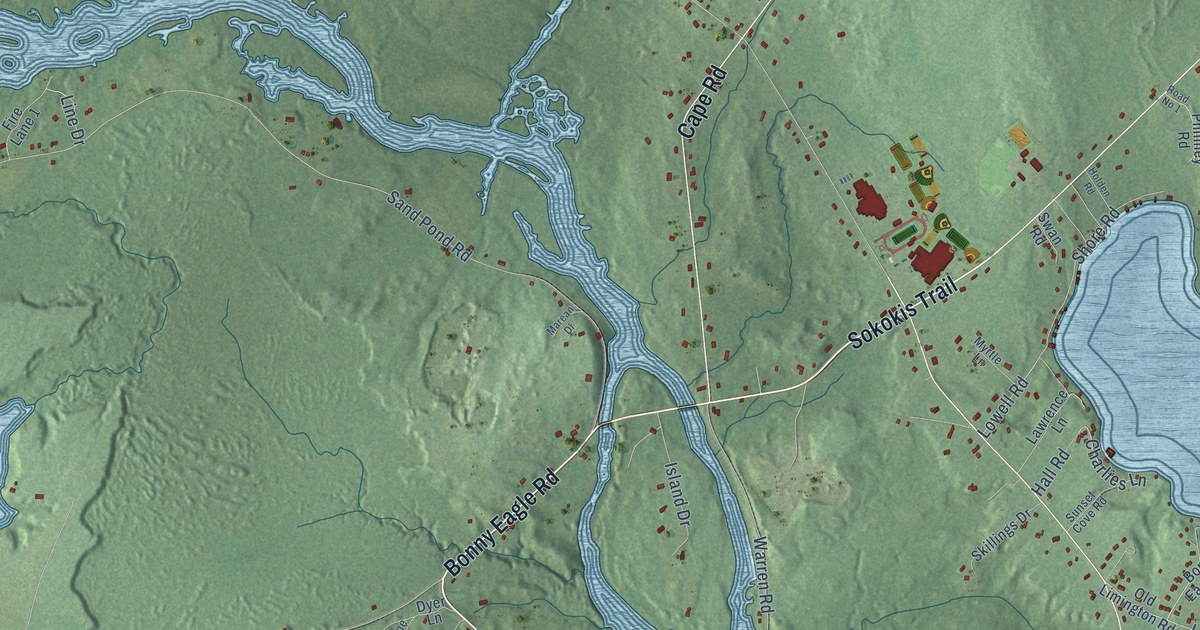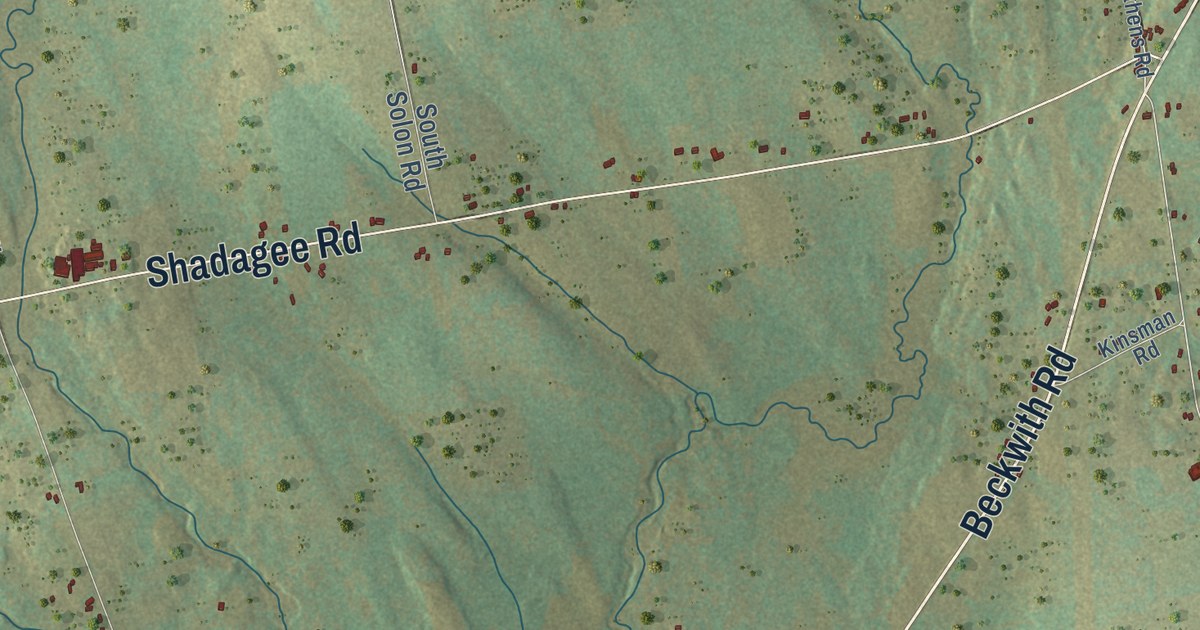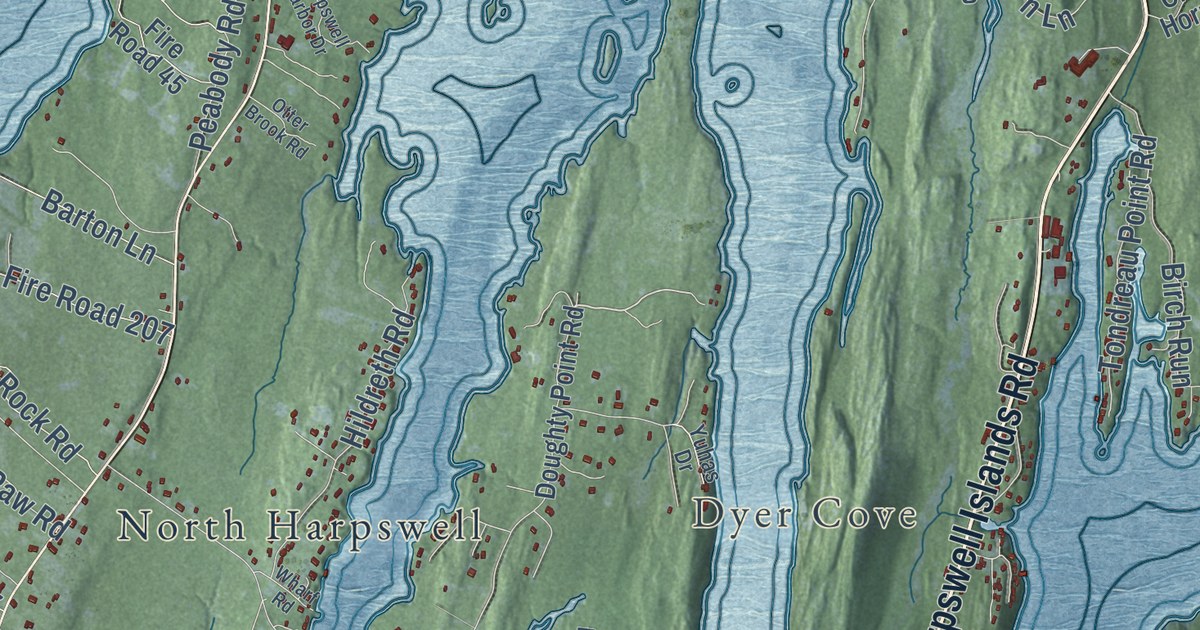
On June 7, 1901, Randall Day of Princeton, Maine, wrote to Augusta about his garden. Three moose had been in it two nights running, and Maine’s game laws protected moose, so Day took his complaint to the state’s Commissioner of Fish and Game. “I hereby notify and warn you to come and remove three of your moose from my little farm,” his letter began.
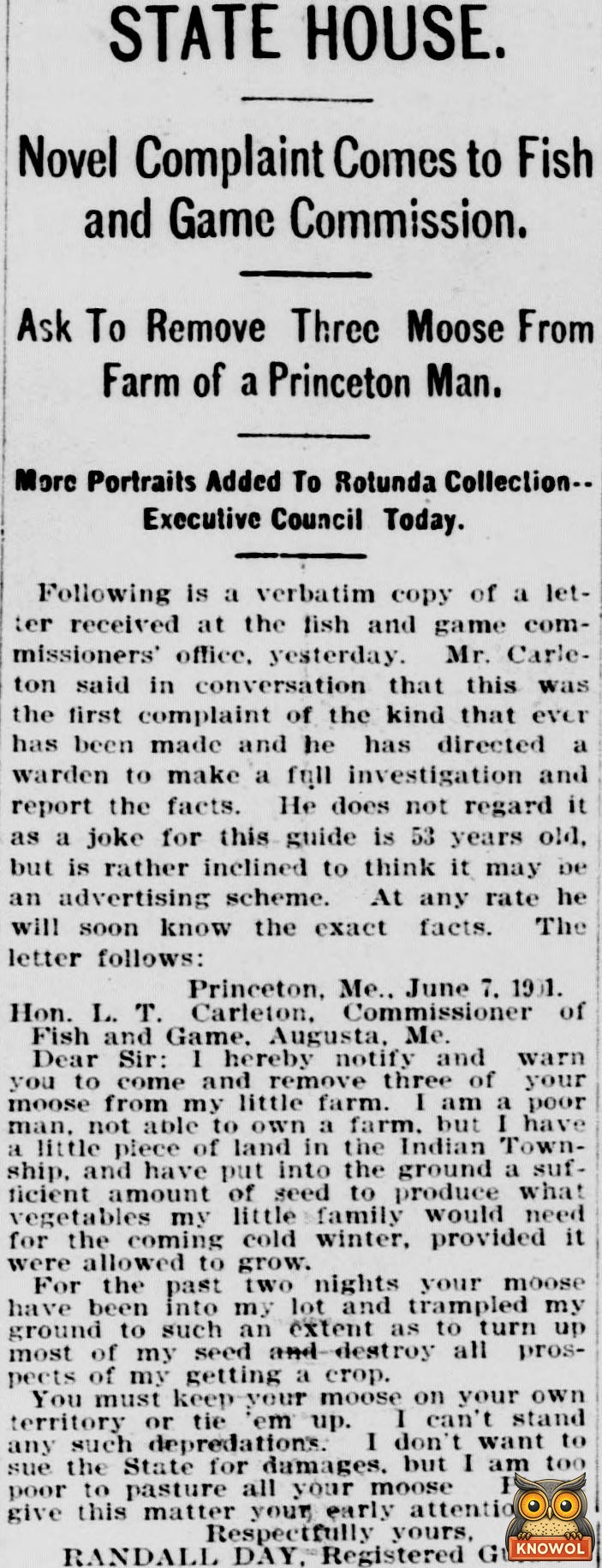
“Novel Complaint Comes to Fish and Game Commission,” Daily Kennebec Journal, Augusta, Maine, June 11, 1901, page 5. Library of Congress, Chronicling America. Click the clipping to read it full size.
A letter to Augusta
Day was a registered guide, paid to lead hunters and fishermen into the Maine woods. His little piece of land was in the Indian Township, just outside Princeton. Here is the rest of his letter to the commissioner, L. T. Carleton, as the Daily Kennebec Journal printed it word for word:
I am a poor man, not able to own a farm, but I have a little piece of land in the Indian Township, and have put into the ground a sufficient amount of seed to produce what vegetables my little family would need for the coming cold winter, provided it were allowed to grow.
For the past two nights your moose have been into my lot and trampled my ground to such an extent as to turn up most of my seed and destroy all prospects of my getting a crop.
You must keep your moose on your own territory or tie ’em up. I can’t stand any such depredations. I don’t want to sue the State for damages, but I am too poor to pasture all your moose. Please give this matter your early attention.
Respectfully yours, Randall Day, Registered Guide.
The first complaint of its kind
The letter reached the commissioner’s office on Monday, June 10, and the Daily Kennebec Journal printed it the next day. Carleton told the paper “this was the first complaint of the kind that ever has been made,” and he sent a game warden to look into it. He didn’t think it was a joke, the paper said, since the guide was 53 years old. But he was “rather inclined to think it may be an advertising scheme.”
He had a reason to wonder. Guides like Day made their living taking sportsmen into the woods, and moose were a big part of the draw around Princeton. That November two moose were shot near the town, and the Washington County Railroad put their photograph in a 1902 handbook for sportsmen, next to a boast that the best landlocked salmon fishing in America was at nearby Grand Lake.
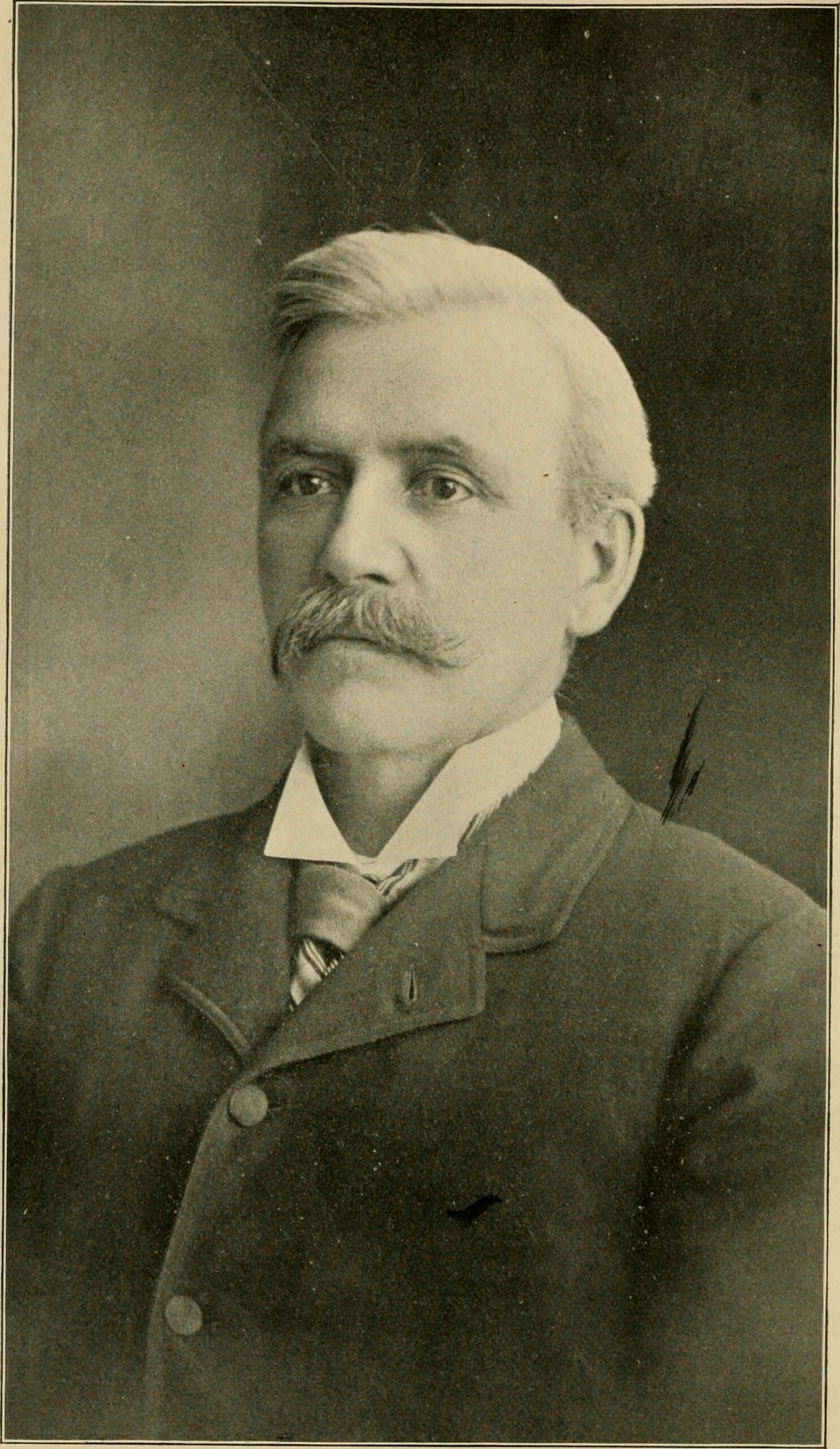
Leroy T. Carleton, the Maine fish and game commissioner who received Randall Day’s letter. From Carleton’s Pathfinder and Gazetteer of the Hunting and Fishing Resorts of the State of Maine, 1899. Internet Archive Book Images, via Wikimedia Commons, no known copyright restrictions. Click the picture to see it full size.
The letter went west
The Calais Weekly Times ran the letter too, and it spread. On June 26 the Wichita Daily Eagle in Kansas printed it under the headline “Game That Takes Advantage of the Game Laws,” along with the Chicago Record-Herald’s opinion. It had come to a pretty pass, the Chicago paper said, when a farmer “must have his crops ruined by moose that go prowling around under the protection of the law.” Animals were like men, it decided: “They must hold aloof and be reserved if they desire to receive distinguished consideration. Let the Maine moose take heed lest he fail.” On July 2 the Minneapolis Journal printed the whole letter as well.
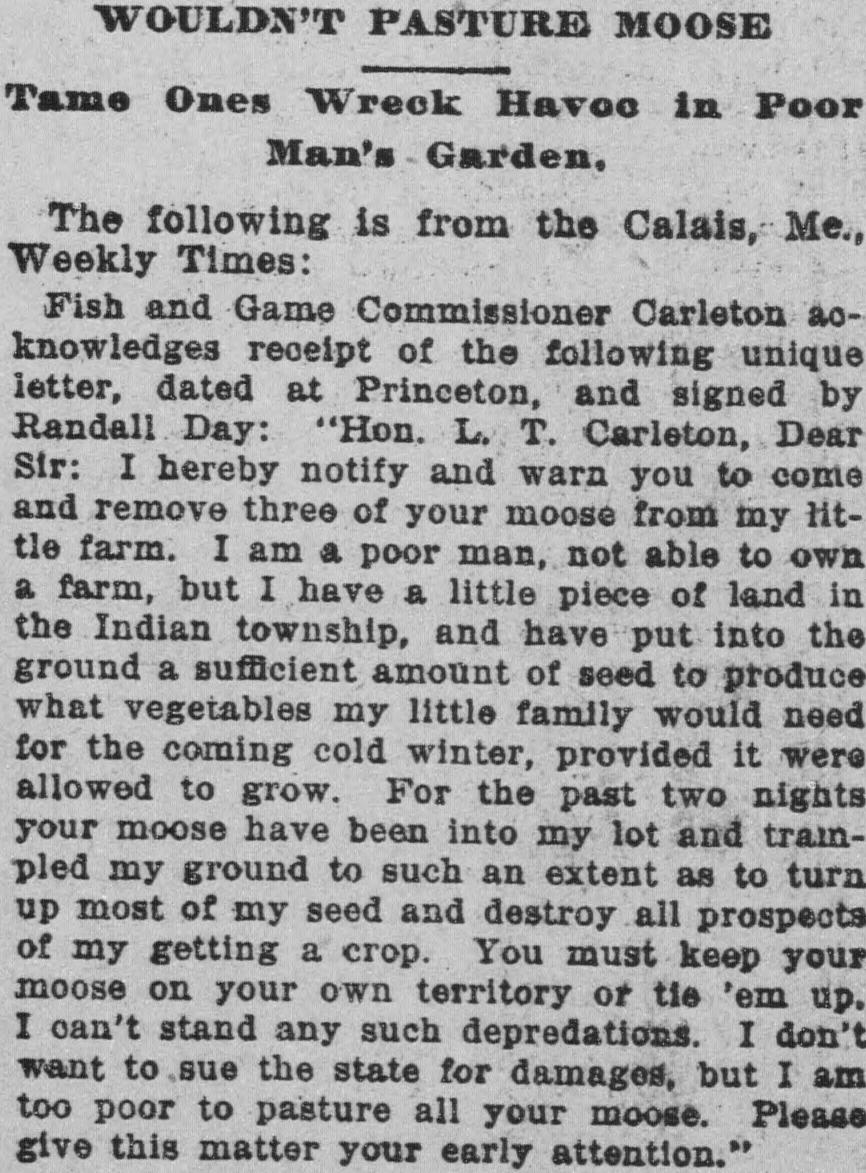
“Wouldn’t Pasture Moose,” the Minneapolis Journal, Minneapolis, Minnesota, July 2, 1901, page 16, reprinted from the Calais, Maine, Weekly Times. Library of Congress, Chronicling America. Click the picture to see it full size.
A moose at the Kineo House
Day wasn’t the first Maine gardener to lose ground to a moose. In early June 1898 a big moose came ashore beside the Kineo House on Moosehead Lake, and hotel guests rushed out to see it. Hemmed in by the crowd, it crashed through the barbed wire fence around Mr. Dennen’s garden, knocked down half a dozen cedar posts, upset his bean poles, and swam off across the bay with a dozen boats and canoes behind it. Mr. Dennen had a complaint of his own. “Since the State has adopted the moose and placed it under its especial care, Mr. Moose thinks he owns the earth,” he said.
A calf moose in Danforth
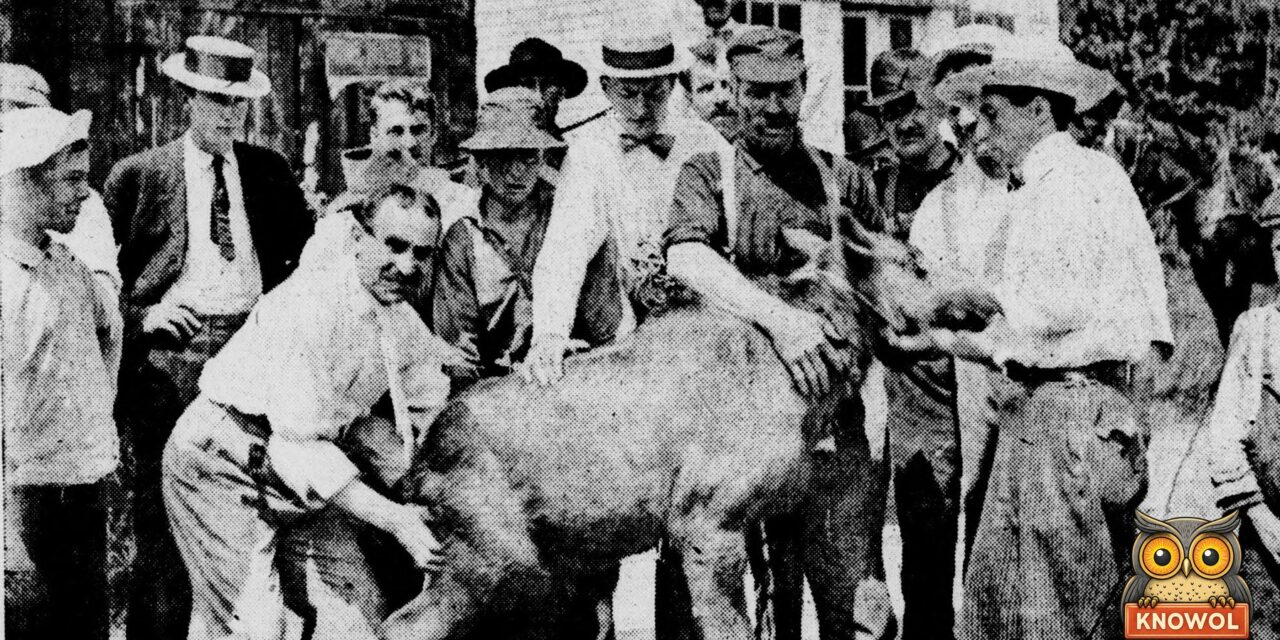
On July 29, 1909, a calf moose wandered onto the streets of Danforth, another Washington County town, and the small boys of the village chased it until it dove into the stream behind the Windsor Hotel. It got tangled in some logs there, and townspeople waded in to pull it out while nearly the whole village watched. The calf was too worn out to stand, so plenty of hands held it up for a picture. Then Constable Brannon led it to the edge of the woods and let it go.
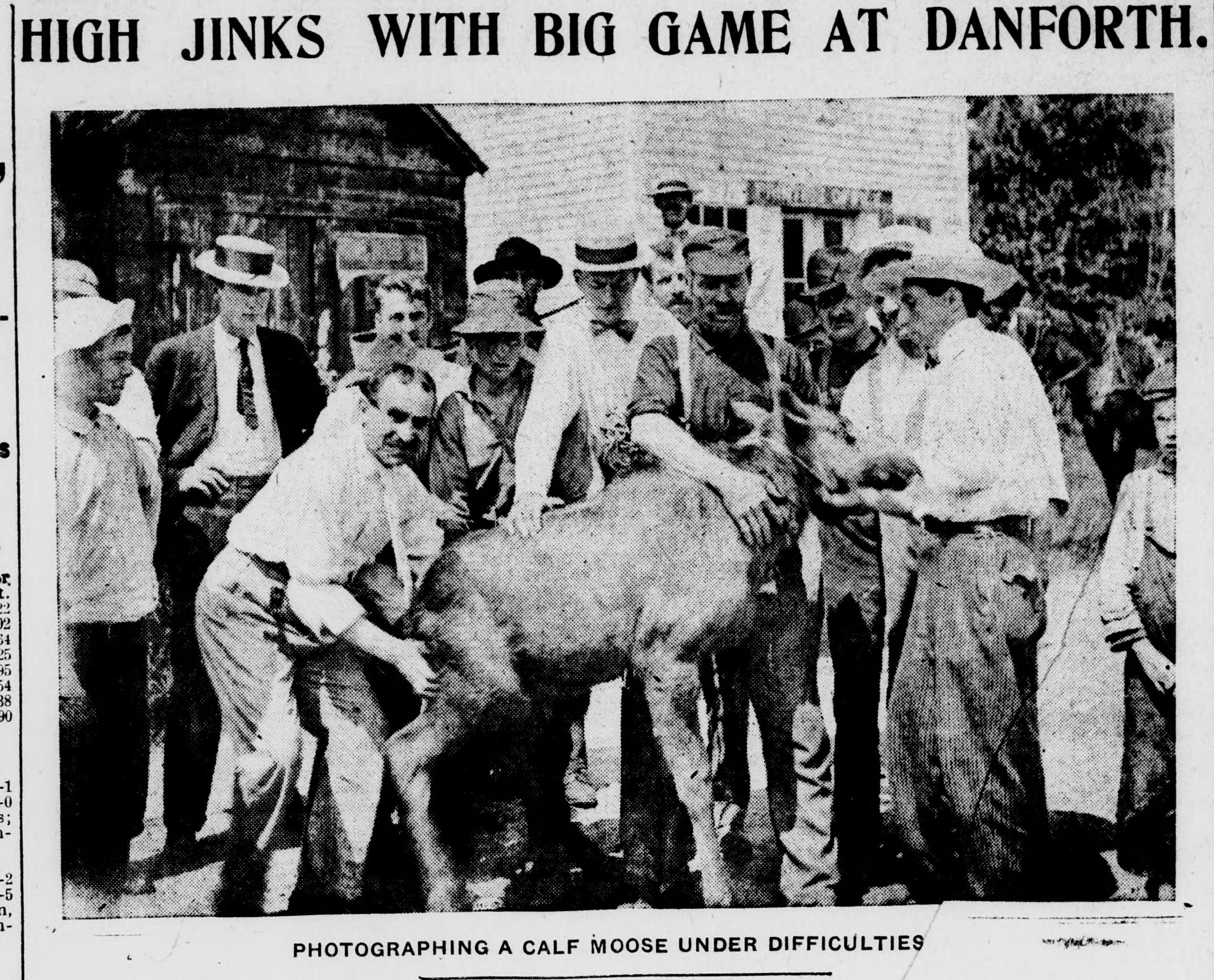
“High Jinks With Big Game at Danforth”: townspeople hold up a tired calf moose for its picture in Danforth, Maine, in late July 1909. Daily Kennebec Journal, Augusta, Maine, August 6, 1909, page 4. Library of Congress, Chronicling America. Click the clipping to read it full size.
What became of Randall Day
None of the papers that carried the letter reported what the warden found. In May 1906 the Kennebec Journal reported the death at Princeton of a Randall Day, “formerly quite well known in Waterville and Winslow,” with two sons still living in Princeton. Five years earlier, Princeton’s Randall Day had done something the commissioner said no one had ever done. He wrote to the State of Maine to say its moose were in his garden, and he asked the state to come and take them home.
Sources
- Daily Kennebec Journal (Augusta, Me.), June 11, 1901, page 5 (“Novel Complaint Comes to Fish and Game Commission,” with Randall Day’s letter word for word).
- The Wichita Daily Eagle (Wichita, Kan.), June 26, 1901, page 4 (“Game That Takes Advantage of the Game Laws,” quoting the Chicago Record-Herald).
- The Minneapolis Journal (Minneapolis, Minn.), July 2, 1901, page 16 (“Wouldn’t Pasture Moose,” from the Calais, Me., Weekly Times).
- Daily Kennebec Journal, May 23, 1906, page 12 (death of Randall Day at Princeton).
- Daily Kennebec Journal, June 9, 1898, page 6 (the moose at the Kineo House).
- Daily Kennebec Journal, August 6, 1909, page 4 (“High Jinks With Big Game at Danforth”).
- Washington County Railroad advertisement, In Pine-Tree Jungles: A Hand-Book for Sportsmen and Campers in the Great Maine Woods (Bangor and Aroostook Railroad, 1902), page 134, Internet Archive.
- Newspaper images from the Library of Congress, Chronicling America. Published 1898 to 1909, public domain.
- Portrait of Leroy T. Carleton: Carleton’s Pathfinder and Gazetteer of the Hunting and Fishing Resorts of the State of Maine (1899), Internet Archive, via Wikimedia Commons_(20541054111).jpg), no known copyright restrictions.
- Cover: Townspeople holding up a calf moose at Danforth, Maine, in late July 1909 (not the Princeton moose), Daily Kennebec Journal, August 6, 1909, page 4. Library of Congress, Chronicling America, public domain.