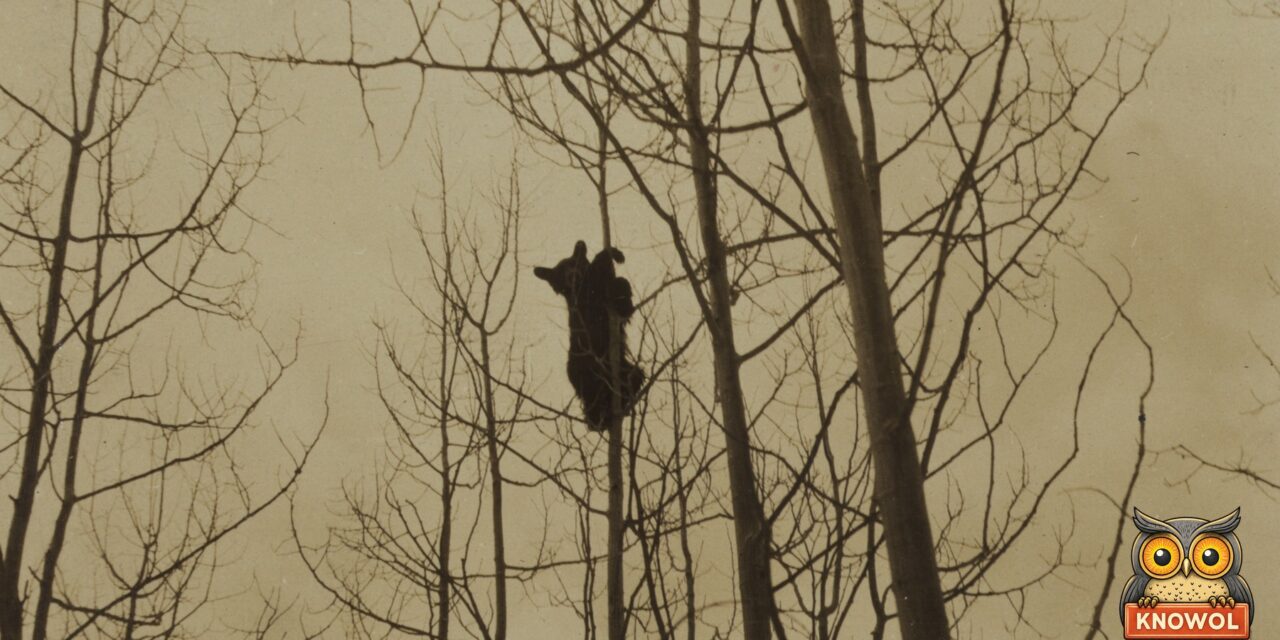
One winter night in 1896, a crowd gathered under a big oak tree just outside Oxford, North Carolina, and stared up at a bear sitting high in the branches. Some of the people held clubs, and some held real rifles. “In the dim moonlight the bear could be seen safely lodged in a large oak,” the newspaper said. Then the shooting began, and it went on for a very long time.
The story comes from The News and Observer, the big daily paper in Raleigh, North Carolina. Its writer in Oxford sent in the town’s news on February 8, 1896, and said the bear night had happened “a few nights ago.” The paper printed it the next day, tucked in at the bottom of a long report about the county court.
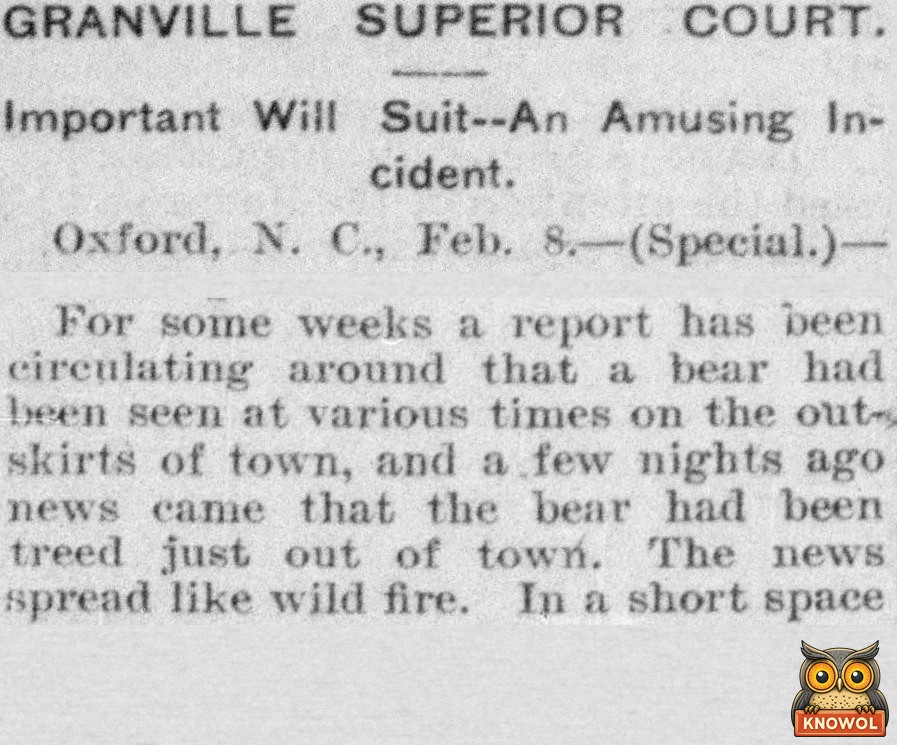
“Granville Superior Court. Important Will Suit, An Amusing Incident.” The News and Observer, Raleigh, North Carolina, February 9, 1896, page 1. The court news between the headline and the bear story is left out. Library of Congress, Chronicling America. Click the clipping to read it full size.
A Bear Near Oxford, North Carolina
For weeks before that night, people in Oxford, North Carolina, had been talking about a bear. “For some weeks a report has been circulating around that a bear had been seen at various times on the outskirts of town,” the paper said. The outskirts are the edges of a town, where the houses stop and the fields and woods begin.
A bear near Oxford would have been big news. In 1896 the state printed a thick book about its land, farms and towns, called North Carolina and Its Resources, and its hunting chapter said the bear’s “natural home” was the Coastal Plain, the low, swampy country near the ocean. “The mountains of the west, too, produce some enormous specimens,” the book added. Oxford sat in between, in the Piedmont, the rolling farm country in the middle of the state, a long way from both the eastern swamps and the western mountains.
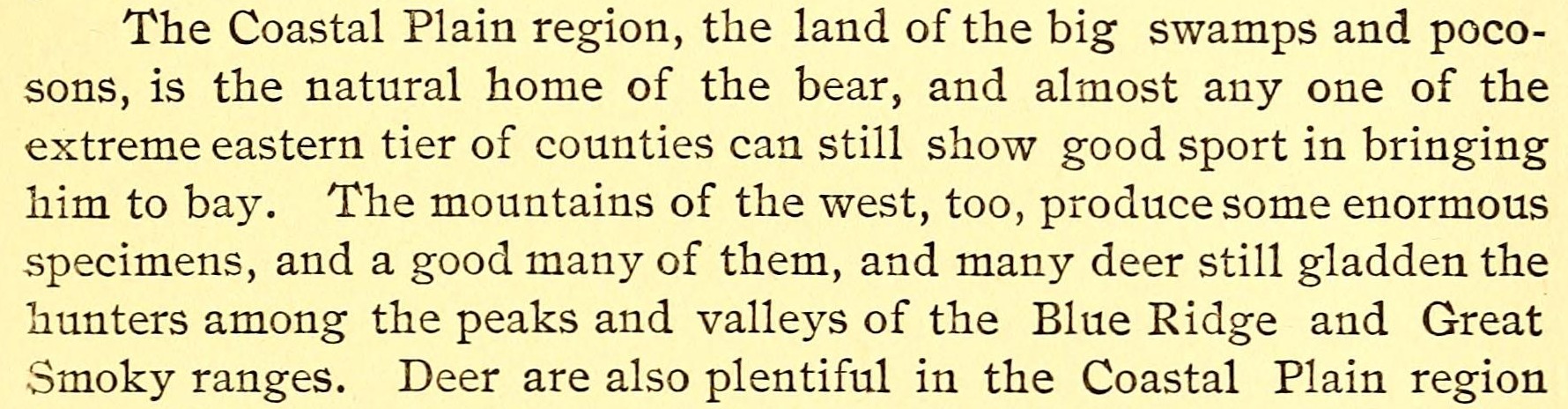
Where North Carolina’s bears lived in 1896, says the state’s own book. North Carolina and Its Resources (Winston, North Carolina: State Board of Agriculture, 1896), page 297. University of North Carolina at Chapel Hill copy, Internet Archive. Public domain. Click the clipping to read it full size.
The same book warned that bears could be “a nuisance to the farmer” because they raided the “hog-pen and sheep-fold.” That mattered in Granville County, the county around Oxford, where the book counted 12,873 hogs and 2,623 sheep.
The Crowd at the Oak Near Oxford
Then one night, news came to Oxford, North Carolina, “that the bear had been treed just out of town.” Treed means chased up a tree, where an animal sits in the branches while the hunters wait below.
“The news spread like wild fire,” the paper said, and in no time a big crowd was standing around the oak. The people “were armed with everything from a club to a regular army rifle,” which was the kind of rifle a United States soldier carried. So some folks came ready for a real fight, and some came with a club, which was nothing more than a heavy stick.
The moon was dim, and the bear was way up in a large oak, where nobody could get a close look. “The shooting began, and the excitement grew intense as he seemed hard to kill,” the paper said. The bear never fell, so the crowd kept on shooting.
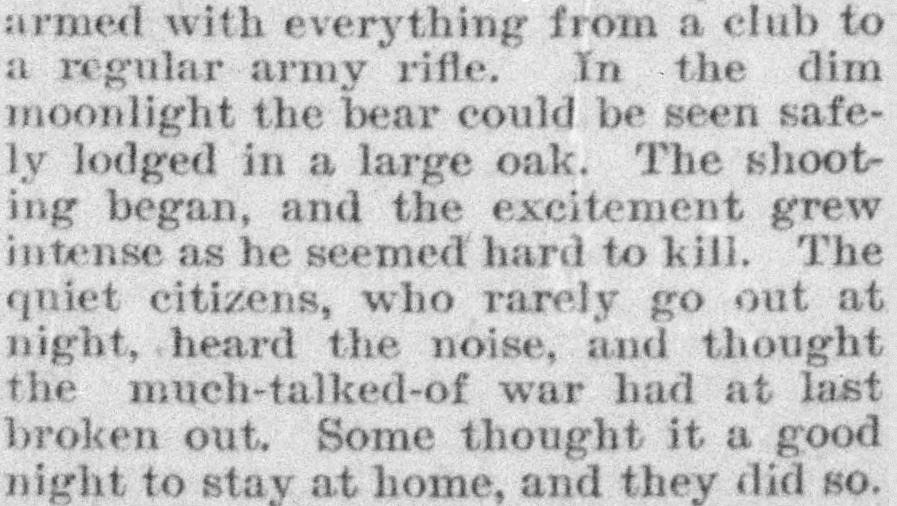
The night at the oak (the lines just before it are left out). The News and Observer, Raleigh, North Carolina, February 9, 1896, page 1. Library of Congress, Chronicling America. Click the clipping to read it full size.
What the Quiet Folks in Oxford Heard
Not everyone in Oxford, North Carolina, ran out to see the bear. The paper wrote about “the quiet citizens, who rarely go out at night,” who heard the noise from the edge of town and guessed what it must be. They “thought the much-talked-of war had at last broken out.”
The writer didn’t say which war, but that winter Americans had heard plenty of war talk. In December 1895, President Grover Cleveland had sent Congress a message about a quarrel with Great Britain over the border between Venezuela, a country in South America, and a British colony next door. The News and Observer put it at the top of its front page, under the words “Our Honor Must Be Maintained.” And the same front page that carried the bear story had news from Cuba, where rebels were fighting to break away from Spain.
So the quiet folks made a quiet choice. “Some thought it a good night to stay at home, and they did so,” the paper said.
Five Hundred Shots Into One Oak in Oxford
The crowd at the oak near Oxford, North Carolina, fired and fired. “After some five hundred rounds had been fired, they thought the bear must be dead.” A round is one shot. Counting to 500 out loud takes a kid several minutes, and the crowd fired about one shot for every number, all at one dark shape in one tree.
At last, “some one climbed the tree,” though the paper never gives the climber’s name. Then comes the best line in the whole story: “and sure enough he was, and had been all the time.” The bear was dead, all right, because it had never been alive.
“He was artificial,” the paper said. Artificial means made by people instead of by nature, so the bear in the oak was a fake.
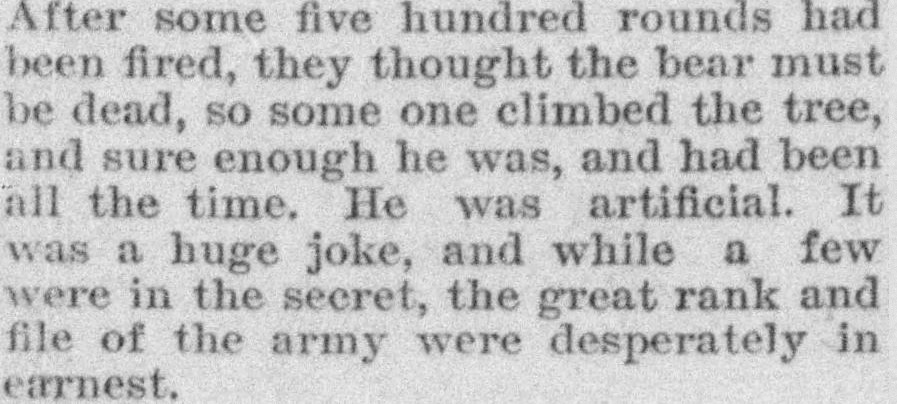
The climb, and the truth. The News and Observer, Raleigh, North Carolina, February 9, 1896, page 1. Library of Congress, Chronicling America. Click the clipping to read it full size.
The Joke on the “Army” of Oxford
A few people in Oxford, North Carolina, had planned the whole thing. “It was a huge joke,” the paper said, “and while a few were in the secret, the great rank and file of the army were desperately in earnest.” In an army, the rank and file are the regular soldiers, not the officers, and the writer called the crowd an “army” for fun, since the folks at home thought a war had started anyway. Desperately in earnest means dead serious.
The paper doesn’t say who the jokers were, what the bear was made of, or how it got up the tree. But its own words show why the trick worked. People had heard bear stories for weeks, so they were ready to believe one more. The night was dark, and the “bear” sat high in a big oak, where a crowd with clubs could never get close enough to touch it.
Oxford, North Carolina, in 1896
Oxford, North Carolina, was the county seat of Granville County, the town where the county court met. The 1896 state book said Oxford had “about 2,500 inhabitants” and was famous for its schools. Granville farmers grew tobacco, corn and wheat, and the book listed the county’s woodland as “oak, hickory, pine, dogwood, persimmon,” so a big oak at the edge of town was easy to find.
The bear story was a side note in the paper’s report on Granville Superior Court, whose January term had just ended after two full weeks with Judge Coble in charge. Its biggest case lasted nearly six days. The nephews and nieces of Col. John Johnson had challenged his will, the written wishes that say who gets a person’s things after they die, and the jury decided the will would stand. Then the writer turned to lighter news, and the headline called it “An Amusing Incident.”
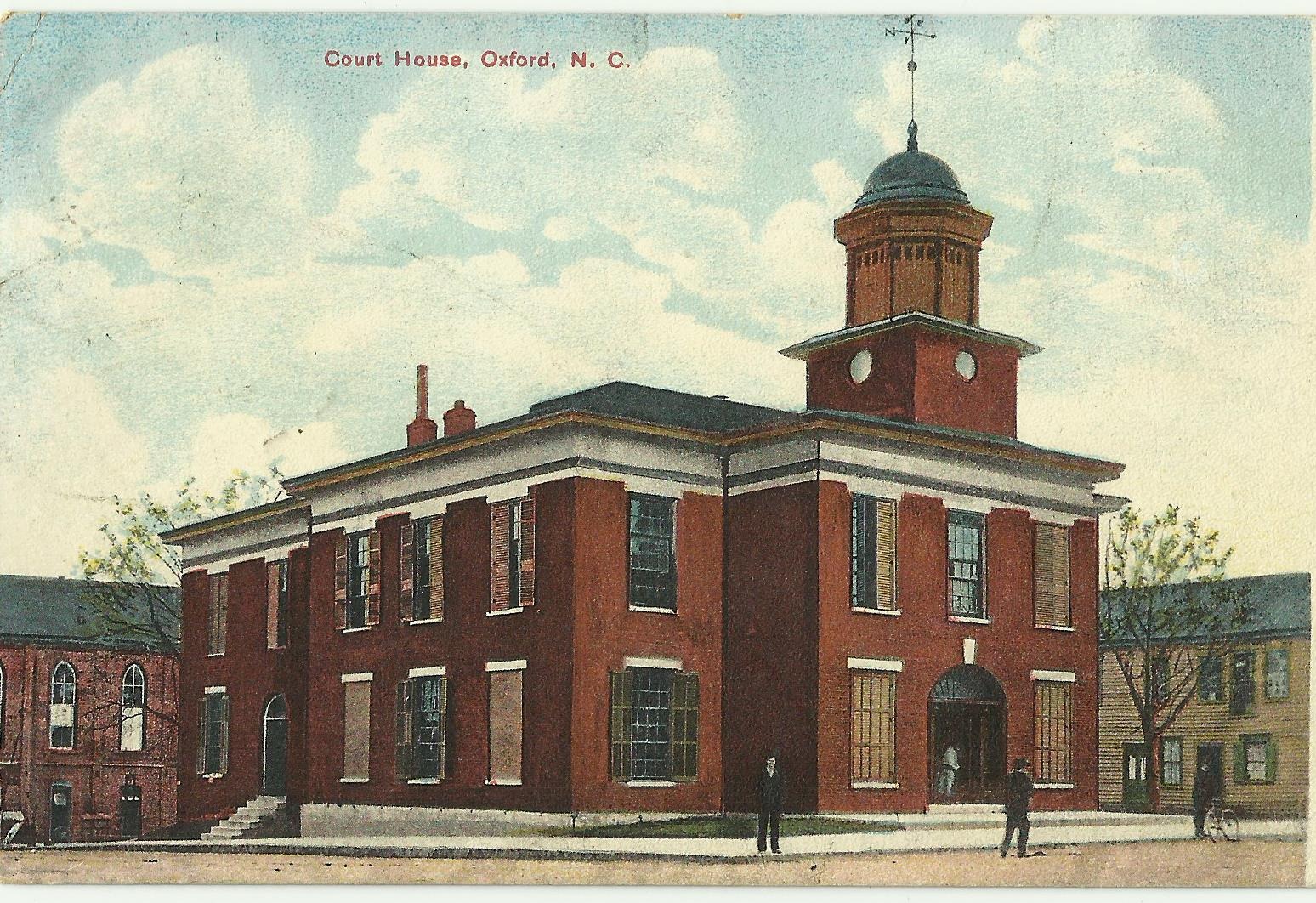
The Granville County Courthouse in Oxford, North Carolina, on an old postcard. PhC.184 Massengill Postcard Collection, State Archives of North Carolina, via Wikimedia Commons. No known copyright restrictions. Click the picture to see it full size.
The Oxford Bear by the Numbers
- Some 500 rounds fired, by the paper’s count
- 1 large oak
- A few people in on the secret
- About 2,500 people living in Oxford
- Weeks of bear stories before the big night
- 0 real bears
A Cousin of This Story
Oxford, North Carolina, wasn’t the only place where a fake animal fooled a crowd of hunters. In 1877, nineteen years before the Oxford bear, an Army general hid a stuffed wildcat in a tree near Omaha, Nebraska, and let his hunting friends blast away at it: The Wildcat in the Tree Near Omaha, Nebraska, Was Stuffed. A General Put It There.
We found the Oxford bear in only one paper, The News and Observer. We searched the other North Carolina papers online for that winter, including the weekly in nearby Henderson, and found no other telling.
The Bear at the Top of This Page
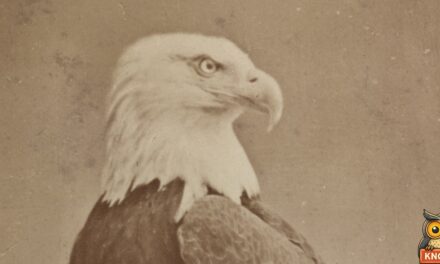
The picture at the top of this story about Oxford, North Carolina, is not the Oxford bear. It is a real bear cub up a bare tree, from a stereograph, a double photo card that looked 3-D in a viewer, which Alexander Lambert copyrighted in 1905 as “Little Bear in Tree.” The Library of Congress keeps it with pictures from Theodore Roosevelt’s 1905 hunting trip. It shows what the crowd in Oxford thought it saw that night: a dark bear shape high in the branches, against a pale sky.
The crowd never got a real bear, but it got a story worth telling. And the people who stayed home that night, sure the war had come, found out later that the only thing shot in Oxford was a fake bear in an oak tree.
Sources
- “Granville Superior Court. Important Will Suit, An Amusing Incident,” The News and Observer (Raleigh, North Carolina), February 9, 1896, page 1, dated Oxford, N. C., February 8: the bear story, the court term and the Johnson will case. The same page’s “The News This Morning” column has the Cuba news. Library of Congress, Chronicling America.
- “A Special Message. President Cleveland Writes About the Venezuelan Dispute. Our Honor Must Be Maintained,” The News and Observer (Raleigh, North Carolina), December 18, 1895, page 1. Library of Congress, Chronicling America.
- North Carolina State Board of Agriculture, North Carolina and Its Resources (Winston, North Carolina: M. I. and J. C. Stewart, 1896): the black bear, its “natural home” and the “hog-pen and sheep-fold” (page 297); Granville County’s woodland, crops, hogs and sheep, and Oxford’s “about 2,500 inhabitants” (page 343). University of North Carolina at Chapel Hill copy, Internet Archive.
- Checked for a second telling, not found: The Gold Leaf (Henderson, North Carolina), February 13 and 20, 1896, read page by page, and a full-text search of the North Carolina papers of early 1896 on Chronicling America.
- Alexander Lambert, “Little Bear in Tree,” stereograph, copyright 1905 (the cover). Library of Congress Prints and Photographs Division. No known restrictions on publication.
- “Court House, Oxford, N. C.,” postcard, undated, PhC.184 Massengill Postcard Collection, State Archives of North Carolina, via Wikimedia Commons. No known copyright restrictions.
- The newspapers, book, stereograph and postcard above were all published or made before 1931 and are in the public domain.