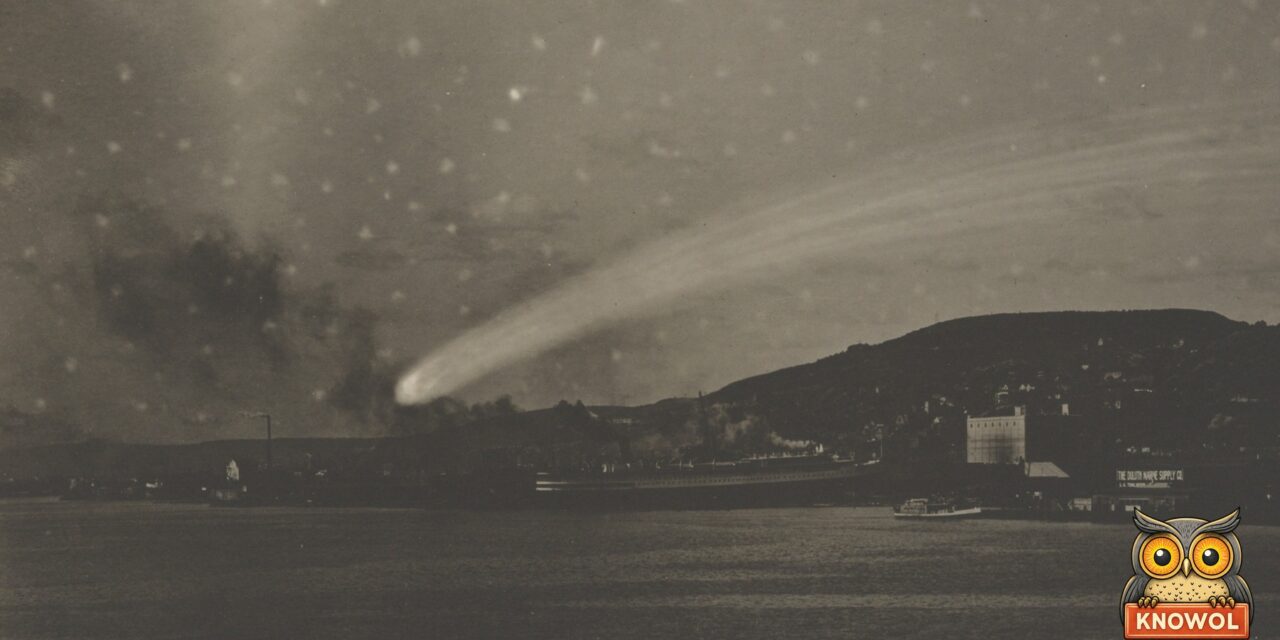
In May 1910, a neighbor named D. C. Ramsey carried one very strange egg into Staunton, Virginia, to show people. The egg was soft. It was an odd shape. And it had a tail six to eight inches long. Its owner, Mrs. M. J. Campbell, lived just over the county line in Rockbridge County. Everyone who saw it said the same thing: that egg looks like Halley’s Comet.
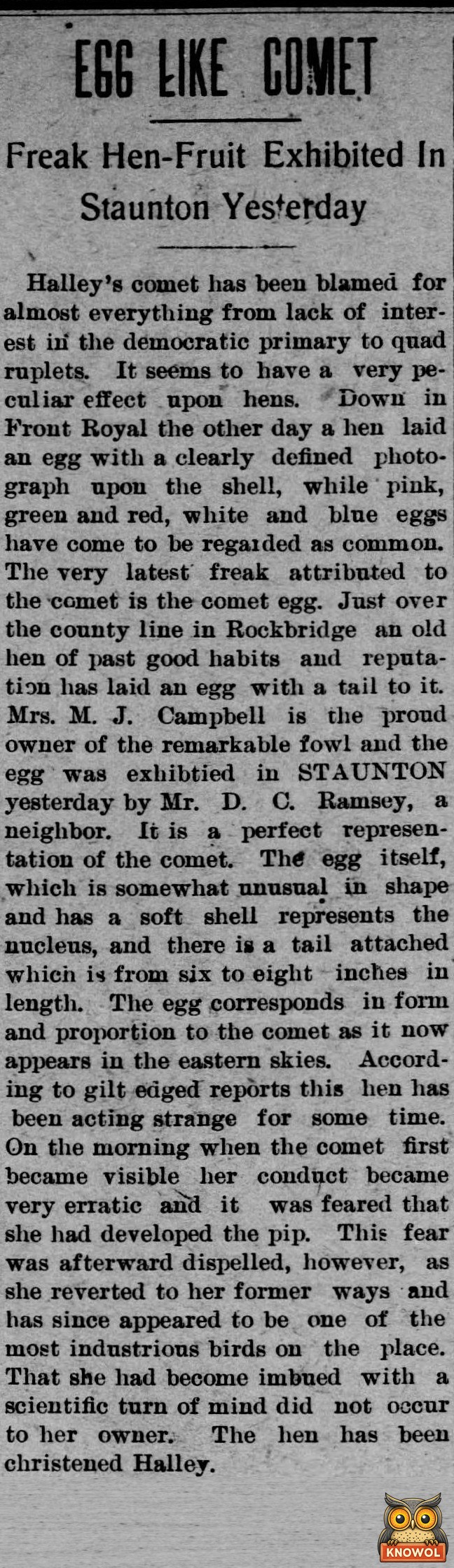
“Egg Like Comet: Freak Hen-Fruit Exhibited In Staunton Yesterday.” Staunton Spectator and Vindicator, Staunton, Virginia, May 13, 1910, page 3. Library of Congress, Chronicling America. Published 1910, public domain. Click the clipping to read it full size.
The Staunton Spectator put the egg in the paper on Friday, May 13, 1910. “Hen-fruit” was old slang for eggs. The paper was having fun, and it said so in its first line: “Halley’s comet has been blamed for almost everything from lack of interest in the democratic primary to quadruplets.”
Why Staunton, Virginia, Was Looking Up
Halley’s Comet comes back about once every 76 years. In the spring of 1910 it was back, bright enough to see without a telescope. People in Staunton and all over the country got up before dawn to look for it low in the eastern sky. Newspapers ran comet stories every day.
So when Mrs. Campbell’s hen laid an egg with a tail, nobody thought it was an accident. The Spectator called her “an old hen of past good habits and reputation.” In other words, she had always been a good, plain, ordinary hen. Then the comet showed up, and she “laid an egg with a tail to it.”
The paper said the egg matched the comet. The round part, with its soft shell, was the comet’s bright head. The long tail was the tail. “The egg corresponds in form and proportion to the comet as it now appears in the eastern skies.”
The Hen Near Staunton Who Acted Strange
The Spectator also had a report on the hen herself. It said she had been acting strange for a while. “On the morning when the comet first became visible her conduct became very erratic and it was feared that she had developed the pip.” The pip was a sickness of chickens, so the family was worried about her.
She got better. The paper said she went back to her old ways and became “one of the most industrious birds on the place.” Industrious means hard-working. For a hen, that means laying eggs.
Then came the best two lines in the story. “That she had become imbued with a scientific turn of mind did not occur to her owner. The hen has been christened Halley.” Imbued means filled up. So the joke is that the hen had turned into a little astronomer, and nobody on the farm noticed. Now she had a name to match.
Comet Eggs All Over the Country
Mrs. Campbell’s hen was not the only one. In the spring of 1910, papers in at least ten states printed “comet egg” stories. The Spectator itself said that in Front Royal, Virginia, “a hen laid an egg with a clearly defined photograph upon the shell.” It added that “pink, green and red, white and blue eggs have come to be regarded as common.” The paper didn’t say who saw those, and it was having fun, so take that part with a grain of salt.
Most comet eggs had one thing in common: a tail. And people loved to show them off. In Fredericksburg, Virginia, a store owner named A. P. Dempsey found one in his back yard in June. Its tail was over four inches long. The Free Lance, the town paper, told readers where to go. “Any one wishing to see this curiosity can call at Mr. Dempsey’s Dry Goods Store.”
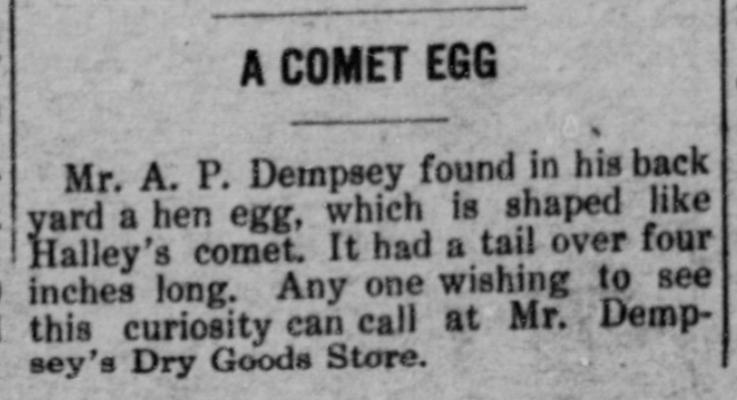
“A Comet Egg.” The Free Lance, Fredericksburg, Virginia, June 21, 1910, page 1. Library of Congress, Chronicling America. Published 1910, public domain. Click the clipping to read it full size.
Back in Staunton, the eggs kept coming. In July, a farmer named G. J. Miller from the Fort Defiance neighborhood walked into the newspaper office with an egg that had a spiral line around one end. The paper said it was different “from those eggs which have been coming to our office known as Comet eggs.” So by July, a comet egg in Staunton was almost old news.
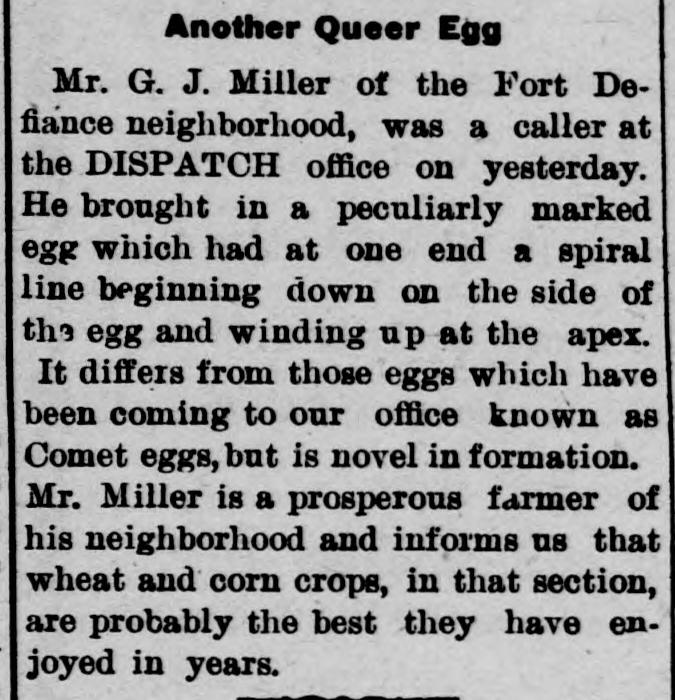
“Another Queer Egg.” Staunton Spectator and Vindicator, Staunton, Virginia, July 8, 1910, page 2. Library of Congress, Chronicling America. Published 1910, public domain. Click the clipping to read it full size.
The Professors Take a Look
In Ithaca, New York, a man named William Scott found a comet egg in his henhouse in early June. He wasn’t sure which hen laid it. The Evening Star in Washington, D.C., said he “is uncertain whether it was a white leghorn or a Rhode Island red that laid it; he has hens of both breeds.” This time the egg went to real scientists. “Professors of Cornell University are making an examination.”
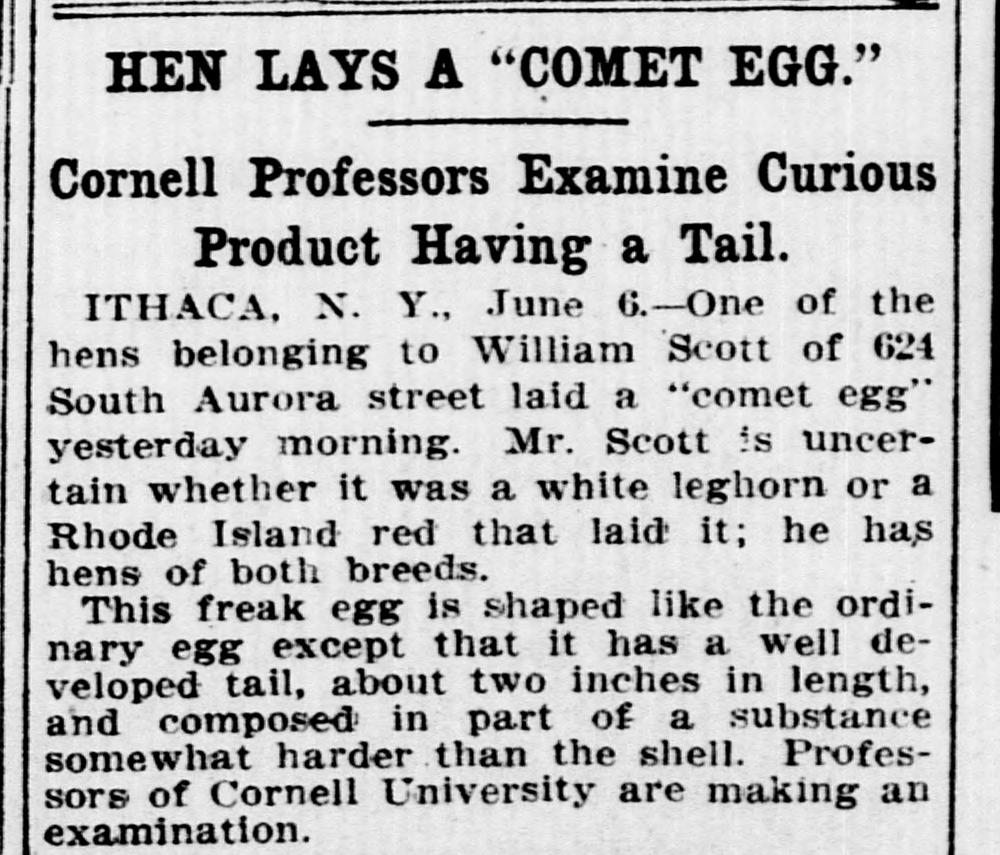
“Hen Lays a ‘Comet Egg.'” Evening Star, Washington, D.C., June 6, 1910, page 3. Library of Congress, Chronicling America. Published 1910, public domain. Click the clipping to read it full size.
Cornell had a college of agriculture with teachers who studied poultry. Their job was to find out if the comet had anything to do with how hens lay eggs. The Alexandria Gazette in Virginia added one more clue from Mr. Scott. While people were worried about the Earth passing through the comet’s tail, “Scott’s hens did not lay at all,” he said.
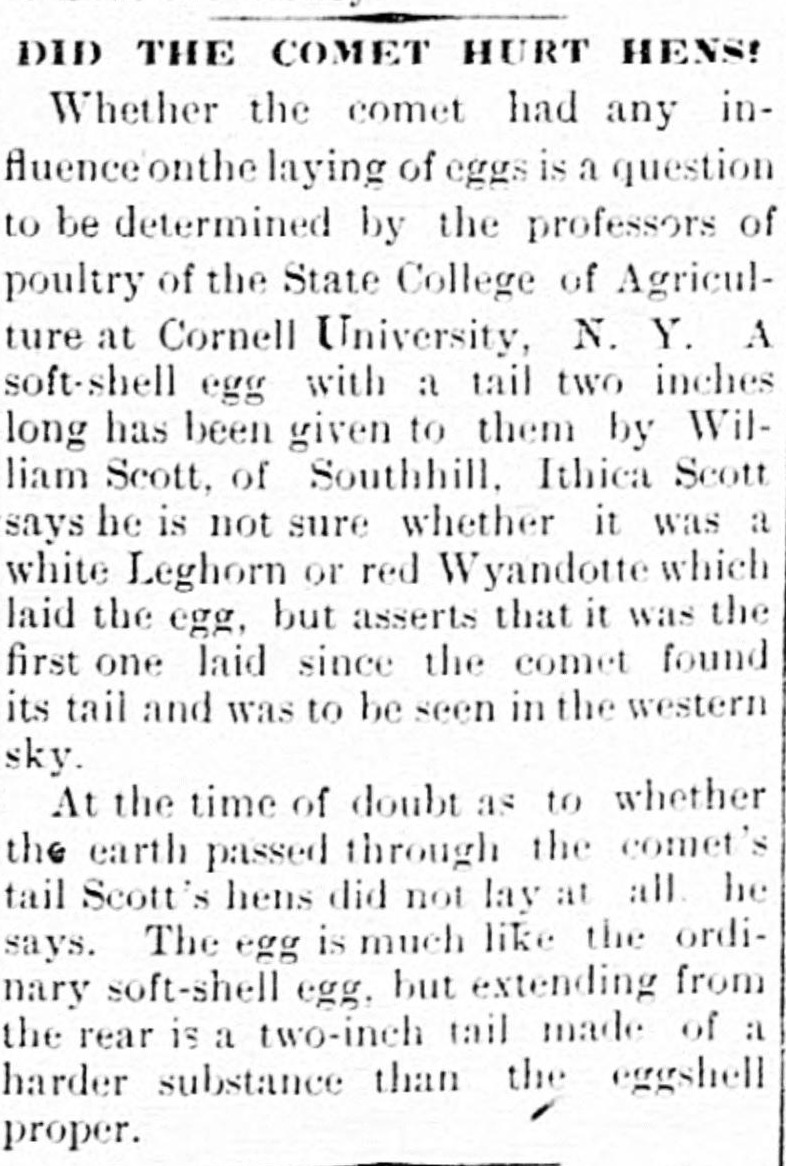
“Did the Comet Hurt Hens!” Alexandria Gazette, Alexandria, Virginia, June 10, 1910, page 2. Library of Congress, Chronicling America. Published 1910, public domain. Click the clipping to read it full size.
If the Cornell professors ever announced an answer, we could not find it in the papers.
What a Comet Egg Really Was
A chicken doctor’s book from those same years gives a clue. In 1914, B. F. Kaupp wrote a book called Poultry Diseases and Their Treatment. It has a section on “abnormal eggs,” which means eggs that come out wrong. Kaupp said these eggs are rare, but “they possess much interest for the scientific investigator.”
One kind is the soft-shell egg, like Halley the hen’s. Kaupp listed the causes: too much food, not enough shell-making food, and one more. “Still another cause is fright, which may cause a premature detachment of the yolk.” Premature means too early. A scared hen could lay an egg before it was finished.
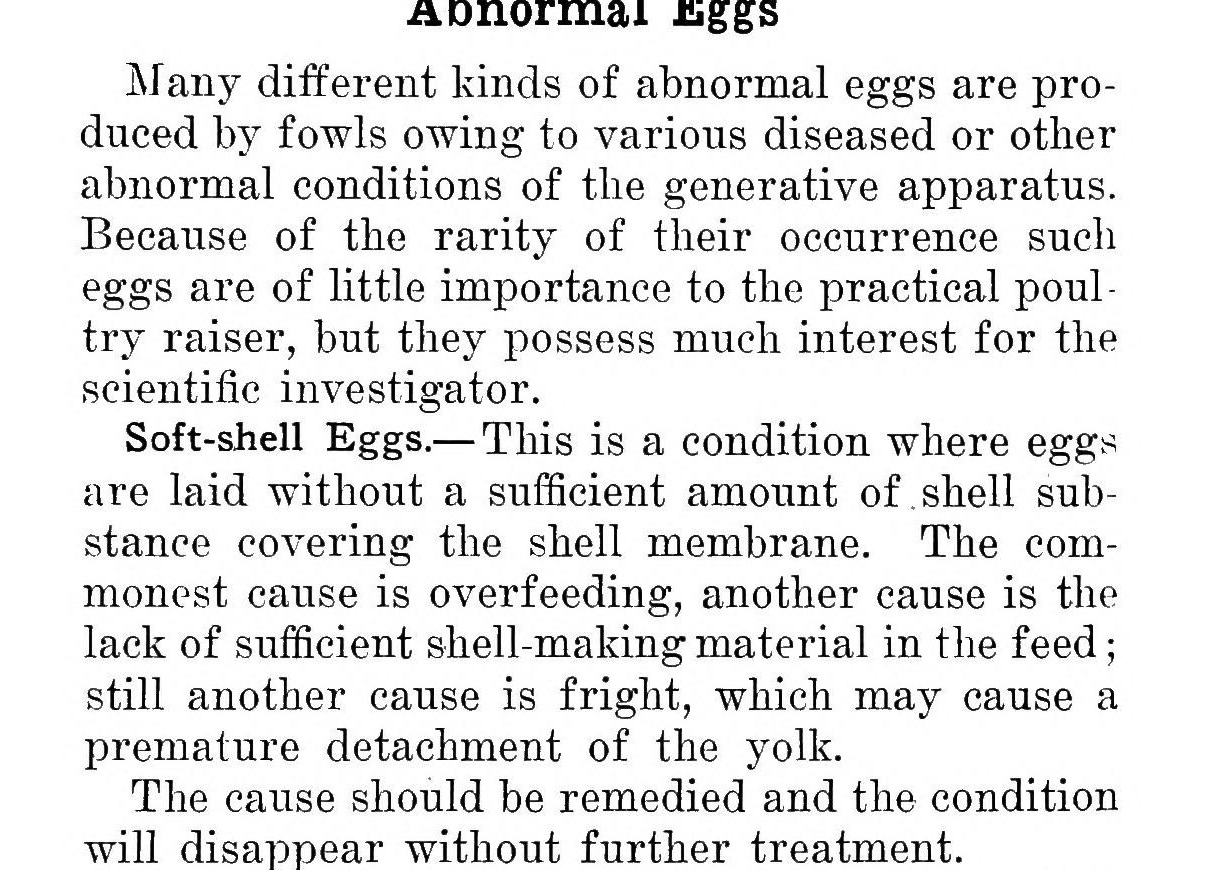
“Abnormal Eggs.” B. F. Kaupp, Poultry Diseases and Their Treatment, Chicago, 1914, page 133. Cornell University Library copy, Internet Archive. Published 1914, public domain. Click the clipping to read it full size.
The book never says a word about comets. A comet is millions of miles away, and a hen can’t read a newspaper. But in 1910, the whole country was staying up late, talking about the sky, and making a fuss. Nobody can say for sure, but a fuss like that can rattle a barnyard. Maybe Halley the hen really did have a rough spring after all.
Staunton, Virginia, and the Comet’s Picture
Staunton was a busy little city back then, the county seat of Augusta County. An 1891 bird’s-eye map counted its people at 12,000, with railroads, mills and hills all around.
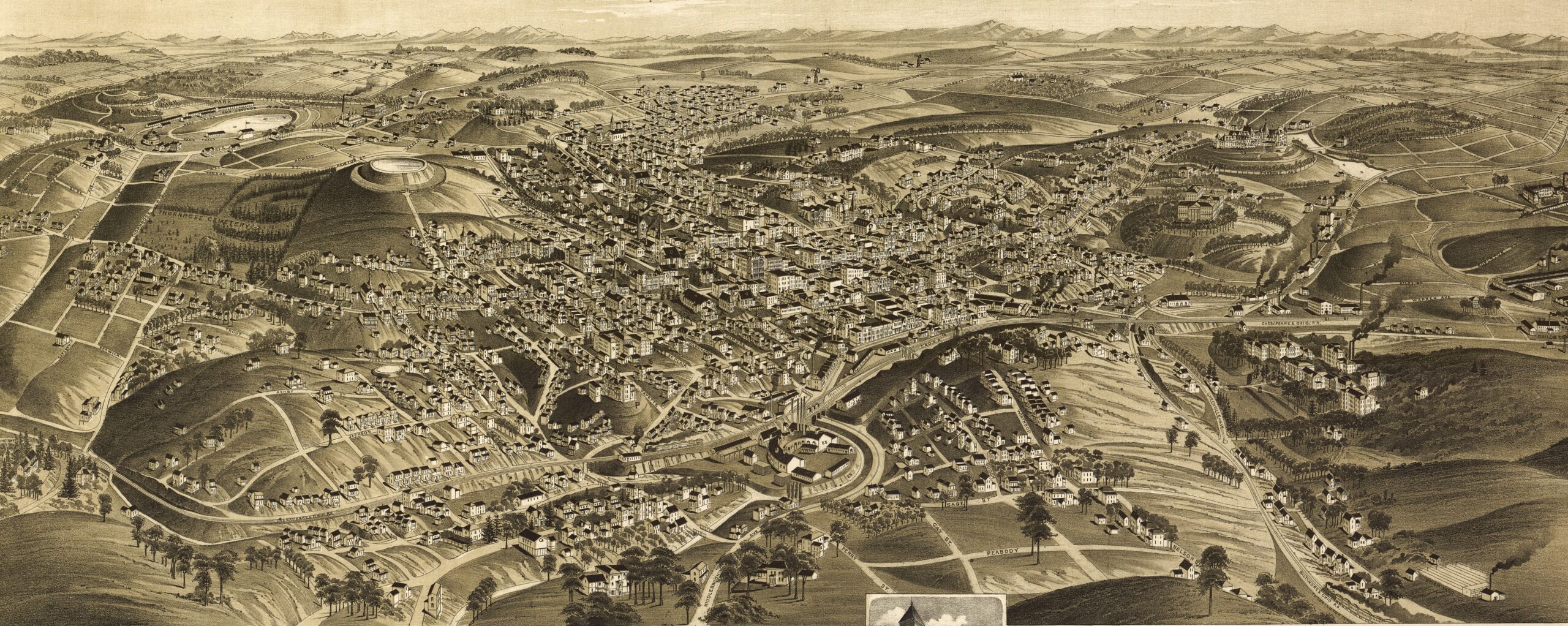
Staunton, Virginia, drawn as a bird’s-eye map in 1891, about 19 years before the comet egg. Perspective Map of the City of Staunton, Va., American Publishing Co., Library of Congress Geography and Map Division. Click the picture to see it full size.
The picture at the top of this story is not Staunton. It is a 1910 photo postcard called “Halley’s Comet. Seen at Duluth, Minn.,” by a photographer named McKenzie, now at the Library of Congress. It shows the comet’s long tail over Duluth, Minnesota, the same spring Halley the hen laid her egg.
Halley’s Comet came back again in 1986, and it is due back in 2061. Other towns had their own comet fun that spring, with comet parties in Plymouth, Indiana. But the egg in Staunton has the best last line. A plain old hen in Rockbridge County laid one strange egg, a neighbor carried it to town, and she ended up with the most famous name in the sky.
Sources
- “Egg Like Comet: Freak Hen-Fruit Exhibited In Staunton Yesterday.” Staunton Spectator and Vindicator, Staunton, Virginia, May 13, 1910, page 3. Library of Congress, Chronicling America
- “Hen Lays a ‘Comet Egg.'” Evening Star, Washington, D.C., June 6, 1910, page 3. Library of Congress, Chronicling America
- “Did the Comet Hurt Hens!” Alexandria Gazette, Alexandria, Virginia, June 10, 1910, page 2. Library of Congress, Chronicling America
- “A Comet Egg.” The Free Lance, Fredericksburg, Virginia, June 21, 1910, page 1. Library of Congress, Chronicling America
- “Another Queer Egg.” Staunton Spectator and Vindicator, Staunton, Virginia, July 8, 1910, page 2. Library of Congress, Chronicling America
- B. F. Kaupp, Poultry Diseases and Their Treatment (Chicago, 1914), page 133. Internet Archive, Cornell University Library copy
- Cover: “Halley’s Comet. Seen at Duluth, Minn.,” photo postcard by McKenzie, 1910. Library of Congress Prints and Photographs. Published 1910, public domain.
- “Perspective Map of the City of Staunton, Va., County Seat of Augusta County, Virginia, 1891.” American Publishing Co. Library of Congress Geography and Map Division. Published 1891, public domain.
- Newspaper pages and books printed in 1910 and 1914 are in the public domain.