On Monday morning, November 9, 1874, readers of the New York Herald in New York City turned to page 3 and found a stack of headlines running down the first column. “AWFUL CALAMITY,” the top one said. “The Wild Animals Broken Loose from Central Park.” Below it came “Savage Brutes at Large,” “The Killed and Wounded” and, in case anyone doubted how serious it was, “Governor Dix Shoots the Bengal Tiger in the Street.”
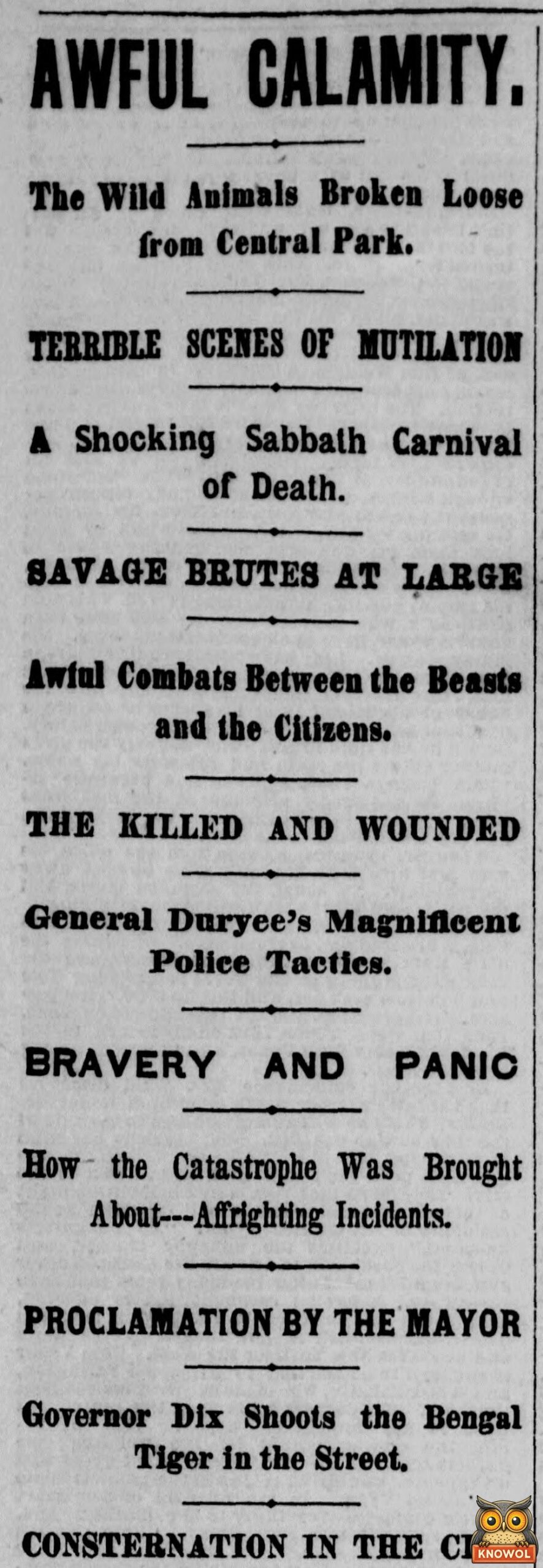
“Awful Calamity,” the New York Herald, New York, November 9, 1874, page 3. Library of Congress, Chronicling America. Click the clipping to read it full size.
Six columns of disaster
The story filled the whole page. It said that on Sunday afternoon, after the public had gone, a keeper at the Central Park menagerie poked his cane through the bars at Pete, the rhinoceros. Pete smashed out of his pen and broke open the cages of the other animals, and soon a puma, a leopard, a jaguar, an African lioness and a tiger were loose in the city. An animal thought to be a tiger leaped onto a crowded ferryboat on West Twenty-third Street. The anaconda went for the giraffe in the next cage. The Herald printed a list of 49 dead and nearly 200 injured, and a proclamation from the mayor: “All citizens, except members of the National Guard, are enjoined to keep within their houses or residences until the wild animals now at large are captured or killed.”
The menagerie itself was real. Its birds and animals were grouped around the old Arsenal building, just inside the park entrance at East Sixty-fourth Street, and the animal houses the Herald described were buildings that thousands of New Yorkers walked past every Sunday.
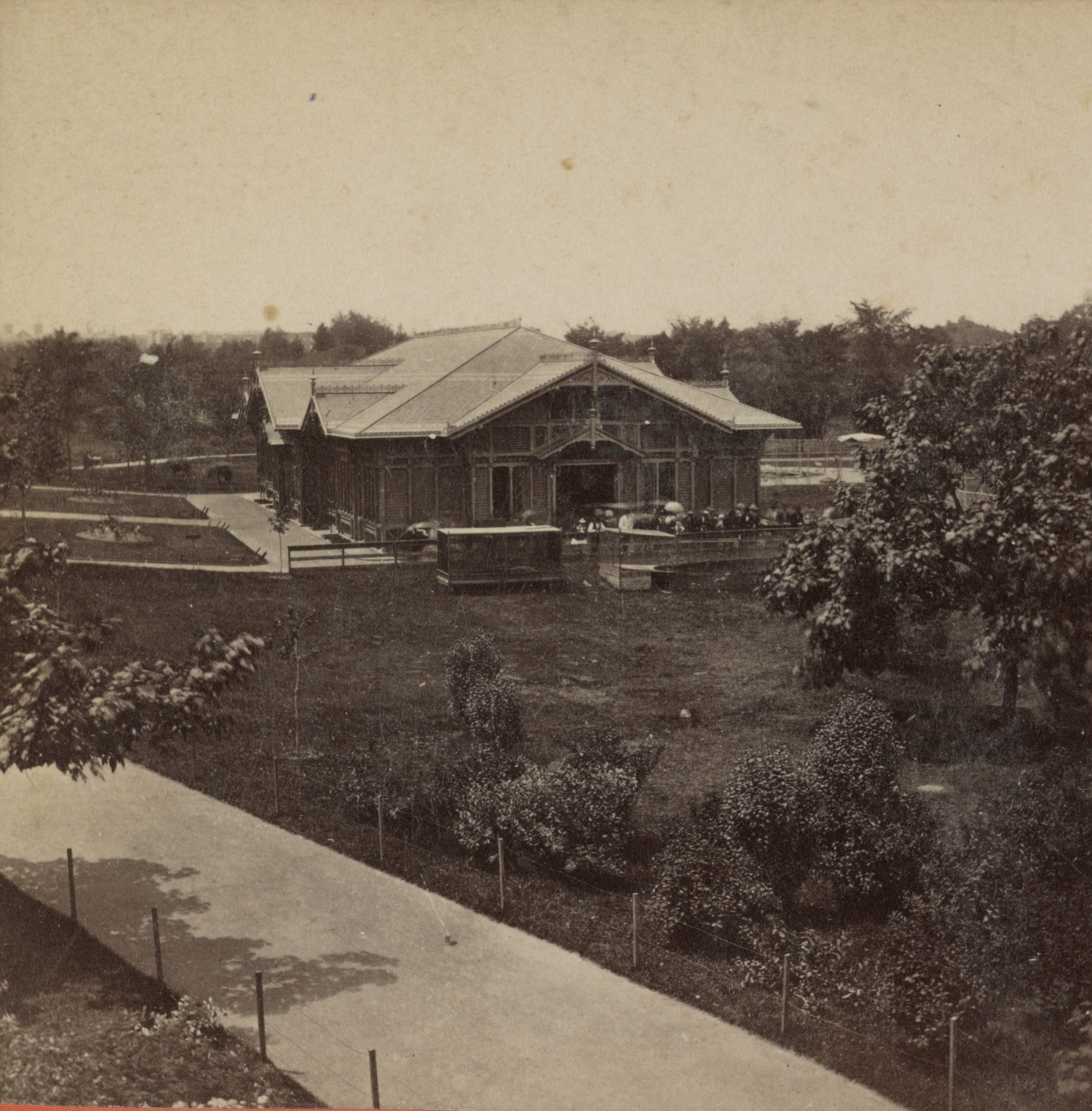
The Menagerie building in Central Park, one half of a stereograph published by E. & H. T. Anthony & Co., 1870s. Library of Congress Prints and Photographs Division. Click the picture to see it full size.
“Not one word of it is true”
At the very bottom of the last column, under a small heading, “The Moral of the Whole,” the Herald came clean. “Of course the entire story given above is a pure fabrication,” it said. “Not one word of it is true.” The writer explained that the idea had come to him a few days earlier while he was gazing through the iron bars of the cages, and he meant it as a warning: if one careless keeper could set the animals loose, was the city ready?
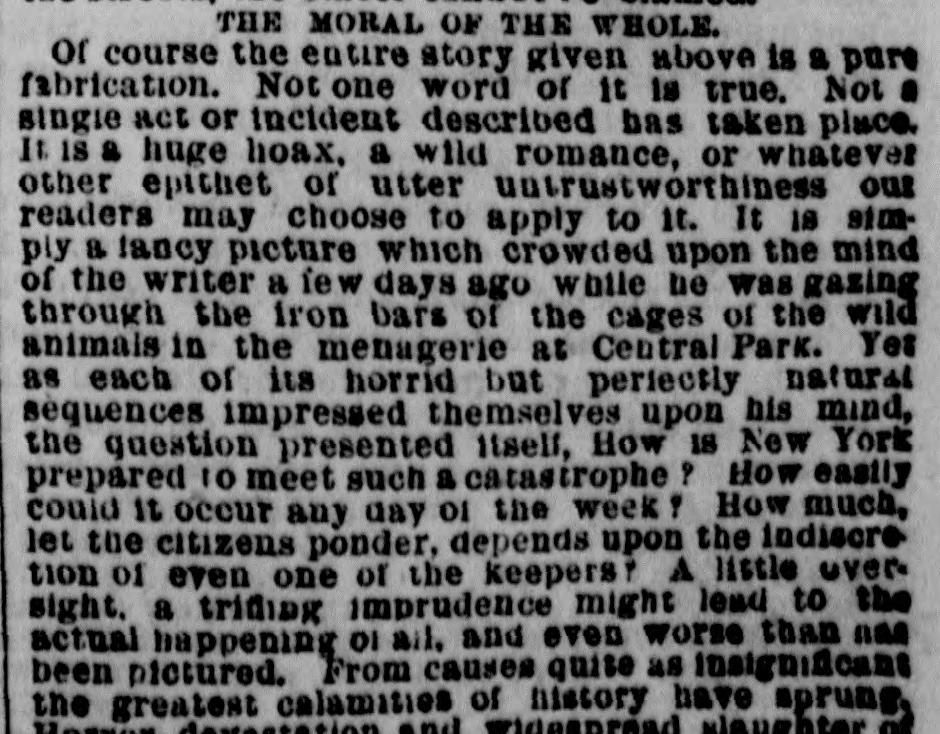
“The Moral of the Whole,” the confession at the end of the story, New York Herald, November 9, 1874. Library of Congress, Chronicling America. Click the clipping to read it full size.
Telegrams, cabs and empty desks
Plenty of readers never reached the bottom of the page. “In many instances people read only the head-lines,” the New-York Tribune reported the next morning, “and others again did not see the denial in the short paragraph at the end.” The Herald also put the story out as an “Extra” later in the day, which spread the scare further.
The Tribune described a city that stayed indoors. Fathers telegraphed home to keep their children out of school and their wives off the streets, then sent more telegrams once they learned it was a hoax. People went to Police Headquarters to ask the superintendent if it was true and were angry to hear it wasn’t. Schools near the park had empty seats. Mr. Owen, the principal of Grammar School No. 37 on Eighty-seventh Street, said several men with children at the school had come by that morning to say their children were staying home because the neighborhood was too dangerous. He guessed he was short 15 or 20 pupils.
One mother wrote a letter to the Tribune. She had left home after breakfast, telling the nurse to take her two babies to Central Park, three blocks away. Downtown at City Hall Park, she bought the Herald’s extra from a newsboy and read the mayor’s proclamation. She ran for the nearest carriage and offered the driver all the money she had with her, $15, to get her home as fast as he could. He did it in 25 minutes. “It seemed an hour,” she wrote.
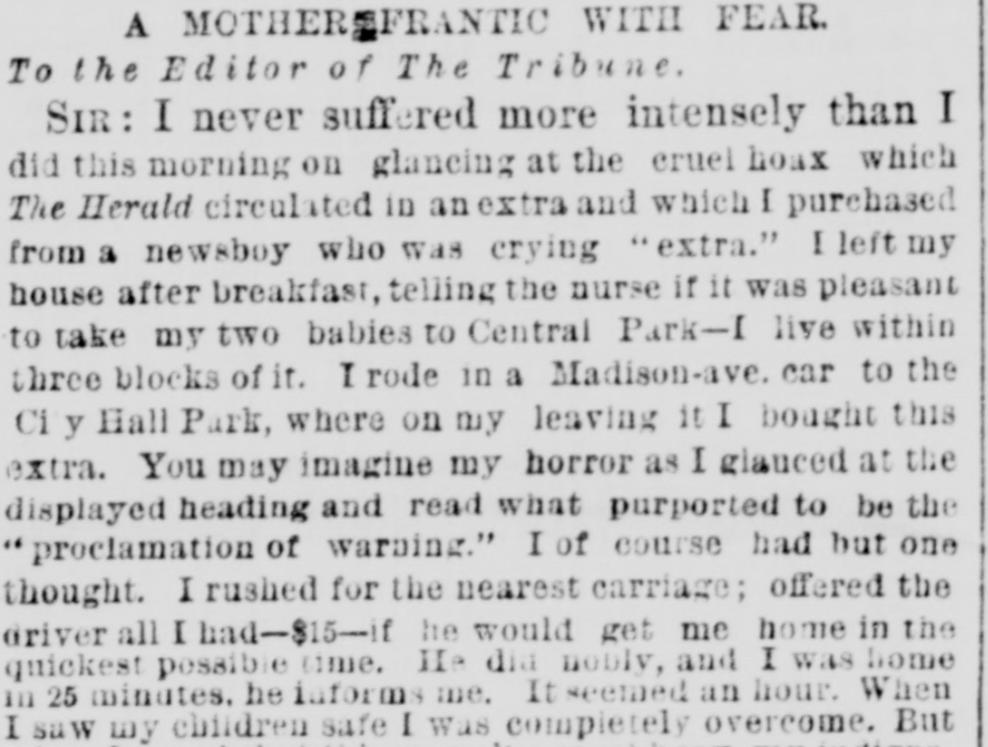
“A Mother Frantic With Fear,” a letter to the New-York Tribune, New York, November 10, 1874. Library of Congress, Chronicling America. Click the clipping to read it full size.
“A ghastly effort at fun”
Other papers were not amused. The Tribune called the story “a ghastly effort at fun” and said “nothing would so become its author as a prompt entry into the Tombs,” the city jail. In Massachusetts, the Worcester Daily Spy scoffed at a paper that thought it smart to fill a whole page with a hoax. The Herald’s own answer, the next day, was a long article on what the city should do about its menageries. Its first sentence pointed out how much a purely imaginary report had stirred up the public, and asked what real animals would do.
The papers from that week don’t describe crowds with rifles hunting tigers. They describe something quieter and easier to believe: people who read the big type and not the small, and families who stayed home on a November Monday, waiting for an all-clear that the fake proclamation promised and that was never going to come.
Sources
- The New York Herald (New York, N.Y.), November 9, 1874, page 3 (the hoax, the proclamation, “The Moral of the Whole”) and November 10, 1874, page 3 (“Wild Beasts”).
- New-York Tribune (New York, N.Y.), November 10, 1874, page 5 (“Alarm Caused by a Newspaper Article” and “A Mother Frantic With Fear”) and page 4 (editorial).
- Worcester Daily Spy (Worcester, Mass.), November 10, 1874, page 2.
- “The Menagerie building, Central Park, New York,” stereograph, E. & H. T. Anthony & Co., between 1871 and 1881: Library of Congress Prints and Photographs Division, LC-DIG-stereo-1s07189. No known restrictions on publication.
- All newspaper images: Library of Congress, Chronicling America. No known copyright restrictions.
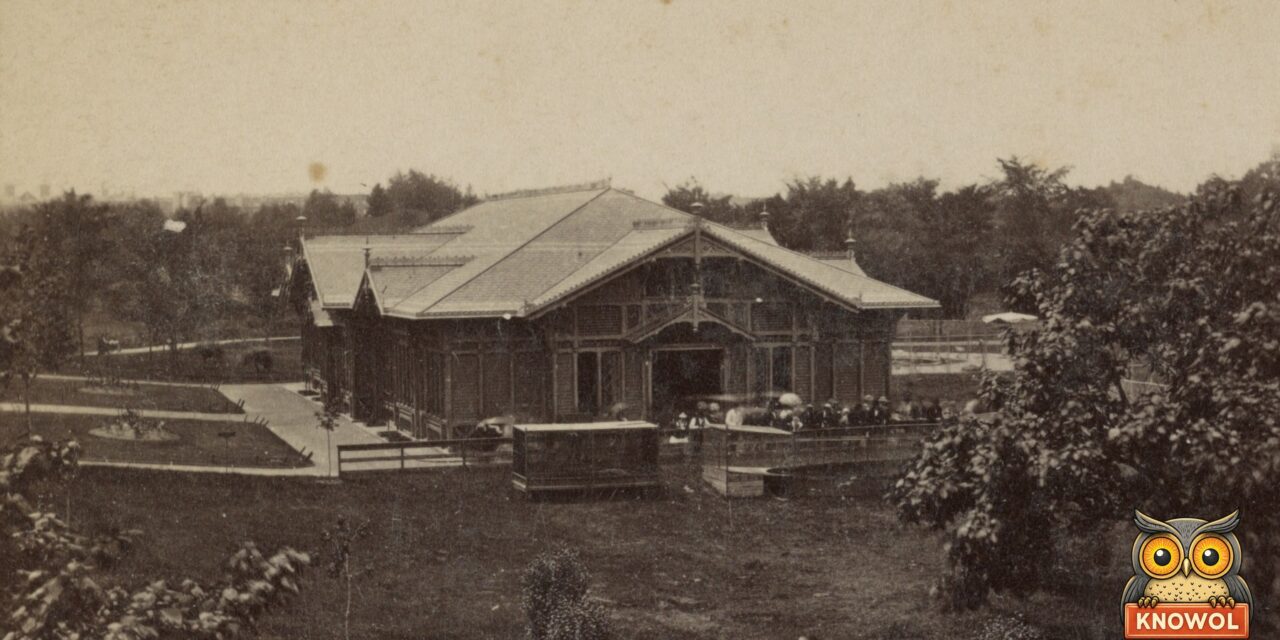
- Cover: “The Menagerie building, Central Park, New York,” one half of a stereograph by E. & H. T. Anthony & Co., 1870s (cropped). Library of Congress Prints and Photographs Division, LC-DIG-stereo-1s07189. No known restrictions on publication.