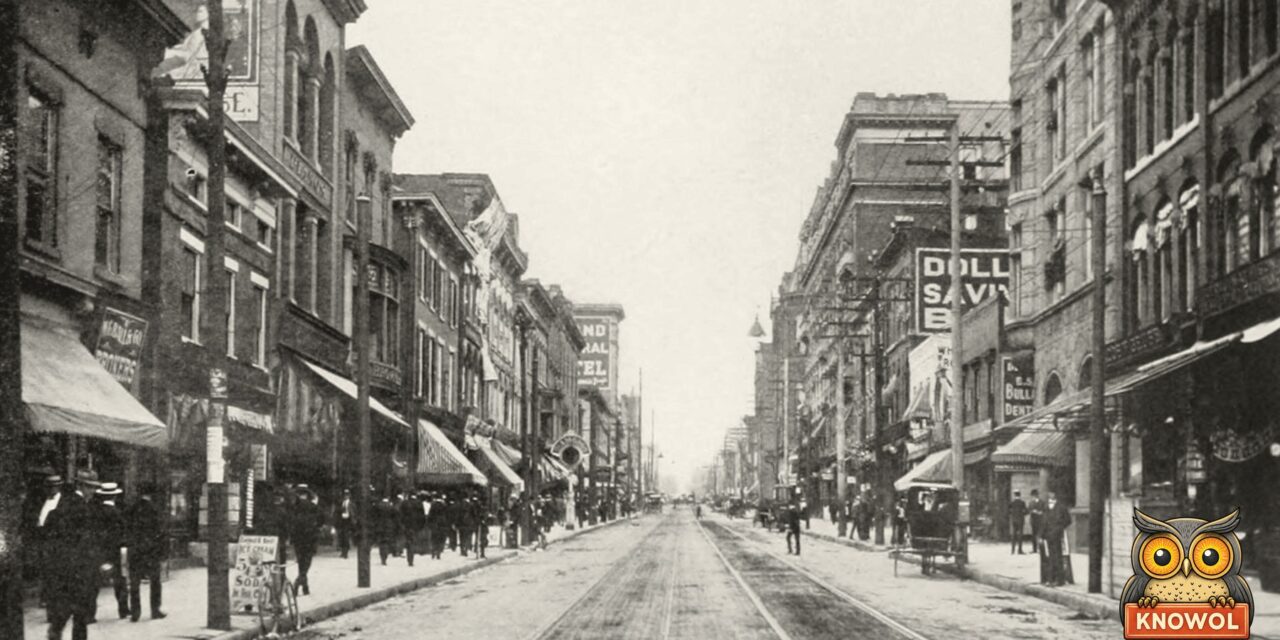
At 1:30 in the morning on Wednesday, September 13, 1905, a man walked down Chapline Street in Wheeling, West Virginia. He took long steps, three feet at a time. After every step he called out the count, as loud as he could. One. Two. Three.
His name was M. B. Curkendall. He was an ex-deputy sheriff from Clarksburg, West Virginia, in town for the State Fair. He believed he was measuring the track for a foot race with big money riding on it. He believed a crowd of men stood behind him, waiting. At forty he stopped to catch his breath, and that is when he noticed how quiet the street was.
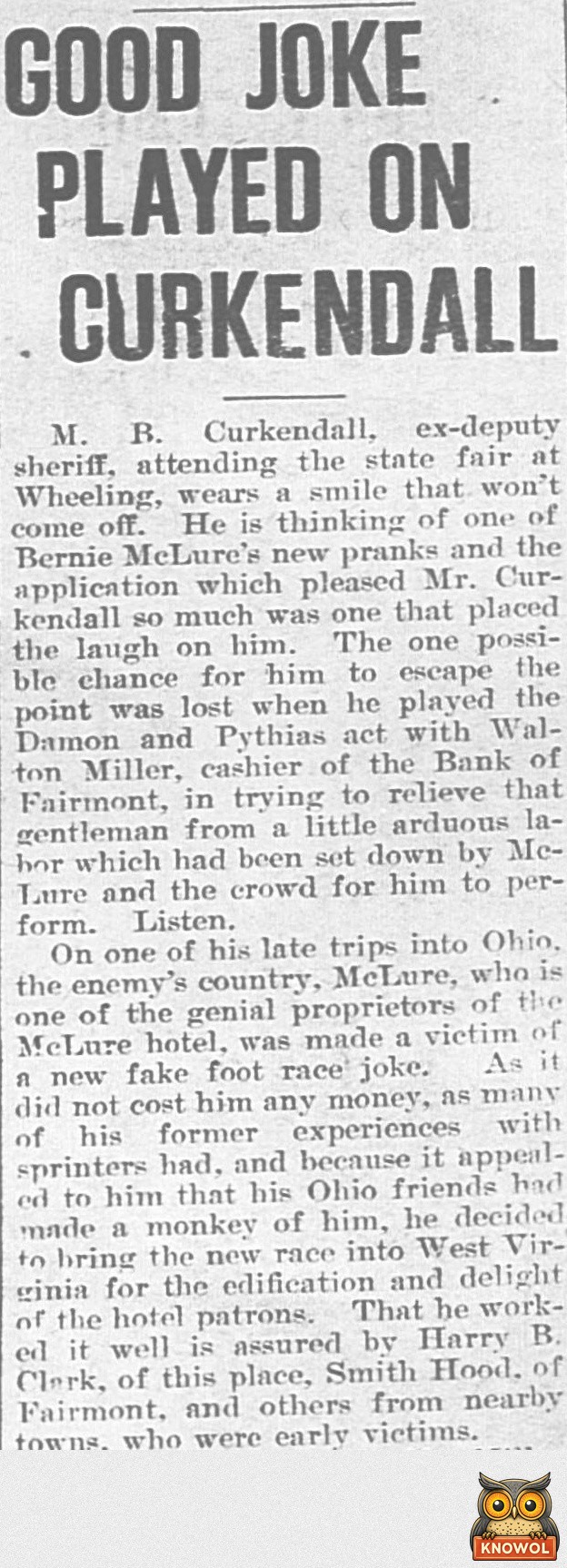
“Good Joke Played on Curkendall.” The headline and the first two paragraphs. The Daily Telegram, Clarksburg, West Virginia, September 15, 1905, page 2. Library of Congress, Chronicling America. Click the clipping to read it full size.
It started in a hotel lobby
It was State Fair week in Wheeling. Curkendall’s hometown paper, the Daily Telegram, told what happened to him there. It began in the lobby of the McLure hotel. The paper called Bernie McLure “one of the genial proprietors,” which means one of the friendly owners.
Early that Wednesday, Curkendall and some other men were standing in the lobby when an argument broke out. McLure was telling “a dapper looking young man” that he would not race him again. He “had won the foot race that day,” and that was enough. The stranger wanted another try and offered “to wager a large sum.” A wager is a bet. McLure “held back,” then gave in, “and the money was placed.”
Word went around the hotel that the stranger “was likely a professional,” a runner who raced for pay. Harry Clark, a Clarksburg man, told Curkendall to come along, “as there was going to be some fun.” Curkendall thought the fun would be watching a professional “separate McLure from his money.” The paper told the next part in two words: “He went.”
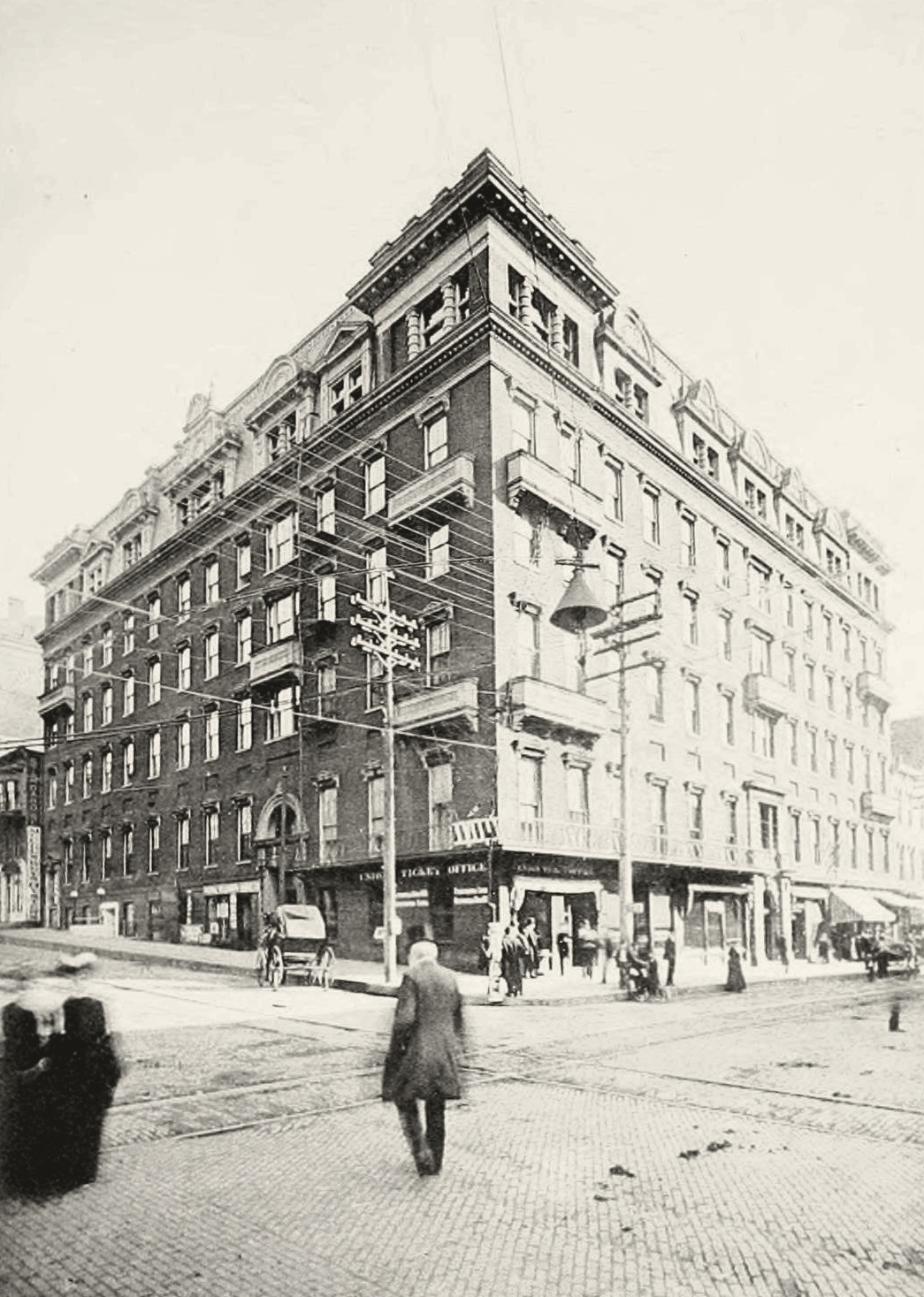
The McLure Hotel in Wheeling, from a picture book of the city published in 1903, two years before the joke. The argument started in its lobby. From “Wheeling” (W. T. Nicoll, 1903), Library of Congress copy at the Internet Archive. Public domain. Click the picture to see it full size.
“Kind sir, allow me”
The party walked to Chapline Street, which was “deserted” at that hour. The stranger began to step off five yards. That was the head start McLure had agreed to give him. McLure complained. The stakeholder, the man holding the bet money, offered to measure it instead. McLure complained again.
The trap had been set for another man in the crowd. He was Walton Miller, the cashier of the Bank of Fairmont, West Virginia. Miller started to speak up. “Let me,” he began. He got no further, because Curkendall did not want his friend to take “extra steps.” The Telegram says he “butted in.” His words were, “Kind sir, allow me to measure the distance.”
So Curkendall measured the fifteen feet. Then the racers remembered that the track had to be fifty yards long. It was “just as well for Mr. Curkendall to step that off,” too. “He agreed.” As he started down the street, McLure yelled after him, “Call ’em out after each step.”
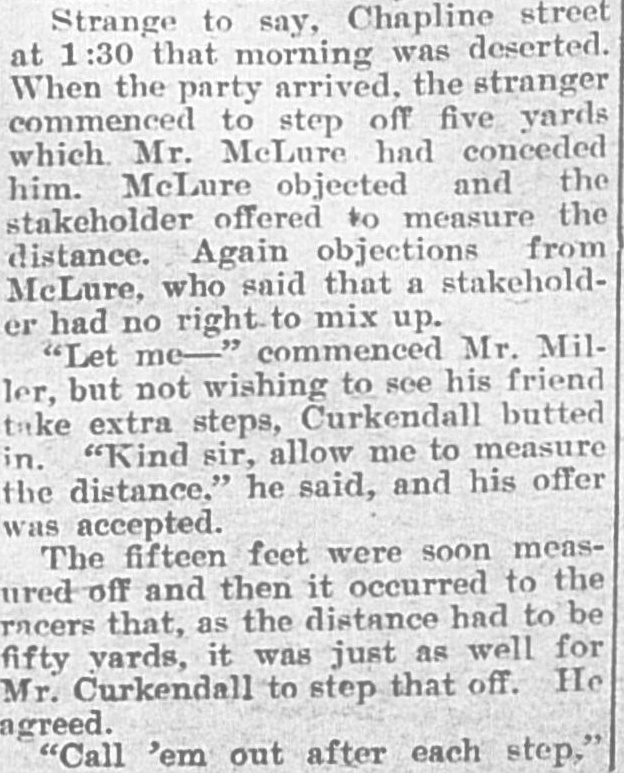
The scene on Chapline Street, from the same story. The Daily Telegram, Clarksburg, West Virginia, September 15, 1905, page 2. Library of Congress, Chronicling America. Click the clipping to read it full size.
Forty steps
Curkendall did as he was told. He went off counting “One, two, three,” the paper says, “in a loud voice.” At three feet a step, forty steps is 120 feet. That is where he stopped.
“He was out of breath from shouting the numbers,” the Telegram says. Then comes the best line in the story: “The quietude of the region startled him.” Quietude is an old word for quiet. The paper went on, “Looking back, he saw that not a soul was in sight.” The whole party had run back to the hotel “to await the return of the latest victim.”
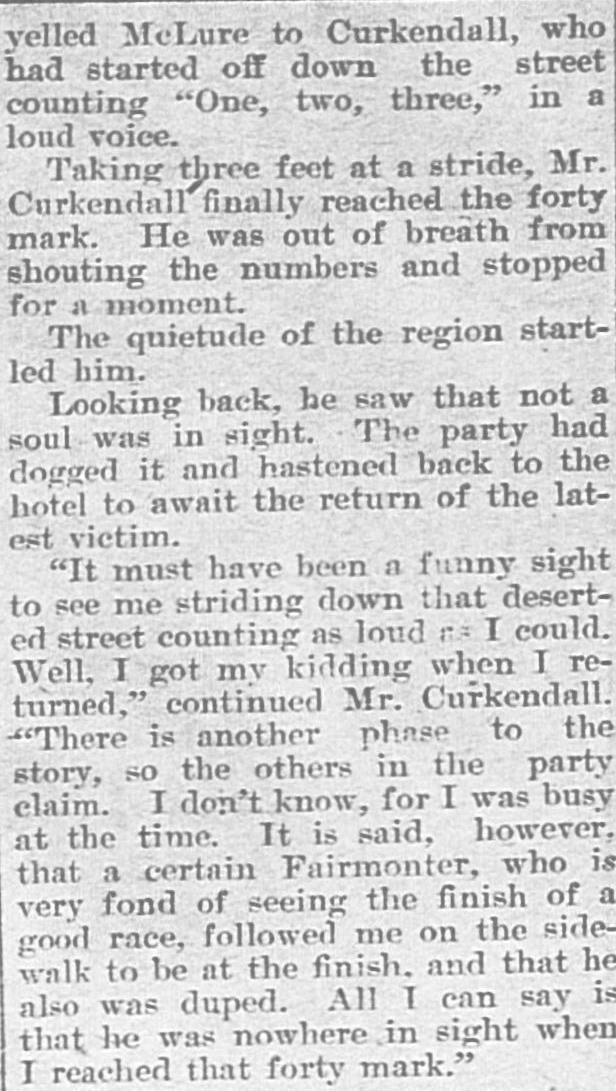
The end of the story, with Curkendall’s own words. The Daily Telegram, Clarksburg, West Virginia, September 15, 1905, page 2. Library of Congress, Chronicling America. Click the clipping to read it full size.
How the trick worked
There was never going to be a race. The argument in the lobby was an act, and the dapper stranger was in on it. All of it was built to get one helpful man to walk away counting, so everybody else could slip off behind his back.
McLure had learned the trick the hard way. On a trip to Ohio he “was made a victim of a new fake foot race joke” himself. It had cost him no money, the paper says, “as many of his former experiences with sprinters had.” So he carried it home “for the edification and delight of the hotel patrons.” Edification means teaching. Harry Clark, the man who invited Curkendall along, had been one of the first to fall for it.
The Telegram called what tripped Curkendall up “the Damon and Pythias act.” Damon and Pythias were two friends in an old Greek story, each ready to take the other’s punishment. Curkendall stepped in to save his friend a walk, and took the whole joke for him.
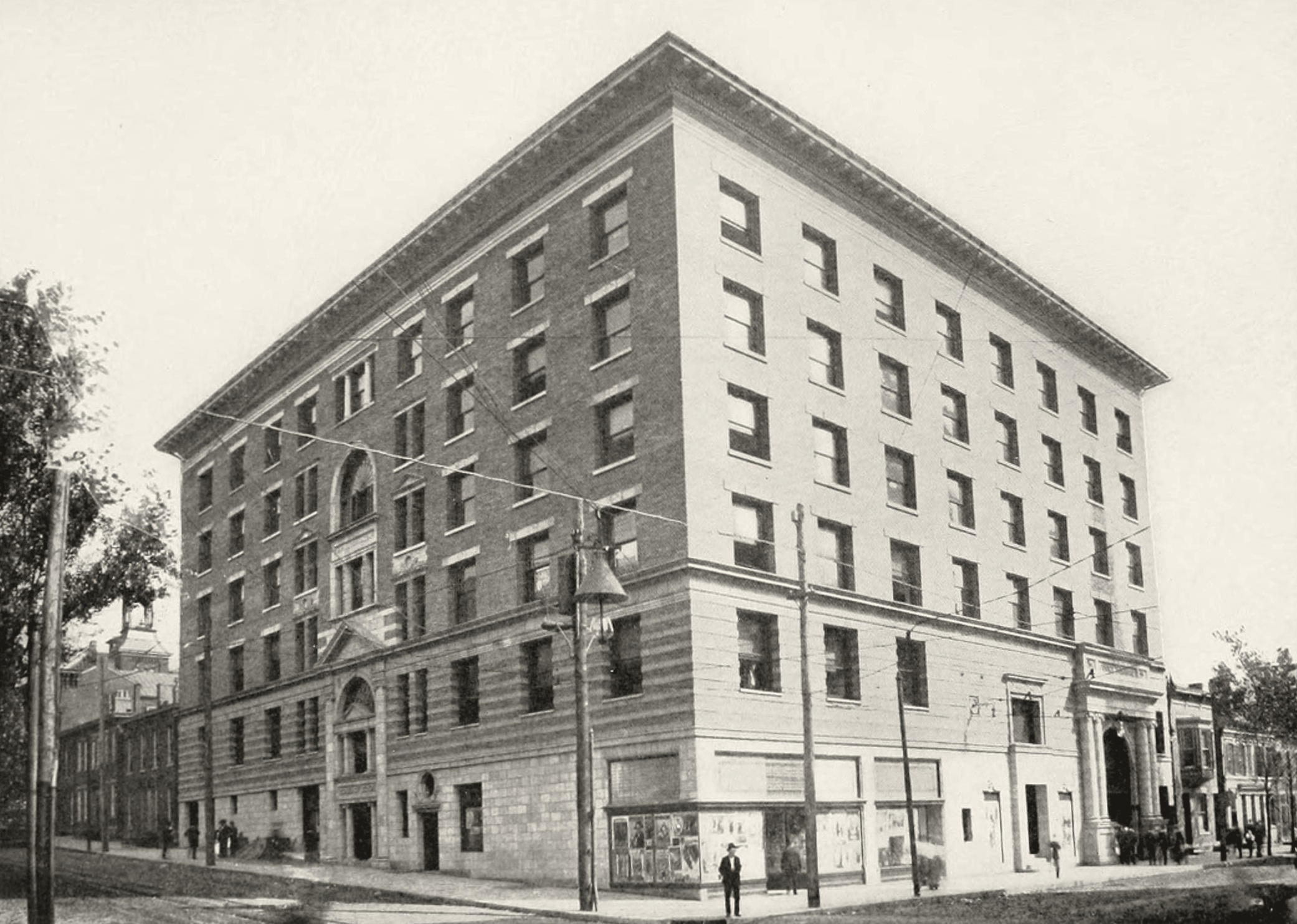
Chapline Street in 1905: the Board of Trade Building at the corner of Twelfth and Chapline Streets, from a souvenir book published that year. The paper does not say which block of Chapline Street the men used. From “Souvenir of Wheeling” (1905), Library of Congress copy at the Internet Archive. Public domain. Click the picture to see it full size.
A smile that won’t come off
Curkendall could have kept quiet. He went home to Clarksburg and told the story on himself. Two days later the Telegram reported that he “wears a smile that won’t come off.”
He told the paper it “must have been a funny sight to see me striding down that deserted street.” He added, “Well, I got my kidding when I returned.” He had also heard “that a certain Fairmonter, who is very fond of seeing the finish of a good race, followed me on the sidewalk to be at the finish, and that he also was duped.” Duped means fooled.
What the fair cost
The fair ran from September 11 to 15. All week the Baltimore & Ohio Railroad sold special tickets from Clarksburg, Fairmont and other towns. You rode both ways for the price of one way. Then you paid “50 cents (children 25 cents) for admission to the fair.”
The railroad’s notice promised horse races: “Brilliant and exciting trotting, running and pacing races every day.” In Fairmont the paper said, “Several hundred go from this city each year.” Curkendall got to the track as well. The Telegram noted that he “watched the ponies in their equine sports.” Equine means having to do with horses.
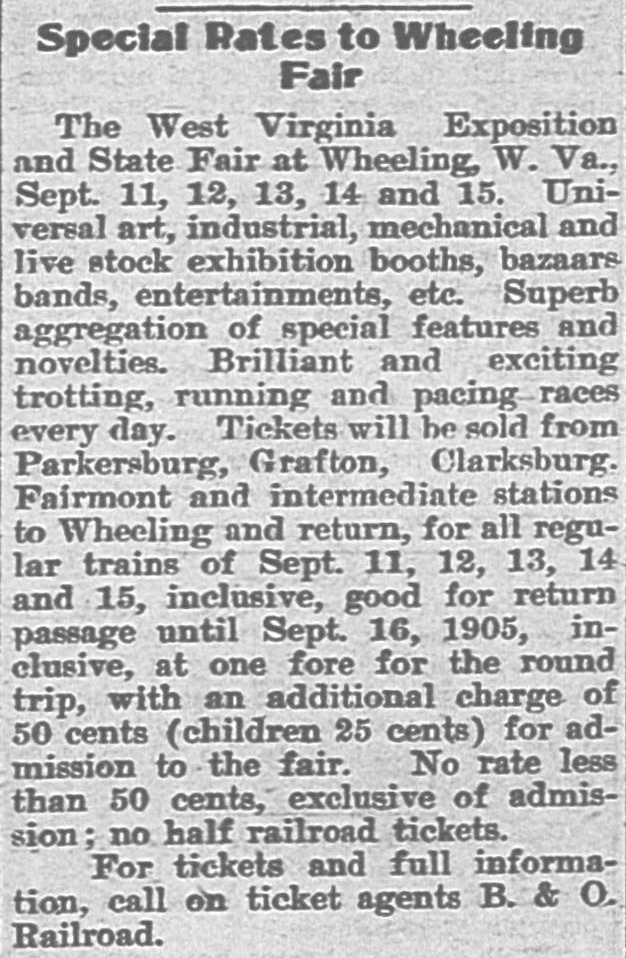
The railroad’s notice for fair week. The Daily Telegram, Clarksburg, West Virginia, September 12, 1905, page 3. Library of Congress, Chronicling America. Click the clipping to read it full size.
The joke gets around
Two weeks later the trick showed up in Clarksburg. On Thursday night, September 28, some men in Glen Elk, a part of town, tried it on a man the paper did not name. The paper says “he bit readily.” He stepped along until “he was lost to sight,” then turned around and found himself alone. Some of the jokers he never found. The rest were laughing so hard that he “took compassion on” them and “joined them in the laugh.”
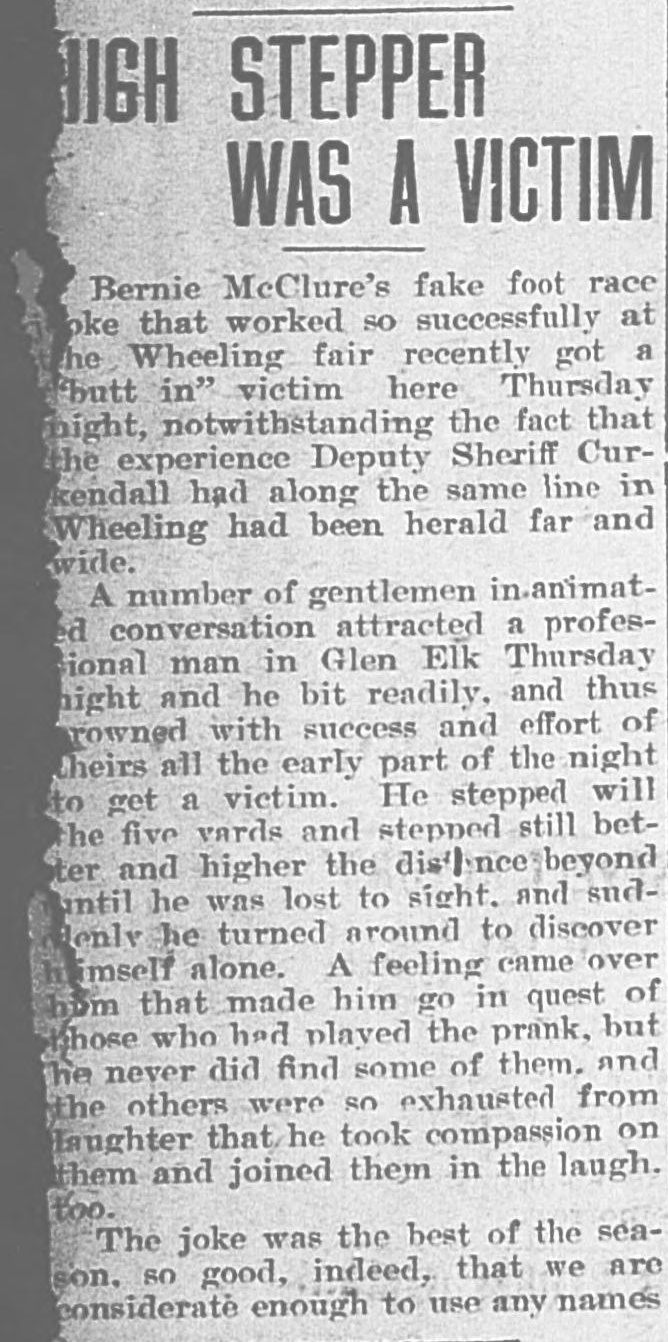
“High Stepper Was a Victim.” The torn edge of the page hides the first letters of some lines. The Daily Telegram, Clarksburg, West Virginia, September 29, 1905, page 1. Library of Congress, Chronicling America. Click the clipping to read it full size.
By late October the Telegram said “that merry jest” had been repeated “in many cities.” Harry Clark was now its busiest player. He caught a traveling man who was staying at the Waldo hotel. That man took the trick to Richwood and played it on Charley Johnson, who kept the Yew Pine Inn. The paper called what came after “a riot of fun and jest.”
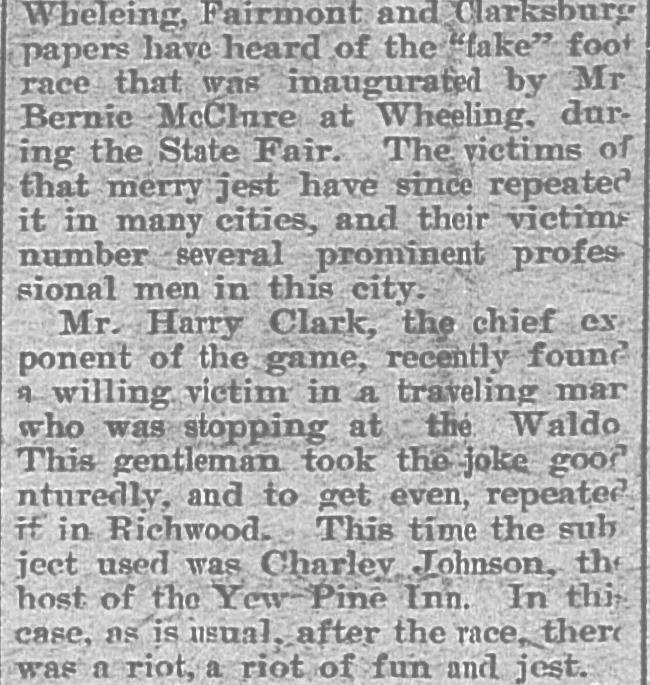
Part of the October report. The last letter of some lines did not print whole. The Daily Telegram, Clarksburg, West Virginia, October 25, 1905, page 1. Library of Congress, Chronicling America. Click the clipping to read it full size.
Then the Telegram made a promise. The details of the trick, it said, “will not be told until” the victims had their revenge. It was a little late for that. The same paper had printed every step six weeks before, under a headline with Curkendall’s name in it.
The good sport
No one lost a dime on Chapline Street that night. Curkendall got caught for one reason: he tried to save a friend some steps. When the laugh landed on him, he carried it home and handed it to the newspaper himself.
The photo at the top of this story shows Market Street in Wheeling. It comes from a souvenir book of the city published in 1905, the year of the joke. In the picture it is daytime and the sidewalks are full. Curkendall’s street was the other kind: late, empty, and so quiet that the quiet itself made him turn around.
Sources
- The Daily Telegram (Clarksburg, West Virginia): September 15, 1905, page 2 (“Good Joke Played on Curkendall”); September 15, 1905, page 4 (Curkendall back from Wheeling); September 12, 1905, page 3 (“Special Rates to Wheeling Fair”); September 12, 1905, page 5 (the State Fair opens); September 29, 1905, page 1 (“High Stepper Was a Victim”); October 25, 1905, page 1 (the joke in other towns).
- The Fairmont West Virginian (Fairmont, West Virginia), September 7, 1905, page 7 (“Many Fairmonters”).
- Cover: “Market Street Looking North From Fourteenth Street,” in “Souvenir of Wheeling” (Wheeling, 1905), Library of Congress copy at the Internet Archive. Public domain.
- “Court Theatre (Board of Trade Building),” corner Twelfth and Chapline Streets, in the same book, at the Internet Archive. Public domain.
- “McLure Hotel,” in “Wheeling” (W. T. Nicoll, 1903), Library of Congress copy at the Internet Archive. Public domain.
- All newspaper images: Library of Congress, Chronicling America. Published 1905.