On Monday night, April 2, 1906, the Auditorium in Minneapolis was full to standing room, with hundreds of children in the seats. The star was a thin bay horse from Shelbyville, Tennessee, named Jim Key. Mayor D. P. Jones offered him the keys of the city. “I am sure,” said he, “I can entrust them to him and know that they will be returned untarnished.”
Then Jim’s trainer, Dr. William Key, who was about 72, challenged the boys in the audience to a spelling match. Five boys took him up on it. Four went out on the first two words, Aaron and Isaac. Jim picked out his letters one at a time. The mayor’s son, David Jones, tied him on the third word, Isaiah. The match was called a draw, and the $1 prize went to the boy.
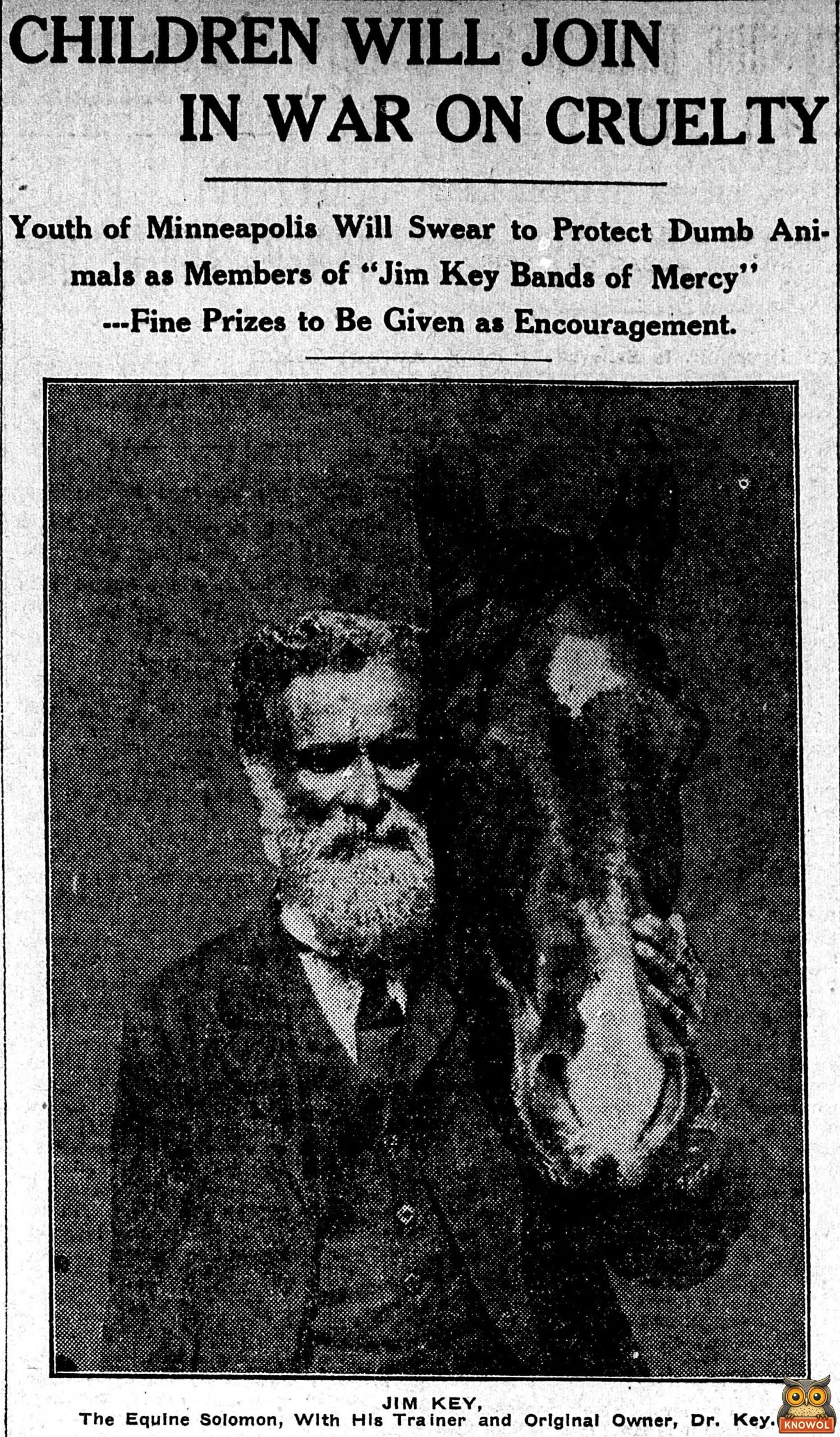
Jim Key and Dr. William Key, the Minneapolis Journal, Minneapolis, Minnesota, April 1, 1906. Library of Congress, Chronicling America. Click the clipping to read it full size.
A sickly colt and a patient teacher
Dr. Key was born into slavery in Tennessee. He taught himself to doctor animals and built up a hotel, a wagon shop and a horse liniment business in Shelbyville, the Tennessee Encyclopedia says. In Tupelo, Mississippi, he bought a mistreated Arabian mare named Lauretta. Her colt was born sickly. Dr. Key nursed him to health, named him Jim after the town drunk, and spent seven years teaching him.
New Yorkers got their first look in 1897, at a stable on East 25th Street hung with more than 5,000 rabbits’ feet, Dr. Key’s lucky charms. Strapped to Jim’s chest was a cash box with a gong he rang by tugging a strap. At fairs, people handed Jim coins and he rang them up. “That cash box made a good living for Jim and me for a time,” Dr. Key said. When he told Jim to ring up a penny, Jim shook his head and snorted. Asked if a penny just wasn’t enough, Jim nodded, so Dr. Key sent him back for a dime. “Dr. Key says that Jim was trained mainly by kindness,” the New York Sun reported.
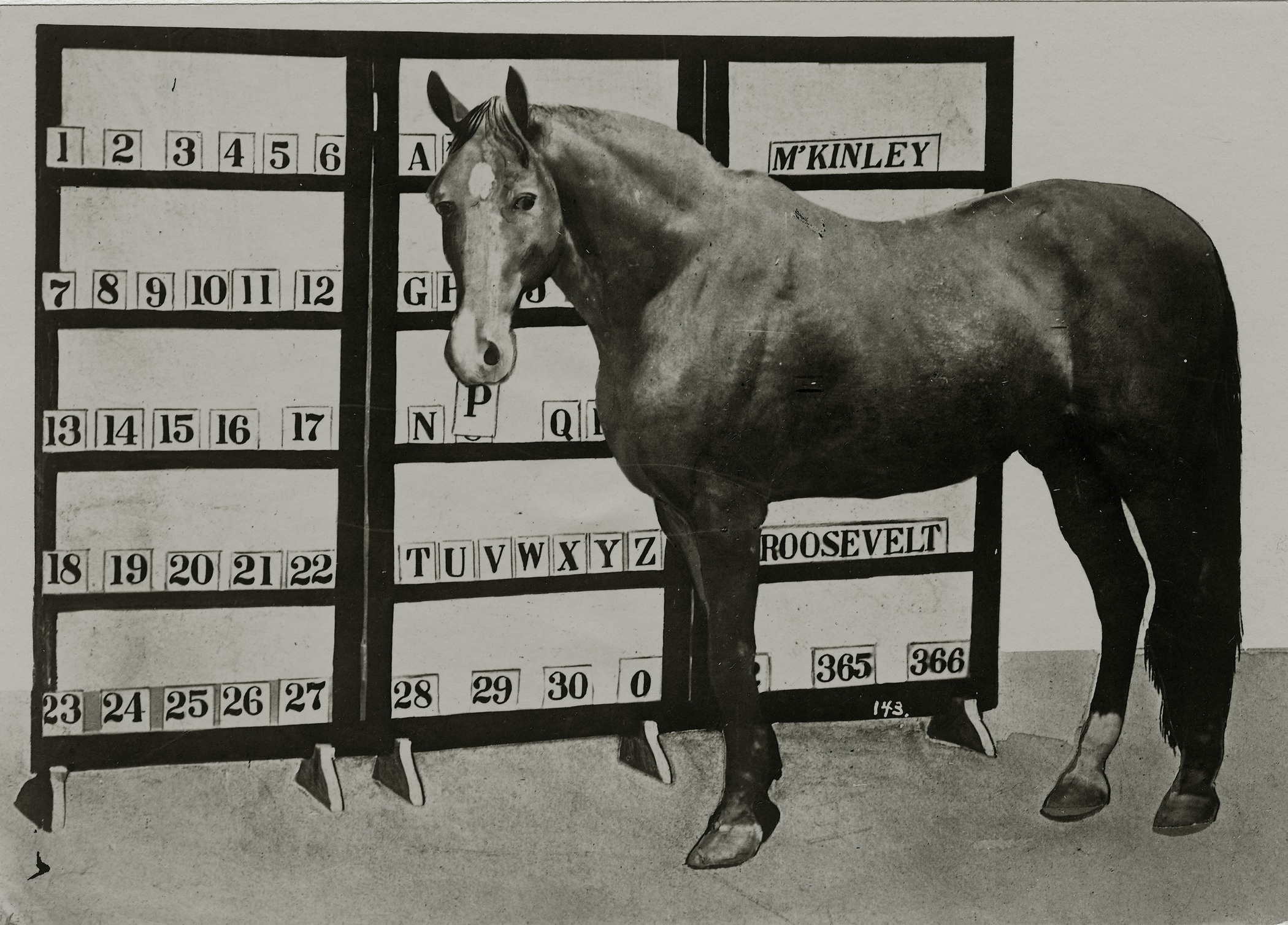
Jim Key beside his rack of number and letter cards, with the names McKinley and Roosevelt, 1904. Official Photographic Company. Missouri Historical Society. Click the picture to see it full size.
The wonder of the Pike
That same summer, the Sun reported that a man named A. R. Rogers was buying Jim, for a price said to be $10,000. Albert Rogers was an officer of the American Humane Association, and he liked that Jim had been taught with patience and rewards. He promised that Jim would never be separated from Dr. Key, the Tennessee Encyclopedia says. From then on Jim toured as a lesson in kindness, and local humane societies shared in the ticket money.
At the 1904 World’s Fair in St. Louis, Jim had his own building on the Pike, the fair’s street of amusements. Before the fair opened, his managers invited St. Louis schoolteachers and fair officials to examine him at Music Hall, to prove he was an educated horse and not a trick horse.
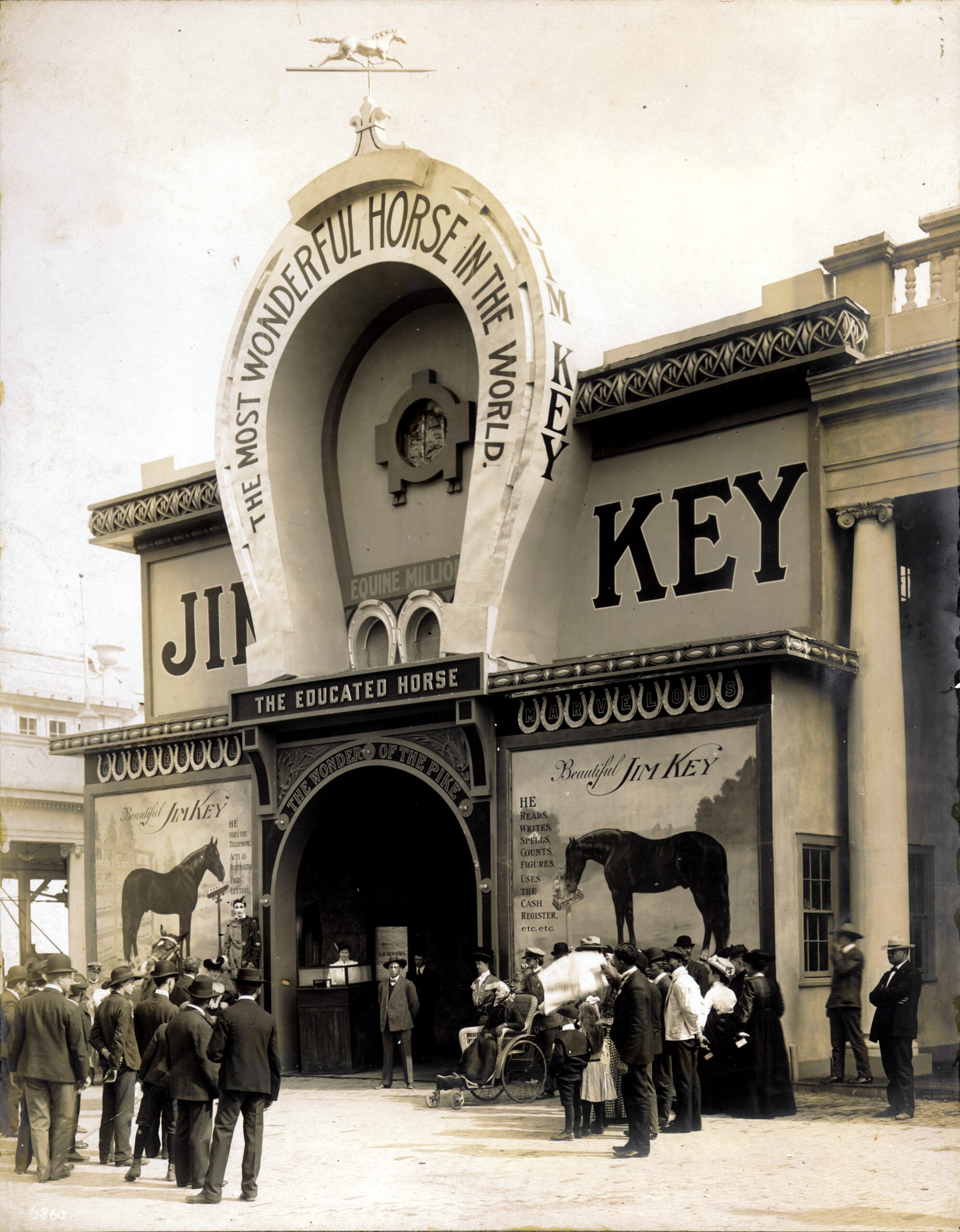
The Jim Key building, with its giant horseshoe, on the Pike at the 1904 World’s Fair, St. Louis, Missouri. Official Photographic Company. Missouri Historical Society. Click the picture to see it full size.
Jim traveled in his own railroad car, with bottled spring water so he’d never drink a strange town’s water. His constant companion was Monk, a stray dog with a badly hurt foot that Dr. Key had found on the street, carried home and cured. One day Dr. Key found Monk riding on Jim’s back, and from then on that was the dog’s favorite spot.
Bands of Mercy
Children who saw Jim were asked to join a Jim Key Band of Mercy. It cost nothing. A child just signed a pledge to be kind to all harmless living creatures. Miss Agnetta Floris, the national organizer, explained the fine print. “We have to put it ‘harmless living creatures’ because many of the children wonder if they can kill mosquitos, and we don’t want to prohibit the killing of big game in tropical jungles,” she said. A little boy in Kansas City wrote in to ask, “Is it wrong to send a fly to heaven by the fly paper route?”
The Minneapolis Journal offered weekly prizes of $1, 75 cents and 50 cents for the best essays on kindness to animals by fourth through eighth graders. A Minneapolis milling company manager bought $5 worth of tickets for the men who drove his horse teams.
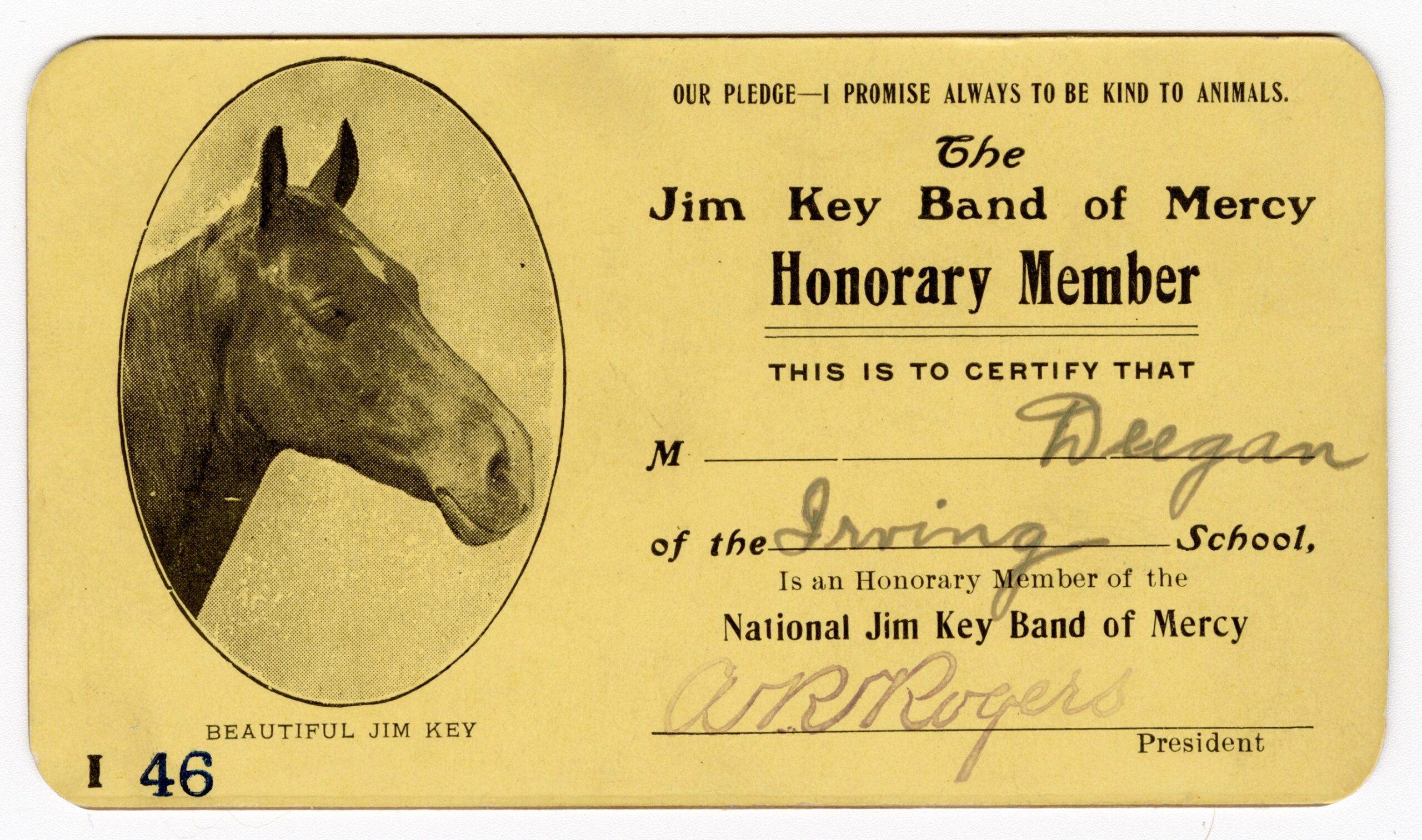
A Jim Key Band of Mercy honorary member card from the 1904 World’s Fair, made out to Deegan of the Irving School and signed by A. R. Rogers. Missouri Historical Society. Click the picture to see it full size.
Home to Shelbyville
In 1906, after nine years on the road and close to two million people in the seats, Jim and Dr. Key went home to Shelbyville, the Tennessee Encyclopedia says. Dr. Key died there on a Monday night in October 1909, at 76. The Nashville Globe reported that he had made a good deal of money with his horse, that his fellow Masons buried him, and that everyone in town respected him.
Jim lived almost three years longer. In September 1912, the Globe’s “Shelbyville Notes” column, between a woman home from Nashville and a young woman off to Fisk University, carried one line: “Jim Key, the educated horse belonging to the late Dr. Wm. Key, died last Wednesday evening.”
Sources
- The Minneapolis Journal (Minneapolis, Minn.), March 25, 1906, page 6, March 30, 1906, page 6, March 31, 1906, page 6, April 1, 1906, page 6 and April 3, 1906, page 8.
- The Indianapolis Journal (Indianapolis, Ind.), September 5, 1897, page 11 (the New York Sun’s report on Jim’s New York shows).
- The St. Louis Republic (St. Louis, Mo.), April 19, 1904, page 3.
- The Nashville Globe (Nashville, Tenn.), October 22, 1909, page 5 and September 27, 1912, page 3.
- All newspaper images: Library of Congress, Chronicling America. No known copyright restrictions.
- Photographs: Official Photographic Company, 1904, Missouri Historical Society, N28448 (No Known Copyright) and “Jim Key, The Educated Horse on the Pike” (public domain). Band of Mercy card: Missouri Historical Society, A0934-00417 (No Copyright, United States).
- James H. Neal, “Jim Key”, Tennessee Encyclopedia, Tennessee Historical Society.
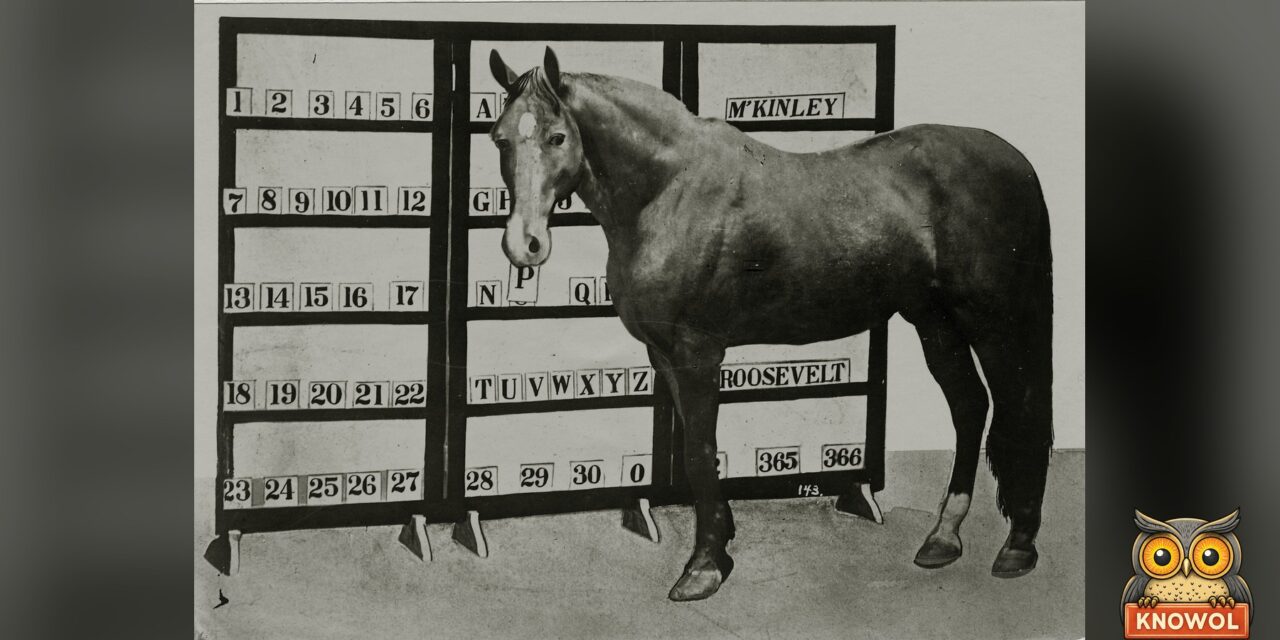
- Cover: the 1904 photograph of Jim Key beside his letter and number cards (Official Photographic Company, Missouri Historical Society), shown whole on a blurred copy of itself.