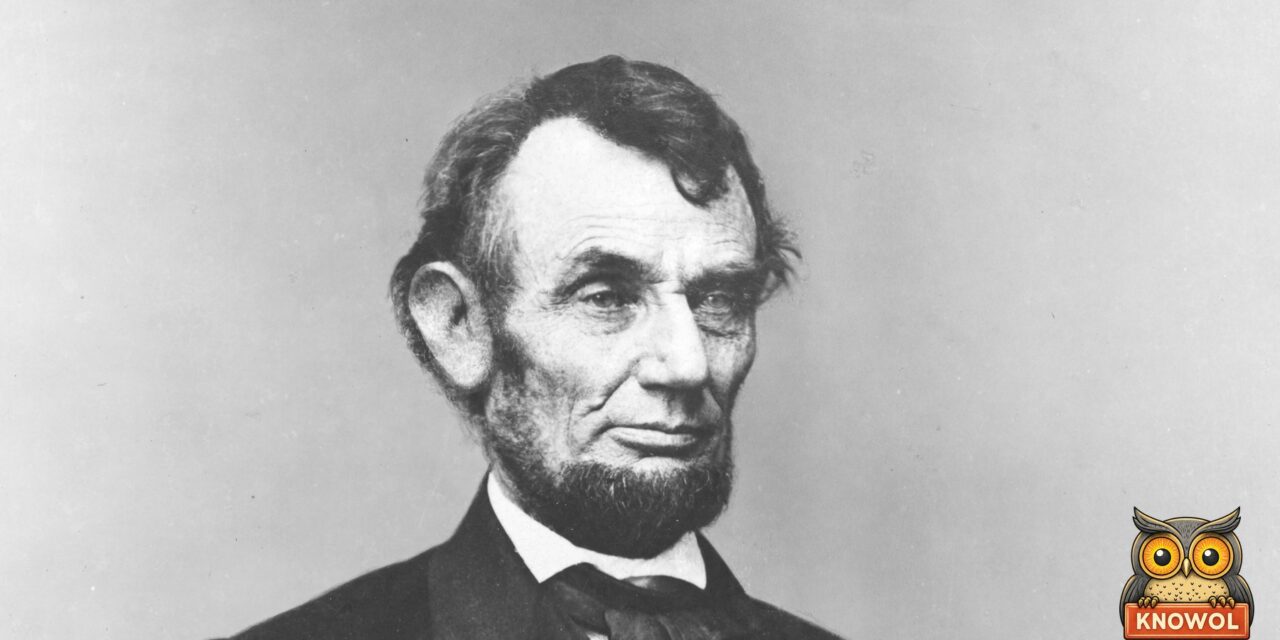
In 1864, Abraham Lincoln’s reception room in the White House in Washington, D.C. was almost always full. Nearly everyone in the crowd wanted something from the President. So when a young New Yorker named Chauncey M. Depew pushed his way in one afternoon and said he wanted nothing at all, Lincoln was delighted.
“It is so rare that any one comes here who wants nothing!” Lincoln said, as Depew told it years later. “Please wait and I will get rid of these people in a few minutes.” Then the tired President sat back on a lounge, a kind of sofa, and told stories. Years later, Depew also told one more Lincoln story from Washington that year. It was about a bald congressman, a war secret, and one of the funniest ways a President ever said no.
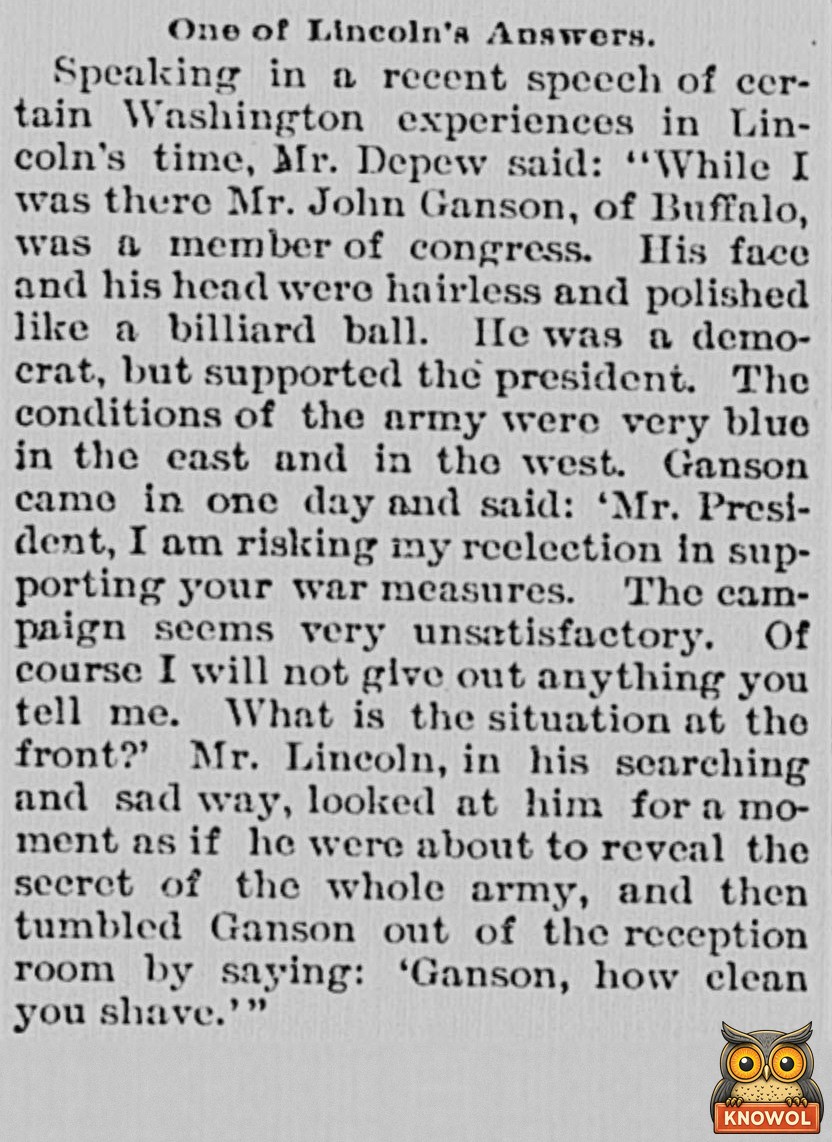
“One of Lincoln’s Answers,” The Roanoke Times, Roanoke, Virginia, April 4, 1895, page 6. Library of Congress, Chronicling America. Click the clipping to read it full size.
Chauncey Depew’s Afternoon With Lincoln in Washington
Chauncey Depew was about 30 years old in 1864, and he was already New York’s Secretary of State. That year New York let its soldiers vote from the war, and it was Depew’s job to get ballots to every New York company in the field and send the votes home. So he spent months in Washington, trying to find out where all of New York’s soldiers were.
Depew told about his visit with Lincoln on February 12, 1895, Lincoln’s birthday, in a speech in Burlington, Vermont. “I was but a boy,” he said, even though he held a big state job. “Mr. Lincoln looked up as I pressed my way through the crowd in his reception room and said: ‘Well, Depew, what can I do for you?'” Depew answered that he did not want anything. He had “simply called to pay my respects.”
Once the room was empty, Depew said, the President sat “rocking to and fro, holding his long knees in his arms and telling story after story to relieve his mind.” Then Lincoln explained why he told so many.
“They say I lower the dignity of the Presidential office by these broad anecdotes. Possibly that is true. But I have found, in the course of a long experience, that the plain people of the country take them as they are, and are more easily reached and influenced and argued with through the medium of a humorous illustration than in any other way.”
In plain talk, some people thought a President shouldn’t tell folksy jokes. Lincoln thought a funny story could make a point better than a long speech. The photo at the top of this story shows him on February 9, 1864, the same year as Depew’s visit. That very photo was the model for Lincoln’s face on the five-dollar bill from 1914 until 2000.
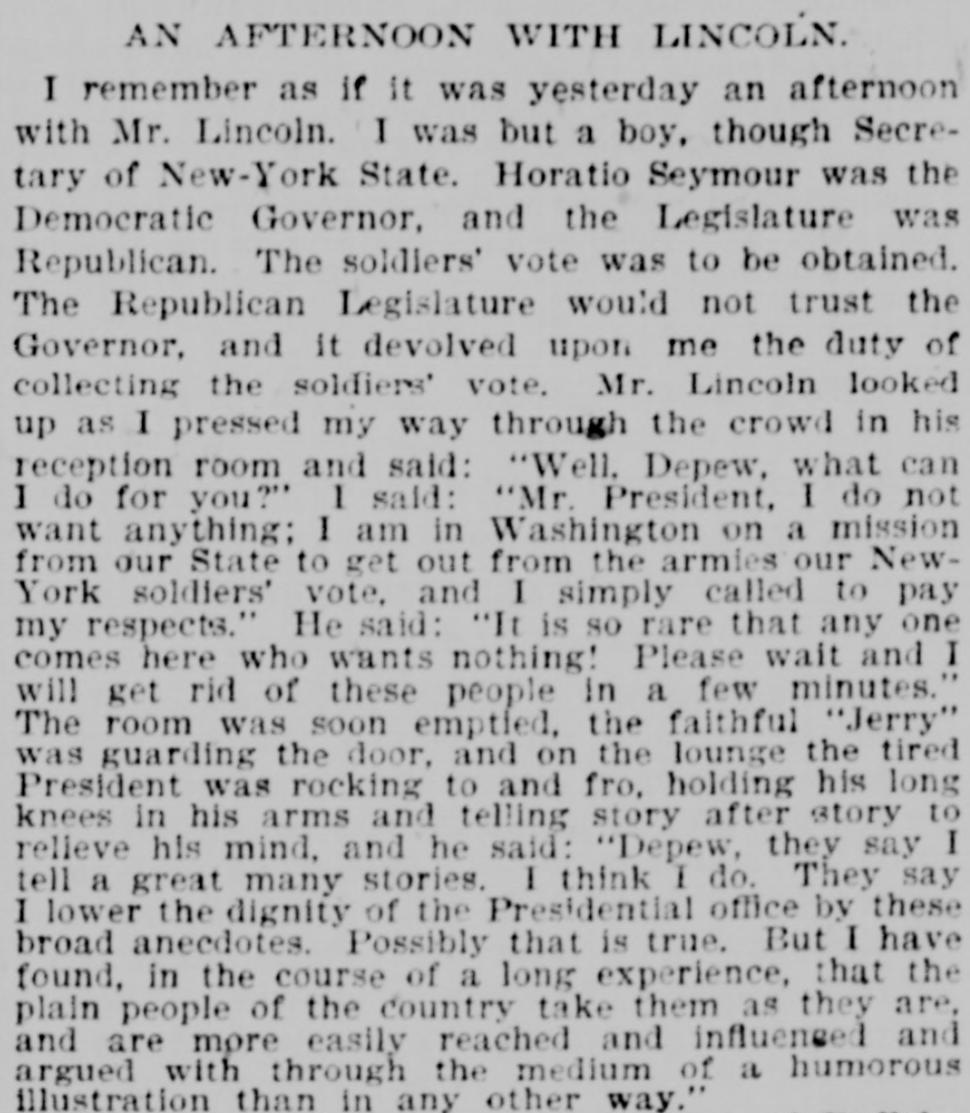
“An Afternoon With Lincoln,” part of Chauncey Depew’s Burlington speech, New-York Tribune, New York, February 13, 1895, page 11. Library of Congress, Chronicling America. Click the clipping to read it full size.
The Bald Congressman From Buffalo, New York
John Ganson was a lawyer from Buffalo, New York, and a member of Congress. He was a Democrat, from the party that ran against Lincoln in 1864, but he backed Lincoln’s “war measures,” the laws and orders for fighting the Civil War. Depew called him “a gentleman of the old school, of great dignity, and always immaculately dressed.”
Depew also remembered Ganson’s head. “His face and his head were hairless and polished like a billiard ball,” he said in 1895, meaning as shiny as a pool ball. Depew was stretching it a little, since Ganson’s photo from those years shows a ring of curls over his ears, but not one whisker on his face.
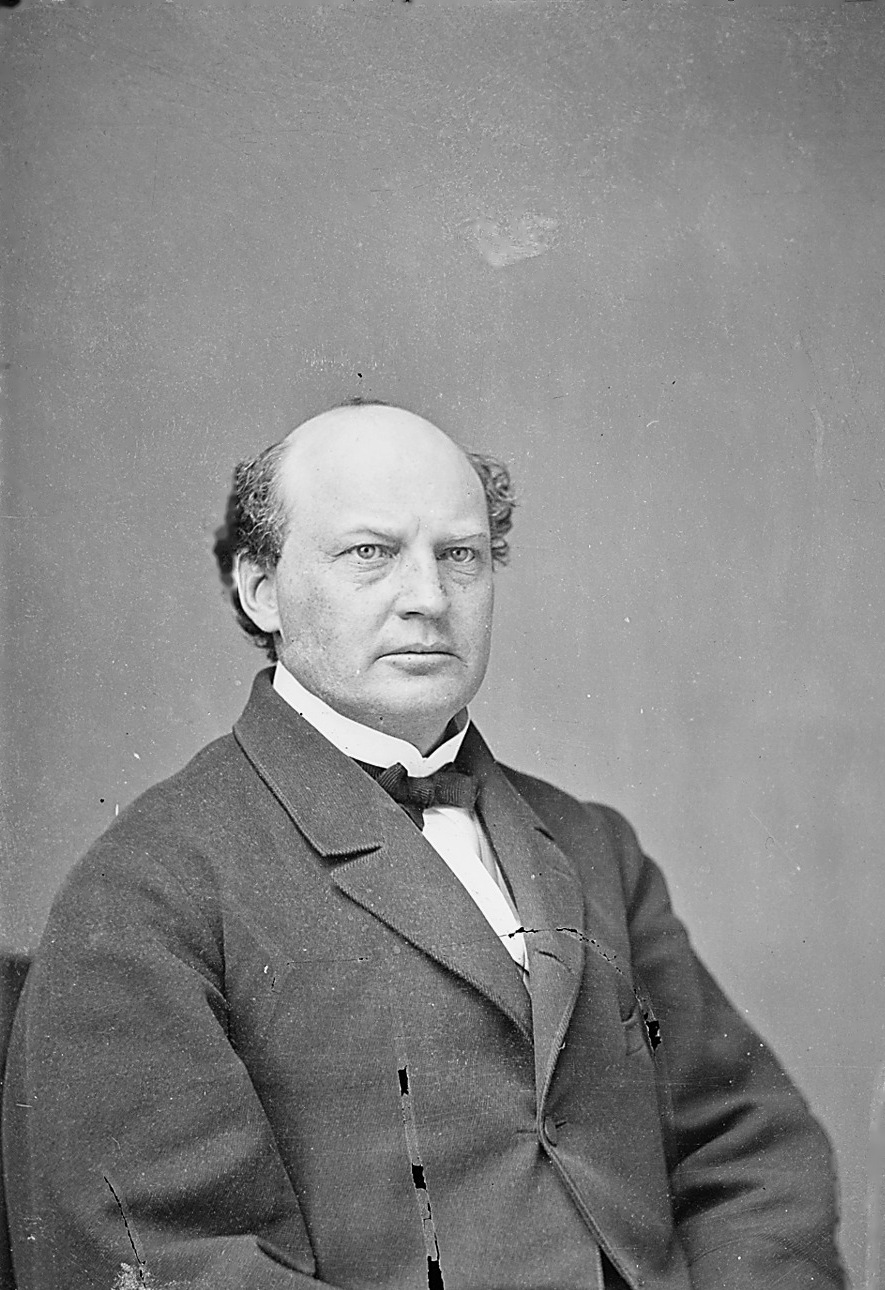
Congressman John Ganson of Buffalo, New York, between about 1860 and 1865, from the Mathew Brady photographs at the U.S. National Archives. Click the picture to see it full size.
Lincoln’s Answer to John Ganson
In Washington in 1864, the war news for President Lincoln’s armies was bad. “The conditions of the army were very blue in the east and in the west,” Depew said, and blue meant gloomy. So Ganson went to the White House to ask the President how the fighting was really going.
“Mr. President, I am risking my reelection in supporting your war measures,” Ganson said, in the version The Roanoke Times printed. “The campaign seems very unsatisfactory. Of course I will not give out anything you tell me. What is the situation at the front?” The front was where the armies were fighting. Ganson was saying: I’m on your side, it may cost me my job, so tell me the truth, and I promise to keep it secret.
Lincoln couldn’t do that, because army plans had to stay secret, and a secret told to even one friendly congressman can travel. But Ganson was on his side, and a flat no would sting, so Lincoln did what he did best.
“Mr. Lincoln, in his searching and sad way, looked at him for a moment as if he were about to reveal the secret of the whole army, and then tumbled Ganson out of the reception room by saying: ‘Ganson, how clean you shave.'”
That’s the whole trick. A compliment is hard to get angry at, and this one was so far off the subject that Ganson knew the talk was over. It was funny, too, because the man with no whiskers was being praised for his shave by a President famous for his beard. (An 11-year-old girl talked Lincoln into that beard.)
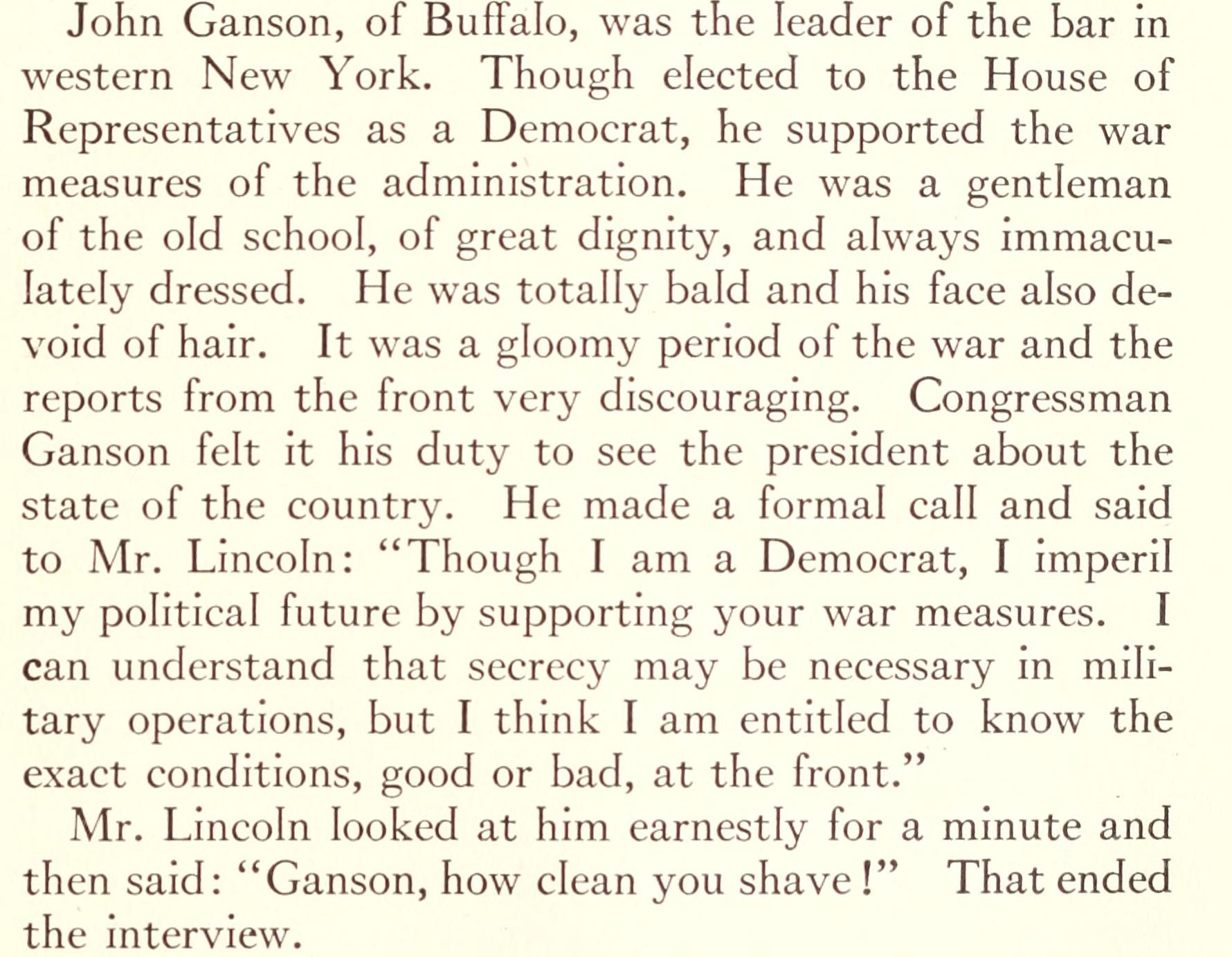
Depew told the story again in his book “My Memories of Eighty Years,” Charles Scribner’s Sons, New York, 1922, page 59. Internet Archive, public domain. Click the clipping to read it full size.
When Depew told it again in his 1922 book, the ending was even shorter. Lincoln “looked at him earnestly for a minute and then said: ‘Ganson, how clean you shave!’ That ended the interview.”
What John Ganson of Buffalo Did Next
John Ganson did not run for Congress again in 1864. But his term lasted until March 1865, and before it ended, he cast one of the most important votes in American history.
On January 31, 1865, the House of Representatives voted on an amendment, a change to the Constitution, that would end slavery everywhere in the United States. It needed two-thirds of the votes, and it had failed the June before. This time it passed, 119 to 56. Two-thirds of 175 votes is about 117, so it made it with two votes to spare.
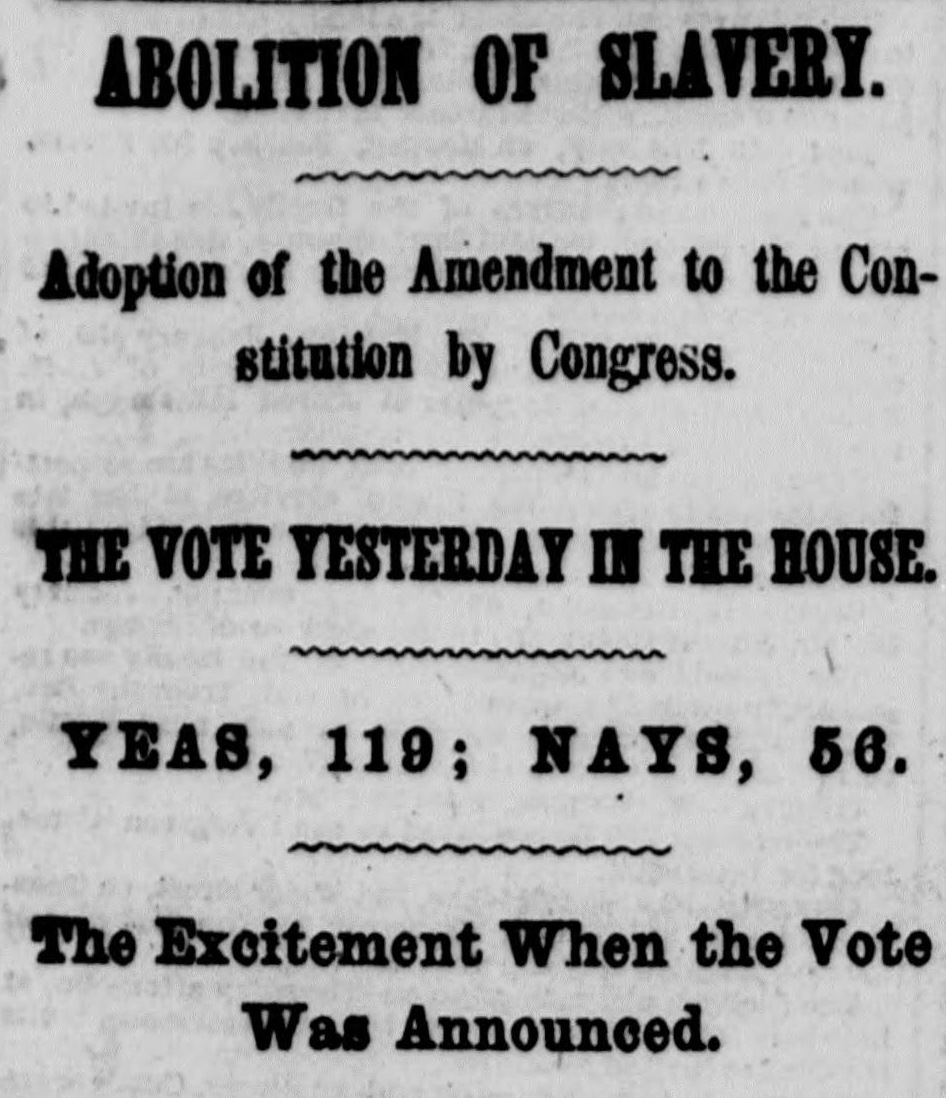
“Abolition of Slavery,” The New York Herald, New York, February 1, 1865, page 1. Library of Congress, Chronicling America. Click the clipping to read it full size.
The next morning, The New York Herald named the seven New York Democrats who voted yes: “Messrs. Odell, Ganson, Steele, Radford, Nelson, Herrick and Griswold.” It also named the members who had voted no in June and then “changed their votes and cast them in the affirmative to-day.” In the affirmative means yes, and John Ganson was on that list too.
When the vote was announced, the Herald said, “loud and continuous cheering arose spontaneously from the crowd on the floor and in the galleries.” Then “a salute of one hundred guns was fired.” By December 1865, enough states had approved it, and the Thirteenth Amendment became part of the Constitution.
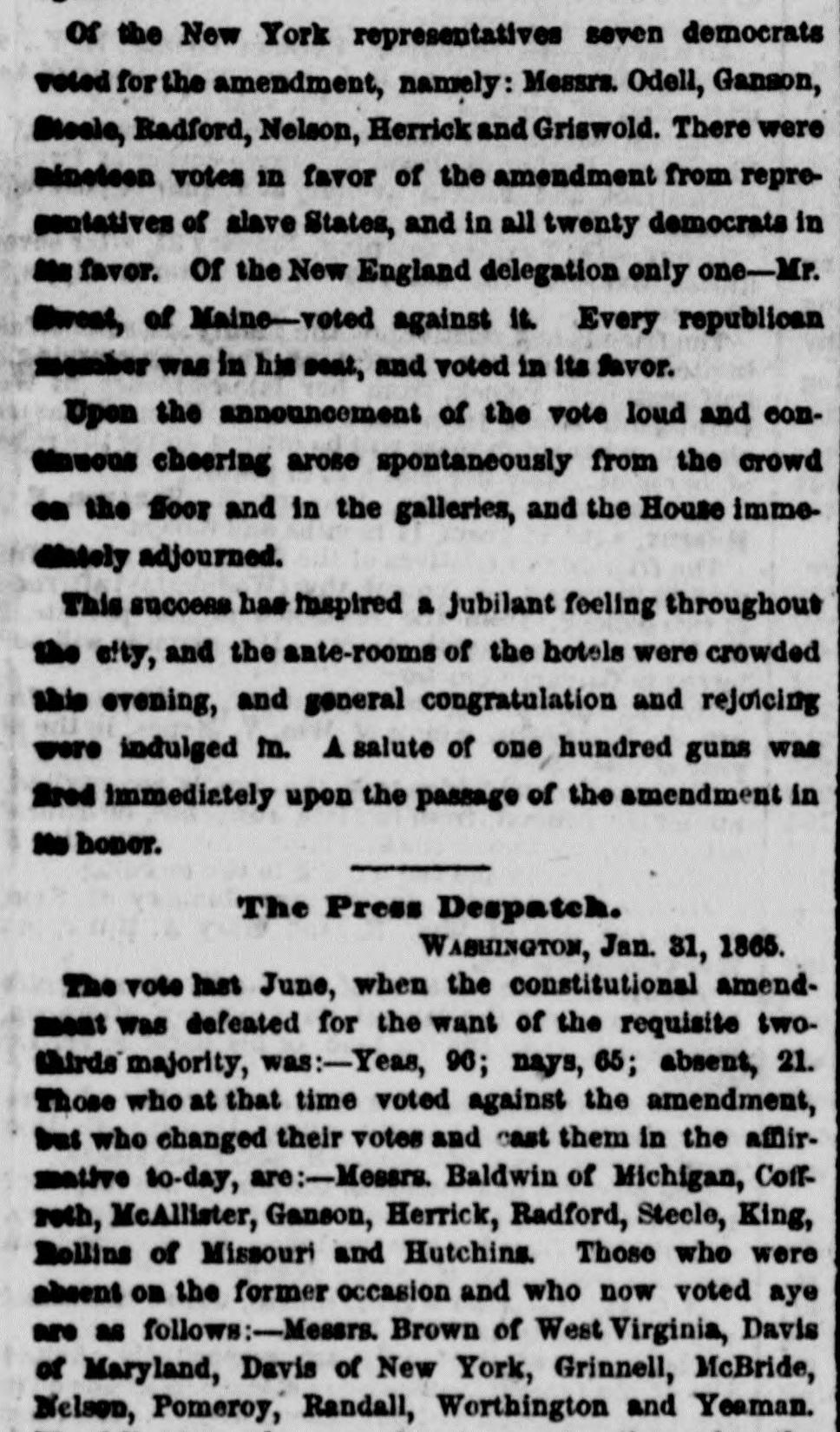
The New York Herald, February 1, 1865, page 1: Ganson among the New York Democrats who voted yes, and among the members who changed their votes from June. Library of Congress, Chronicling America. Click the clipping to read it full size.
John Ganson’s Face Among the Yes Votes
In 1865, Powell & Co. sold a big collage of tiny photographs of everyone in Congress who voted yes on the amendment to end slavery, with Lincoln’s portrait at the bottom. Vice President Hannibal Hamlin is in it too. Its printed key matches every face to a number. John Ganson of New York is No. 114. Two lines below him is No. 107, James A. Garfield of Ohio, who became President 16 years later.
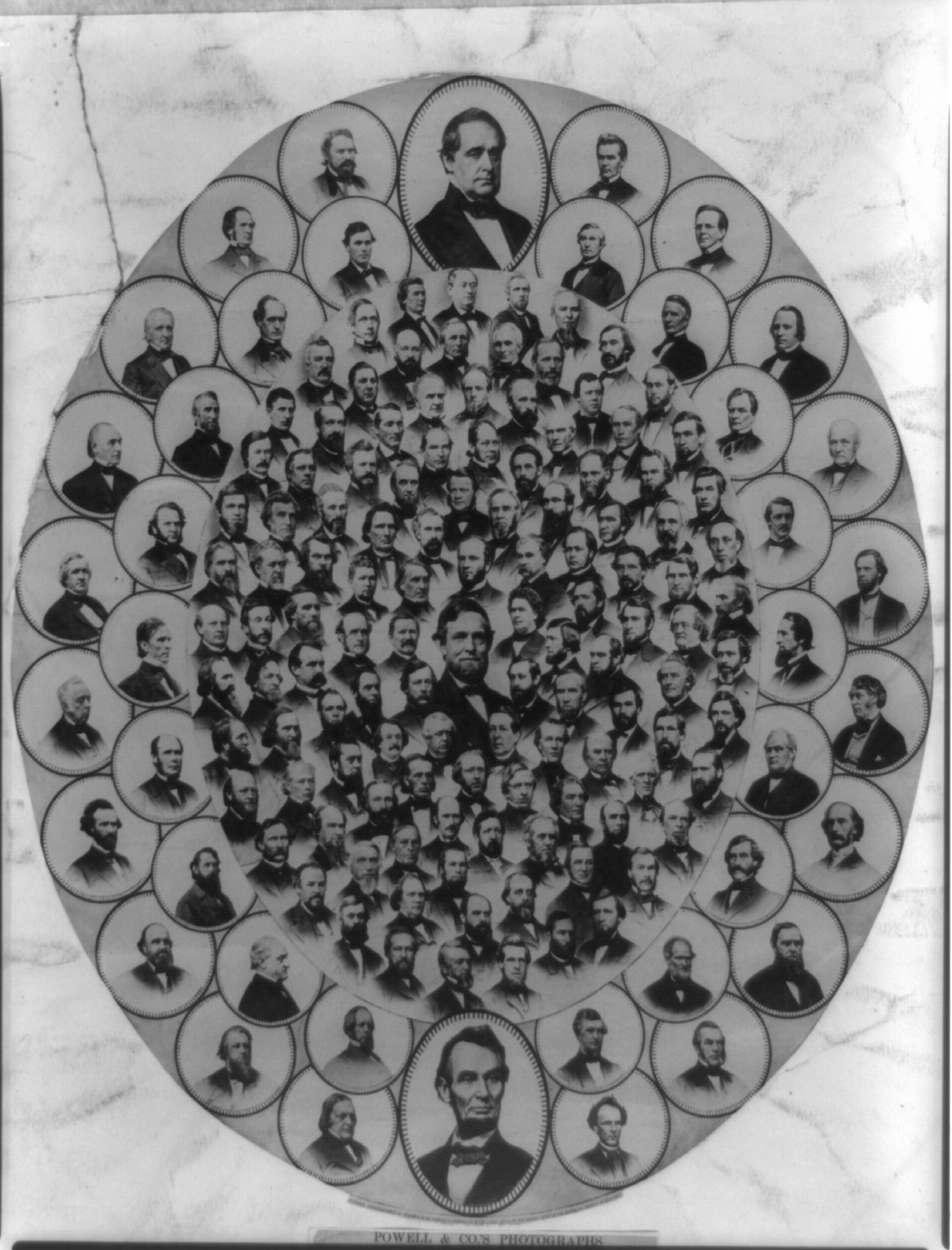
Powell & Co.’s photographs of Lincoln, Hamlin and the senators and representatives who voted “aye” on the amendment to end slavery, 1865. Library of Congress Prints and Photographs Division. Click the picture to see it full size.
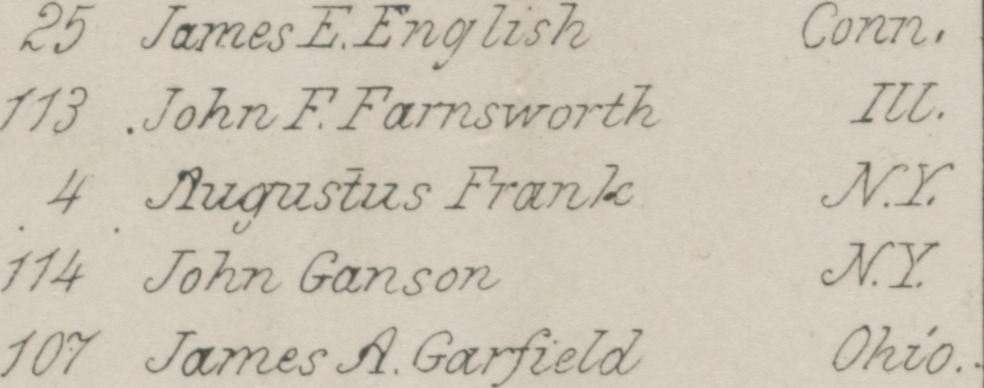
Part of Powell & Co.’s printed key, 1865, with “114 John Ganson N.Y.” Library of Congress Prints and Photographs Division. Click the picture to see it full size.
Ganson went home to Buffalo when his term ended. He went back to his law practice, became a railroad director, and lived in Buffalo until he died in 1874.
Lincoln and John Ganson, by the Numbers
- About 30: Chauncey Depew’s age when he visited Lincoln, the man who wanted nothing
- 0: whiskers on John Ganson’s face, according to his photo
- 119 to 56: the House vote on the amendment to end slavery, January 31, 1865
- 2: votes to spare
- 100: guns fired in salute after the vote
- 114: John Ganson’s number on Powell & Co.’s key
- 1895, 1900, 1908, 1912, 1922: years the story was printed or told again
How Chauncey Depew’s Lincoln Story Got Around
Depew’s speech in Burlington, Vermont, was a big night. The New-York Tribune said it was the “first annual meeting and banquet of the Young Men’s Republican Club of Vermont.” It added, “Burlington has never seen so brilliant and cultured an audience assembled within its beautiful opera house as that which Chauncey M. Depew faced when he rose to deliver his oration on Abraham Lincoln.”
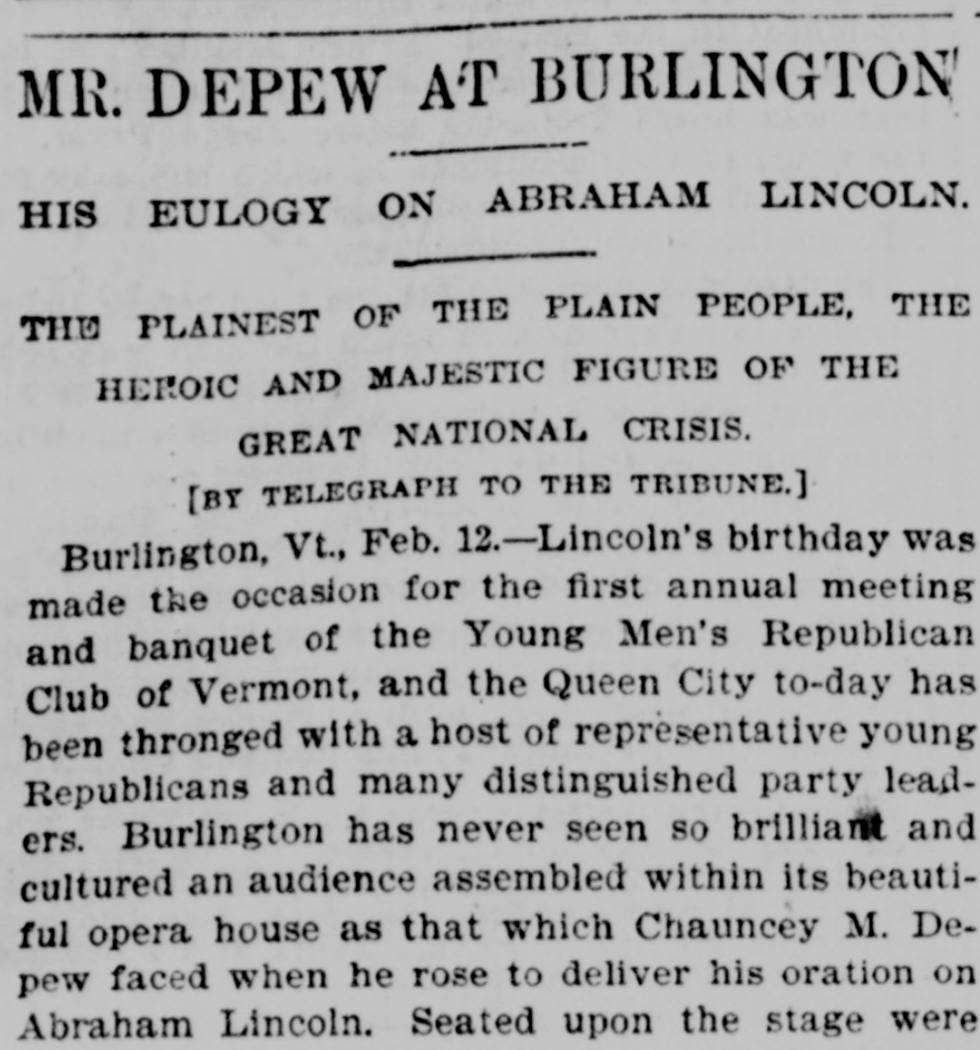
“Mr. Depew at Burlington,” New-York Tribune, New York, February 13, 1895, page 11. Library of Congress, Chronicling America. Click the clipping to read it full size.
Other papers cut out the Ganson part and passed it along. The Springfield Republican in Massachusetts had it within days. By spring it ran in The Roanoke Times in Roanoke, Virginia, the Arizona Republican in Phoenix, the Jerome Chronicle in Arizona, and The Eagle in Silver City, New Mexico.
In 1900, a book of Lincoln’s Birthday programs for schools printed the story too. It called it an example of “the war President’s quaint diplomatic tact.” Tact means knowing how to say something hard without hurting anyone’s feelings.
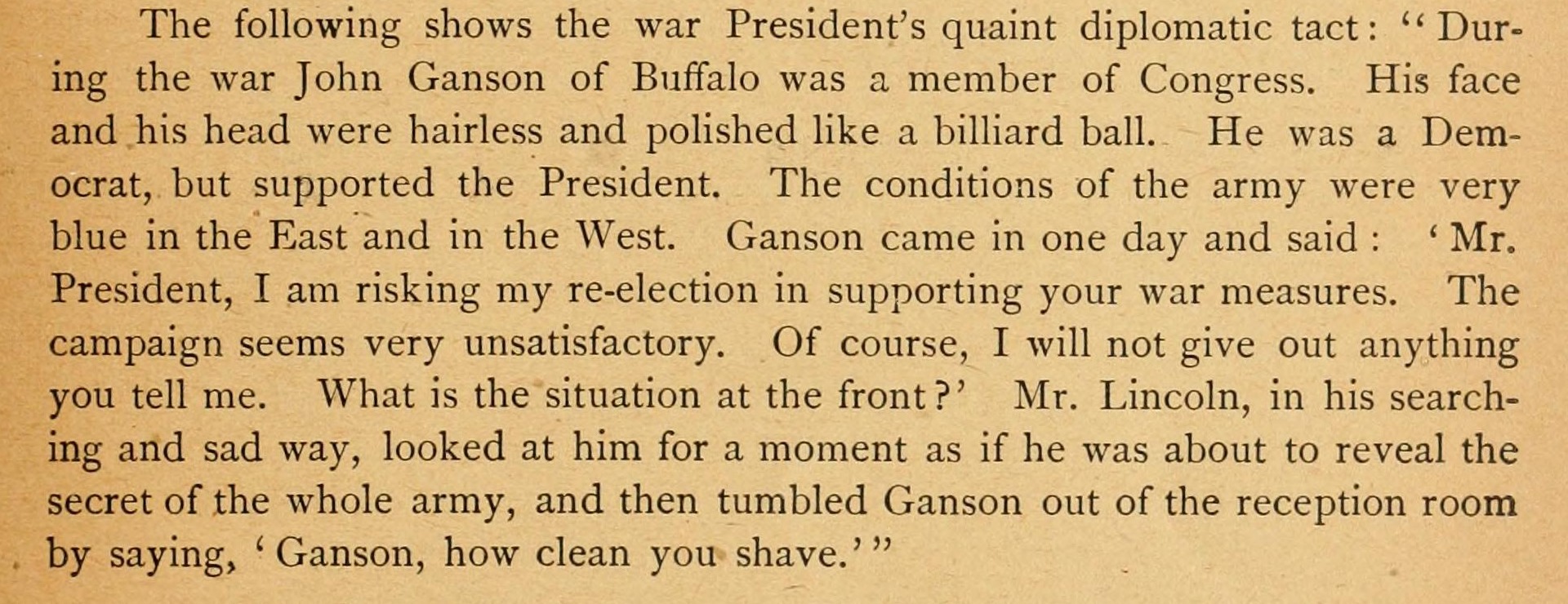
“Fin de Siècle Lincoln’s Birthday Exercises for Schools,” March Brothers, Lebanon, Ohio, 1900, page 13. Library of Congress copy, Internet Archive, public domain. Click the clipping to read it full size.
Depew kept telling it. He told it at Lincoln Day dinners in New York City in 1908 and 1912, and he put it in his book in 1922, almost 60 years after that afternoon at the White House.
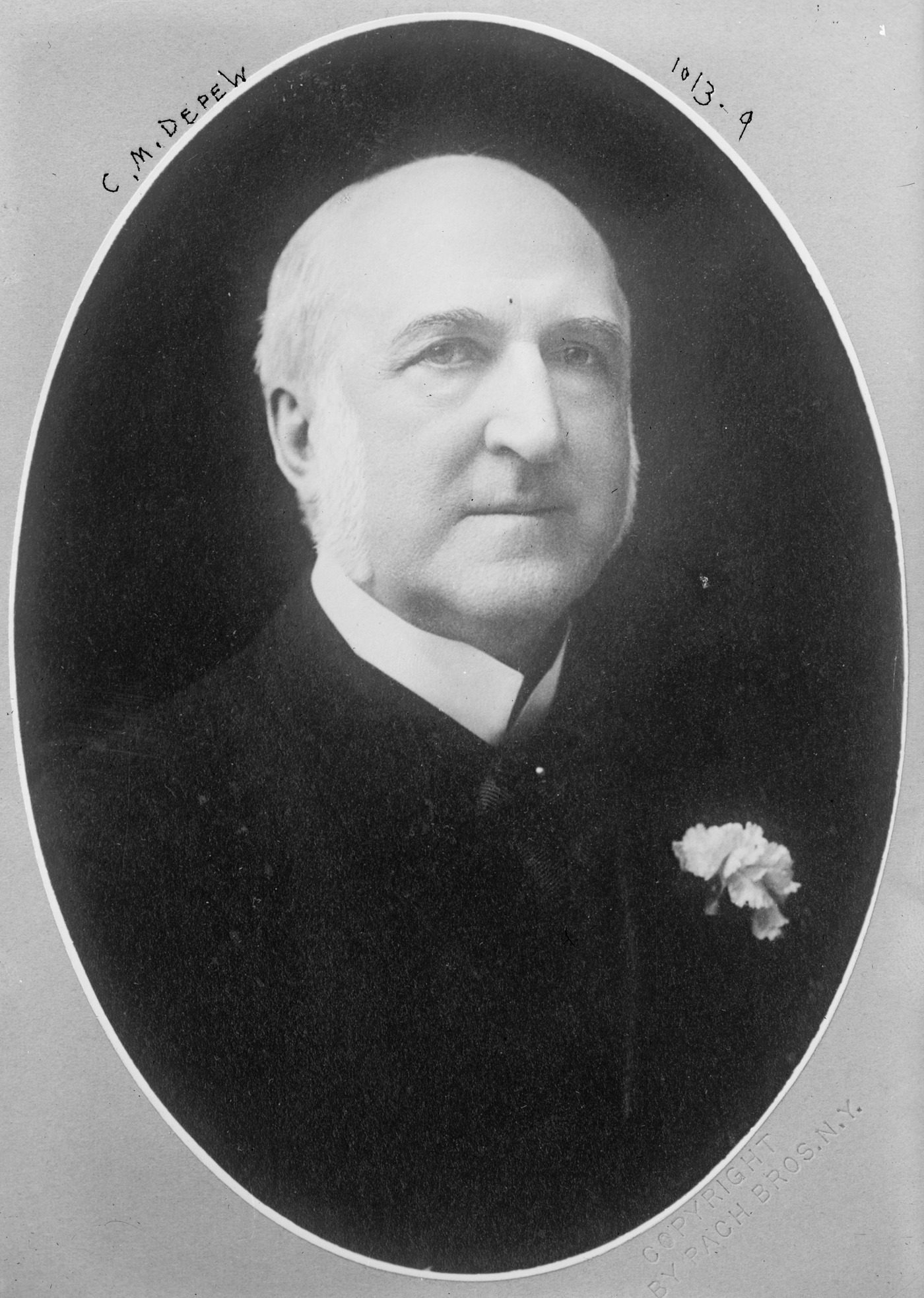
Chauncey M. Depew in his later years, a Pach Brothers portrait copied by the Bain News Service (no date on the record). Library of Congress Prints and Photographs Division. Click the picture to see it full size.
Lincoln never did tell John Ganson the army’s secrets. He gave him a joke instead. A few months later, on the last day of January 1865, the clean-shaven congressman from Buffalo gave his country something that mattered far more than any secret. He voted to end slavery.
Sources
- “One of Lincoln’s Answers,” The Roanoke Times (Roanoke, Virginia), April 4, 1895, page 6. Library of Congress, Chronicling America.
- “Mr. Depew at Burlington: His Eulogy on Abraham Lincoln,” New-York Tribune (New York, New York), February 13, 1895, page 11. Library of Congress, Chronicling America.
- “Abolition of Slavery,” The New York Herald (New York, New York), February 1, 1865, page 1. Library of Congress, Chronicling America.
- Reprints of the Ganson story in 1895: Springfield Weekly Republican, February 15, page 5; Jerome Chronicle, April 6, page 3; Arizona Republican, April 10, page 2; The Eagle (Silver City), May 15, page 15. Library of Congress, Chronicling America.
- Chauncey M. Depew, “My Memories of Eighty Years”, Charles Scribner’s Sons, 1922, pages 52 to 59 (the soldiers’ vote, the afternoon with Lincoln, and John Ganson). Internet Archive.
- “Fin de Siècle Lincoln’s Birthday Exercises for Schools”, March Brothers, Lebanon, Ohio, 1900, page 13. Library of Congress copy, Internet Archive.
- Depew’s later tellings: “Proceedings at the Twenty-second Annual Lincoln Dinner of the Republican Club of the City of New York,” 1908 and “Proceedings at the Twenty-sixth Annual Lincoln Dinner,” 1912. Internet Archive.
- “Biographical Directory of the American Congress, 1774-1949”, U.S. Government Printing Office: entries for John Ganson (page 1193) and Chauncey Mitchell Depew (page 1077). Internet Archive. Used for dates only.
- The 13th Amendment to the U.S. Constitution, National Archives.
- Cover: “Abraham Lincoln, three-quarter length portrait, seated, facing right,” February 9, 1864. Library of Congress Prints and Photographs Division. No known restrictions on publication.
- Photo: “Hon. John Ganson, N.Y.,” Mathew Brady photographs, about 1860 to 1865, U.S. National Archives, public domain (copy on Wikimedia Commons).
- Photo: “Powell & Co.’s photographs of Abraham Lincoln, Hannibal Hamlin and of the Senators and Representatives who voted ‘aye’,” 1865, and its printed key. Library of Congress Prints and Photographs Division. No known restrictions on publication.
- Photo: “C.M. Depew,” Bain News Service. Library of Congress Prints and Photographs Division. No known restrictions on publication.
- Sister story from the same election year: He Bet Against Lincoln, So He Pushed 750 Oysters From Providence, Rhode Island, to Boston.
- The newspapers, books and pictures above were published before 1931 and are in the public domain, except the 1774-1949 Biographical Directory, a U.S. government book used here only for dates.