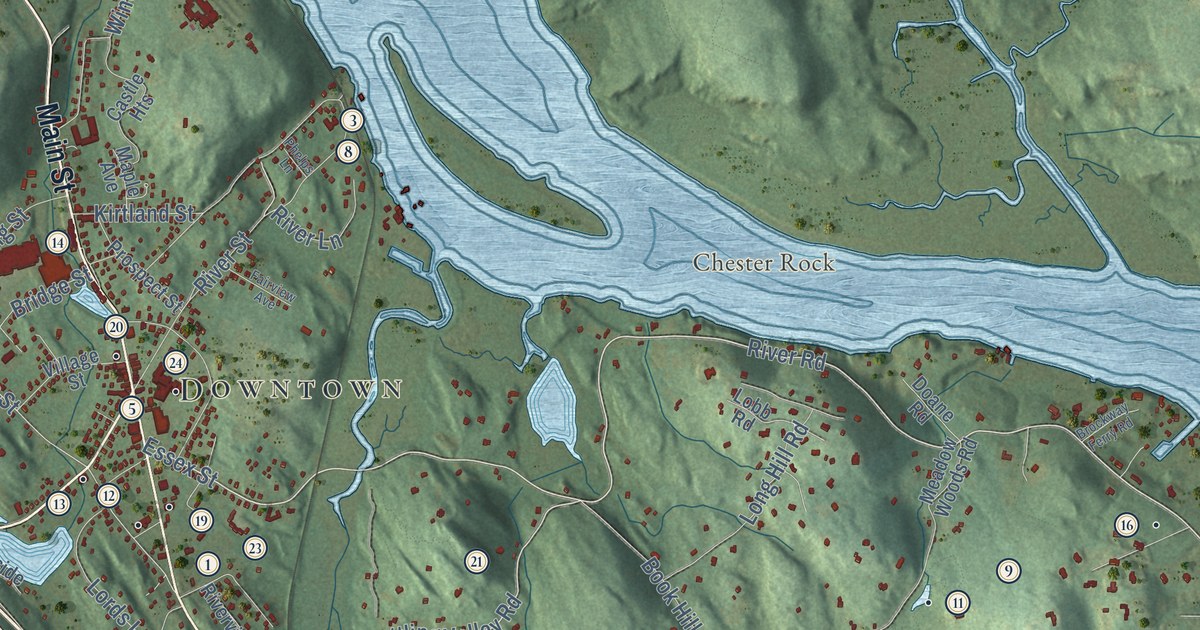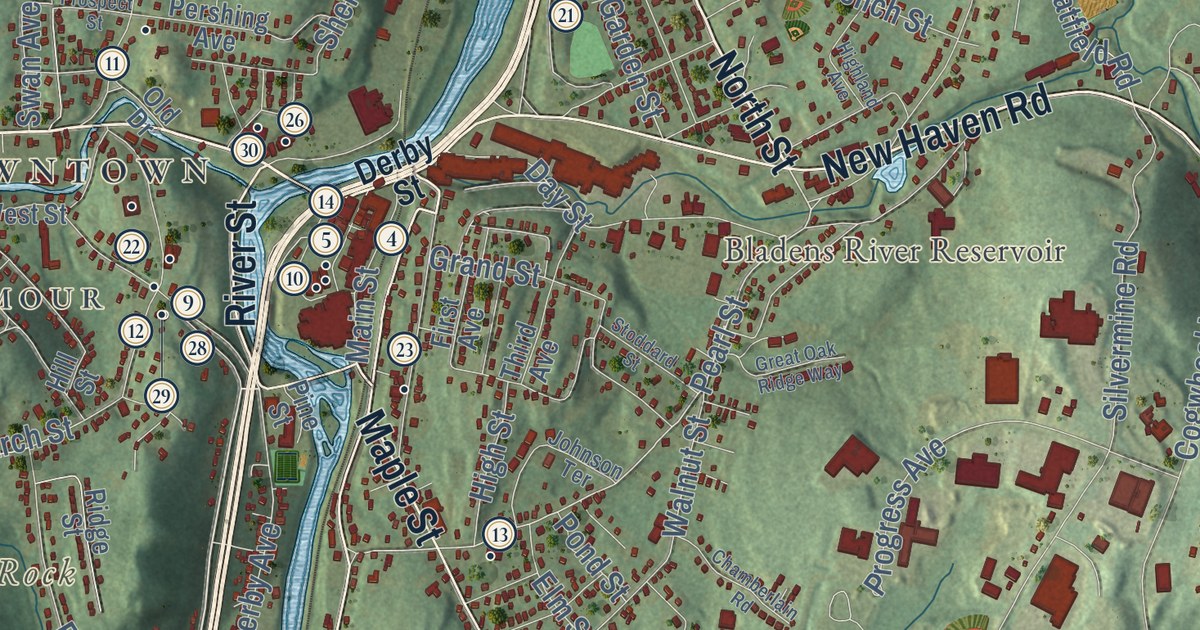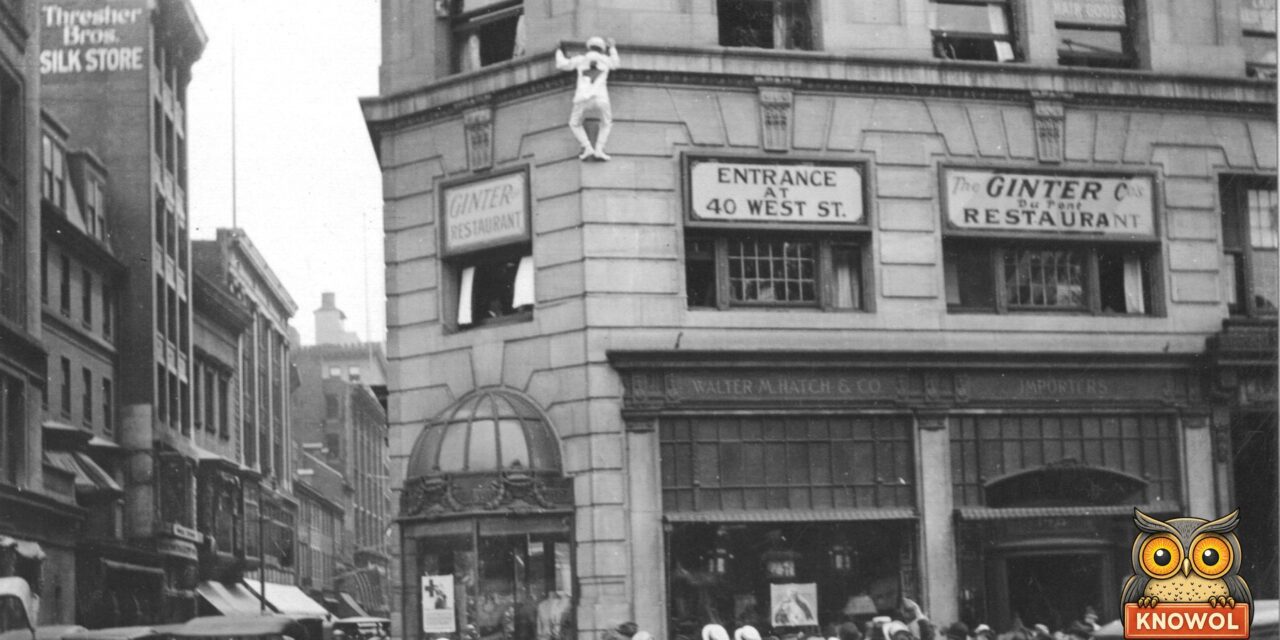
On the evening of September 11, 1917, a crowd gathered on Main Street in New Britain, Connecticut, to watch a man climb the front of the John A. Andrews building. He had no ladder and no rope. He planned to go up the outside wall to the roof using only his hands and feet.
His name was Jack Williams, and people called him “The Human Fly.” The New Britain Herald said he “uses no ropes, no spikes, nothing, in fact, except his limbs.”
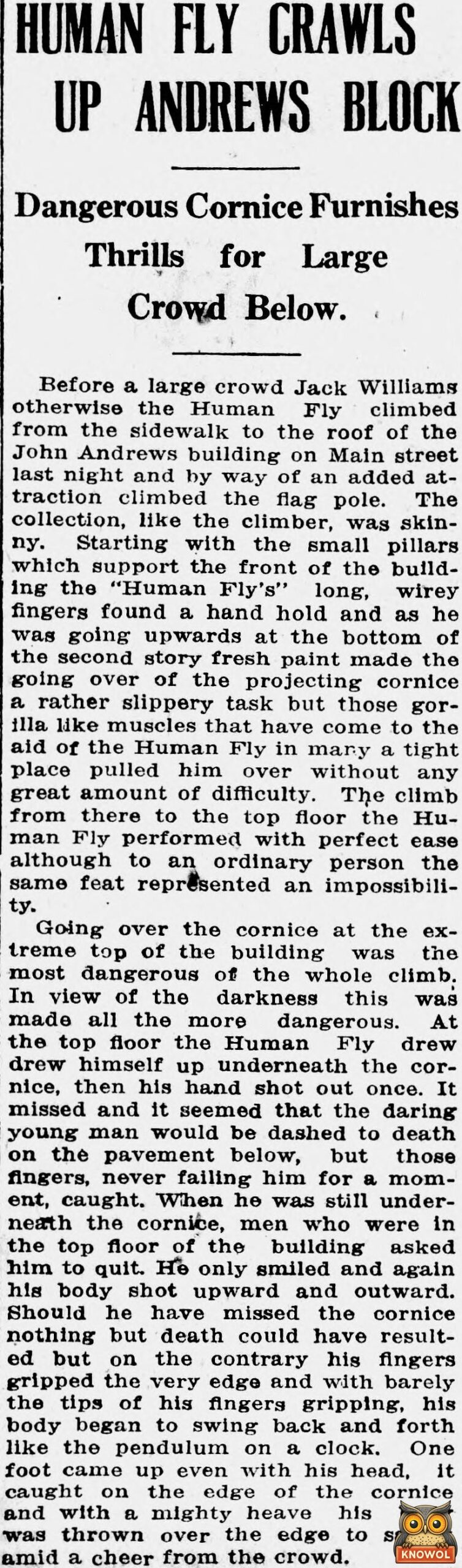
“Human Fly Crawls Up Andrews Block.” New Britain Herald, New Britain, Connecticut, September 12, 1917, page 1. Library of Congress, Chronicling America. Click the clipping to read it full size.
Climbing for the soldiers
The United States was at war in 1917. That month, New Britain men picked by the draft were leaving on the train for an army camp at Ayer, Massachusetts. Back home, the Herald was collecting money to buy tobacco for the soldiers. Williams offered to help. He would climb any building the mayor or a committee picked, and give 35 cents of every dollar the crowd tossed in to the soldiers’ fund.
He climbed at 6:15 in the evening so factory workers could come and watch. The paper also bragged that he had climbed some of the highest buildings in the country, including the Woolworth building in New York City.
The potato test
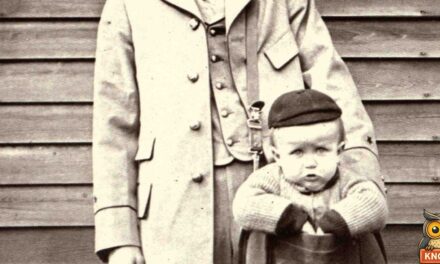
The Herald said the secret was his hands. Williams could squeeze a potato until it turned to mush, and he did it often to check his grip. “When I find I can’t squeeze a potato to a pulp I’m going to quit the game,” he told the paper.
He said he found his talent by accident. In a southern city, years before, he had rescued a woman from the fourth floor of a burning building. After that he took up climbing for a living. His motto was “Upward and Onward.”
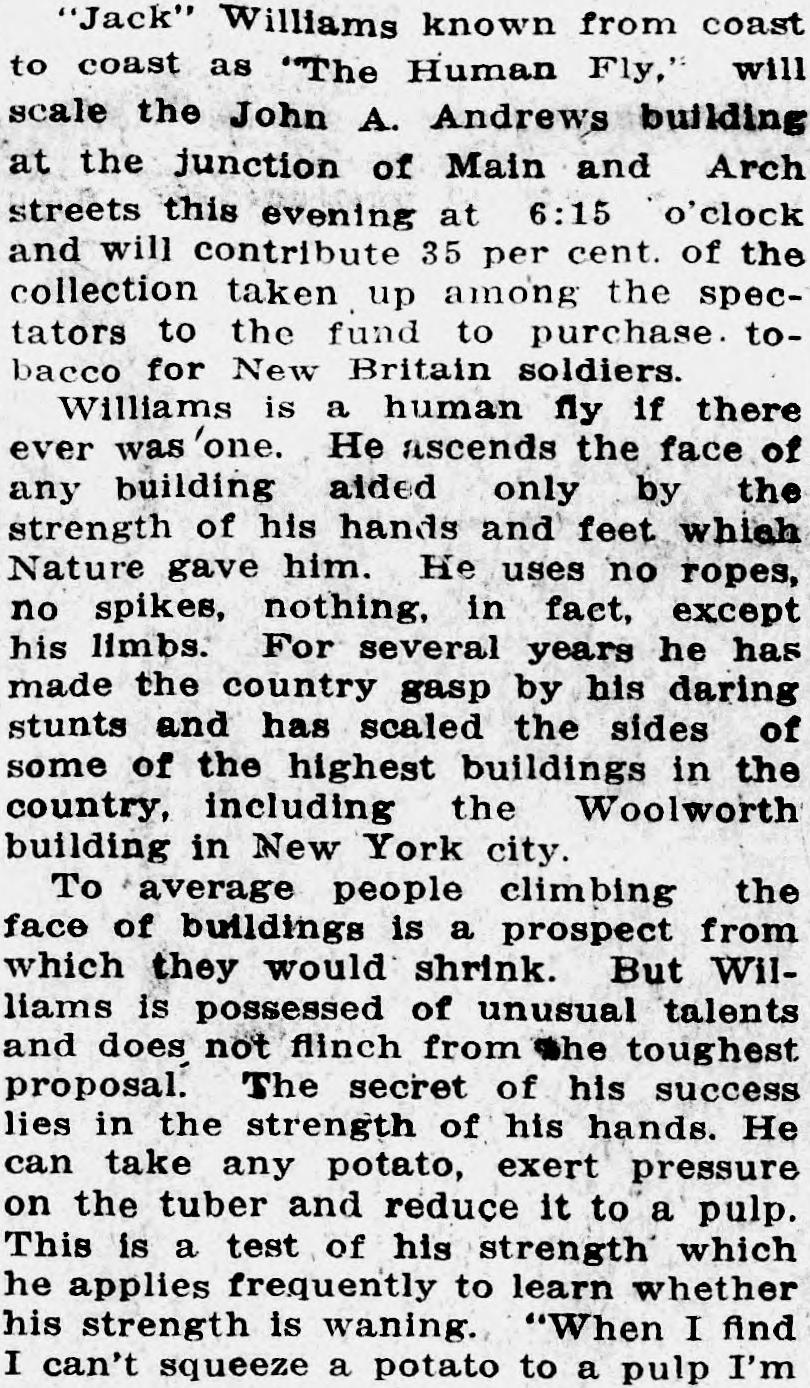
The potato test. New Britain Herald, New Britain, Connecticut, September 11, 1917, page 1. Library of Congress, Chronicling America. Click the clipping to read it full size.
How a human fly climbed
A big brick or stone building is covered with things to grab: pillars, window ledges, carved trim. A human fly used them like a ladder, going from window to window. The hard part was the cornice. That’s the wide ledge that sticks out at the top of a building, like the brim of a cap. To get over it, the climber had to reach out and hang by his fingers with nothing under his feet.
In New Britain the cornice was even harder, because it was dark by then. Williams pulled himself up under the top ledge and his hand shot out. It missed. Men inside the top floor asked him to quit. “He only smiled,” the Herald said.
He tried again and caught the edge with just the tips of his fingers. Then “his body began to swing back and forth like the pendulum on a clock.” On one swing he hooked a foot on the ledge and heaved himself over, while the crowd cheered. For an extra thrill, he climbed the flag pole too.
“The collection, like the climber, was skinny”
That was the Herald’s verdict. Boy Scouts were supposed to pass the hat, but a mix-up kept them away. “Hundreds were unable to find a place to put their nickels and dimes,” the paper said. The soldiers’ fund got $13.44.
The next evening Williams went up the front of the B. C. Porter Sons store on Main Street. The crowd gave $47, and the fund’s share was $7.81. That’s less than his 35 cents a dollar, and the paper never said why. Other people gave too, and by September 12 the Herald’s whole tobacco fund had passed $100.
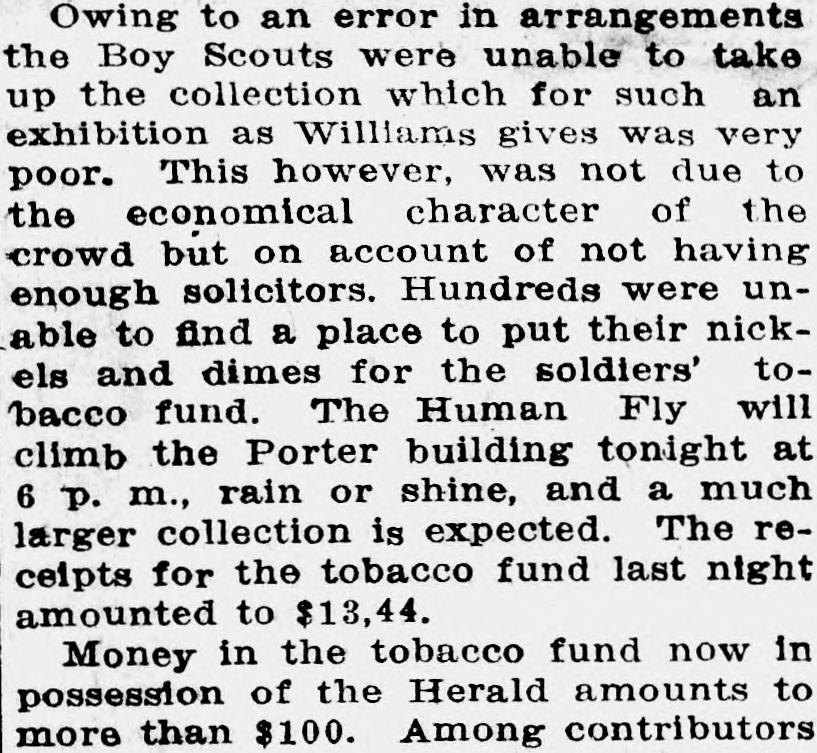
The collection problem. New Britain Herald, New Britain, Connecticut, September 12, 1917, page 1. Library of Congress, Chronicling America. Click the clipping to read it full size.
Bigger crowds down the road
A month later, other towns did better. In Norwich, Connecticut, on October 15, the Norwich Bulletin counted 3,000 men, women and children packed into Main Street to watch Williams climb the Wauregan House hotel. The crowd was so thick that a band marching to a theater couldn’t get through and gave up.
The cornice stopped him again. He couldn’t reach it at first. Then, “while the multitude held their breath in suspense,” he got one hand on it, then the other, swung back and forth a few times, and heaved himself up and over onto the roof. The climb took nearly half an hour, and the crowd gave $152.92.
Three days later in Willimantic, Connecticut, another crowd of 3,000 waited half an hour for him to show up. Once more he got over the top ledge by swinging his body like a pendulum.
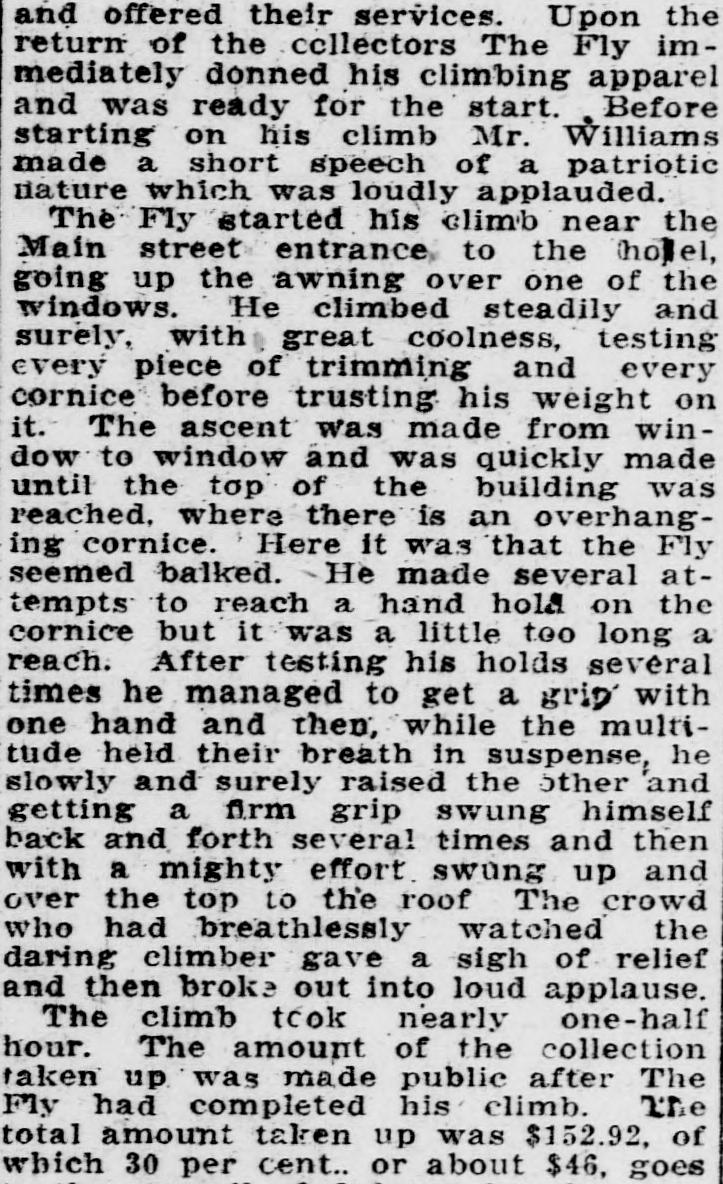
Over the cornice in Norwich. Norwich Bulletin, Norwich, Connecticut, October 16, 1917, page 7. Library of Congress, Chronicling America. Click the clipping to read it full size.
Human flies everywhere
Williams wasn’t the only one. During the war, climbers went up buildings all over the country to raise money. In Boston, Massachusetts, in 1918, a human fly named Harry Gardner climbed the Lawrence Building for the Red Cross, and photographers caught him on the way up. It was dangerous work, and some human flies slipped and fell. That’s a big reason you don’t see them climbing Main Street anymore.
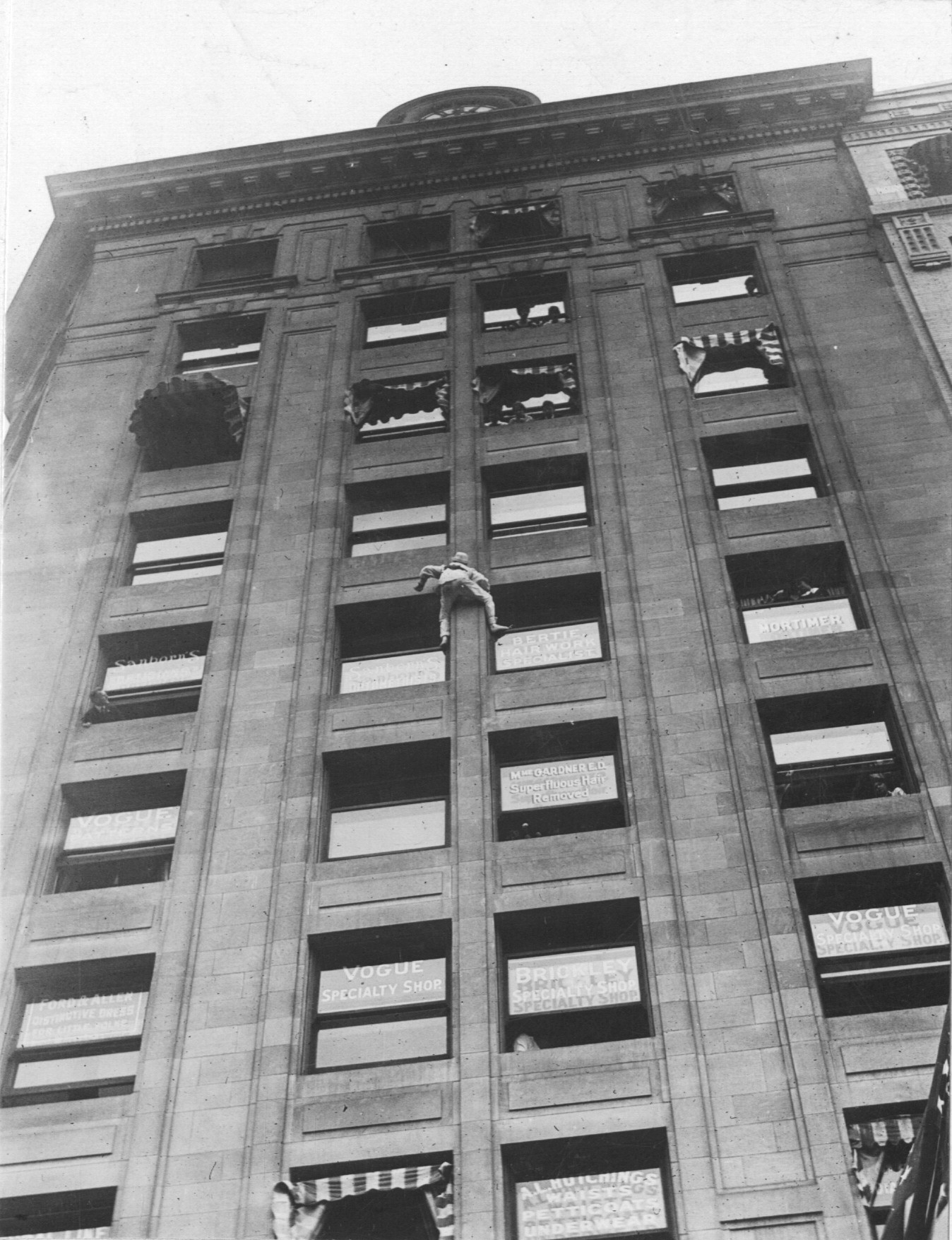
Harry Gardner nearing the top of the Lawrence Building in Boston, Massachusetts, 1918, on a climb to raise money for the Red Cross. Photograph by Frank E. Colby. U.S. National Archives, via Wikimedia Commons. Public domain. Click the picture to see it full size.
Sources
- New Britain Herald, New Britain, Connecticut: September 7, 1917, page 1 (“Human Fly to Give Money for Tobacco”); September 11, 1917, page 1; September 12, 1917, page 1 (“Human Fly Crawls Up Andrews Block”); September 13, 1917, page 1 (“That Tobacco Fund”). Library of Congress, Chronicling America.
- Norwich Bulletin, Norwich, Connecticut: October 16, 1917, page 7 (the Wauregan House climb); October 19, 1917, page 2 (“Thousands Watch Human Fly,” Willimantic). Library of Congress, Chronicling America.
- Harry Gardner photographs, U.S. National Archives, on Wikimedia Commons: making his way upwards, May 1918, by Alfred Brust (the cover); nearing the top, by Frank E. Colby.