The deed was written by hand on parchment, in old Roman letters, like a fancy college diploma. It handed over a thousand acres of Vermont forest, a trout pond, a hunting lodge and the top of a mountain called Pico. It was a birthday present.
Former Governor Fletcher D. Proctor of Proctor, Vermont, gave it to his son, Mortimer R. Proctor, who had just turned 21. The news went out from Rutland on June 24, 1910. The next morning it was on the front page of the New-York Tribune, under a headline anyone could read in a second: “BIRTHDAY GIFT A MOUNTAIN.”
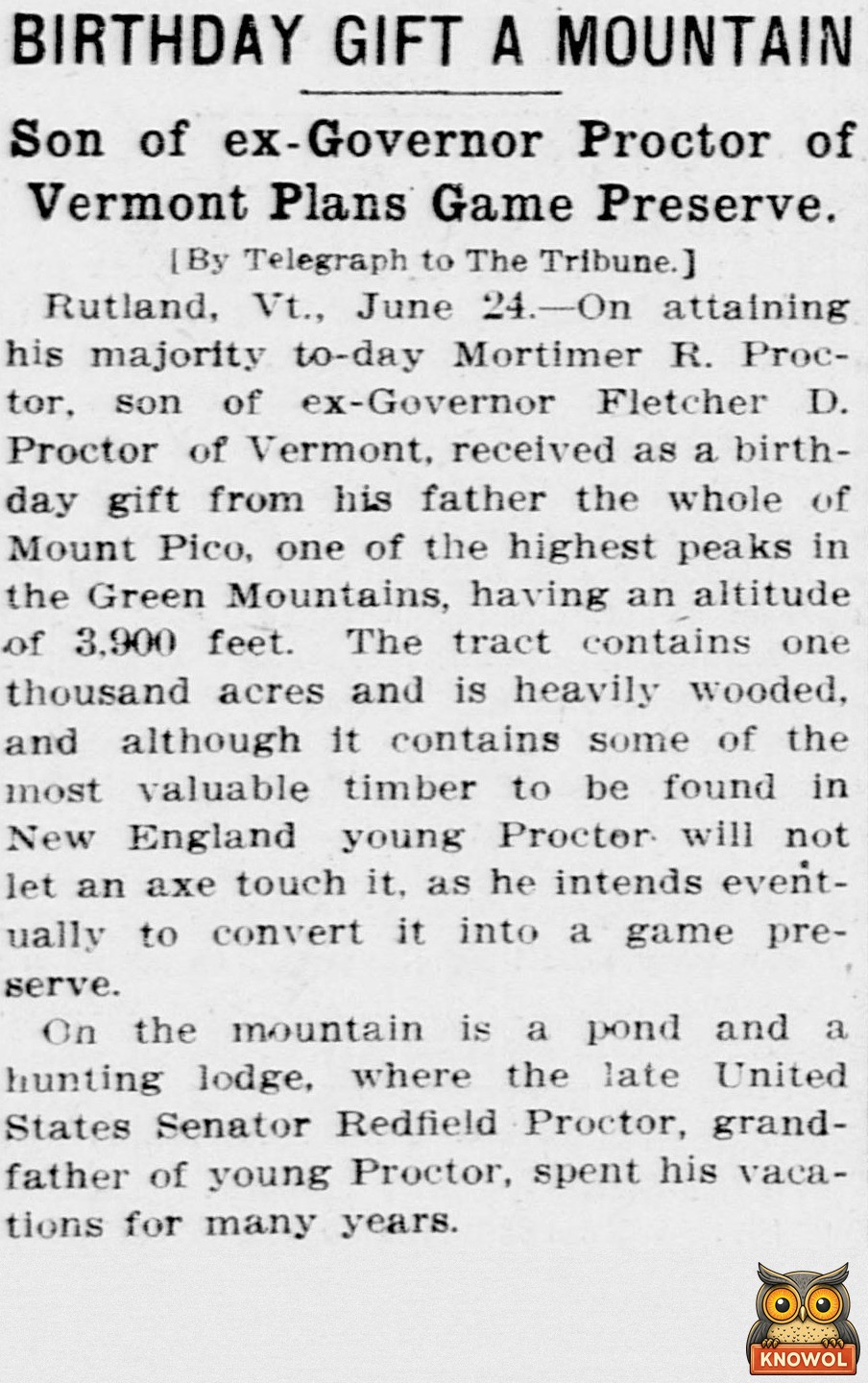
New-York Tribune, New York, New York, June 25, 1910, page 1. Library of Congress, Chronicling America. Click the clipping to read it full size.
The best line came next. Pico was covered with trees, and the Tribune said it held “some of the most valuable timber to be found in New England.” Timber means trees big enough to saw into boards, and boards meant money. But the paper said young Proctor “will not let an axe touch it.” He planned to make the mountain a game preserve, land kept wild for deer and other wild animals.
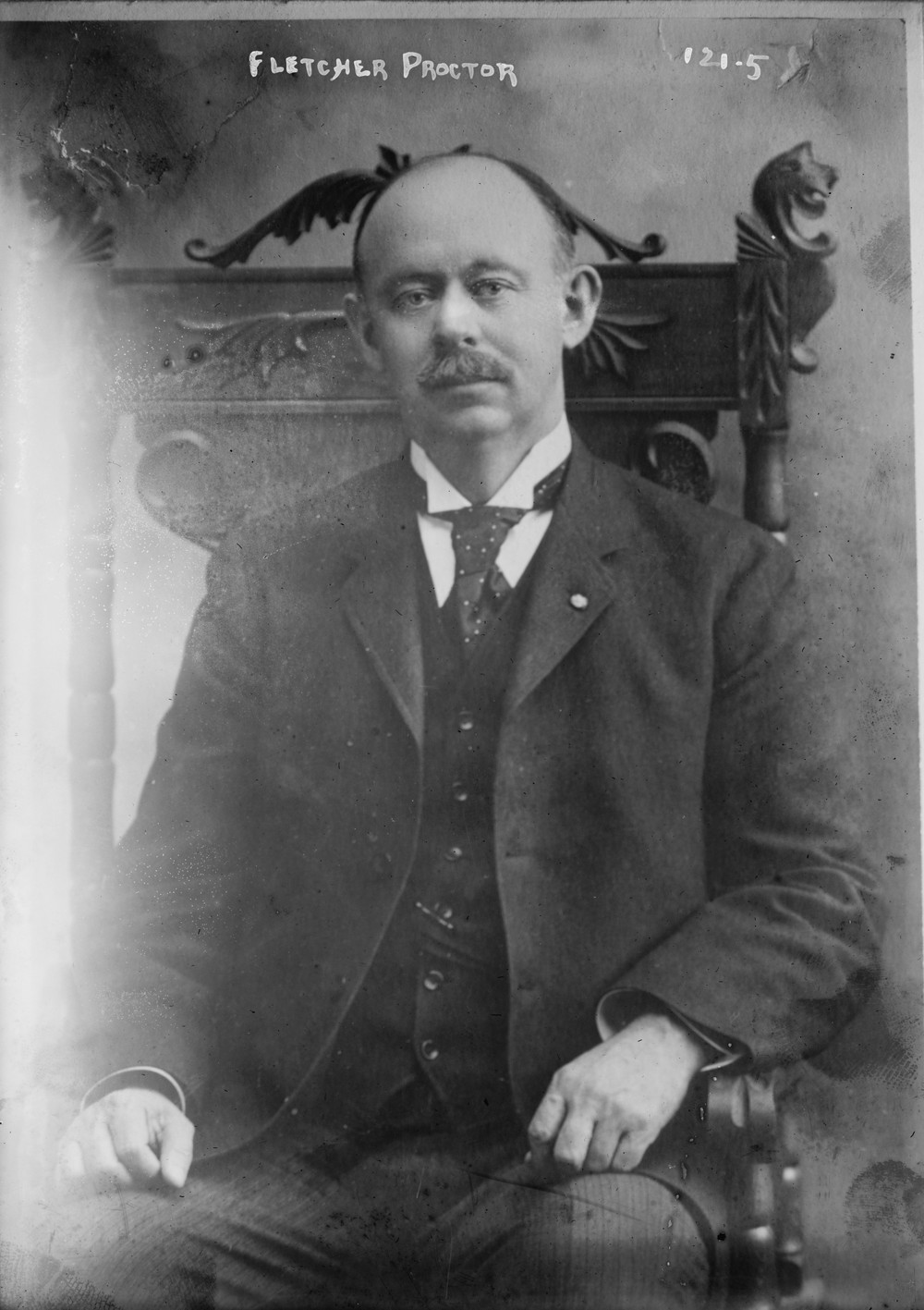
Fletcher D. Proctor, Mortimer’s father and a former governor of Vermont. Bain News Service, Library of Congress. No date is recorded on the card. Click the clipping to read it full size.
Pico Peak, a Mountain Near Rutland, Vermont
Pico stands in Vermont’s Green Mountains, east of Rutland, in the town that was then called Sherburne. Today that town is Killington, Vermont. The papers gave Pico’s height as 3,900 feet, about three-quarters of a mile straight up. The gift covered a thousand acres, more ground than 750 football fields.
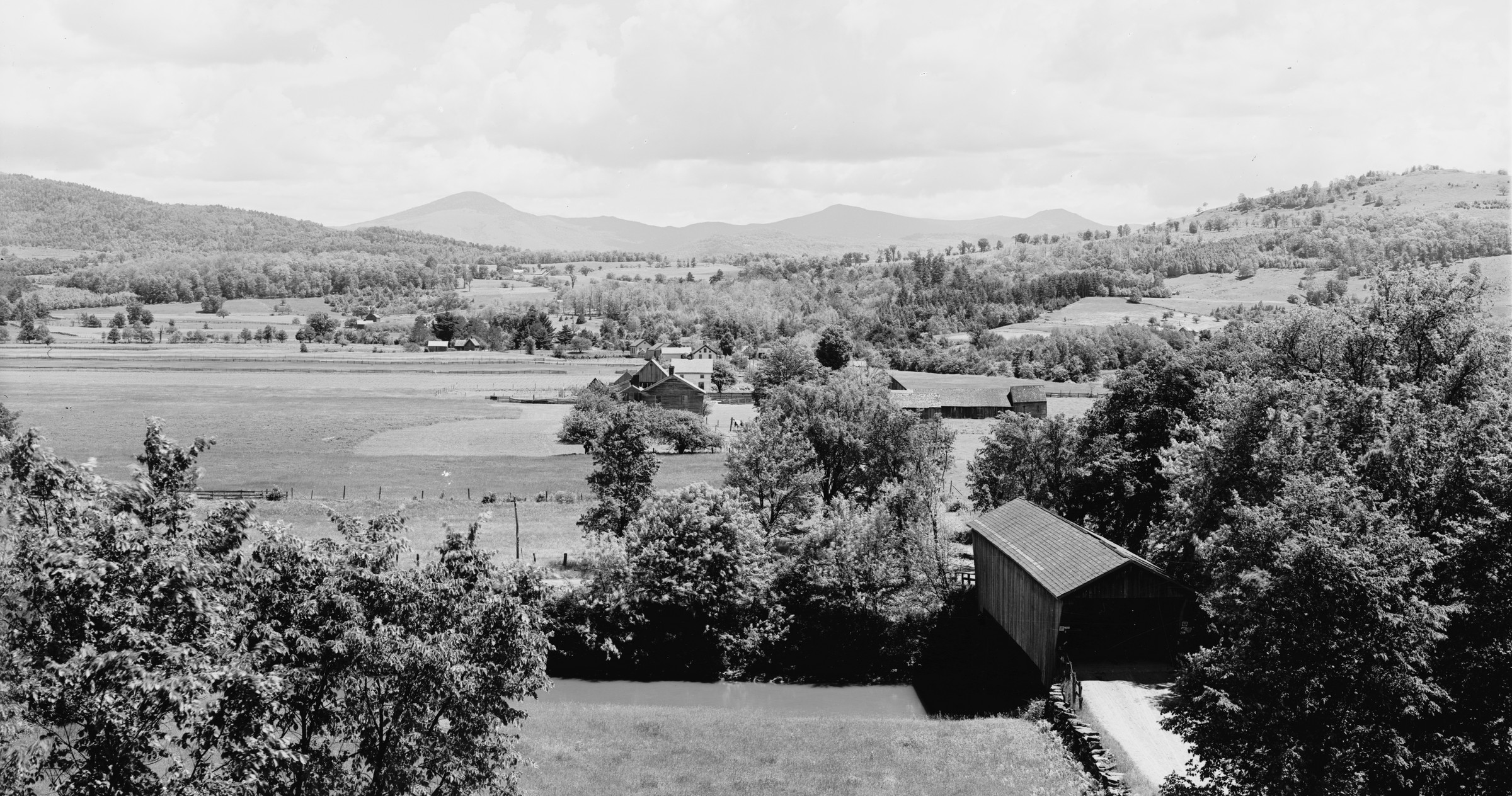
Mount Pico, Mount Killington and Mount Shrewsbury, far off across a farm valley, seen from the Rutland Railroad between 1900 and 1906. Detroit Publishing Co., Library of Congress. Click the picture to see it full size.
Mortimer’s family already knew the place well. The New York Times said that on the mountain was “a trout pond and lodge where Senator Proctor spent his vacations for many years.” That was Mortimer’s grandfather, the late U.S. Senator Redfield Proctor, who had bought Pico Pond and the land around it years before.
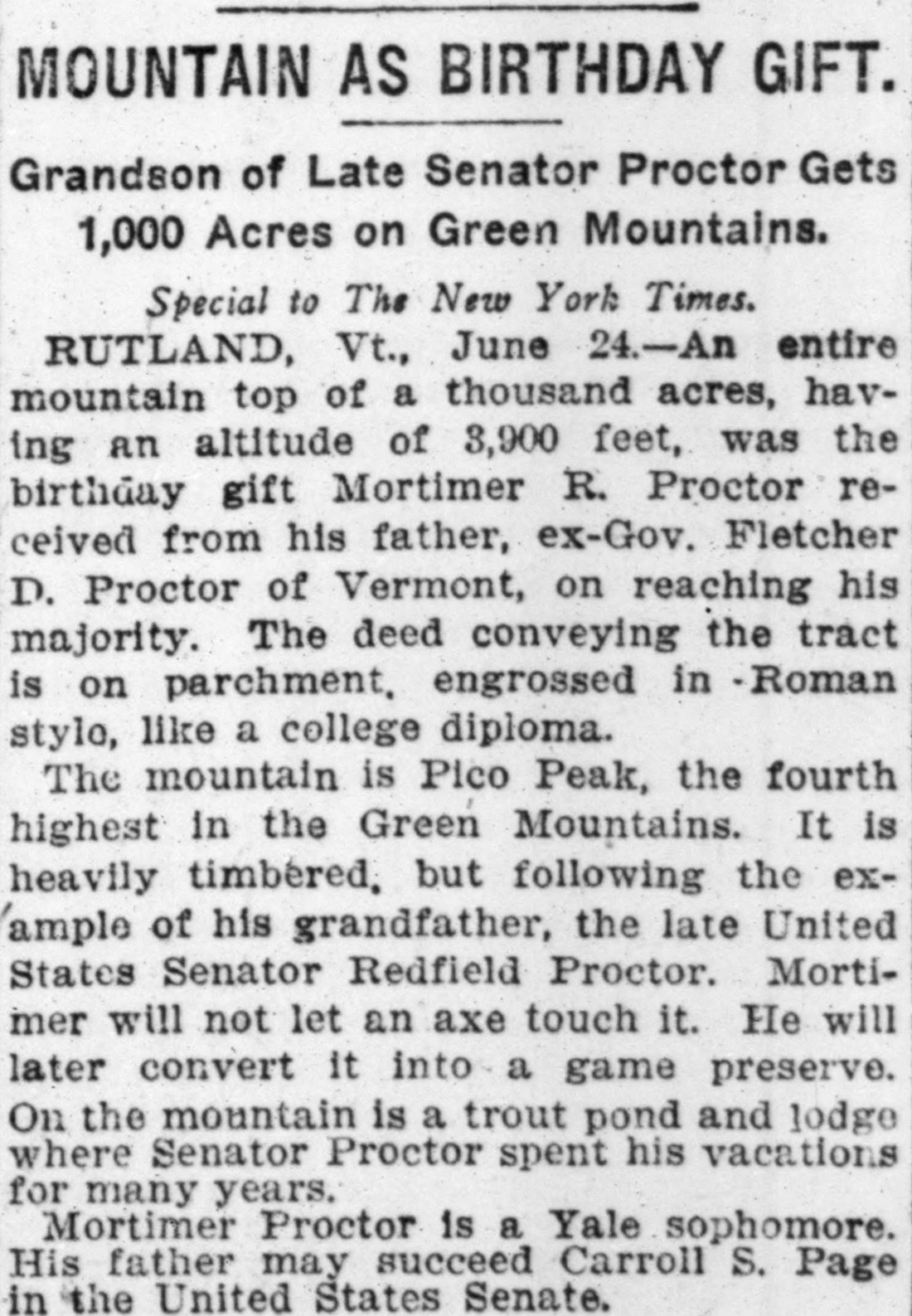
The New York Times, New York, New York, June 25, 1910, page 1. Internet Archive. Public domain. Click the clipping to read it full size.
A Deed Like a College Diploma
In Middlebury, Vermont, the Middlebury Register told how fancy Mortimer Proctor’s paperwork for Pico was. A deed is the paper that proves who owns a piece of land. This one “was specially prepared on parchment and is handsomely engrossed by hand after the style of diplomas, in old Roman script letters.” Engrossed means written out in big, careful lettering. “It is the work of F. W. Martin, an expert penman of Boston.” A penman was someone paid for beautiful handwriting.
Turning 21 in 1910 meant reaching your “majority,” the age when the law treated a young man as a grown-up who could vote and sign papers for himself. The Register made a funny slip. It said the young man had “just attained his minority,” which would mean he had just become a kid again.
The birthday boy wasn’t even home. The Register said he “has completed his sophomore year at Yale University and is now on a trip to Europe with a classmate.” So a college student touring Europe became the owner of a Vermont mountain.
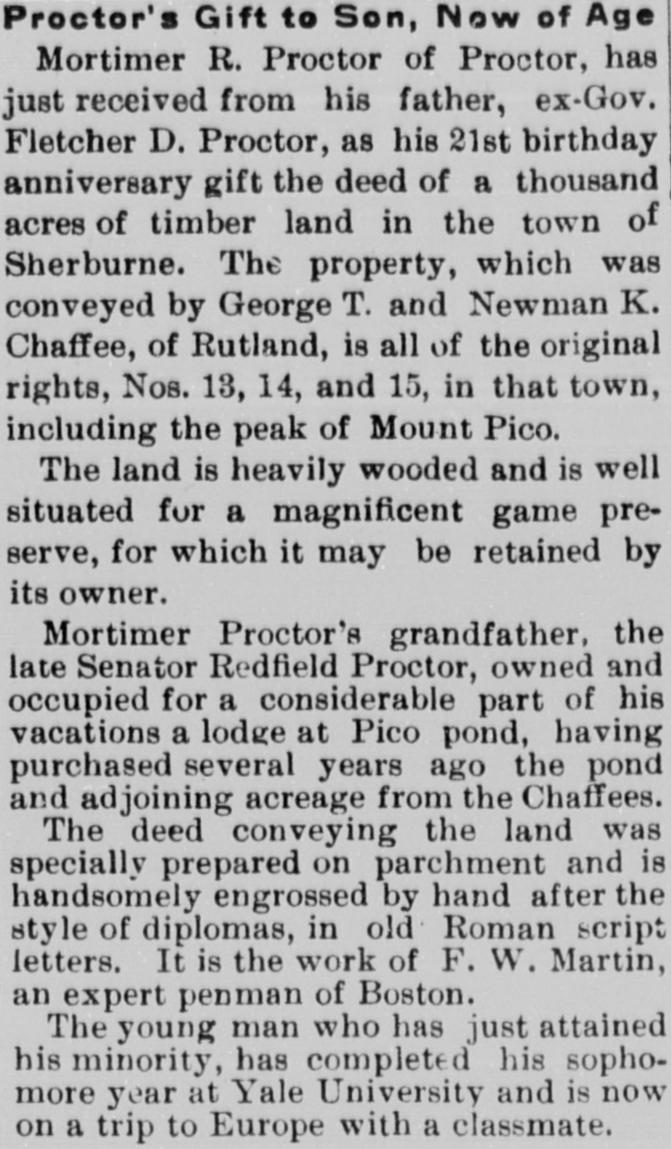
Middlebury Register, Middlebury, Vermont, July 1, 1910, page 2. Library of Congress, Chronicling America. Click the clipping to read it full size.
Deer, Bears and “the Finest Mountain in the World”
The Sun, a New York City paper, liked the Proctor gift so much that it wrote an editorial about Pico and the Vermont peaks around it, and the Burlington Weekly Free Press in Burlington, Vermont, reprinted it. The Sun said the wild country around Pico was where “deer roam freely and bears are often trapped.” It called Mortimer “the new possessor of Pico by a superb birthday gift.” Possessor means owner.
The Sun cheered that two of the four peaks were “already beyond the vandals’ reach,” safe from anyone who might strip them bare. One was Pico. The other was its taller neighbor, Killington, whose rocky top belonged to a Rutland man named Wheeler. He loved it so much, the paper said, that “he pronounces it the finest mountain in the world.” Remember that name.
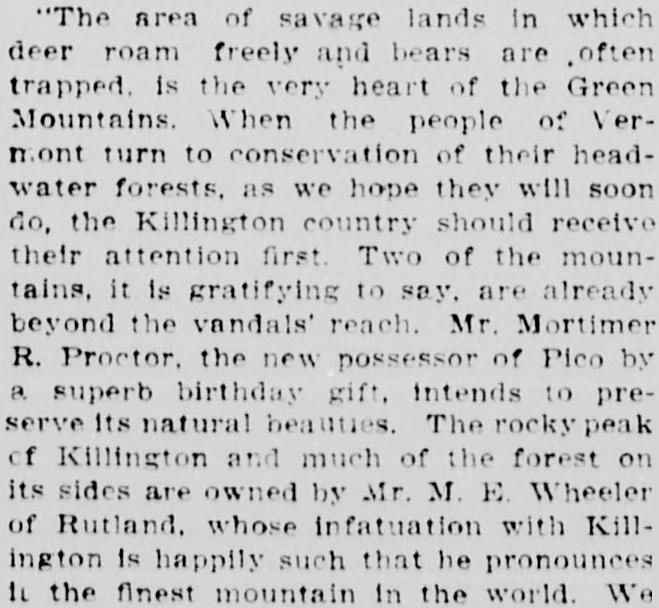
From The Sun’s editorial, as reprinted in the Burlington Weekly Free Press, Burlington, Vermont, July 21, 1910, page 16. Two pieces of one column, joined. Library of Congress, Chronicling America. Click the clipping to read it full size.
Hikers Cross Pico on the Long Trail
Three years after the gift, hikers could walk over Mortimer Proctor’s mountain in Vermont. In June 1913, the Green Mountain Club, a hiking club, held its yearly meeting in Brandon, Vermont. A state forest officer named R. M. Ross showed up “with a gang of men, reporting the completion that morning of 35 miles of the Long Trail over Killington, Pico, Mount Carmel and Mount Horrid.” The Long Trail was a footpath being cut along the tops of the Green Mountains.
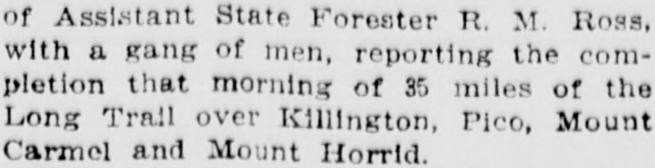
Burlington Weekly Free Press, Burlington, Vermont, June 19, 1913, page 13. Library of Congress, Chronicling America. Click the clipping to read it full size.
A Telephone and a Fire Tower on Top of Pico
In April 1915, Mortimer Proctor’s mountain in Vermont got a new job: fire watch. The Burlington Weekly Free Press reported that “Mortimer Proctor, who owns Pico mountain, has put a telephone line to the summit and the State will maintain a look-out there, also.” A lookout was a watcher posted up high to spot the smoke of a forest fire early. With a telephone at the top, he could call it in right away.

Burlington Weekly Free Press, Burlington, Vermont, April 22, 1915, page 11. Library of Congress, Chronicling America. Click the clipping to read it full size.
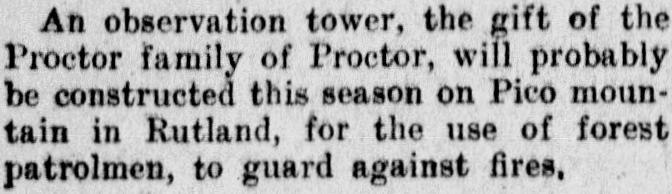
A month later, the Barre Daily Times said a tower was coming too. “An observation tower, the gift of the Proctor family of Proctor,” would probably go up on Pico “for the use of forest patrolmen, to guard against fires.”
The Barre Daily Times, Barre, Vermont, May 12, 1915, page 7. Library of Congress, Chronicling America. Click the clipping to read it full size.
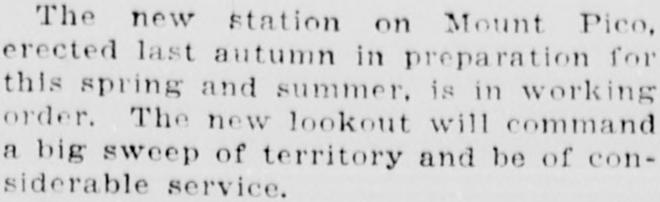
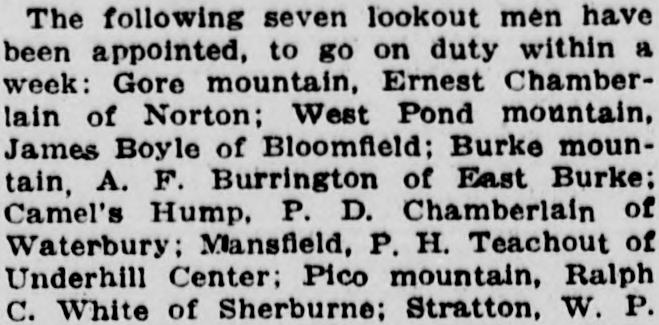
It went up that fall. In August 1916, the Free Press said the new station on Mount Pico was “in working order” and “will command a big sweep of territory.” In May 1917, Vermont named seven lookout men, and the list included “Pico mountain, Ralph C. White of Sherburne.” So the job of watching over Mortimer’s trees went to a man from the town at Pico’s feet.
Burlington Weekly Free Press, Burlington, Vermont, August 24, 1916, page 7. Library of Congress, Chronicling America. Click the clipping to read it full size.
Burlington Weekly Free Press, Burlington, Vermont, May 10, 1917, page 9. Library of Congress, Chronicling America. Click the clipping to read it full size.
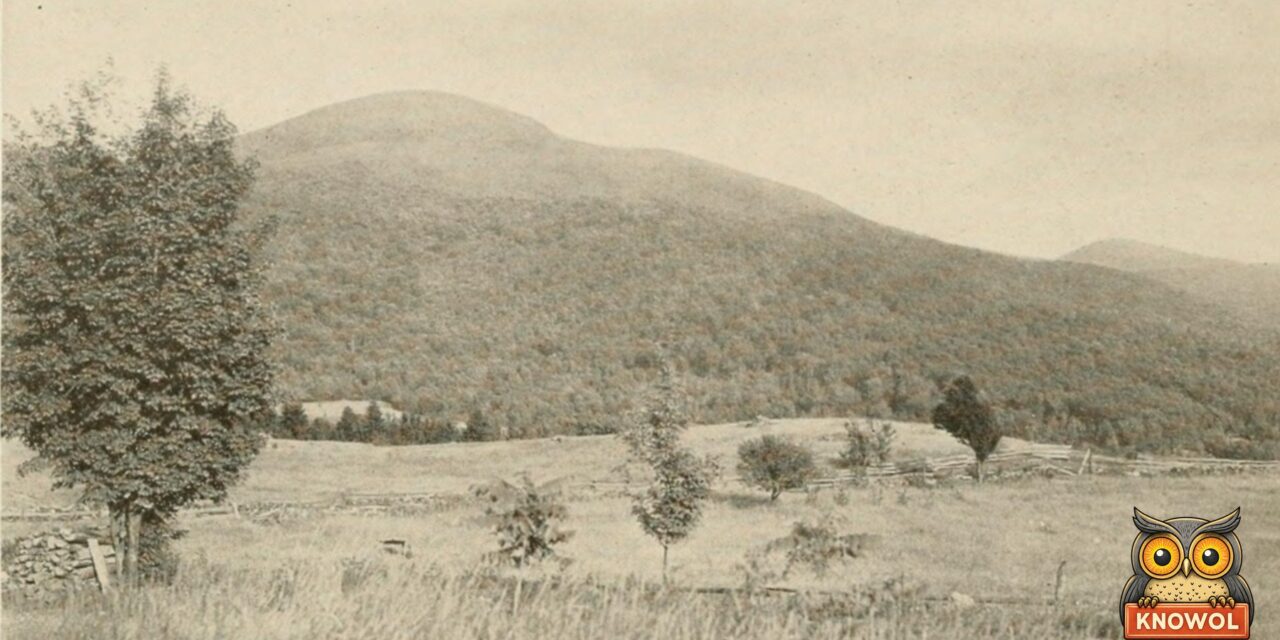
In 1918, the State of Vermont printed a booklet called The Lure of Vermont’s Silent Places to invite visitors to its mountains. It said a side trail led “to the summit of Pico where a large wooden tower affords splendid views of Killington, Mendon, Ascutney, Rutland and the forests which clothe the range for many miles east and west.” The photo at the top of this page comes from that booklet. It shows Pico itself, in a picture printed eight years after the birthday.

The Lure of Vermont’s Silent Places, State of Vermont, 1918, page 39. Library of Congress copy, Internet Archive. Public domain. Click the clipping to read it full size.
Pico by the Numbers
- 21: Mortimer Proctor’s age when his father gave him Pico.
- 1,000: acres in the gift, more than 750 football fields.
- 3,900: feet high, as the 1910 papers gave it.
- 35: miles of the Long Trail finished over Killington, Pico, Mount Carmel and Mount Horrid by June 1913.
- 7: lookout men Vermont named in May 1917. One of them watched from Pico.
The Boy From Proctor, Vermont, Who Got a Mountain and Gave One Away
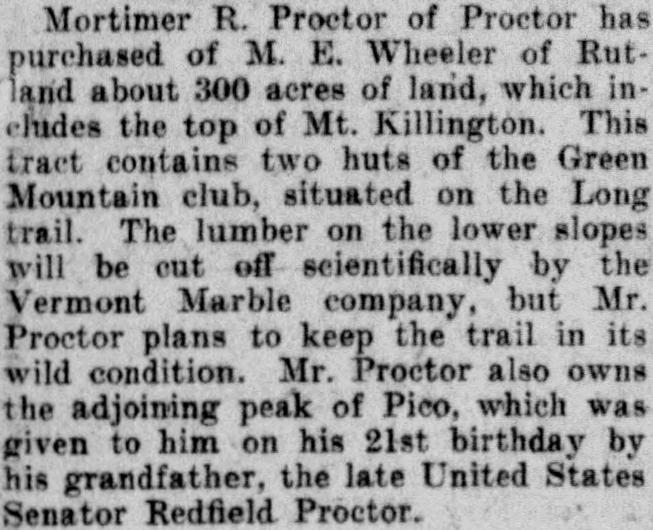
Mortimer Proctor finished Yale in 1912 and went to work for his family’s business, the Vermont Marble Company. He served as an Army officer in France in World War I. Then, in January 1920, the Barre Daily Times reported that he had bought “about 300 acres of land, which includes the top of Mt. Killington,” from M. E. Wheeler of Rutland. That was the man who called Killington the finest mountain in the world.
The paper said the marble company would cut lumber on the lower slopes “scientifically,” meaning with care, “but Mr. Proctor plans to keep the trail in its wild condition.” The same note mixed one thing up. It said Pico had come from his grandfather, but the 1910 papers all say his father gave it.
The Barre Daily Times, Barre, Vermont, January 17, 1920, page 7. Library of Congress, Chronicling America. Click the clipping to read it full size.
The Town of Killington’s own history says Mortimer gave Killington Peak to the State of Vermont in 1938, and sold Pico to a ski company, Pico Ski Inc., in 1948. In between, he served as Vermont’s governor from 1945 to 1947.
The papers never said whether there was cake at that 21st birthday. They did say what the birthday boy planned to do with his present: keep the axes away. Five years later he ran a telephone line up Pico so someone could guard its woods from fire. And the young man who got a mountain as a gift later gave its taller neighbor to the people of Vermont.
Sources
- “Birthday Gift a Mountain,” New-York Tribune (New York, New York), June 25, 1910, page 1. Library of Congress, Chronicling America.
- “Mountain as Birthday Gift,” The New York Times, June 25, 1910, page 1. Internet Archive.
- “Proctor’s Gift to Son, Now of Age,” Middlebury Register (Middlebury, Vermont), July 1, 1910, page 2. Library of Congress, Chronicling America.
- The Sun’s editorial on the Killington peaks, reprinted in the Burlington Weekly Free Press (Burlington, Vermont), July 21, 1910, page 16. Library of Congress, Chronicling America.
- Burlington Weekly Free Press, June 19, 1913, page 13, the Long Trail. Library of Congress, Chronicling America.
- Burlington Weekly Free Press, April 22, 1915, page 11, the telephone line. Library of Congress, Chronicling America.
- The Barre Daily Times (Barre, Vermont), May 12, 1915, page 7, the observation tower. Library of Congress, Chronicling America.
- Burlington Weekly Free Press, August 24, 1916, page 7, the new station on Mount Pico. Library of Congress, Chronicling America.
- Burlington Weekly Free Press, May 10, 1917, page 9, the lookout men. Library of Congress, Chronicling America.
- The Barre Daily Times, January 17, 1920, page 7, Killington Peak. Library of Congress, Chronicling America.
- The Lure of Vermont’s Silent Places, State of Vermont, 1918, page 32 (the Pico photo) and page 39 (the tower). Library of Congress copy, Internet Archive.
- Town of Killington, Vermont, Town History, “Killington Peak and Pico Peak,” prepared by the Sherburne Historians.
- National Governors Association, Gov. Mortimer R. Proctor.
- Mt. Pico, Mt. Killington, and Mt. Shrewsbury from Rutland R.R., Green Mountains, Detroit Publishing Co., between 1900 and 1906. Library of Congress Prints and Photographs Division. No known restrictions on publication.
- Fletcher Proctor, seated, Bain News Service. Library of Congress Prints and Photographs Division. No known restrictions on publication.
- The newspapers, the booklet and the photographs above were all published or made before 1931 and are in the public domain.