On Wednesday, September 12, 1894, the fair in Springfield, Vermont, drew what the Bellows Falls Times called “the largest attendance probably ever known on the last day.” Families came for the horse races, the prize cows and the best potatoes in town, and they came to see a balloon go up. Back in August, the same paper had reported that the fair’s managers were “talking of having a balloon ascension September 12.”
A balloon ascension, a giant cloth balloon filled right on the fairgrounds and sent up before the whole crowd, was the big thrill of a country fair in those days. This one never left the ground. The Bellows Falls Times told it plainly: “The accident to the balloon prevented the ascension and caused some disappointment but the crowd did not seem to lack for amusement.” None of the papers we found said what went wrong with the balloon, but this one did say who saved the afternoon. It was a dog.
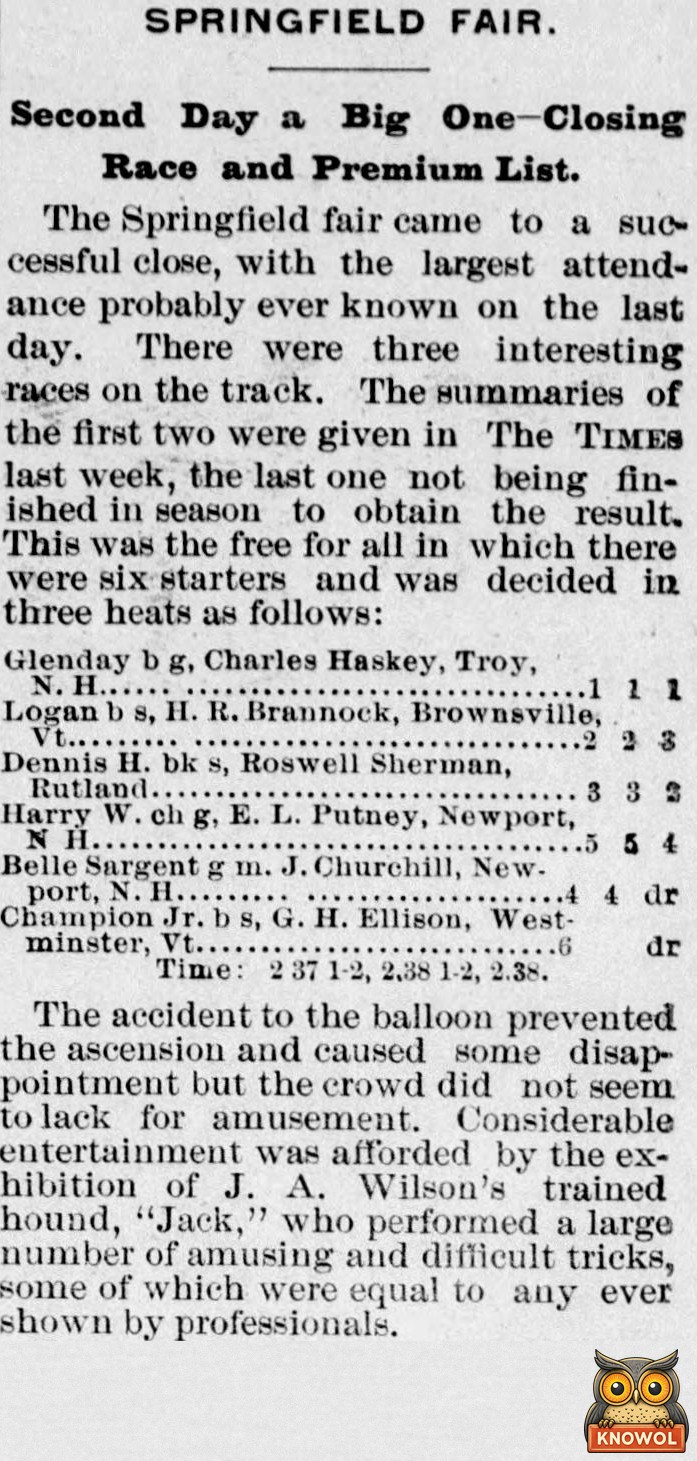
“Springfield Fair. Second Day a Big One.” Bellows Falls Times, Bellows Falls, Vermont, September 20, 1894, page 1. Library of Congress, Chronicling America. Click the clipping to read it full size.
A Hound Named Jack Steals the Show in Springfield, Vermont
The fun came from “J. A. Wilson’s trained hound, ‘Jack,’ who performed a large number of amusing and difficult tricks, some of which were equal to any ever shown by professionals.” In plain words, a local dog was as good as the paid stars who traveled with the big shows.
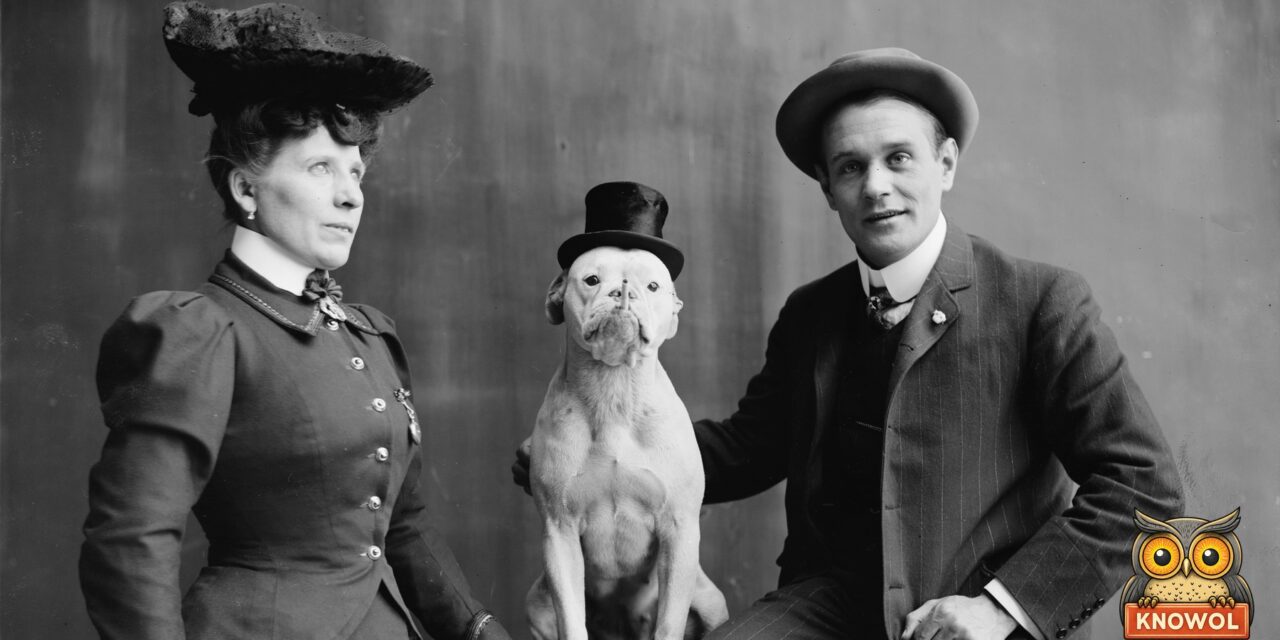
No paper we found listed Jack’s tricks one by one, and no photo of him has turned up. The picture at the top of this page shows a different trained dog from those years, Bobbie, wearing a tiny top hat between Mr. and Mrs. Frank Kern. The Detroit Publishing Company took it sometime between 1900 and 1910, when dog acts like theirs were a regular part of show business.
What the papers did save is where Jack went next, because for ten years they kept writing about him.
The Balloon That Stayed on the Ground in Springfield, Vermont
The Vermont Phoenix, a paper in Brattleboro, Vermont, said the Springfield Agricultural Society “had two good days for its fair, Tuesday and Wednesday,” with “live stock, fruit and vegetables, dairy products, farming tools, etc.” The balloon, planned for the second day, was meant to be the topping on all of it.

From the Springfield news. Bellows Falls Times, Bellows Falls, Vermont, August 23, 1894, page 10. Library of Congress, Chronicling America. Click the clipping to read it full size.
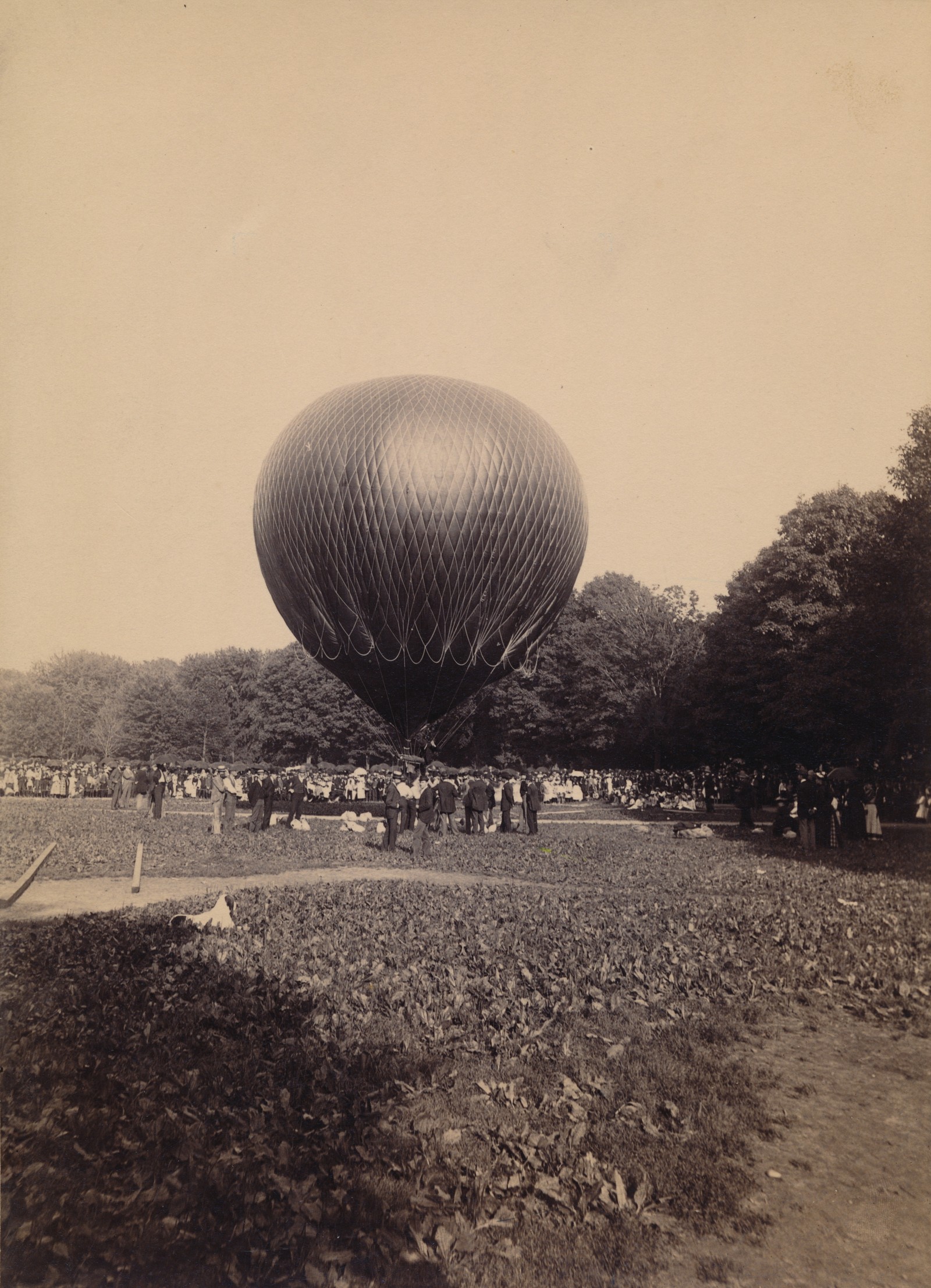
A balloon ascension like the one the Springfield crowd hoped to see: George E. Greenleaf’s balloon at Lawrence, Massachusetts, July 4, 1890. Photo by Geo. H. Leck. Lawrence Public Library, Digital Commonwealth. Click the picture to see it full size.
The same story’s prize list has one line worth a smile. In the drawing match for horses, a pulling contest where teams hauled a heavy load, first prize went to the “Town of Springfield.” The town’s own horses beat everybody else’s.
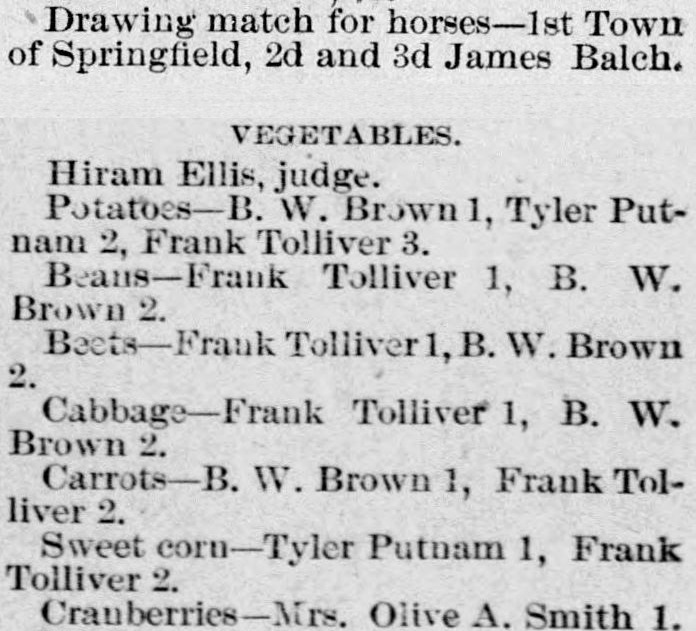
From the prize list, two pieces of the same column joined. Bellows Falls Times, September 20, 1894, page 1. Library of Congress, Chronicling America. Click the clipping to read it full size.
A bird’s-eye map from 1886 shows Springfield’s mills and churches tucked into the hills along the Black River.
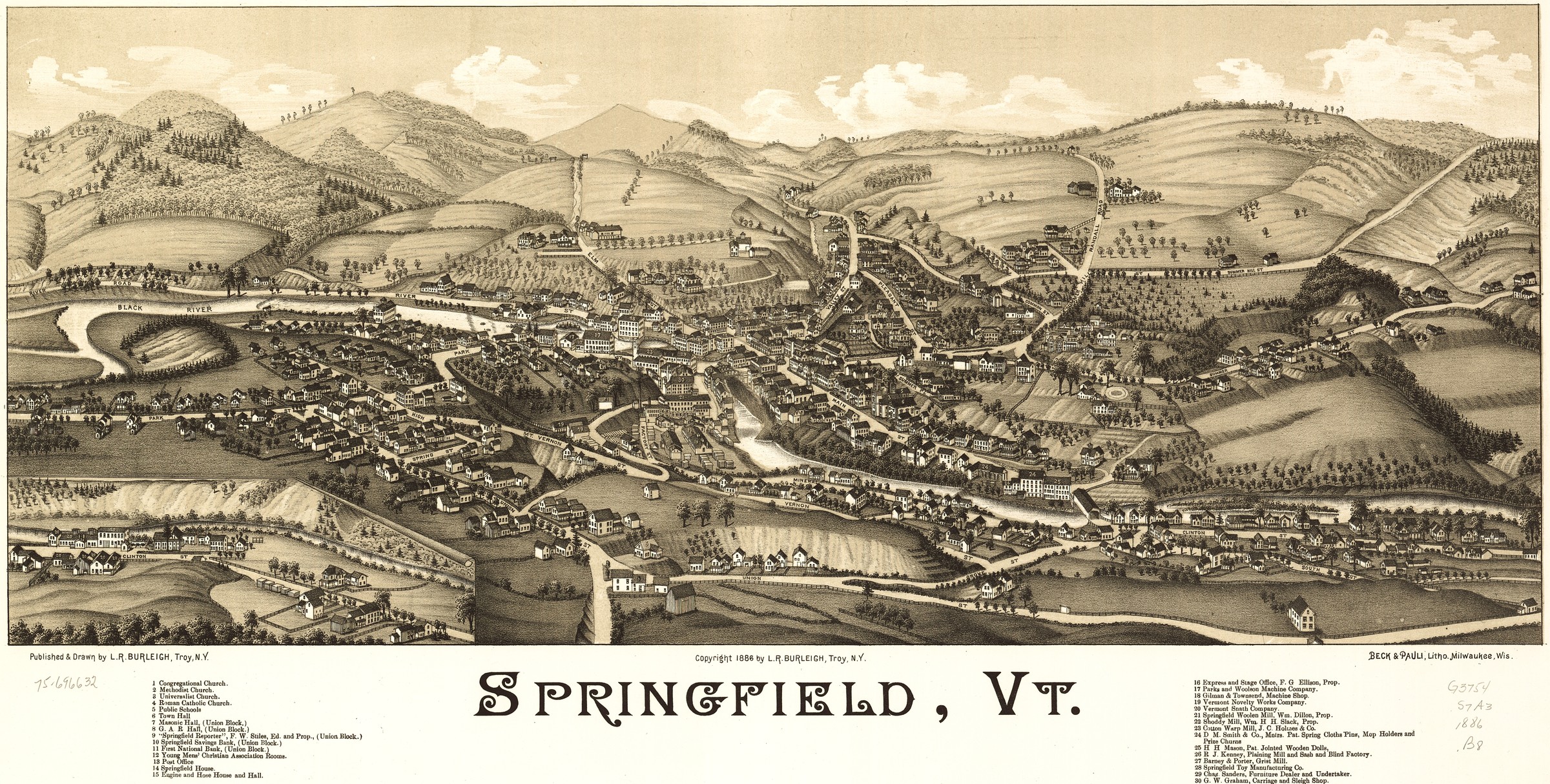
Springfield, Vermont, in a bird’s-eye map by L. R. Burleigh, 1886. Library of Congress, Geography and Map Division. Click the picture to see it full size.
Jack Was Already a Star at the State Fair in White River Junction, Vermont
A week before Springfield’s fair, J. A. Wilson and Jack had worked the big Vermont State Fair in White River Junction, Vermont. The Herald and News of West Randolph, Vermont, began with a grumpy line about fair shows in general: “Special attractions offered at fairs have usually disgusted rather than pleased. Those at the State fair were an exception.”
The paper went on: “Prof. Joe Wilson’s trained dog Jack and the Japanese acrobats gave daily exhibitions that gained big applause from the big crowds that witnessed them.” Prof. was short for Professor, a title showmen loved. It didn’t mean Joe Wilson taught at a college. It meant he was the expert, and his dog was the star pupil.
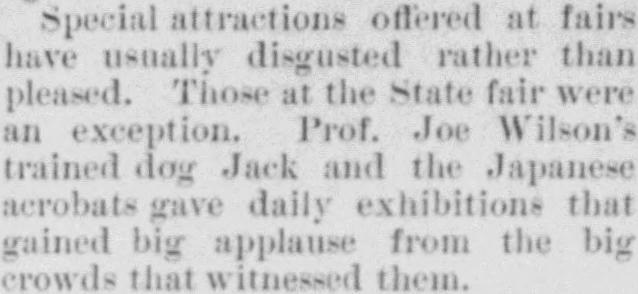
Herald and News, West Randolph, Vermont, September 13, 1894, page 2. Library of Congress, Chronicling America. Click the clipping to read it full size.
Later that month, the Bellows Falls Times said, “It is expected that Prof. J. A. Wilson, with his dog, will go to Woodstock to attend the county fair this week.”

From the West Springfield news. Bellows Falls Times, September 27, 1894, page 4. Library of Congress, Chronicling America. Click the clipping to read it full size.
Jack Takes His Tricks to Portland, Maine, and Burlington, Vermont
By 1895, Jack was working bigger crowds. In Portland, Maine, where a fair was held inside City Hall, the Portland Daily Press said “the band concerts with the wonderful feats of the trick dog Jack, drew excellent audiences to the fair yesterday and Superintendent Dennison smiled as he counted up the box office receipts.” Jack was good for business.
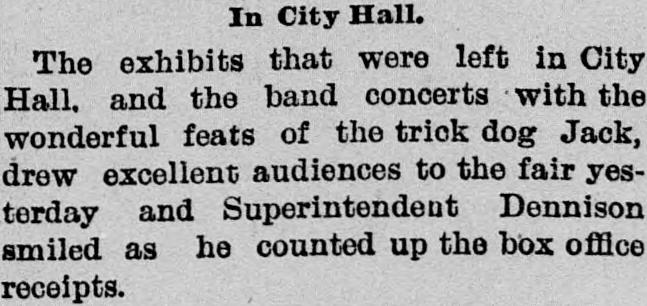
The Portland Daily Press, Portland, Maine, September 3, 1895, page 8. Library of Congress, Chronicling America. Click the clipping to read it full size.
That year Jack also played the Bay State Fair in Worcester, Massachusetts, and then Wilson took him farther. In May 1896, the Bellows Falls Times said “J. A. Wilson returned to his home here Monday night from a seven months’ trip in western states with his trained dog.”
By that summer, Jack had a big price tag. The St. Johnsbury Caledonian said the Inter-State Fair in Burlington, Vermont, would have “Prof. Wilson’s $5,000 dog Jack, the prize winning champion performing dog of the world.” That was a showman’s brag, but the same notice says 143 race horses would compete for “$5,300 in stakes,” the prize money for all the horse races put together. One dog was priced almost as high as all of it.
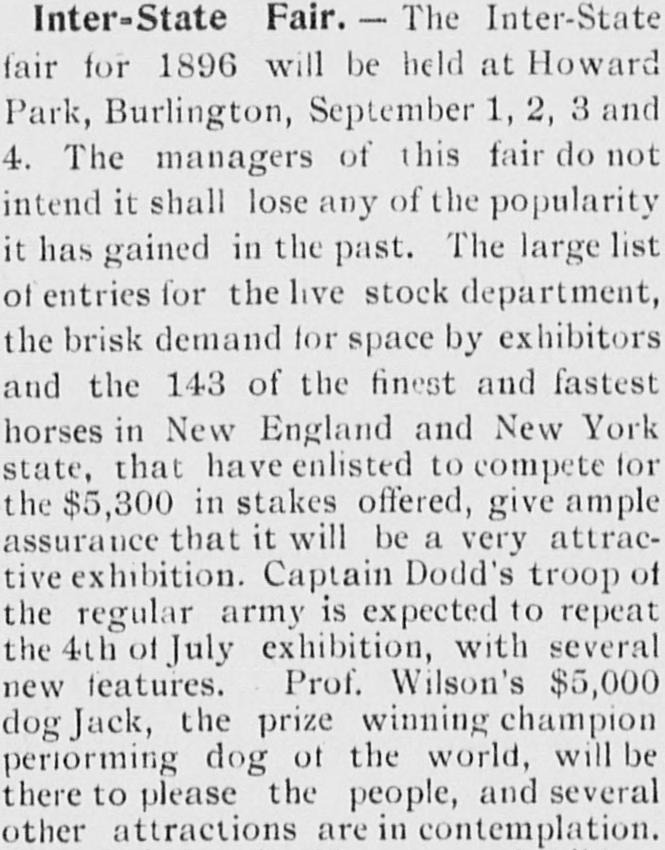
St. Johnsbury Caledonian, St. Johnsbury, Vermont, August 28, 1896, page 1. Library of Congress, Chronicling America. Click the clipping to read it full size.
Jack Plays Mother Hubbard’s Dog in “Jack and the Beanstalk”
Next, Jack went on the stage. For three or four years he was in “Jack and the Beanstalk,” a big musical show, called an extravaganza, that toured the country with nursery-rhyme characters, songs and fancy scenery.
He did not play Jack. He played Mother Hubbard’s dog, from the old rhyme where Old Mother Hubbard goes to the cupboard to get her poor dog a bone. In February 1898 the Worcester Spy said “A word of praise is due the humble canine actor who took the part of Mother Hubbard’s dog.”
Then it added a surprise: “He is a collie, valued at $5000, by his master, J. A. Wilson of Chester, Vt.” Back in 1894, the Bellows Falls Times had called Jack a hound. One of the two papers had the breed wrong, and without a photo there is no way to settle it.
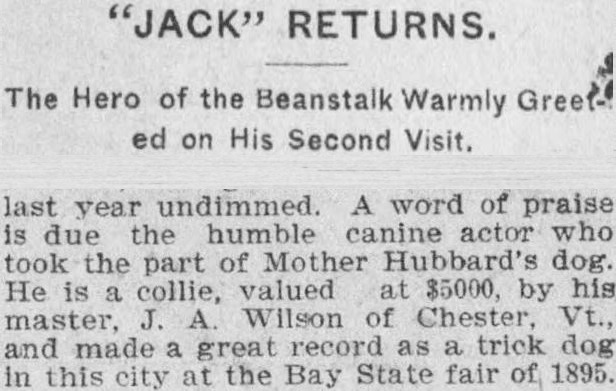
Headline and paragraph from the same story, joined. Worcester Daily Spy, Worcester, Massachusetts, February 8, 1898, page 1. Library of Congress, Chronicling America. Click the clipping to read it full size.
In July 1899, a vaudeville company, the kind of show made of many short acts in a row, played the Rustic Theatre in Brattleboro, and Jack was one of the acts. The Vermont Phoenix said there “is a local interest in Prof. Wilson and his great dog Jack, who appear in Jack the Beanstalk during winter seasons, as they come from the near-by town of Chester.”
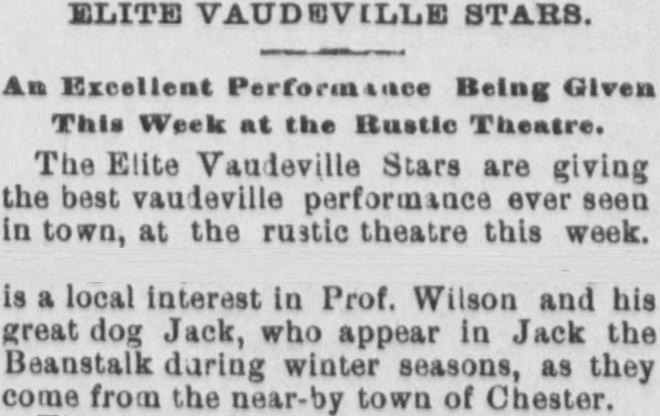
Headline and lines from the same story, joined. Vermont Phoenix, Brattleboro, Vermont, July 28, 1899, page 6. Library of Congress, Chronicling America. Click the clipping to read it full size.
Ten Years on the Road, From Chester, Vermont, to Texas
In August 1904, the Vermont Watchman of Montpelier printed the last news we found about Jack. It began with a typo, “The performing boy ‘Jack,'” for dog. The note said Jack had “been shown at about every fair in New England by his owner, Joseph A. Wilson, of Chester Depot,” a village in the town of Chester, Vermont, and that Jack had “recently died in Boston.”
The Watchman added, “Jack was ten years in the show business with his master and had appeared in all the first-class vaudeville houses from Maine to Texas.” Joe Wilson stayed in show business too. That season he was working “as ticket seller at Austin & Stone’s museum in Boston.”
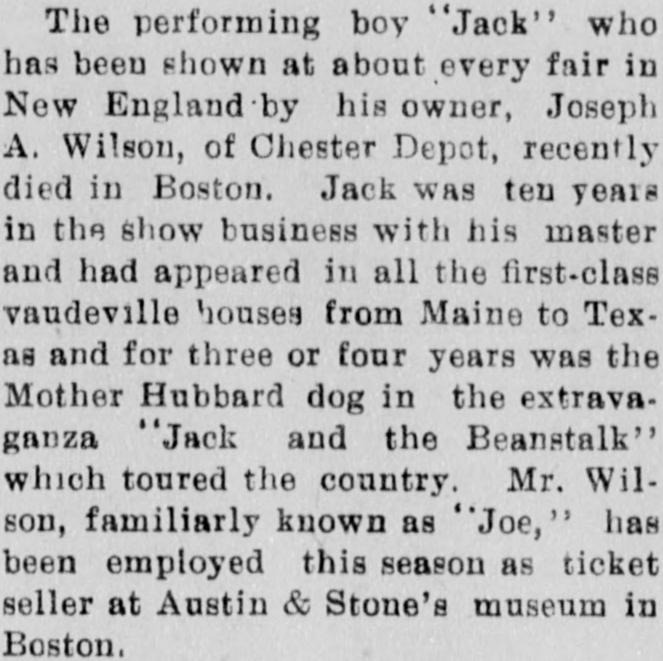
The Vermont Watchman, Montpelier, Vermont, August 25, 1904, page 3. Library of Congress, Chronicling America. Click the clipping to read it full size.
The crowd in Springfield came in 1894 to watch a balloon go up, and it never left the ground. The dog who filled in that afternoon went much farther than any fair balloon, from a Vermont fairground to the best theaters from Maine to Texas, with Joe Wilson right beside him.
Sources
- “Springfield Fair. Second Day a Big One,” Bellows Falls Times (Bellows Falls, Vermont), September 20, 1894, page 1. Library of Congress, Chronicling America.
- Bellows Falls Times, August 23, 1894, page 10, Springfield news, the balloon plan. Library of Congress, Chronicling America.
- Herald and News (West Randolph, Vermont), September 13, 1894, page 2, the State Fair at White River Junction. Library of Congress, Chronicling America.
- Vermont Phoenix (Brattleboro, Vermont), September 14, 1894, page 8, “The Fair at Springfield.” Library of Congress, Chronicling America.
- Bellows Falls Times, September 27, 1894, page 4, West Springfield news. Library of Congress, Chronicling America.
- The Portland Daily Press (Portland, Maine), September 3, 1895, page 8, “In City Hall.” Library of Congress, Chronicling America.
- Bellows Falls Times, May 20, 1896, page 3, Chester news. Library of Congress, Chronicling America.
- St. Johnsbury Caledonian (St. Johnsbury, Vermont), August 28, 1896, page 1, the Inter-State Fair. Library of Congress, Chronicling America.
- “‘Jack’ Returns,” Worcester Daily Spy (Worcester, Massachusetts), February 8, 1898, page 1. Library of Congress, Chronicling America.
- “Elite Vaudeville Stars,” Vermont Phoenix, July 28, 1899, page 6. Library of Congress, Chronicling America.
- The Vermont Watchman (Montpelier, Vermont), August 25, 1904, page 3, “About the State.” Library of Congress, Chronicling America.
- Mr. and Mrs. Frank Kern and trained dog Bobbie, Detroit Publishing Co., between 1900 and 1910 (the cover). Library of Congress Prints and Photographs Division. No known restrictions on publication.
- Balloon ascension by Geo. E. Greenleaf, Lawrence, Mass., July 4, 1890, photo by Geo. H. Leck. Lawrence Public Library, Digital Commonwealth. No known copyright restrictions.
- Springfield, Vt., bird’s-eye map by L. R. Burleigh, 1886. Library of Congress, Geography and Map Division.
- The newspapers, photographs and map above were all published or made before 1931 and are in the public domain.