Henry Clark sat in a wagon on the race track at the fair in Orange, Connecticut, with his horse hitched up in front of him. So did three other men. It was September 11, 1901, and nobody was waiting for a gun. They were waiting for one word. When it came, the race didn’t start with running. It started with unbuckling.
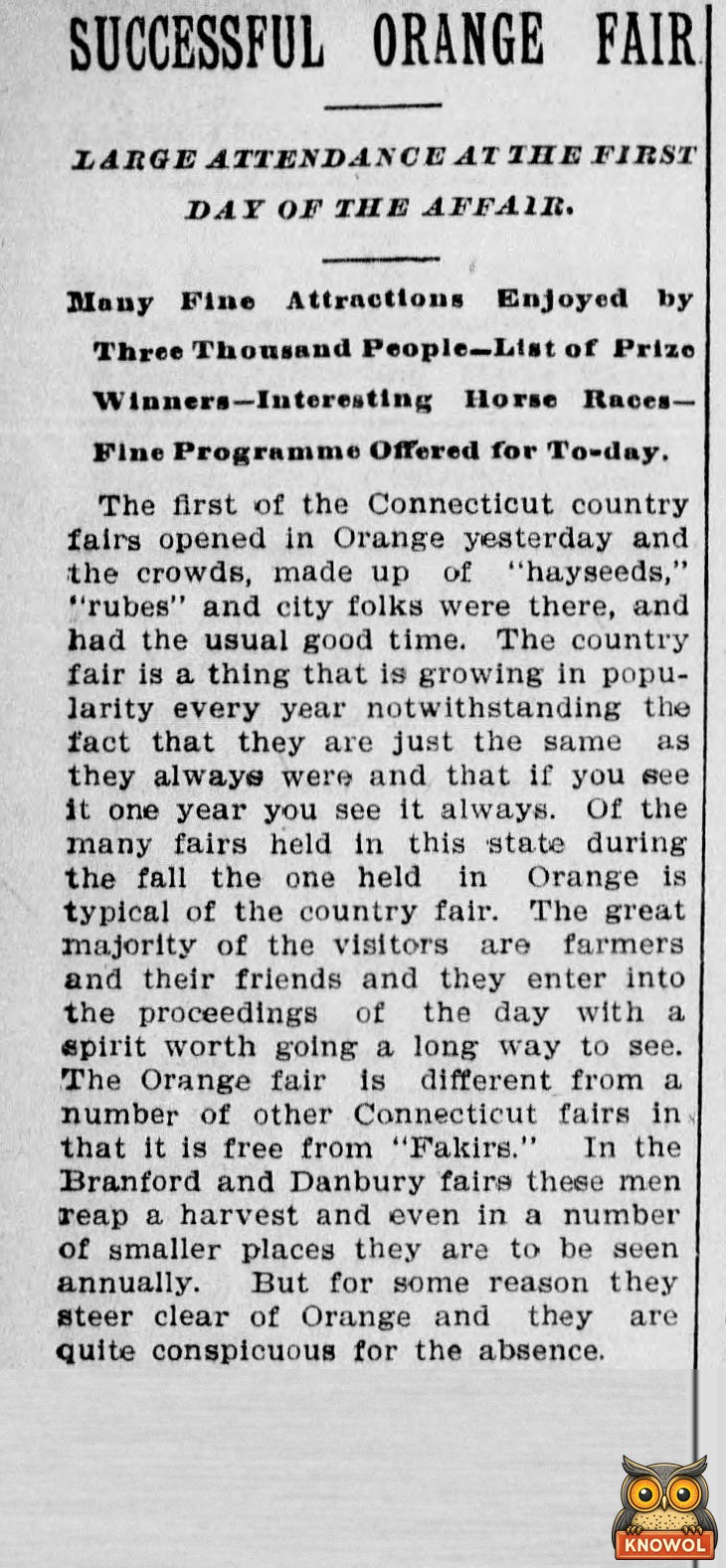
“Successful Orange Fair.” Morning Journal and Courier, New Haven, Connecticut, September 12, 1901, page 7. Library of Congress, Chronicling America. Published 1901, public domain. Click the clipping to read it full size.
The Morning Journal and Courier, a daily paper in nearby New Haven, Connecticut, covered both days of the Orange fair. Its reports tell about vegetables and cattle, but the best parts are the games the farmers played with their own horses.
The Harness Race at the Orange Fair
Here is how the first race worked at Orange, in the paper’s own words: “At the word ‘go’ each driver unhitched and unharnessed his horse, hung the entire harness on the dashboard of his wagon, then harnessed his horse, hitched it to his wagon and drove around the track.”
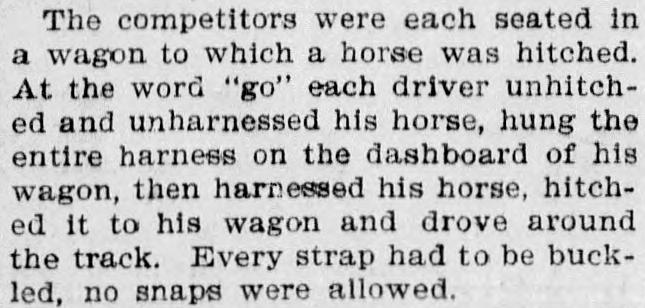
The rules of the harness race. Morning Journal and Courier, New Haven, Connecticut, September 12, 1901, page 7. Library of Congress, Chronicling America. Published 1901, public domain. Click the clipping to read it full size.
A harness is the set of leather straps that ties a horse to a wagon, with a bridle on the head. Farmers put one on every morning, the slow and careful way. In this race they took the whole thing off and put it all back on, as fast as they could, with a crowd watching.
There was one more rule, and it was the hard one. “Every strap had to be buckled, no snaps were allowed.” A snap is a quick metal clip. A buckle means pushing a pin through a hole in the leather, one strap at a time, with your fingers. So no shortcuts. Henry Clark won first prize, and W. H. Beecher came in second.
The Peg Race on the Second Day in Orange
On Thursday, September 12, the Orange fair ran a bigger version of the same idea, called the peg race. This time five men raced. Each one had to “unhitch, hang their harness on the fence surrounding the track, hitch thoroughly and ride a half mile.”
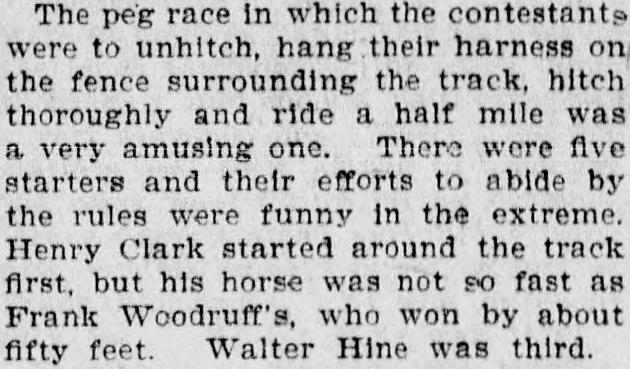
The peg race. Morning Journal and Courier, New Haven, Connecticut, September 13, 1901, page 2. Library of Congress, Chronicling America. Published 1901, public domain. Click the clipping to read it full size.
The reporter loved it. He wrote that “their efforts to abide by the rules were funny in the extreme.” Picture grown men running to the fence with armfuls of leather, then fumbling with buckles while their horses waited.
And here comes the turn. Henry Clark, the champion buckler from the day before, did it again. He got his horse dressed first and “started around the track first.” But a half mile is a long way. The paper said “his horse was not so fast as Frank Woodruff’s, who won by about fifty feet.” Walter Hine came in third. Clark had the fastest fingers at the fair. Woodruff had the faster horse.
Every Silly Race at the Orange Fair
The Orange fair printed its whole Thursday schedule in the paper, and it reads like a field day for grown-ups. There was a 50 yard backing race. The paper doesn’t explain it, but the name says it: the horses had to go backward. Harold Woodruff won it. Then came an umbrella race, the peg race and a greased pig race, where people chased a pig slicked with grease that was almost impossible to hold.
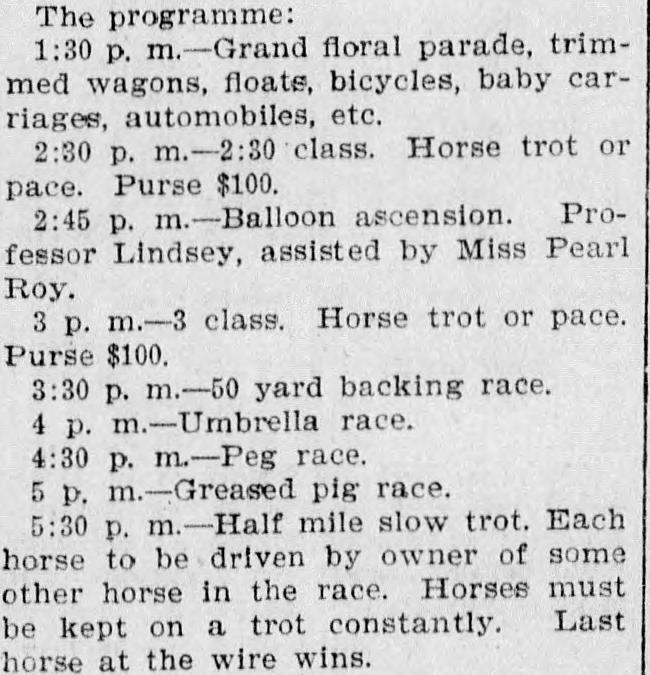
The second day’s schedule, from the balloon to the greased pig. Morning Journal and Courier, New Haven, Connecticut, September 12, 1901, page 7. Library of Congress, Chronicling America. Published 1901, public domain. Click the clipping to read it full size.
The last race on the list was the strangest one of all, a half mile slow trot. “Each horse to be driven by owner of some other horse in the race.” The horses had to keep trotting the whole way. And the rule at the end flipped racing upside down: “Last horse at the wire wins.” So every driver steered somebody else’s horse and tried to lose. The next day’s report never said who won. Rain clouds rolled in about 4:30, and many people went home before the last events.
The Balloon Girl in the Tree
Like most big fairs in 1901, the Orange fair had a balloon ascension each day. A daredevil rode a huge cloth balloon up and came down by parachute.
On the second day it was Miss Pearl Roy’s turn. The balloon only rose “about 300 feet,” which is about as high as a 30-story building. Then the wind took it. “Miss Roy dropped in a tree and sustained a few injuries, but was not badly hurt.” People picked her up and took her to the place where she was staying near the fair grounds.
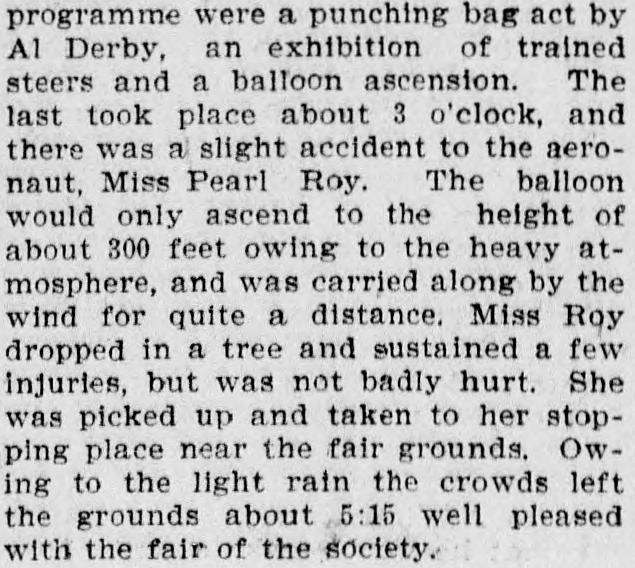
Miss Pearl Roy lands in a tree. Morning Journal and Courier, New Haven, Connecticut, September 13, 1901, page 2. Library of Congress, Chronicling America. Published 1901, public domain. Click the clipping to read it full size.
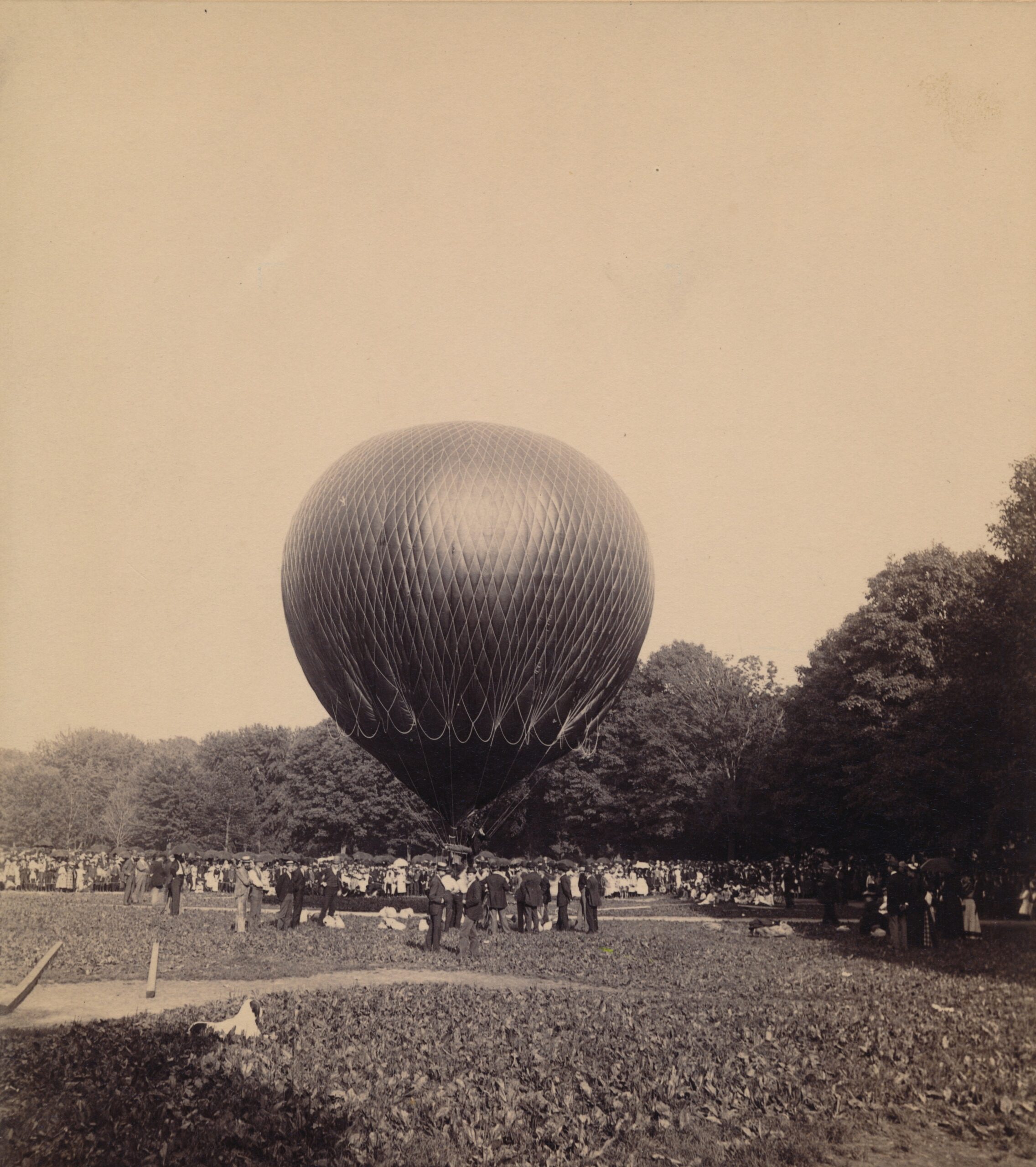
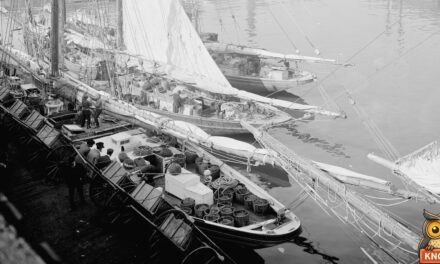
A balloon about to go up in front of a big crowd on July 4, 1890, in Lawrence, Massachusetts. It is not the Orange balloon, but fair balloons of the time looked like this. Photo by Geo. H. Leck, Lawrence Public Library, Digital Commonwealth. Click the picture to see it full size.
The trees around Orange seemed to like balloons. Three years later, at the 1904 Orange fair, a young man and a young woman went up hanging from two parachutes, “with their feet dangling in the air.” The plan was a double parachute drop, but the paper said “the arrangement did not work as intended.” The balloon drifted down into the top branches of a tree, and the paper said the young woman, Miss Mabel Kent of Shelton, Connecticut, “landed safely in the tree top.”
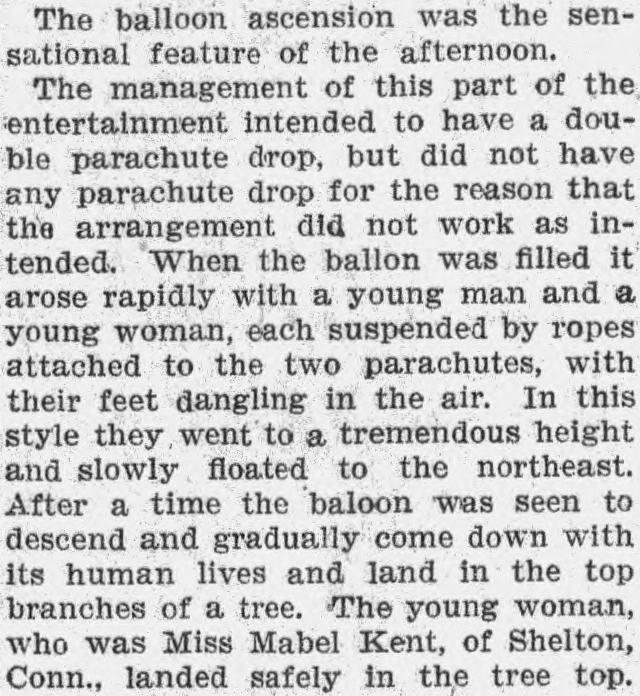
Another Orange fair balloon lands in a tree. Morning Journal and Courier, New Haven, Connecticut, September 8, 1904, page 6. Library of Congress, Chronicling America. Published 1904, public domain. Click the clipping to read it full size.
A Clean Fair Run by Young Men in Orange
Many country fairs in Connecticut had fakirs. That was the old word for traveling con men who ran crooked games, like a shell game where you could never find the pea. The day before the 1901 fair opened, the paper said the Orange fair was run by “some live and energetic young men” who wanted to keep out “fake” games. Those games, it said, tempted “the poor farmer’s boy” into “parting with his hard-earned saving.” Their goal was “an absolutely clean and moral fair.”
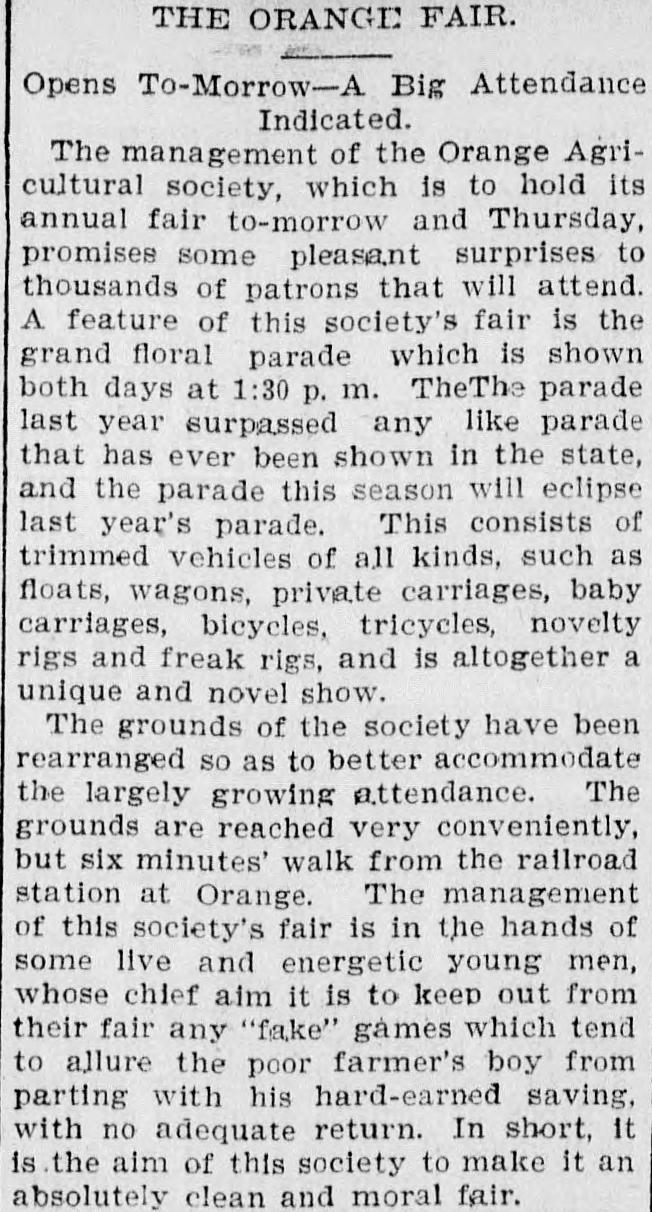
“The Orange Fair. Opens To-Morrow.” Morning Journal and Courier, New Haven, Connecticut, September 10, 1901, page 8. Library of Congress, Chronicling America. Published 1901, public domain. Click the clipping to read it full size.
It worked. On opening day the reporter wrote that the Orange fair was “free from ‘Fakirs.'” At the Branford and Danbury fairs, he said, these men “reap a harvest,” but “for some reason they steer clear of Orange.”
Watson S. Woodruff was the president and Walter S. Hine the vice president. Arthur D. Clark and Edward L. Clark, Jr., kept the books. Look at those last names. Clarks, Woodruffs and Hines ran the fair, and Clarks, Woodruffs and Hines raced in it. This was a town playing games with itself.
Floats and Baby Carriages in Orange
The Orange fair also had a grand floral parade that went “twice around the track.” Prizes went to S. D. Woodruff for floats, Mrs. J. N. Clarke for baby carriages and Miss Francis Snow for the best trimmed bicycle. Miss Wynola Hine won first for “the most unique rig.”
The Fence Lined With Horses at the Orange Fair
About 3,000 people came to the Orange fair each day in 1901, and many of them came by horse and wagon. On the second day, the paper said, the fence “was lined with a row of horses’ heads almost the entire way around the track,” and hundreds more teams stood unhitched inside it.
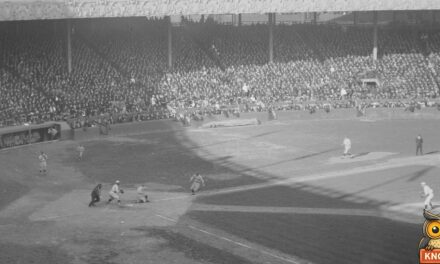
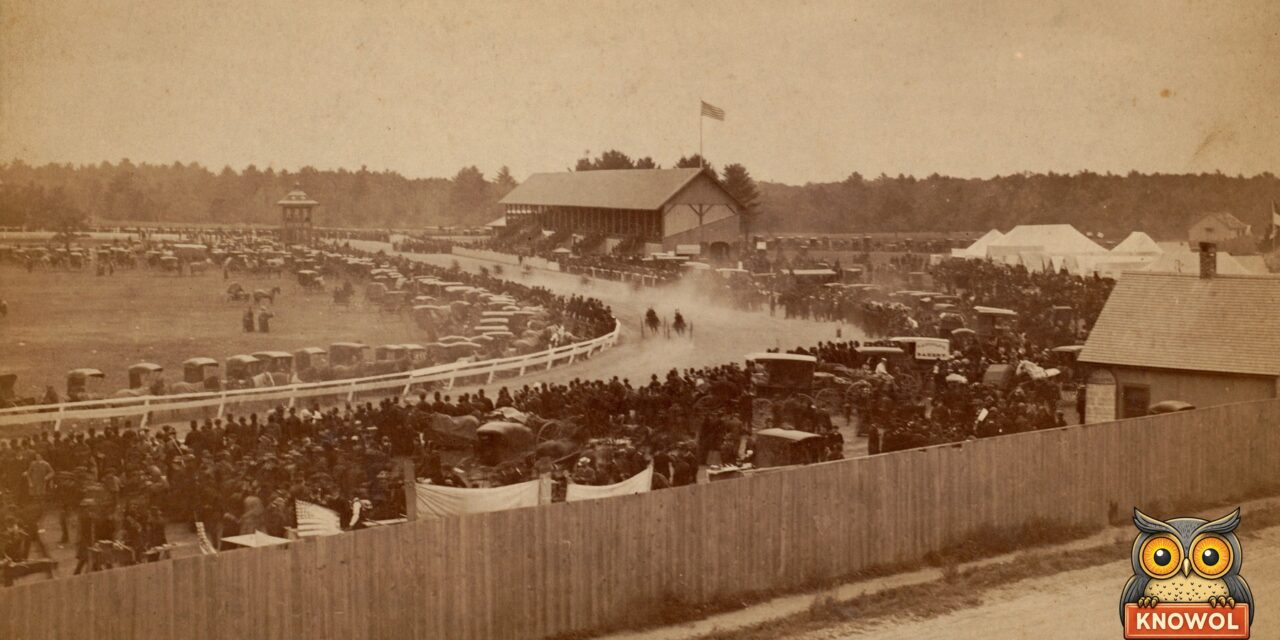
The cover photo at the top of this story shows a fair just like it, with buggies parked all around the rail and two trotters racing through the dust. It was taken at the fair grounds in Brockton, Massachusetts, not in Orange, but it shows the same kind of day.
The Morning Journal and Courier is the only paper we found that told about the 1901 Orange fair, so its reporter is our only witness. He was a good one. He watched farmers take their horses apart and put them back together, a balloon girl fall into a tree, and a crowd go home in the rain, “well pleased with the fair of the society.” Henry Clark won one race and lost the other. Either way, he got to buckle every strap in front of the whole town.
Sources
- “The Orange Fair. Opens To-Morrow.” Morning Journal and Courier, New Haven, Connecticut, September 10, 1901, page 8. Library of Congress, Chronicling America
- “Successful Orange Fair.” Morning Journal and Courier, New Haven, Connecticut, September 12, 1901, page 7. Library of Congress, Chronicling America
- “The Orange Fair Closes.” Morning Journal and Courier, New Haven, Connecticut, September 13, 1901, page 2. Library of Congress, Chronicling America
- “Notes of the Orange Fair.” Morning Journal and Courier, New Haven, Connecticut, September 8, 1904, page 6. Library of Congress, Chronicling America
- Cover: “Harness racing, Brockton fair grounds,” D. T. Burrell, photo artist, Brockton, Massachusetts. Brockton Public Library. Digital Commonwealth. No known copyright restrictions.
- “Balloon ascension by Geo. E. Greenleaf … July 4th, 1890, Lawrence, Mass.,” photo by Geo. H. Leck. Lawrence Public Library. Digital Commonwealth. No known copyright restrictions.
- Newspaper pages printed in 1901 and 1904 are in the public domain.